Design of backdoor
BACK DOOR
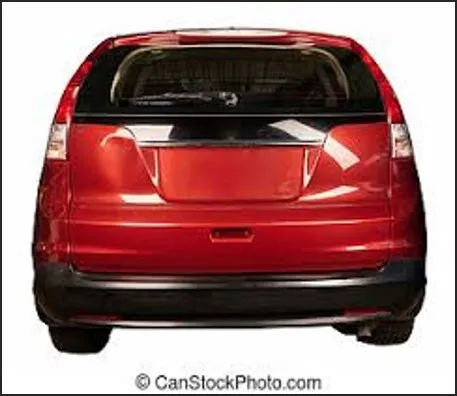
The door or opening of a cargo area that is hinged athe the top, side or bottom is called the back door. If the door is hinged at the bottom, it is usally called a tailgate.
Automotive backdoors are an important part of a vechile's design. They are designed to provide safety and security to passengers while aslo being aesthetically pleasing. The design of automotive rear doors is complex and involes many factors such as aerodynamics, wieght and safety.
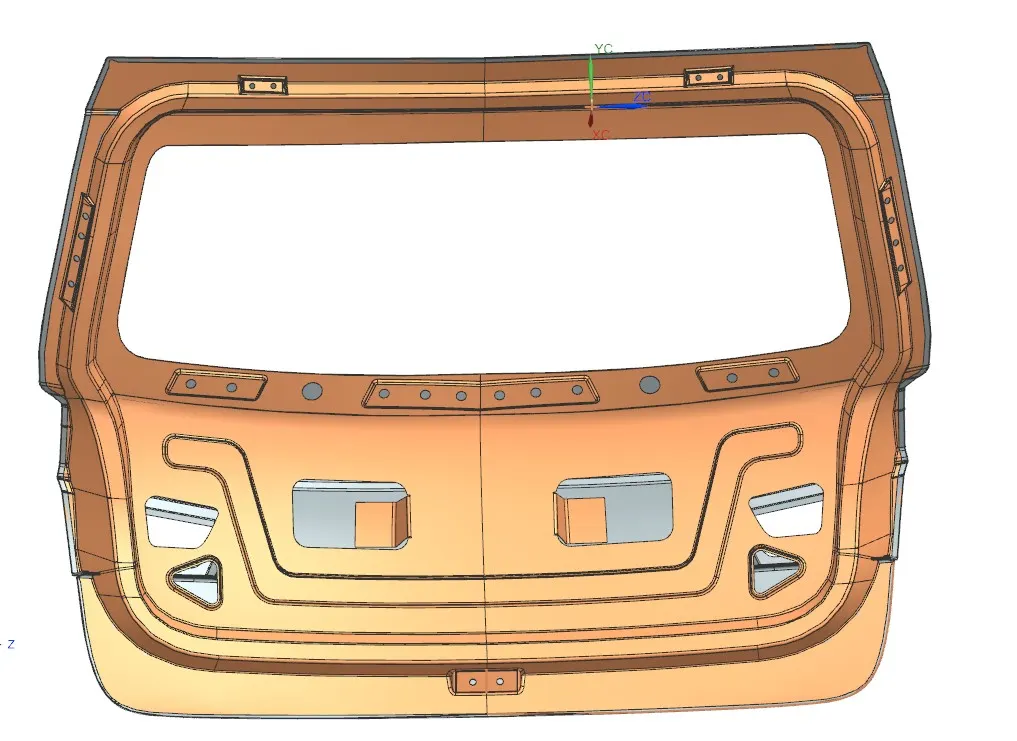
The structure of the back doors is made up of several components such as the outer panel, inner panel and reinforcement componets. The outer panel is the visible part of the door that is painted and provides the asthetic appeal. The inner panel is the part of the door is not visible and provides structural support. Reinforcement components are used to provide additional strength to the door.
They can be operated manually or automatically. Manual backdoor needs human effort. But it is held in open position using gas stays. Automatic doors have motors to assist openingh and closing.
DESIGN PARAMETERS.
Designing of a cars backdoor includes a number of factors that needs to be accounted for.
Boot Space : The back door should be designed in such a way that the tunk volume is not affected without compromising on other parameters.
Rear Visibility: The back door must ensure rear visibility via the IRVM through the rear windshield.
Rear Collision : In the event of a collision, embossments are provided on the panel such that the impact is directed away and towards the frame of the car.
Acessibility of Components : Since the assembly takes place after the joining of the inner & outer panels of the backdoor. It is necessary to ensure the ease of assembly of other componets like the tail lamps. etc
Reinforcements : Embossments are provided for improving the overall strength of the back door as well as reinforcements for mounting hinges, gas stays, wiper motor and the striker as it improves the strength locally.
Striker Placemnets : The position of the striker should be prependicular to the latch when the latch and the striker meets. To ensure this, a circle is drawn from the centre of hinge axis and qa tangential line which coincides with path of the striker is made. Then the radius of the circle is varied to get the required position corresponding to the latch position.
Clearence : A gap of 0.2mm is provided between the inner and outer where hemming is carried out. Similarity a gap of 5mm is provided in regions where mastic is applied.
Joining Method : The outer surface are hemmed together and hemming glue is applied in 0.2mm gap. Mastic are applied in the 5mm regions.
BACK DOOR SUB ELEMENTS
Outer Panel : Outer panel is the class A surface which contributes to the aesthetics of a car. There are upper outer panel and lower outer panel in the case.
Inner Panel : It encompasses all the sstructural reinforcements, embossments for mountings, sealing flange, mastic flange, etc.
Hinge Reinforcements
Gas Stay Reinforcements
Wiper Motor Reinforcements
Striker Reinforcements
All the above mentioned reinforcements serves the purpose of increasing strength locally. Thier surfaces are flat to ensure the poper mounting of said components. The size, shape and location of these componets directly affects the reinforcements as well.
Sealing Flange : The seaking flange is used for applying a rubber seal to keep the boat water tight.
DRAFT ANALYSIS
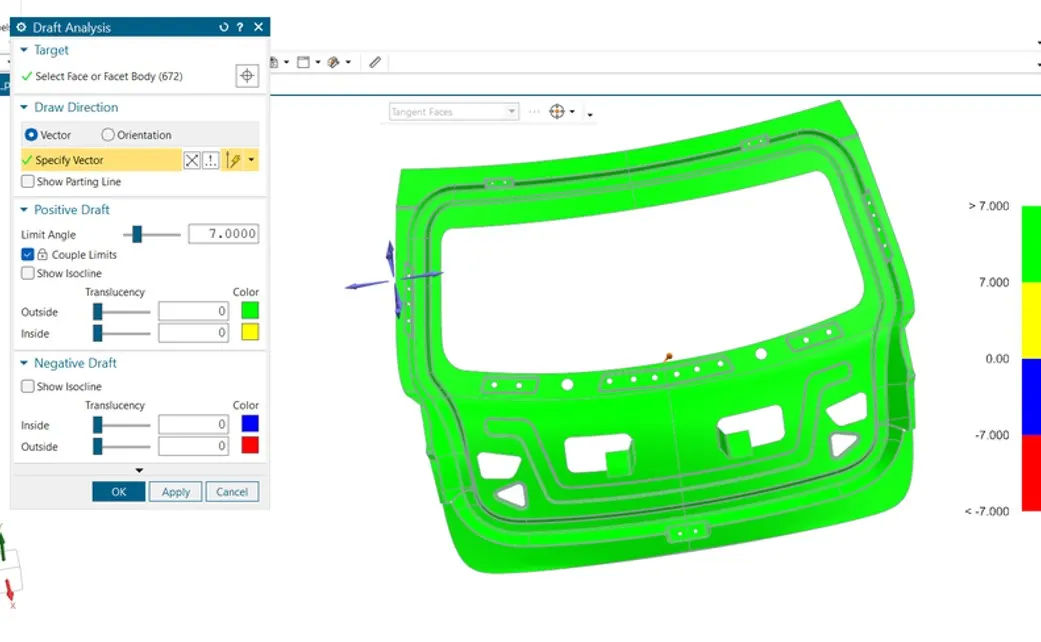
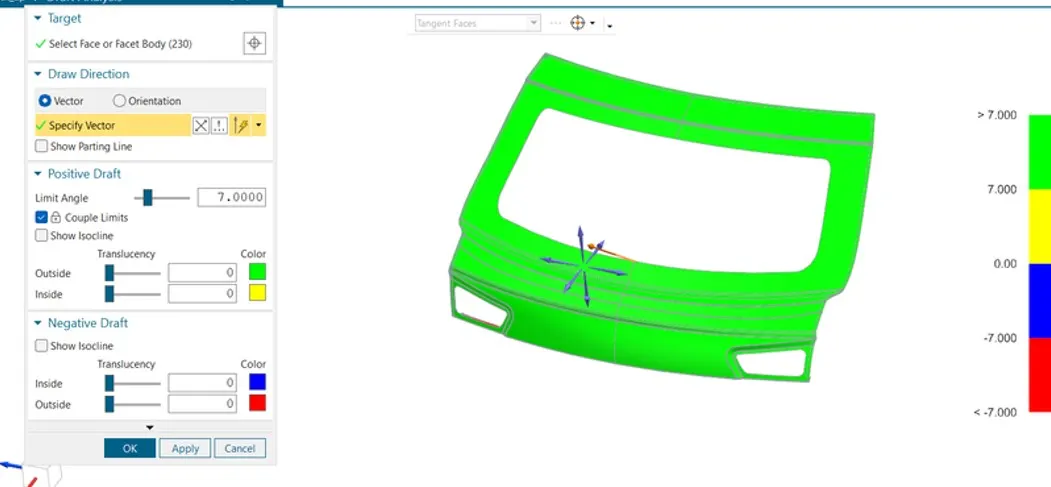
A tooling axis is created in the most suiatable position. Draft analysis was carried out and all the surfaces were having a positive draft of at least 7 degrees, except the hemming positions. For outer panels, the hemming surface doesn't clear draft criteria of 7 degree, but it is not a matter of concern as the surface is manufactured by bending the sides. Draft analysis of different components are given below:
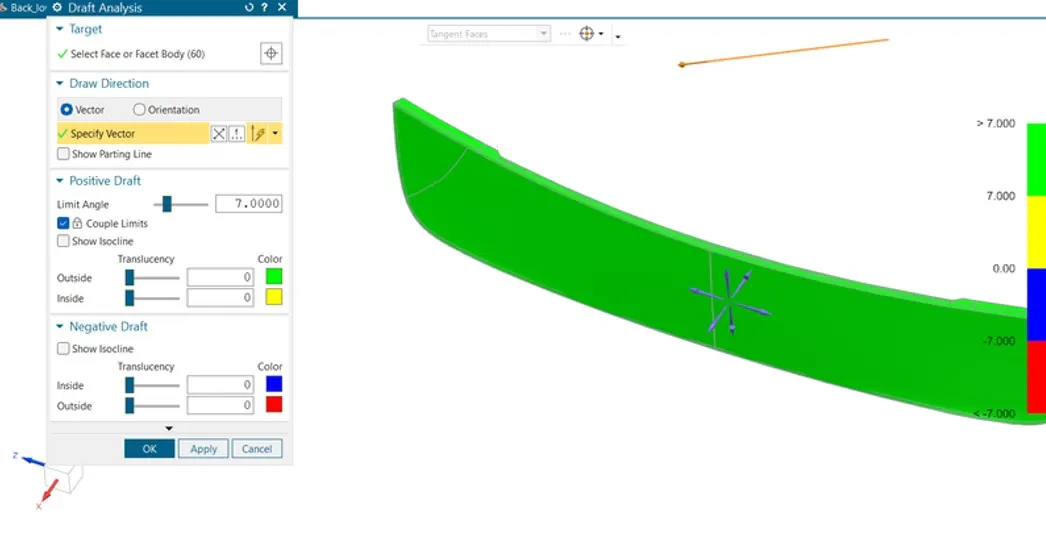
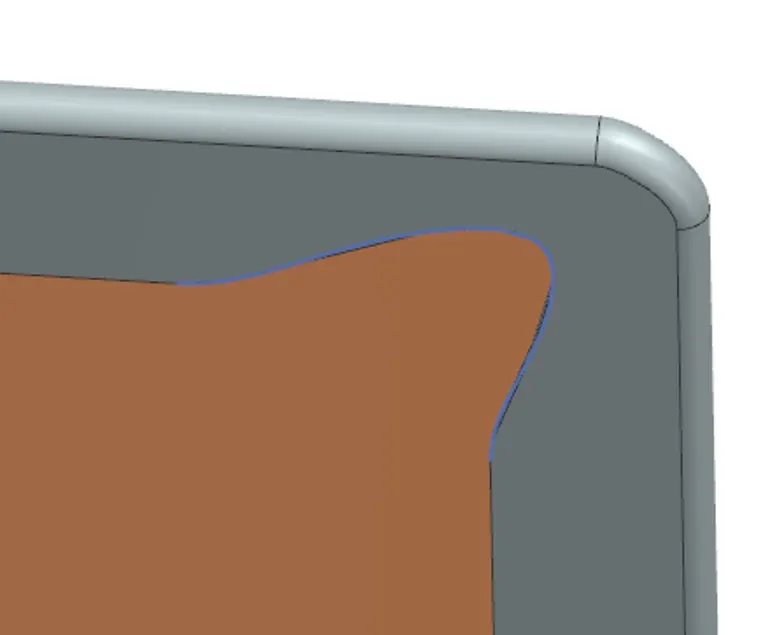
Adequate hem relif are given to avoid stress concentration issues.
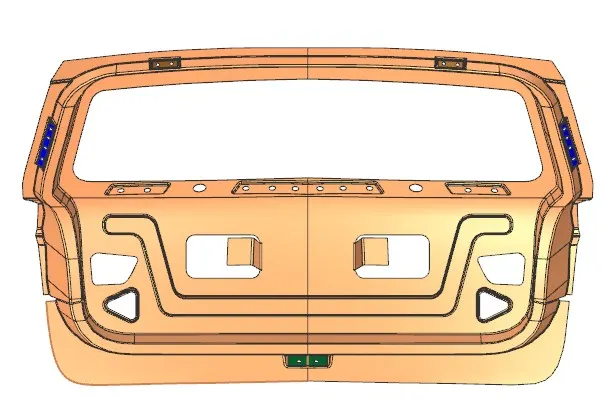
The inner panel with reinforcement at emboss loaction is shown in the figure below:
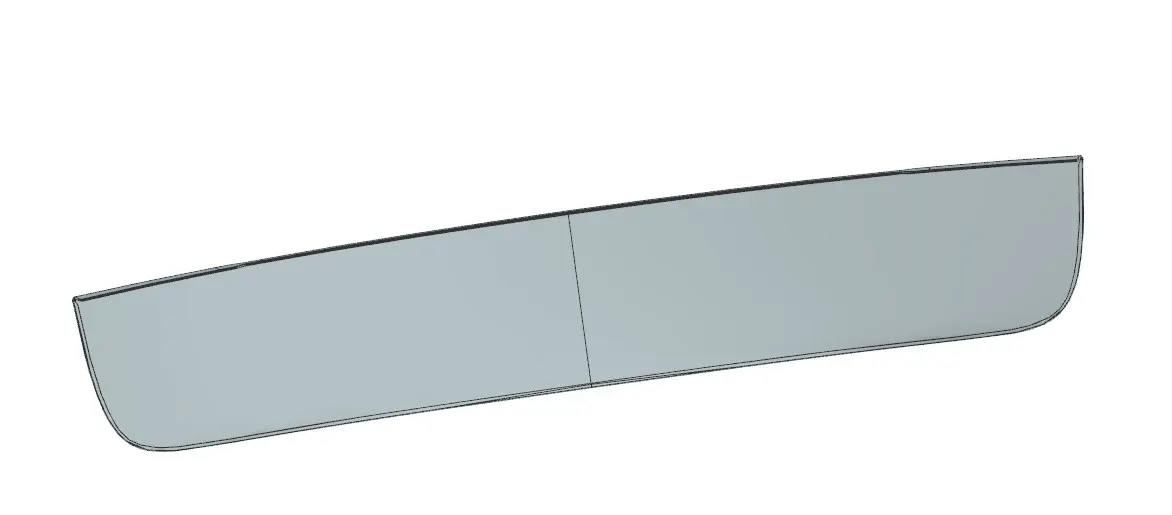
Upper and Lower panels are given below. The hemmed edges can be seen here;
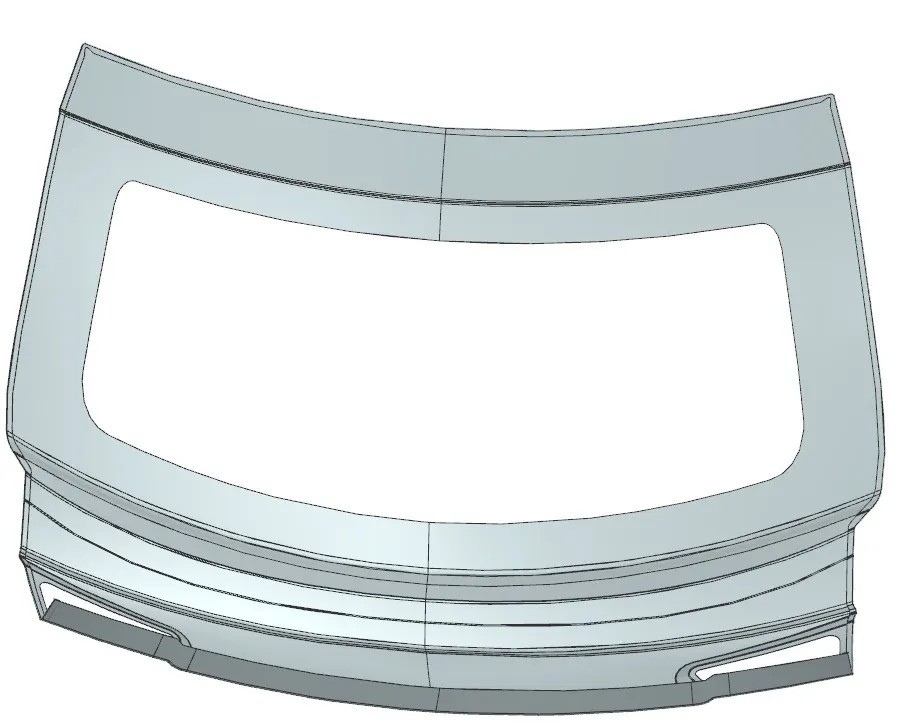
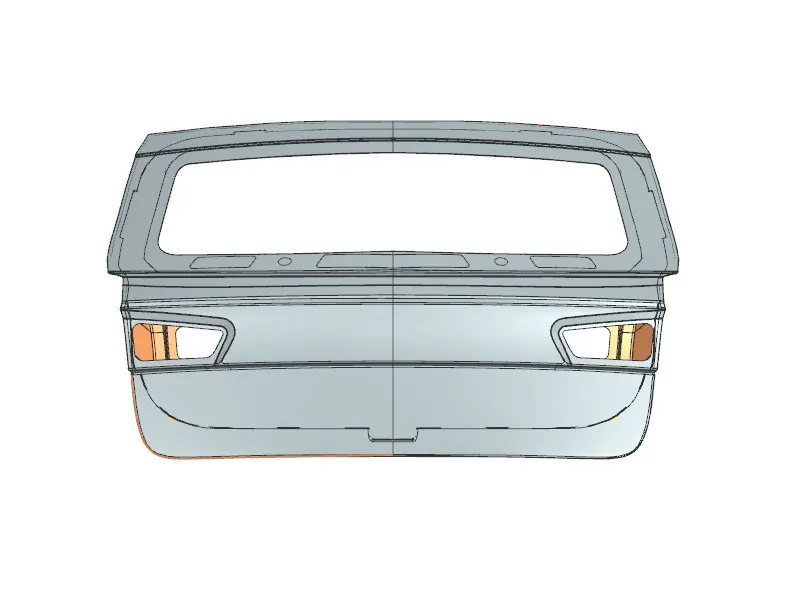
Final Assembly is as follows:
front view
side view
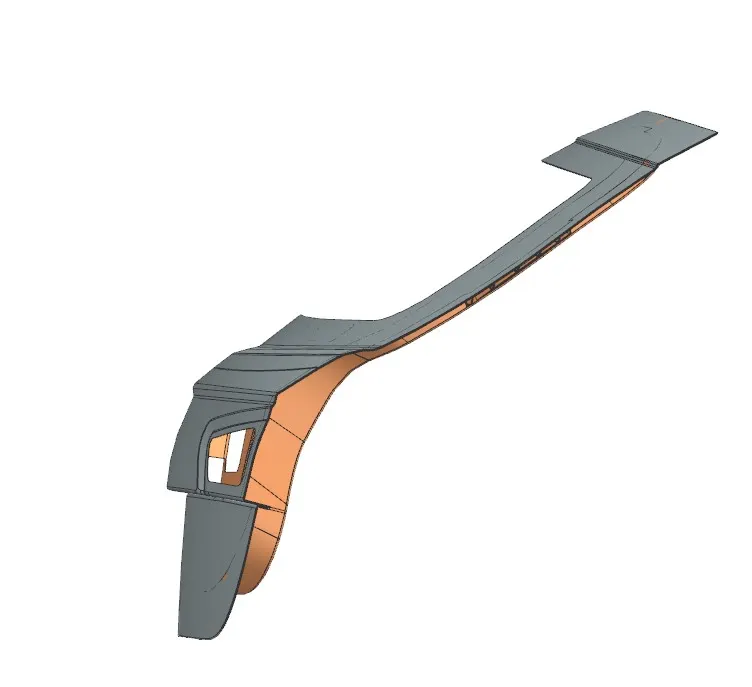
back side view