Design of backdoor
Design of BIW Back Door For Hatchback car using NX-Cad
Objective:
- To design the back door of a car.
- To design an inner panel for the back door.
- To design the necessary reinforcement like Hinges, Gas stay, Wiper Motors, Latch and striker Using some basic standards.
- Draft Analysis for inner panel to verify whether it requirements should satisfy the deep drawing method.
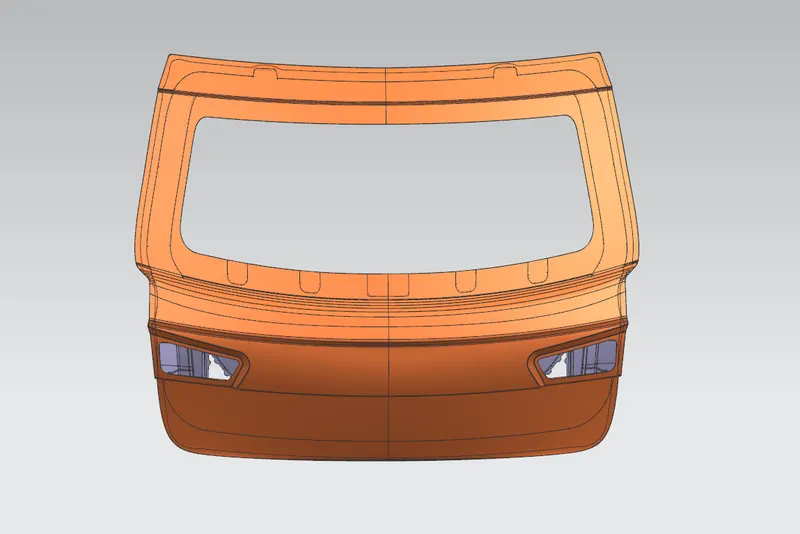
Fig 1:
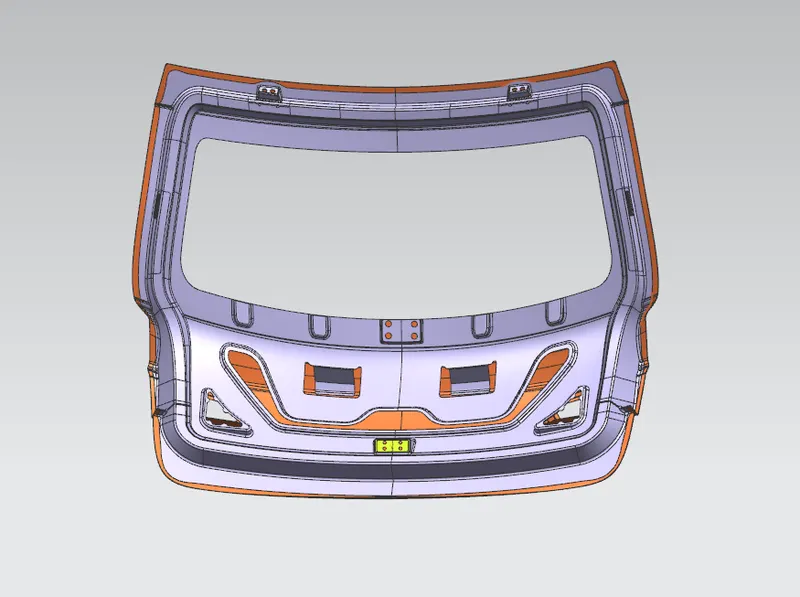
Fig 2:
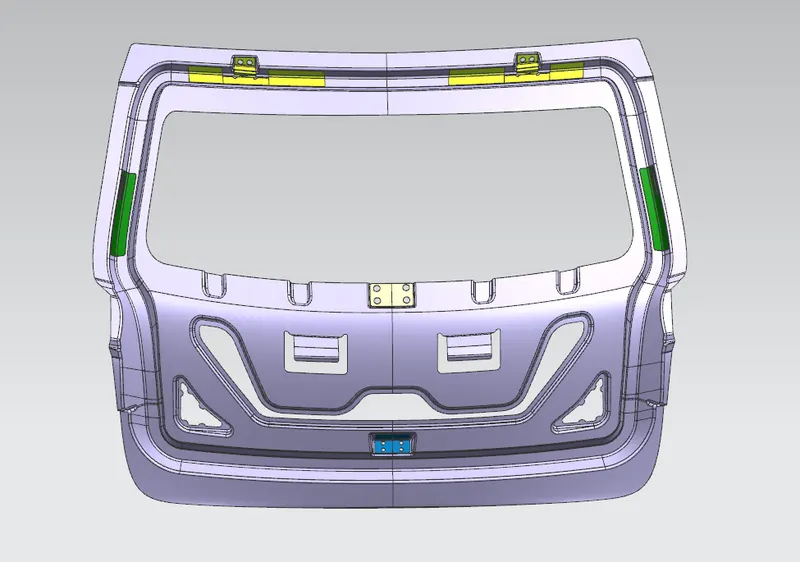
Fig : 3
Parts of the Back door Assembly:
- Outer Panel.
- Inner Panel.
- Hinge Reinforcement.
- Latch and Striker.
- Latch and Striker Reinforcement.
- Gas Stay Reinforcement.
- Wiper Motor Reinforcemnt.
Introduction:
The back door of a car is used to access the boot of a car. Back door is also called as Tail gate. Mainly, a car back door which is consist of inner panel, outer panel and the car parts are made up of steel or alumininum based on the budget of the car and also it based on previous version cars comparision.
If we use aluminium it can add strength where we can avoid the reinforcement. Aluminium parts have more strength and less density. Only drawback of the aluminium is cost when compared to steel. Now a days most of the car manufacturers are trying to use aluminium instead of steel and they are reducing the number of parts and weight of the car drastically.
Design Consideration for Back Door:
- Rear visibility.
- Boot space and accessibility.
- Fit and clearance.
- Rear crash regulation.
- The door should be light weight for opening manually.
- The door should be thin to maximize the boot area.
- Design the back door with some of the load cases are bend test, Dent test, Tortion test and Endurance test.
Embosses:
- Embosses are usually required for to improve the strength of the component or part. It is an operation mostly for the purpose of stiffening flat surface. The Back doors strengthened will be based on the master section creation.
- These embosses are provided to strengthen to the inner panel during impact.
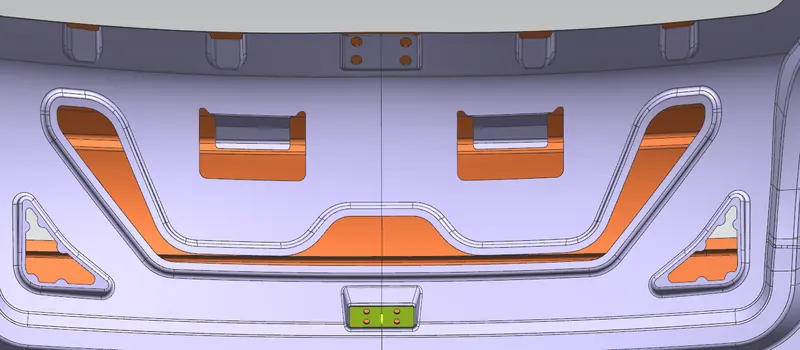
Fig : 4
- The inner panel also consists of mastic support region which is used to put mastic sealant between the outer and inner panel for preventing vibration on back door.
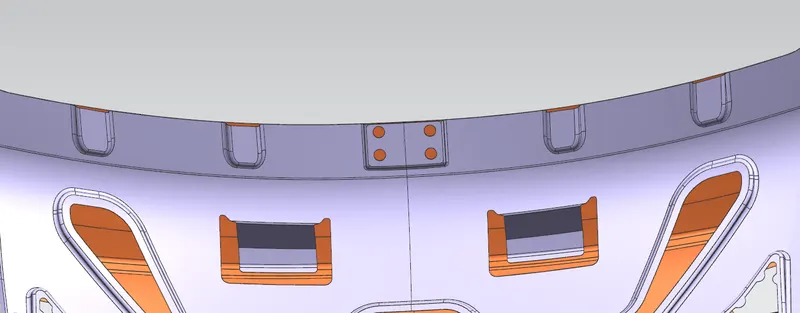
Fig : 5
- The emboss is created for placing latch and striker by creating a trajectory which follows the opening and closing of back door with respect to the hinge axis.
Hemming:
- Hemming is a forming operation in which the edges of the sheet are folded or folded over another part in order to achieve a tight fit. Normally hemming operations are used to connect parts together, to improve the appearance of a part and to reinforce part edges.
- In car part production, hemming is used in assembly as a secondary operation after deep drawing, trimming and flanging operations to join two sheet metal parts (outer and inner) together. Typical parts for this type of assembly are hoods, doors, trunk lids and fenders.
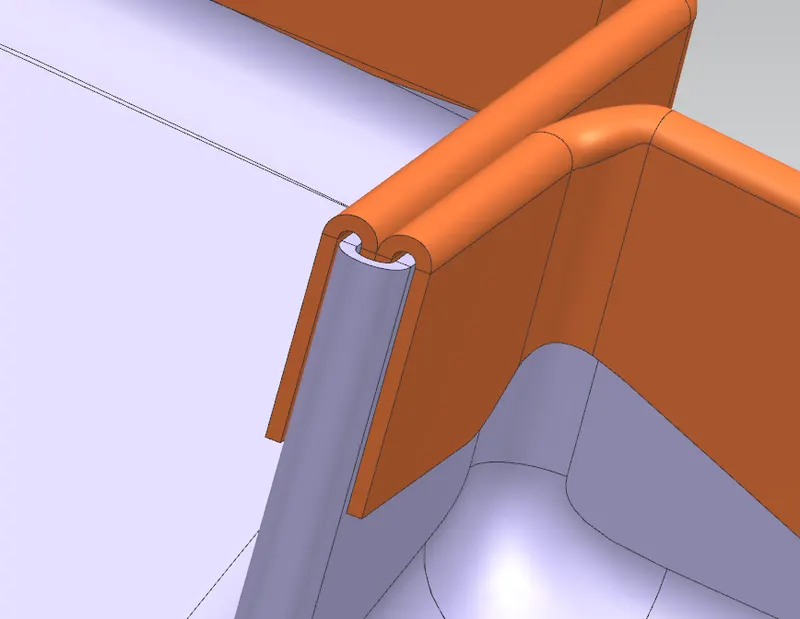
Fig : 6
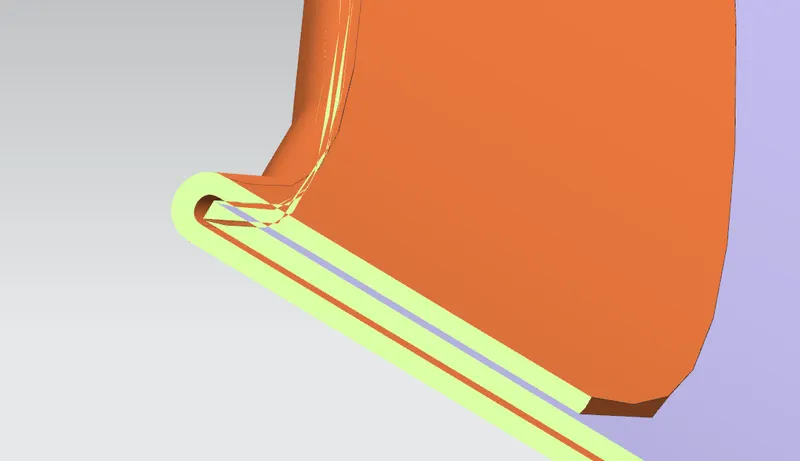
Fig : 7
- Hemming is the process of joining two surfaces using set of rollers to bend the parent over the sub part. Here the parent part is the outer panel and sub part is the inner panel.
- After Hemming is done, now we need to provide corner relief on the corners of the hood. So, that part is manufactural.
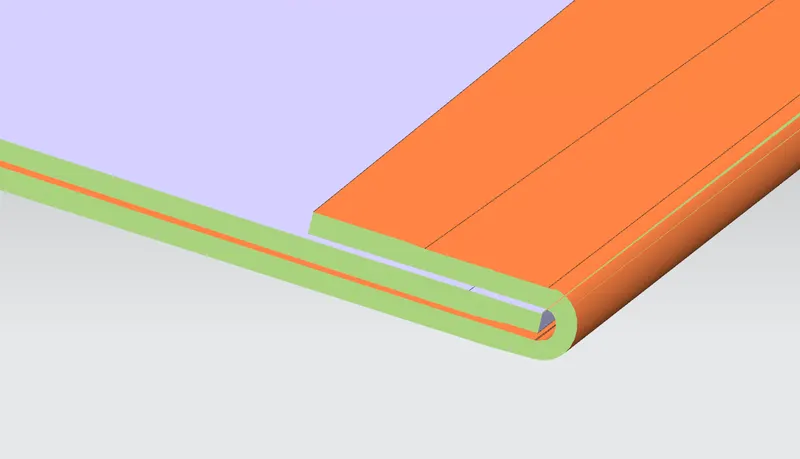
Fig : 8
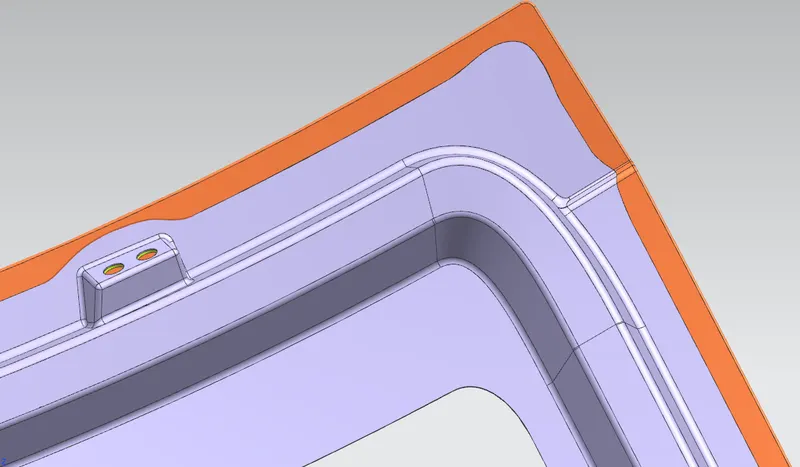
Fig : 9
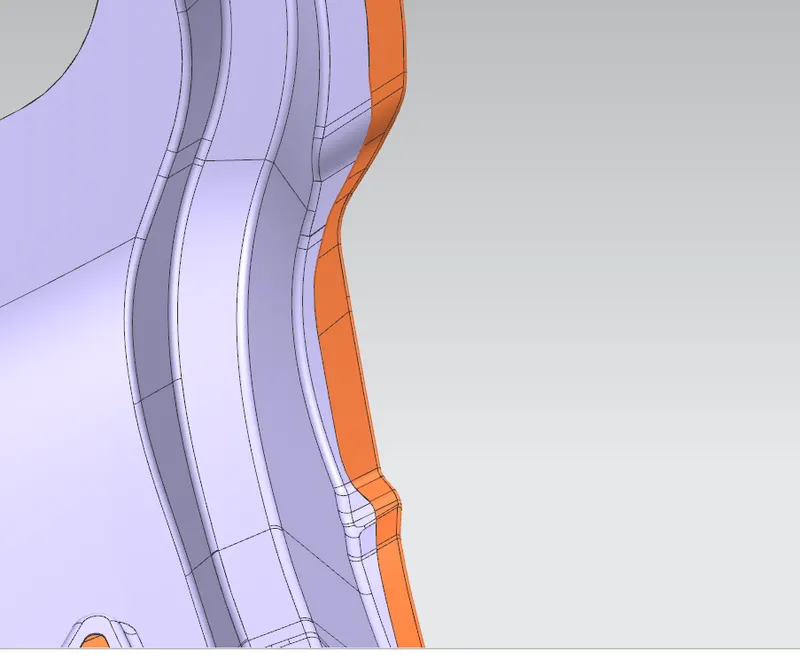
Fig : 10
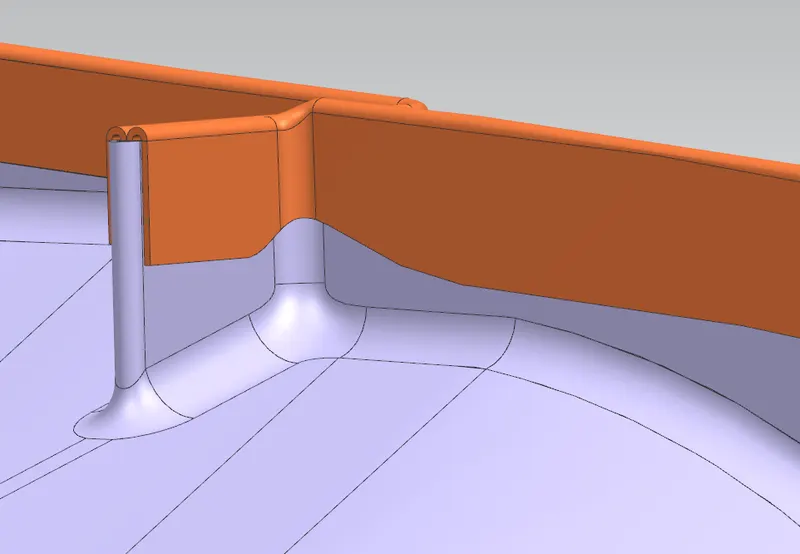
Fig : 11
- Relief is done to decrease the stress concentration along the corners. This is done by trimming the corner by a minimum radius for the rollers to pass along smoothly.
Reinforcement:
After the development of the entire inner panel of the Back Door, we need to develop some additional necessary reinforcements like latch and striker, hinges, gas stay and wiper motor will need a reinforcement that needs to be developed. All the reinforcements are made from sheet metal of thickness 1.5mm is to avoid any failure.
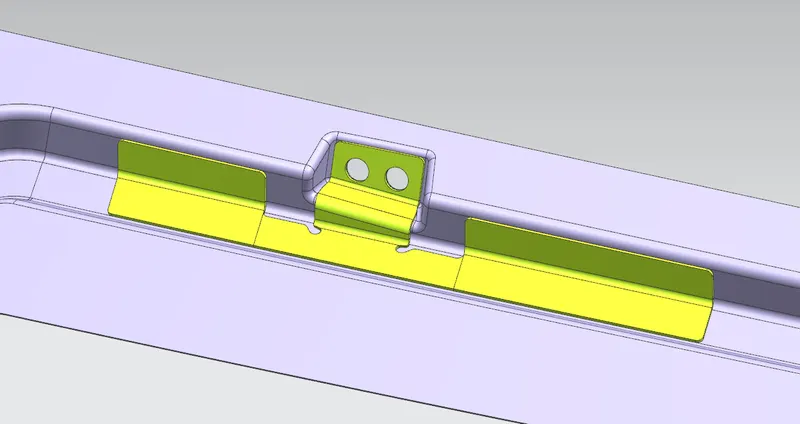
Fig : 12
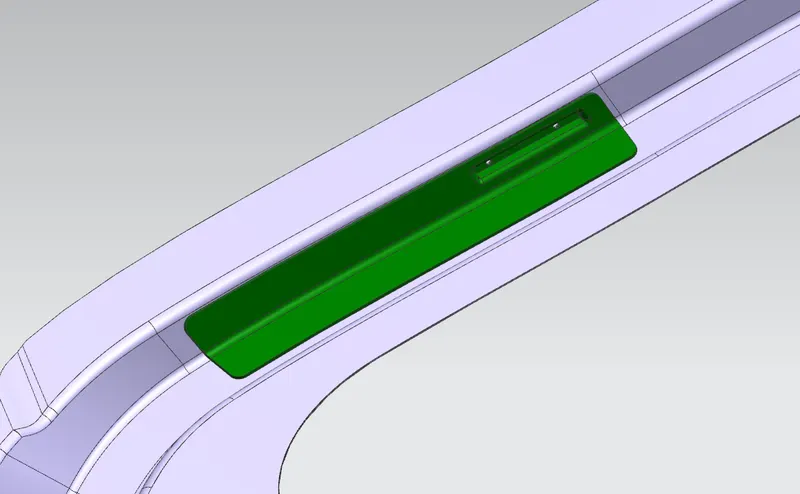
Fig : 13
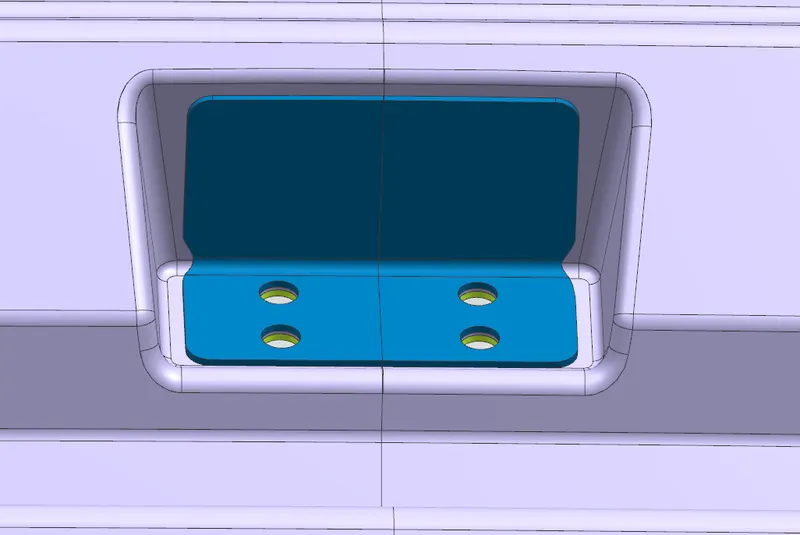
Fig : 14
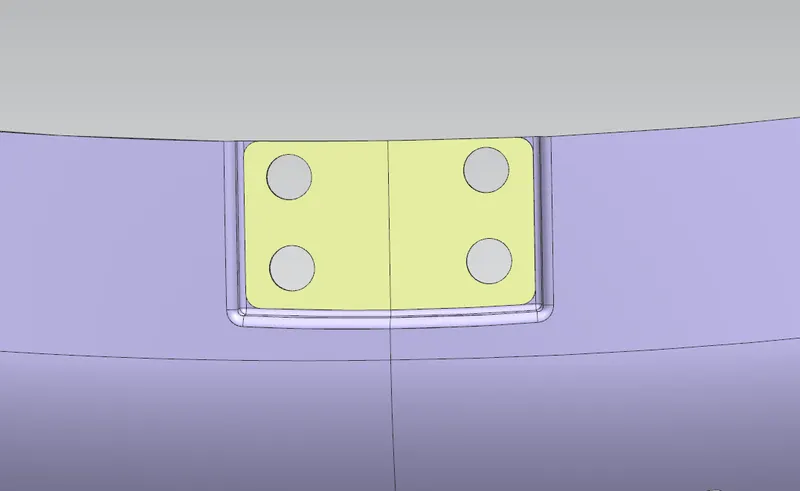
Fig : 15
The inner panel is designed to give support to the styling surface on the outside which mainly acts as a reinforcements and gives rigidity to the outer panel during rear collision of the car.
Draft Analysis:
Draft analysis is a method of checking the draft angle on various faces of a part with a particular direction.
It should be more than 7deg for aluminium for hard metals, minimum draft angle is 10 deg.
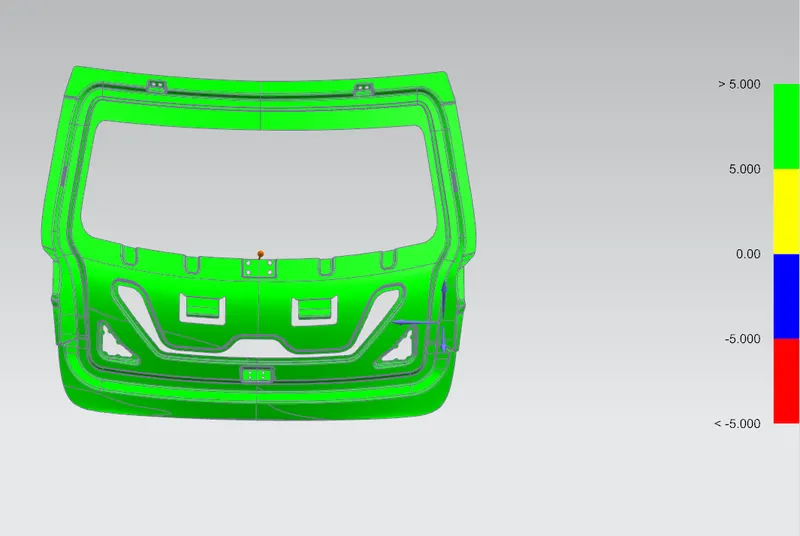
Fig : 16
Draft angle is done to show that the metal can be drawn with the particular design without any tear in the metal of disfiguration. So, in NX CAD theres an option called draft analysis is used to get the desired results.
Conclusion:
Thus the back door has been designed with all the necessary parts and all the required reinforcements were deisgned and assembled.