Design of backdoor
.0 AIM
Use the provided styling surface to come up with a back door design, use appropriate design methodologies, and provide the necessary reinforcements and embosses
2.0 INTRODUCTION
2.1 BACK DOOR
Back door or tail gate simply refers to the back of the car that can open and close.it covering the rear of the vehicle.It provide access to a cargo area (trunk/boot ).A tailgate hinged at the roof is a predominant characteristic of hatchbacks, estates/station wagons and liftbacks .The door or opening of a cargo area may be hinged at the top, side, or bottom.
In most cars, usually this process will be done manually. One has to get down the car to open and close the tail-gate with the car key.Nowadays, automobile manufacturers providing Advanced features like the automated tail-gate. An automatic tail-gate in the car will do the process of shutting and opening the tail-gate electronically.
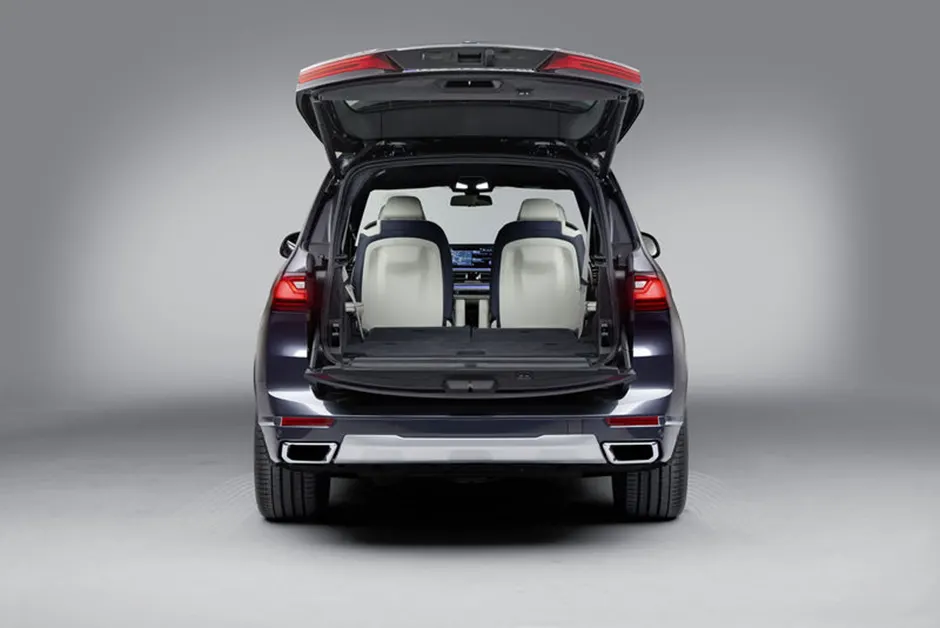

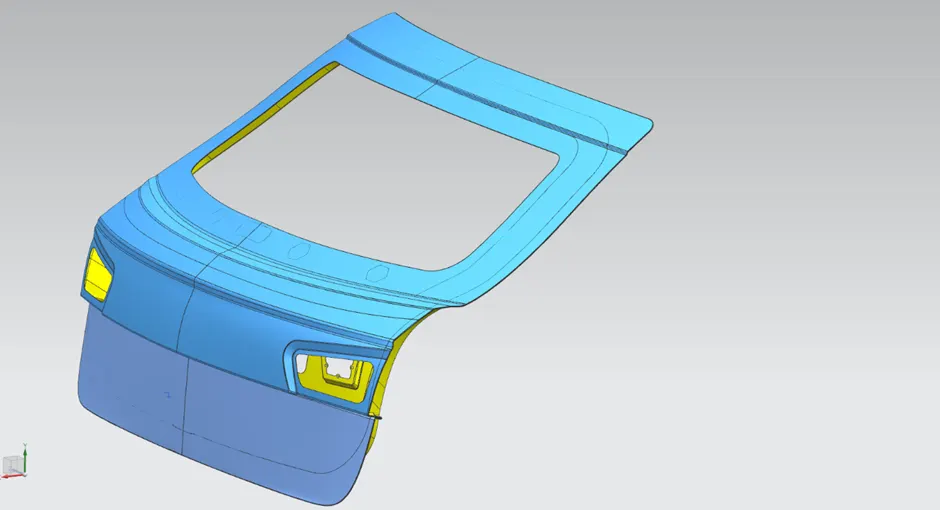
fig.2.1 back door (split tailgate)
3.0 MANUFACTURING PROCESS
Conventional tailgate assemblies are made from stamped metal panels welded together to form a tailgate. Latches are added on either side of the tailgate to engage a striker on the pickup sides. A handle operates the latches to open and close the tailgate assembly. Steel tailgate assemblies provide a durable and secure closure for the pickup bed.
Another disadvantage of steel tailgate assemblies is the cost of the tooling required and equipment required to stamp metal tailgate components. Metal tailgate components are generally produced in a large stamping press. The stamping presses generally require finely machined tools made from hardened steel. The cost of tooling a metal tailgate is much more expensive.
3.1 MATERIAL FOR BODY PANELS
Materials for car body panels require certain specific characteristics to meet the industry’s challenges: rationalisation of specifications for leaner inventory, improved formability for reduced rejection rate and better quality. Higher Strength Low Alloy (HSLA) steels of thinner gauges, are getting preference for weight reduction and the resulting better fuel economy.Other quality characteristics under demand are higher yield stress (strength), toughness,fatigue strength, improved dent resistance as well as corrosion resistance in materials used for body panels for improved durability and reliability.
To obtain consistent quality of autobody skin panels without failures during stamping, the formability/ductility specifications of strip steels are the basic requirements.Most of the steels used in automotive application are aluminium-killed steels of about 0.7 to 0.9 mm thickness.
An intensive research and development are going on for alternate materials, manufacturing processes and stamping tools for sheet-metal components with the main objectives of cutting down the weight and unit cost of the vehicle. Simultaneously, the steel content of the car is falling with the use of aluminium and new materials, such as plastics. Aluminium may provide the most sought after solution to reduce the weight of the vehicles. A reduction of 30% in weight is achievable if the same strength, stiffness, and stability of the component are to be realised by substituting steel with aluminium. Possibility of significant reduction in die cost will be another advantage with aluminium. However, problems related to strength, serviceability,
manufacturability, and above all the cost, require effective solutions before the acceptance of aluminium as a substitute to steel for body panels. Plastics for bumpers,
3.2 STAMPING PROCESS
Stamping processes to be used for a panel depend on its design. However, normally the processes used extensively are blanking, drawing, piercing, forming, notching, trimming,hemming, etc. Blanking prepares the initial approximate form of the part in flat sheet. Drawing is generally the first operation to attain depth related form. Piercing, notching, hemming, are product design related operations. Trimming generally removes the extra material on the periphery of the panel provided for blankholding during draw operation. Decision on trim line is very important and becomes deciding factor to obtain good draw.
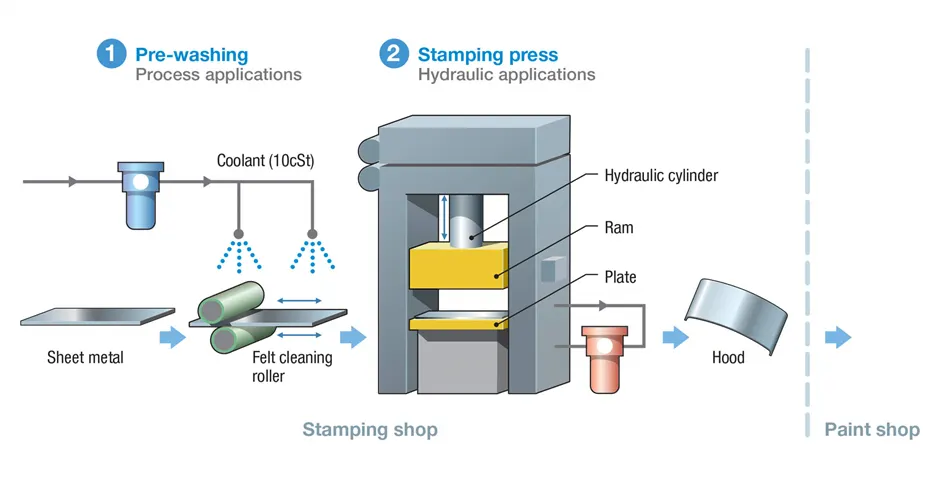
fig.3.2.1 stamping process
1. Blanking
When required, blanking is the first step of the stamping process. Blanking is the process of cutting larger sheet or coils of metal into smaller, more manageable pieces. Blanking is usually performed when a stamped metal piece will be drawn or formed.
2.Piercing
If a part requires slots, holes, or other cutouts, piercing can be employed. Piercing, which can be performed simultaneously with blanking, punches the requisite shapes out of the metal sheet.
3.Drawing
Drawing is the actual stamping in the metal stamping process. A punch forces a section of metal through a die, providing the primary shape of the part. When the depth of the part is less than the primary opening, it is considered shallow drawing; parts with a depth greater than the opening are deep drawn.
4.Bending
Bending is a fairly self-explanatory process. The part-in-progress is placed on a specially designed die and a ram pushes against the metal, providing the required bend. Bending is performed after drawing, as attempting to punch an already bent piece of metal causes the entire part to deform.
5.Hemming
Hemming is a technology used by the automotive industry to join inner and outer closure panels together (hoods, doors, tailgates, etc.). It is the process of bending/folding the flange of the outer panel over the inner one. The accuracy of the operation affects significantly the appearance of the car’s outer surfaces and is therefore a critical factor in the final quality of a finished vehicle.
roller hemming :-The robotized hemming systems use a standard industrial robot integrated with a roller hemming head, offering a very flexible solution. This roller hemming head consists of a body, some guides and a number of rolls that are designed according to the geometry of the part in each case.
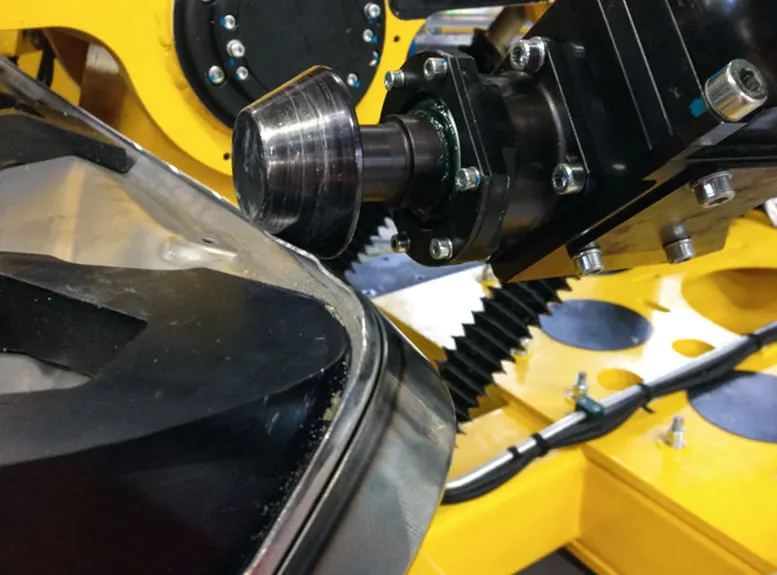
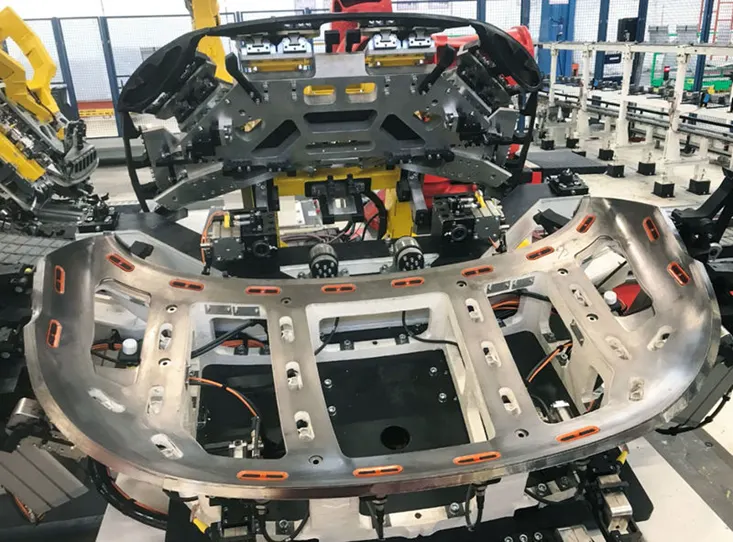
fig.3.2.2 roller hemming
4.0 BACK DOOR DESIGN
The design consideration of back door are ,
- Visibility Criteria
- Force Dissipation
- Latch and Stricker Positions
- Hinge Position
- Gas Stay Position
- Hemming and Relief Areas
PARTS OF BACKDOOR
- Back door outer panel (upper and lower)
- Back door inner panel
- Hinge reinforcements
- Gas stay reinforcements
- Latch and striker reinforcements
- Wiper motor reinforcements
1. BACK DOOR OUTER PANEL
In this design back door is created as two different parts back door outer panel upper and lower. This outer panel designed based on visibility criteria and proper reliefs provided at the corner for hemming operation .The thickness of outer panel is 0.75 mm .
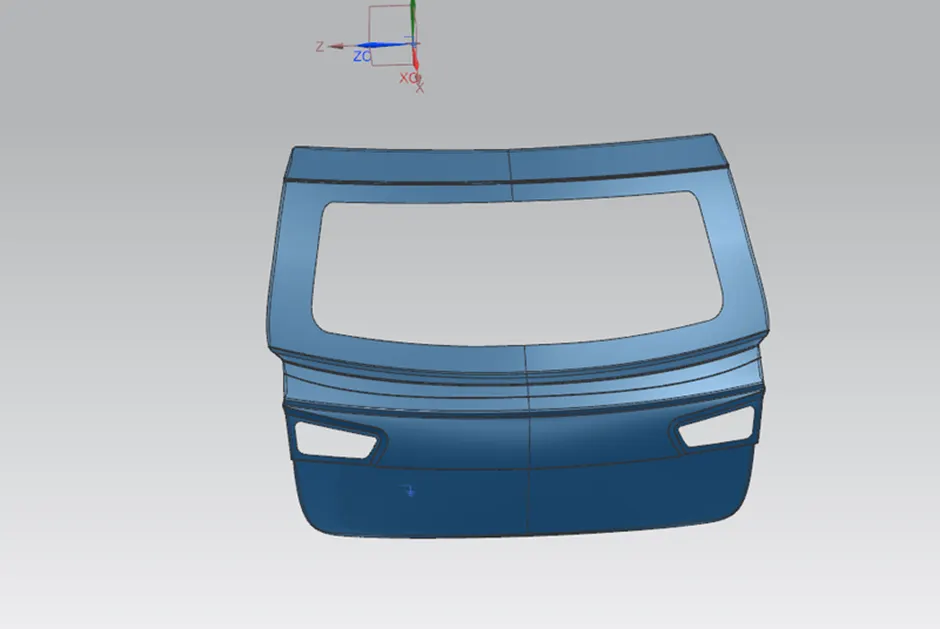
fig 4.1. outer panel
2.BACK DOOR INNER PANEL
Back door outer panel designed based on hinge, gas stay, wiper motor position and reinforcement as well as visibility criteria .Suitable tooling direction is created for trouble free manufacturing process.In this design stamping operations created based on this tooling direction. Embosses are provided in this design for force dissipation. In this design appropriate clearance given in mastic areas .The inner panel thickness is 0.75 mm
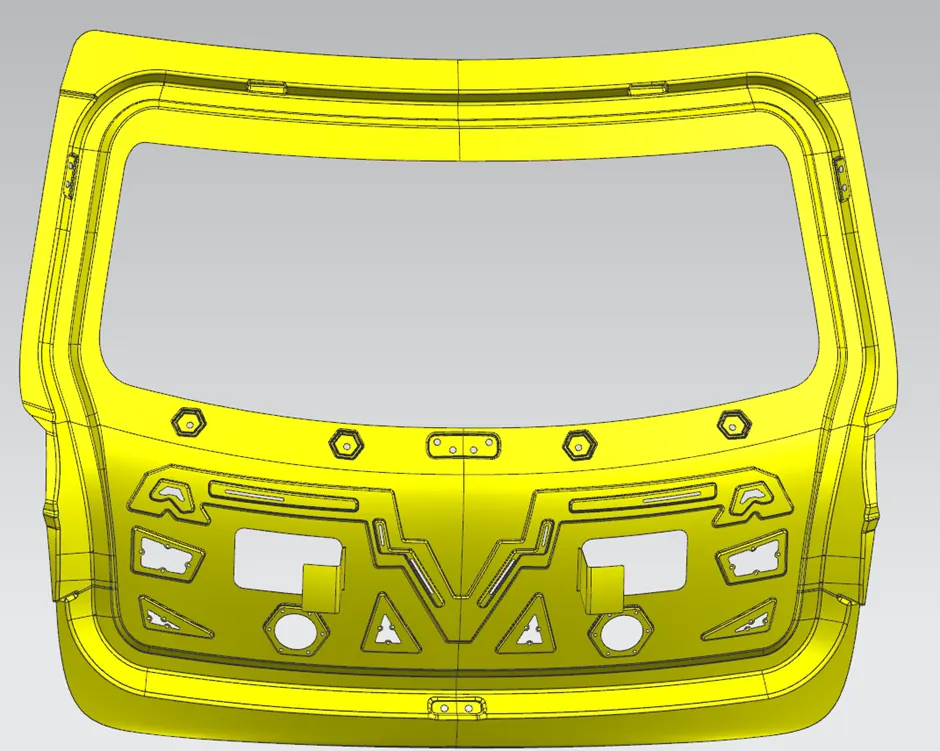
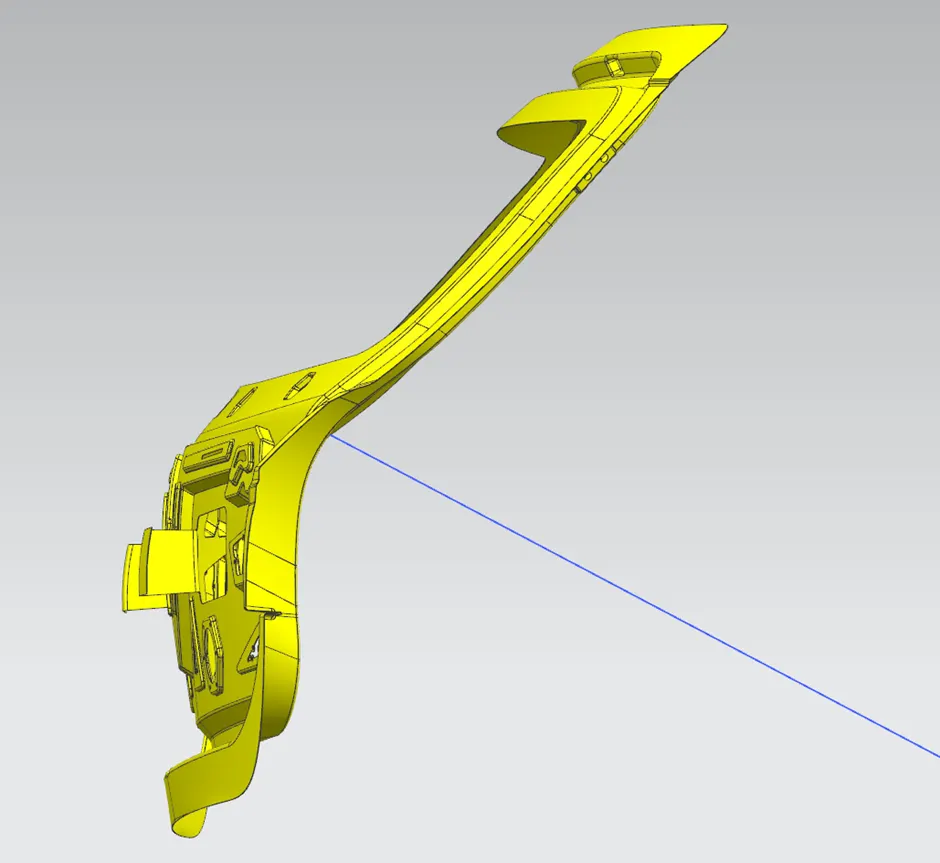
outer panel and tooling direction
- Force dissipation
This inner panel design created by considering the force dissipation criteria.The embosses are created in such a manner that force will dissipate in to sides of the back door during a collision and prevent reaching inside the passenger cabin.Y and V embosses provided in the back door for force dissipation and improve the strength of the metal.
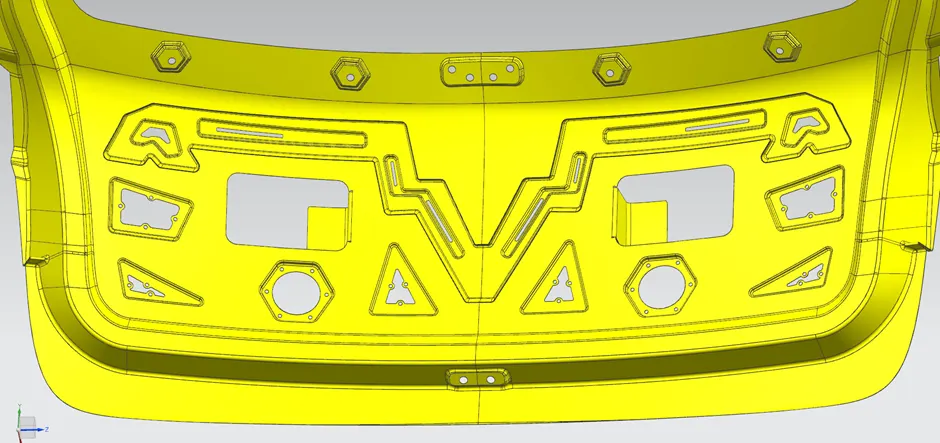
fig.4.3 Embosses and force distribution
- Mastic Area
Mastics sealants used for joining of outer panel and inner panel. It increase the strength of back door and good NVH. So accurate clearance given for mastic sealant.
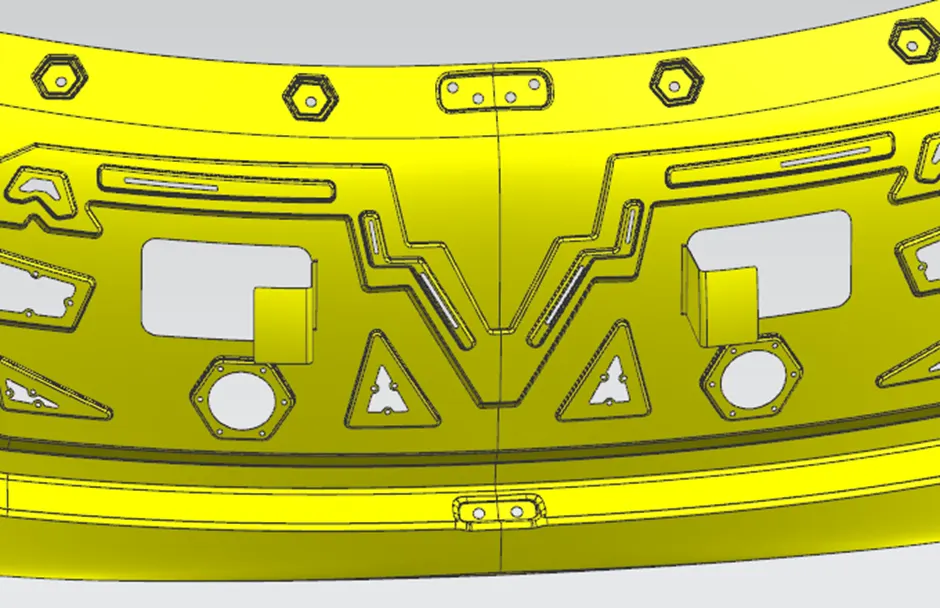
fig.4.4.mastic area
Reinforcements in inner panel
- Hinge reinforcement
In this design hinges provided on the top side of the door. Appropriate reinforcement given for hinge mounting areas to improve the strength.
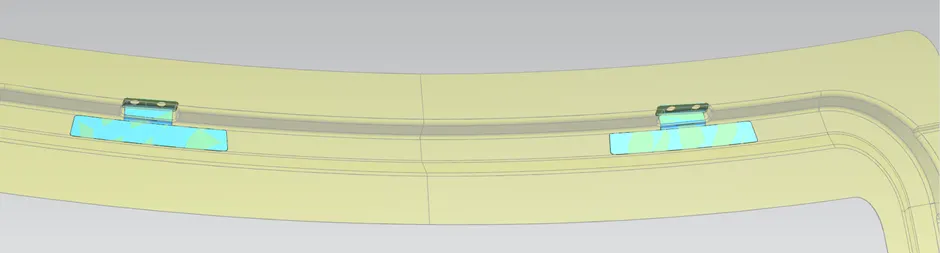
fig.4.4 hinge reinforcement
- Gas stay reinforcement
Gas stays support the weight of the back door while they are open. More load act on this region ,So suitable reinforcement provided for better strength
it is spot welded on the inner panel.
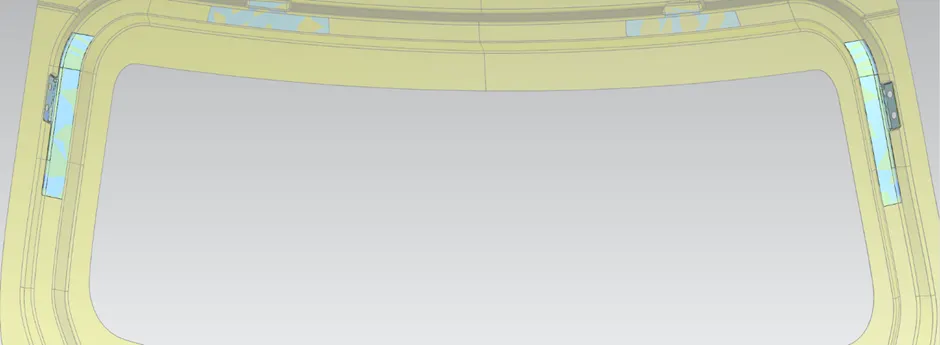
fig .4.5 gas stay reinforcement
- Wiper motor reinforcement
Reinforcement provided in this region for fixing the wiper motor.
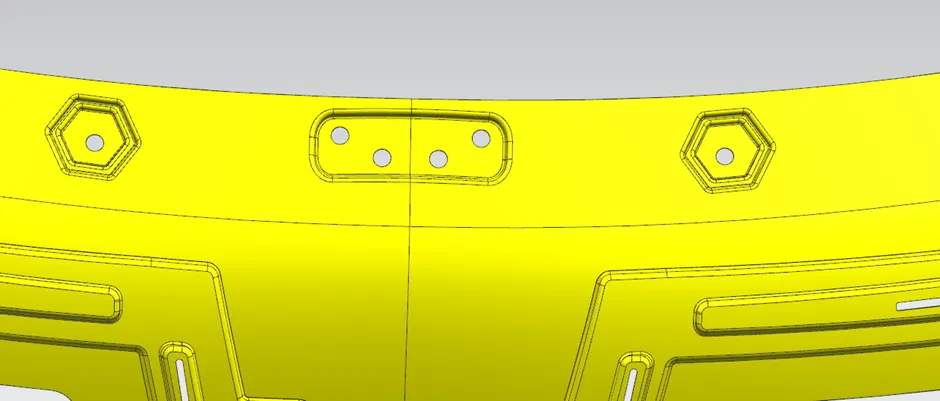
fig 4.6 wiper motor reinforcement
- Latch and striker reinforcement
The striker is designed to create a tight fit between the door and the seal on the cab. The door open and shut several times in a day.So more force acting on this area.The reinforcement given in the latch and striker mounting area to increase the strength.it is spot welded on the inner panel
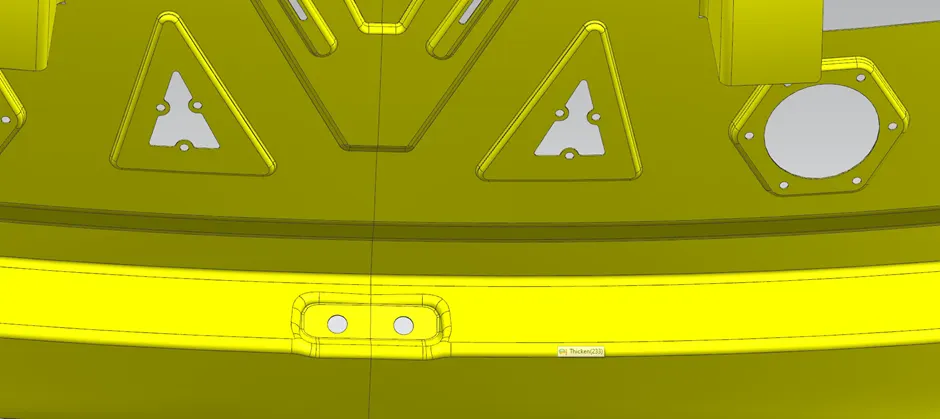
fig 4.7 striker reinforcement
All reinforcement parts spot welded on the inner panel for better strength on that area.
- Hemming
Hemming is a technology used by the automotive industry to join inner and outer closure panels together (hoods, doors, tailgates, etc.).In addition adhesive bond provide for excellent joining of panels it also reduce vibration .here this design 0.2mm clearance provided for hem glue .
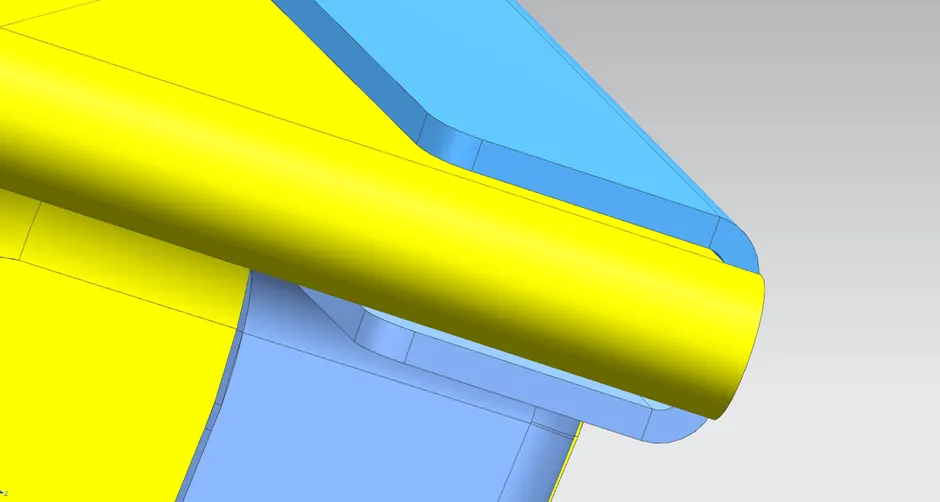
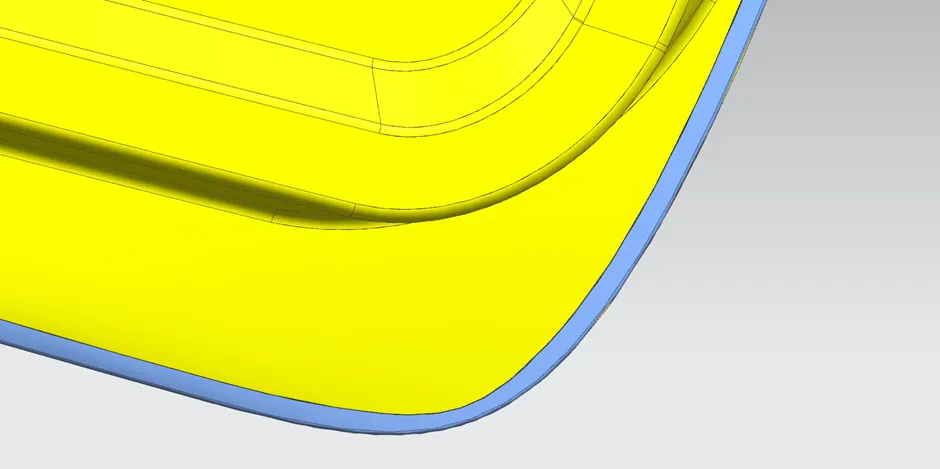
fig4.9 hemming area and corner relief
- Proper corner relief provided for trouble-free hemming operation
5.0 Draft Analysis
draft analysis performed to check the designed part is suitable for stamping operation with respect to the tooling direction.We can find out the errors by using this feature.The minimum draft angle is 7.The negative draft is denoted by different colour so we can easily find out the unsuitable areas.
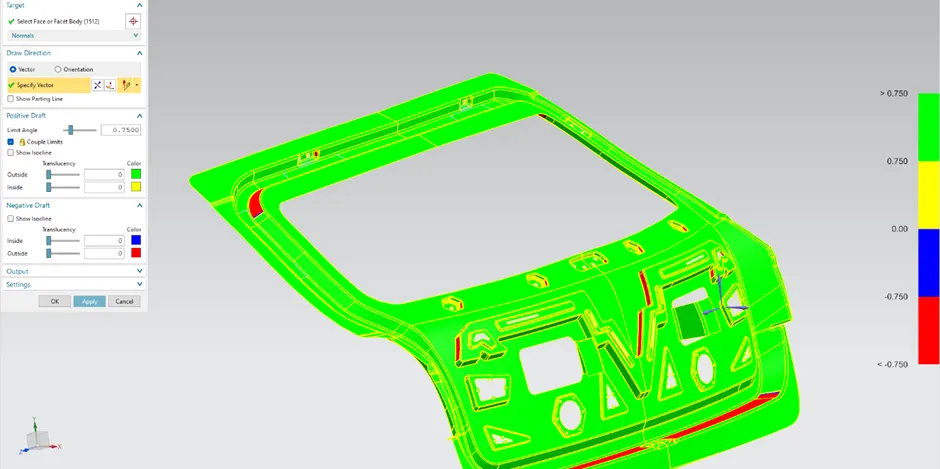
fig .5.draft analysis
6.0CONCLUSION
The backdoor is designed based on design considerations .Required reinforcement provided on inner panel. The design is checked by using draft analysis feature
7. view
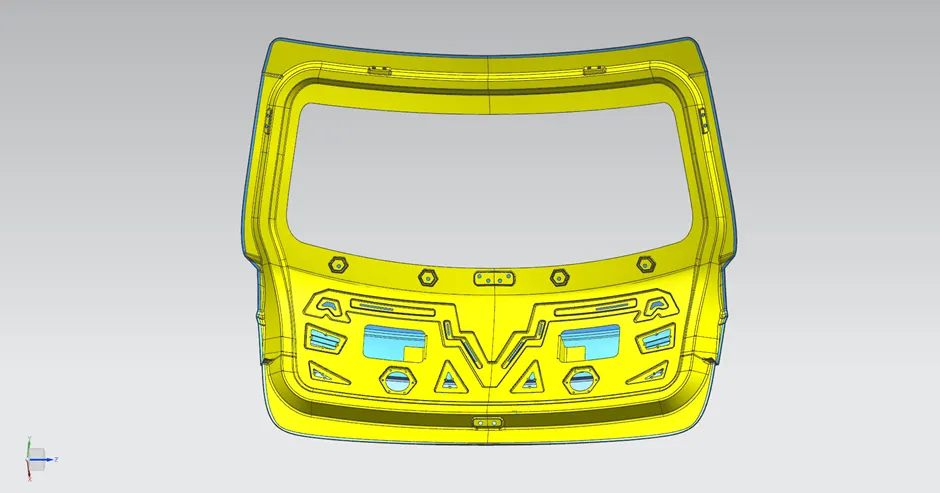
front
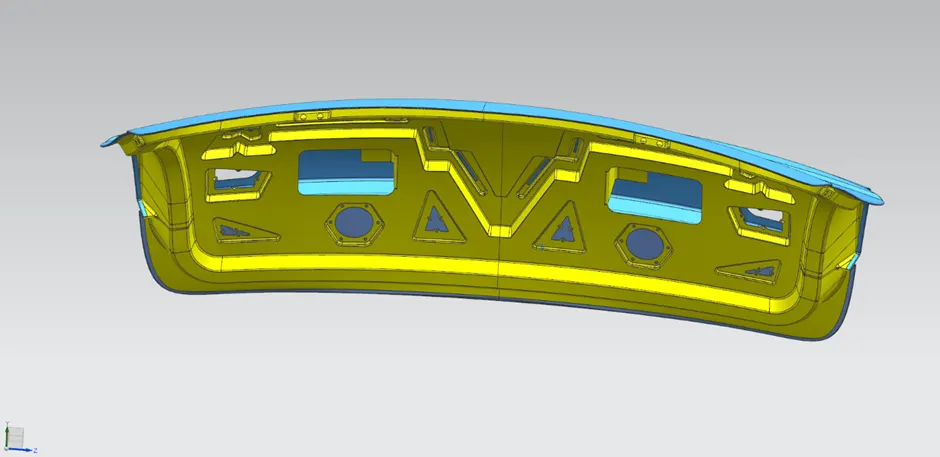
top
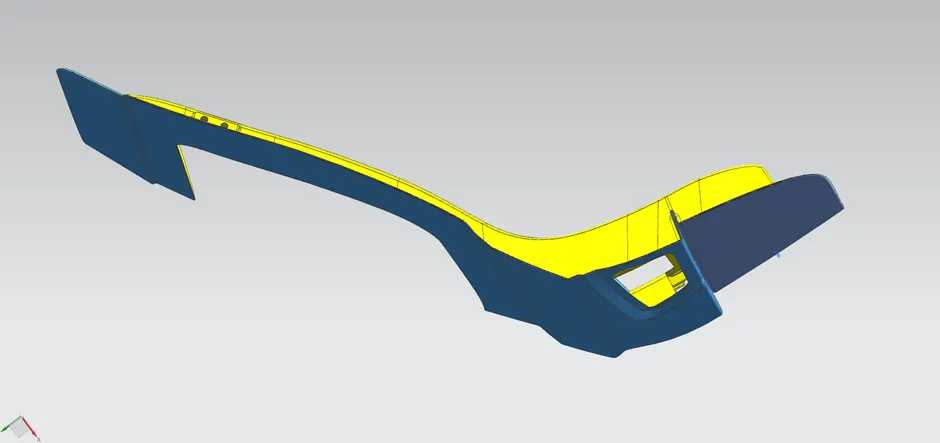
right
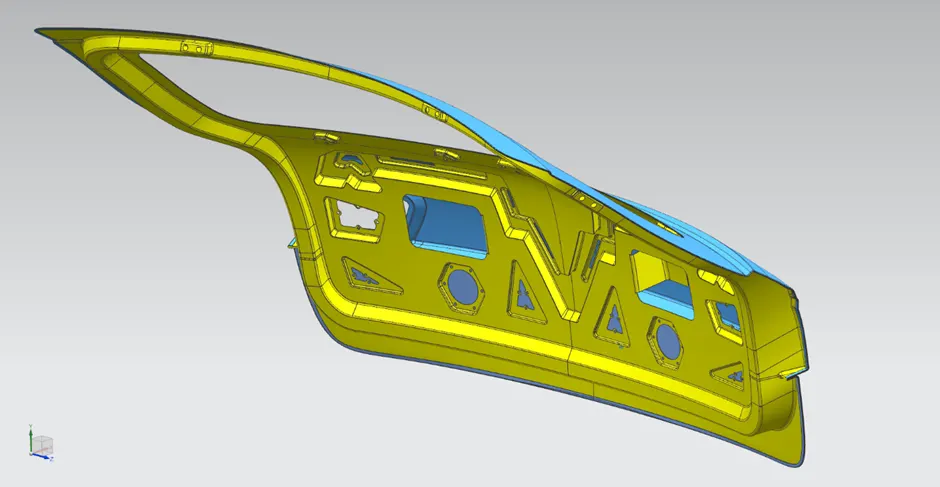
Due to high MB, I am sharing the link of Google Drive with you because you have a limit of 20 MB in it and my model is going up to 50MB, so for this reason, I am sharing the link of Google Drive here. Am. In this you will get the entire model.
DRIVE LINK:- https://drive.google.com/file/d/1KDfcPyregm31JhcEDPgVJnSx4y_eKDbR/view?usp=drive_link