Design of backdoor
Unable to upload files below 20 MB
Aim:
To design a backdoor of the car on sheet metal using the appropriate design and provided skin data by considering design parameters.
Objective:
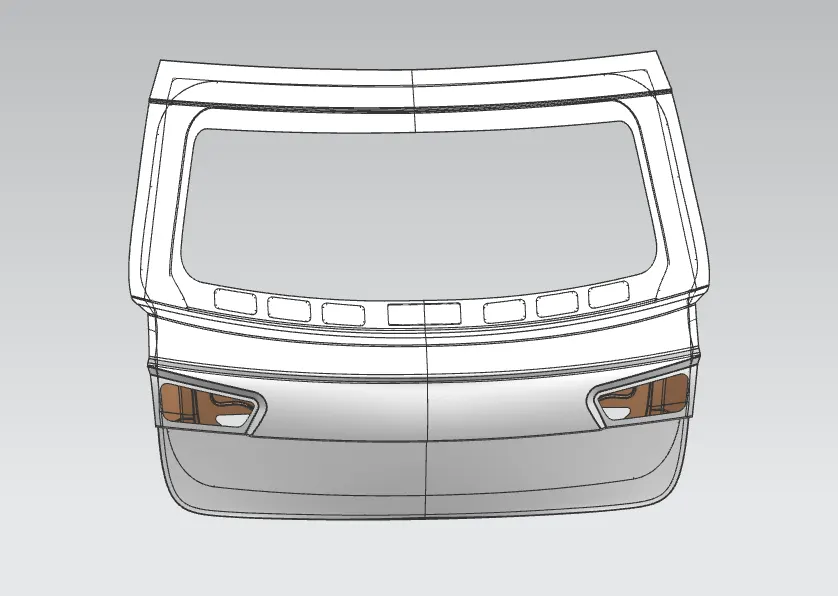
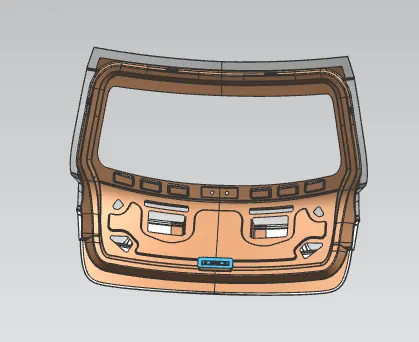
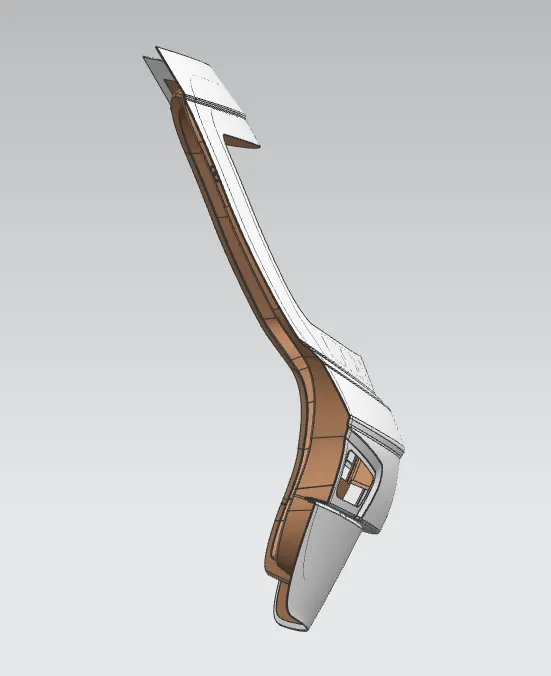
- To design a back door of a car with an inner panel, outer panel and reinforcement for hinges, gas stay, Wiper motor and latch.
- The inner panel is subjected to the draft analysis to ensure whether it is satisfying the deep drawing requirements for the tooling direction that is created in the design.
Manufacturing process :
Conventional tailgate assemblies are made from stamped metal panels welded together to form a tailgate. Latches are added on either side of the tailgate to engage a striker on the pickup sides. A handle operates the latches to open and close the tailgate assembly. Steel tailgate assemblies provide a durable and secure closure for the pickup bed.
Another disadvantage of steel tailgate assemblies is the cost of the tooling required and equipment required to stamp metal tailgate components. Metal tailgate components are generally produced in a large stamping press. The stamping presses generally require finely machined tools made from hardened steel. The cost of tooling a metal tailgate is much more expensive.
Types of Back Door in a car:
- Top Mounted door
- Side mounted door
- Bottom Mounted door
Components of Back Door:
- Inner Panel
- Outer Panel Upper / Lower
- Hinge Reinforcement LH / RH
- Gas Stay Reinforcement LH / RH
- Wiper motor reinforcement
- Latch Reinforcement
Design Consideration:
• Rear visibilities for safety and functionality
• Support structures like hinges and Gas stay/ Power lifter
• Rear crash regulations
• Boot space
• Mounts for wiper motor and lights
• Strength criteria
• Draft analysis
Design methodology:
Firstly, we have to check if there are any surface irregularities in the skin data, if irregularities are there, then repair if by using a bridge curve and through curve nesh and sew it.
Then we create a sealing flange. Generally, with the help of master sketch, we will design the panel with appropriate dimensions. But here there is no master sketch, we designed by assumption.
Creation of Tooling Direction:
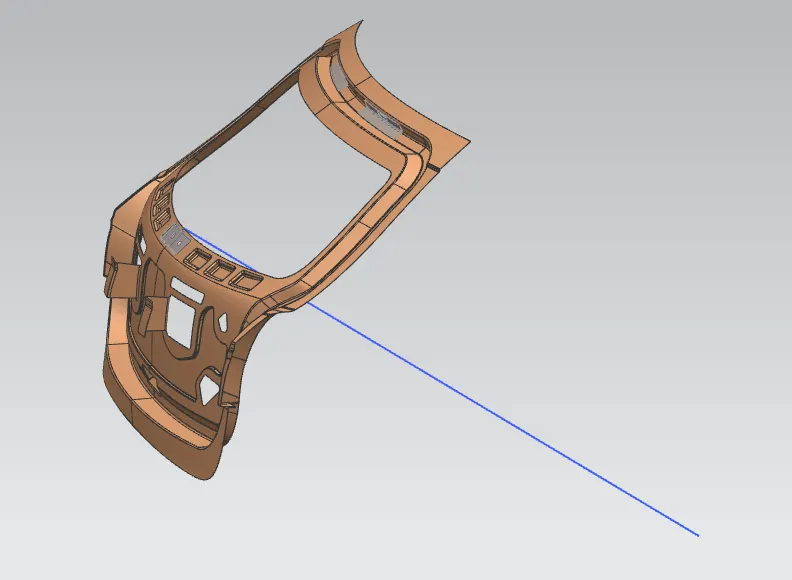
Back door is going to be manufactured by deep drawing process. In deep drawing process has a tool which is core and Die. The core part follows the single straight path the inclination angle of the core is known as tooling direction. The tooling direction/axis is created so, that the manufacturing team take the reference of this tooling axis and manufacture the part accordingly. It is designed by using Top-down approach.
Mastic Region:
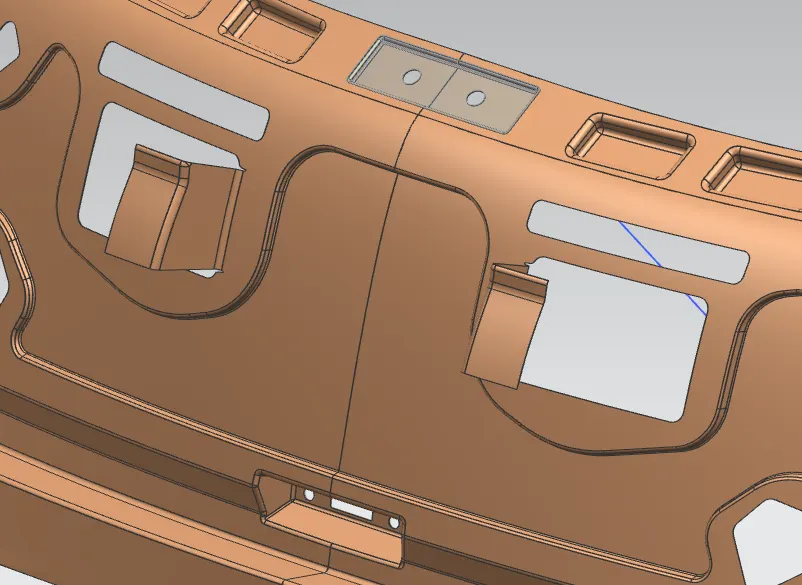
The mastic points are defined on the back door inner panel where the back door can easily deform. They help the backdoor outer panel to come back to its original shape after it gets deformed. Mastic sealants are elastic compound that believe like the rubber.
The gap between the inner panel and the outer panel over the embosses is filled with mastic sealants at curtained specified places, this helps to reducing vibrations and overall NVH (Noise, Vibrations and Harness)
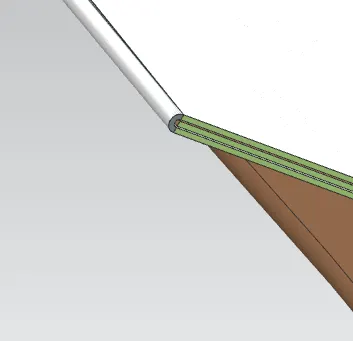
Then, the sheet will bend with the helped of another die to make the flanges in “L” Shape.
Inner Panel:
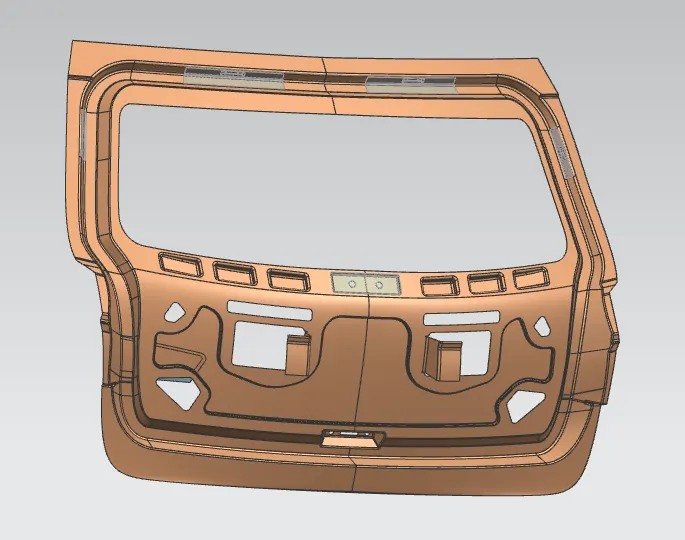
The inner panel is a component which is used for strengthen the door assembly and it is one of the most important components on which all accessories are mounted like hinges, glass guide channel, molded trim, latch etc. the possible method is the integration method. In the integration method, the part is stamped out of a single blank. This reduces the number of tools needed, the assembly cost and eliminates any fit ability problem.
Outer Panel:
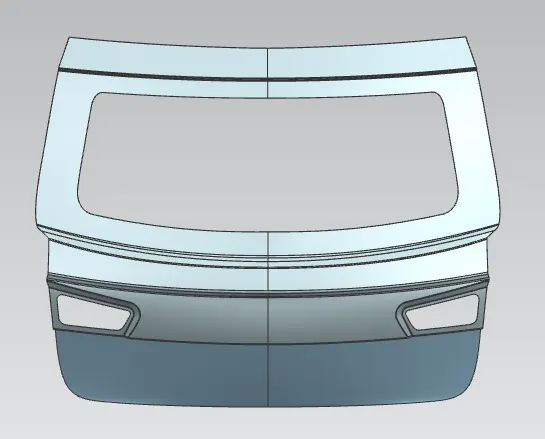
The outer panel of the back door is similar to the other BIW components where it is the aesthetic part of vehicle. The coating provided is of multi stage which has the property of scratch resistance, rust prevention and smooth and attractive finishes. The outer panel also has the provisions for the tail. Lamp, rear fog lamp and also has the provision for license plate mountings. Most of the hatchback cars have the provision for wiper motor.
Embosses & Reinforcement:
With the distinctive cross section, embosses are created. The embossed are used to increase the strength of the backdoor. While designing we should keep in mind that it should not be over strength. So, we prefer to design big embosses rather than small embosses. These embosses are used to despite the forces sideways.
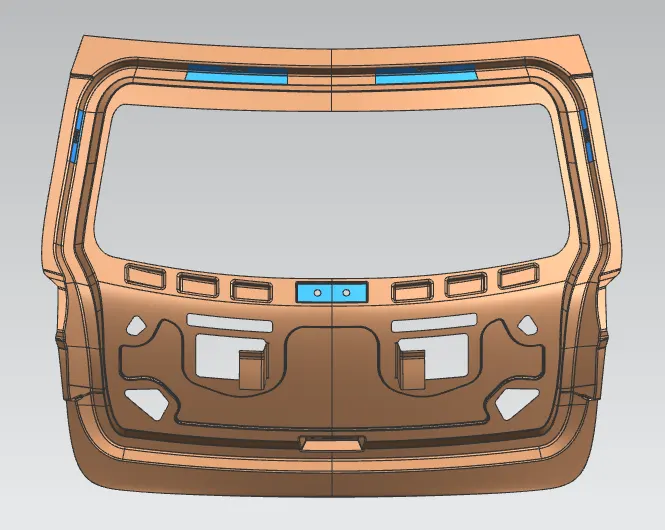
1. Indoor Embossess:
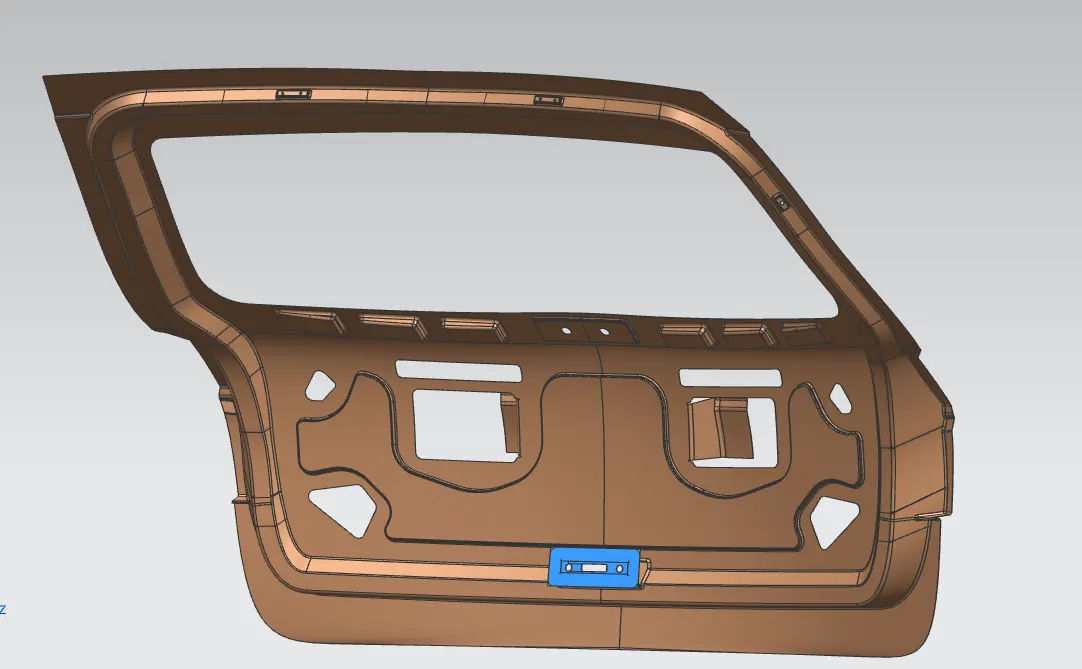
2.Gas Stay Reinforcement:
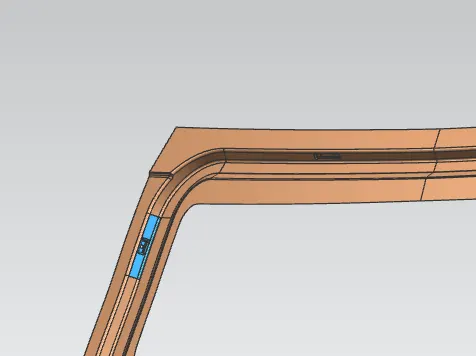
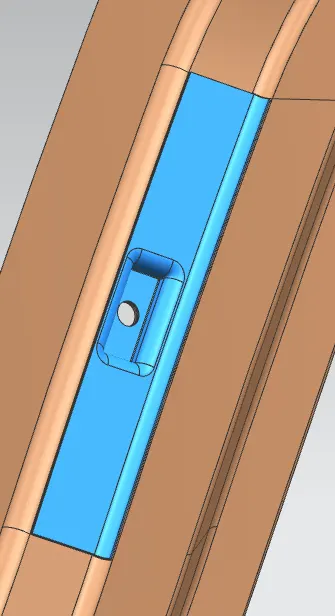
3. Hinge Embosses:
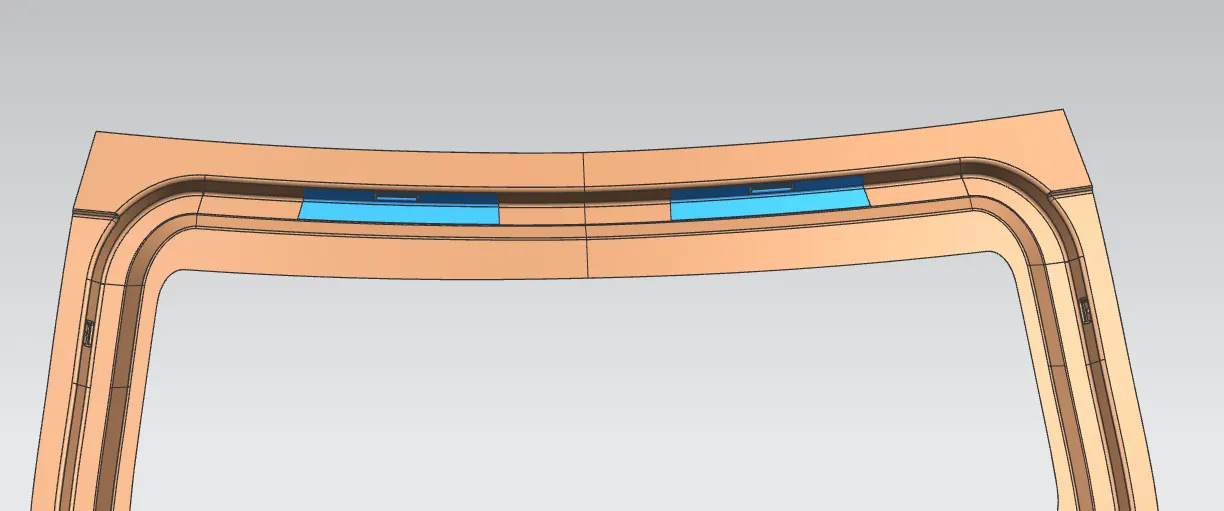
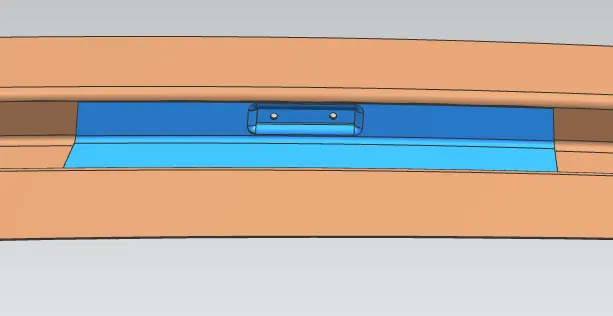
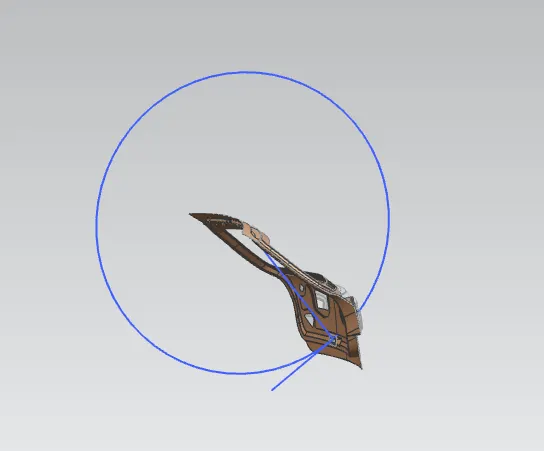
The backdoor is a swinging commodity, which swings with the help of hinges. This can be done by tentatively positioning the hinges and on the hinge axis, we take a center point. Again, we take another center point on the latch hole. Taking these two points as a reference we draw a circle. This circle is the striker trajectory and it has to be perpendicular. This can be achieved by moving the hinge axis back and forth or by rotating the latch area.
4. Latch and striker trajectory:
To define the opening and closing trajectory, the hinge and latch are positioned based on the hinge axis and trajectory. The circle drawn should be perpendicular to the latch striker to satisfy the condition. Based on the rotation trajectory the hinge axis, latch striker and predefined Gas stay are correlated for smooth kinematics of the door opening and closing.
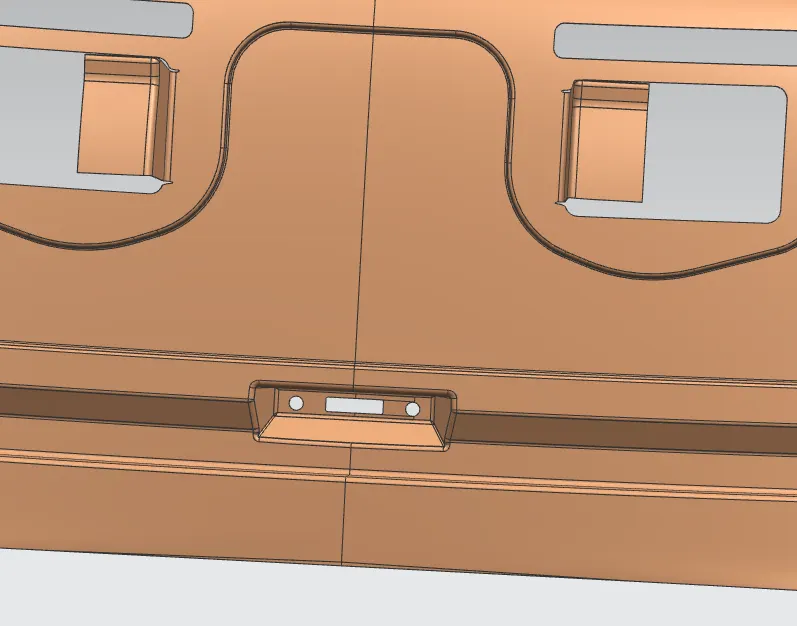
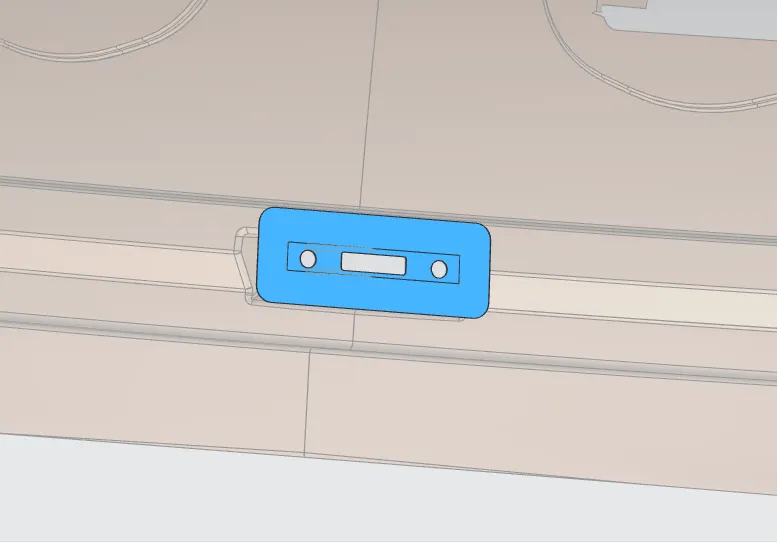
5. Wiper Mechanism Reinforcement:
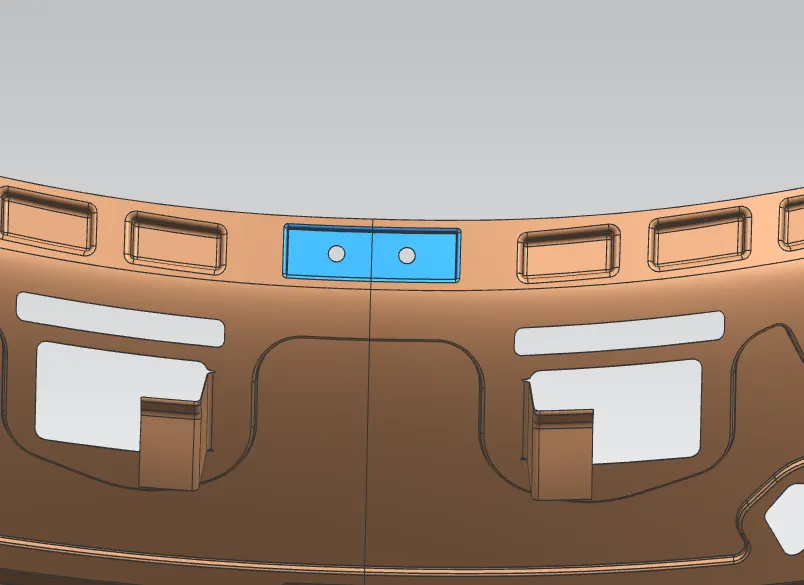
Reinforcement provided in this region for fixing the wiper motor.
Hemming Operation:
</>
<> </>
< class>Draft Analysis:
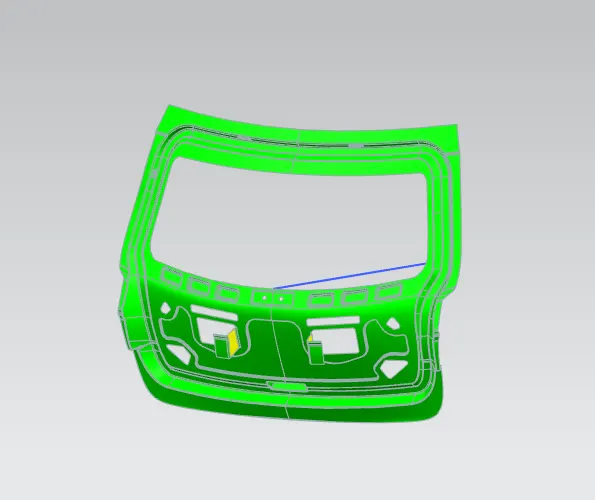
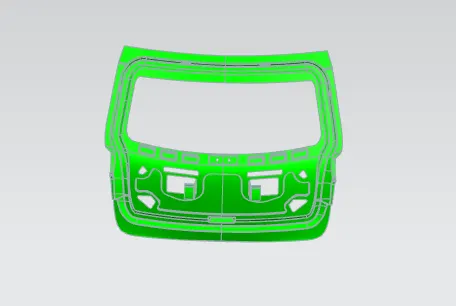
The draft analysis command enables you to detect if the part you drafted will be easily removed. This type of analysis is performed based on color ranges identifying zones on the analyzed element where the deviation from the draft direction at any point, corresponds to specified values.
Minimum draft angle of 7 degree is considered for analysis, green color infers on the parts that all face along the tooling direction has positive draft angle greater than 7 degree and passed in analysis.
BACK DOOR ASSEMBLY:
Conclusion:
Thus, the back door was designed and developed from the given styling surfaces with essential reinforcements and emboss. To satisfy the manufacturing requirements draft analysis was also done on the inner panel.