Design of backdoor
Introduction to backdoor
# The back door is also called trunks or boots in America. in India, the storage area is called a dickey. or generally often called a tailgate.
# The back door compartment was used to carry the luggage and Stepney wheel in the early days. but right now it is the most important area which defines the overall look of the cars.
# The back door shape will be different for the different types of cars.
# There are three possibilities for the car opening which are given below
hinged at
1. Top
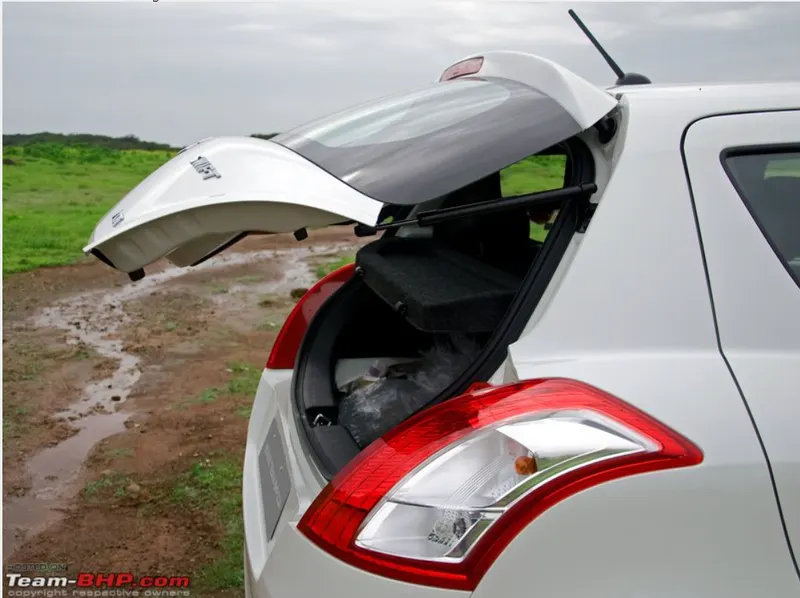
2.side
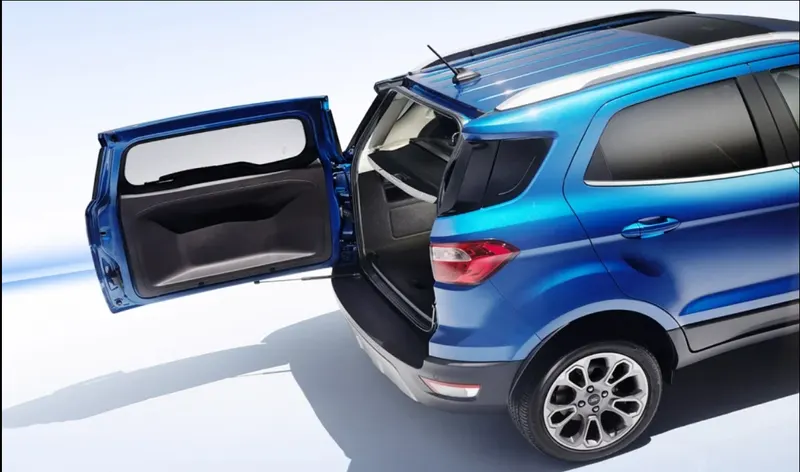
3.bottom
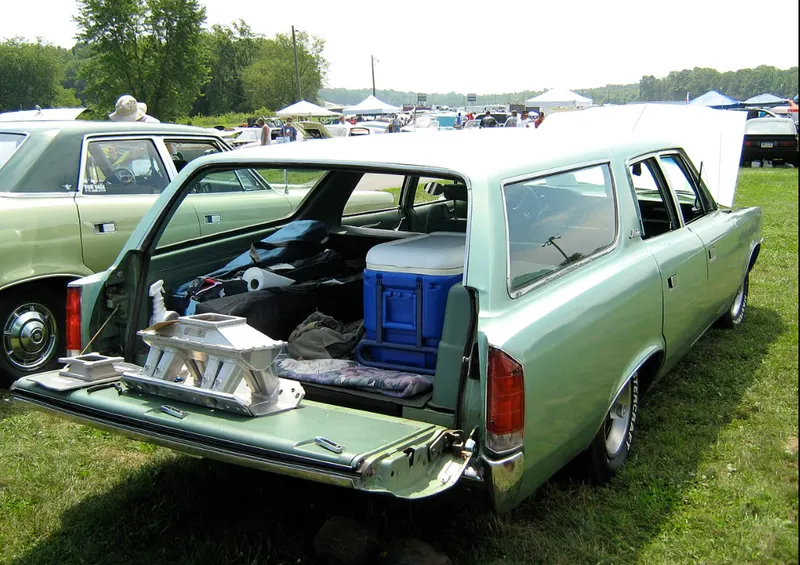
# The locking of the car may be achieved together with the passenger compartment. nowadays cars also have a function to remotely open the trunks.
# Trunks are also working as a guard when the car is hit by a vehicle on the rear side.
# This is some general info about the Trunks.
A standard back door will have sub-parts of
1.back door outer
2.Back door inner
3.Reinforcements
Back door skin data downloading
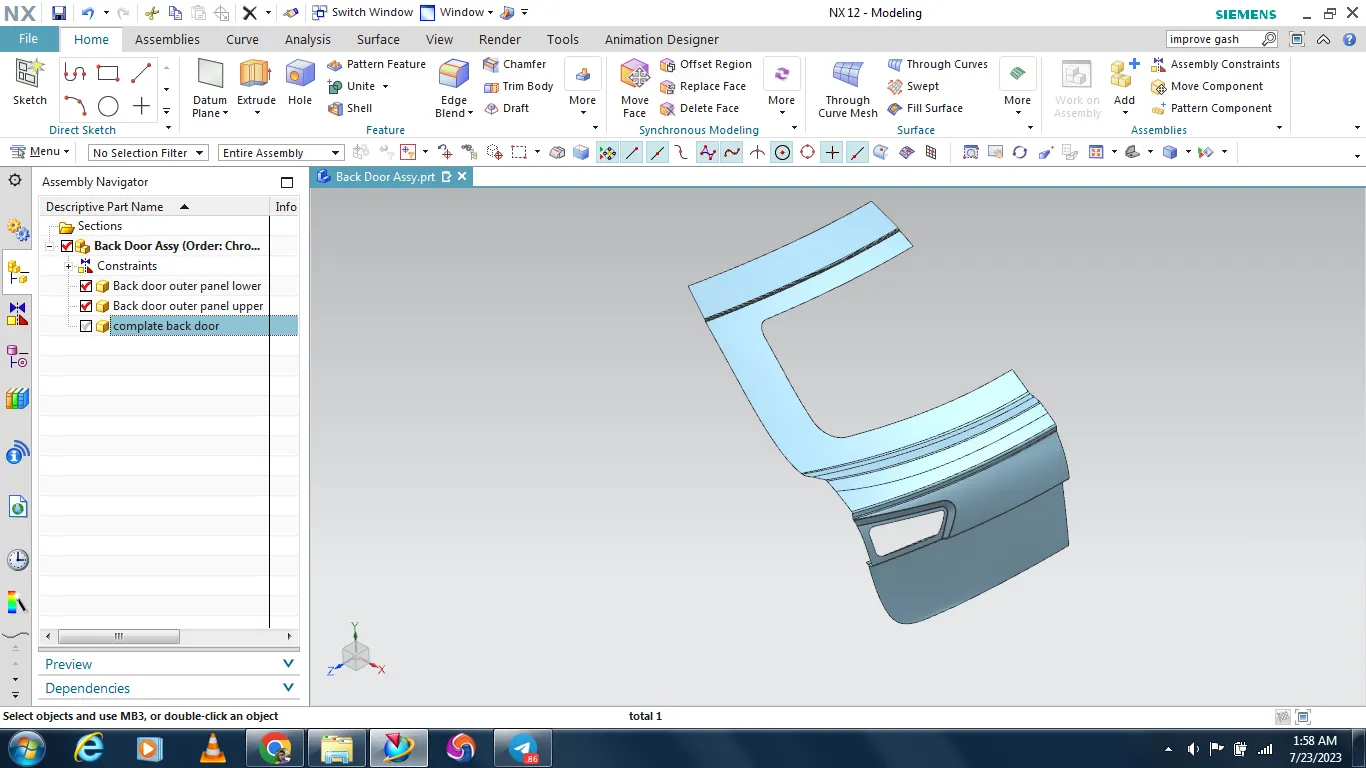
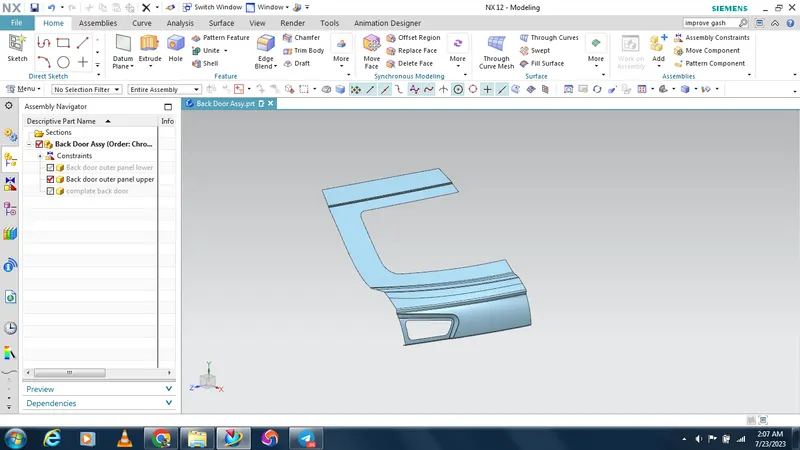
Back door outer panel upper
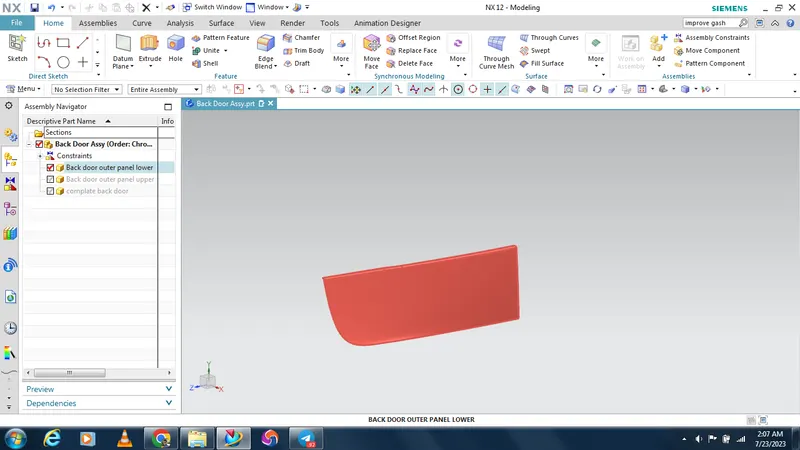
Back door outer panel lower
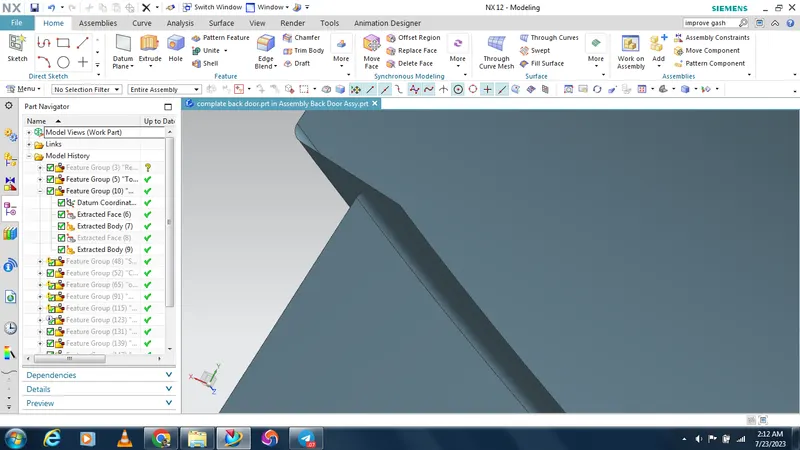
The back door outer panel upper and back door outer panel lower will be joined by spot welding on the flanges. for that, both panels should have a clearance of 0.2 mm.
So while designing we have to make sure that we follow these criteria.
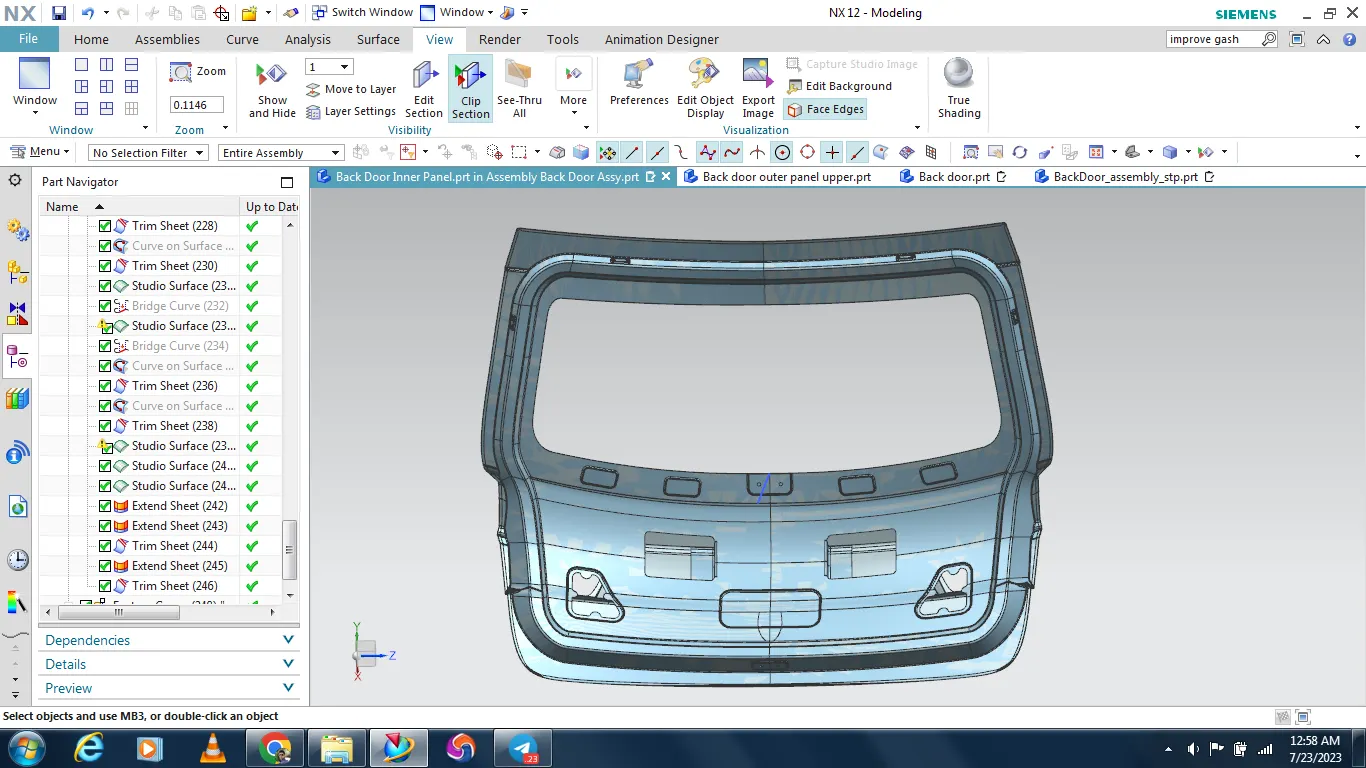
In the inner panel the sealing operation completing doing.
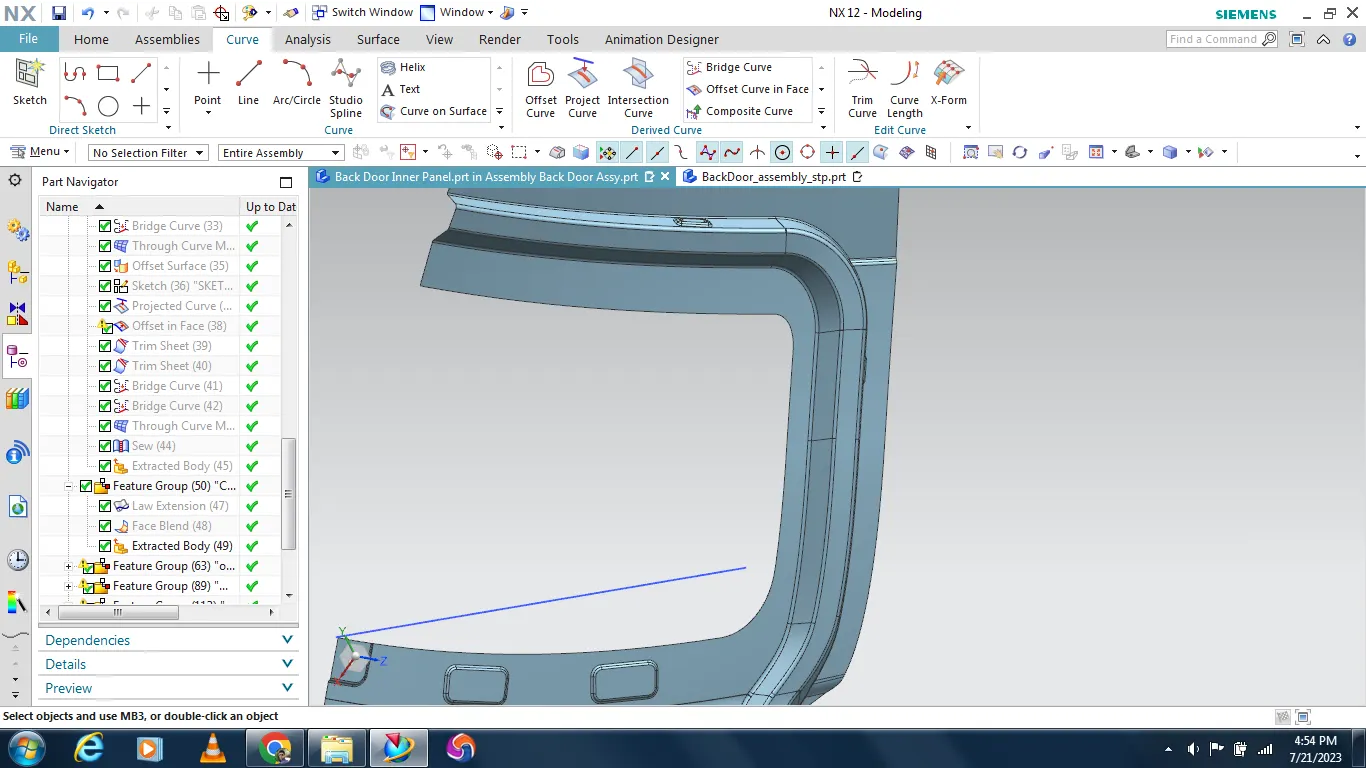
Inner panel emboss
inner panel completing next doing embossing.
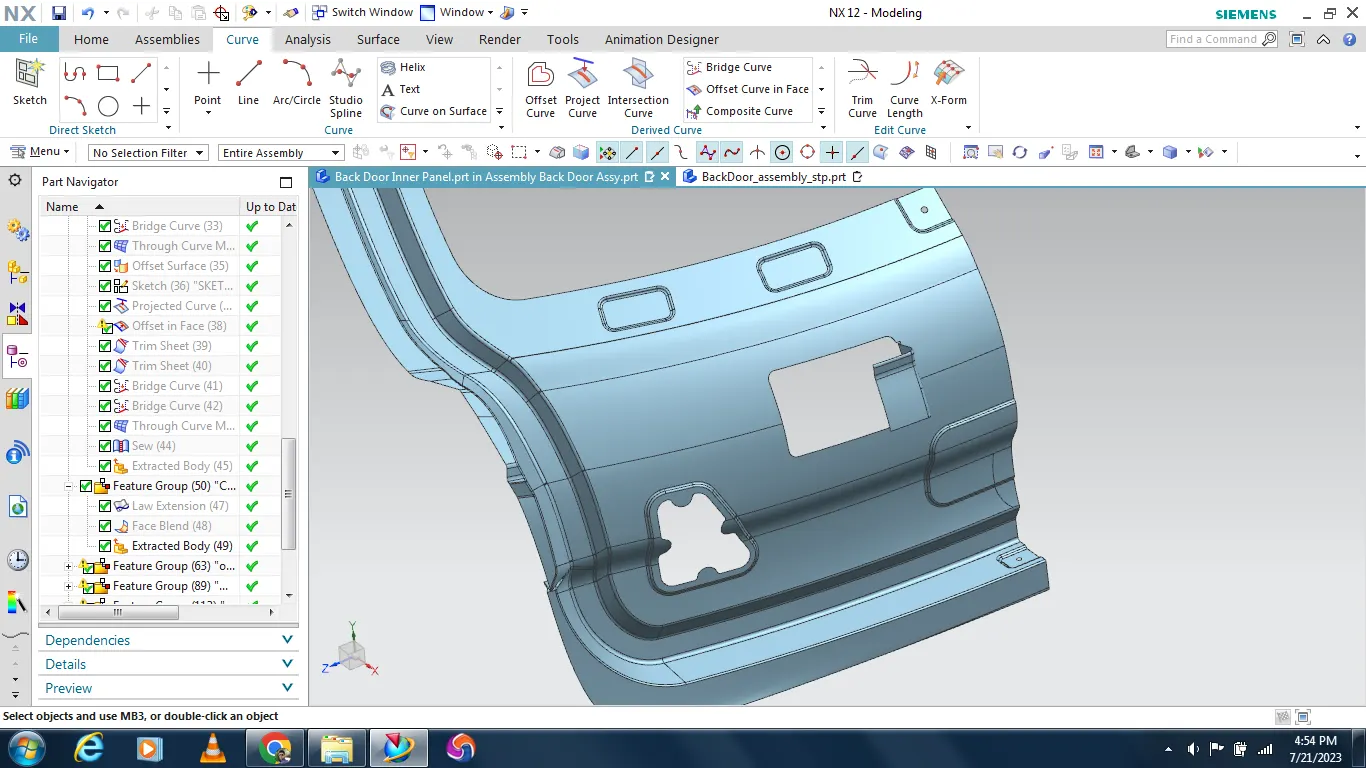
Creating hinge reinforcement.
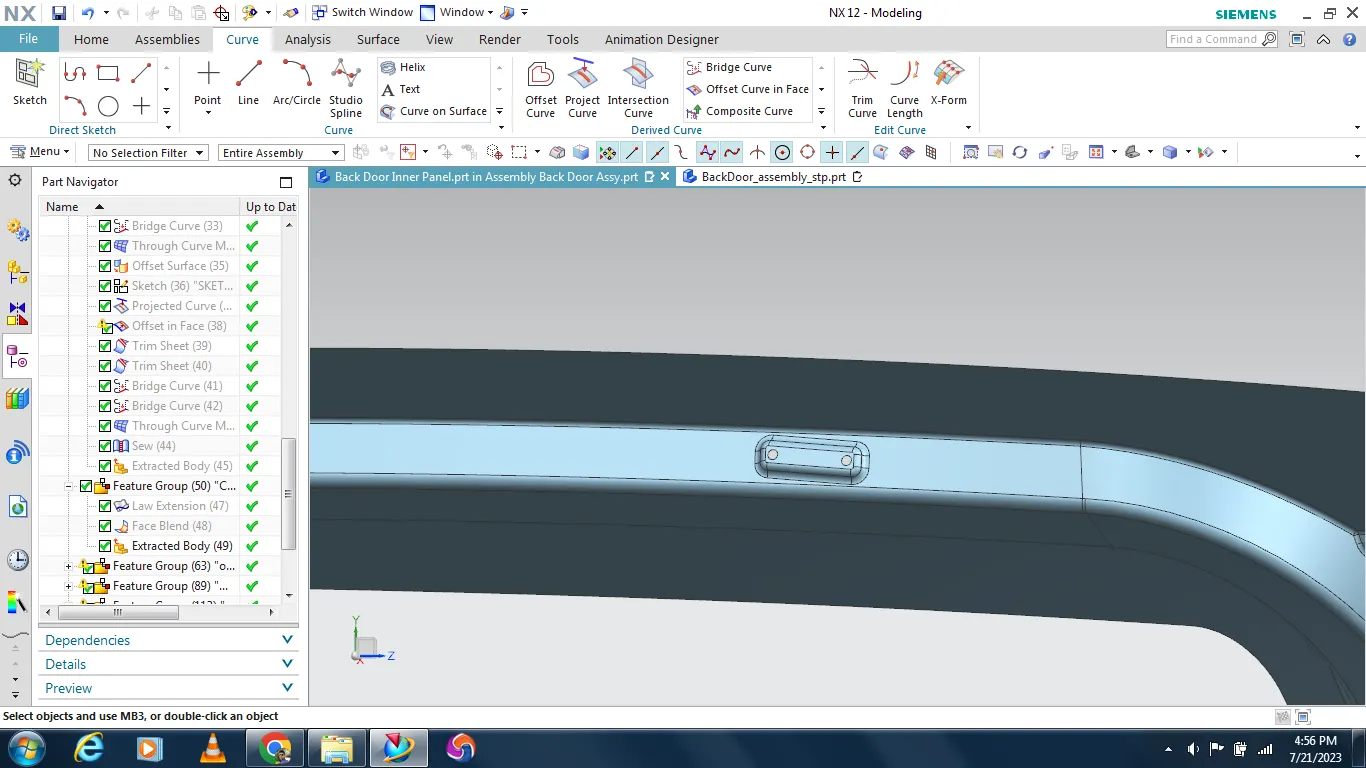
Creating gas stay reinforcement.
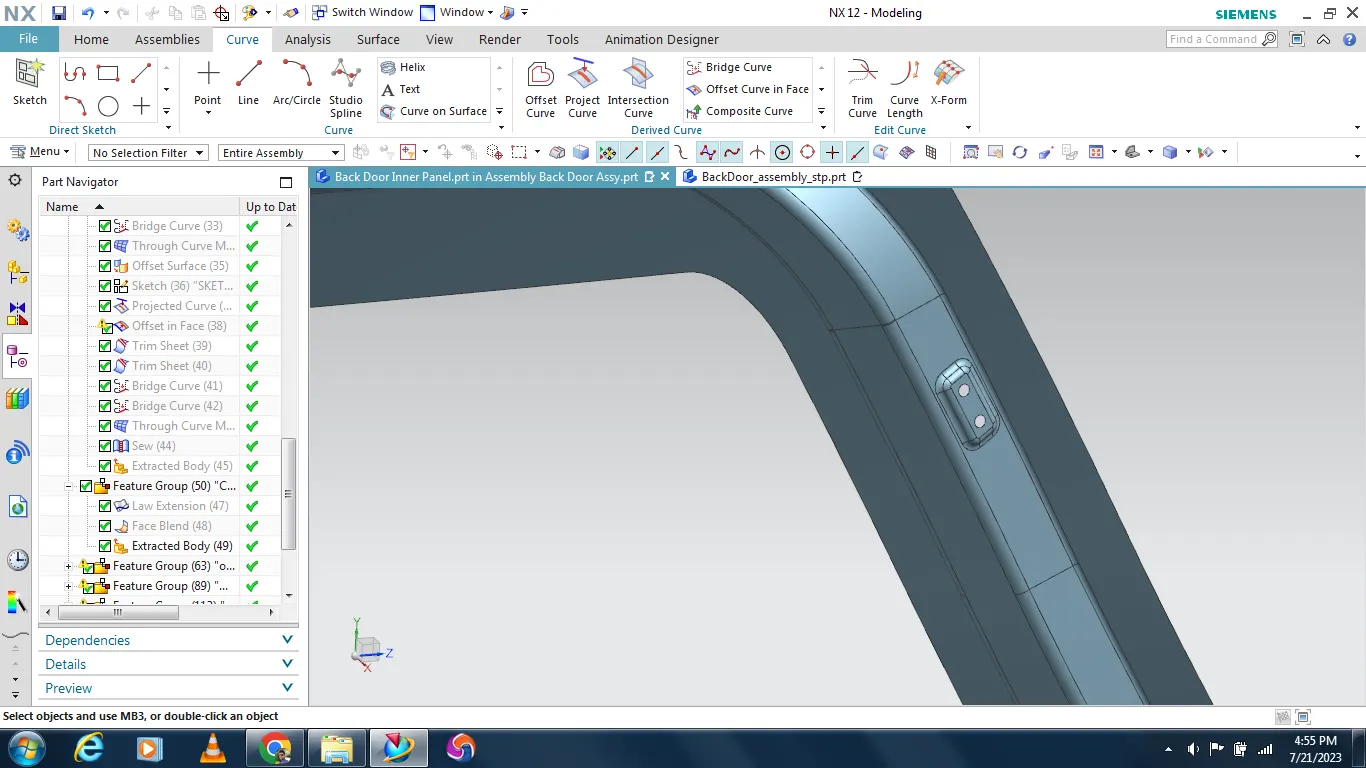
Creating the wiper motor mountng.
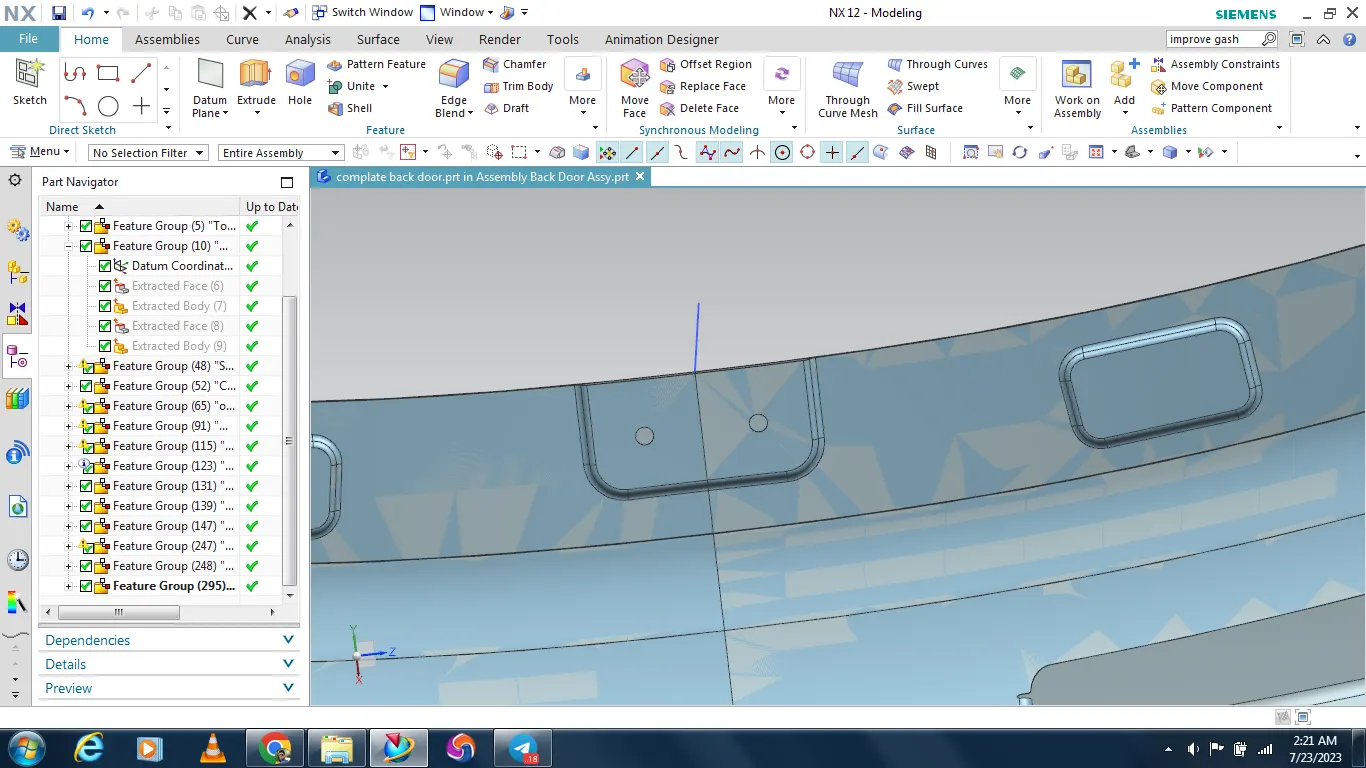
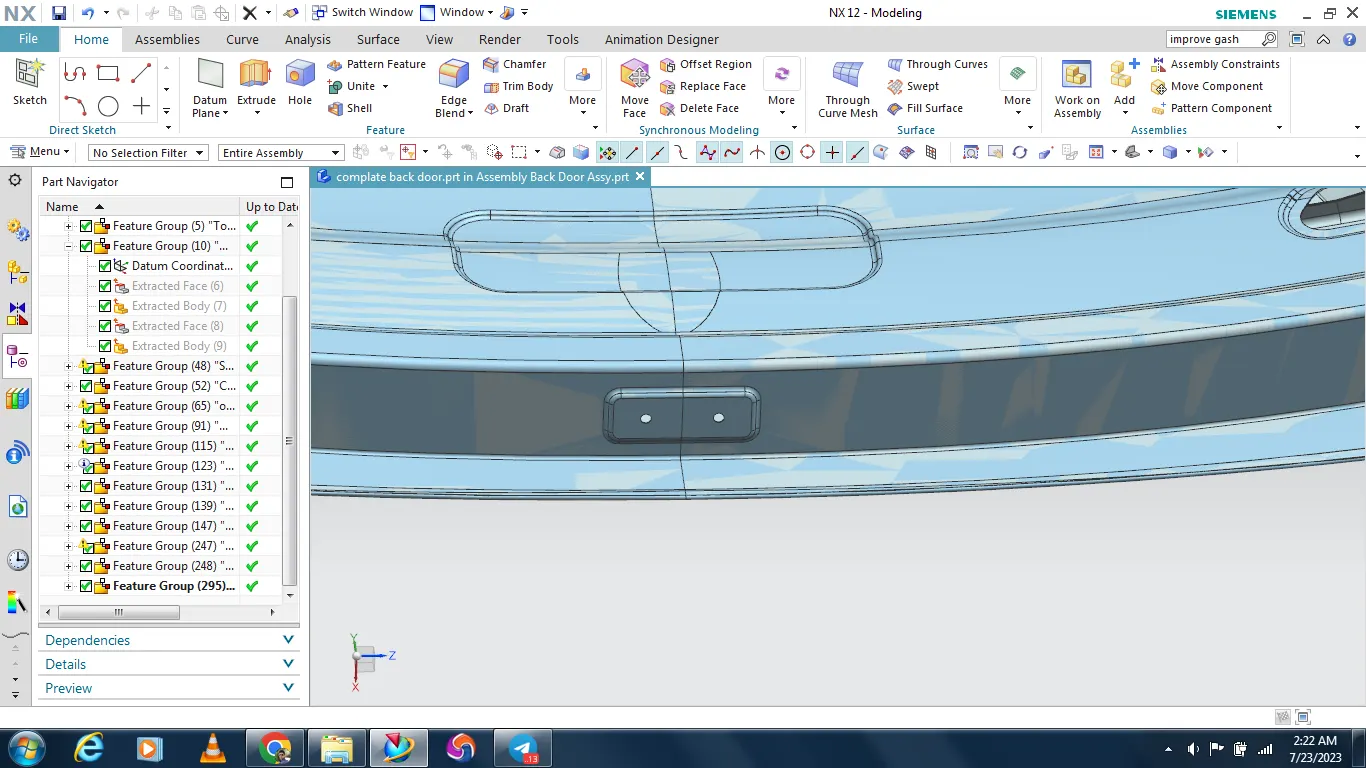
Creating hing locking.
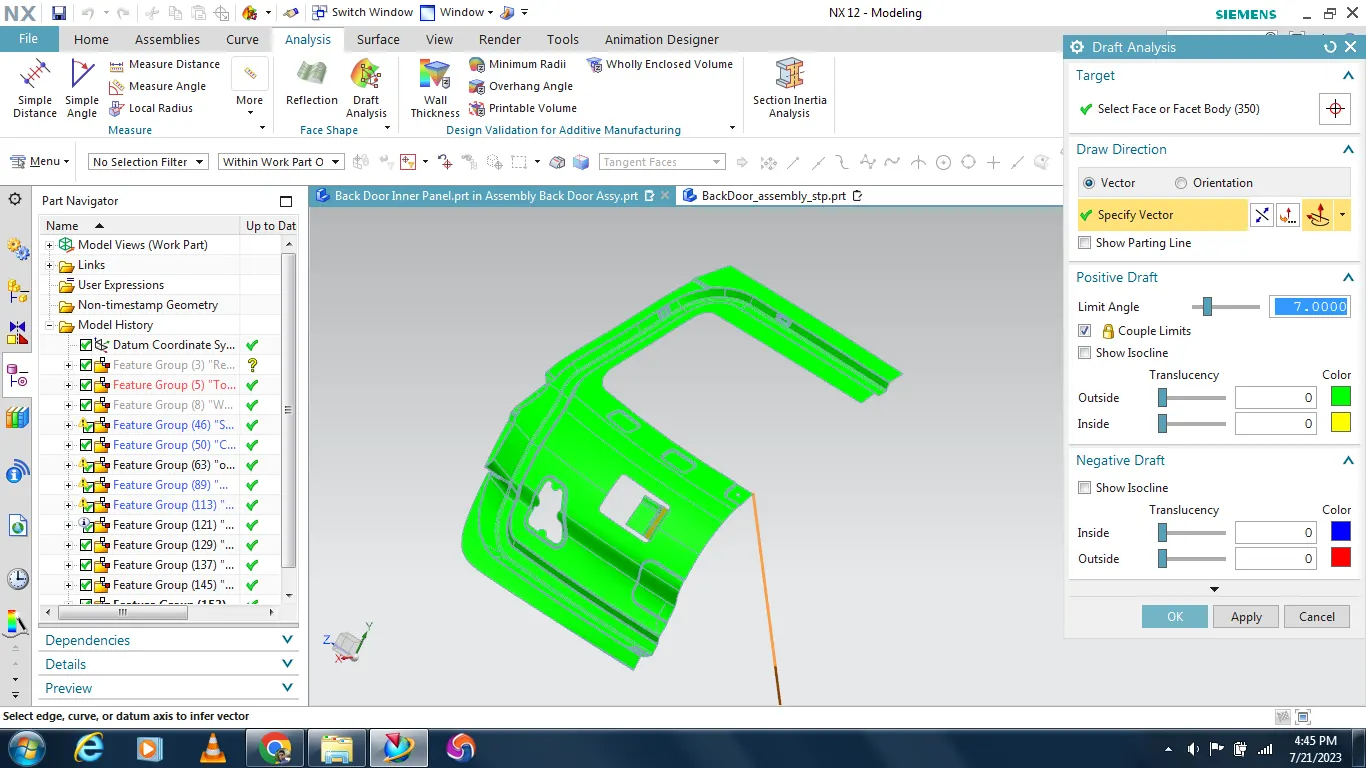
DRAFT ANALYSIS
# Sheet metal parts are generated from a press tool or some forming tools, maybe the plastic parts which generally come out from the plastic molds and maybe the casting parts, all such kinds of parts required some face on the surfaces which are parallel to the tooling direction.
# if we don't provide a draft on the surface then the tool will not come out and tool motion will destroy the surfaces or also reduced the finishing of surfaces.
# The draft is used for providing angles or tapers on product features such as walls, ribs, posts, and bosses that lie parallel to the direction of release from the mold eases part injection.
# Draught angles are designed in such a way that they will assist depart rejection. By doing so we have a reduced cycle time and improved productivity.
# Draft value for a particular part is mostly decided by the material used for making it.
# 3 degrees is a minimum for sheet metal when it's come to the draft angle.
Hemming
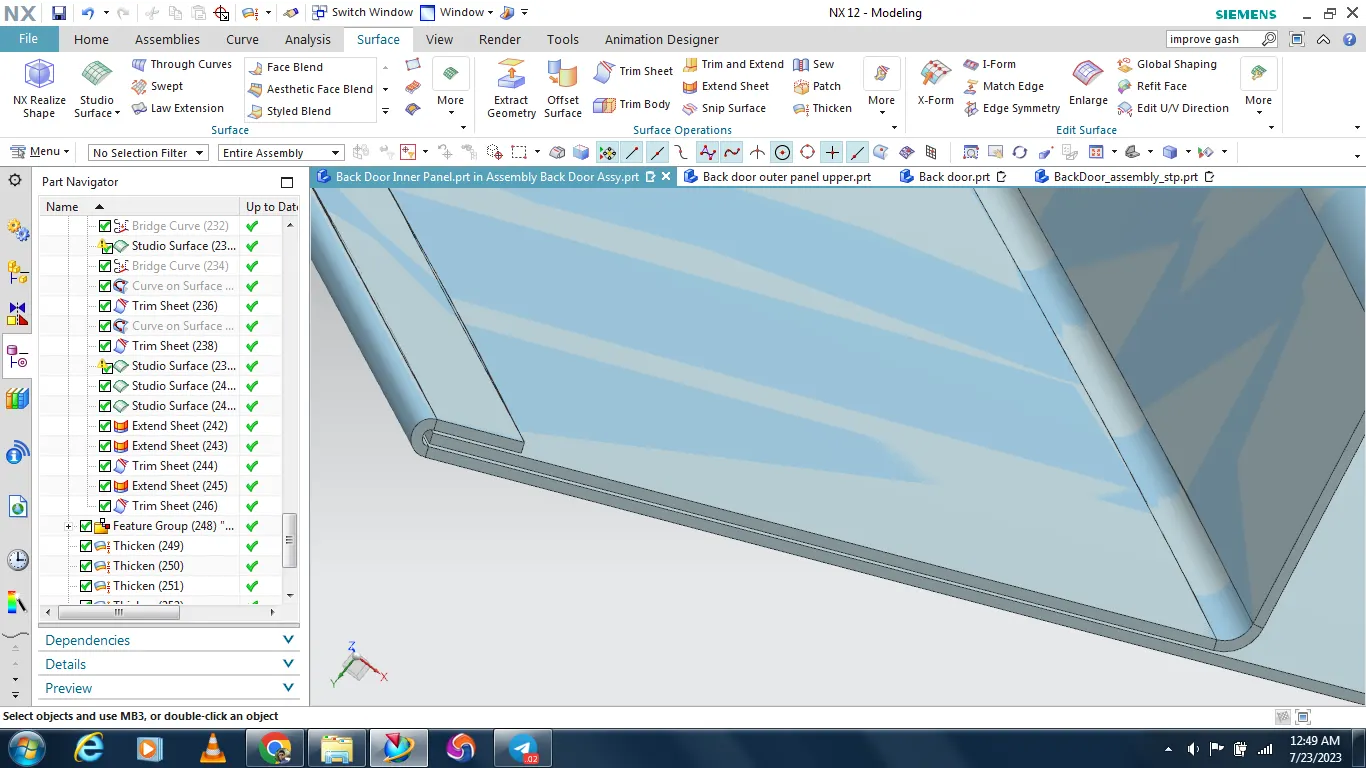
Hemming is the process in which the extra material comes from the edge of the outer panel and wraps around the inner panel.
The purpose is to join the inner panel with the outer panel.
We must give some relaxation to the curve areas and also maintain 0.2mm clearance between parts.
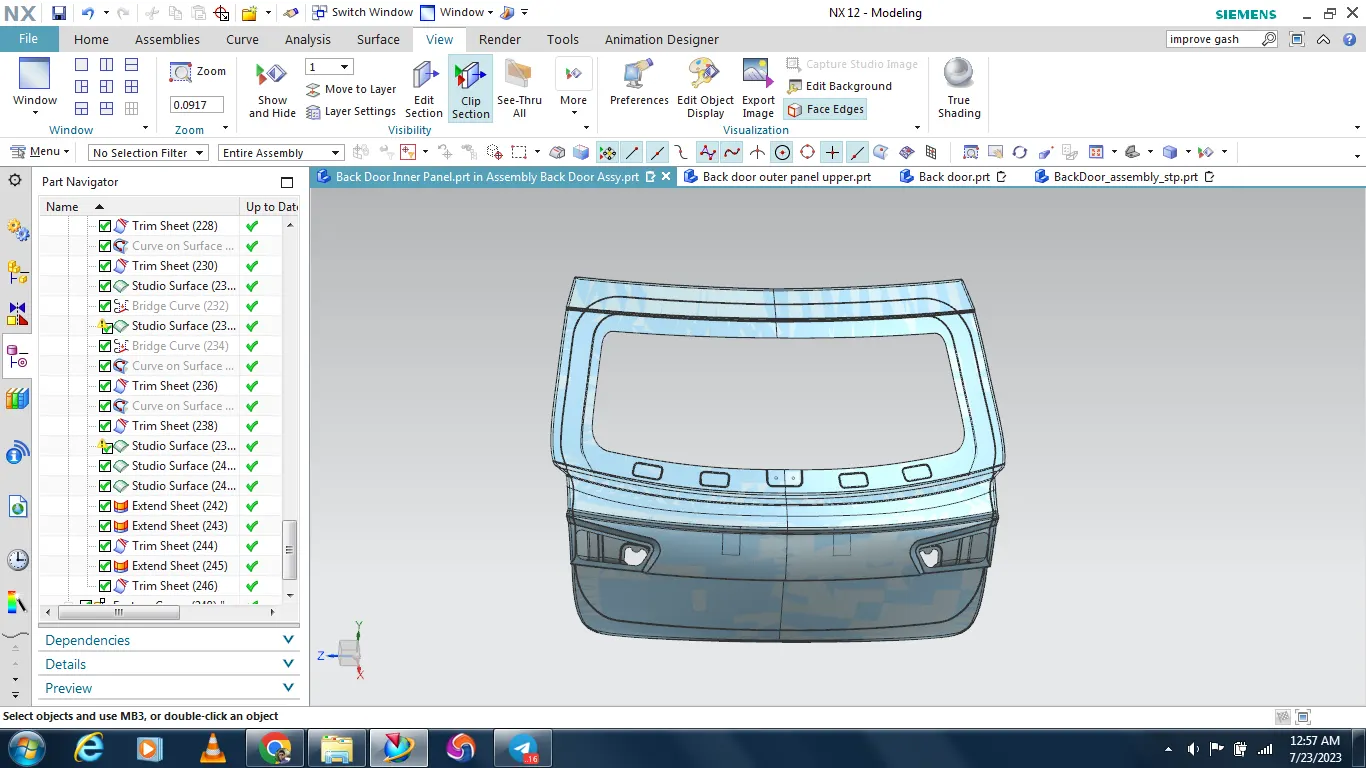
Thicken operation completing.