Design of backdoor
BACK DOOR
AIM:
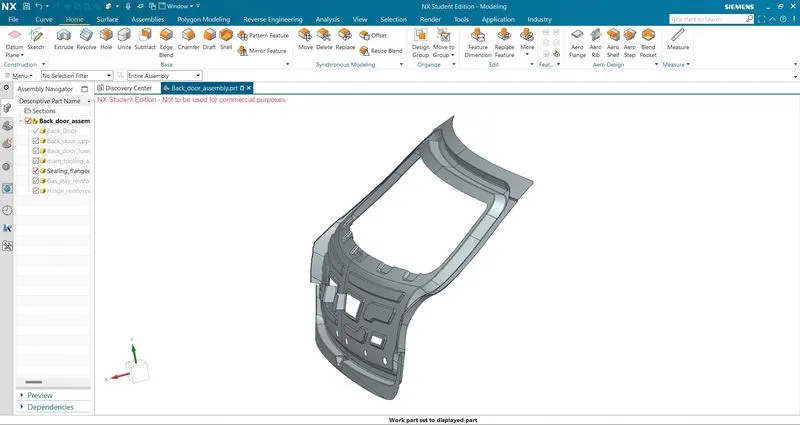
To design a back door assembly of a car, with given skin data of a class a surface. Added to the back door, the design should include a hinge, gas stay, latch and striker, and wiper motor reinforcement.

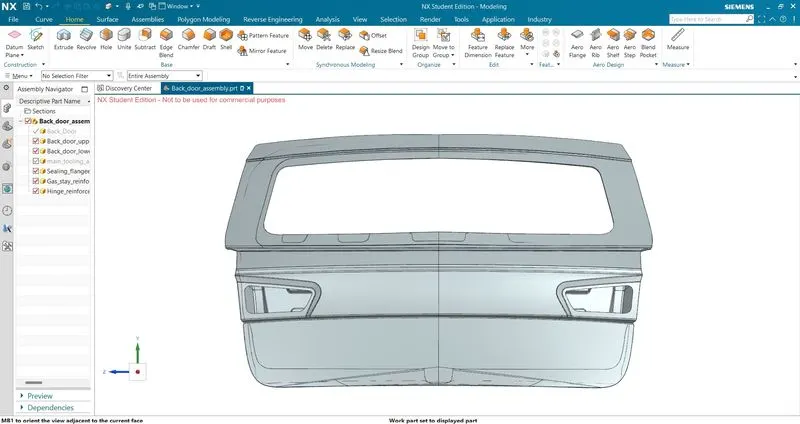
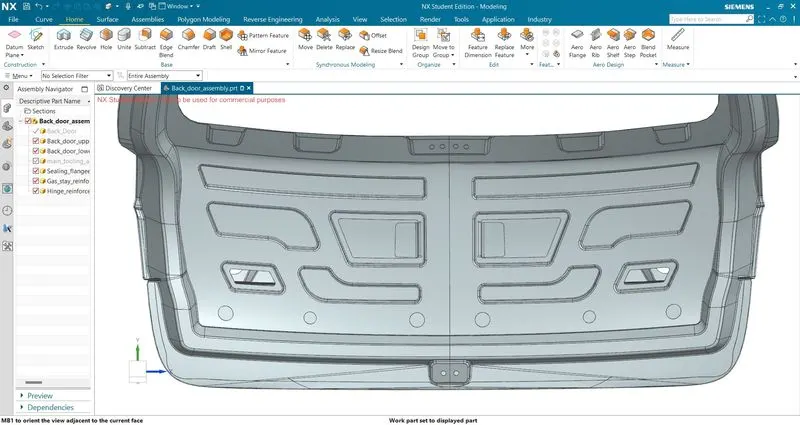
The parts include the rear door outer panel, rear door inner panel, mastic region, latch and striker reinforcement, wiper motor reinforcement, gas stay reinforcement, hinge reinforcement, and the hemming region
Rear door:
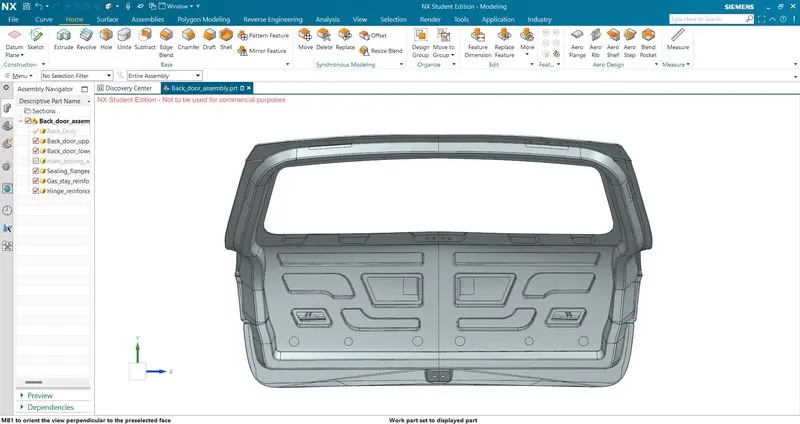
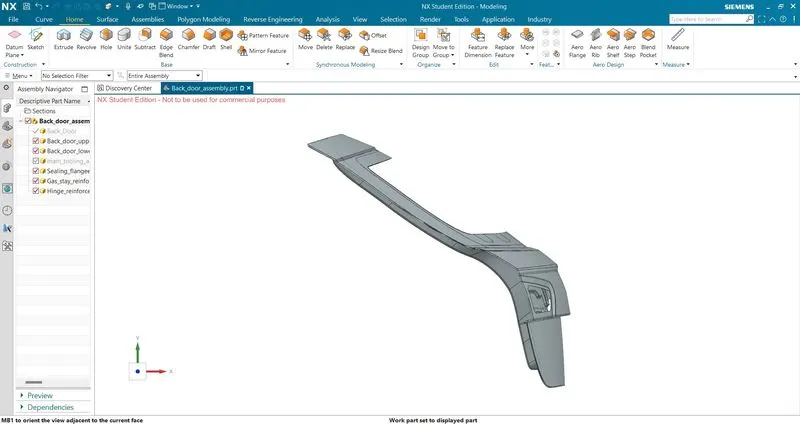
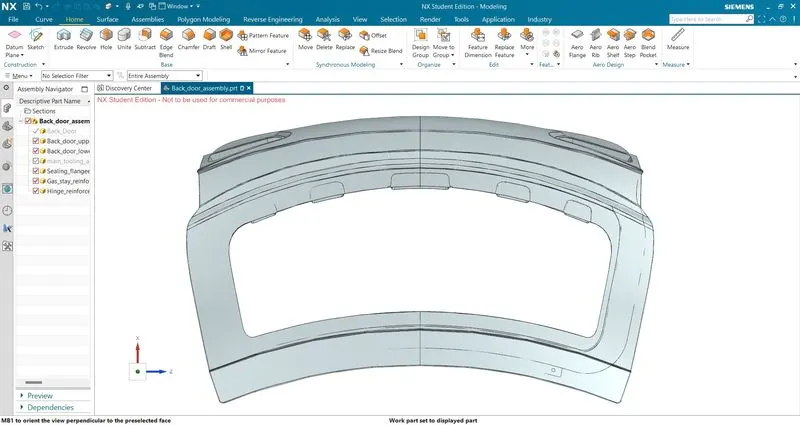
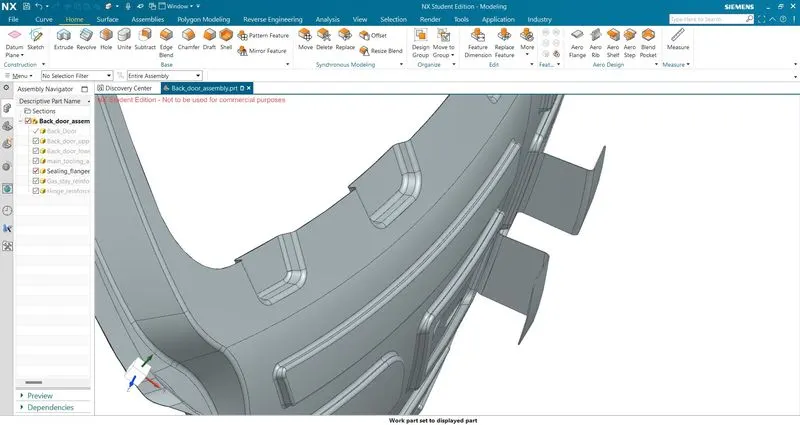
Mastic region connecting inner and outer panels:
Reinforcements:
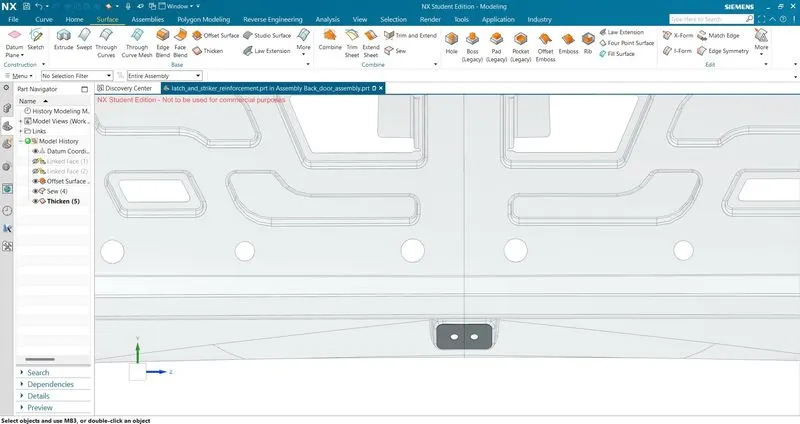
Latch and striker reinforcement:
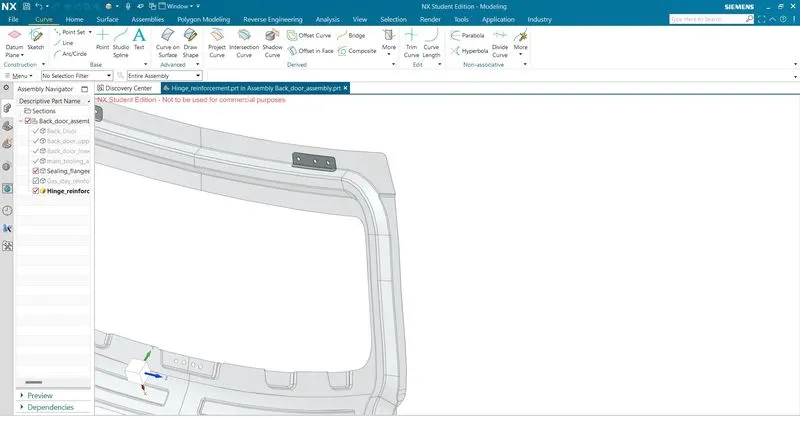
Hinge reinforcement:
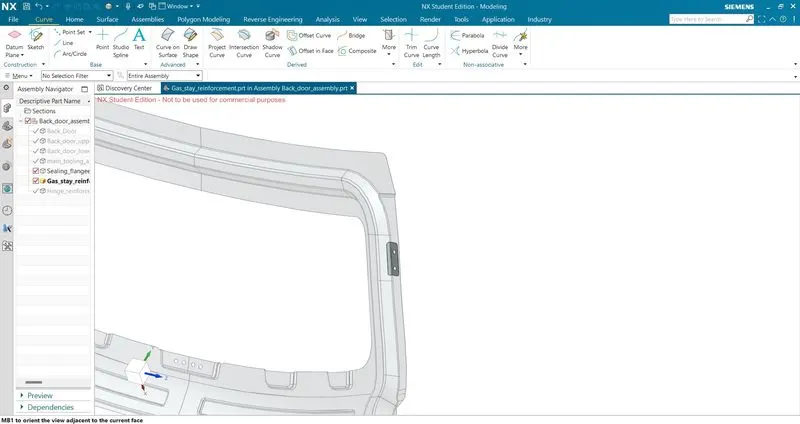
Gas stay reinforcement:
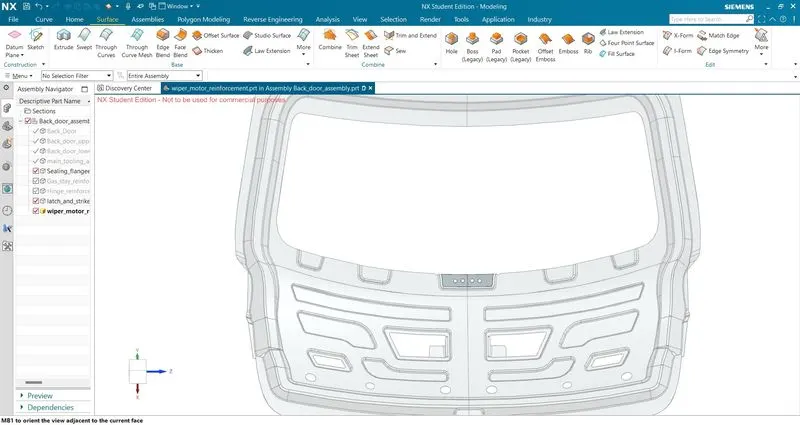
Wiper motor reinforcement:
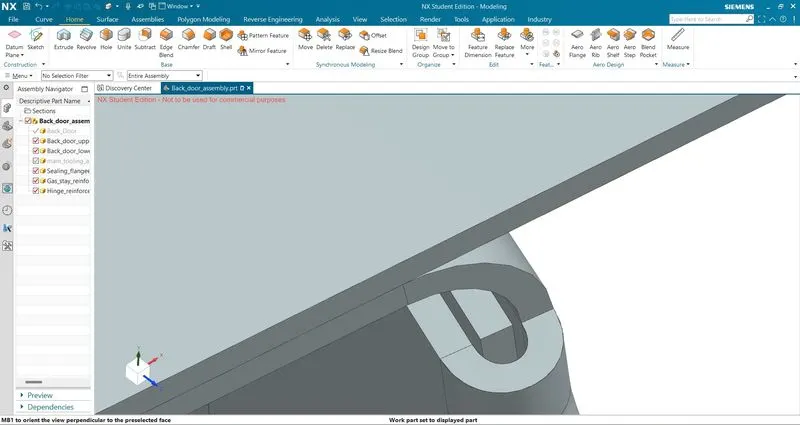
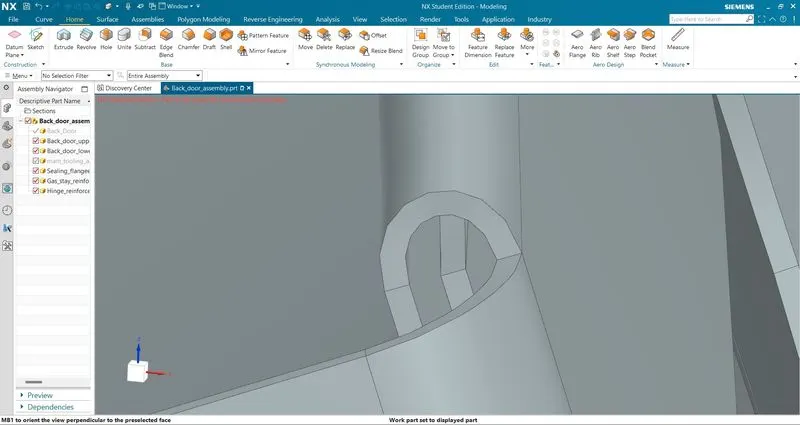
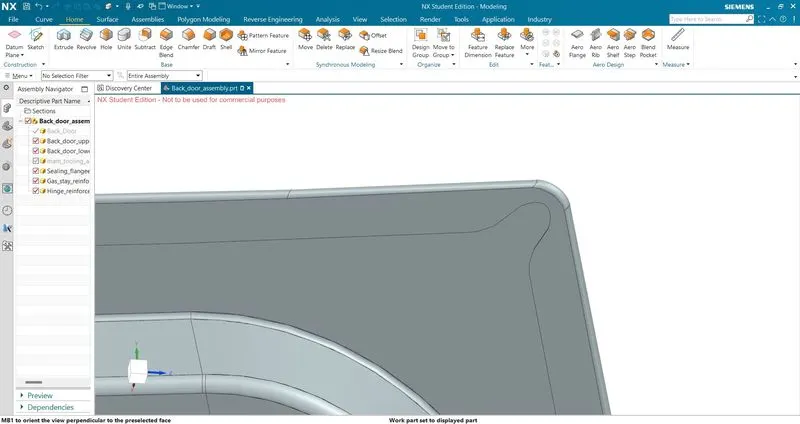
Hemming region and reliefs:
The manufacturing process of the rear door:
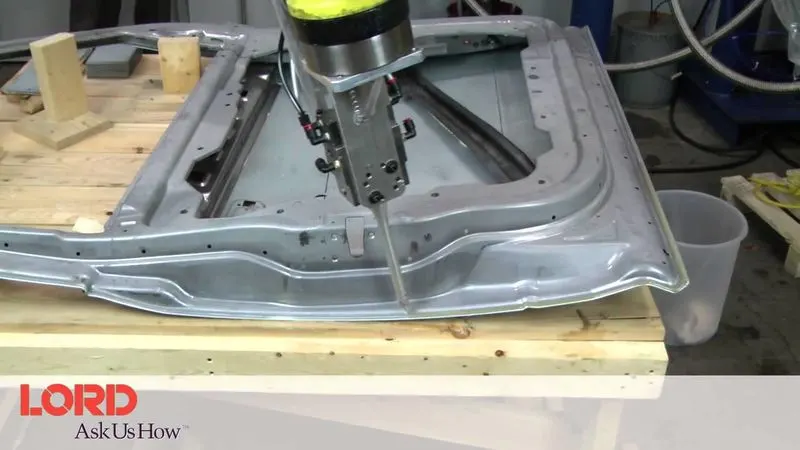
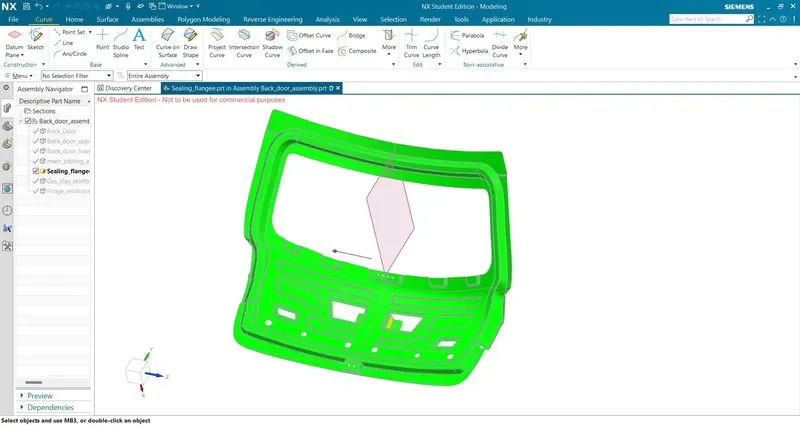
The rear door is manufactured by stamping and hemming. Stamping is the process of pressing the mold on a sheet metal surface to get the desired part and hemming is the process of joining of inner panel and outer panel. Hemming is done by bending and rolling the end of the outer panel to the inner panel. For stamping the draft angle of the part should be at 7 degrees, which is an optimal draft angle for sheet metal related products.
Draft analysis:
Stamping:
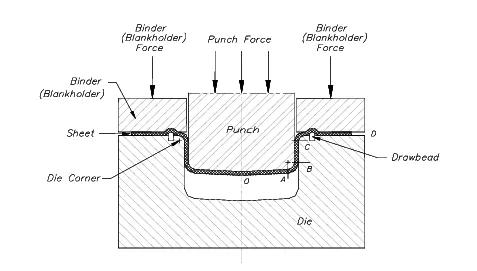
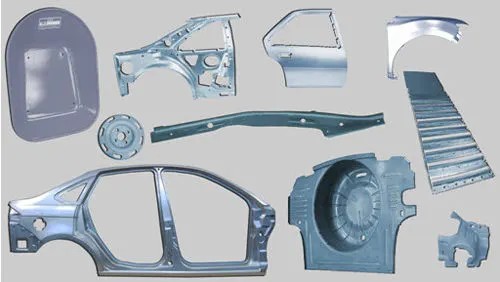
The process of turning sheets of metal into a useful part or component is called sheet metal stamping. The metal is fed into a press, where the stamping tool, also known as a die, creates the desired shape. The die is pressed into or through the metal with tremendous force.
Hemming:
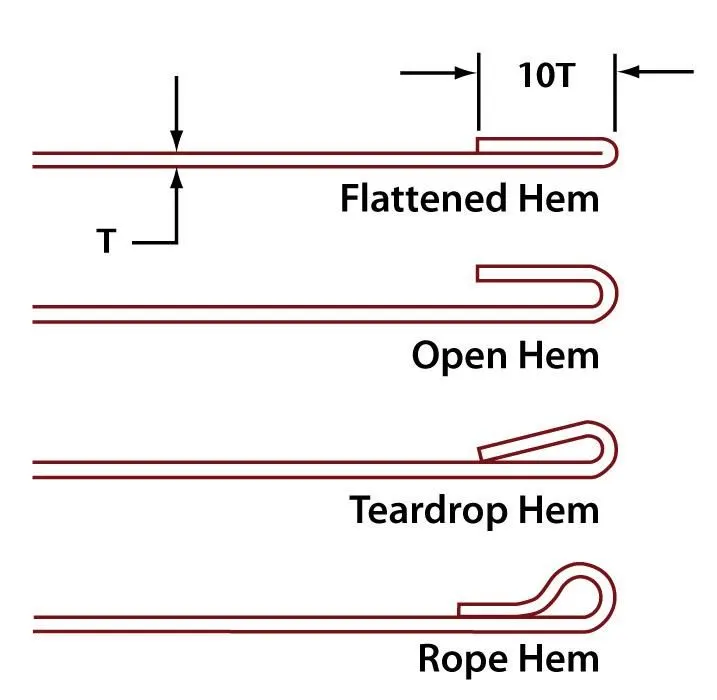
Hemming and seaming are two similar metalworking processes in which a sheet metal edge is rolled over onto itself. Hemming is the process in which the edge is rolled flush to itself, while a seam joins the edges of two materials. Hems are commonly used to reinforce an edge, hide burrs and rough edges, and improve appearance.