Design of backdoor
TAIL GATE:-
Aim:
To Use the provided styling surface to come up with a back door design, use appropriate design methodologies, and provide the necessary reinforcements and embosses
Introduction:
- The backdoor or tailgate is the rearmost part of the automobile which opens upwards, downwards, and sideways to give access to the luggage space or seating.
- And back door is an access point to a vehicle that is not the main entrance. It is usually located in the rear of the vehicle and is used for loading and unloading cargo or passengers. Some vehicles may also have a rear hatch that can be opened with a key or remote control. Features may include cargo storage compartments, adjustable seats, and an emergency exit.
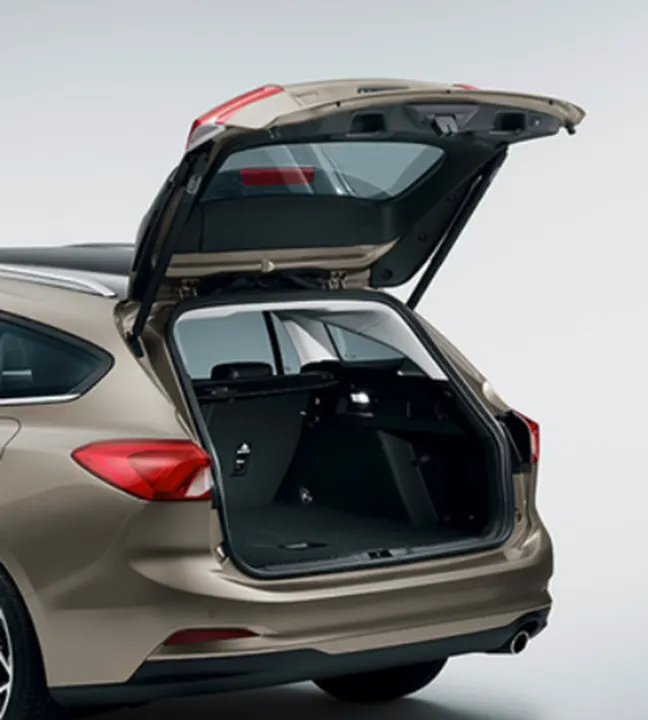
Types of Rear Doors are:
1. Hinged Doors
2. Sliding Doors
3. Swing Doors
4. Liftgate Doors
Hinged doors open and close like a normal door, while sliding doors slide open and closed. Swing doors are hinged and open outward like a regular door, but are heavier and require more effort to open. Liftgate doors open upward and provide easy access to the cargo area of the vehicle
Manufacturing Process:
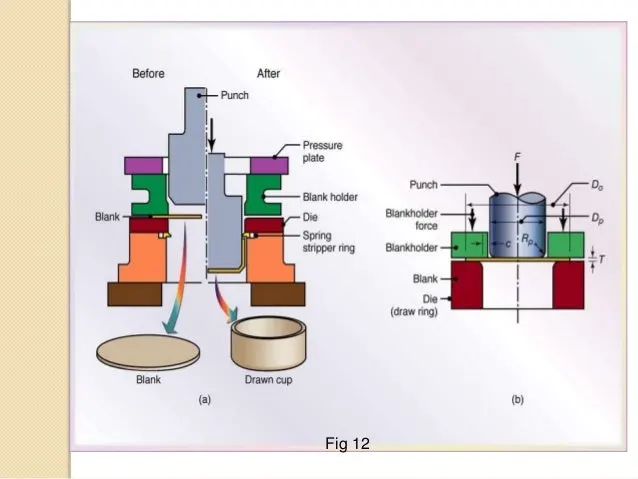
- DRAWING
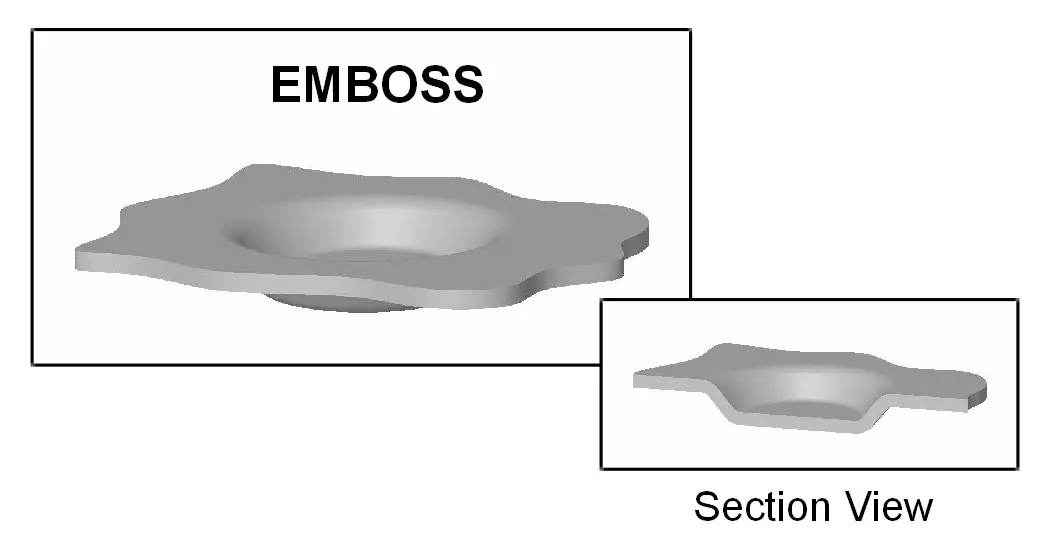
- EMBOSSING
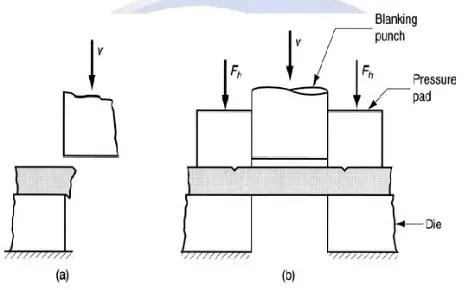
- TRIMMING
- PIERCING
- LANCING
- HEMMING
1) Drawing: Drawing is a metalworking process that uses tensile forces to elongate metal, glass, or plastic. As the material is drawn (pulled), it stretches and becomes thinner, achieving a desired shape and thickness.
2) Embossing: Embossing is a manufacturing process in which an object is raised or depressed from a flat surface to create a pattern or design. This can be done by pressing or rolling a die or stamp onto the surface of a material
3) Trimming: Trimming is a manufacturing process used to finish a product by removing excess material or components. The process typically uses cutting tools such as knives, scissors, or shears to remove the unwanted material. Trimming is often used to remove burrs, rough edges, and excess material from the surface of the product. It can also be used to shape the product or add decorative details.
4) Piercing: Piercing is a manufacturing process in which a hole is created in a material by using a sharp tool or die. The process is commonly used to create holes in sheet metal, plastic, and other materials. Piercing can be used to create various shapes and sizes of holes, depending on the type of tool used
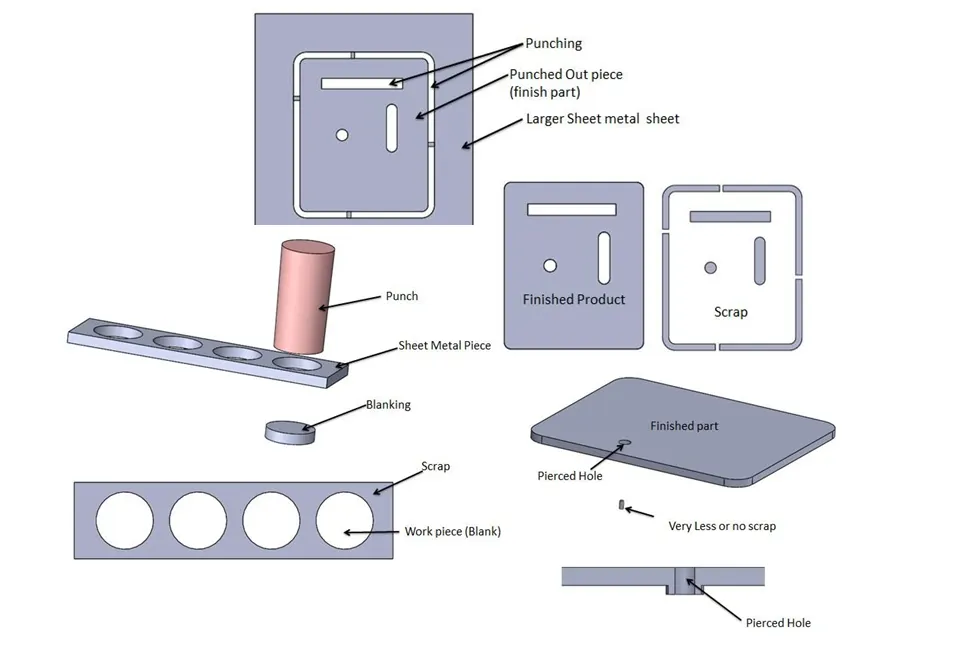
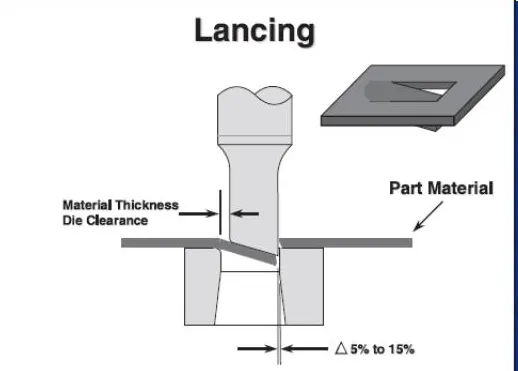
5) Lancing: Lancing is a process in a metal sheet in which metal is cutting a sheet of metal through part of its length and then bending the cut portion
6) Hemming: Hemming in sheet metal operations refers to the bending of a sheet metal edge onto itself. It is very similar to edge stitching in clothes. Similar to how an edge stitch strengthens the edge and makes it more durable, a hem imparts strength to the metal edge and improves its appearance. The edge of one part may also be folded onto another part to create a joint
Main Parts for Back Door are:
- Outer Upper Panel
- Outer Lower Panel
- Inner Panel
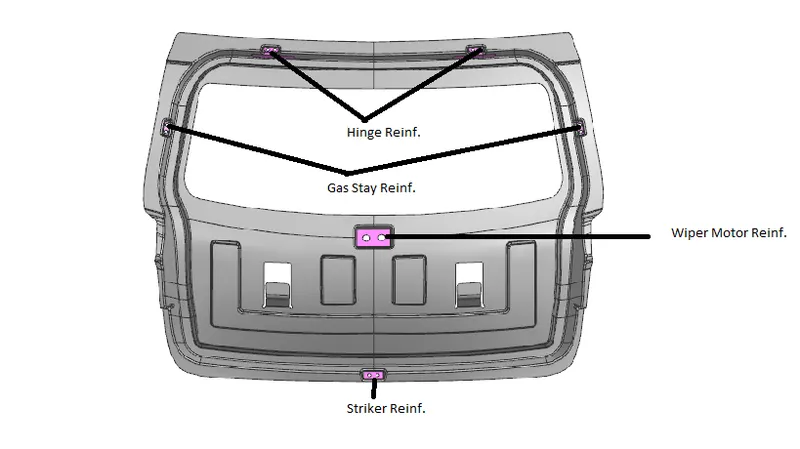
- Hinge Reinforcements
- Striker Reinforcements
- Wiper Motor Reinforcements
- Gas stay Reinforcements
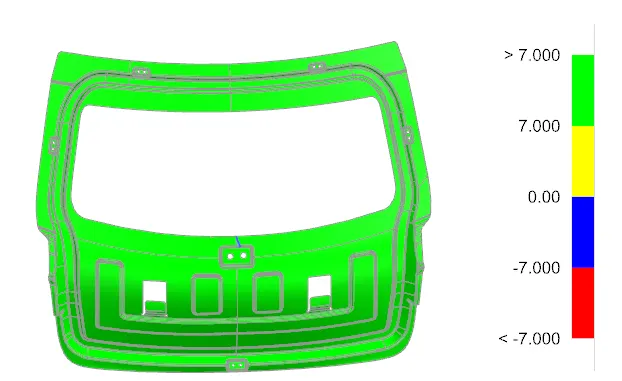
Tooling Direction: Normally, Tooling Direction is a direction where the manufacturing need to be done when The Draft analysis would be green with that Direction. And also is very important that Tooling Direction for Manufacturing .
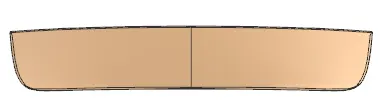
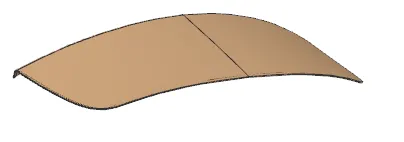
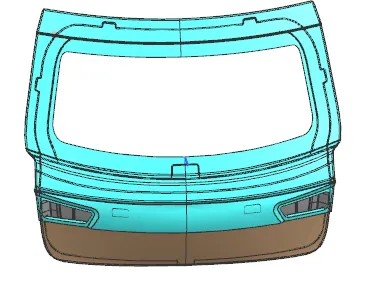
1) Outer upper Panel: This panel need to be more Asthetic Because it is Outer most visible part.
And also Contains wiper motar assy., Rear Brake Indicator, Number plate Light, Gas stay Connecting, Turn Indicators, .
This panel covers the Reinforcements and Inner panel with the process known as Hemming.
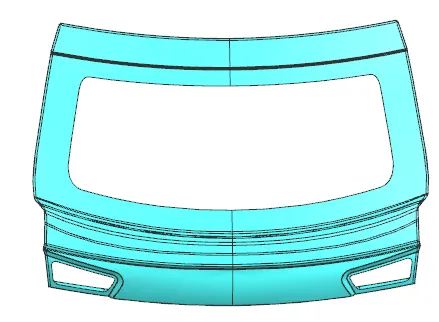
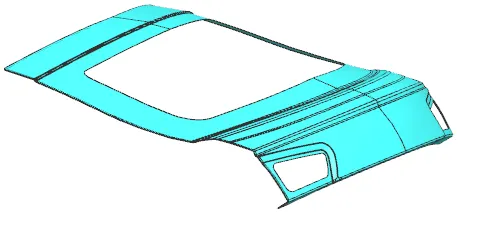
2) Outer Lower Panel: This panel need to be also asthetic look,And it contains Number Plate fixing for few vehicles
This Outer Lower covers bottom portion of Inner Panel.
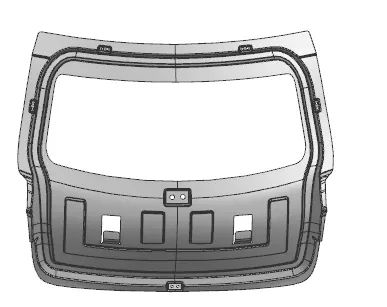
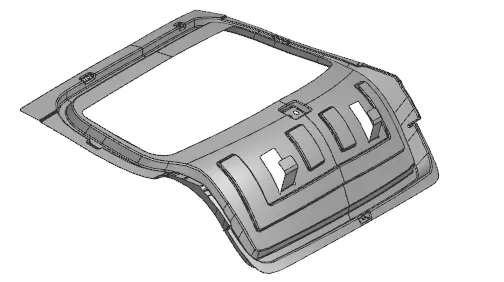
3) Inner Panel : Inner panel is having High Standards which having more Assemble with Other parts like Hinges, Striker, Gas Stay, Reinforcements.
And Also Having Sealant Flange which is tightly Joins when closes the Rear Door .
Reinforcements: Reinforcements are required for a vehicle door in order to provide additional strength and rigidity. Reinforcements increase the structural integrity of the door and help prevent it from bending or flexing. Reinforcements can also help protect the door from impacts and other external forces, thus increasing the overall safety of the vehicle.
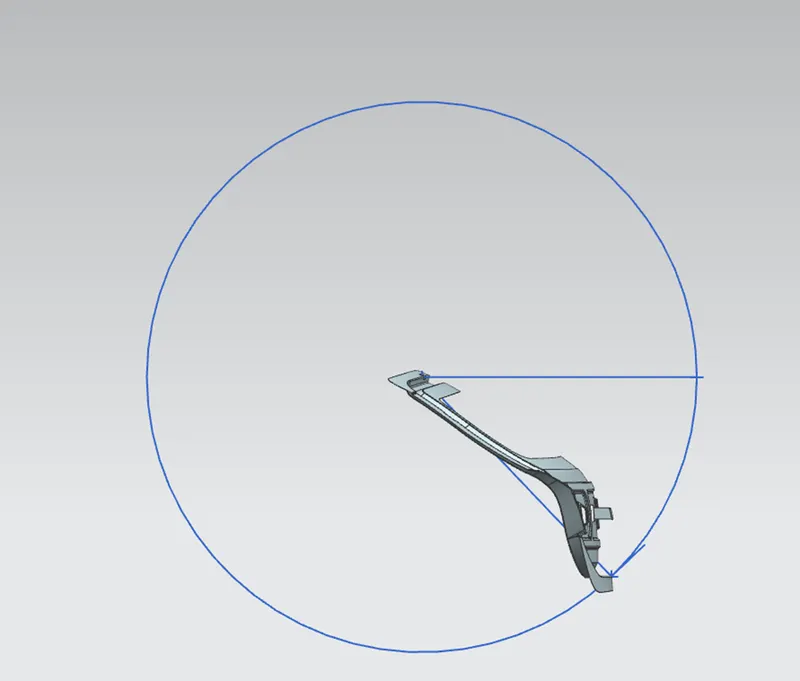
Trajectory:
The position of the hinge should be perpendicular to the latch at the time of latch and striker meets. The circle is drawn from the centre of the hinge axis to find the path of the striker and perpendicular to the path.
MASTIC SEALANT:
The mastic sealant is used to fix the inner panel and the outer panel which increases the NVH factor & stiffness of the back door.
Draft Analysis: Draft analysis is a command which shows the Ability of Maufacturing with referance to Tooling Direction and Having Colour coding for indication i.e., Green shows can manufactur with that direction.
Different Views of Assembled Door:
Front View:
Right View:
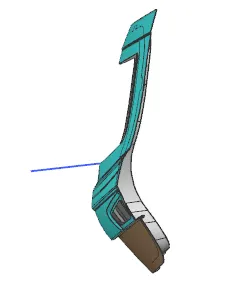
Rear View:
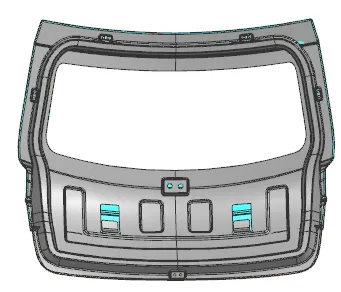
Left View:
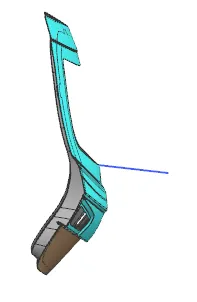
Conclusion: Back Door/ Rear Door Successfully designed as per Required standards and finally Assembled