AUTOMOTIVE BACK DOOR DESIGNING
AUTOMOTIVE BACK DOOR DESIGNING
Introduction
The back door of a car is a vital component that provides access to the vehicle's luggage compartment. It must be both functional and visually appealing, while also meeting safety requirements. In modern times, Computer-Aided Design (CAD) software has revolutionized the design process of car back doors. Designers can create intricate and precise designs, taking into account aerodynamics, safety regulations, and structural integrity. This allows car manufacturers to produce back doors that are not only visually appealing, but also highly functional and safe. In this article, we will delve into the significance of back door design in the automotive industry, and how CAD software has become an indispensable tool in this process.
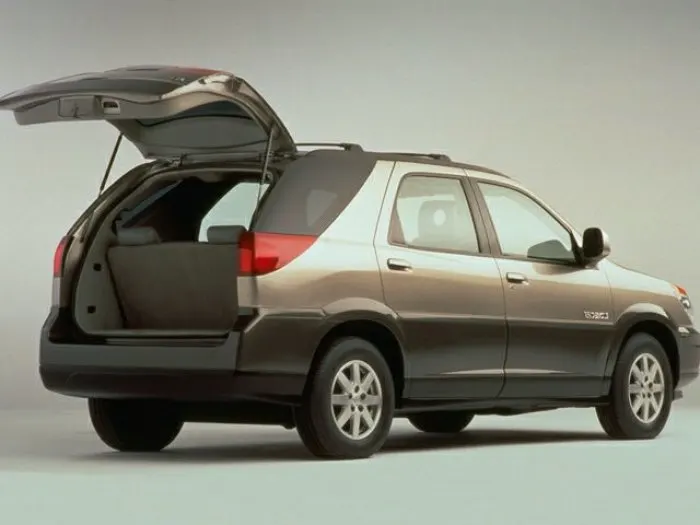
Types of Back Doors
There are various types of car back doors, each with its own set of advantages and disadvantages. Here are some of the most common types:
-
Hinged Back Doors: Hinged back doors are the most traditional type of car back doors. They are attached to the car's body using hinges and open outward. The advantages of hinged back doors include simplicity and durability. However, they require ample space to open fully and may be difficult to open in tight spaces.
-
Liftgate Back Doors: Liftgate back doors open upwards, like a hatchback. They are commonly found in SUVs, hatchbacks, and some minivans. The advantages of liftgate back doors include easy loading and unloading of cargo and a wider opening than hinged doors. However, they require ample space above the car to open fully and may not be as sturdy as hinged doors.
-
Split Back Doors: Split back doors are divided into two sections that open independently. They are commonly found in SUVs and larger vehicles. The advantages of split back doors include versatility in cargo loading and unloading and the ability to open only one section of the door when necessary. However, they can be more complex and may have more mechanical components that can fail.
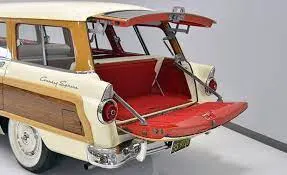
Back Door Assembly
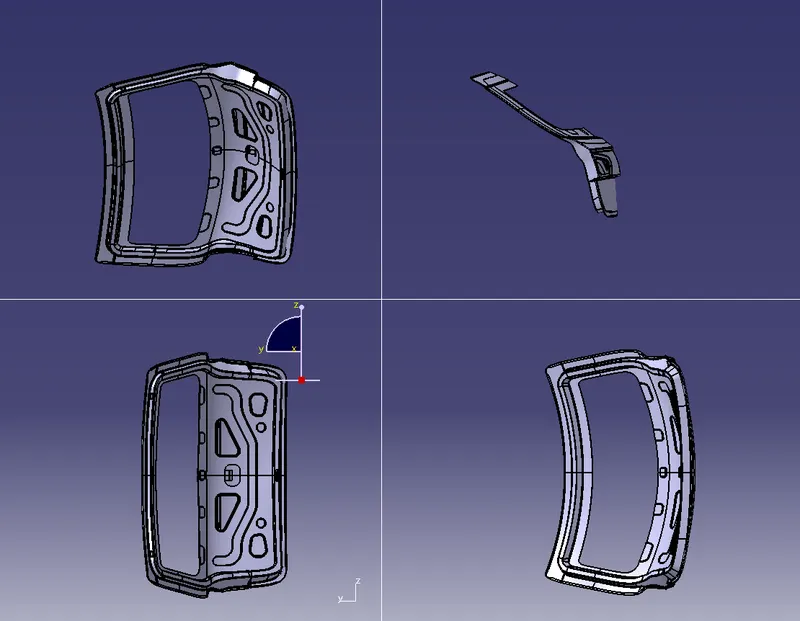
1. Inner panel:
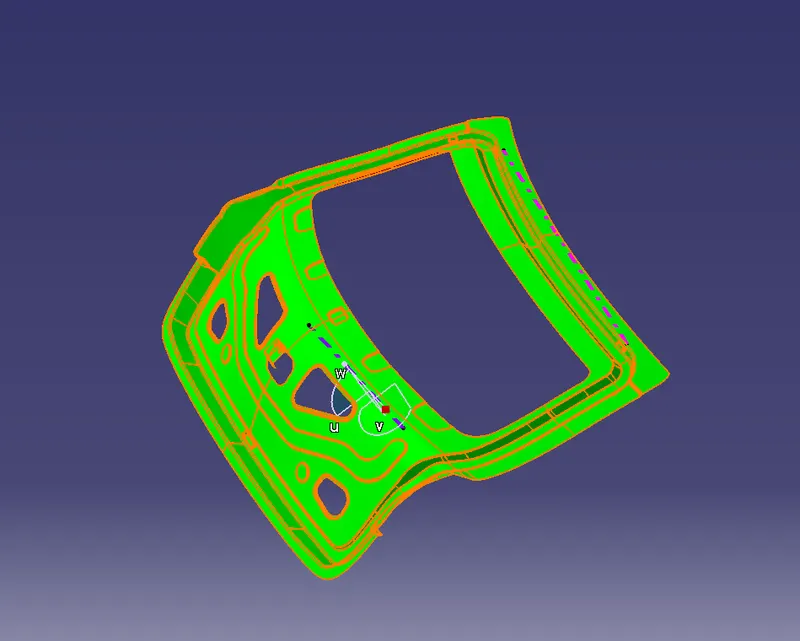
The inner door panel is a crucial component that provides structural support to the door assembly and serves as the foundation for mounting all other accessories, such as hinges, glass guide channels, moulded trims, and latches. The integration method is a possible way of manufacturing the inner door panel, where the part is stamped out of a single blank. This approach reduces the number of tools required for production, lowers the assembly cost, and eliminates any potential fitment issues. In summary, the inner door panel is a critical component that plays a vital role in ensuring the overall functionality and safety of the door assembly.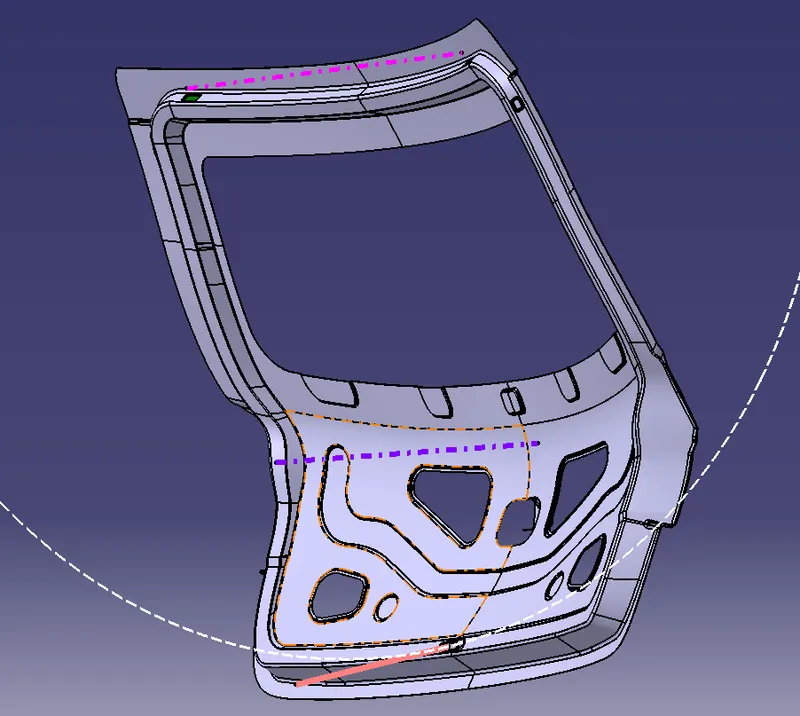
Draft analysis of inner panel
Draft angle is 5.
Outer panel: The outer panel of a back door serves as an aesthetic component and is similar to other Body-in-White (BIW) parts. It features a multi-stage coating that provides scratch resistance, rust prevention, and an attractive, smooth finish. The panel also includes provisions for mounting tail lamps, rear fog lamps, and license plates. In addition, many hatchback cars have a wiper motor provision built into the outer panel. Overall, the outer panel is an important component that not only enhances the vehicle's appearance, but also provides functionality and accommodates various other features necessary for the back door's operation.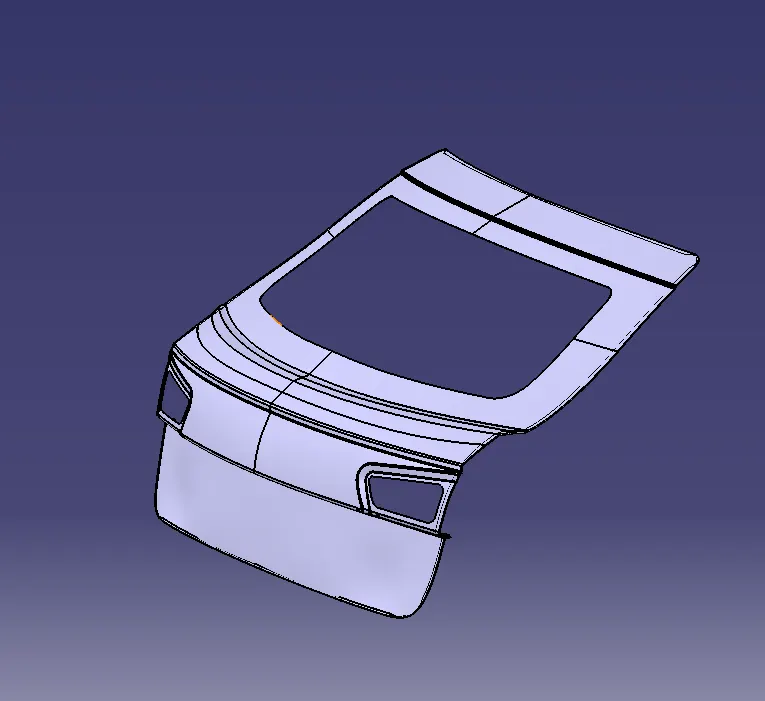
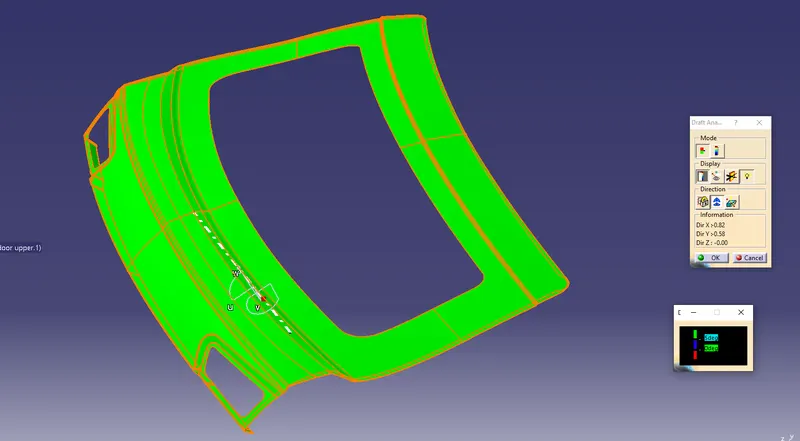
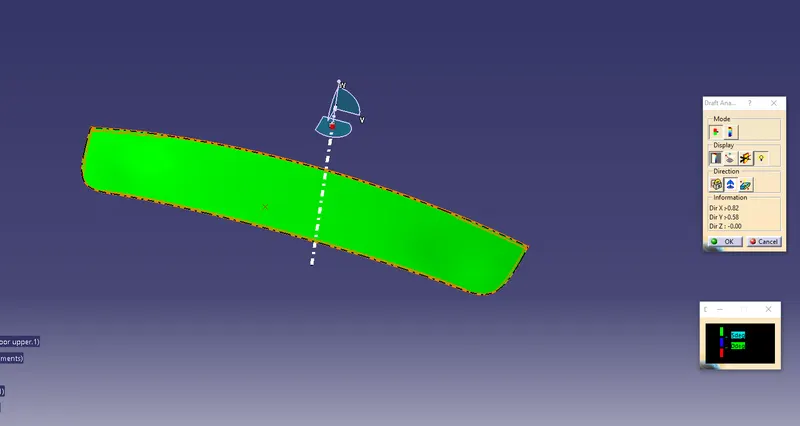
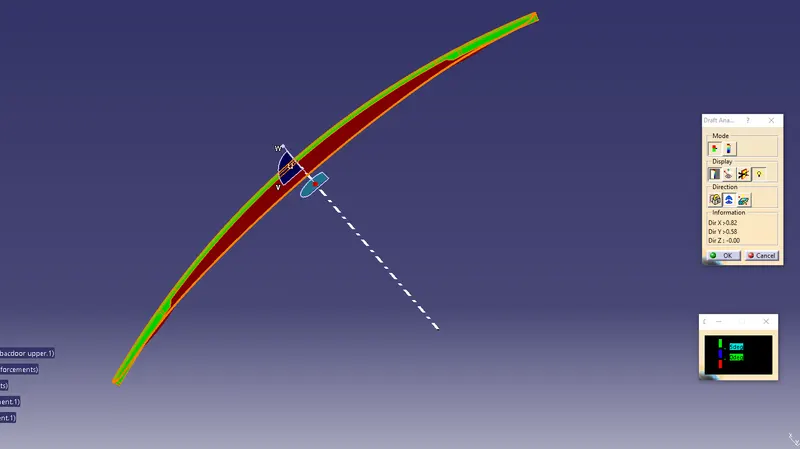
Draft analysis of the outer panels
Draft angle is 5 for both upper and lower panel.
Upper Panel:
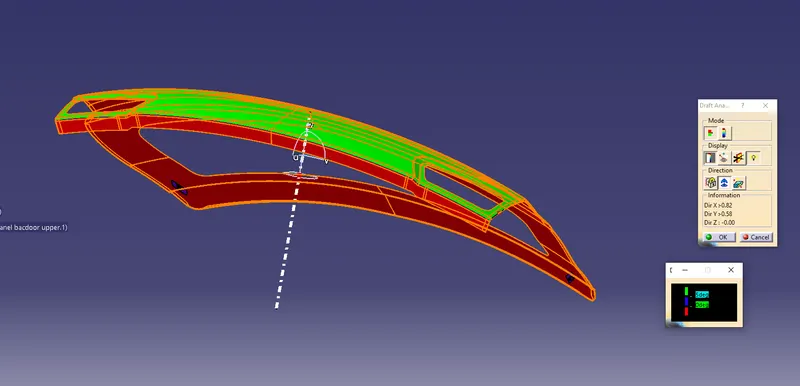
Lower panel:
Hinge reinforcement: Hinge reinforcement is an important component of the back door assembly, which is designed to strengthen the hinge attachment points and ensure the proper functioning of the hinges. This reinforcement is typically located near the hinge attachment points on the back door and the roof. It helps to distribute the load evenly across the hinge and prevent any deformation or damage to the back door or roof. Additionally, hinge reinforcement provides added safety and durability to the back door assembly, ensuring that the door remains securely attached to the vehicle even under challenging conditions.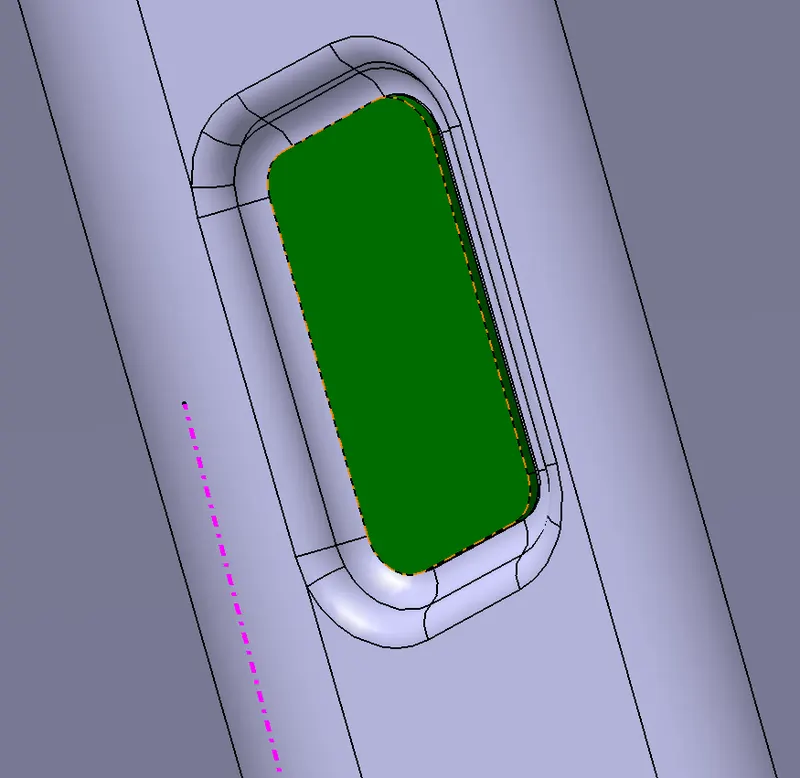
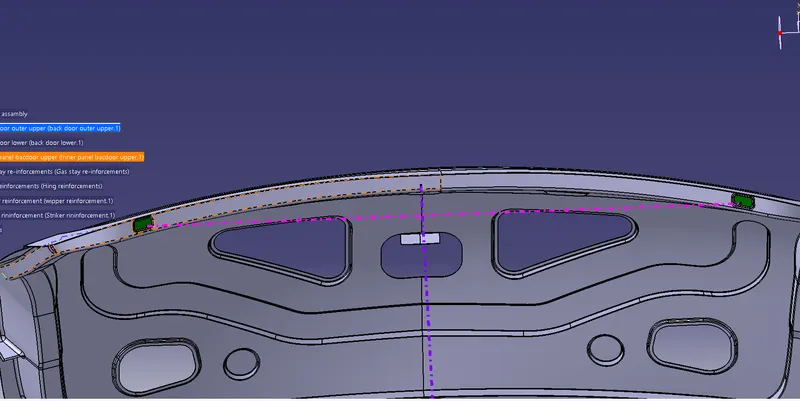
Gas stay reinforcement: Gas stay reinforcement is a critical component of the back door assembly that helps to support the gas stay mechanism, which in turn aids in opening and closing the back door with minimal effort. This reinforcement is typically located near the attachment point of the gas stay on the back door and is designed to distribute the load evenly across the back door structure. It provides added strength and rigidity to the back door assembly, ensuring that the gas stay mechanism functions smoothly and efficiently. Furthermore, gas stay reinforcement enhances the overall safety of the back door assembly, preventing any deformation or damage that could potentially compromise the security and operation of the back door.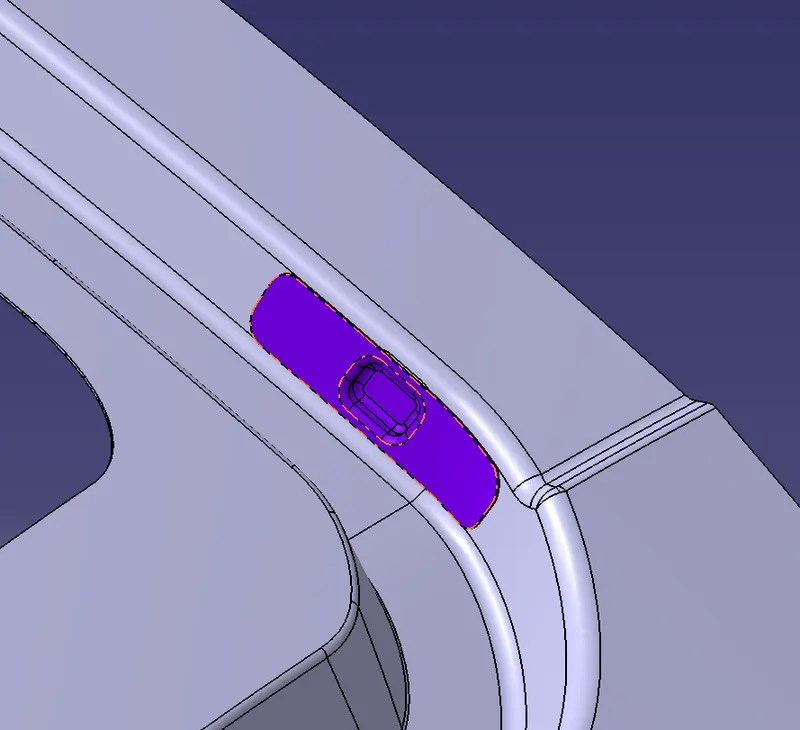
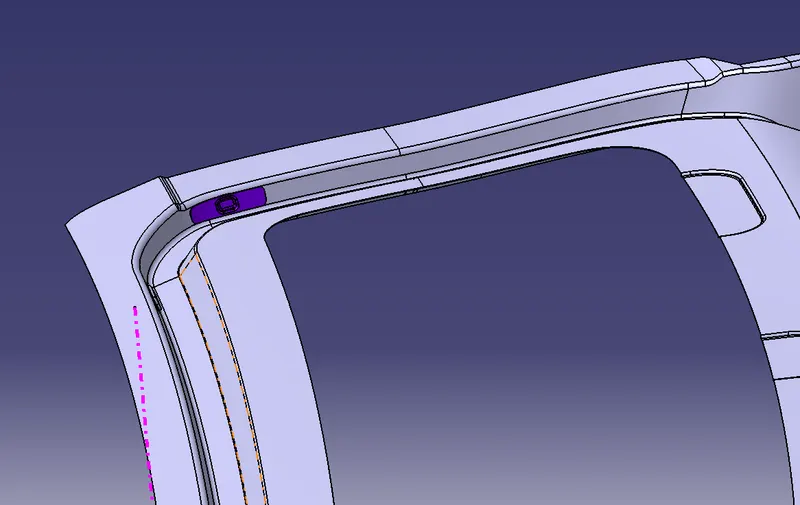
Wiper motor reinforcement: Wiper motor reinforcement is a component that provides structural support for the wiper motor, which is used to operate the rear wiper blade on some vehicles. It is usually located near the wiper motor attachment point on the back door and is designed to prevent any deformation or damage that may occur due to the force applied during the wiper blade's operation. The reinforcement helps to distribute the load evenly across the back door, enhancing its strength and rigidity. Additionally, wiper motor reinforcement enhances the overall safety of the back door assembly by ensuring that the wiper motor operates smoothly and without any interference from the back door structure. 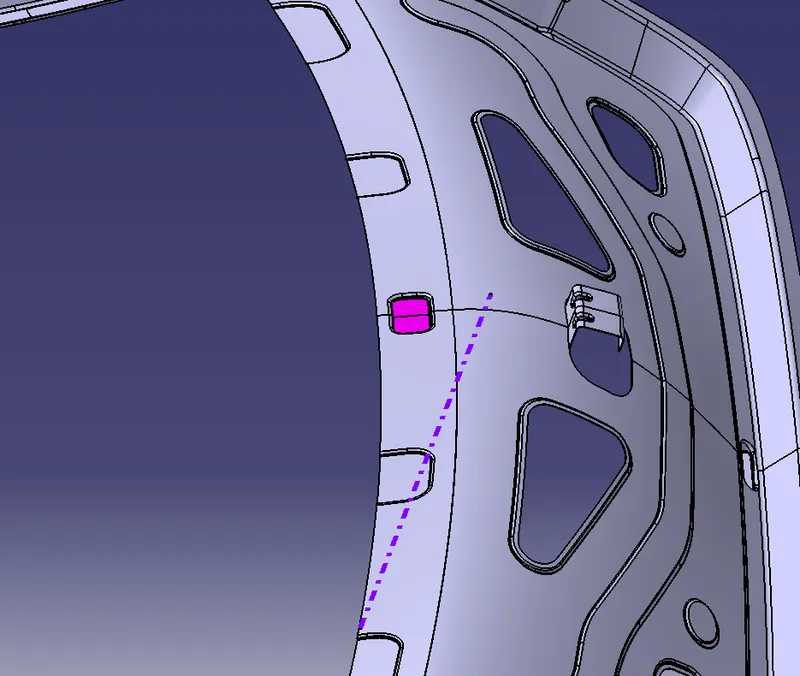
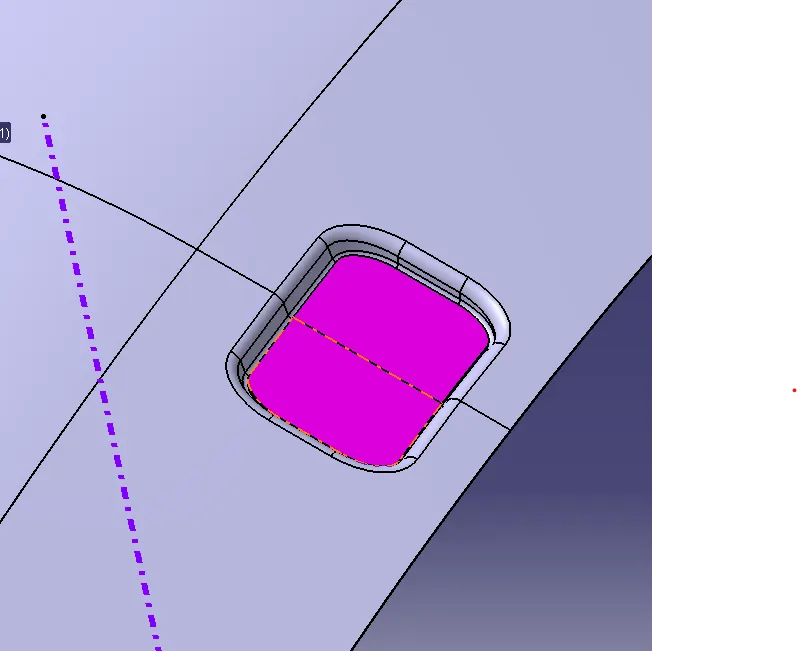
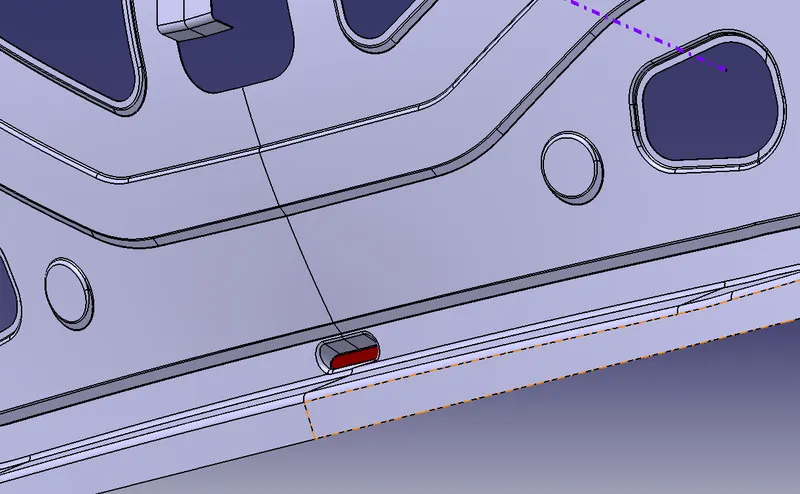
Striker reinforcement: Striker reinforcement is an essential component of the back door assembly, which provides additional support to the latch/striker mechanism that keeps the back door securely closed. It is usually located near the striker attachment point on the back door and is designed to distribute the load evenly across the back door structure, ensuring that the striker mechanism functions smoothly and efficiently. Striker reinforcement enhances the overall strength and rigidity of the back door assembly, preventing any deformation or damage that could compromise the security and operation of the back door. Furthermore, striker reinforcement enhances the safety of the back door assembly, ensuring that the back door remains securely closed during normal driving conditions, even in the event of sudden jolts or impacts.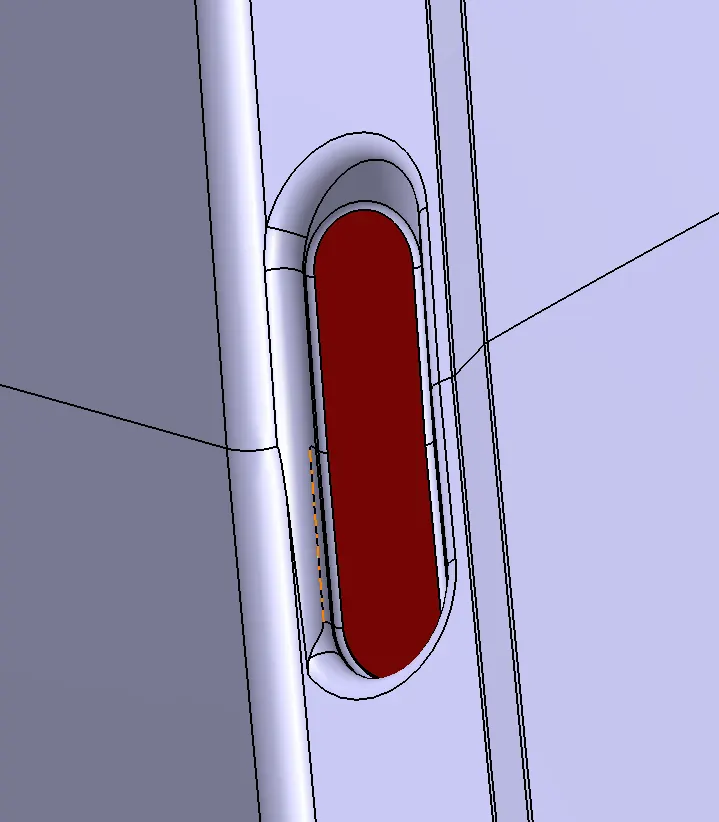
Manufacturing of a Car back door:
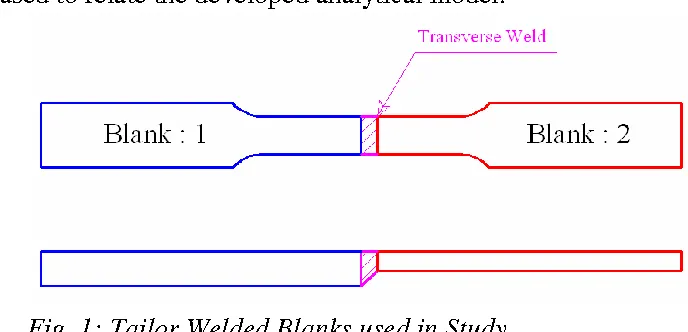
In the automobile industry, the focus on reducing weight has led to the development of new manufacturing methods for car back doors. One approach is to use materials that are lighter than steel, but this can be expensive. As a result, lightweight steel is being explored as a more cost-effective and recyclable alternative. The Ultra-Light Steel Auto Body (ULSAB) concept proposes using manufacturing techniques like hydro-forming and tailor welded blanks (TWB) to reduce weight. TWBs are composed of two sheets of metal that are welded together prior to stamping, allowing for the welding of different grades, thicknesses, or coatings to achieve the desired properties in different areas. This results in weight reduction without increasing the number of tools needed for production. The door inner panel is an example of TWB used in production.
A Tailor welded blank is a manufacturing technique used in the automotive industry to reduce the weight of vehicles. It involves welding two separate pieces of sheet metal together prior to stamping to create a single blank. This allows for the welding of different grades, thicknesses, or coatings together to create the desired properties in different areas of the part. Tailor-welded blanks also offer flexibility in designing parts and can form large blanks from smaller sheets. This technique reduces the weight of the car as different thicknesses of materials can be selectively placed, resulting in weight reductions. The door inner panel is an example of a part produced using tailor-welded blanks, as the only strength requirement is in the region where the hinges attach to the panel.
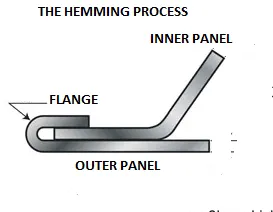
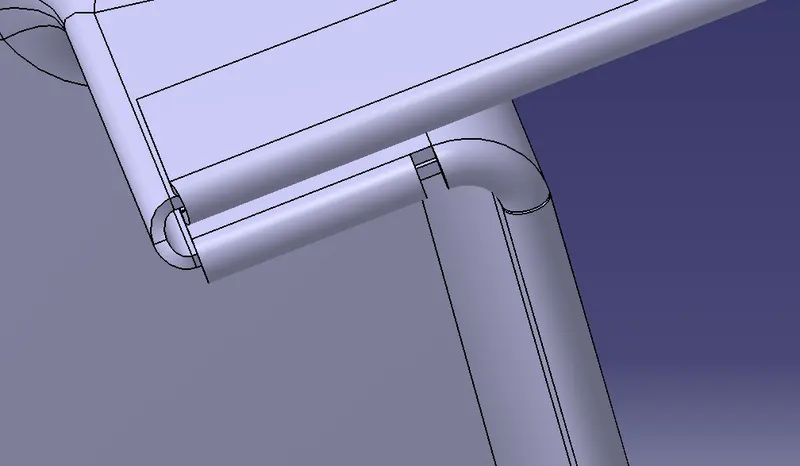
Hemming is a metalworking operation used to join two sheets of metal by bending one sheet over the other. The edge of one sheet is first bent at a 90-degree angle to form a flange, and then the flange is folded over and clamped onto the other sheet. This process is commonly used in the automotive industry for joining two panels of a car body, such as the roof and the side panel, to create a seamless appearance.
Positioning of Striker
The latch trajectory is the path followed by the hood when it is opened and closed. The design of the latch trajectory is critical to ensure that the hood opens and closes smoothly and does not interfere with other components of the car.
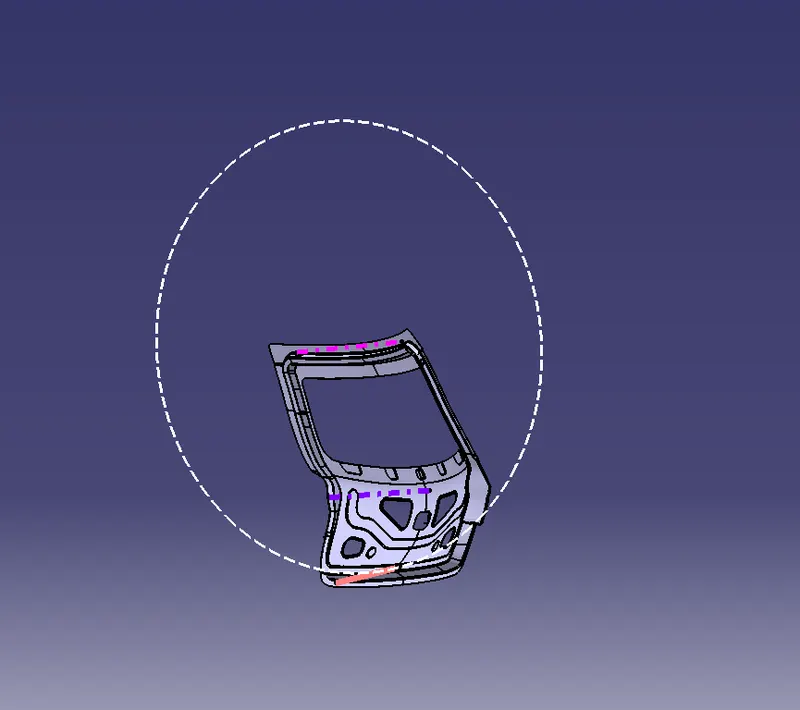
Imaginary Hinge Axis:
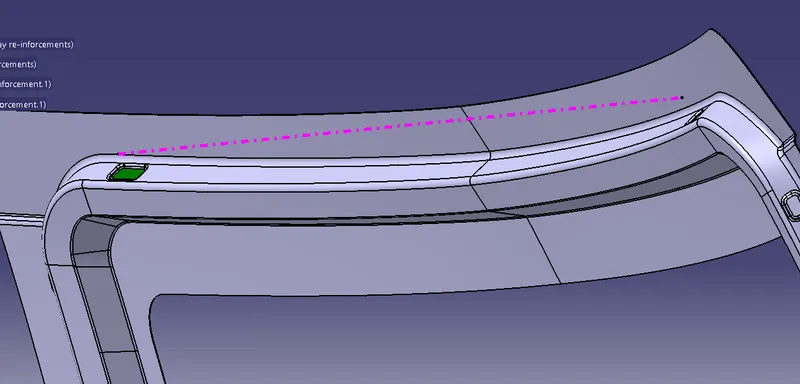
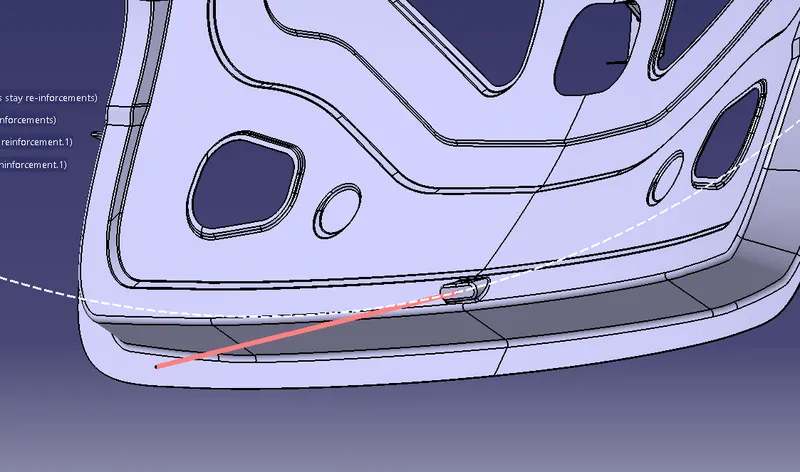
A tangent line to the Circle of the hinge axis:
Conclusion :
I utilized suitable design methodologies and incorporated the required reinforcements and embosses to design the back door based on the provided styling surface. However, it should be noted that the lower outer panel of the design has defects in the Class A surface. Despite this issue, I proceeded with the design process and ensured that the necessary reinforcements and embosses were in place.