Design of backdoor
Backdoor Design Report
Objective :
To design a Tail gate (Backdoor) of a car with the references given in the skin data/styling surface provided.
Introduction :
It’s a car door located to the rear of the car behind the passenger seats which allows the access to the rear compartment of the car. It usually has the mounting points for the tail lights, rear windshield, windshield wiper, the registration plate,& the rear-view camera. It’s classified as a door because it provides access to the passenger compartments.
Types of Car backdoors (Tail gates) -
- Top Mounted
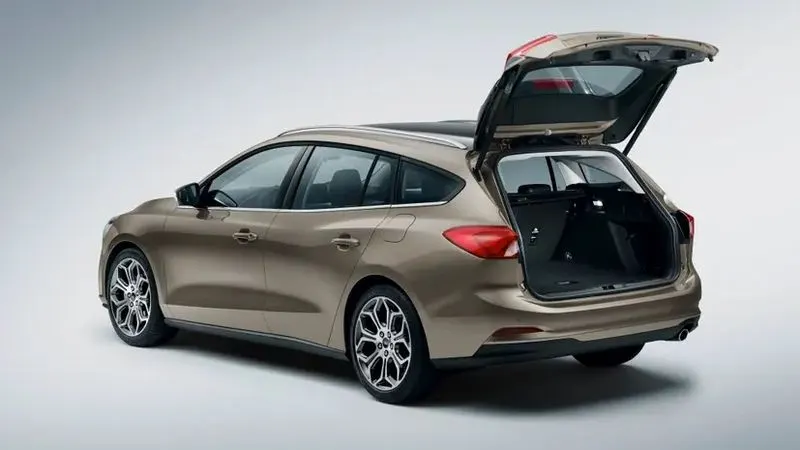
Most commonly used type of backdoor, in all car types except pick-ups. They hinged at the top and use either Gas stays or levers for support. They are usually manually operated but also can me motorized for hands-free operation.
- Side Mounted
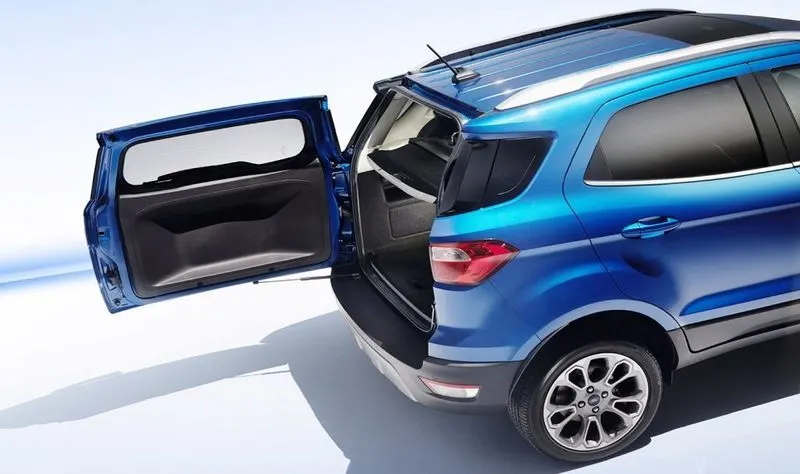
It’s generally used in SUVs, MPVs & pickups. They provide easier access to the compartment, but causes inconvenience to open in tight spaces. It’s hinged on one side and supported by gas stays/levers at the bottom.
- Bottom mounted/ Split type
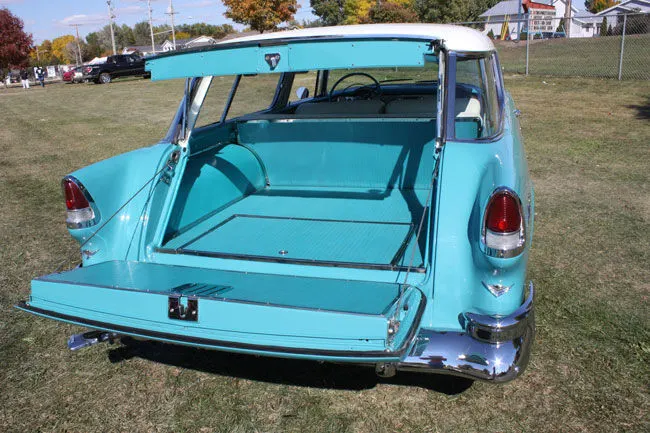
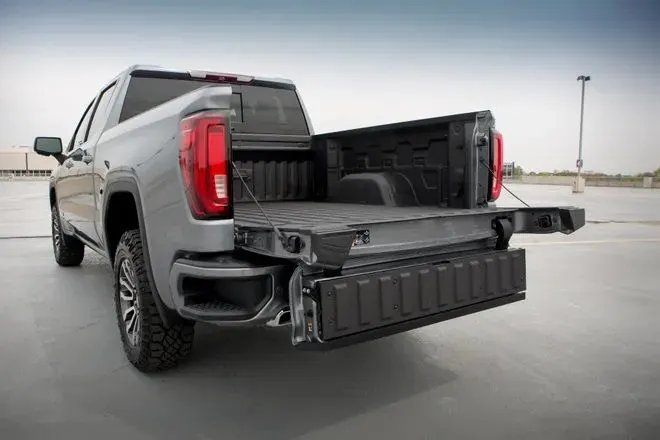
Bottom Mounted tail-gates are mainly use in pickups. The Spilt type backdoor has 2 part, the top part which only houses the rear windshield and the bottom part similar to a pickup truck’s. The lower part can be supported so that it extends the length of the rear compartment, making it convenient to use as a table/ bench.
Working Mechanisms -
- Lever Type
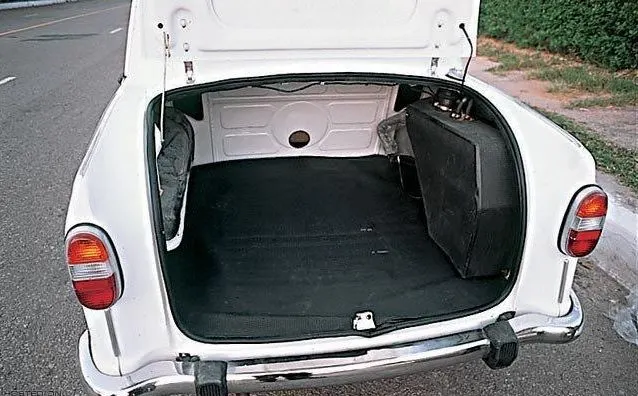
A simple two part levere design, one of the lever has a groove cut out which locks the other lever when the mechanism is fully opened. These were used in older generation cars.
- Gas Stay Type
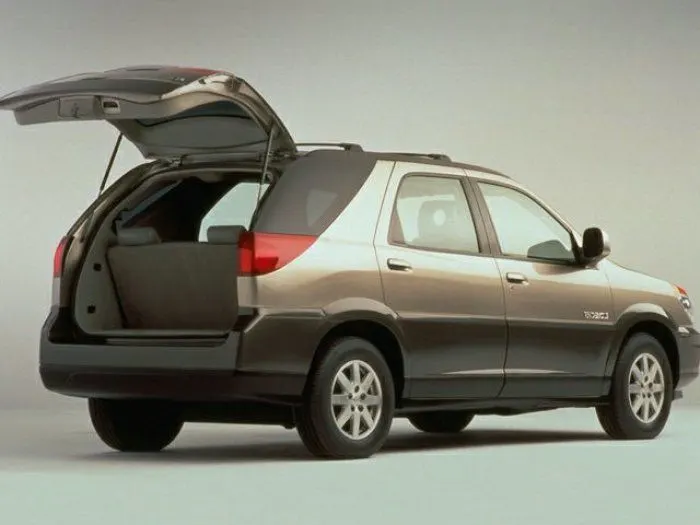
It’s used in all types of cars from lower segments to luxury segments. They are either pneumatic or hydraulic.
- Automatic (Powered) lift system
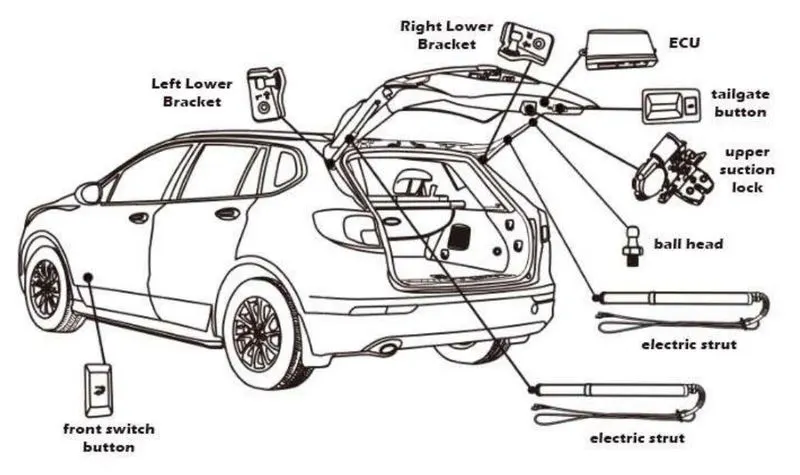
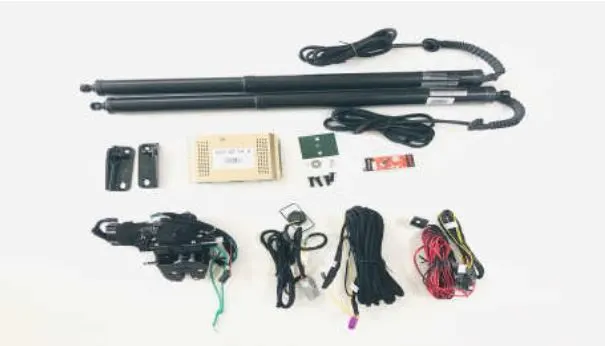
It enables the backdoor to be opened/closed with the press of a switch either inside the car near the driver seat or in the rear compartment or on the key fobs. Modern cars even have sensors which recognizes specific motions of the owner to open and close the tail gates. Gas stays are required here too but it is automated.
Functions of a Backdoor -
- It serves as entry and exit point for luggage/passenge
- Protects the occupantsfrom the environment.
- Protects and secures theluggage carried in the rear compartment.
- Parking sensorsand rear view camera are mounted on it.
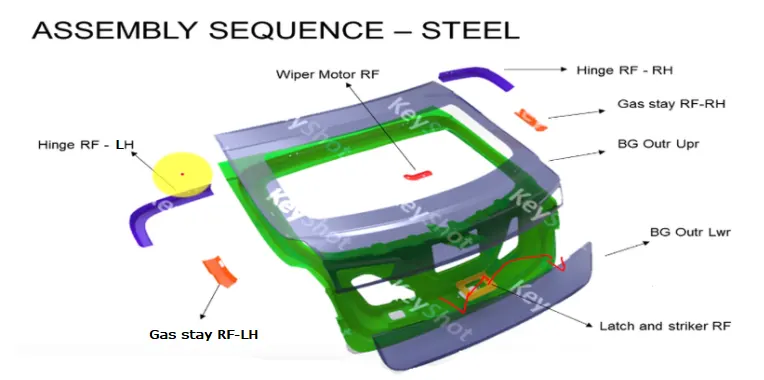
- Houses the rear windshield,wiper motor assembly and tail lamp assembly.
Design Consideration -
- Rear visibility Criteria.
- Rear crash regulations.
- Availability of space in the rear compartment.
- Hinge axis and positioning.
- Latch & Striker position.
- Gas stay position.
- Hemming, spot welding and Relief area.
- Drainage holes and sealing.
Components of a Backdoor -
- Inner Panel.
- Outer Panel.
- Hinge & it’s reinforcements.
- Latch & Striker and it’s reinforcements.
- Gas stay and it’s reinforcements.
- Wiper motor and it’s reinforcements.
- Tail lamp assembly.
- Sensors and Camera modules.
Material Selection -
The functional requirement of a backdoor panel is that it should be light-weight but also strong enough to handle large amounts of force/load thus stiffening the whole car body. Thus, the selection of material plays a major role in this case. Most commonly used materials for commercial and affordable cars are -
- Aluminium
- Steel
Carbon fibre and Magnesium Alloys are also used which reduces the weight by a lot, but only in higher end sports/luxury vehicles, as it is much costlier than the common materials.
|
|
Aluminium |
Steel |
|
Parts |
Parts are casted |
Parts are stamped |
|
Reinforcements |
Reinforcements can be neglected |
Reinforcements are necessary |
|
Thickness |
Thickness can be varied |
Thickness should be uniform |
|
Weight |
Lighter in weight compared to steel |
Heavier in weight |
|
Cost |
Costly as compared to Steel |
Cheaper than Aluminium |
|
No. Of Components |
Less No. of components |
More No. of components |
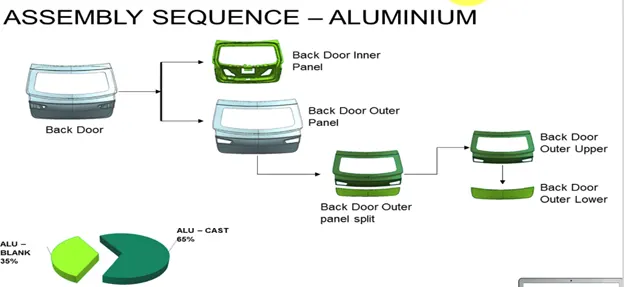
If casted Aluminum parts are used instead of deep drawn steel parts there is no need of reinforcements and the overall weight of the car is reduced by approximately 5-10kg thus increasing the performance of the vehicle. Also the draft angle for casted parts is around 3 degrees while for deep drawn parts is around 7-10 degrees which helps in increasing the luggage/ cabin space.
Manufacturing Methods -
The weight of the panels produces should be kept as low as possible without affecting the strength of those parts. Deep drawing, Casting and Stamping processes are commonly used but Lightweight Steel can’t be produced by these processes. Improving the structure of steel using better manufacturing techniques enables the production of lightweight steel. This reduces the quality gap between the usage of aluminium and steel, while keeping the cost of production considerably low. Two processes from the Ultra-Light Steel Auto Body (ULSAB) concept can be used for producing light-weight steel -
- Hydroforming
Hydroforming is a cost-effective way of shaping ductile metals such as aluminum, brass, low alloy steel, and stainless steel into lightweight, structurally stiff, and strong pieces. Hydroforming is a specialized type of die forming that uses high-pressure hydraulic fluid to press room temperature working material into a die. To hydroform aluminum into a vehicle's frame rail, a hollow tube of aluminum is placed inside a negative mold that has the shape of the desired result. High-pressure hydraulic pumps then inject fluid at very high pressure inside the aluminum tube which causes it to expand until it matches the mold.
- Tailor Welded Blank
A tailor-welded blank is a blank that is comprised of two separate pieces of sheet metal that have been welded together prior to stamping. Tailor welded blanks allow the welding of the different grades, different thickness or different corrosion coatings together in order to give the properties needed in different areas, without increasing the number of tools needed to form the part and eliminating the fit ability concerns. They also allow a high degree of flexibility in designing parts and large blanks can be formed from much smaller sheets. The use of tailor-welded blanks would reduce the weight of the car. Having the ability to selectively place different thickness of material would result in weight reductions. An example of this used in production is the door inner panel. The only strength requirement on a door inner is in the region where the hinges attach to the panel.
Joining Processes -
- Hemming
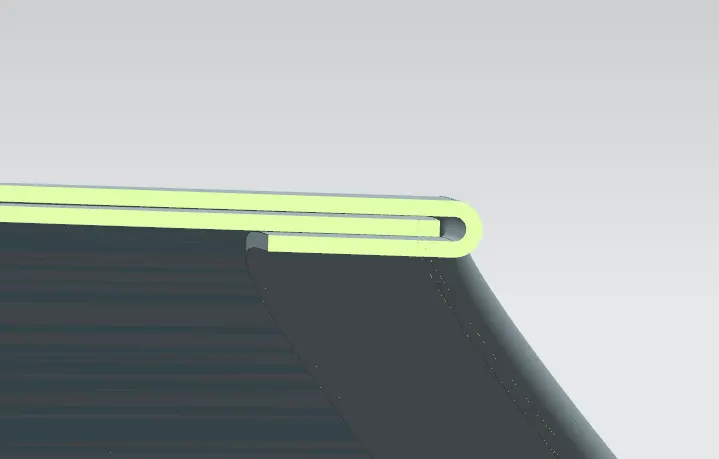
Outer Panel is folded and sealed over the inner panel. Thus negating the use of welding and other joining processes that might affect the aesthetics of the outer panel.
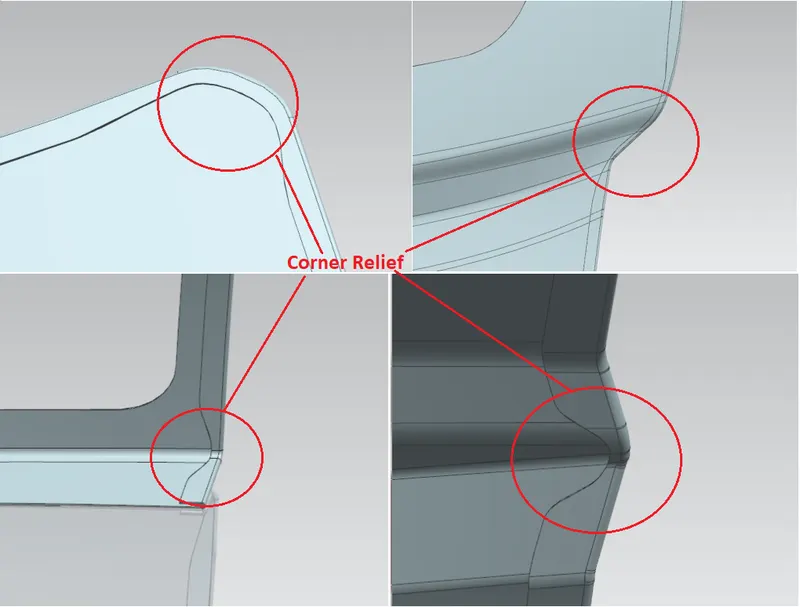
Corner Relief is provided to the hemming region wherever there is a curve/ bend in the panel to relieve the stress concentration and reduce vibrations, to strengthen the panel.
- Spot Welding
Spot welding is a type of electric resistance welding used to weld various sheet metal products, through a process in which contacting metal surface points are joined by the heat obtained from resistance to electric current.
Design of the components of a Car backdoor -
- Outer Panel
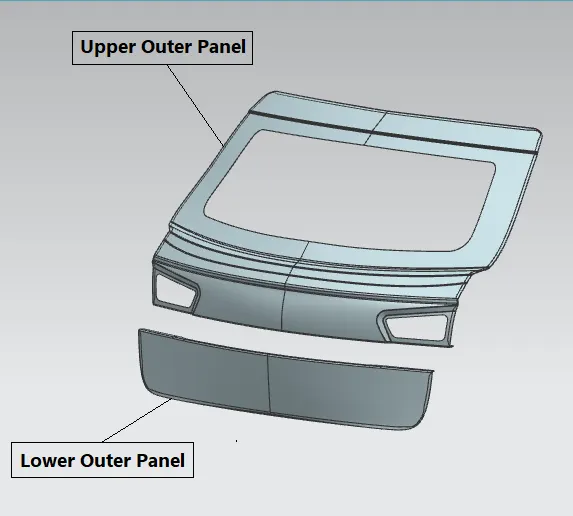
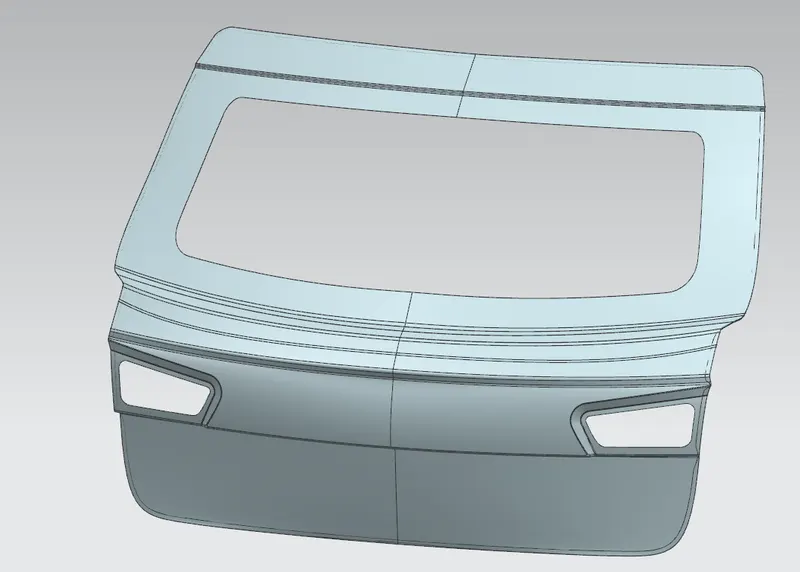
It forms the outer covering of the Backdoor with the inner panel enclosed within it using Hemming Process. It also increases the aesthetic look of the car. It consists of cutouts for the rear tail lamps, fog lamps, etc. Outer panel is a BIW component manufactured in a single or double piece operation by using stamping operation. It is provided with multistage coatings which has property of scratch resistance, rust prevention etc.
- Inner Panel
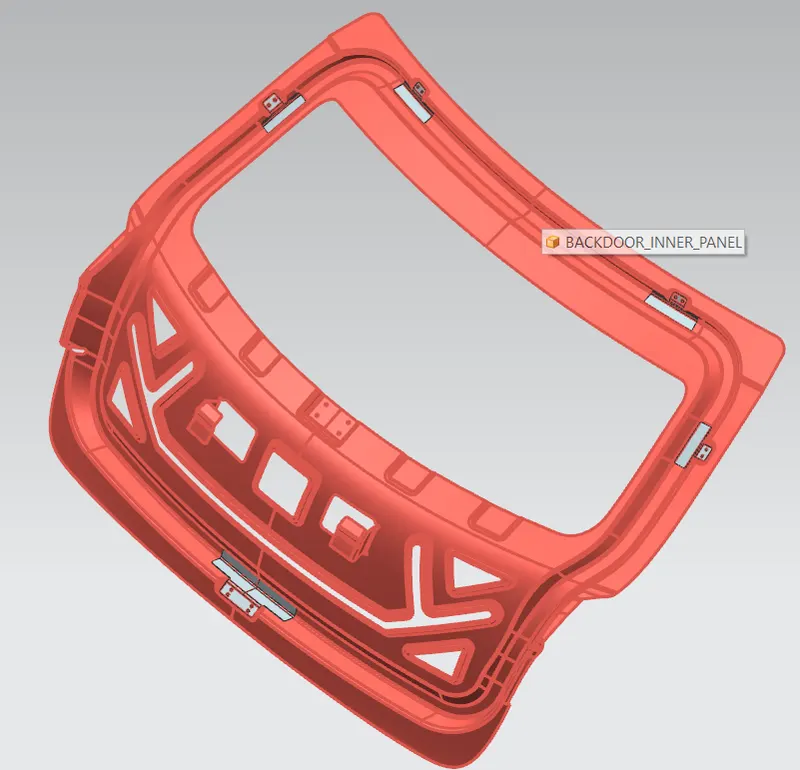
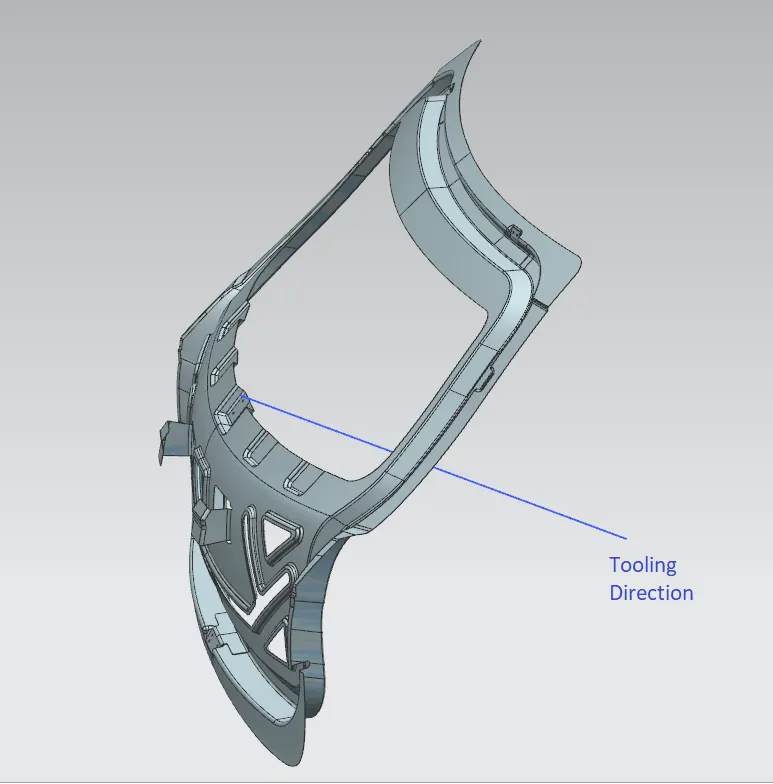
It’s the component covered by the outer panel. The inner panel is produced by either casting or through Deep drawing. The inner panel should be sufficiently strong enough to carry all the load of this components and also strengthen the structure to safeguard the backdoor from the rear crash conditions. It’s main purpose is to provide a strong structural support and for the mounting of all the components such as wiper mounting, hinges, gas stay, latch & striker reinforcements, etc. A tooling direction is decided according to the design before its manufacturing process.
- Sealing Flange
It is that section of the inner panel which enables the backdoor to sit over the rear body side of the car. Its design is important as it decides how a backdoor is mounted on the rear body side of the car and also restricts any external matter to enter inside the vehicle.
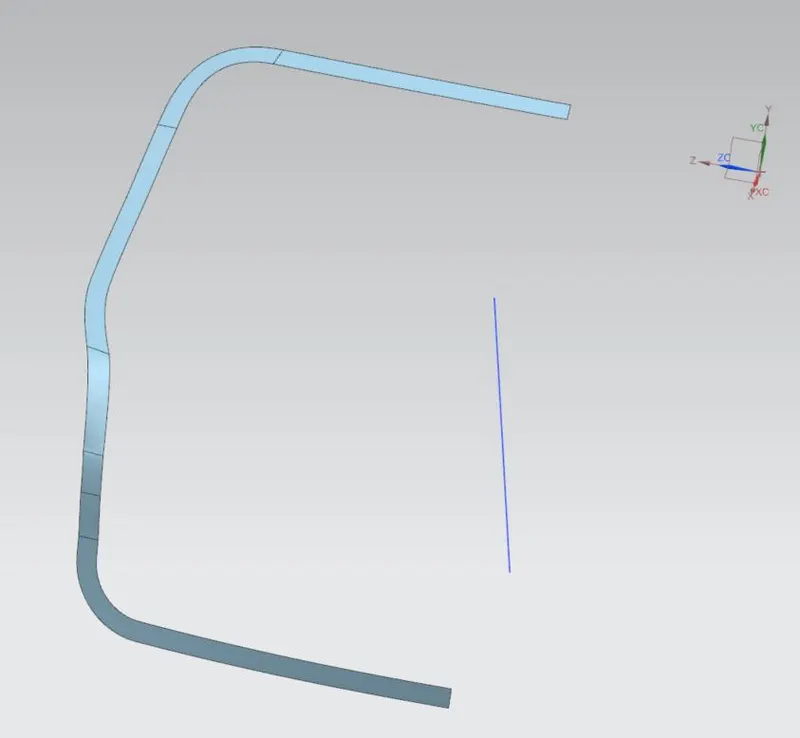
- Latch & Striker Trajectory
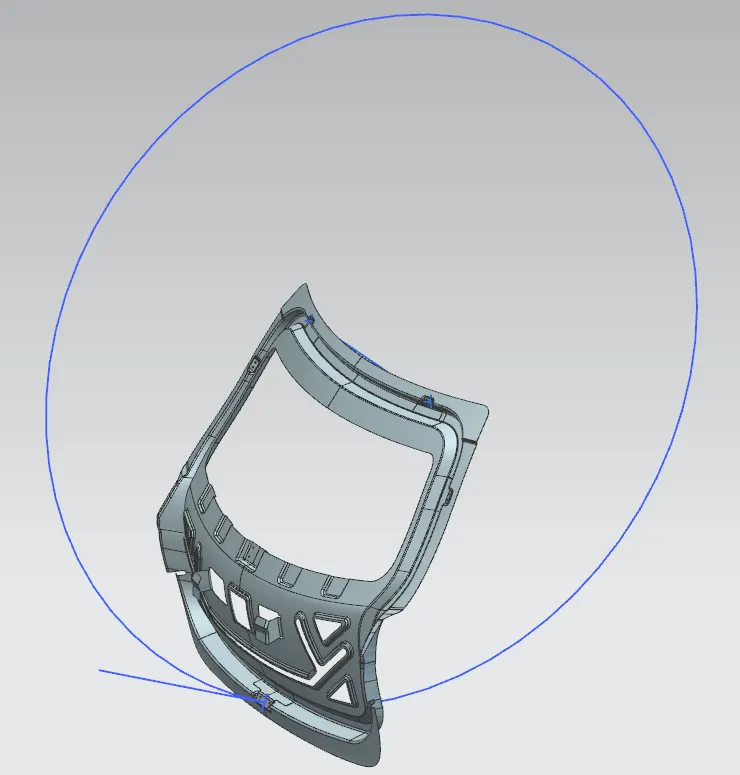
After determining the position of the hinges and latch & striker, the center point of hinges are considered and an axis joining these points are taken. A circle is drawn by taking the midpoint of the axis as the center of circle and endpoint as a mid-point on latch & striker placement. This gives us a trajectory by which the backdoor will be opened and closed.
- Reinforcements
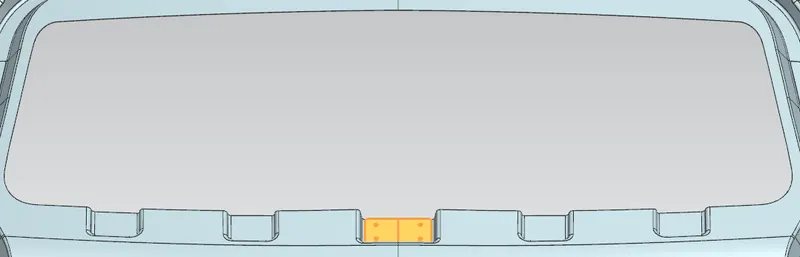
Reinforcements are provided to the inner panel to increase it’s strength in localized areas, which is relatively small compared to the panel, for absorbing and dissipating loads throughout the panel to help maintain it’s structural rigidity. These reinforcements are usually 1.0-1.5mm thick. The essential reinforcements provided to a car backdoor are -
- Hinge Reinforcement
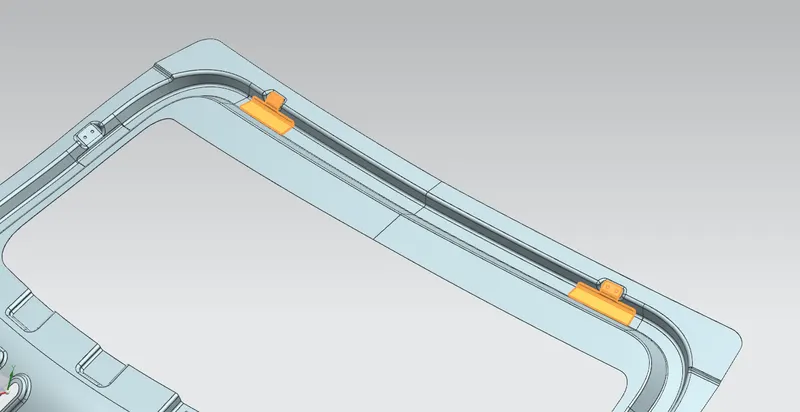
- Latch and striker Reinforcement
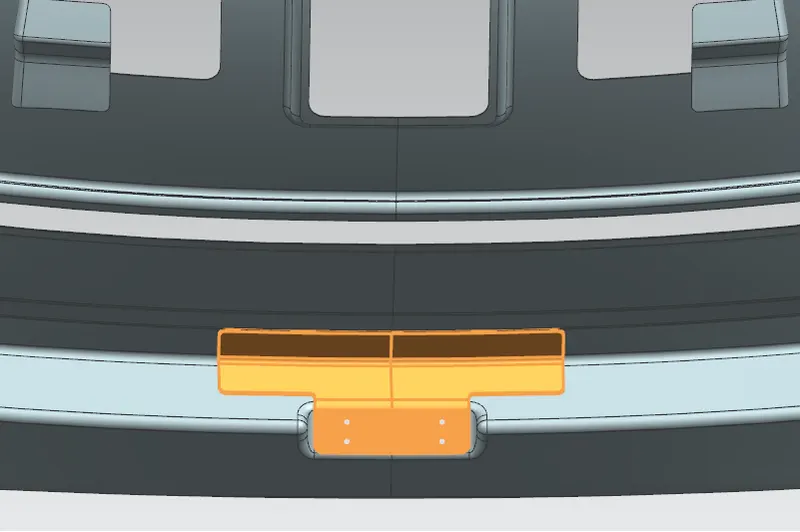
- Gas stay Reinforcement
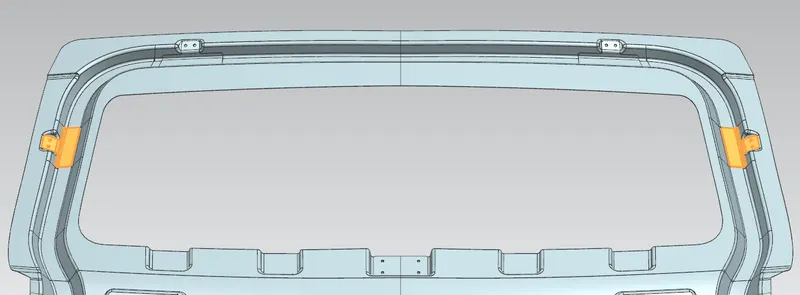
- Wiper motor Reinforcement
Draft Analysis -
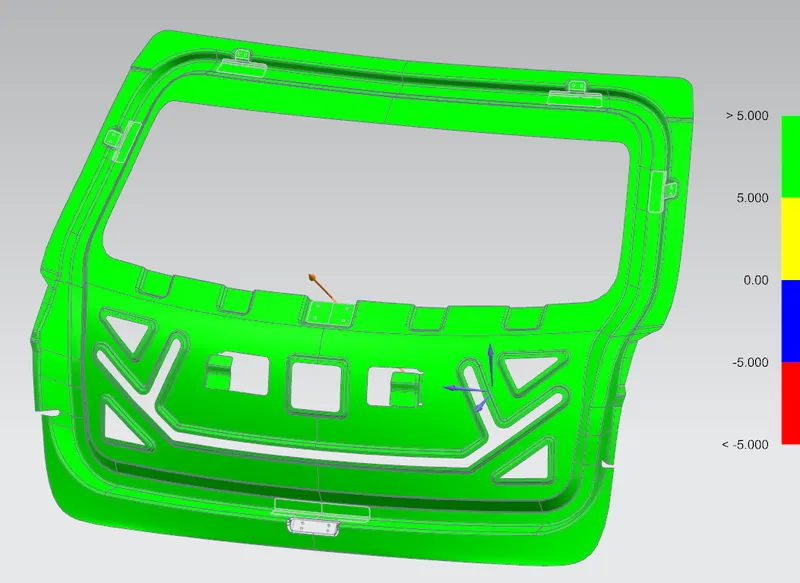
Every part which is manufactured from press tool or other forming tools require some positive draft on the faces which are parallel to the tooling direction. In case of Zero-draft or Negative-drafts, the finished product would either don’t have a smooth surface finish or it won’t be ejected out of the mould after the process. Draft Analysis command enables us to detect these critical zones, thus enables the designer to make appropriate changes in the design.
Conclusion -
- Successfully completed the design and assembly of the backdoor with its functional componentsafter taking required design criteria into consideration.
- Carried out a Draft Analysis anddetermined that the part is manufacturable.