Design of backdoor
AIM
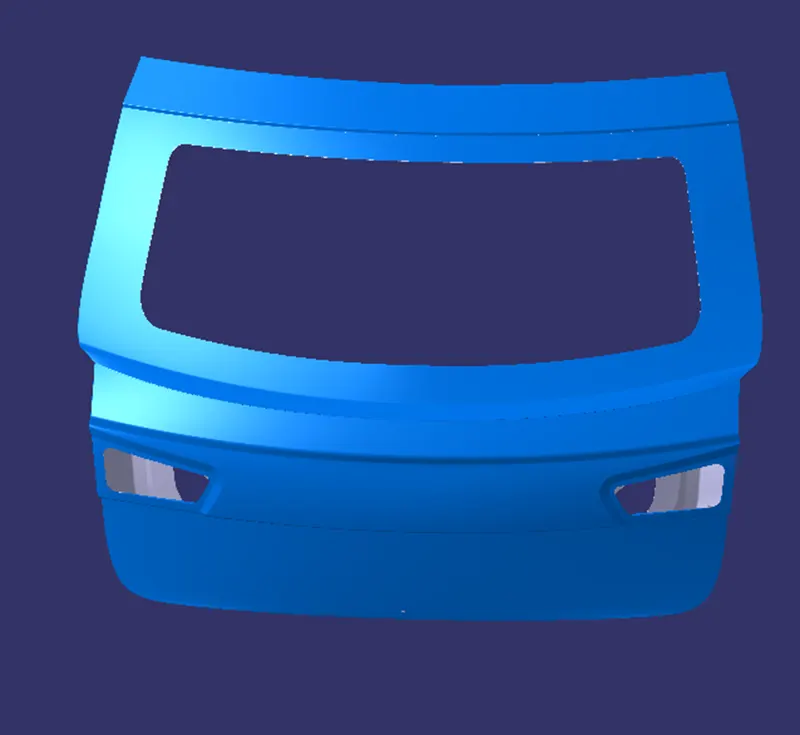
Use the provided styling surface to come up with a back door design, use appropriate design methodologies, and provide the necessary reinforcement and embosses
BACK DOOR
It is the door which is located at the rear side of the car and it provides access to the boot space, doors can be operated manually or electrically powered. In most of the luxury car doors are operated electrically
Types Of Doors Based on Working Position
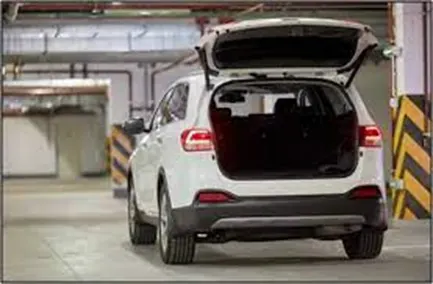
Top mounted doors
Doors are mounted on the top region
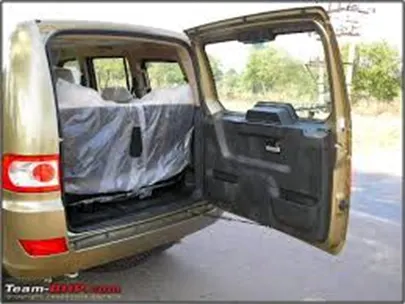
Side mounted doors
Doors are mounted at the side
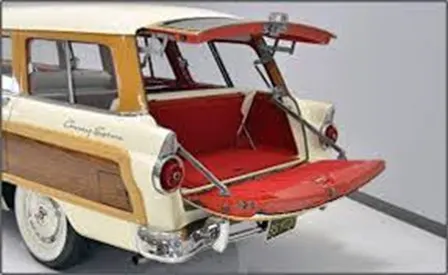
Bottom\split type doors
Doors are mounted on bottom side ore mounted as shown in figure below
Types Based on Working Mechanism
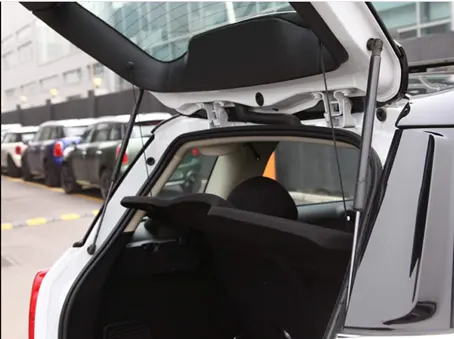
Gas stay type
It is the most commonly used tailgate mechanism for lower segment to luxury segment cars
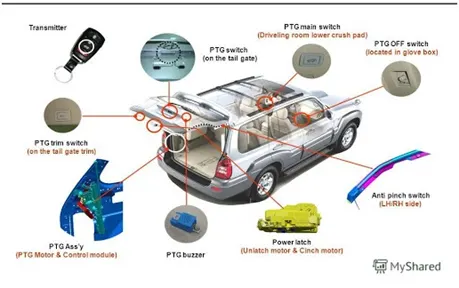
Powered lift system
It is another sophisticated way of trunk opening mechanism which is automatically opened and closed at the touch of a button
SHEETMETAL PROCESS USED FOR MANUFACTURING THE BACK DOOR
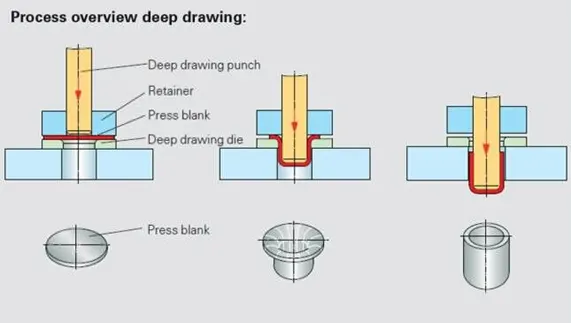
Deep drawing
This process is an effective method of manufacturing of cups, cans and other similar deep drawing products. Deep drawing has two main categories
First-stage drawing: the blank shape of metal is placed on the die and contact with the product. When thew metal specimen is flat piece of sheet metal used in forming and finish the products. Initially punch moves in downward direction. The outer rim of blank is subjected to pure radial drawing between die and blank metal. The metal becomes a bend and sliding over die and also stretched between die and punch. The metal in the vicinity of the punch head and contact with it bend and slide over radii and stretch over punch head.
Redrawing: the component drawn from first stage again it is redrawn convert into more depth to form a cup shape in the die and punch. The second stage of drawing is called redrawing
Embossing
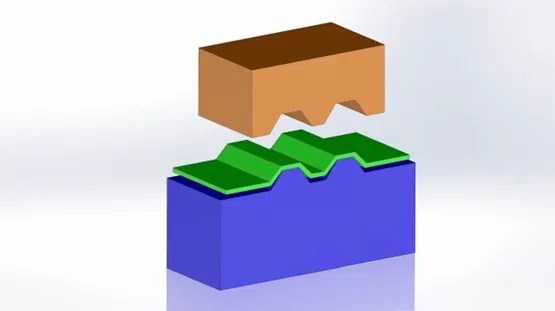
Embossing is a metal forming process for producing raised or sunken designs or reliefs in sheet material, this helps in increasing the strength of the produced part
Hemming
Hemming is a operation in which the edges of the sheet are folded over another part in order to achieve a tight fit. Normally hemming operation are used to connect parts together, to improve the appearance of a part and to reinforce part edges
Types of hemming operations
Conventional die hemming: flanges is folded over the entire length with a hemming tool
Roll hemming: the hemming rollers is guided by an industrial robot to form the flange
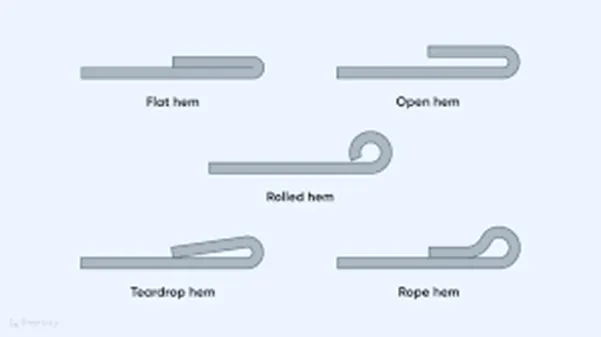
Types of hems
Flat hem
Open hem
Rolled hem
Teardrop hem
Rope hem
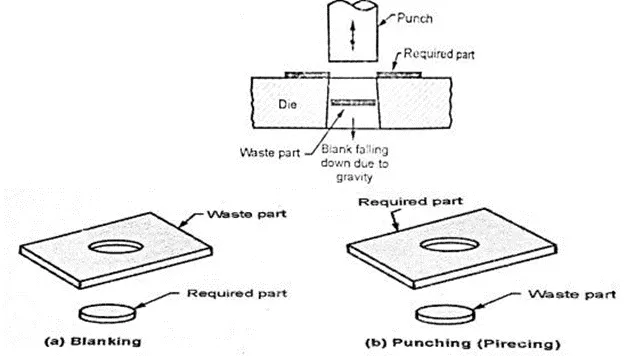
Blanking
It is cutting operation of a flat sheet metal and the article punched out is known as blank (required product) and the material left behind is considered as waste
Punching
It is similar to blanking only the main difference is that, the hole is the required product and the material punched out from the hole is considered as waste
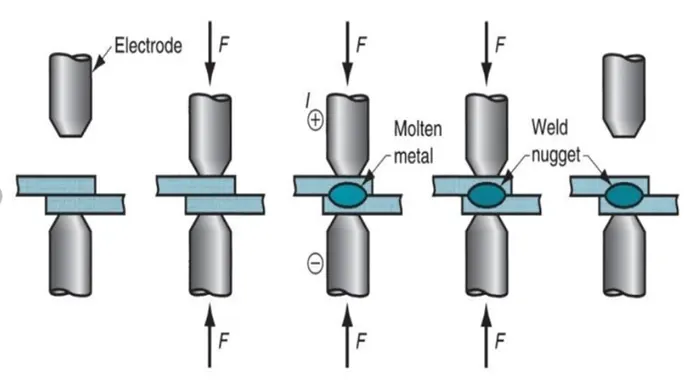
Spot Welding
Spot welding involves using heat produces by resistance to an electrical current to join materials together. The current heats the material to a point where they become malleable. The use of strong pressure bond them together
BACK DOOR DESIGN
Door Part Thickness
Outer panel: - 0.75mm
Inner panel: - 0.75mm
Reinforcements: - 1.5mm
Given data
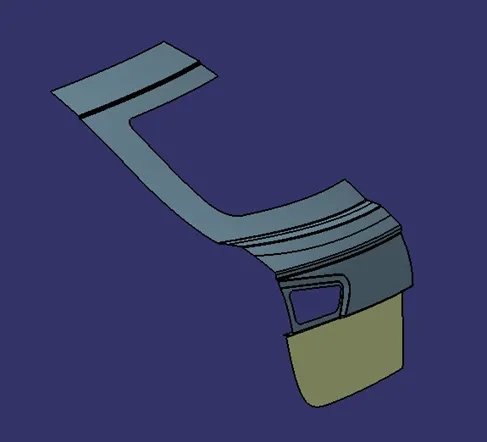
Given file is repaired and tooling axis is created
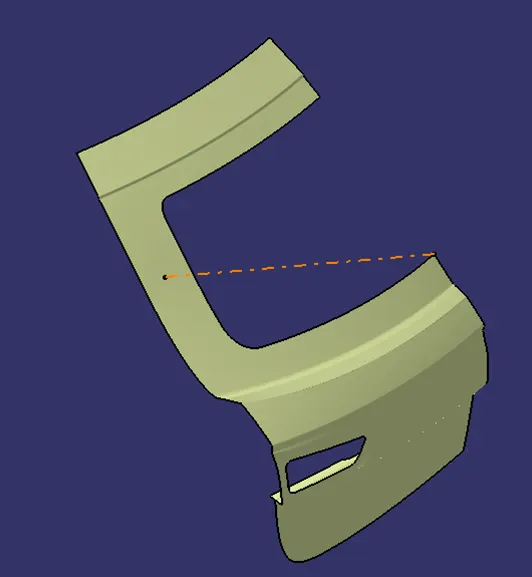
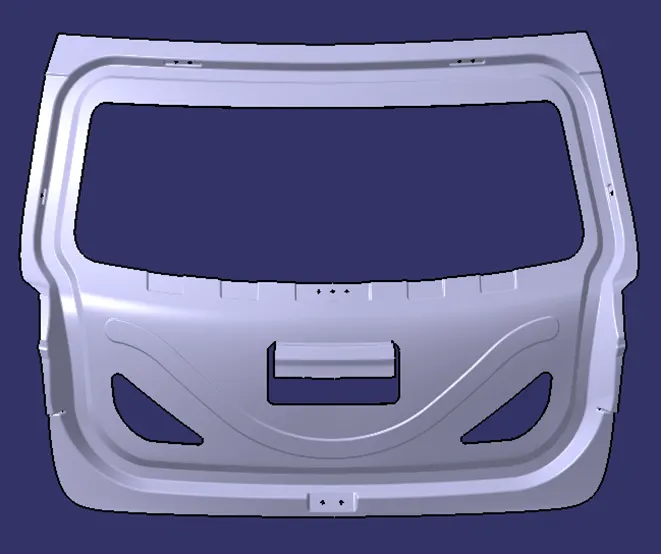
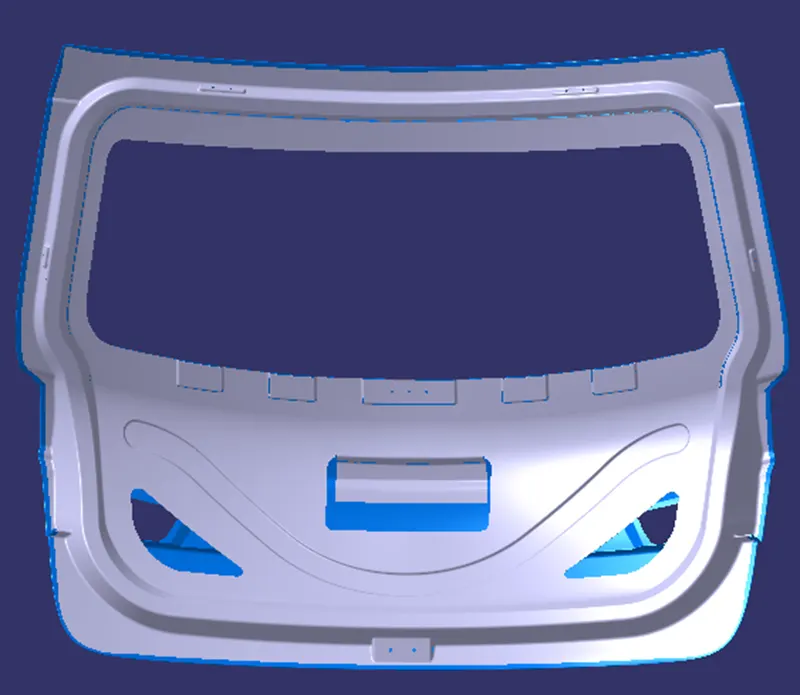
Inner panel is created with 0.75mm thickness providing embosses, openings and screw holes
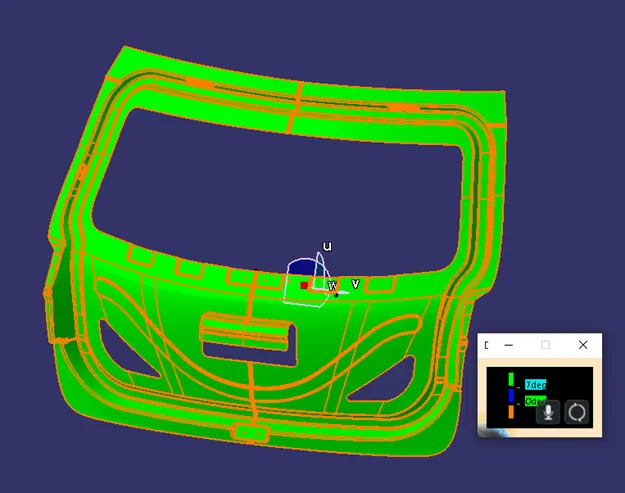
Draft analysis of inner panel
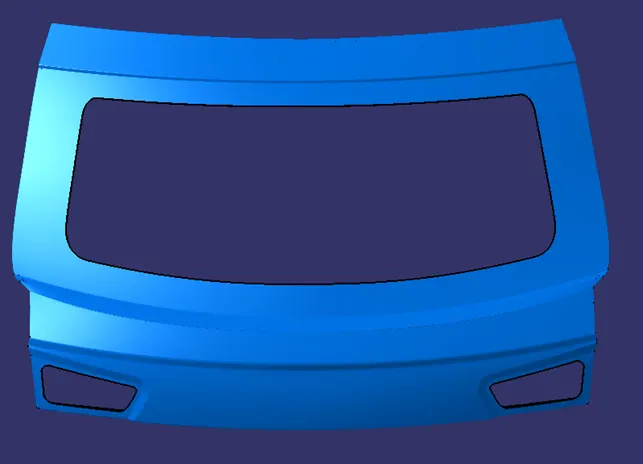
Outer panel upper part is created with 0.75mm thickness hemming is also done for fixing it to the inner panel
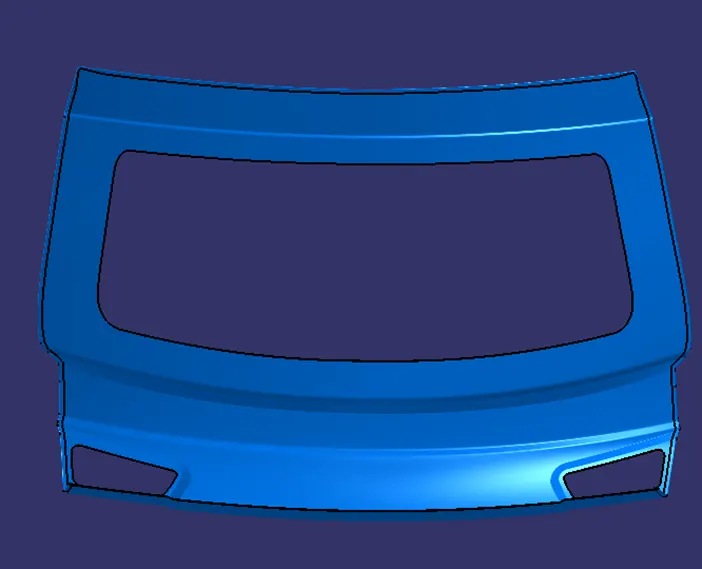
Outer panel lower part is created with 0.75mm thickness hemming is also done for fixing it to the inner panel
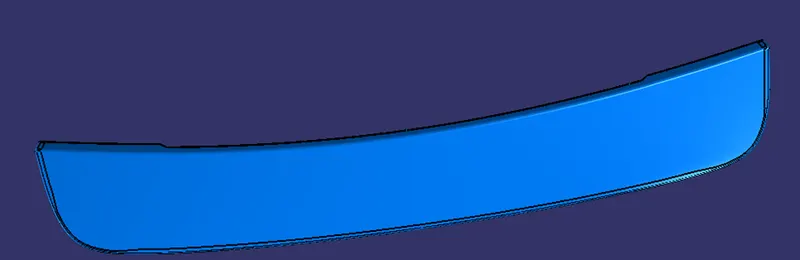
Then reinforcement for hinge gas stay wiper motor and latch and striker fixing is made
Hinge reinforcement
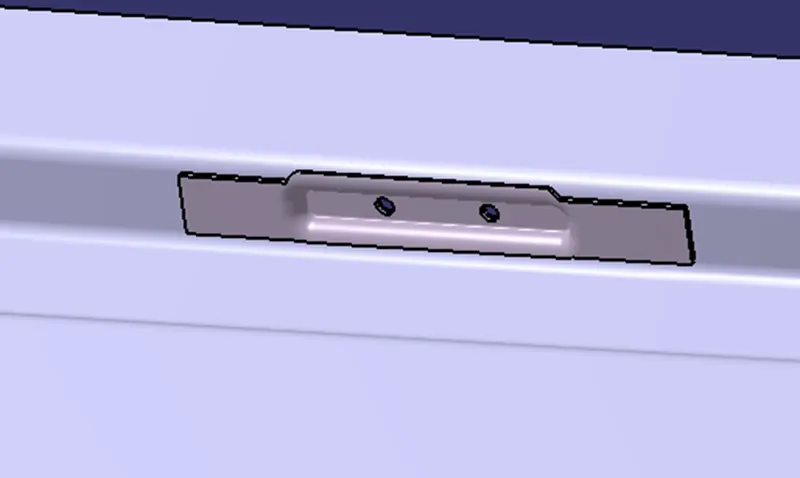
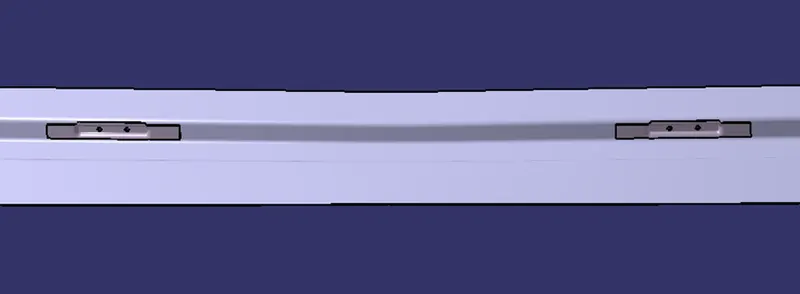
Gas stay reinforcement
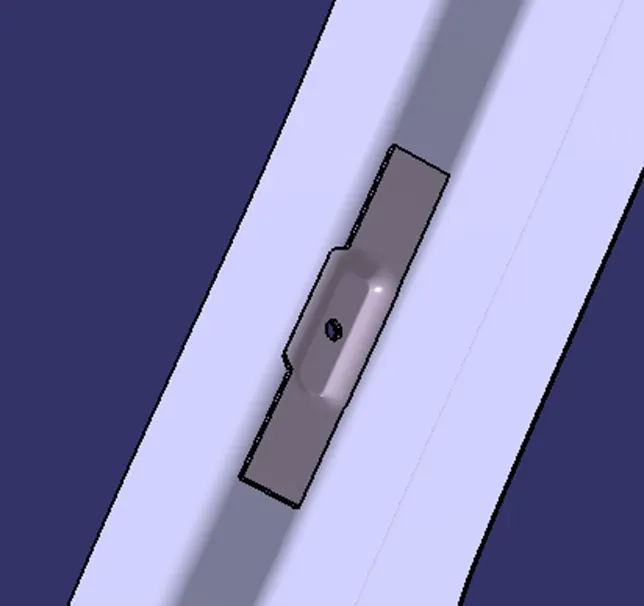
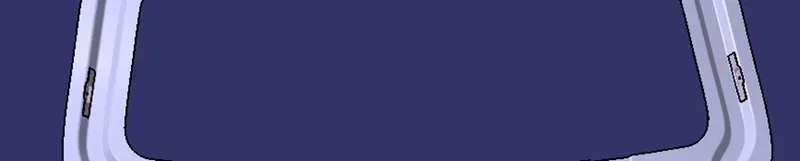
Wiper motor reinforcement
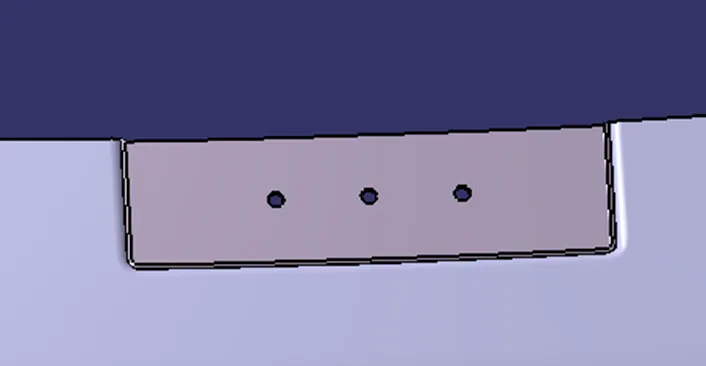
Latch and striker reinforcement
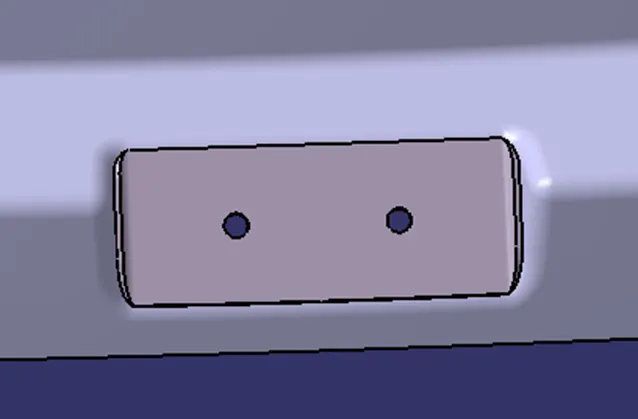
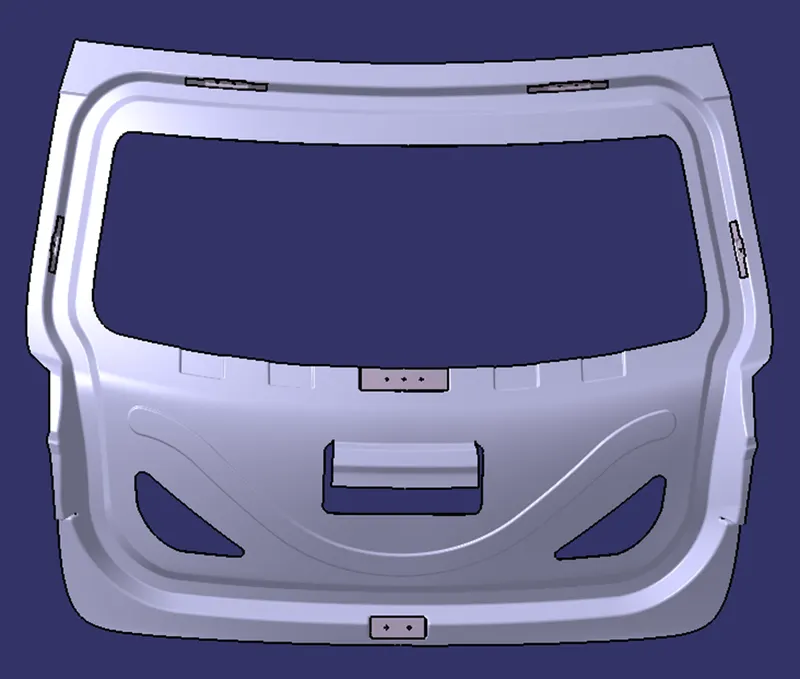
Final Assembly
CONCLUSION
Thus, the design of back door using appropriate design methodology and providing necessary reinforcement and embosses are done