Design of backdoor
INTRODUCTI0N:
A "back door" in a car typically refers to the rear passenger door or the rear cargo door, depending on the type of vehicle. which gives access for the boot space to store luggage, spare wheel etc. The doors can be operated mannualy or eclectric powered.In most of the luxuary car is electric powered.
Basically the car parts are made of Steel or Aluminium based on the budget of the car.
Using Aluminium improve the Strength where we can avoid the reinforcements. Aluminium parts are casted and we can very the thickness of the part, because of this avoid or reduce the number of parts as compared to Steel. Only drawback is the cost of aluminium, which is high cast As compared to steel.
Steel Parts are stamped, we cannot vary the thickness of the part because of more number of parts are added. which could increase the weight of the part.
So now a days most of the car manufacturers are trying to use Aluminium instead of Steel and they reduce the number of parts and weight of the car drastically.
| STEEL | ALUMINIUM |
| Parts are stamped | Parts are casted |
| Reinforcement is necessary | Reinforcement is neglected |
| Constant Thickness | Varried Thickness |
| More Component | Less Component |
| More Weight | Light Weight |
| Less in Cost as compared to Al | More Cost as compared to Steel |
COMPONENTS OF THE BACK DOOR:
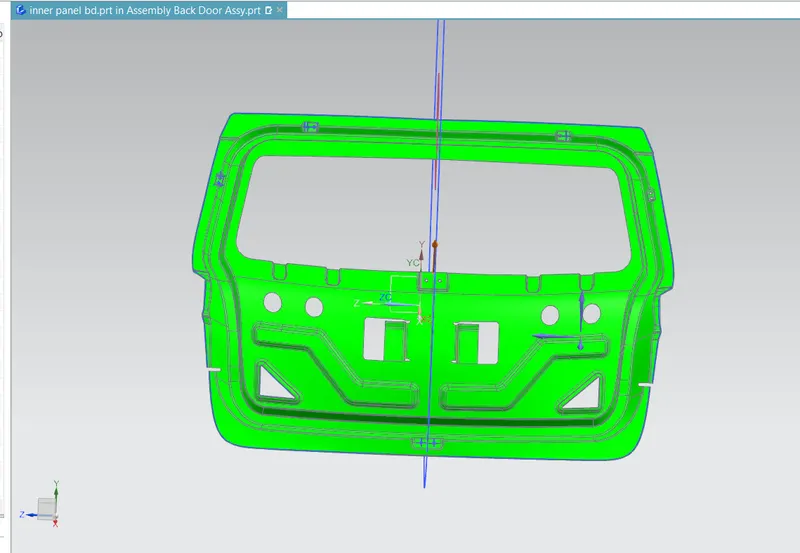
- Inner panel
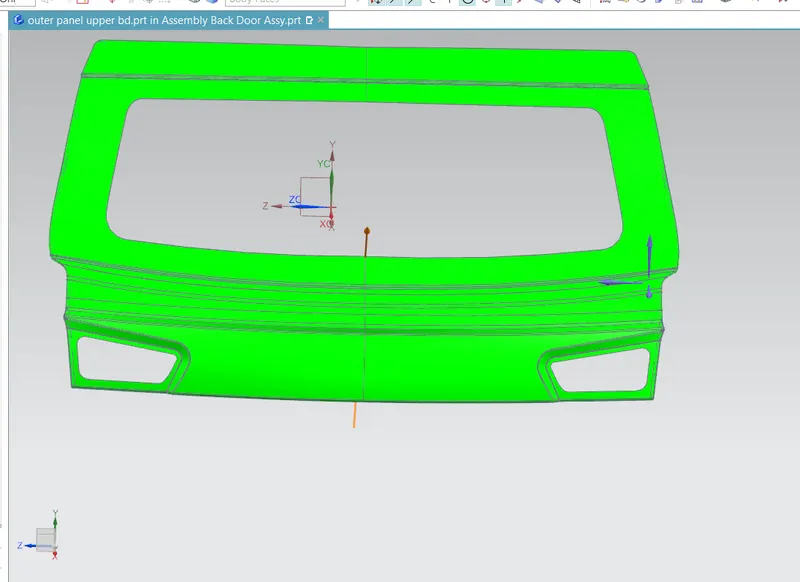
- Outter panel upper
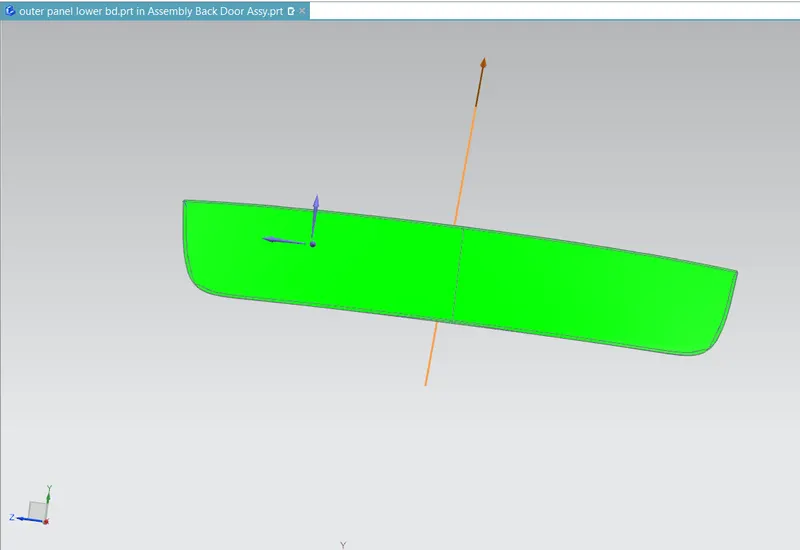
- Outter panel lower
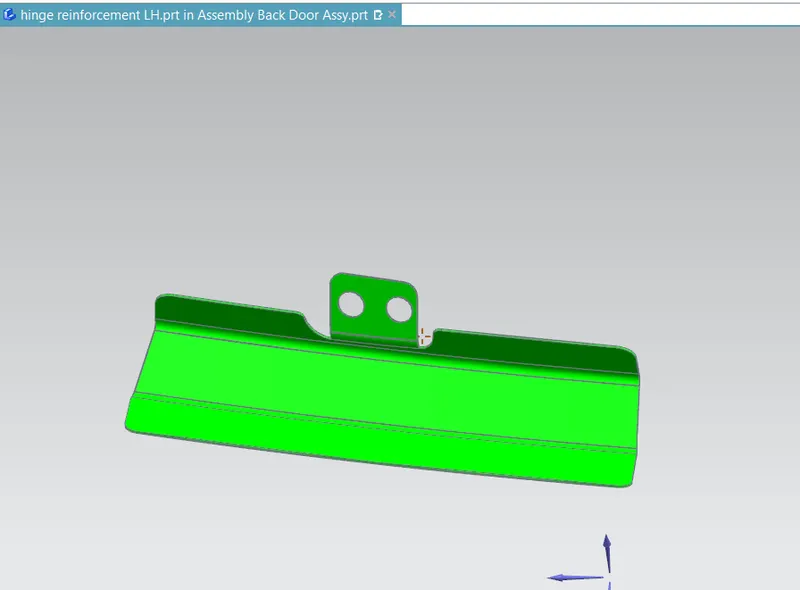
- Hinge reinforcement LH
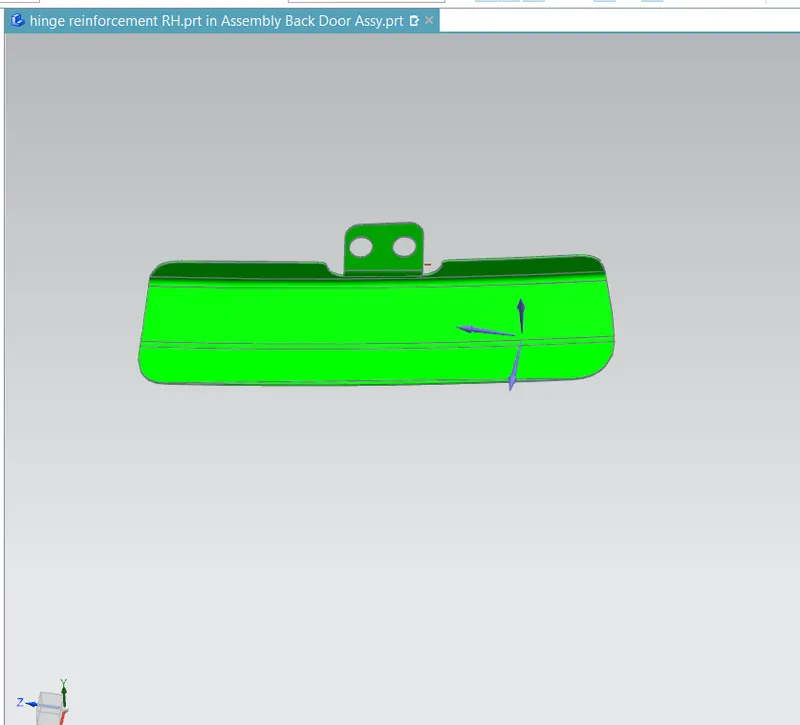
- Hinge reinforcement RH
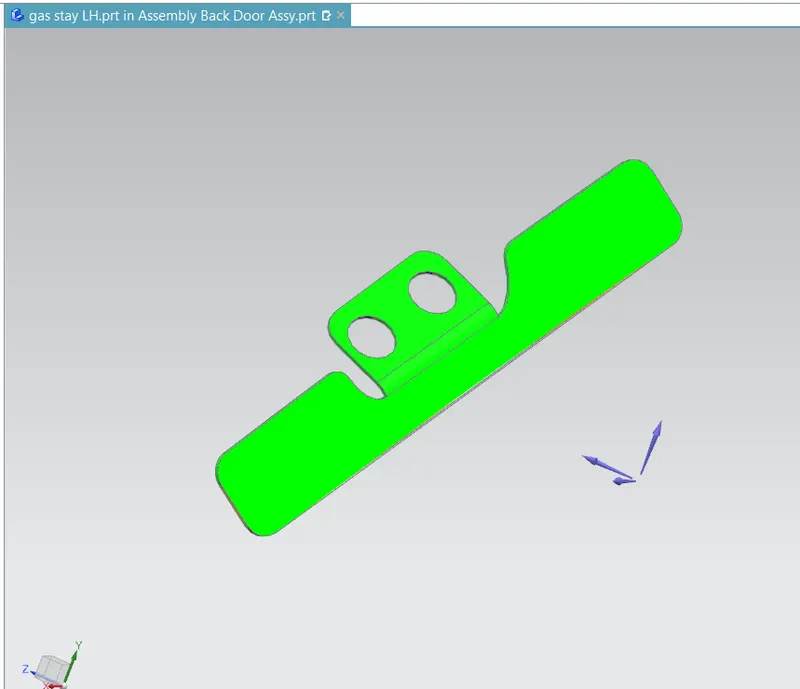
- Gas stay reinforcement LH
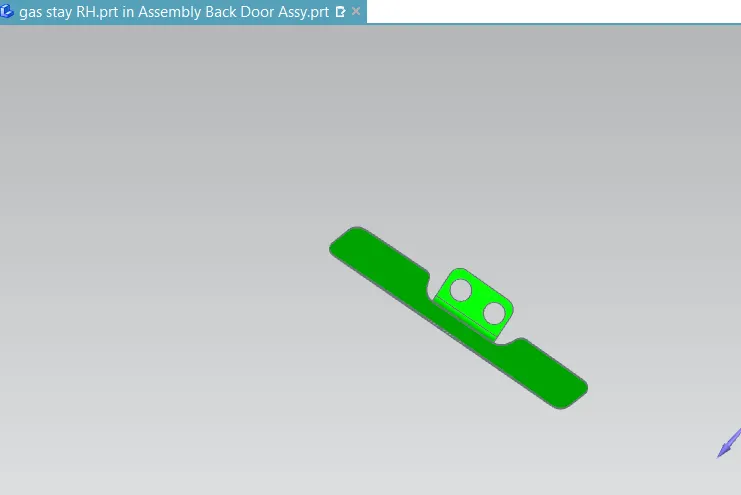
- Gas stay reinforcement RH
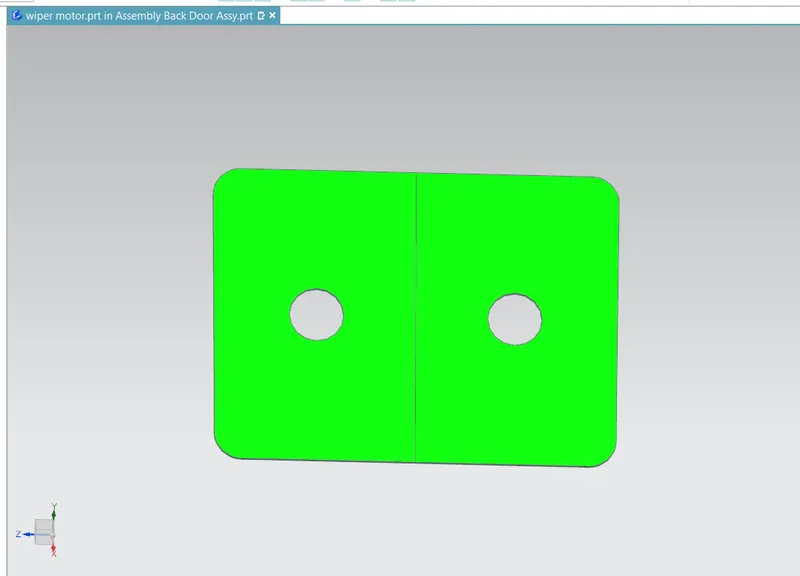
- Wiper motor reinforcement
- Latch reinforcement
INNER PANEL:
Wiper motor, latch reinforcements, hinge reinforcements and gas stay reinforcements are mounted on the inner panel of the backdoor only.
Before starting to design the inner panel of the back door the tooling direction for Deep Drawing purpose should be created.
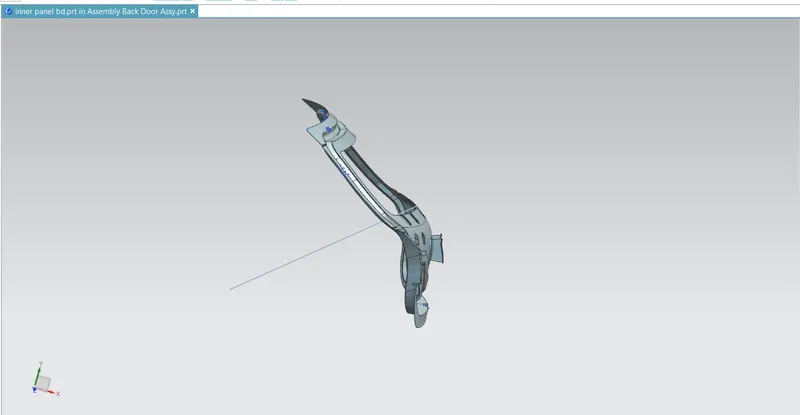
LANCING:
Lancing is a metal cutting operation in which the metal is sliced or slit to free up metal without separating it from the original sheet. Unlike other metal cutting processes, lancing does not create a slug. This process can save material and eliminate the need for expensive scrap removal systems.
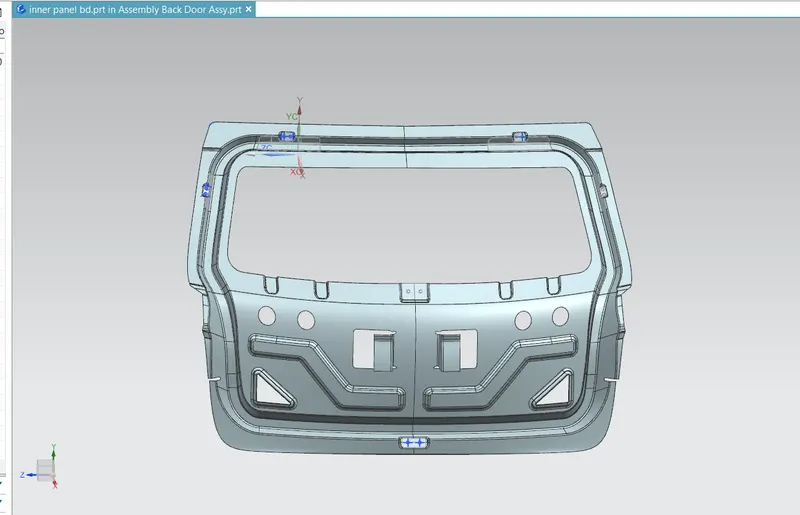
EMBOSSES:
The embosses in the inner panel helps to increase the strength and act as a local reinforcement. Another purpose of giving emboss is to distribute impact forces towards hinges.
OUTER PANEL:
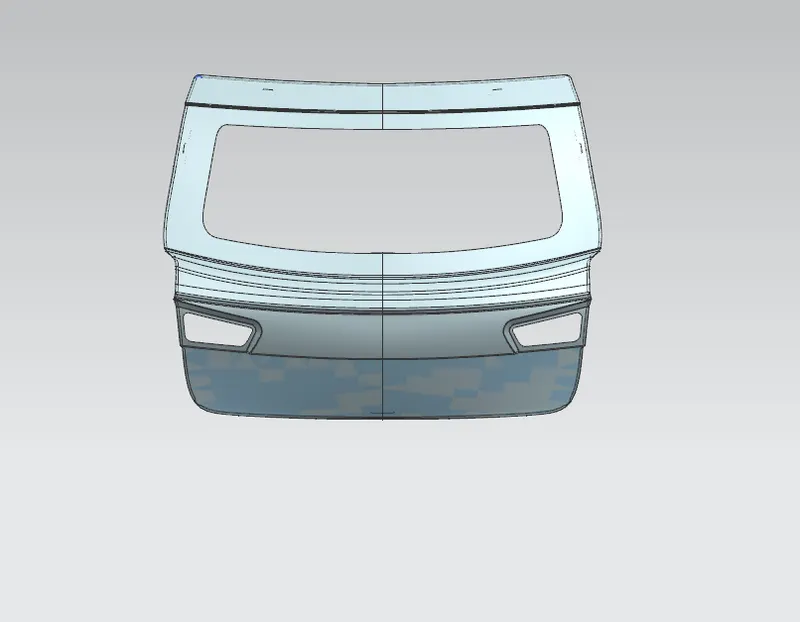
In this project the outer panel is two parts, one is outer panel upper and another one outer panel lower.
Outter panel is the styling surface of the backdoor. Glass for rear visibility is mounted on the outter panel upper. tail lamps are also mounted on the outter panel upper.
Number plate is mounted on the outter panel lower.Spot welds and other manufacturing process should done only on the inner panel because the outter panel is the styling surface which should not have any scratches or welds .Because it affects the style of the car which leads to bad impression on the customers.
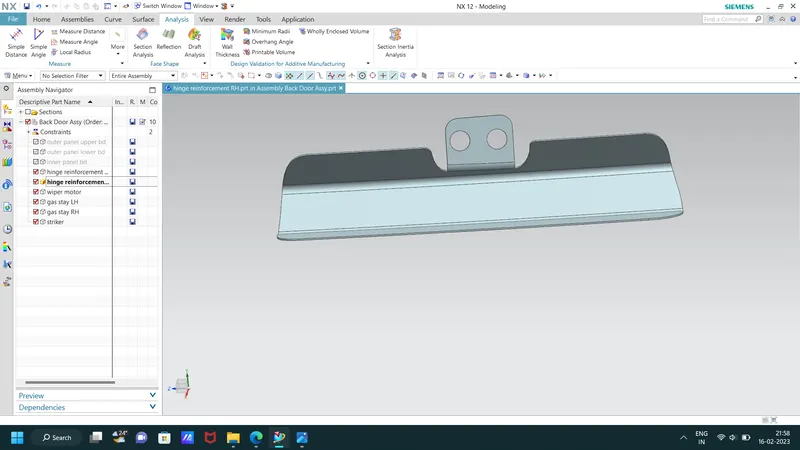
HINGE REINFORCEMENT:
Hinges support the weight of the whole backdoor and it's uses for allow to door open and close condition.Hinge is providing rotation to backdoor about it’s own axis and also keep it connected to the roof portion.
GAS STAY:
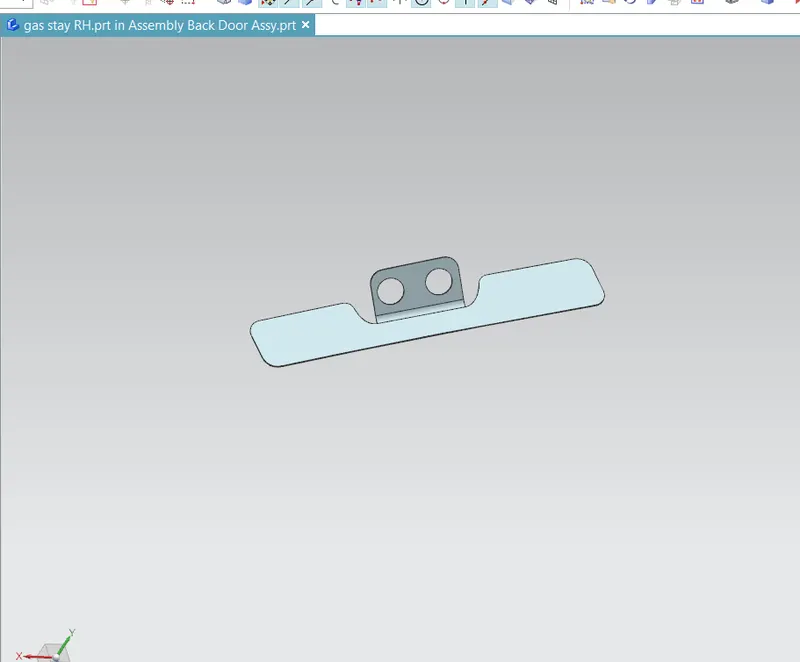
Gas Stay is a device used for supporting the back door in its open position. Gas stay is keep to door open condition.One end of the Gas Stay is fixed on the backdoor and the other end on the Body Side or on the Back door stationary area.
The gas stay reinforcements is created with embosses to increase a strength of inner panel of the back.
STRIKER:
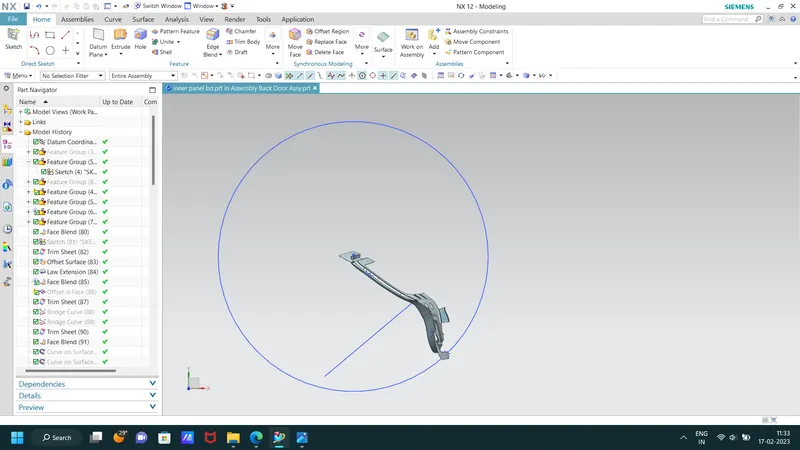
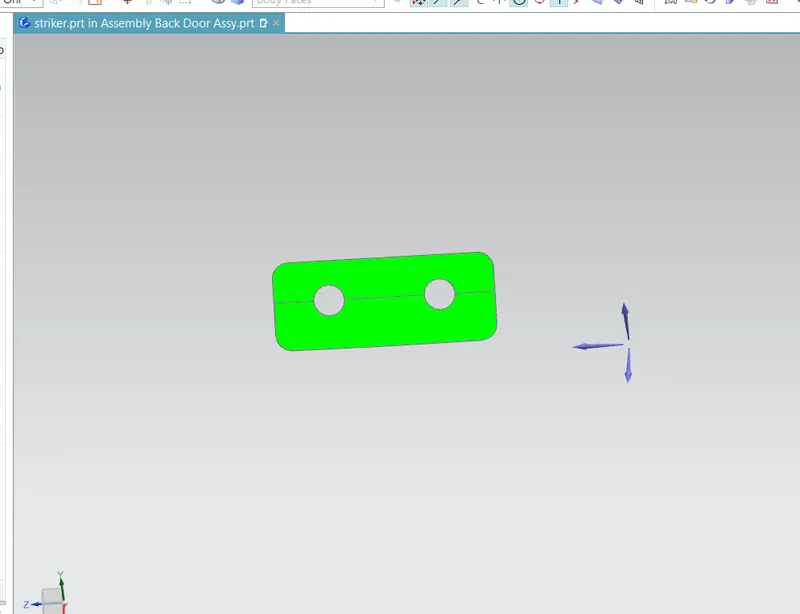
Circle drawn from the center of the hinge axis to find the path of the striker and positioned perpendicular to the path.
WIPER MOTOR:
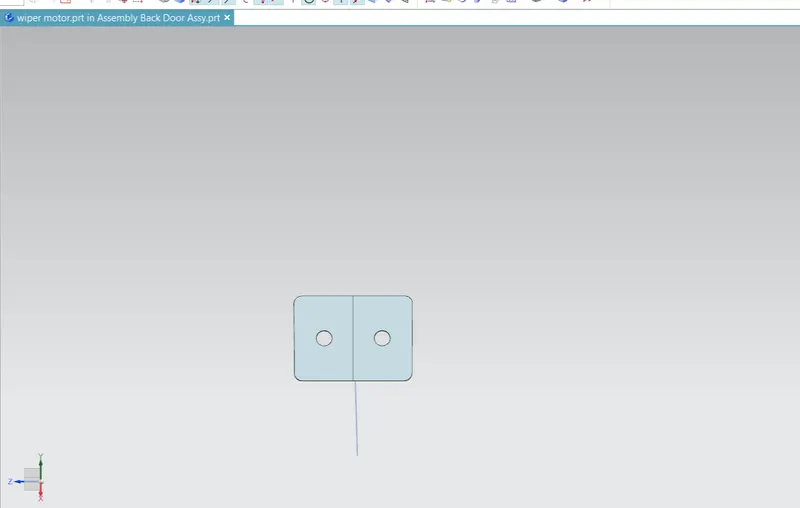
Wiper is used to to wipeout the rain water falls on the rear glass. It is actuated by the motor which is mounted on the inner panel due to the vibration and heat created by the motor. The inner panel where the motor is mounted gets deform and the parts attached to the motor starts to vibrate which leads to poor NVH. So we have to provide the reinforcement where the wiper motor is placed.
HEMMING:
Hemming and seaming are two similar metalworking processes in which a sheet metal edge is rolled over onto itself. Hemming is the process in which the edge is rolled flush to itself.
CORNER RELIEF:
During the hemming process, when giving the Corner Relief helps to control sheet metal material behavior and to prevent unwanted deformation during unbend operations and also helps to reduce the number of passes in hemming.
DRAFT ANALYSIS:
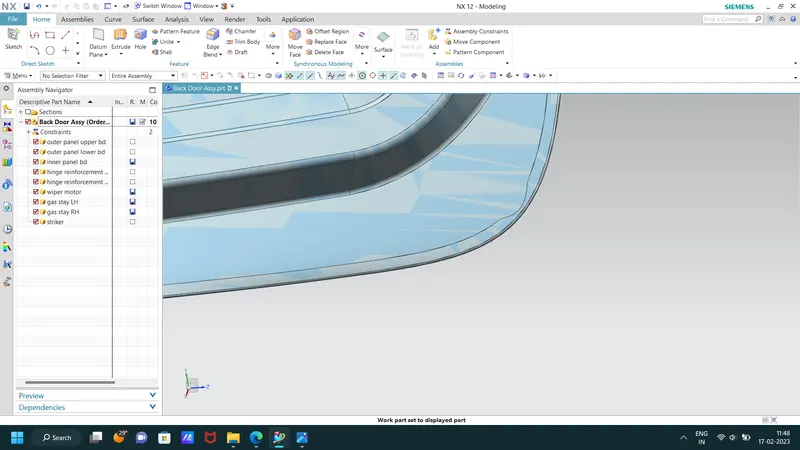
The draft analysis will be performed for the tooling direction created at first and checked that the model is suitable for manufacturing.
CONCLUSION:
The back door was designed from the given styling surface and Draft analysis is also done.