Hood design-Week 2
DESIGN OF HOOD USING NX CAD
OBJECTIVE :
To design outer panel of Hood with Hem and develop the Inner panel with all necessary reinforcements defition of the positioning of the Hinge, striker and create provision for mastic sealant points.
THEORY :
The Hood or Bonnet of a car is considered as the frontal BIW enclosure component. Bonnets are designed to reduce air resistence as the air flows around the car. The design of the Bonnet is vital since it affects the aerodynamic flow around the car. Apart from this bonnet are also designed to meet several other requirements. They serve a great deal of purpose in protecting the passengers inside the car and the pedestrians in the event of the accident. It also acts as the cover for the engine.
HOOD DESIGN CONSIDERATION:
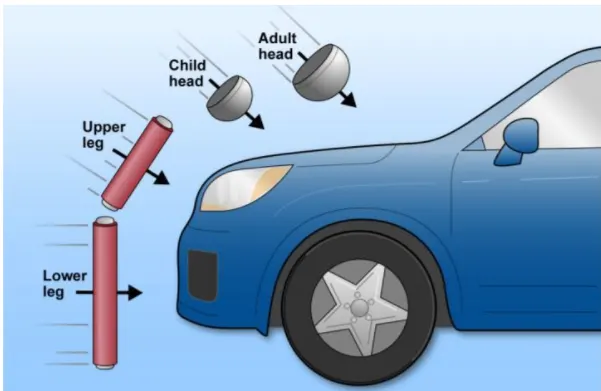
- The European New Car Assessment Programme (Euro NCAP) is a European car safety performance assessment program which has developed test specifications & rating systems for assessing pedestrian injuries during impacts with the front of vehicles such test include a series of tests using impacts designed to bio-mimic a collision at speed of 40 km/h.
- They describe a situation in which a pedestrian is situated laterally & a car first hits one of his legs. Test are conducted on the leg, upper leg & most importantly the head, as head trauma is most commonly responsible for casualties.
- So to avoid severe injuries to the head, the high impact area for adults & children are subjected to less thickness. Also no reinforcement should be provided in that area as during head collision, the hood will absrob the head impact energy leading to collapse of the hood & thus protecting severe head injury.
- Another important criteria for the hood design is the protection of the occupants inside the car during front collision. The design of the hood should be in a such a way that the during the collision, the force should travel in the upward direction through the embosses & directed towards the body of car. Thus protecting the occupants inside.
The Hood or Bonnet consists of following parts :
1.Hood outer panel
2.Hood inner panel
3.Striker
4.Hinge
Hood thickness :
Outer panel thickness= 0.75 mm
Inner panel thickness= 0.75 mm
Reinforcement thickness= 1.5 mm
Operations used in manufacturing of Hood :
- Deep drawing
- Embossing
- Hemming
- Sealant
Deep drawing :
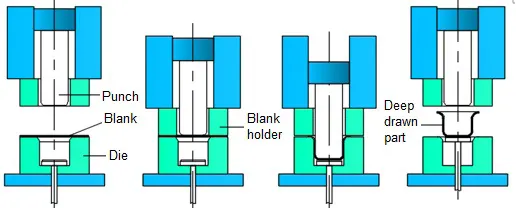
Deep drawing is a sheet metal formation process. This process takes place in such a way that a die placed and on top of that a sheet metal is placed and with a punch from the top/male punch rod an impression is made in the sheet from the die/mould of the male die.
Embossing :
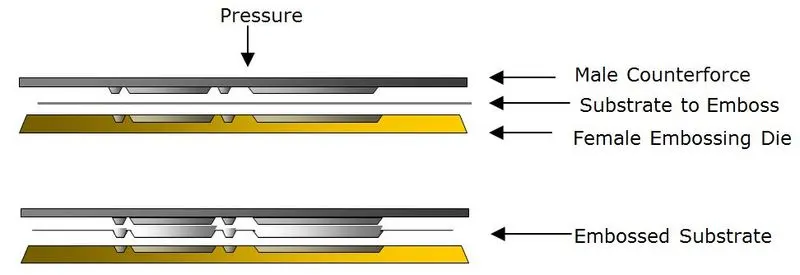
Sheet metal embossing is a stamping process for producing raised or sunken designs or relief in sheet metals. The inner panel of the hood has more embosses of improving the strength of the panel. This process can be made by means of relavant male and female roller dies, or by using sheet or a strip of metals between rolls of the desired pattern.
Hemming :
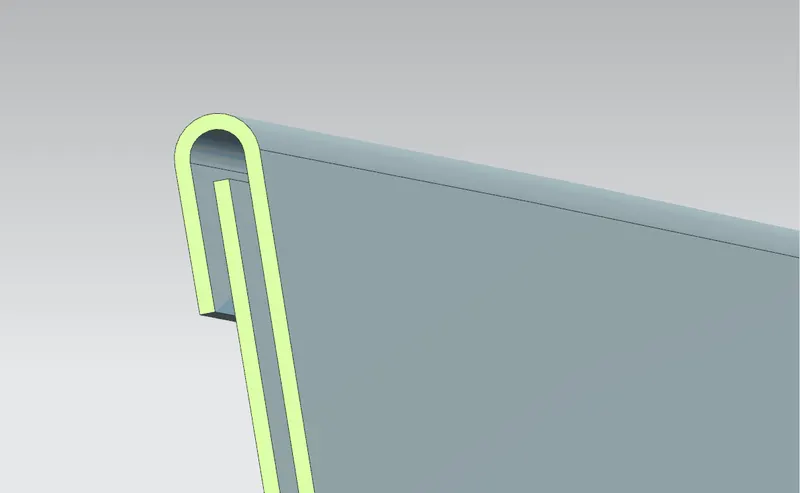
Hemming is a process of forming operation in which the edges of the sheet are folded over another part in order to achieve a tight fit. Normally hemming operations are used to connect parts together, to improve the appearance of a part and to reinforce part edges.
Sealant :
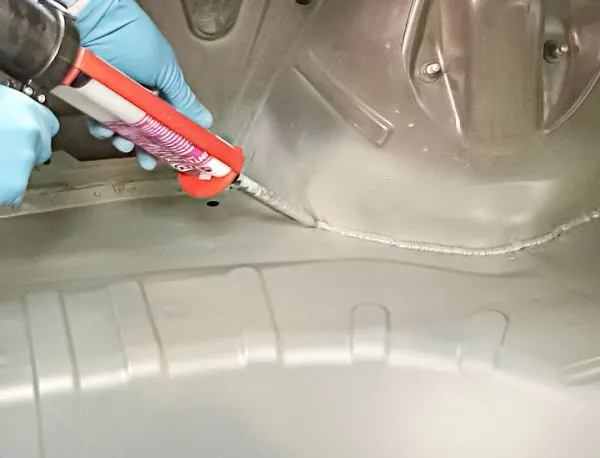
These are applied on the mastic points inbetween the inner panel and outer panel of the hood by using a sealant glue. To fix the outer panel, processes like bolting, riveting or welding is used, it will lose all its features. So sealant is used which is elastic compound and acts like rubber. It is placed between both the panels.
Hood outer panel
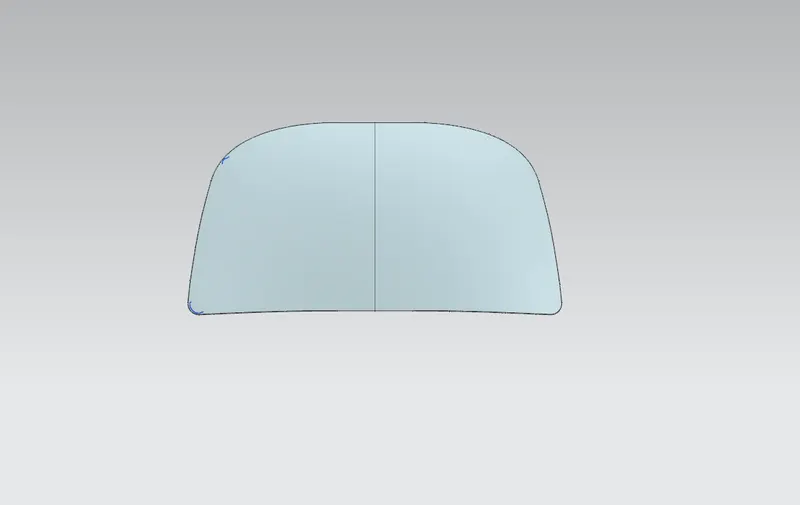
- Hood outer panel is the most important part of the hood to makes the car look in a very good aesthetic proportion.
- The outer panel is used to be on top of the inner panel since it provides more damage resistant from outer environment and protect the inner panel and the engine compartment.
- Based on the master diagram the hood outer panel thickness is provided with 0.75mm.
Inner Panel
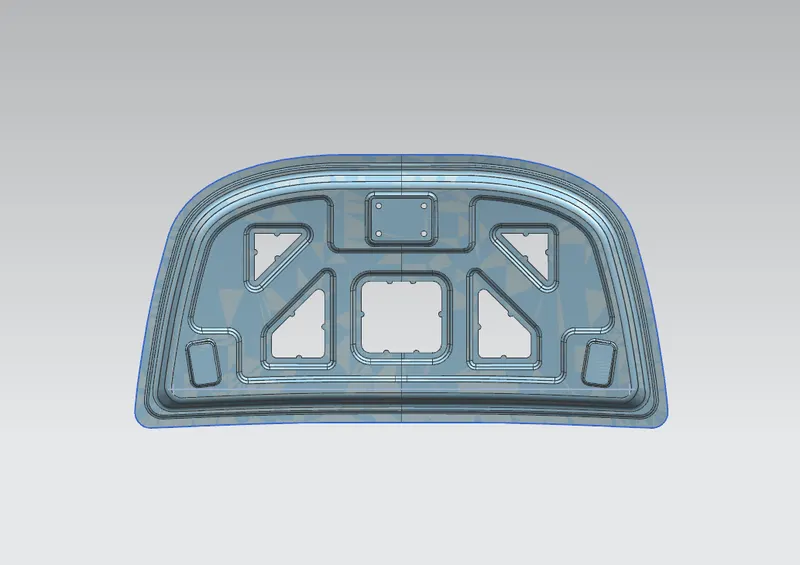
- In the inner panel only we can research & implement the safety of pedestrians & as well as the driver. In this panel only we can attach the reinforcement, embossed, mastic points etc.
- It is an object of the present invention to provide a hood inner panel capable of reduction of a reaction force of the hood inner panel even if a level of deformation of a hood of a vehicle increases, & ensuring a sufficient energy absorption capacity.
Striker and Hinge reinforcements:
Striker
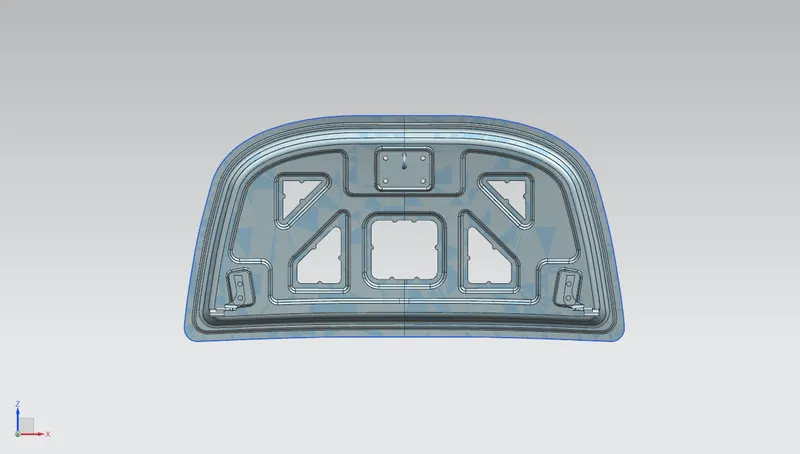
part is acted in the hood assembly as a lock kind of system for outer panel and inner panel to lock on to the chasis while on motion. Latch will be provided on bottom of the inner panel for support of the hood.
Hinge
part where it is fixed with the hood and the engine compartment for open and close features using axis orientation. One end will be fixed on to hood and another with engine compartment.
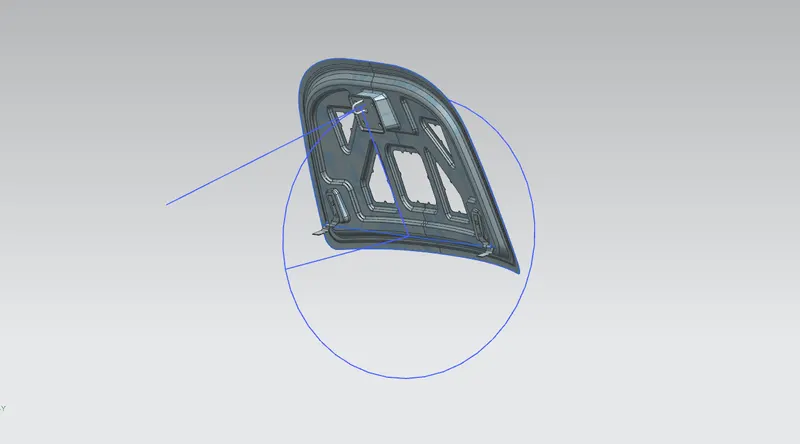
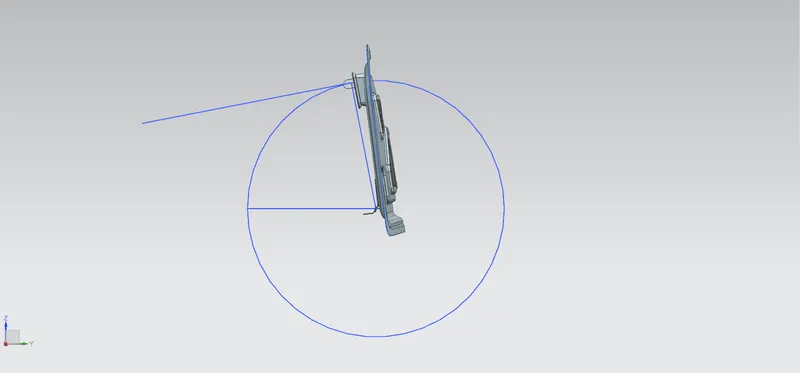
Latch trajectory
While opening or closing the hood, the latch must be perfectly aligned to the fixing or striker point. For that, the latches trajectory must be perpendicular to the hinge axis.
MASTIC POINT
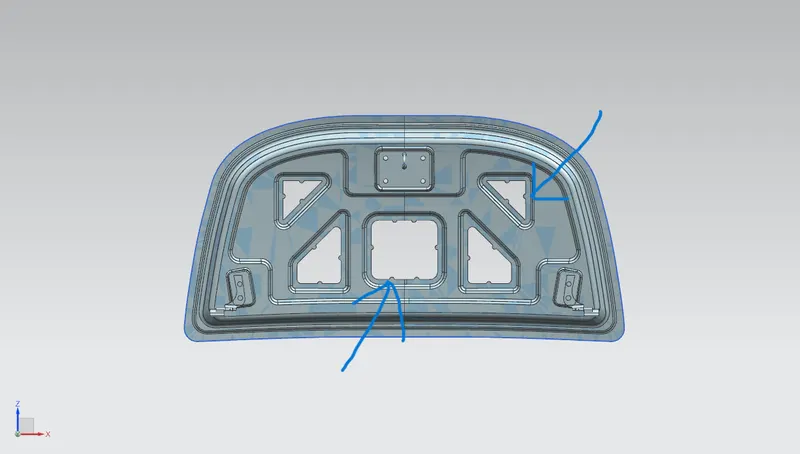
- The mastic sealant or mastic point is an elastic compound that behaves like a rubber. The mastic points are defined on the hood inner panel where the hood can easily deform.
- They help the hood outer panel to come back to its original shape after its gets deformed. The mastic has an influence area of 80mm. See below picture where the mastic provision is given in the current design of hood.
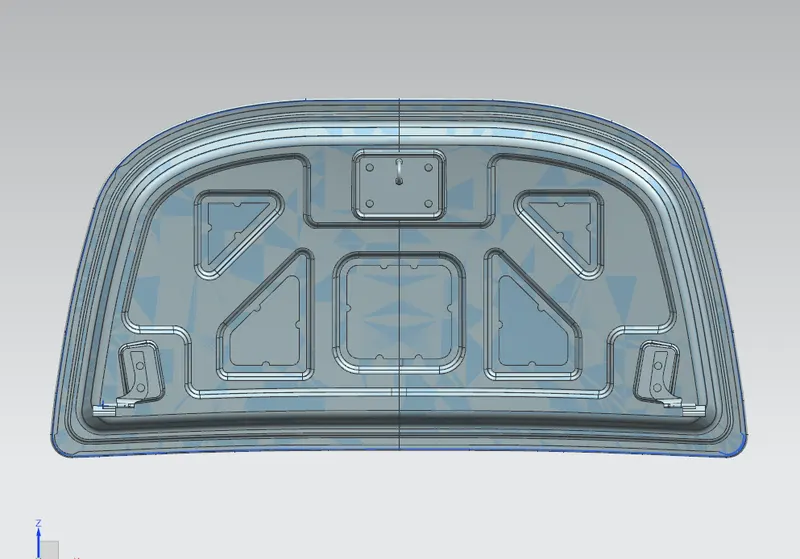
HOOD ASSEMBLY
CONCLUSION
The hood design is completed by using the criteria and dimensional aspects from the master design.