Design of backdoor
BACKDOOR DESIGN
OBJECTIVE:
From using the styling surface with given information and to positioning the latch reinforcement striker, hinge, and wiper mountings. The report consists of positioning of Latch and Stricker, Wiper motor. Taillight mounting, Gas stay Reinforcements with suitable emboss definitions.
INTRODUCTION:
An automobile back door sealant or Tailgate is the panel that covers the boot (or trunk) of an automobile. It enables access to the main luggage compartment. A hinge allows the boot lid to be raised, while devices such as springs or gas cylinders hold it up in the open position. The Backdoor is an assembly of many parts such as inner panel, outer panel upper, outer panel lower and Reinforcement. The inner panel is attached to the outer panel using mastic.
STEEL ALUMINIUM
Parts Parts are stamped parts are casted.
Reinforcement Necessary Can be neglected.
Thickness Constant Can be varied.
Components More Less in number
Weight More Lighter
Cost Less in Cost As compared to Al More As compared to Steel.
PARTS OF The BACKDOOR
- BACKDOOR OUTER PANEL(UPPER)
- BACKDOOR OUTER PANEL(LOWER)
- BACKDOOR INNER PANEL
- HINGE REINFORCEMENTS
- GAS STAY REINFORCEMENT.
- LATCH AND STRIKER REINFORCEMENTS
- WIPER MOTOR REINFORCEMENT
DESIGN CONSIDERTION OF A BACKDOOR
- REAR VISILIBILITY CRITERIA
- REAR CRASH REGULATION AND REQUIREMENTS
- SEALIN AND ITS FUNCTION
- BEND TEST DENT TEST TORSION TEST AND ENDURANCE TEST
- LUGGAGE VOLUME
- GAP AND FLUSHNESS REQUIREMENTS
- JOIN TECHNIC USING LIKE HEMMING, SOPTWELDING
INNER PANEL
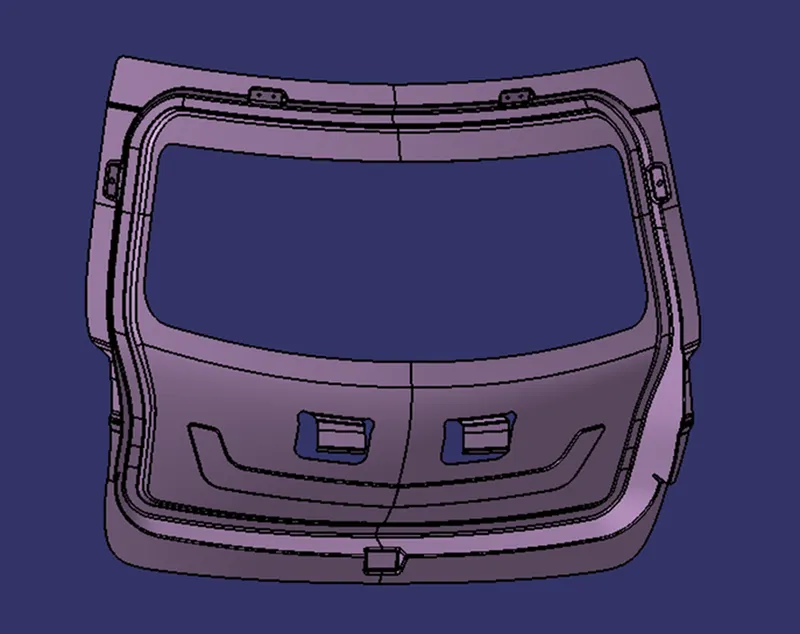
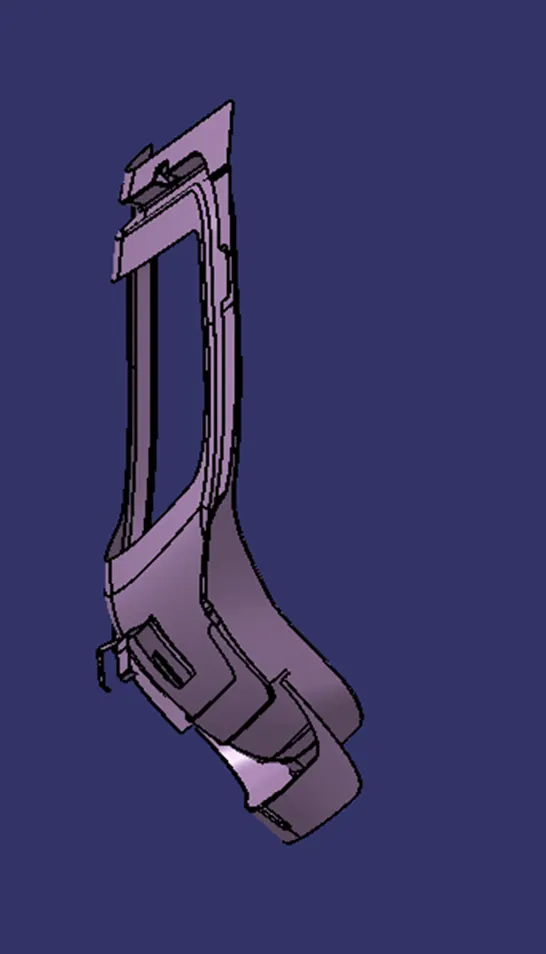
The inner panel is a single Sheetmetal piece deep drawn to complex shape which ensure to withstand the impact force exerted transferase from outer panel during rear collision of car. It is provided with emboss to add extra strength and it is designed in such a way to distribute the forces equally to all regions away from the center of inner panner toward the gas stay and hinges support area. On the periphery flanges are kept applying mastic sealant for doing hemming process. Thickness of inner panel consider 0.75mm
Emboss on the inner panel are faced toward tooling direction so that, during rear collision projected emboss take the impact force before damaging the inner panel and divert the peak impact force toward the hinge and gas stay support areas routing outside faces.
BACKDOOR DESIGN
OBJECTIVE:
From using the styling surface with given information and to positioning the latch reinforcement striker, hinge, and wiper mountings. The report consists of positioning of Latch and Stricker, Wiper motor. Taillight mounting, Gas stay Reinforcements with suitable emboss definitions.
INTRODUCTION:
An automobile back door sealant or Tailgate is the panel that covers the boot (or trunk) of an automobile. It enables access to the main luggage compartment. A hinge allows the boot lid to be raised, while devices such as springs or gas cylinders hold it up in the open position. The Backdoor is an assembly of many parts such as inner panel, outer panel upper, outer panel lower and Reinforcement. The inner panel is attached to the outer panel using mastic.
STEEL ALUMINIUM
Parts Parts are stamped parts are casted.
Reinforcement Necessary Can be neglected.
Thickness Constant Can be varied.
Components More Less in number
Weight More Lighter
Cost Less in Cost As compared to Al More As compared to Steel.
PARTS OF The BACKDOOR
- BACKDOOR OUTER PANEL(UPPER)
- BACKDOOR OUTER PANEL(LOWER)
- BACKDOOR INNER PANEL
- HINGE REINFORCEMENTS
- GAS STAY REINFORCEMENT.
- LATCH AND STRIKER REINFORCEMENTS
- WIPER MOTOR REINFORCEMENT
DESIGN CONSIDERTION OF A BACKDOOR
- REAR VISILIBILITY CRITERIA
- REAR CRASH REGULATION AND REQUIREMENTS
- SEALIN AND ITS FUNCTION
- BEND TEST DENT TEST TORSION TEST AND ENDURANCE TEST
- LUGGAGE VOLUME
- GAP AND FLUSHNESS REQUIREMENTS
- JOIN TECHNIC USING LIKE HEMMING, SOPTWELDING
INNER PANEL
The inner panel is a single Sheetmetal piece deep drawn to complex shape which ensure to withstand the impact force exerted transferase from outer panel during rear collision of car. It is provided with emboss to add extra strength and it is designed in such a way to distribute the forces equally to all regions away from the center of inner panner toward the gas stay and hinges support area. On the periphery flanges are kept applying mastic sealant for doing hemming process. Thickness of inner panel consider 0.75mm
Emboss on the inner panel are faced toward tooling direction so that, during rear collision projected emboss take the impact force before damaging the inner panel and divert the peak impact force toward the hinge and gas stay support areas routing outside faces.
OUTER PANEL DESIGN:
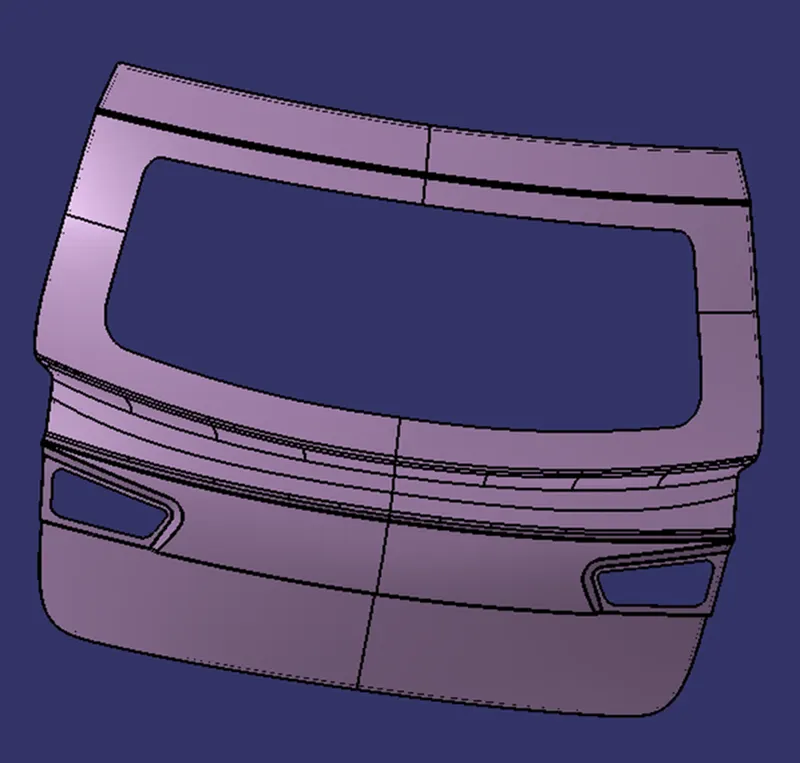
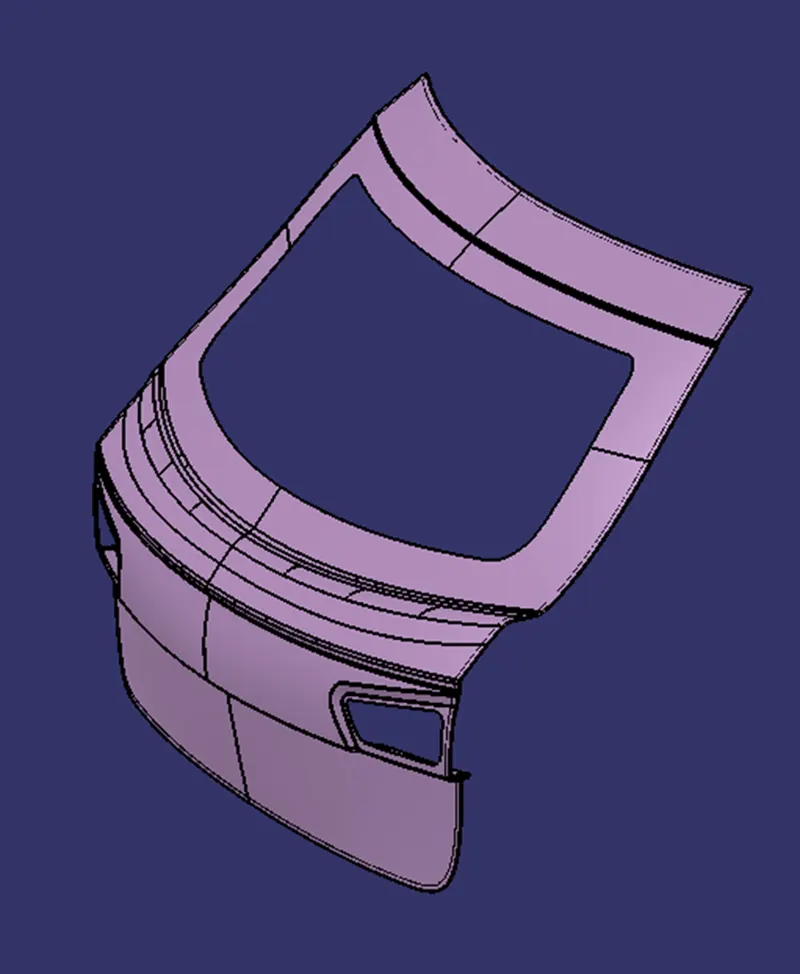
The outer panel is a styling surface of the Back door that covers the inner panel and all mountings of accessories. The outer panel should provide an aesthetic look to the back door and cover the inner panel neatly. The outer panel is divided into two parts as upper and lower part. These parts are attached to the inner panel by hemming around the edges and mastic sealants. Then the lower and upper part is joined using spot welding technique. The thickness of these panels is also considered as 0.75mm.
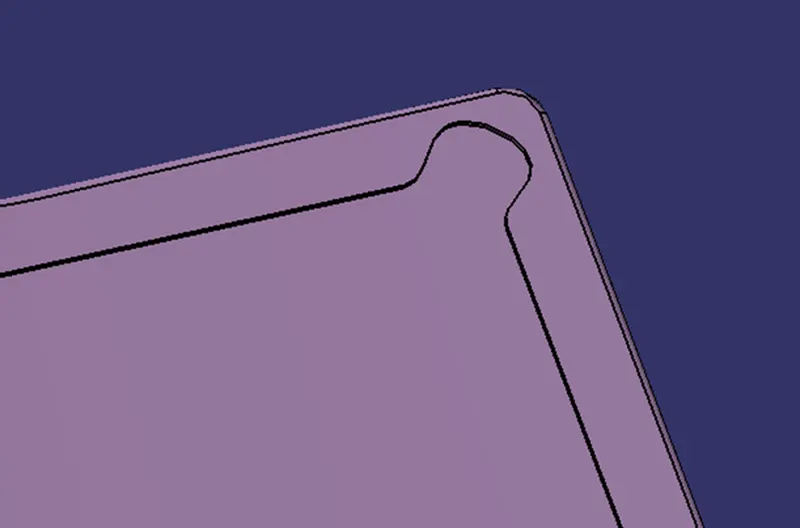
RELIEF
Are provided at the corners and closure areas to avoid intolerance issues arising from the rolling process.
REINFORCEMENT PAD:
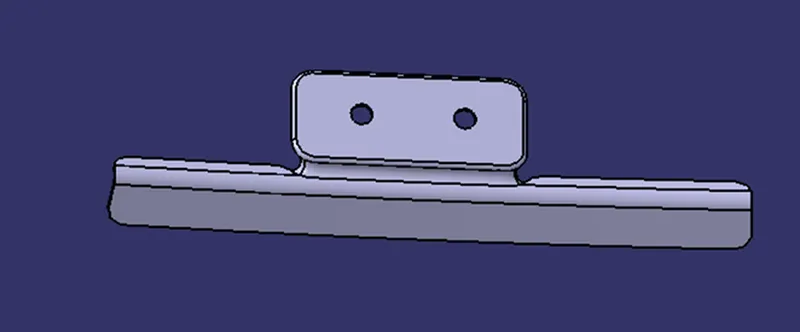
These are used to increase the local strength of emboss structure and provide a strong base for the mounting components like hinges, gas stay, motor mounting and latch Stricker on inner panel. The thickness of all reinforcement pad is 1.2mm.
HEMMING
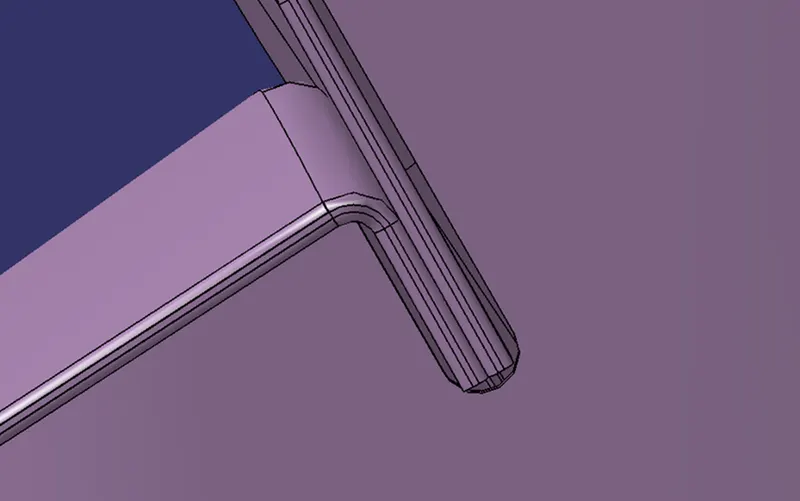
Hemming metalworking processes in which a sheet metal edge is rolled over onto itself. Hemming is the process in which the edge is rolled flush to itself.
MASTIC SEALANTS
To improve NVH (Noise, Vibration and Harshness) i.e. to reduce these levels, Mastic Sealants are used. They also improve strength. They are made of hard Rubber and are introduced as a paste thereby joining the inner and outer panel with a thickness of 5mm. Mastic Sealant are preferred over spot welding to join the inner and outer panel since the latter reduces the aesthetics of the car, especially on the outer panel which is the styling surface.
CONCLUSION:
The Body In White Back Door of a car was designed following the engineering standards and also the deep drawing requirements were satisfied.