Design of backdoor
TITLE: Design of Back-Door (Tailgate)
-
AIM:
- By using the provided styling surface to come up with a back door design, using appropriate design methodologies and to provide the necessary reinforcements and embosses.
-
BACK-DOOR (TAILGATE):
-
What is Back Door?
- Backdoor are one of the type of door of the vehicle which are located next to the passenger seat which provides access to the luggage compartment.
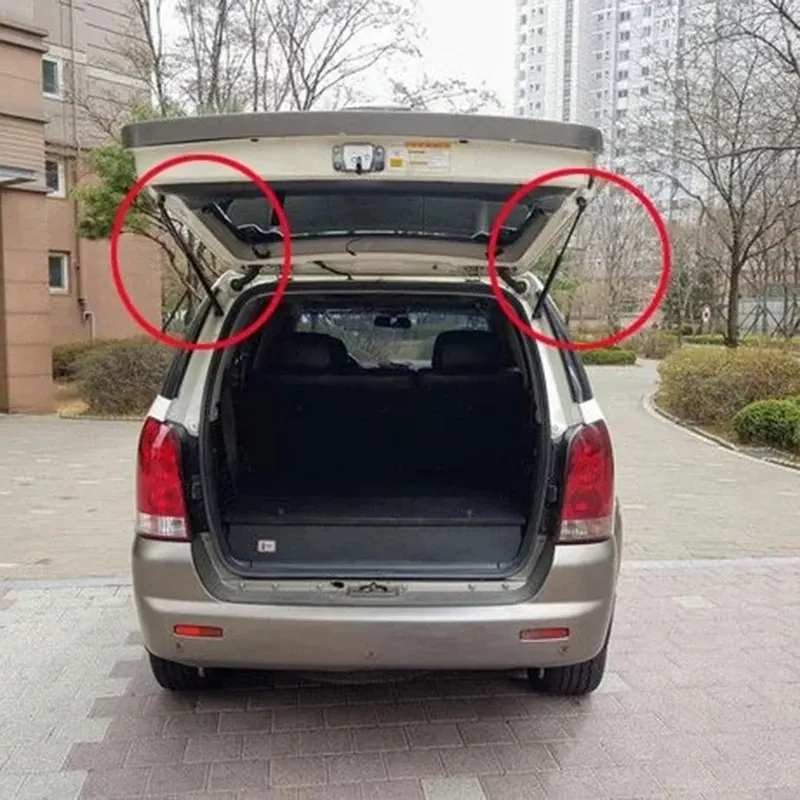
- In the most of the cars, these back door are operated with the help of gas stay which in turn reduces the effort required to lift the door.
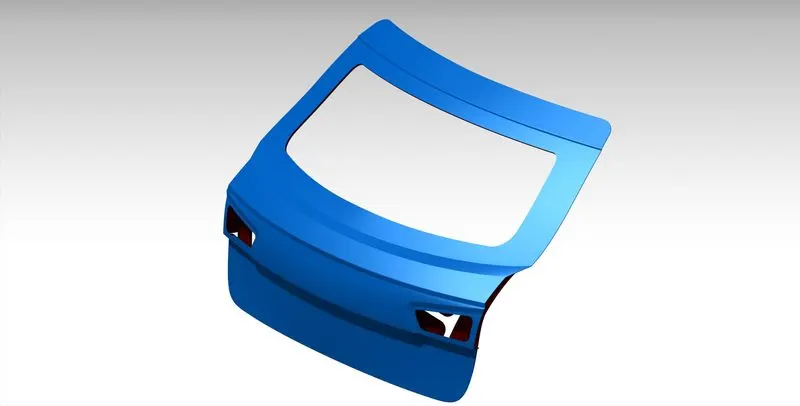
- It houses the outer panel, inner panel and the rear windshield.
-
What material is used for Back Door?
- The material is same to the rest of the body for the car, the material used is Alumininum or High Strength Steel.
-
Why is Back Door used?
- It is one of the closure component in a car.
- It provides safety to the rear of the car from impact.
-
Components in the Back Door:
- Outer Panel
- Inner Panel
- Hinges
- Gas Stay
- Striker
-
Types of Lift System for Back Door:
Gas Stay:
Gas stay types backdoor/liftgate/tailgate is an ideal and most commonly used tailgate mechanism from lower segment car to luxury car segment. The ideal components of tailgate consist of a hinge, door, gas stay and some rubber beadings for sealing of door.
Powered Lift System:
Power trunk lift system is another sophisticated way of trunk or liftgate opening mechanism which is to automatically open and close of the trunk and release of the latch by the touch of a bottom. Powered trunk Lift system consists of a power latch, anti pinch switch, PTG assly, PTG main switch. When the switch is pressed in the compartment or outside the power latch releases the latch and the entire backdoor is opened. The anti pinch switch is located in order to avoid accidental hand insertion during the operation of the door.

-
Back Door Thickness:
- Outer panel thickness= 0.75 mm
- Inner panel thickness= 0.75 mm
-
Design:
Inner Panel:
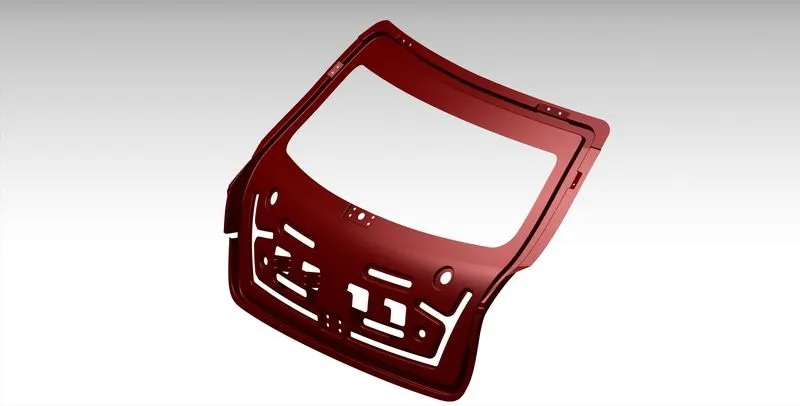
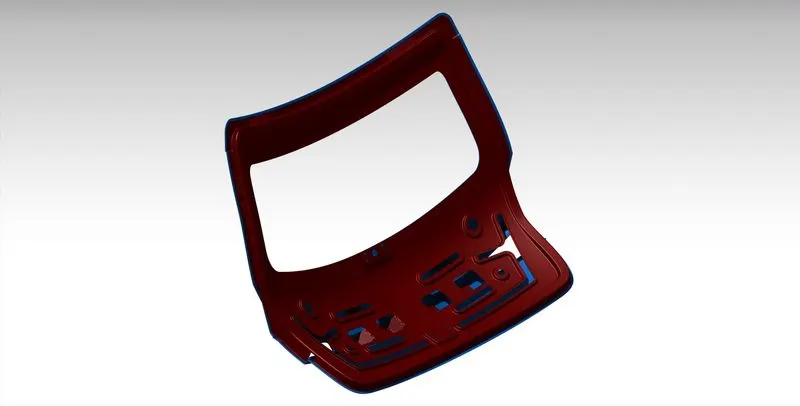
The inner Panel is a component which is used for strengthening the door and it is one of the most important components on which all accessories are mounted like hinges, glass guide channel, mounted trim, latch etc.., The possible method is the integration method. In the integration method, the part is stamped out of a single blank. This reduces the number of tools needed the assembly cost and eliminates any fit ability problem.
-
Outer panel:
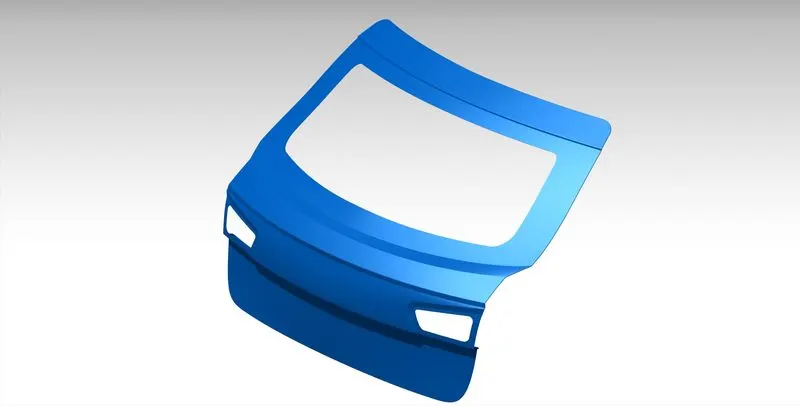
The Outer panel of the back door is similar to other BIW components where it is the aesthetic part of a vehicle. The coating provided is of multi stage which has the property of scratch resistance, rush prevention and smooth and attractive finishes. The Outer panel also has the provisions for the tail lamp, rear fog lamp and also has the provision for license plate mountings. Most of the hatch back cars have the provision for wiper motor.
-
Back Door Assembly:
-
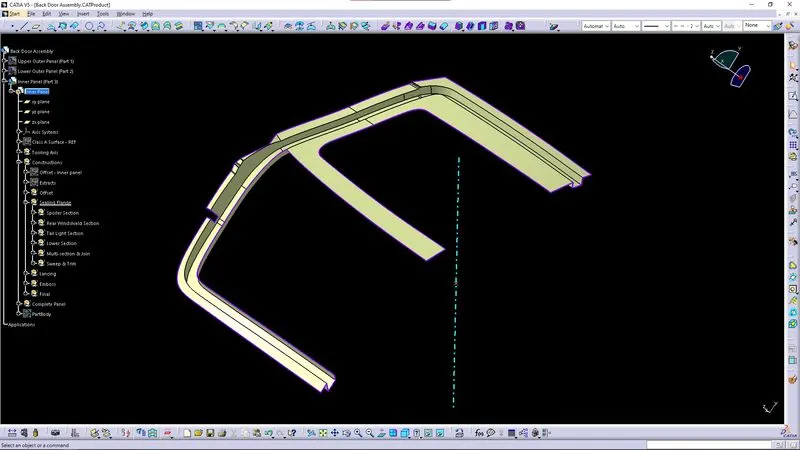
Sealing Flange:
A seal mounting flange projects from automotive body structure into a door opening and receives a U-shaped base portion of a seal that seals with the periphery of an automotive door. The U-shaped base portion has ribs extending therefrom that function as barbs which engage the flange or engage a ramp or bead on the flange to prevent the seal from being dislodged from the door opening. The seal includes a pair of joined tubular portions that are relatively flexible and are flattened upon closing the door to seal with the door.
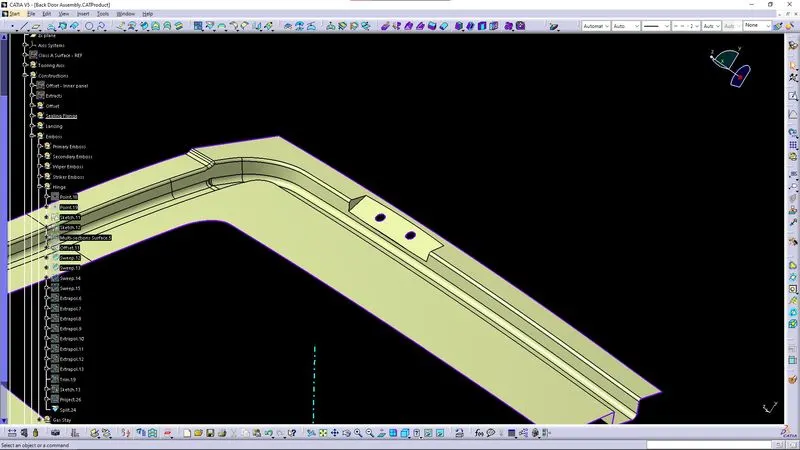
Hinge:
Locking and movement mechanism in a back door.
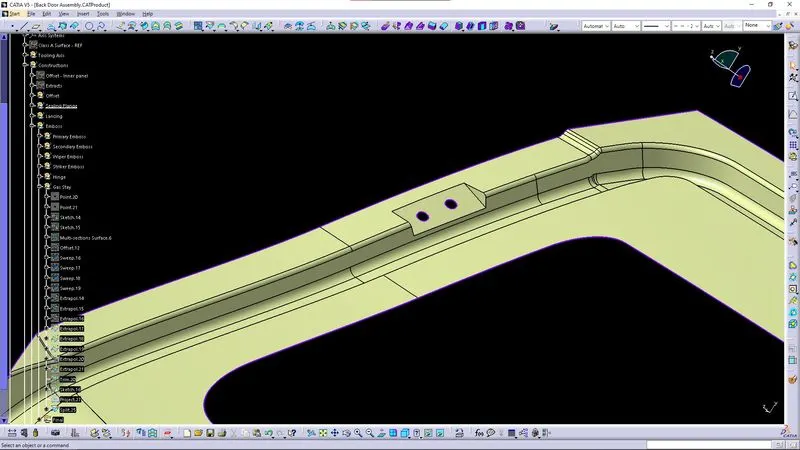
Gas Stay Mounting:
This mount location is for the lifting mechanism which makes the component easily liftable for the person opening the back door.
-
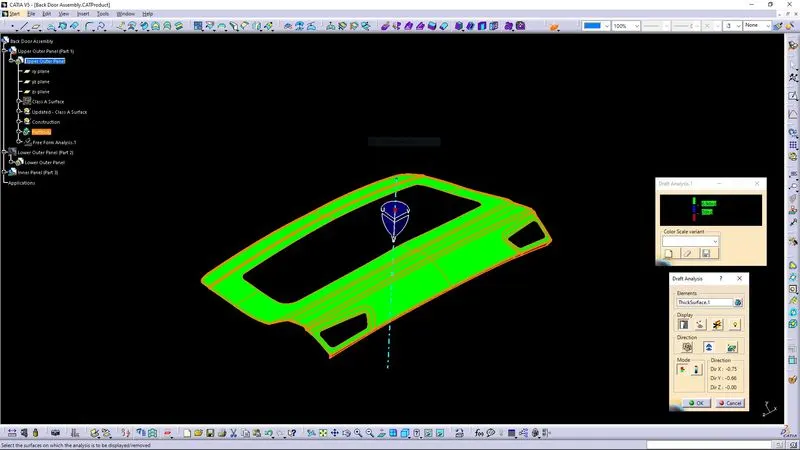
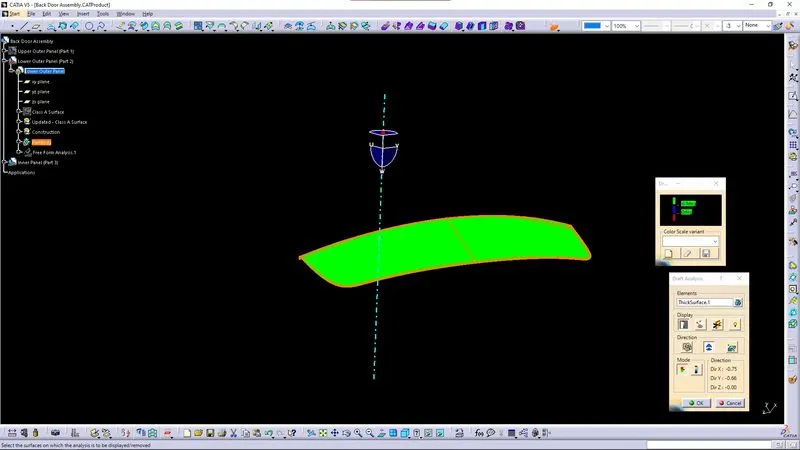
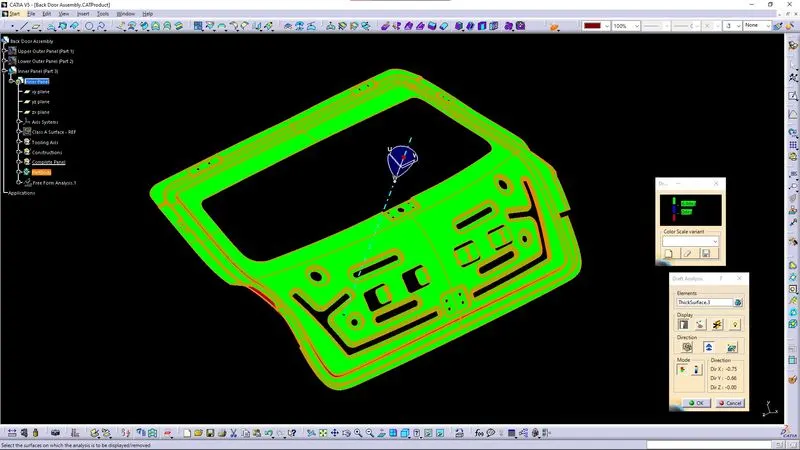
DRAFT ANALYSIS:
1. Outer Panel (Upper):
2. Outer Panel (Lower):
3. Inner Panel:
-
Conclusion:
- The backdoor design is completed successfully by using the given styling surface and appropriate design methodologies.
- Draft analysis is performed and manufacturability is achieved.