Design of backdoor
Aim: To design a Backdoor of the car on sheet metal using the appropriate design and provided skin data by considering design rules.
Objective: To design the backdoor with design methodologies and and provide the emboses,reinforcements in the inner panel and side relief in outer panel to increase the strength.
Theory:
Backdoor:
The Back door of a car is a component which hinges at the back of the car to cover the boot space or luggage area, But there are more functions that come with it which has to be considered while making a design of the same like rear visibility criteria and boot space.
This part is usually designed keeping the master section of the rear roof rail because of the sealant flange and also various other considerations, as it is also in contact with the side body of the car.
It has back lights/ Tail lamps and Braking lights which is termed as "Third brake light" mounts on it, rear windshield fixes between inner and outer panel, in some back door spare wheel can be mounted on it, sometimes car registration number plate mounts on it and it gives a complete closed design to the car.
Backdoor images:
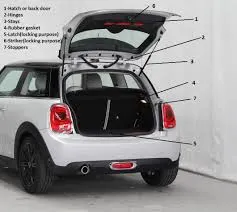
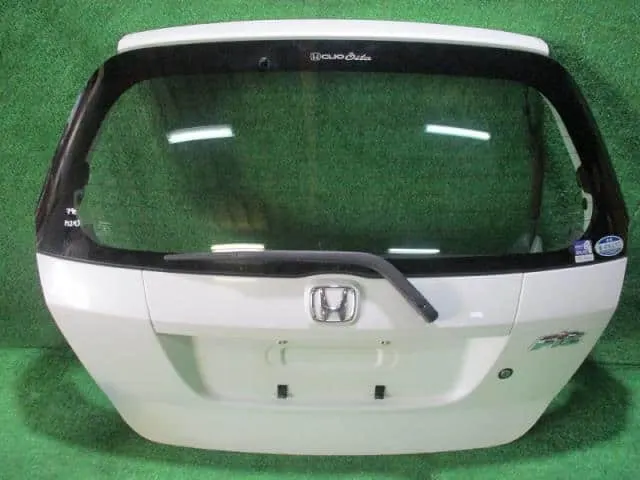
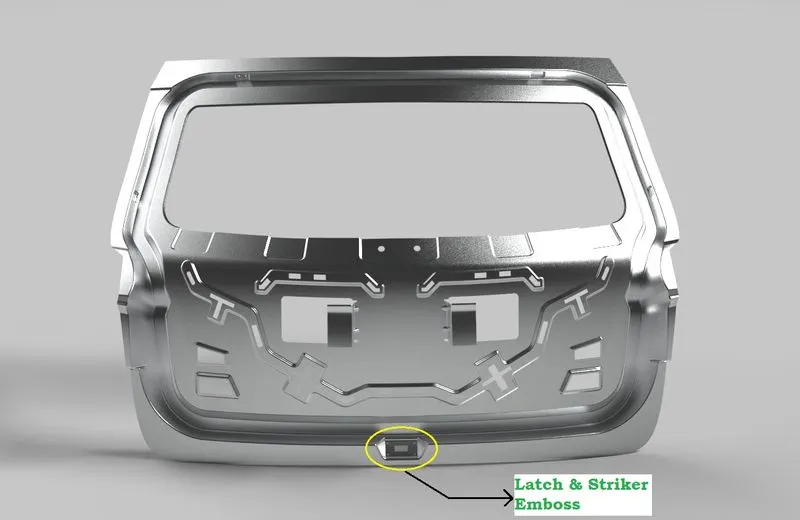
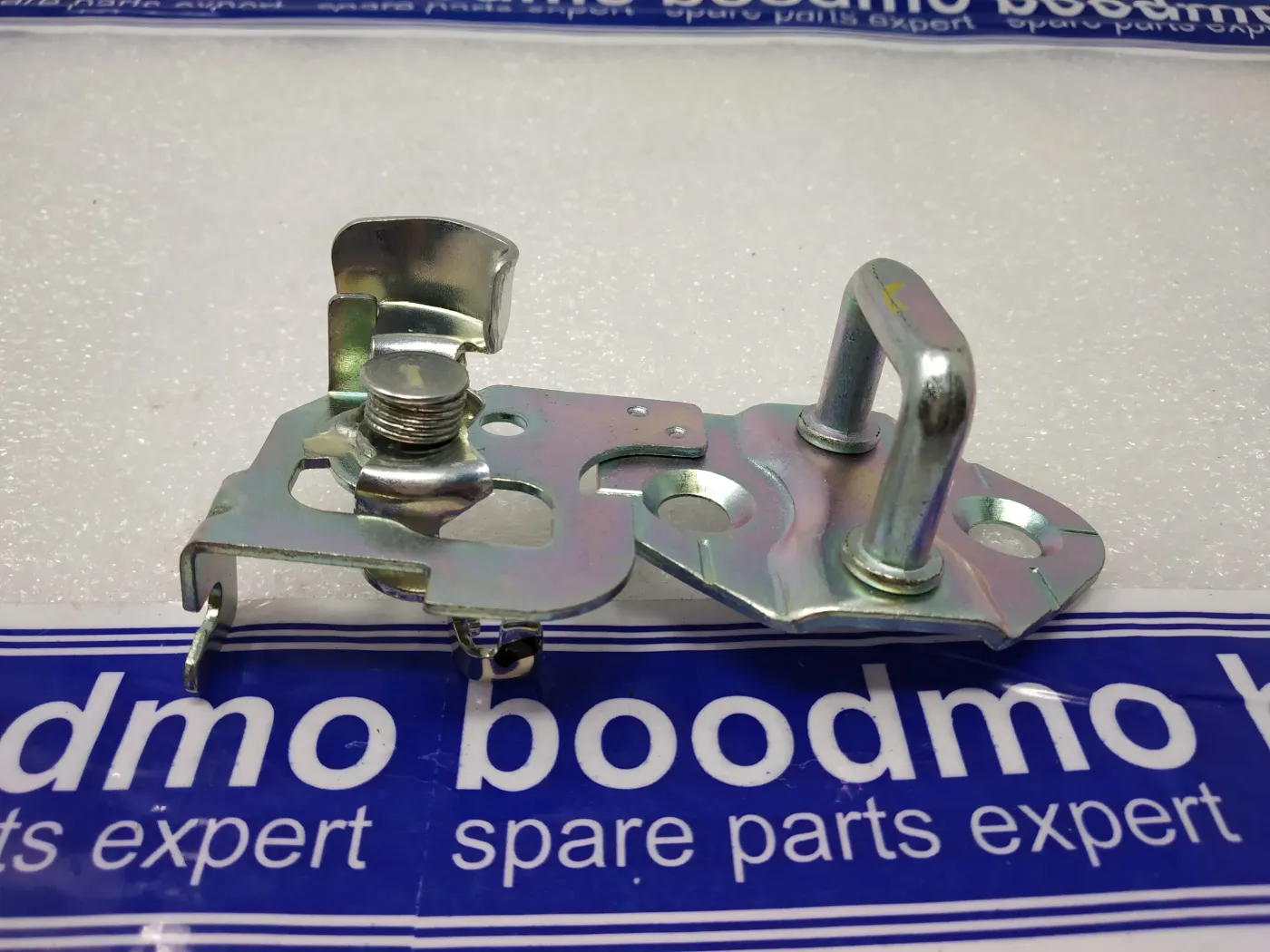
Striker image:
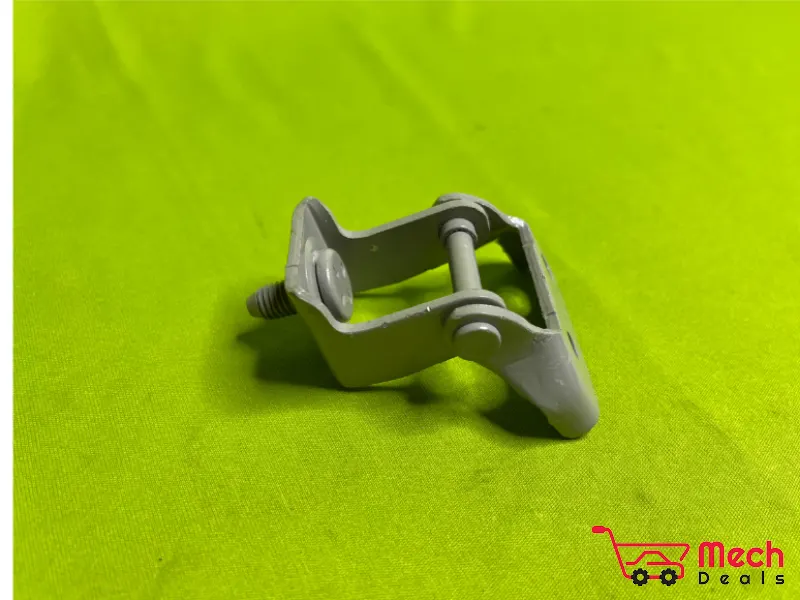
Hinge Images:
Design Considerations:
- Rear Visibility for safety and functionality
- Support Structures like Hinge and Gasstay/ Power lifter
- Rear Crash regulations
- Boot Space
- Mounts for wiper motor and lights
- Strength criteria
- Draft Analysis
Procedure:
Firstly we have to check if there are any surface irregularities in the given data, If irregularies are there, then repair if by using a parallel curve and Through sweep it.
Then we create a sealing flange. Generally with the help of sketch, we will design the panel with appropriate dimensions. But here there is no master sketch,we designed by assumption.
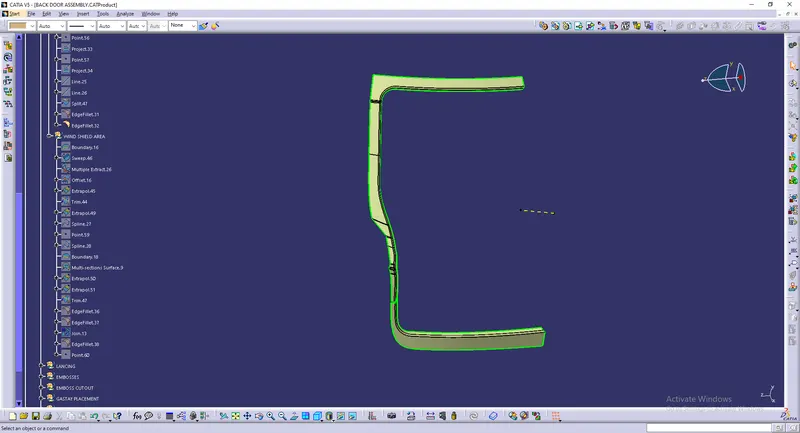
Here the sealing flange is created by maintaining a gap between inner panel to the sealing flange.
Tooling Direction-
The back door is going to be manufactured by deep drawing process. In Deep Drawing process have a tool which is core and Die. The core part follows the single Straight path the inclination angle of the core is known as a tooling direction. The tooling direction/axis is created so, that the Manufacturing team take the reference of this tooling axis and manufacture the part accordingly.
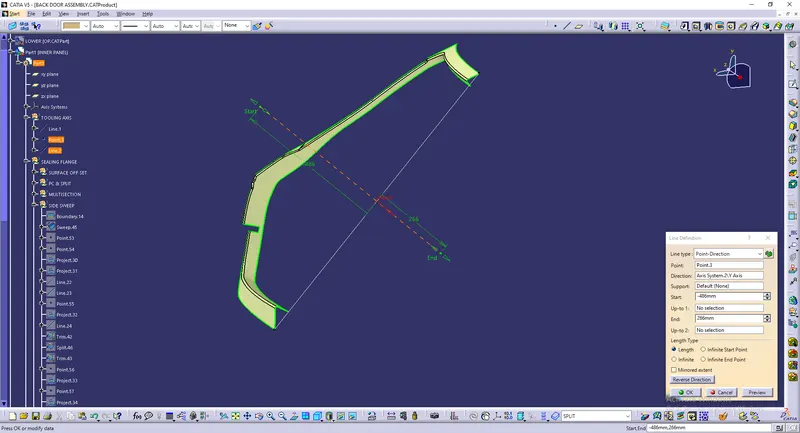
Inner Panel:
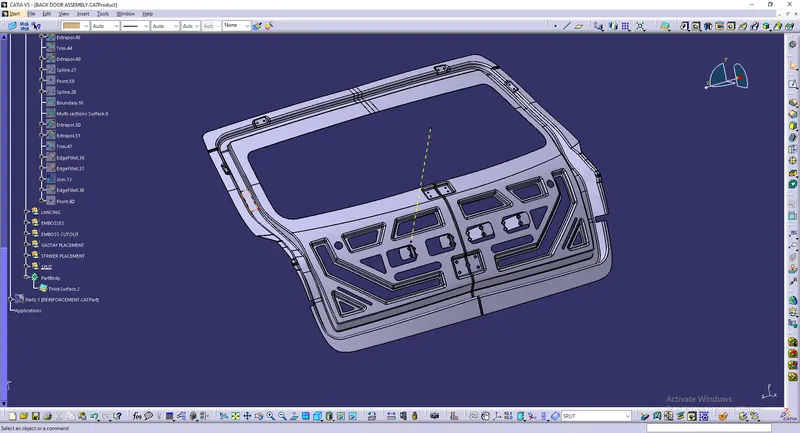
Force Distribution:
When the crash occurs o the car at rear end, the impact force should dissipate to outside. For this we created the embosses in the combination of U/V, undercuts, mastics.
Mastic region:
- The mastic points are defined on the backdoor inner panel where the backdoorcan easily deform. They help the backdoor outer panel to come back to its original shape after it gets deformed.Mastic sealants are elastic compound that behaves like the rubber.
- The gap between the inner panel and the outer panel over the embosses is filled with mastic sealents at certained specified places, this helps to reducing vibrations and overall NVH ( Noise, Vibration, Harshness).
- Then, the sheet will bend with the help of another die to make the flange in "L" shape.
- Thus, the flange will have somehow same design and the length will completely depend on the Cut-out, if we need more length of flange, then we need to cut more sheet.
Emboses:
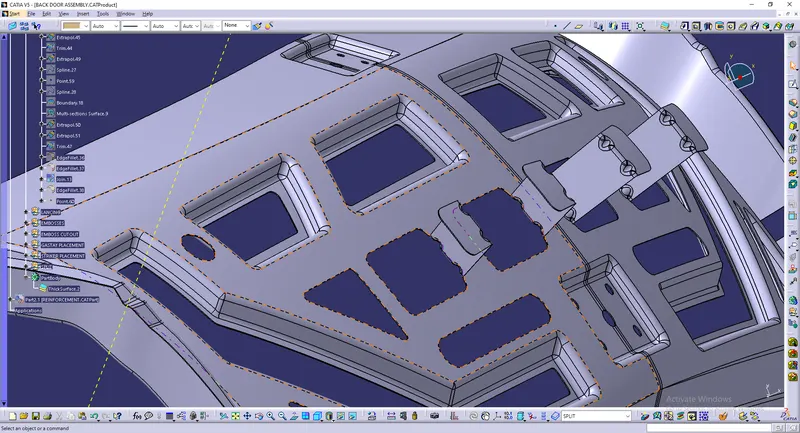
- With the distinctive cross-section, embosses are created. The embosses are used to increase the strength of the backdoor. While designing we should keep in mind that it should not be over strength. So we prefer to design big embosses rather than small embosses. These embosses are used to disipate the forces sideways.
Hinge Emboses
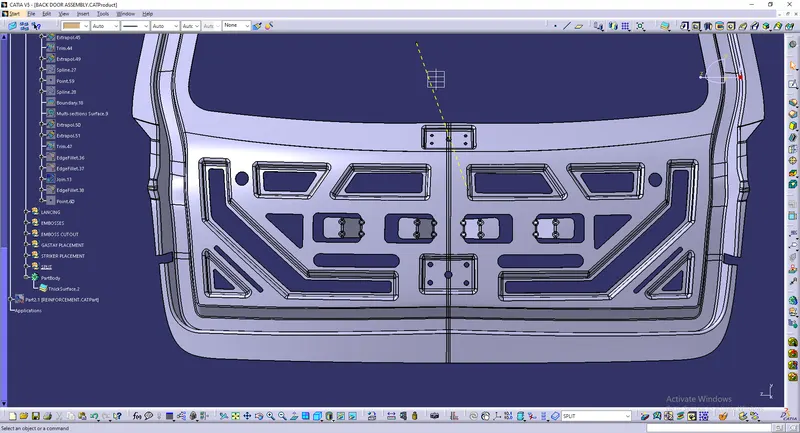
The backdoor is a swinging commodity, which swings with the help of hinges. This can be done by tentatively positioning the hinges and on the hinge axis, we take a center point. again we take another center point(approx) on the latch hole. Taking these two points as a reference we draw a circle. This circle is the striker trajectory and it has to be perpendicular. This can be achieved by moving the hinge axis back and forth or by rotating the latch area.
To create hinge mounting emboss
- A plane was taken because mounting area should be flat or should not have any radius of curvature.
- A sketch was drawn on that plane.
- The emboss command was used to make the hinge emboss feature by using plane as an end cap of hinge emboss.
- And holes were created for the nut and bolts for assembly of hinge.
Gas Stay Embose:
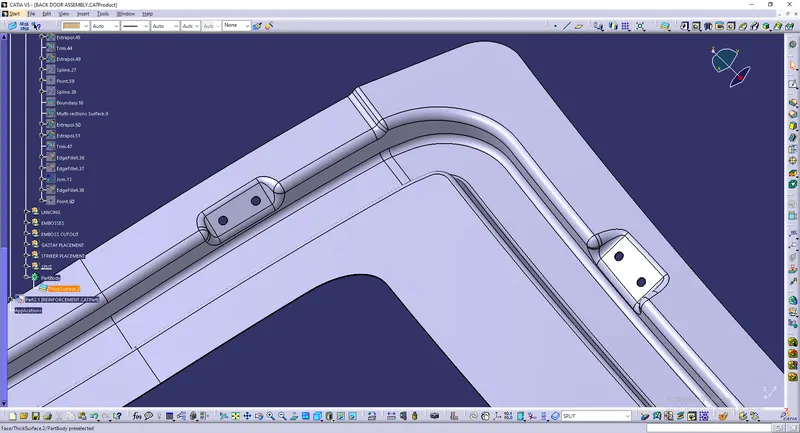
Wiper Embose:
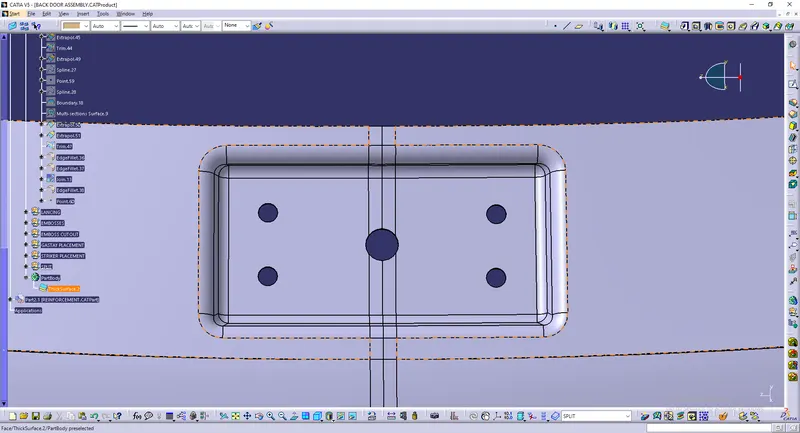
Latch and Striker Trajectory:
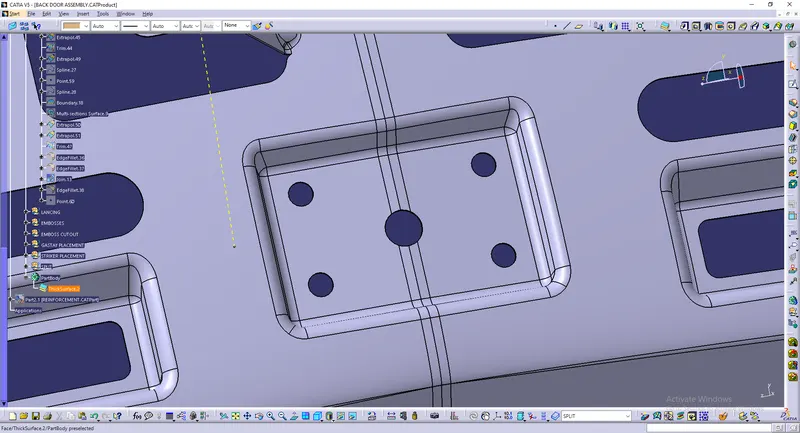
Outer Upper Panel:
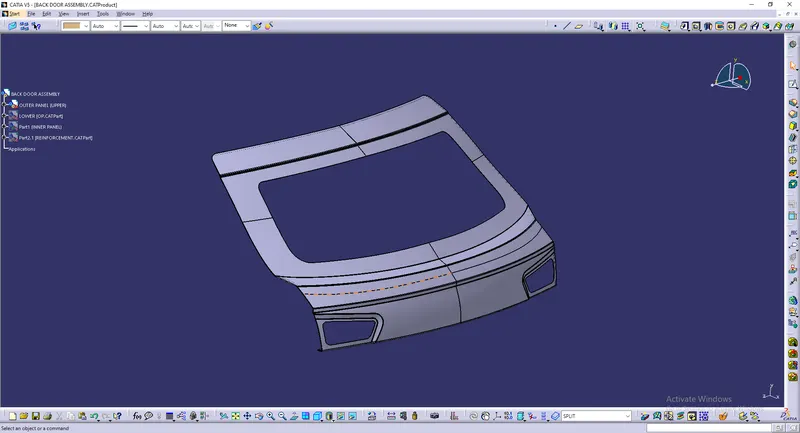
Outer Lower Panel:
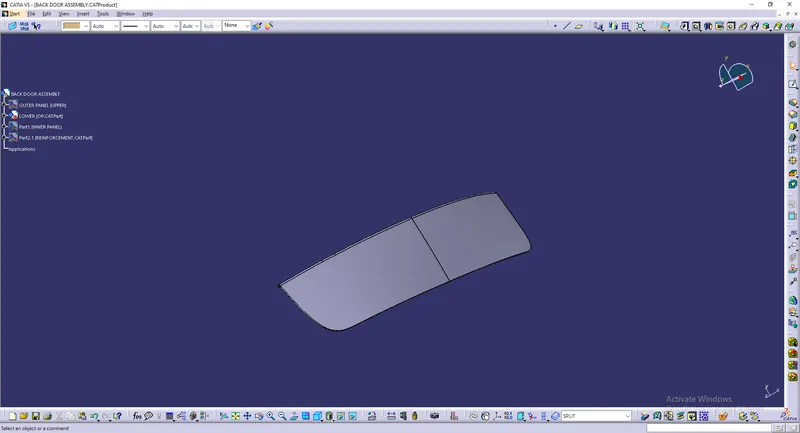
What is hem ?
Hems are folds to the edge of a part to create a rounded, safe edge. Hemming may be open, flat, or tear-dropped, and tolerances depend on the hemmming radius, material thickness, and features near the hem. The process of creating hems is called hemming.
Hems are created by bending a flange of your part back on itself. This increases the strength of the hemmed edge and also gets id of any sharp edges.
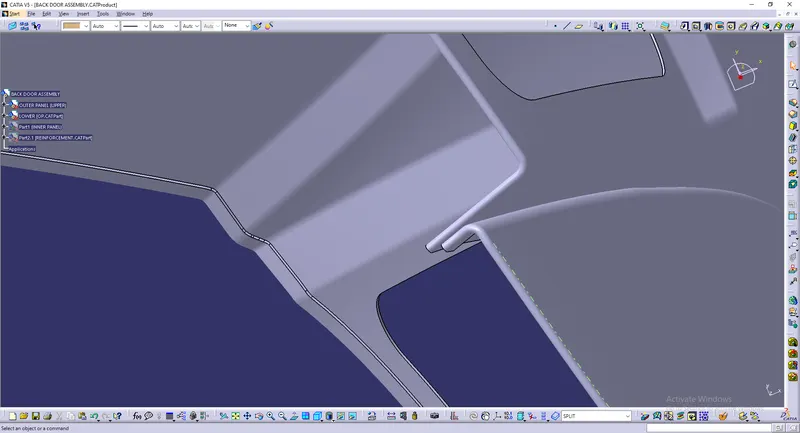
Side Reliefs:
- Here we added a relief at the curvatures. Because these reliefs will avoid sharpness and it is easy to manufactural.
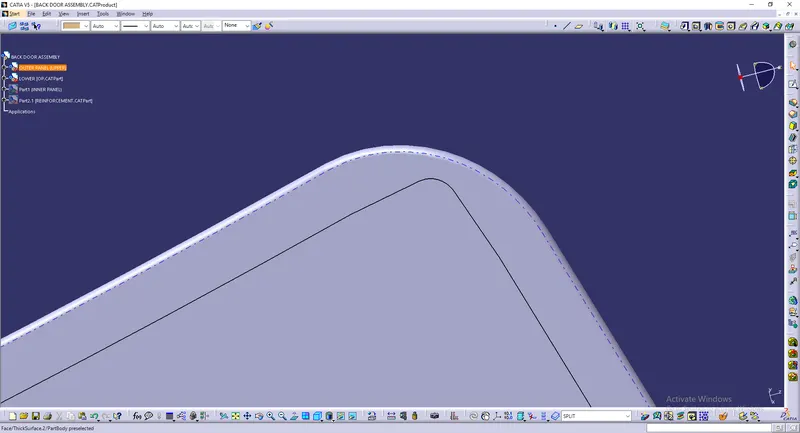
Reinforcements:
- Hinge Reinforcement [LH & RH]
- Gas Stay Reinforcement [LH &RH]
- Wiper Reinforcement
- Striker Reinforcement
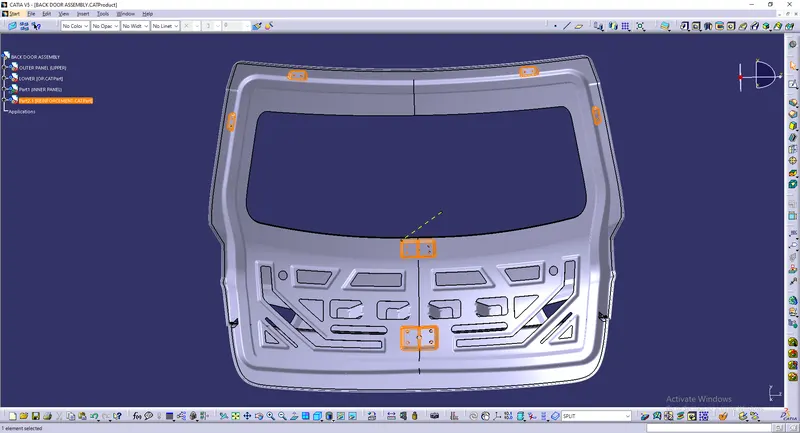
Draft Analysis:
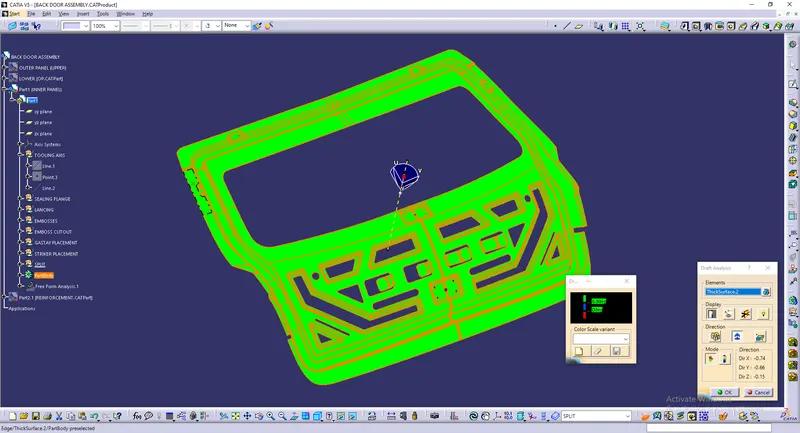
Draft Analysis is done to analyze the draft angle. This allows us to verify whether the product will be easily removed from the tool.
When designing a product it needs to be slightly angled so that the tool can be pulled away from the part easily, without deformation or damage. This slight angle is called draft.
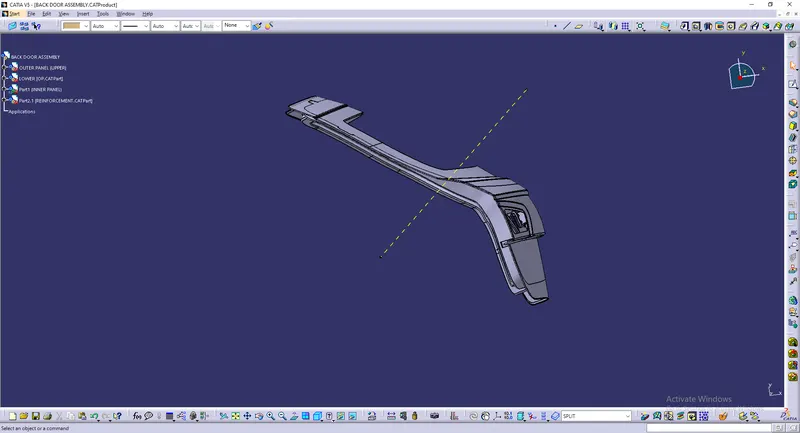
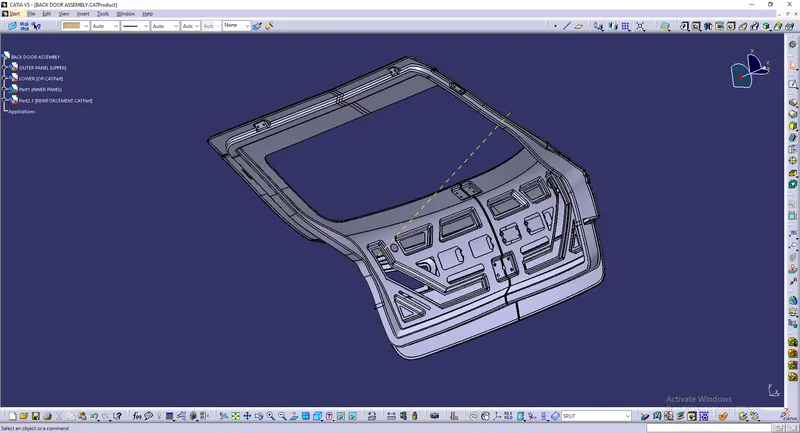
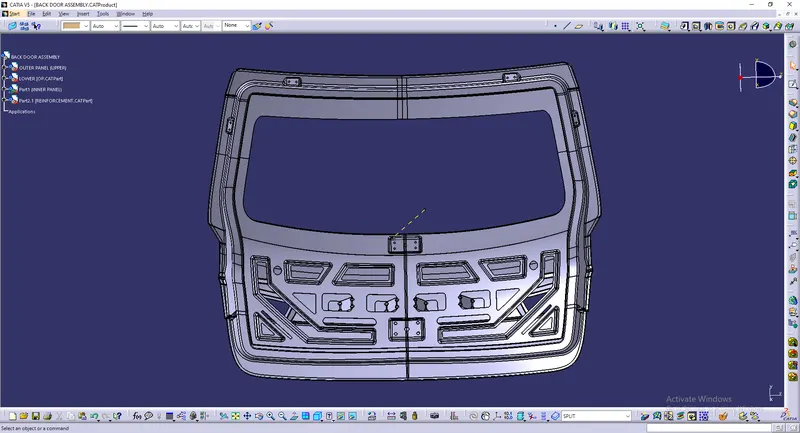
Assembly Images:
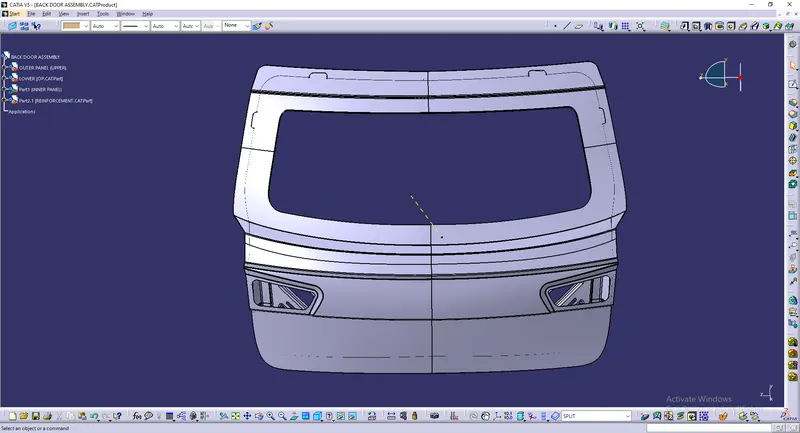
Conclusion:
The backdoor is designed by using the given data, in catia v5 software with a proper guidelines and the result is satisfactory.