Conjugate Heat Transfer Analysis on a graphics card.
The following work has been performed on SpaceClaim, Fluent meshing, Gambit meshing and ANSYS Fluent. Graphics Card is one of the crucial component on PC/Laptop to perform critical tasks. With recent advancements in the technology to perform the analysis the smaller the the card the compact the system. The higher the flow of fan can result into satisfactory operation of the working temperature of the graphics card. The Model was readily available and hence the enclosure was created in Spaceclaim . The details regarding the processor, fins and base are shown in figure.
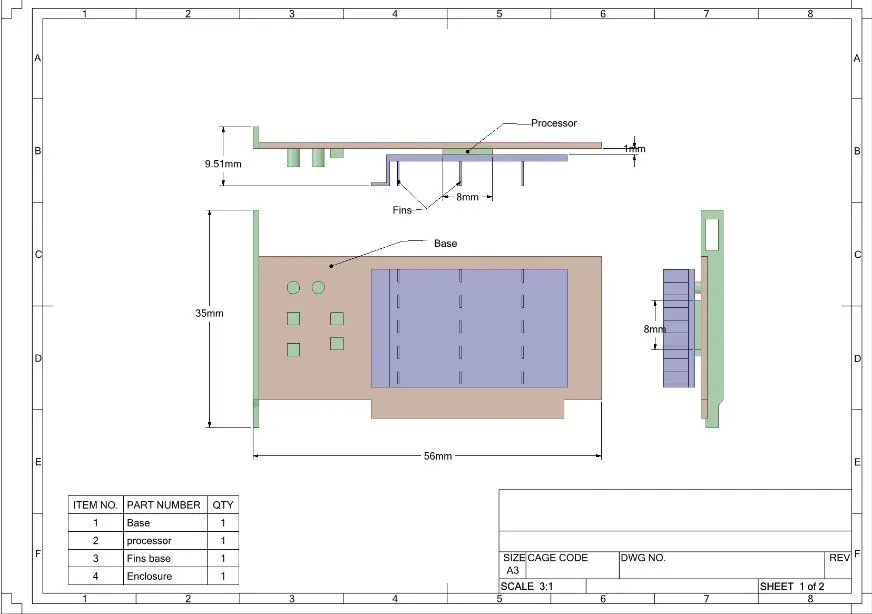
- From the drawing it can be seen that the processor has a volume of 64 mm^3. The processor generates the heat which is then transfered to fins which results into dissipating of heat due to high heat transfer area.
- The fins are simulated for Copper and Alluminium while silicon is assigned to processor.
Meshing:- The meshing was performed in ANSYS Fluent meshing
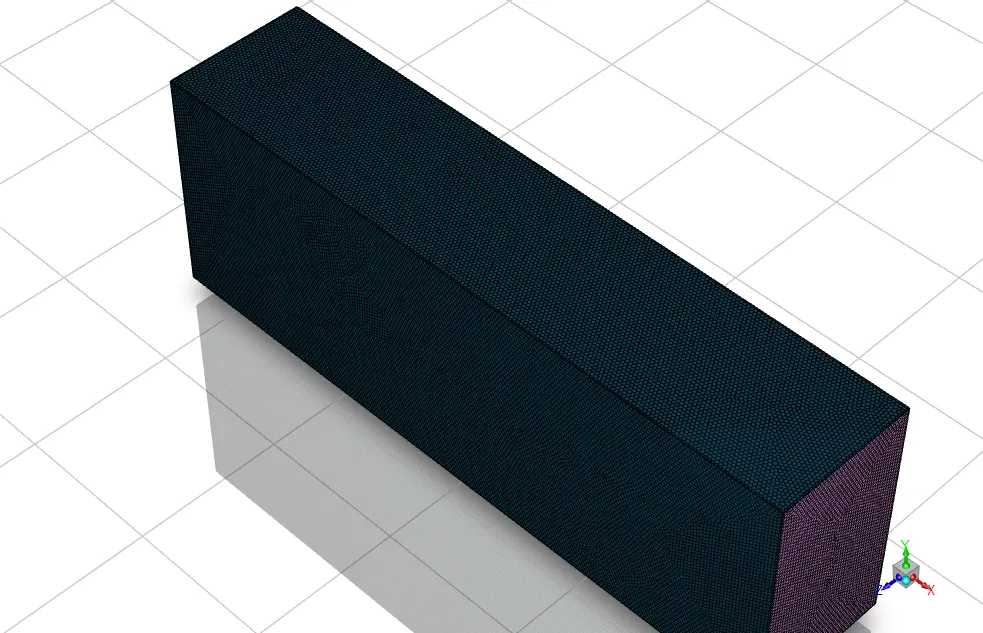
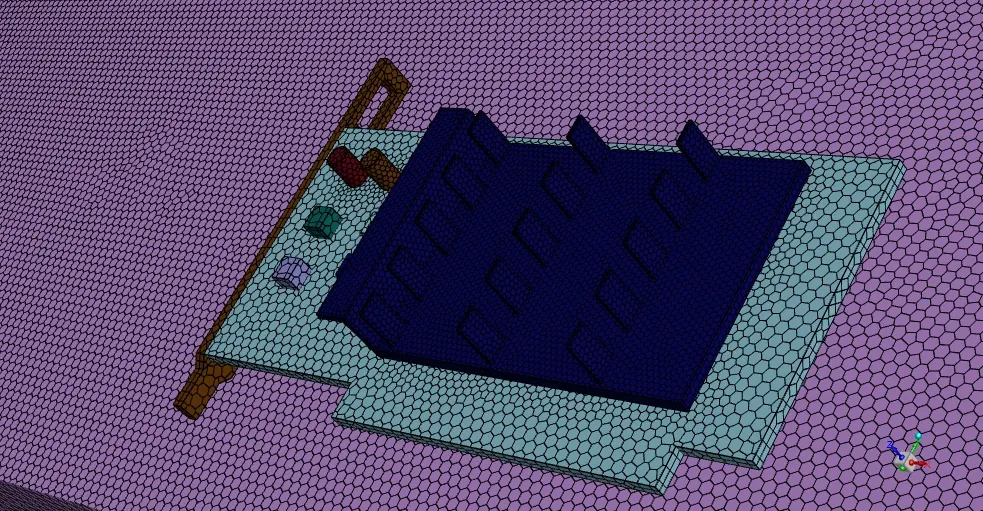
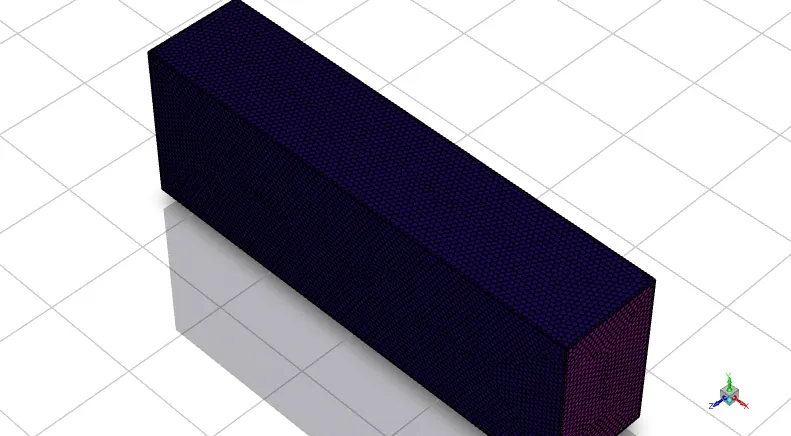
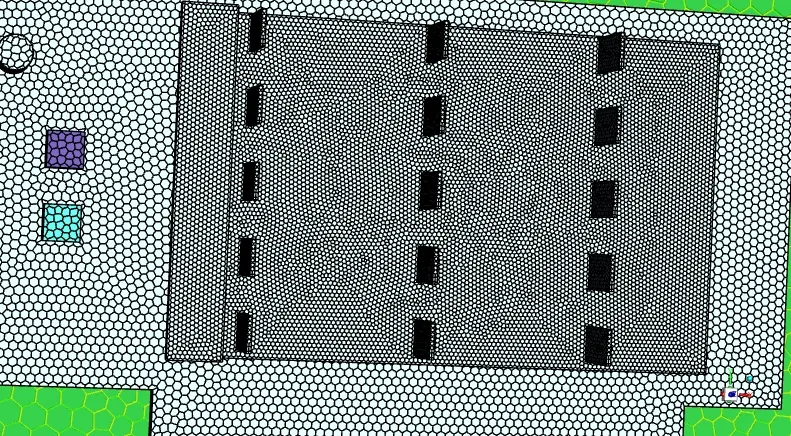
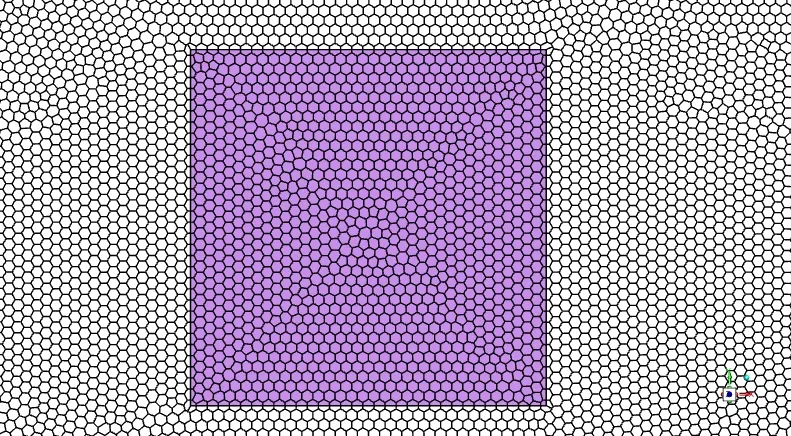
PROCESSING:- The processing was performed in ANSYS FLUENT. The Steady state analysis was performed with k omega SST model and SIMPLE algorithm. The Processor was considered as a constance heat generating source. The volume of processor is 64 mm3 which can be seen from the drawing.
- According to certain literatures followed the high working end processors can generate heat upto 100 W, this results into 1562500000 W/m3 of heat generation.
- The materials used were Alluminium for fins, Silicon for processor and steel for base. The properties of the material used are shown in table.
| Al | Si | Steel | Air | Cu | |||
| Thermal Conductivity (W/mK) | 202.4 | 130 | 16.27 | 0.0242 | 387.6 | ||
| Specific Heat(J/kgK) | 871 | 700 | 502.4 | 1006 | 381 | ||
| Density (kg/m3) | 2719 | 2300 | 8030 | 1.225 | 8978 | ||
- The analysis was performed for threee different velocities of 2, 5 and 10 m /s. Further three different meshes were performed which had 79k, 1 lakh and 5 lakh elements in it. the minimum element quality was approximately 0.14 which was satisfactory for the analysis.
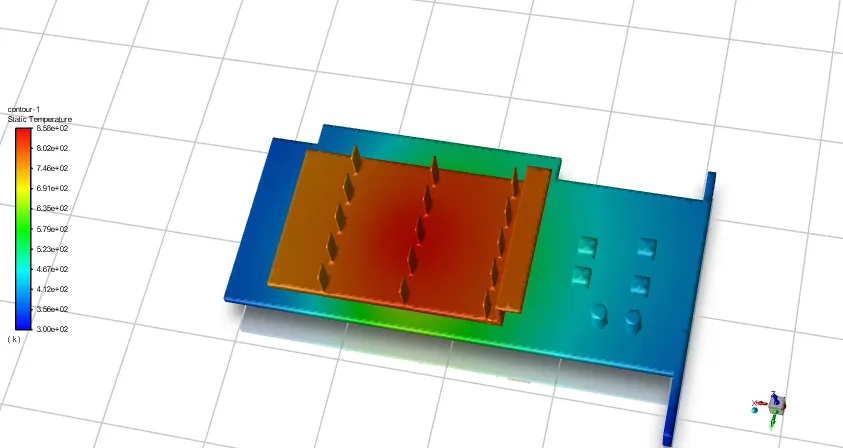
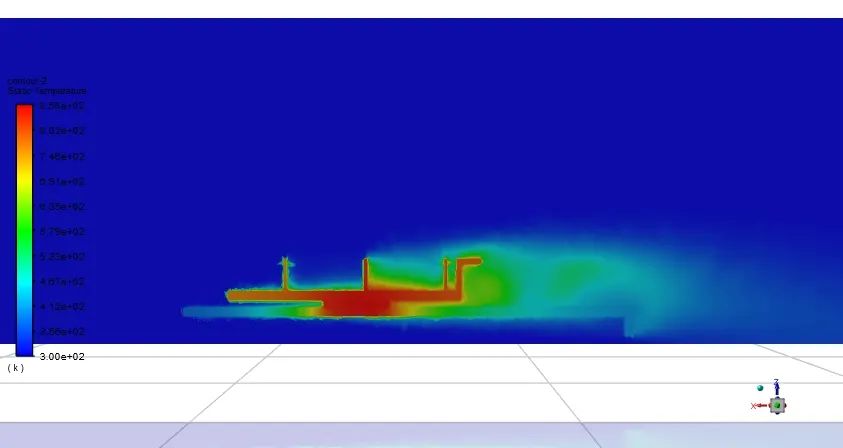
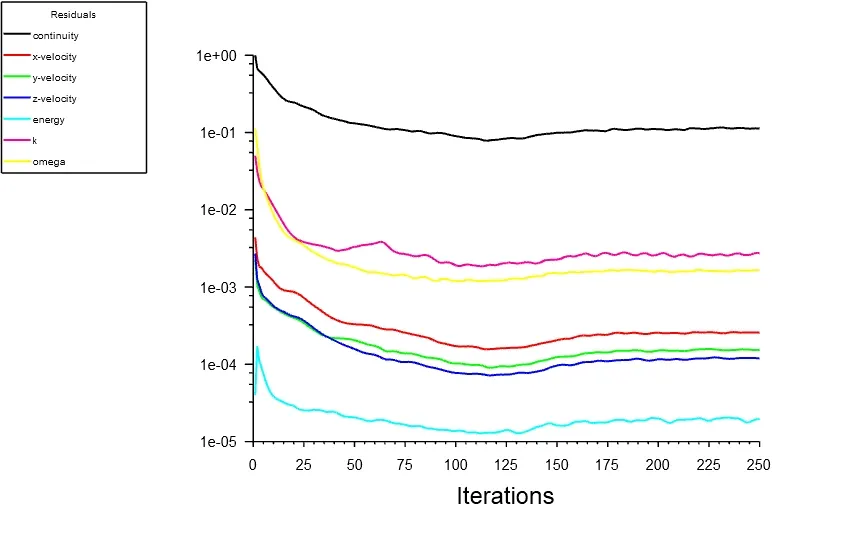
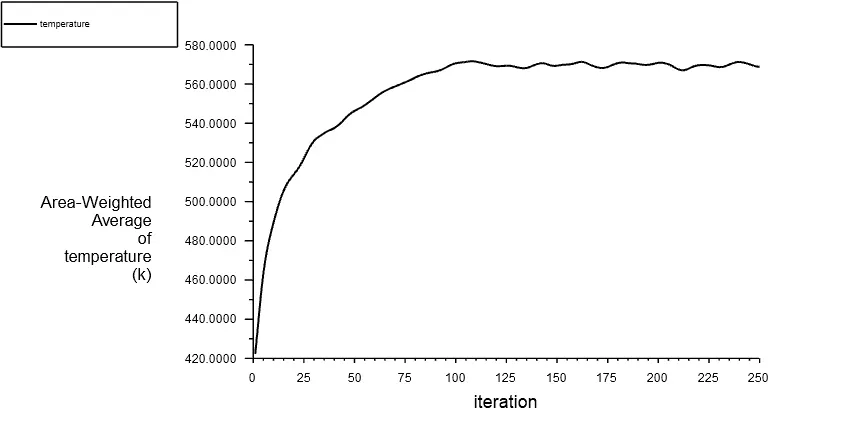
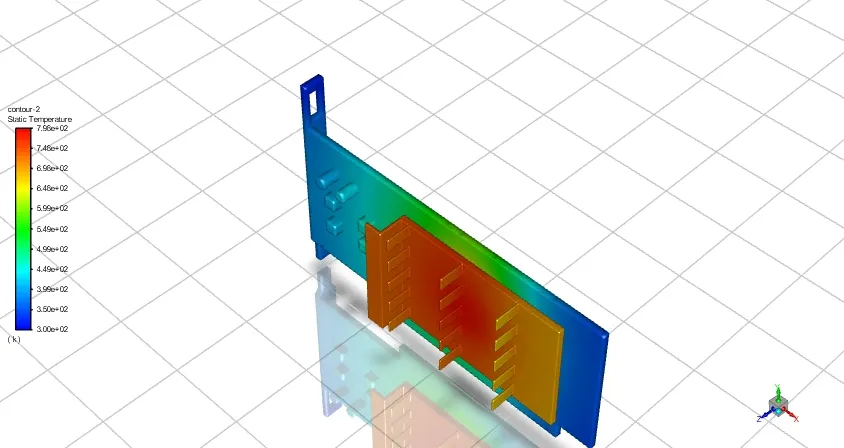
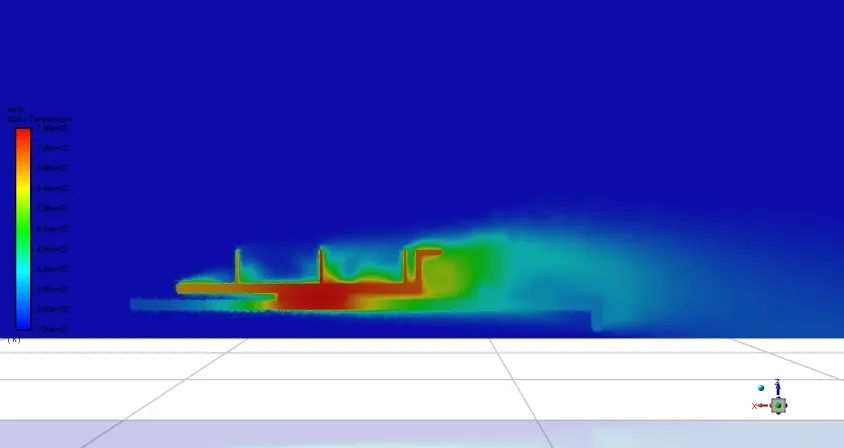
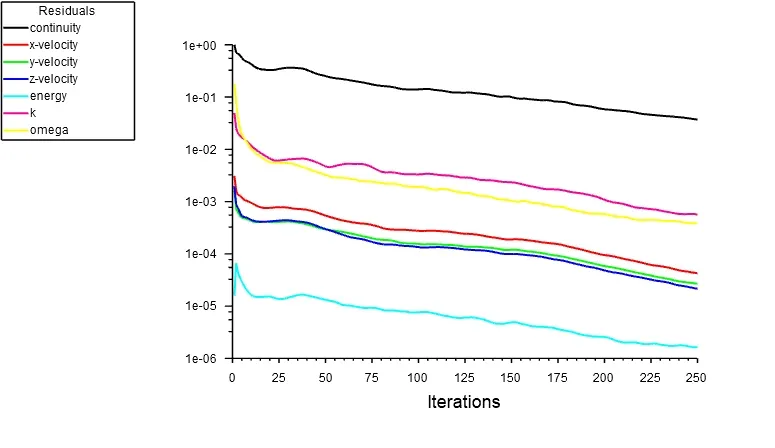
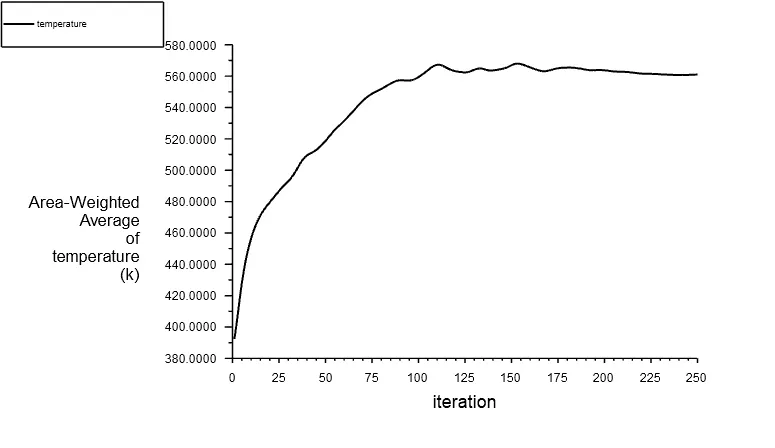
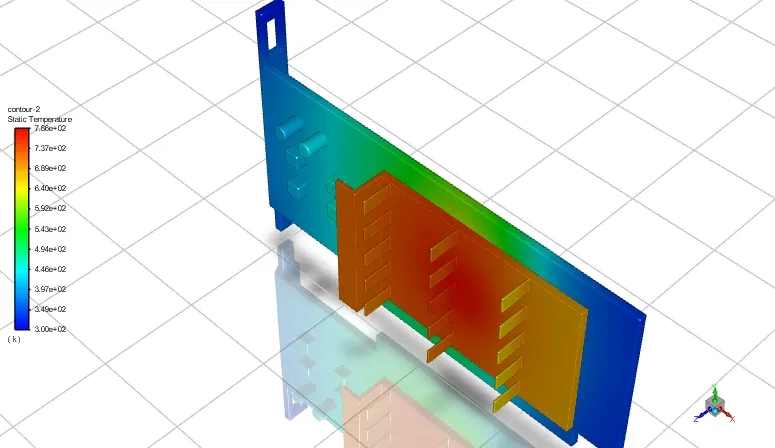
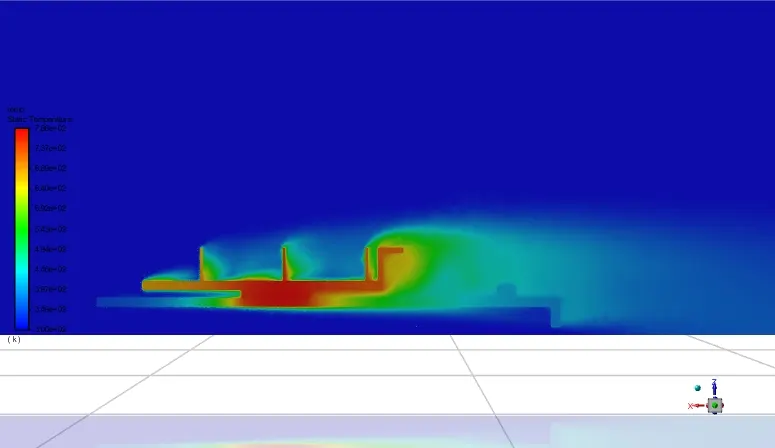
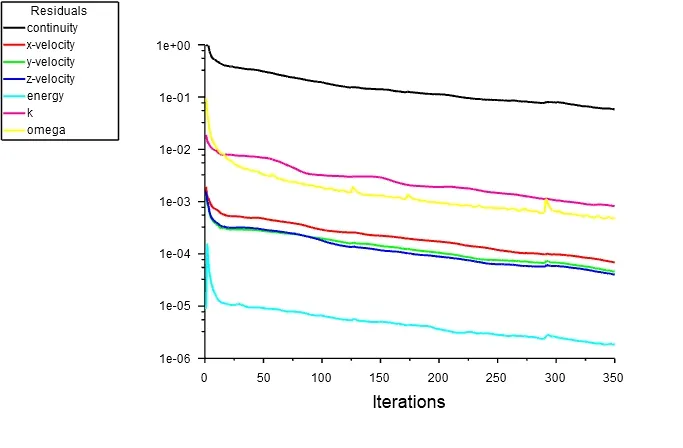
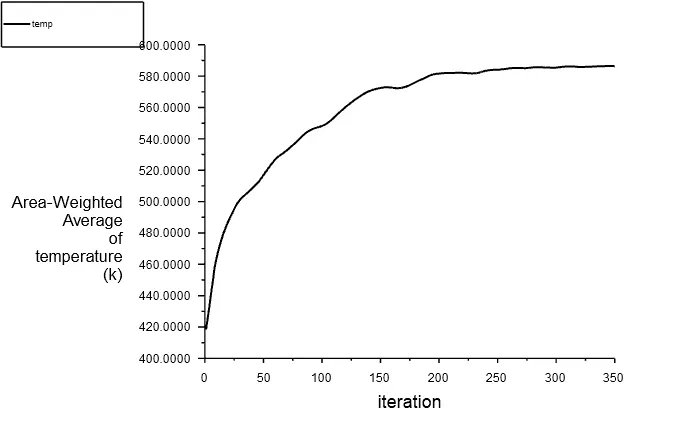
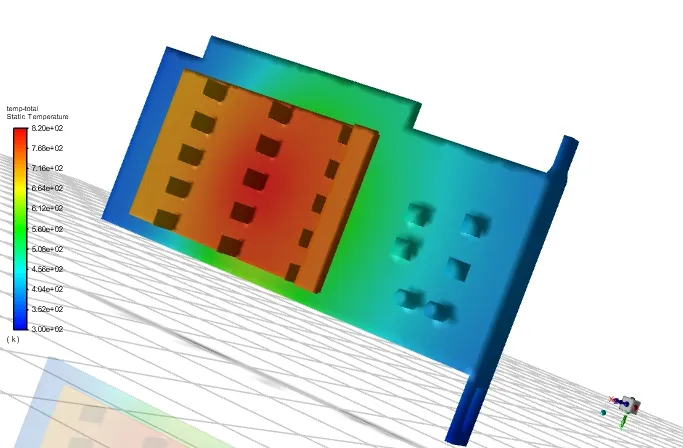
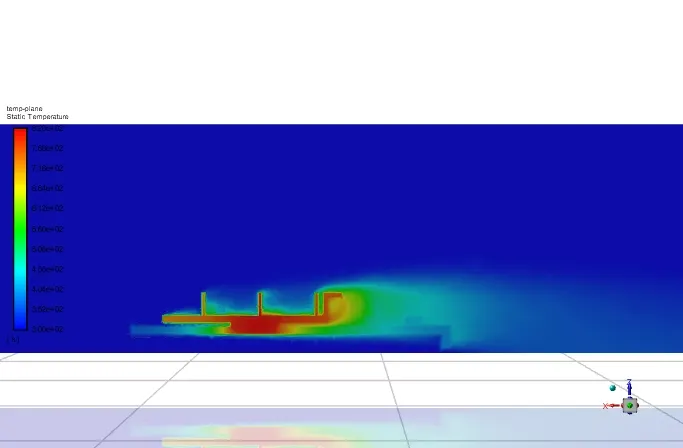
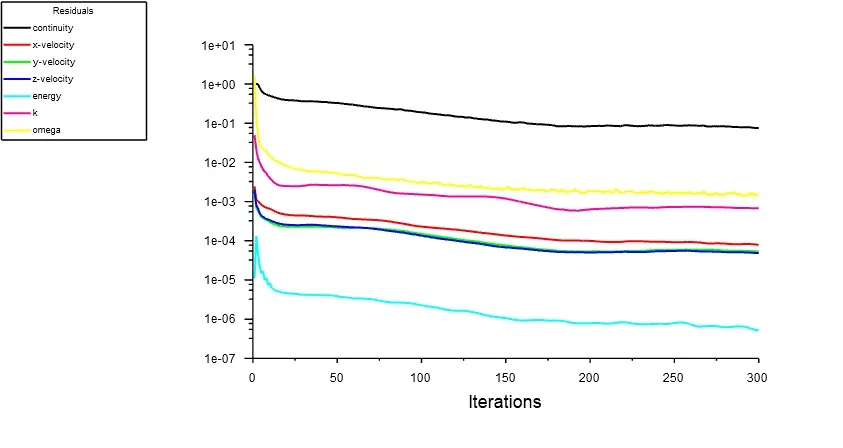
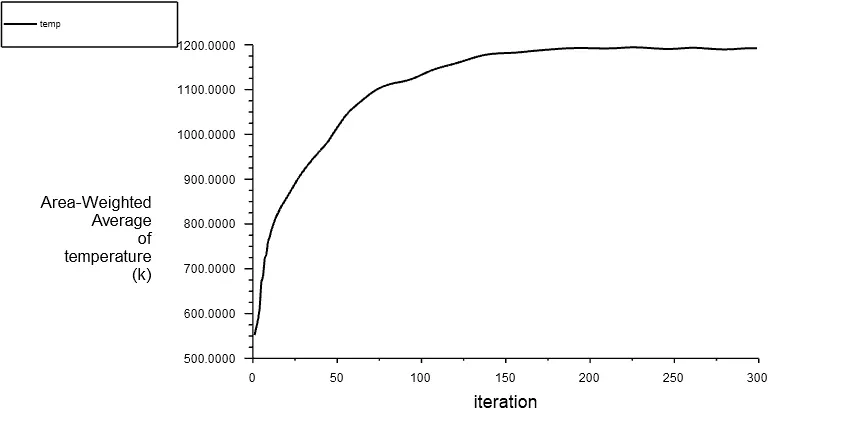
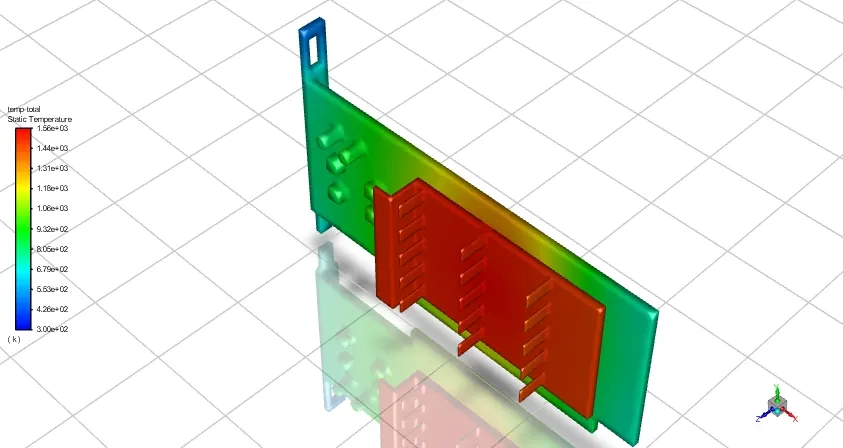
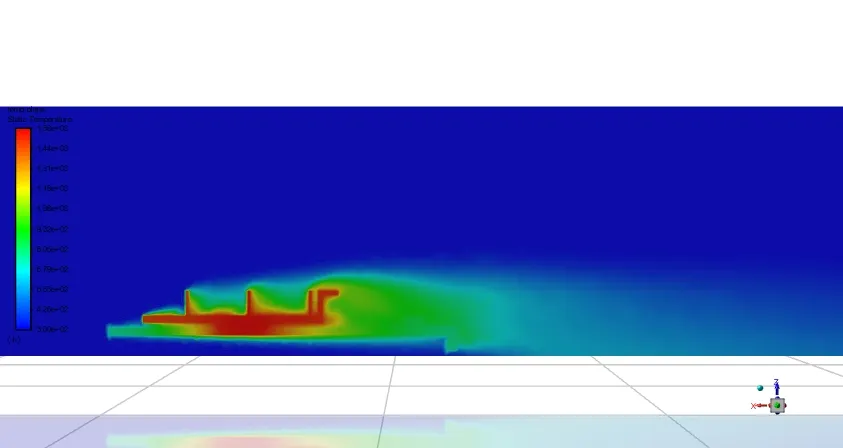
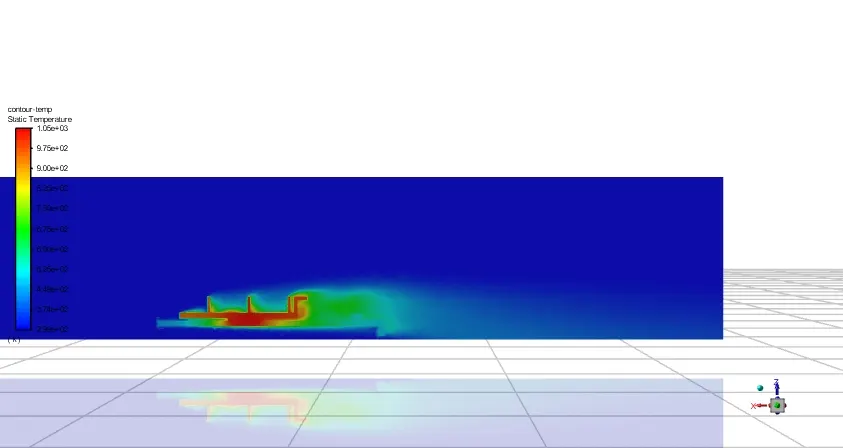
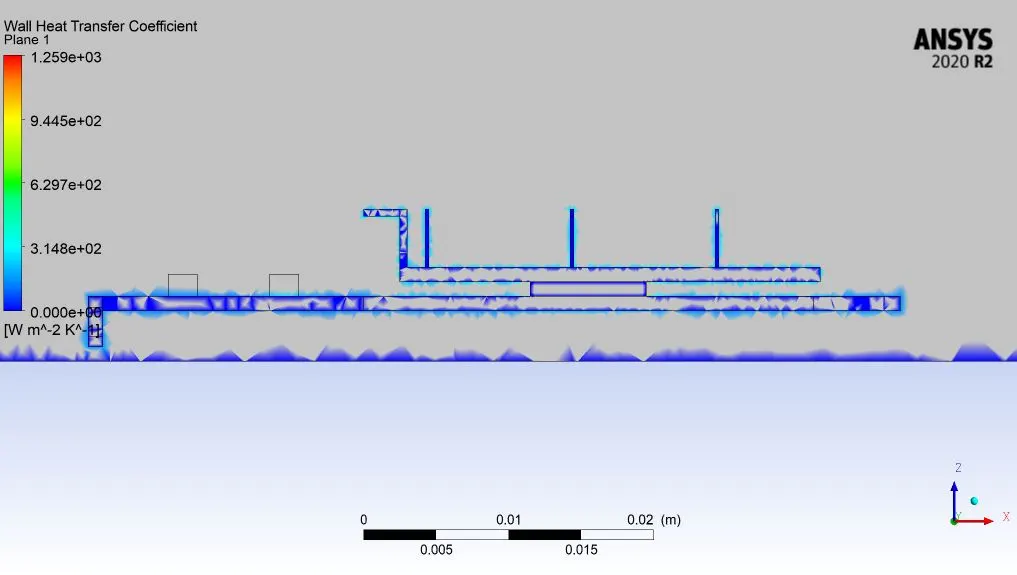
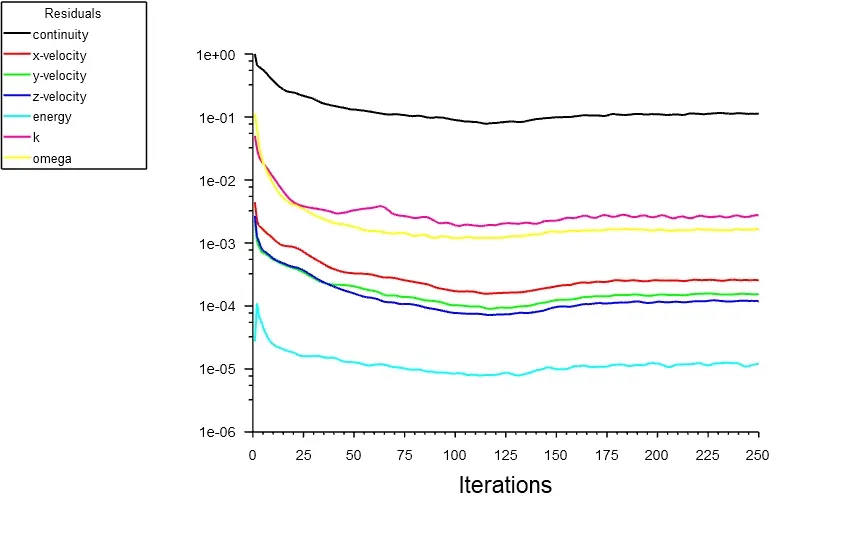
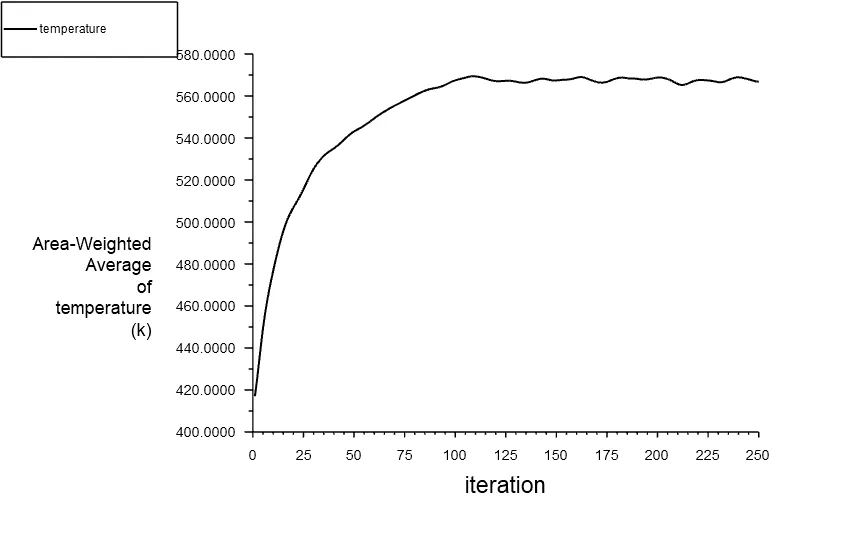
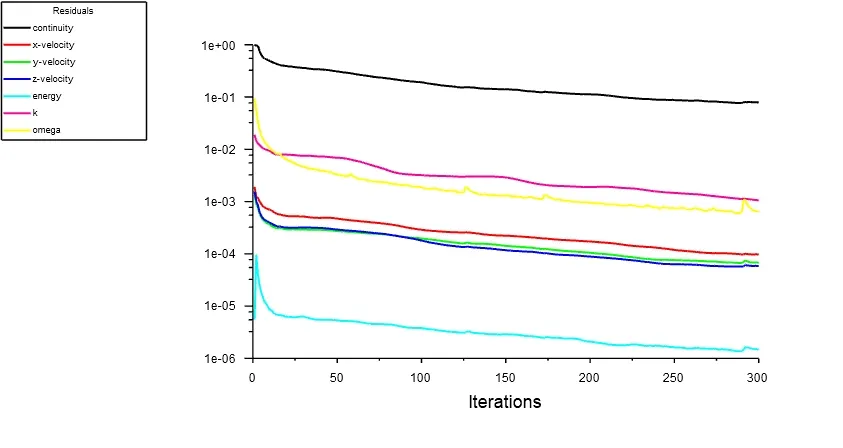
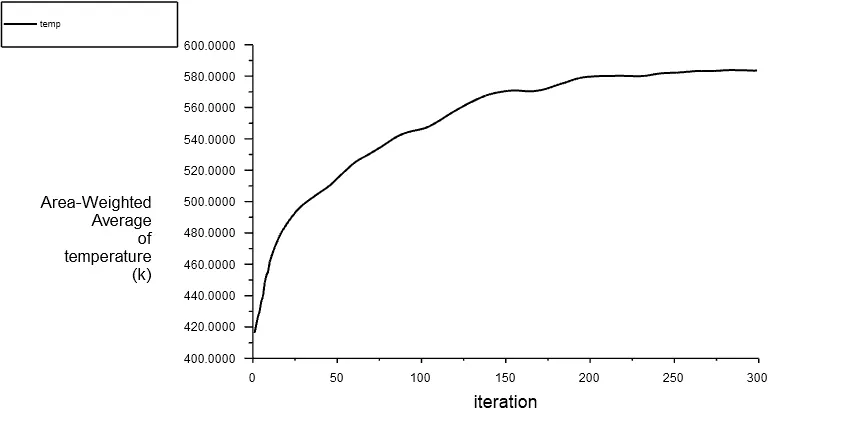
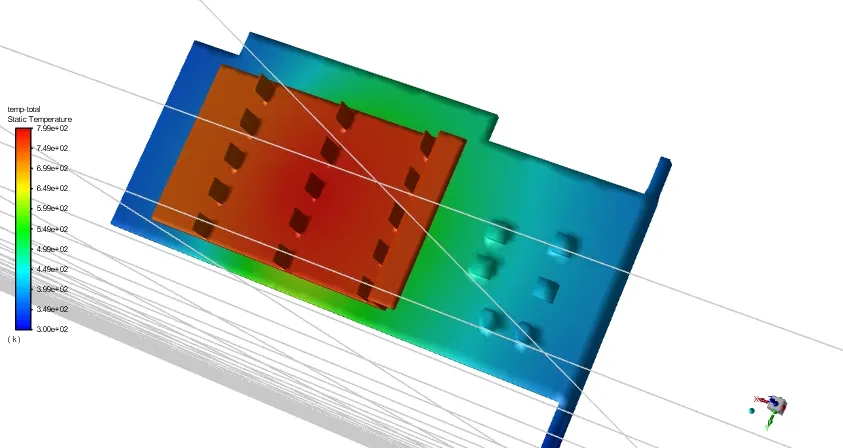
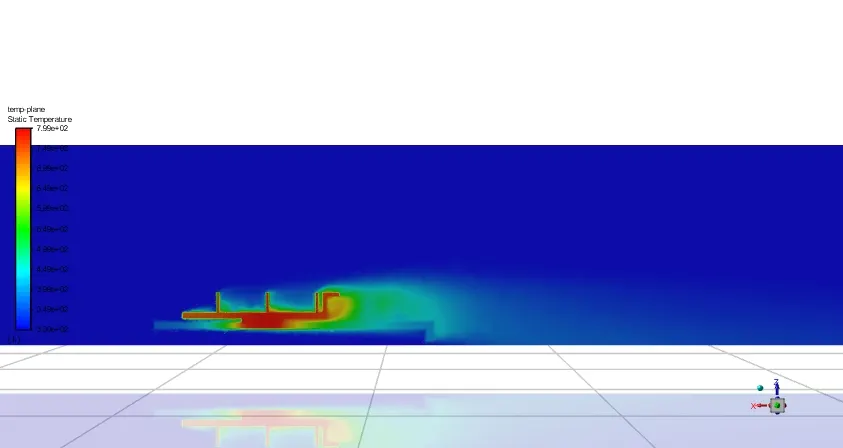
- Residual plot, temperature plot and temperature contours were generated for the results.
The following results were found :-
- PRIMARY BASE LINE MESH:- The nature of residual plot and temperature plot indicates convergence after 150-175 iterations.
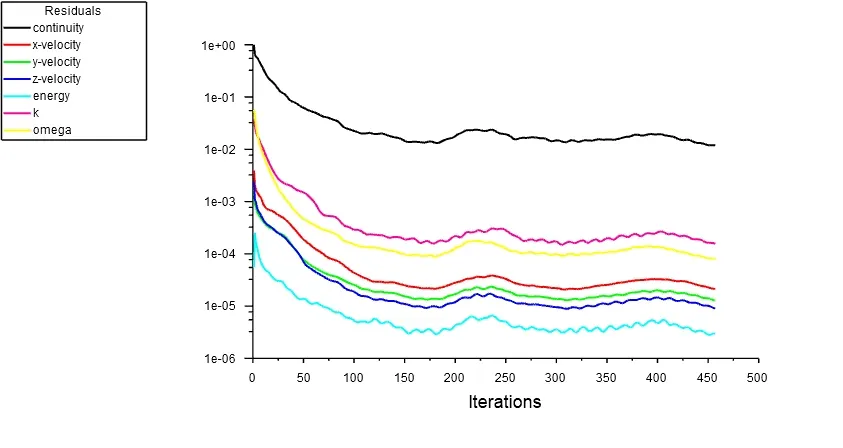
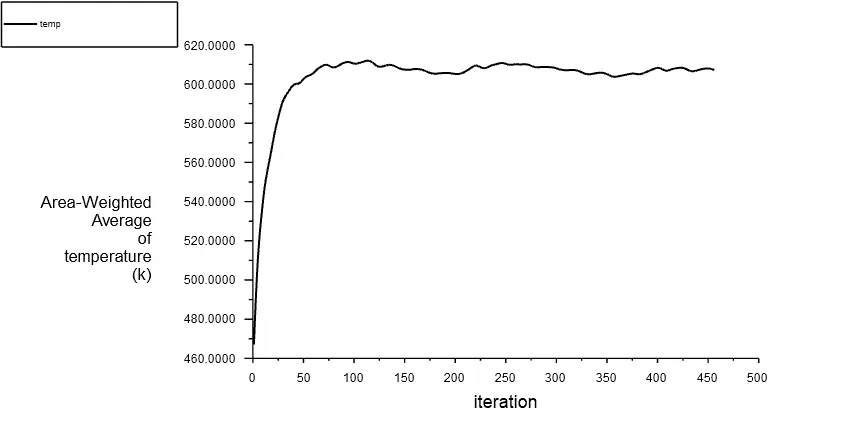
- INTERMEDIATE MESH (1 LAKH MESH):-
- Fine meshing(4 lakh):-
- FINE MESHING (5 LAKH) GAMBIT V = 10 m/s:-
FOR VELOCITY OF 2 m/s: (FINE MESH-GAMBIT):-
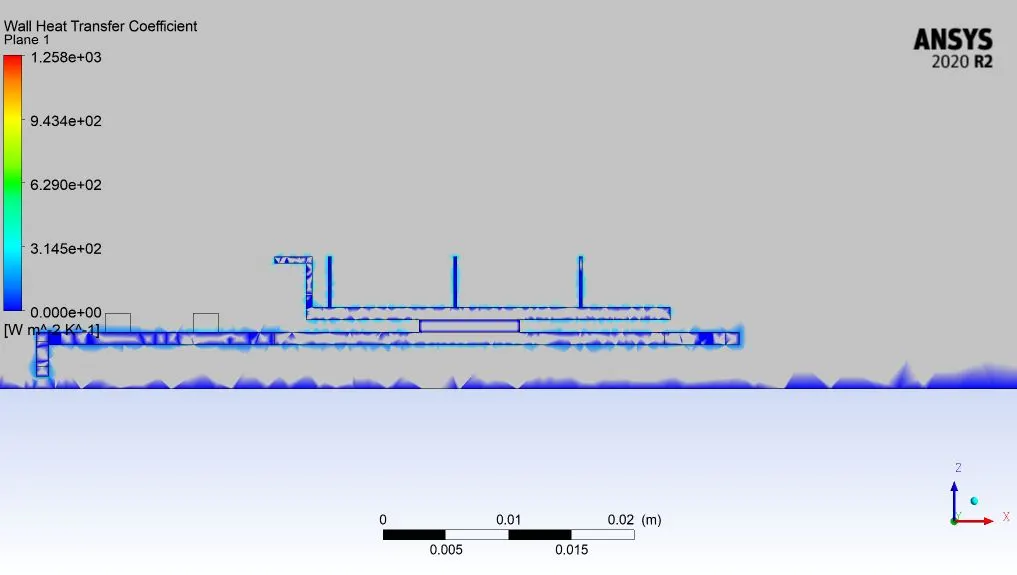
FOR VELOCITY OF 5 m/s (GAMBIT-Fine mesh:-
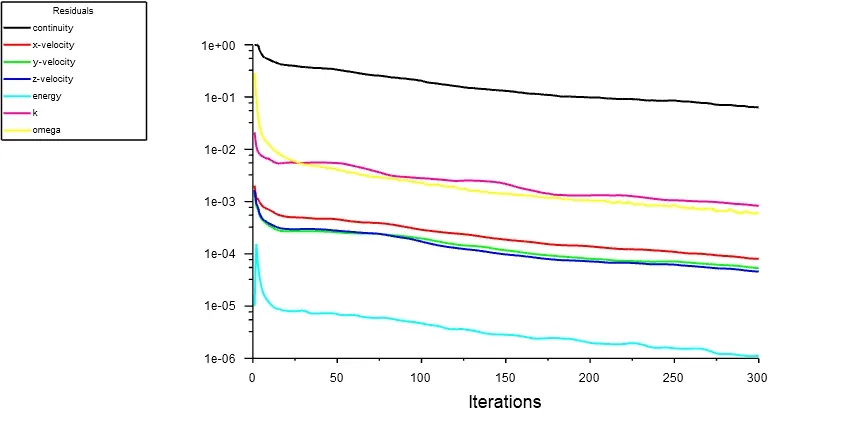
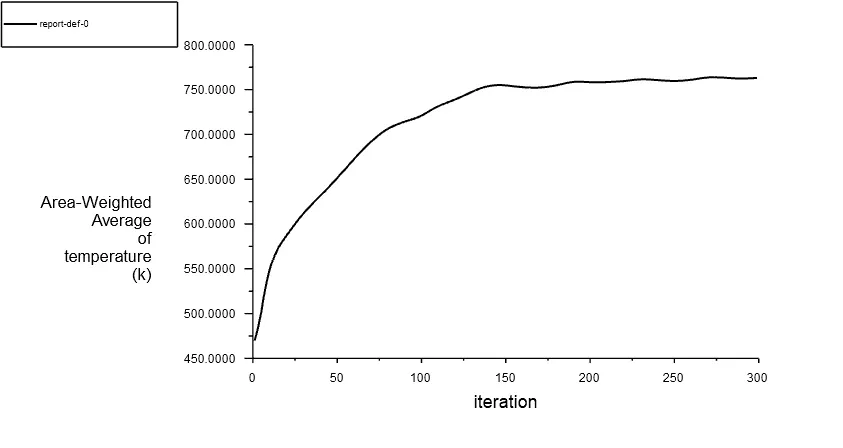
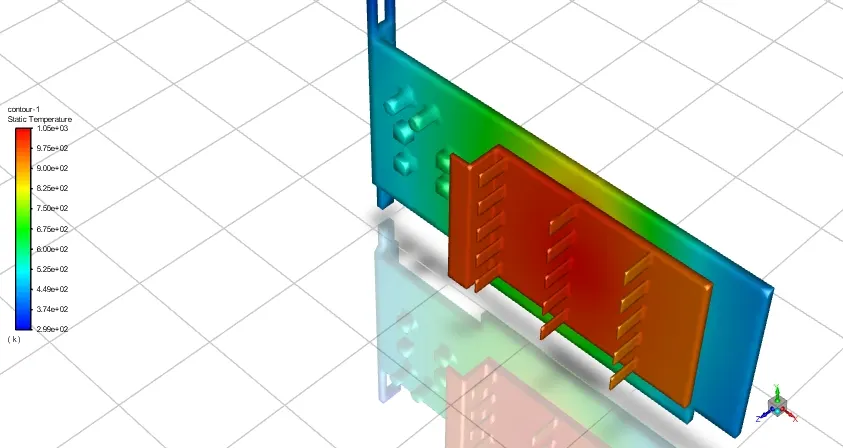
- Another analysis was performed by using Copper as fins materials. The following results were found
- Intermediate mesh:- (1 lakh)
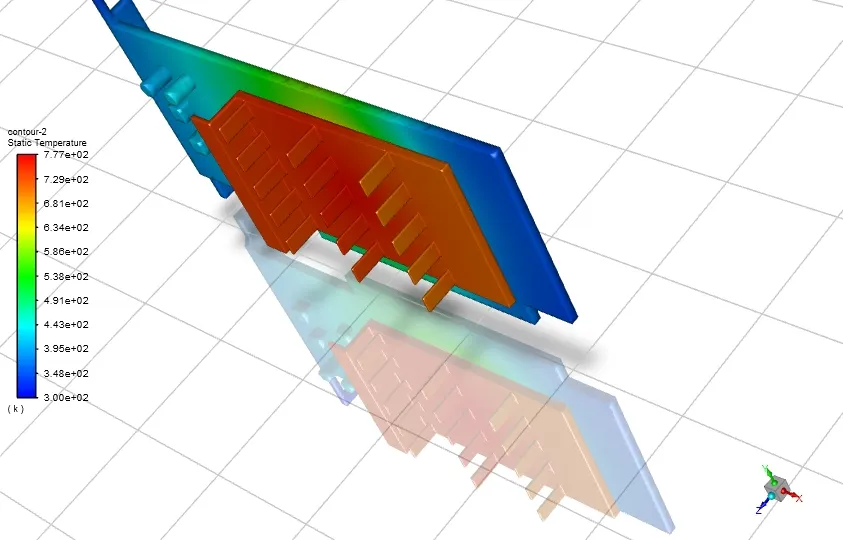
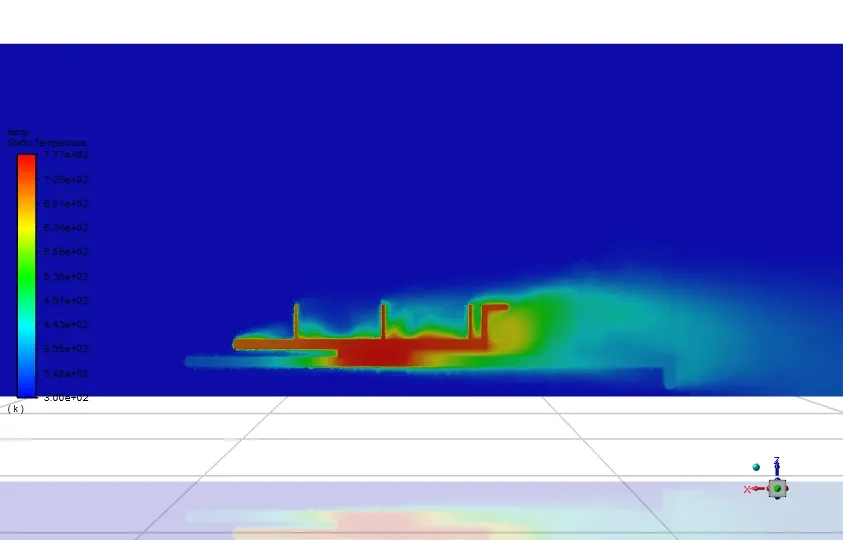
- Fine meshing (5 lakh):-
| Cases | Total Elements | Min. Element quality | Fins | Processor | Base | Heat flux / m^3 | Vel. (m/s) | Temp. in (K) | Temp In deg C | Wall HTC (W/M2K) |
| Case 1 | 103799 | 0.14 | Al | Silicon | Steel | 1562500000 | 10 | 568.78 | 295.78 | 15.56 |
| Case 2 | 79531 | 0.12 | Cu | Silicon | Steel | 1562500000 | 10 | 607 | 334 | 24.33 |
| Case 3 | 542182(GAMBIT) | 0.14 | Al | Silicon | Steel | 1562500000 | 5 | 763 | 490 | 18.29 |
| Case 4 | Al | Silicon | Steel | 1562500000 | 10 | 586 | 313 | 19.6114 | ||
| Case 5 | Cu | Silicon | Steel | 1562500000 | 10 | 583 | 310 | 19.66 | ||
| Case 6 | Al | Silicon | Steel | 1562500000 | 2 | 1191 | 918 | 17.73 | ||
| Case 7 | 103799 | 0.14 | Cu | Silicon | Steel | 1562500000 | 10 | 566 | 293 | 15.56 |
| Case 8 | 79531 | 0.12 | Al | Silicon | Steel | 1562500000 | 10 | 607 | 334 | 12.05 |
| Case 9 | 409073 | 0.14 | Al | Silicon | Steel | 1562500000 | 10 | 561 | 288 | 22.3 |
RESULTS AND DISCUSSION:_ Different meshes were performed to understand the temperature generation of the processor in effect of fan blowing heat away.
- Gambit meshing as well as ANSYS Fluent meshing were performed, the results were found to be varying for different meshes but for fluent meshing the temperature was found to be approximately 565 K i.e 292 degree Celsius for Al based fins and gambit mesh showed the temeprature of 586 K i.e 313 deg Celsius for the approximately same number of mesh elements.
- Further the validation can be done experimentally to understand the accuracy of gambit mesh and fluent mesh.
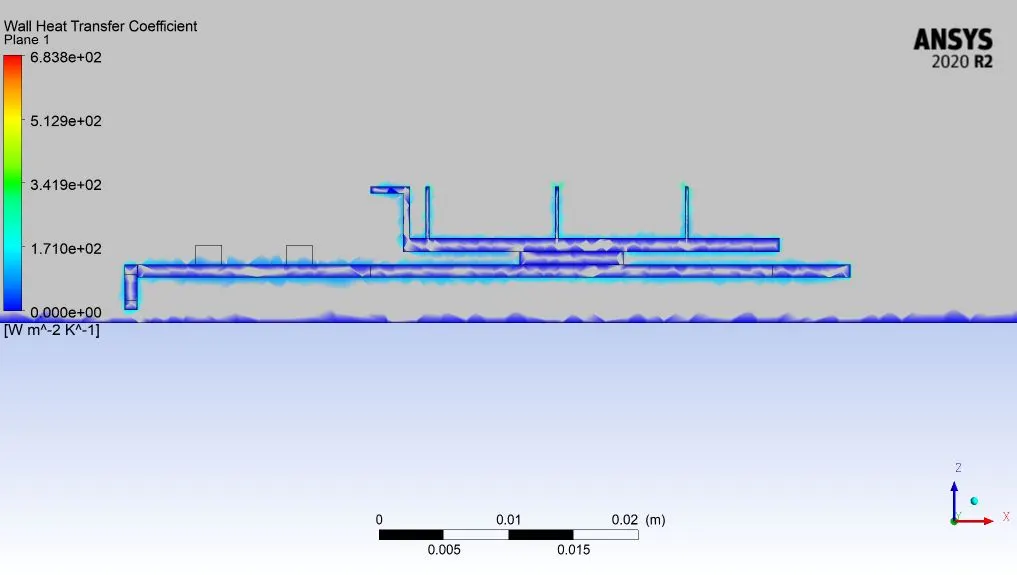
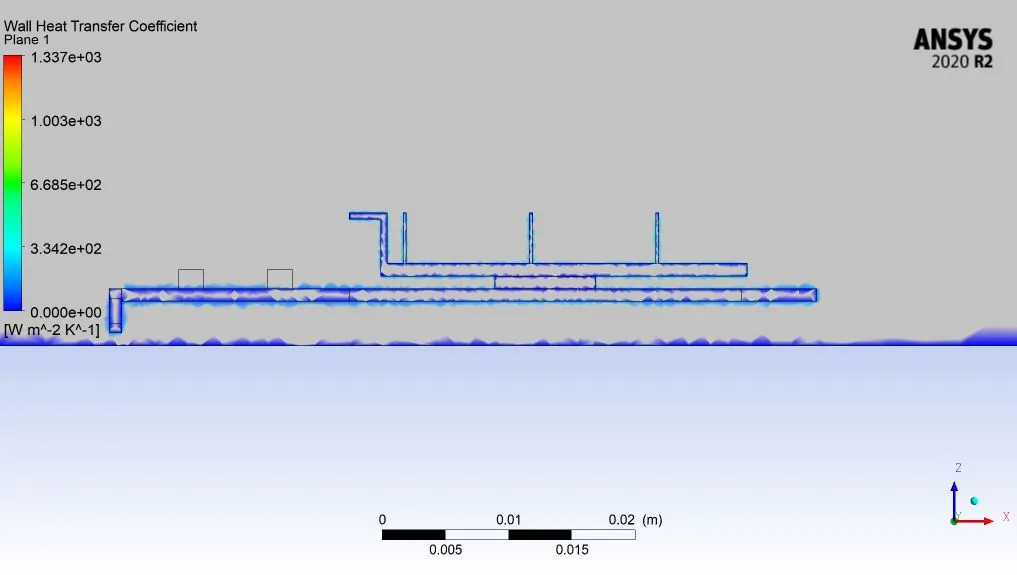
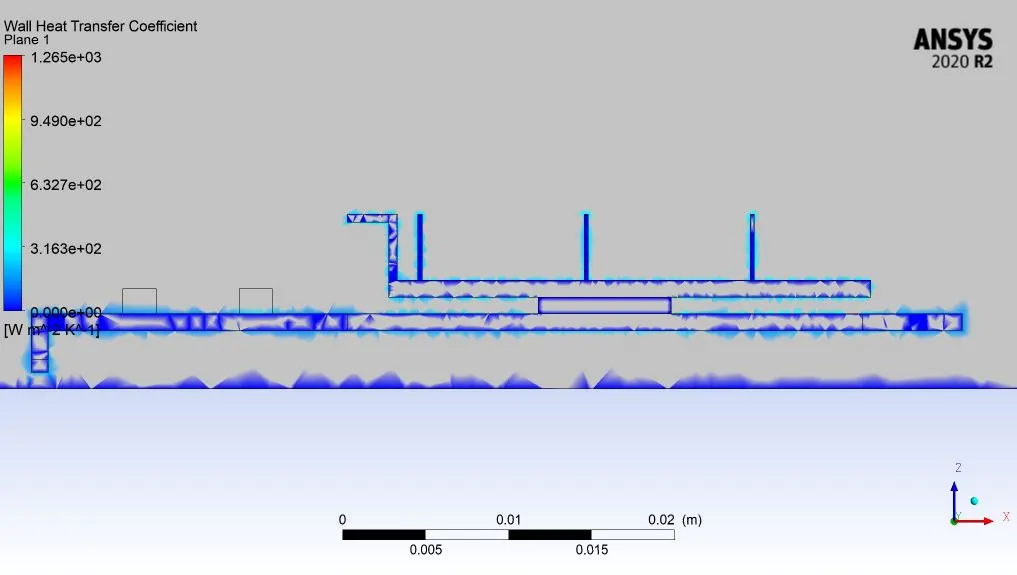
- The wall HTC was found to be varying from 16 to 22 W/m2K for fluent meshing while for gambit itr was found to be 20 W/m2K.
- The copper fins were then used which lowered the temperature ofcourse due to its better conduction of heat than alluminium.
- The validation is necessary of the results for actually predicting the temperature generation which can be done experimentally.