Challenge on Combustion
1 Objective
To study about the combustion simulation on combustor model using ANSYS Fluent and analysis of NOx formation and soot formation in the combustion product. Process of reduction in formation in NOx and soot in combustion product is also analysed by using one step soot model in during simulation ANSYS Fluent. Analysis of mass fraction of different species at different location in combustor is also taken into consideration.
2 Introduction
Combustion is a process of reaction of a fuel with oxidant in a controlled environment to get useful amount of energy (basically in form of heat). The energy obtained after combustion is basically the conversion of internal energy of the reactant (i.e. Fuel and oxidant). To have a good output and better result it is necessary that the combustion process should be controlled and also the product of the combustion does not contain harmful product (NOx and Soot formation) which leads to environmental problem such as air pollution.
So our study is based on simulation of combustion process to ensure that the product of the combustion at the outlet of the combustor is harmful product or not or if there then process of the reduction in the harmful product is studied.
3 Geometry & Meshing
3.1 Geometry of combustor
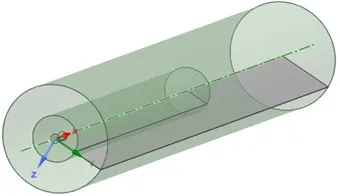
To reduce the computational time for the simulation the 3D model is reduced to 2D geometry and final domain of combustor is taken into consideration and shown below.

3.2 Meshing of Domain
Meshing is done by using an element size of 2.5 mm and all triangles method is chosen to ensure the triangular element. Capture proximity option is turned on during meshing with a minimum proximity size of 0.025mm and a number of cell across gap is 4. This option in meshing is used to capture data at the narrow section in the domain (i.e. at the entry of fuel) with a main purpose is to create a dense meshing at the entry of the fuel. Finally a total number of nodes and elements used for simulation is 12014 and 23245 respectively.

3.3 Physics & Setup
To simulate the problem pressure based steady state solver is chosen and for solving turbulent occur in the reaction a standard K-epsilon model with eddy dissipation is used along with energy solver turned on. Species transport model is used for combustion reactant and product with NOx and soot model turned on. First methane-air gas is used for combustion process and then for next simulation methane-air 2step gas is used which allows water (used 15% by mole in the fuel) in the fuel with a main purpose to reduce NOx and soot formation in the product.
3.4 Boundary conditions used
Air is entering with a velocity & temperature of 0.5m/s & 300K respectively inside the combustor while on the other hand fuel is entering with a velocity & temperature of 80m/s & 300K respectively.
At the outlet pressure –outlet (with gauge pressure is 0 pa) is used.
4 Results
Part-I Results at zero percent addition of the water to the fuel
4.1 Residual
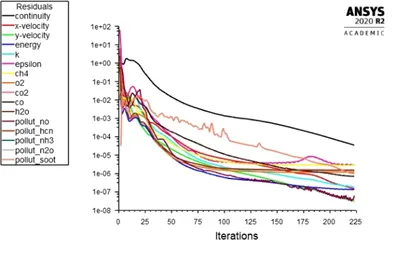
Convergence of the solution is achieved at iteration approximately 225
4.2 Temperature Contour
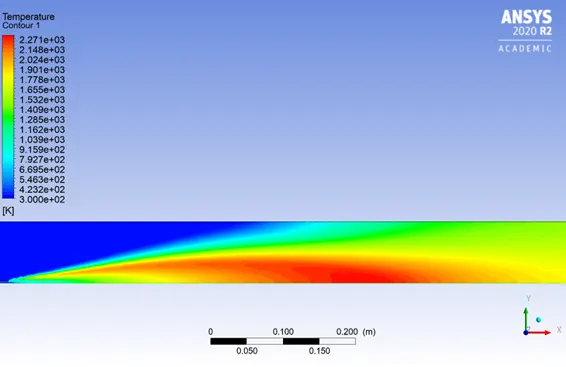
It is observer that the maximum temperature obtained after combustion is approximately 2271 K and it is shown by the red zone in the Figure 5.
4.3 Mass Fraction of different species at different location in the combustor
4.3.1 Mass fraction of CH4
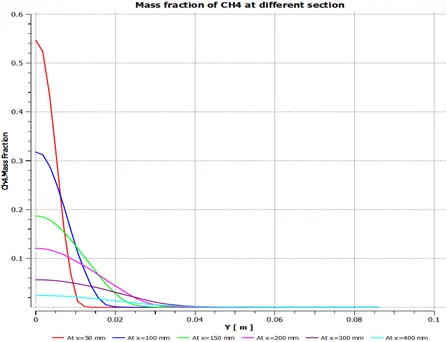
It is observed from the figure 6 that as we go forward in X-direction in the combustor slightly decrease in the mass of CH4 is observed, this is because as combustion process goes forward with respect to time decrease in the mass of the reactant happen as well as increase in mass of product is obtained. While as we move towards Y-direction in the combustor large amount of decrease in mass of CH4 is observed, this is due to fat that the fuel inlet is happening at the centre with a very small inlet section.
4.3.2 Mass Fraction of CO2
Mass Fraction of H2O
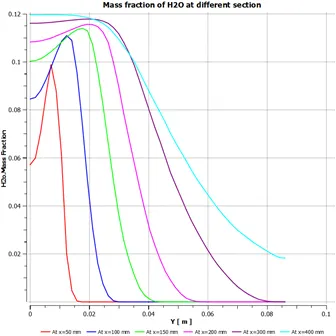
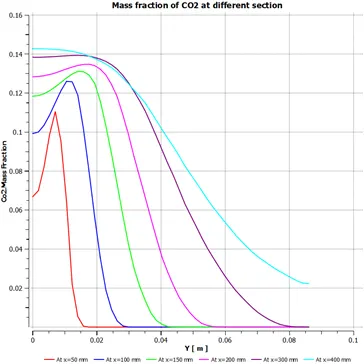
It is observed from the figure 7 and figure 8 that as we go forward in X-direction the increase in the mass of CO2 as well as mass of H2O is observed which can be explained by the method of formation of combustion product (i.e. as combustion process happen in forward direction there is decrease in mass of reactant as well as increase in the mass of product will obtained with respect to time). While as we move towards Y-direction in the combustor large amount of decrease in mass of CO2 as well as mass of H2O is observed, this is due to fat that the fuel inlet is happening at the centre with a very small inlet section.
4.3.3 Mass Fraction of N2
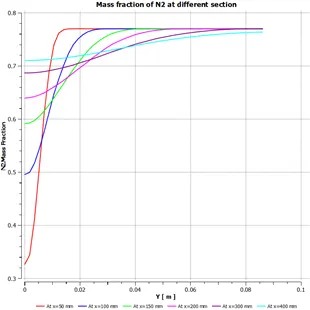
It can be clearly observed from the figure 9 that as we go forward in the combustor along X-axis mass of N2 increases initially but at last mass from every section comes at same place. Through this we can say that N2 is not taking part in the combustion process because N2 is highly inert gas. Furthermore N2 is reacting with O2 to form NOx pollutant at the product.
Mass Fraction of O2
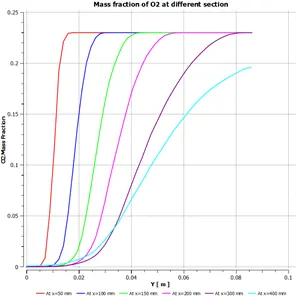
It is observed from the figure 10 that as we go forward along X-axis in the combustor not much variation in mass of O2 is observed while as we go forward in Y-direction mass of O2 increases drastically which is because O2 is present at upper section in large amount.
4.3.4 Mass fraction of NOx (i.e. NO, N2O)
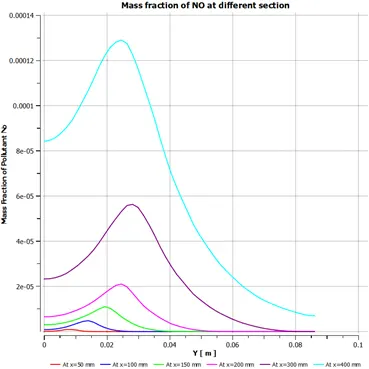
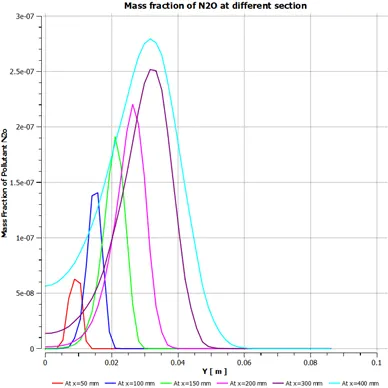
It is observed from the figure 11 & Figure 12 that as we go forward in X-direction there is increase in mass of NOx while as we go forward in Y-direction initially there is increase in mass of NOx achieves to a maximum value and then decrease in mass is observed, this is because of the fact that NOx is easily formed at higher temperature which occurs at low y value.
4.3.5 Mass fraction of Soot
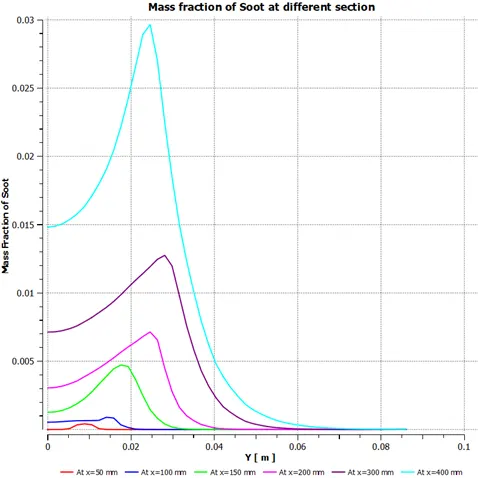
It is observed from the figure 13 that with increase in X-value mass of soot is increases while with increase in y-value decrease in mass of soot is observed, this is because of the fact that Soot is easily formed at higher temperature which occurs at low y-value.
Part II- Now we are adding water varying from 5% to 30% by mole to the fuel to check the effect of it on NOx & formation. As NOx & soot contributes to air pollution, the primary aim is to minimise the formation of NOx & soot and this can be done by adding water content to the fuel by mole. So the main focus is on NOx & soot mass fraction formed after adding water to the fuel. Thus mass fraction plot at different section of combustor of NOx & Soot is given in further graph in this report.
4.4 Comparison of graphs of Mass Fraction of NOx & Soot formation by adding 5 to 30 % of water with step increase of 5% by mole to the fuel (CH4)
1.1.1 Comparison for NOx & Soot formation
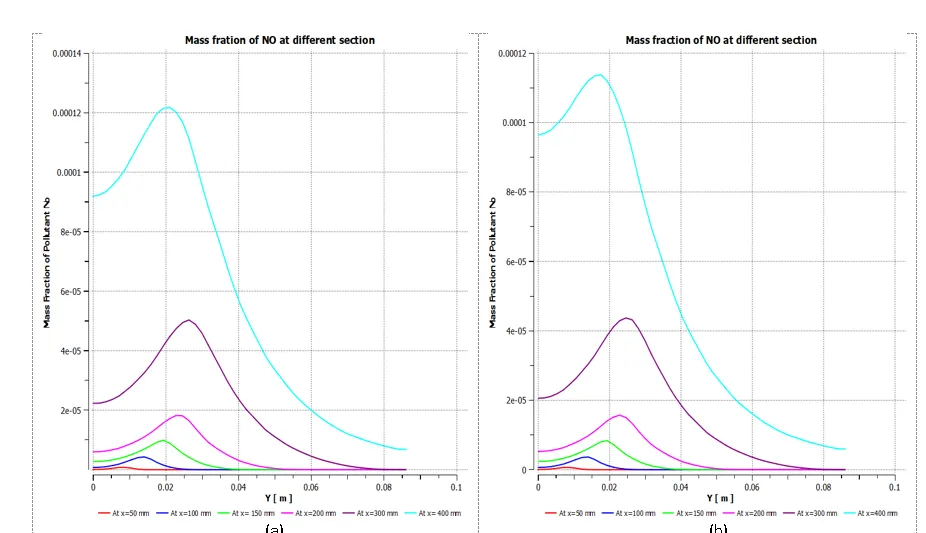
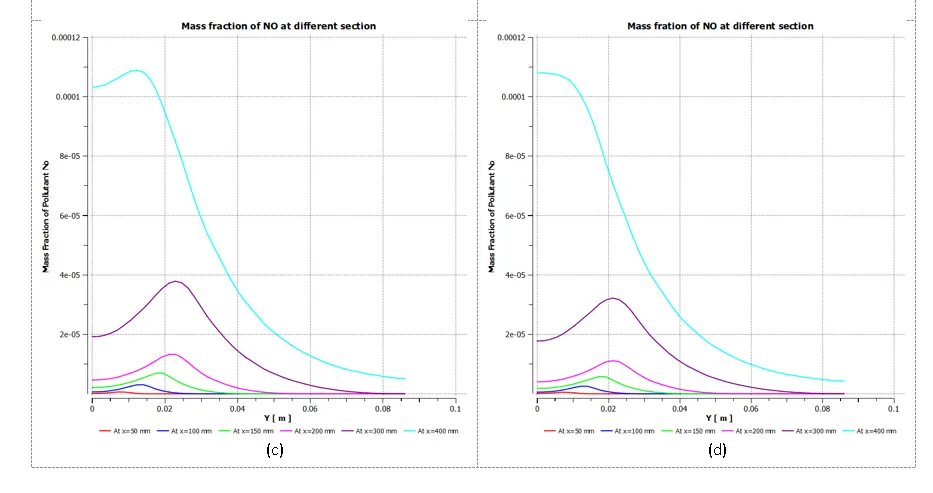
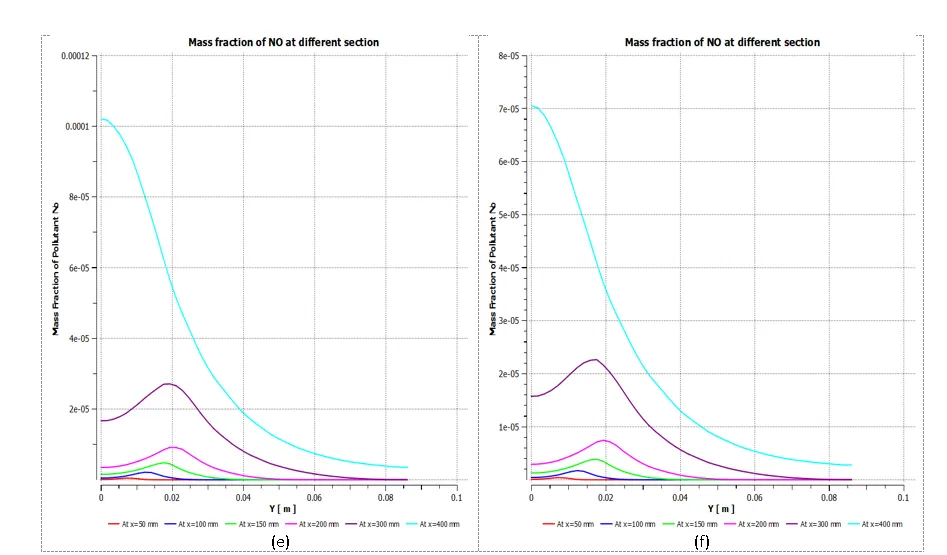
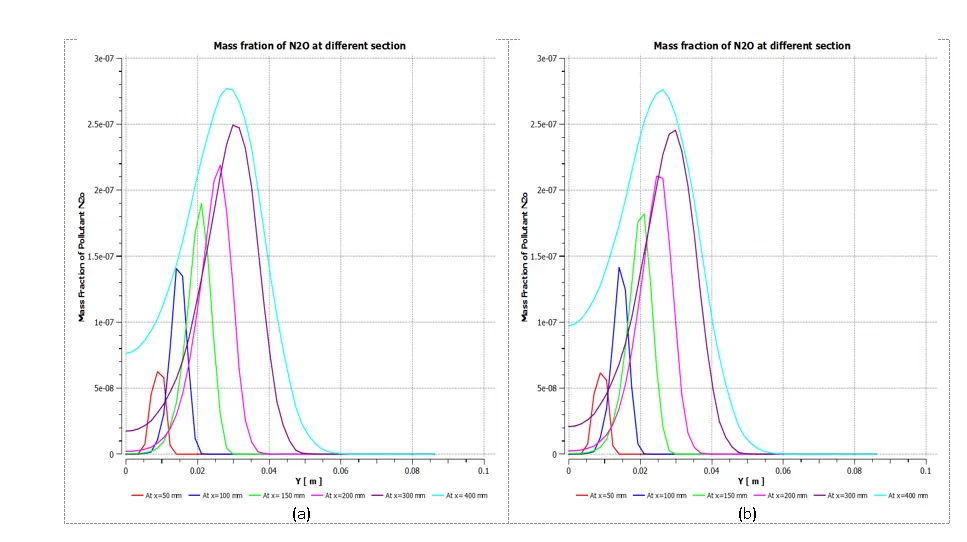
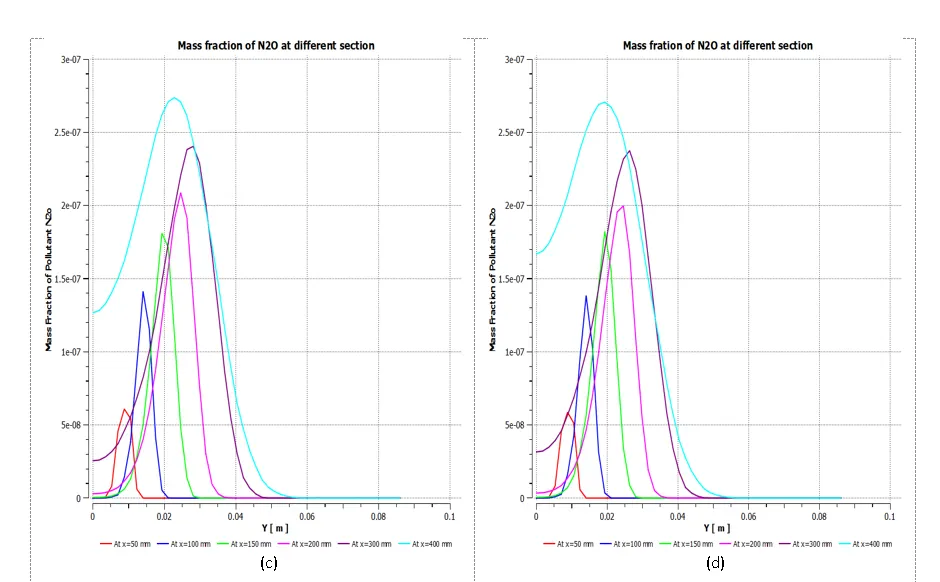
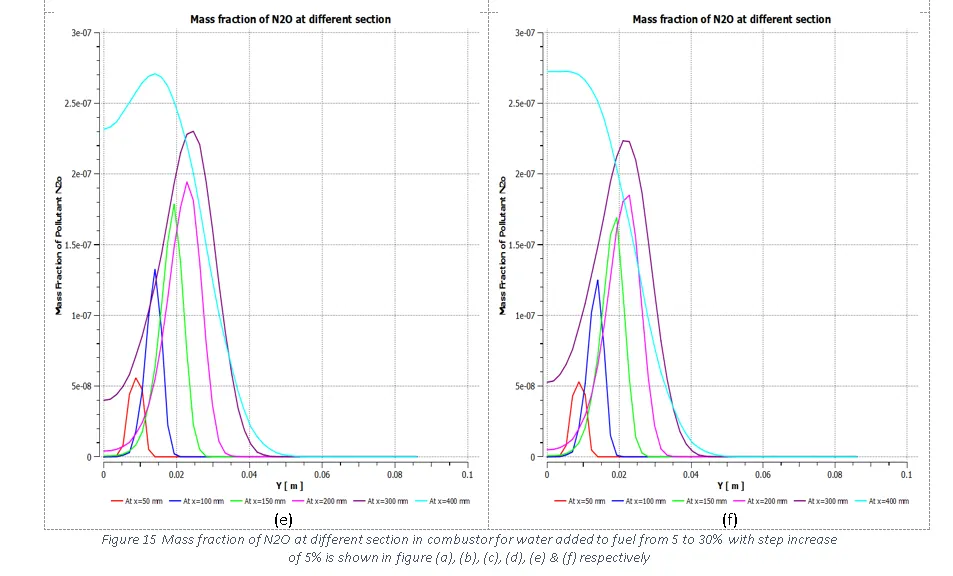
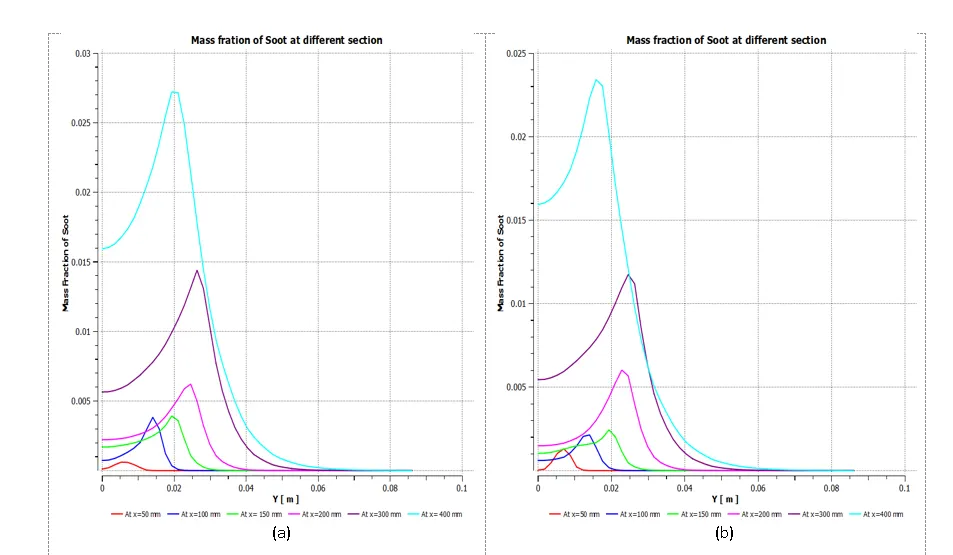
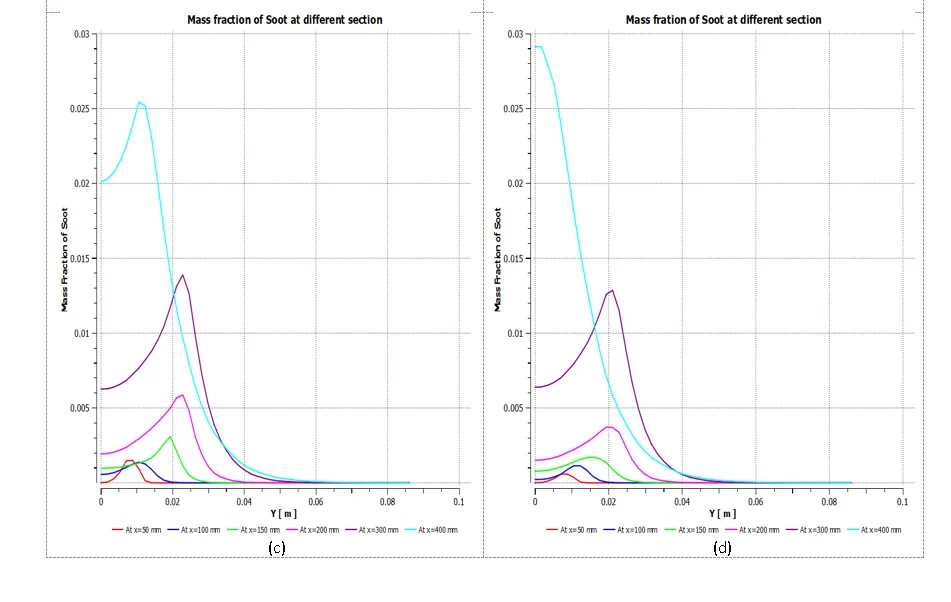
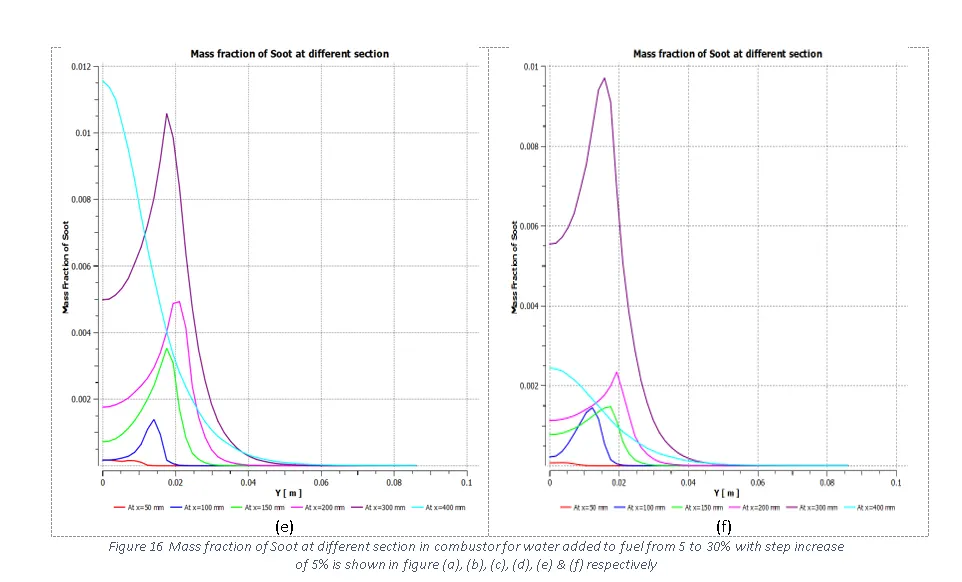
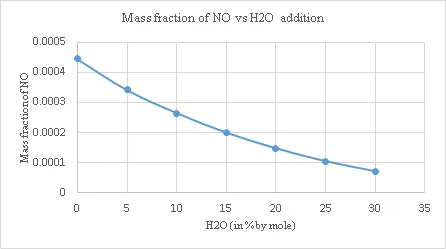
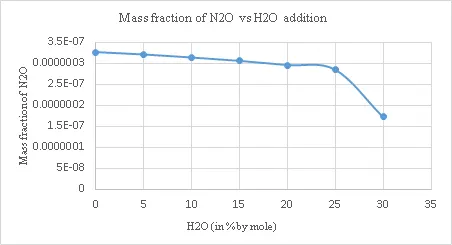
It is clearly observed from the Figure 14 which shows a comparison of NO formation during combustion is that as we increase water content in fuel by mole the NOx and Soot formation decrease by mass. This is due to fact that water content in fuel controls the temperature of the combustion near the igniter there by decrease in content of NOx & Soot in the product as high temperature is the favourable condition to produce NOx & Soot
4.5 Comparison of Contour of Mass Fraction of NOx & Soot formation by adding 5 to 30 % of water with step increase of 5% by mole to the fuel (CH4)
4.5.1 Contour of NO
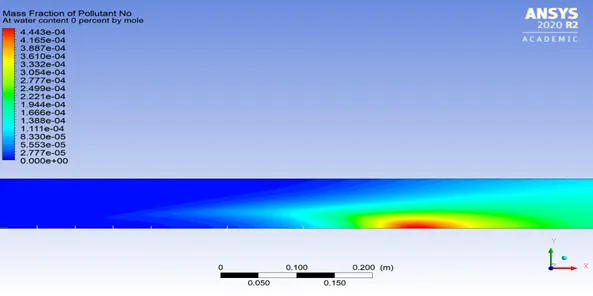
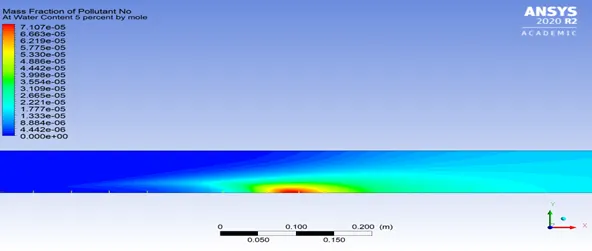
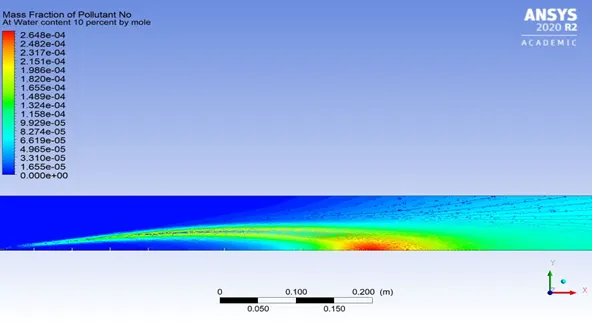
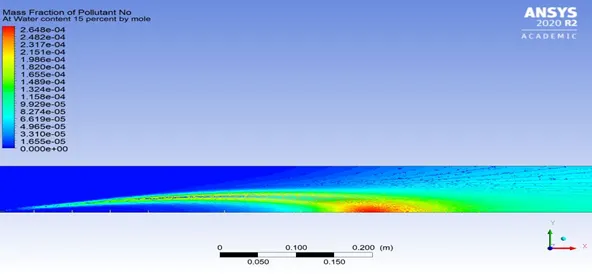
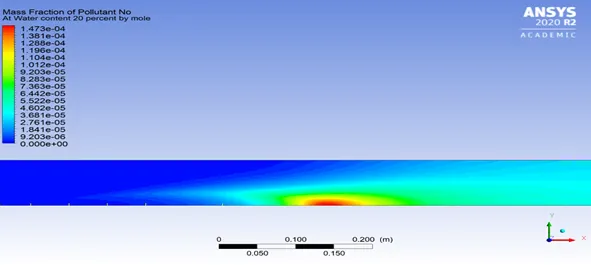
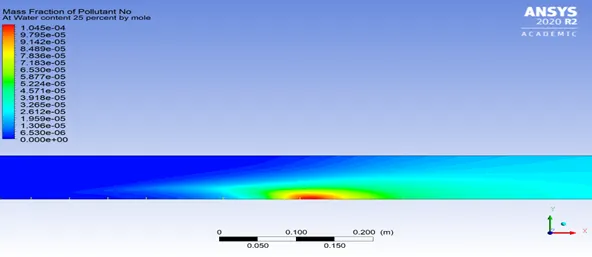
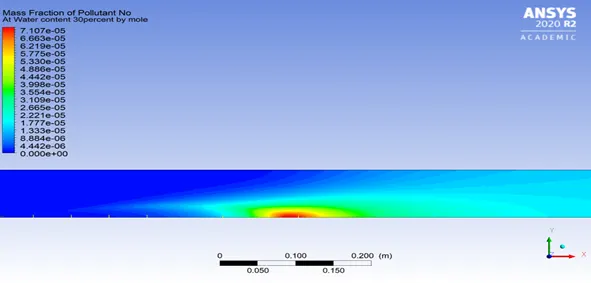
Figure 17 Contour of NO inside the combustor for water added to fuel from 5 to 30% with step increase of 5% is shown in figure (a), (b), (c), (d), (e), (f) & (g) respectively
4.5.2 Contour of N2O
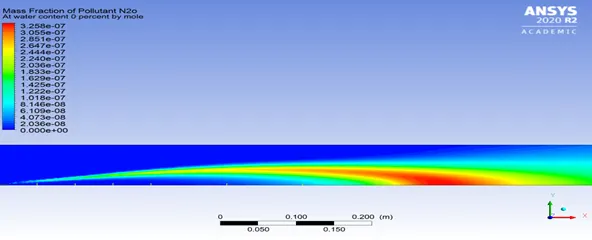
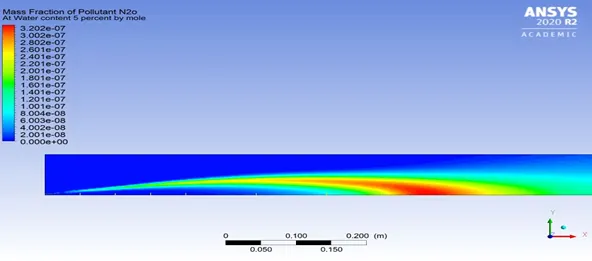
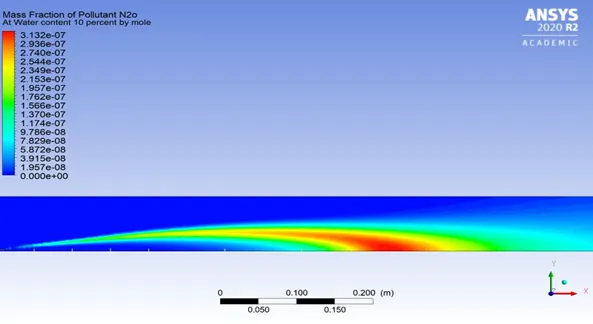
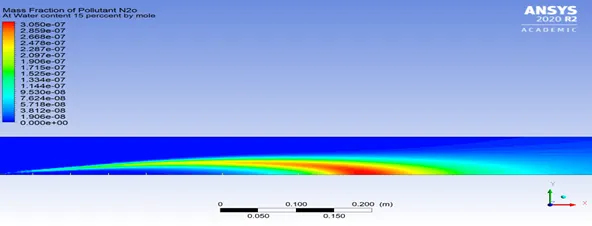
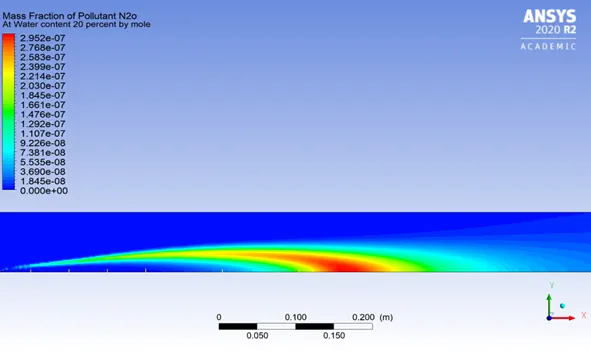
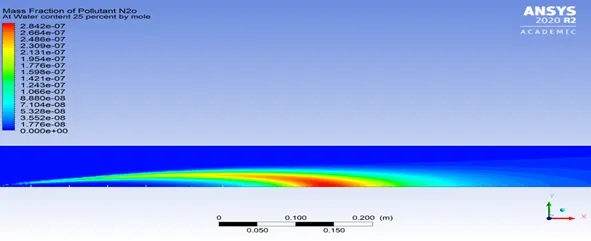
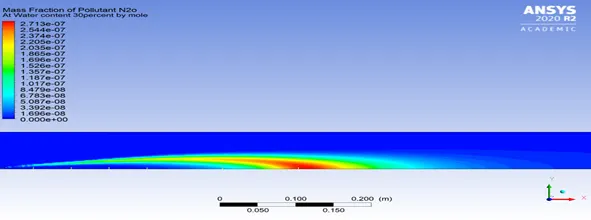
Figure 18 Contour of N2O inside the combustor for water added to fuel from 5 to 30% with step increase of 5% is shown in figure (a), (b), (c), (d), (e), (f) & (g) respectively
4.5.3 Contour of Soot
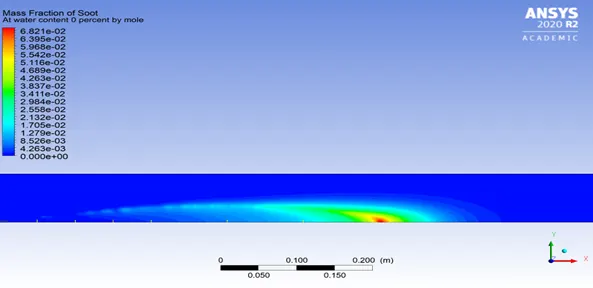
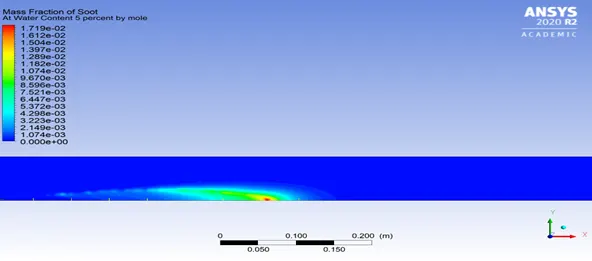
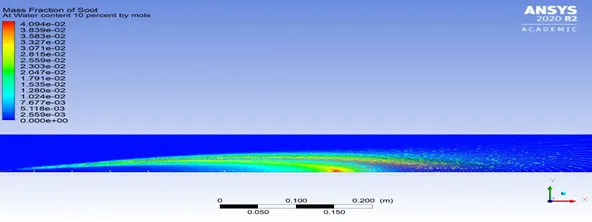
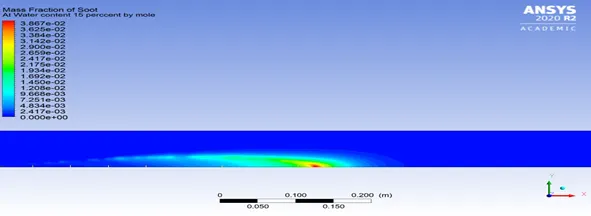
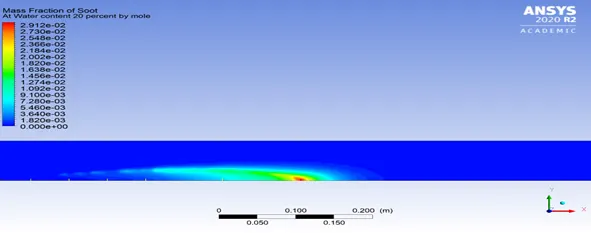
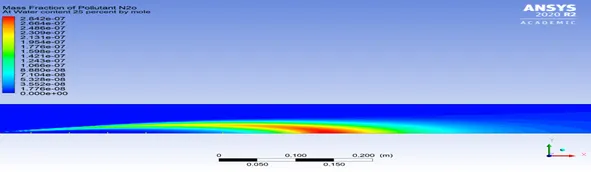
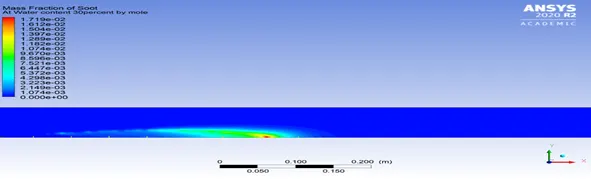
Figure 19 Contour of Soot inside the combustor for water added to fuel from 5 to 30% with step increase of 5% is shown in figure (a), (b), (c), (d), (e), (f) & (g) respectively
4.5.4 Graph plotted NO vs Water addition
4.5.5 Graphs plotted N2O vs Water addition
4.5.6 Graph plotted Soot vs Water addition
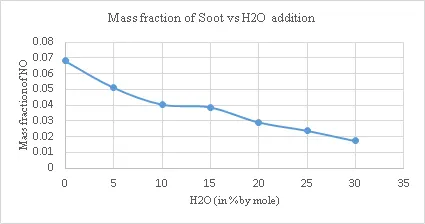
Figure 22 Soot vs Water addition
It can be clearly observed from the figure 20, 21 & 22 that the production of NOx & Soot is decreases with increase in water content of the fuel.
5 Conclusion
- Dry Fuel leads to a larger amount of NOx & Soot formation because Nitrogen is higher probability of reaction with oxygen at high temperature.
- Water content in the fuel will decrease the production of NOx & Soot by maintaining the temperature level under activation temperature (Temperature above which Nitrogen starts reacting with oxygen leads to NOx & Soot formation) of Nitrogen.
- As water content in fuel increase, harmful product of combustion like NOx & Soot will decreases.