Challenge on Combustion
AIM: Perform a combustion simulation on combustor model and plot the variation of mass fraction of different species
Methodology: Combustion simulation were carried out in ANSYS Fluent using Methane Air mixture material model. Eddy dissipation model was enabled with uses the ratio of k and `epsilon` to initiate combustion. Thermal NOx and soot model were enabled to calculate the NOx and soot mass fraction. The project is divided into two parts. In the first part line probes are used at different location to plot the variation of CO2, H2O, CH4, N2, O2, Nox and Soot emissions. Line probes are inserted at location x = 80 mm, 200mm, 400mm, 600mm and 770mm. In the second part Methane air 2step mixture model is used to study the effect of water in NOx and soot mass fraction at outlet.
PART 1: Methane Air mixture model along with Eddy dissipation is used. The simulation was run for 300 iterations and temperature at outlet and monitor point which is halfway along the length is plotted to identify convergence.
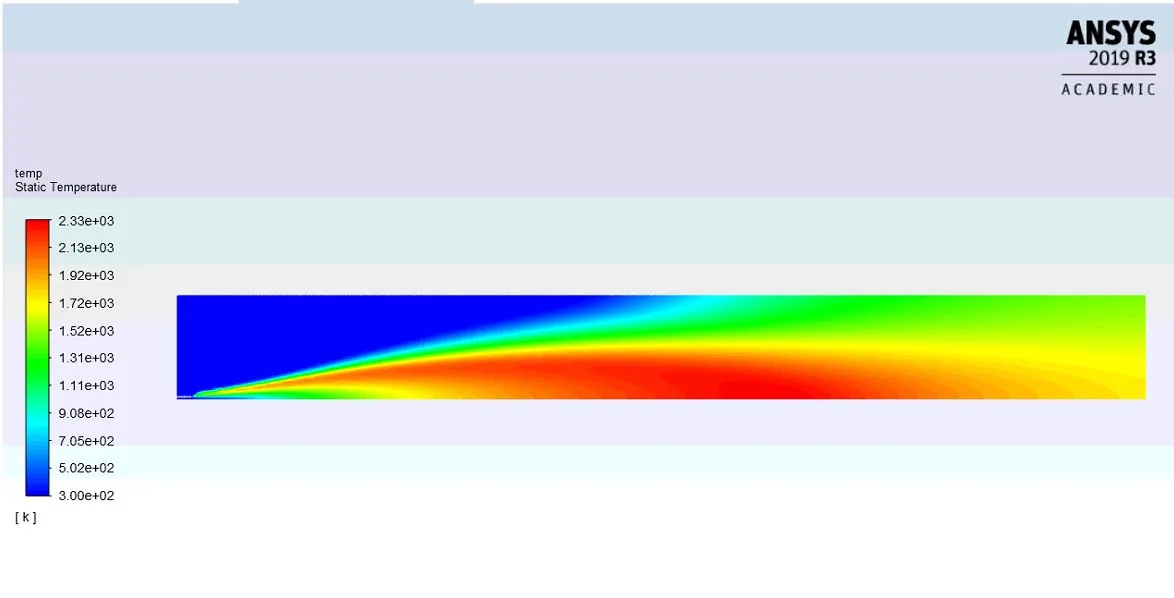
Temperature Contours
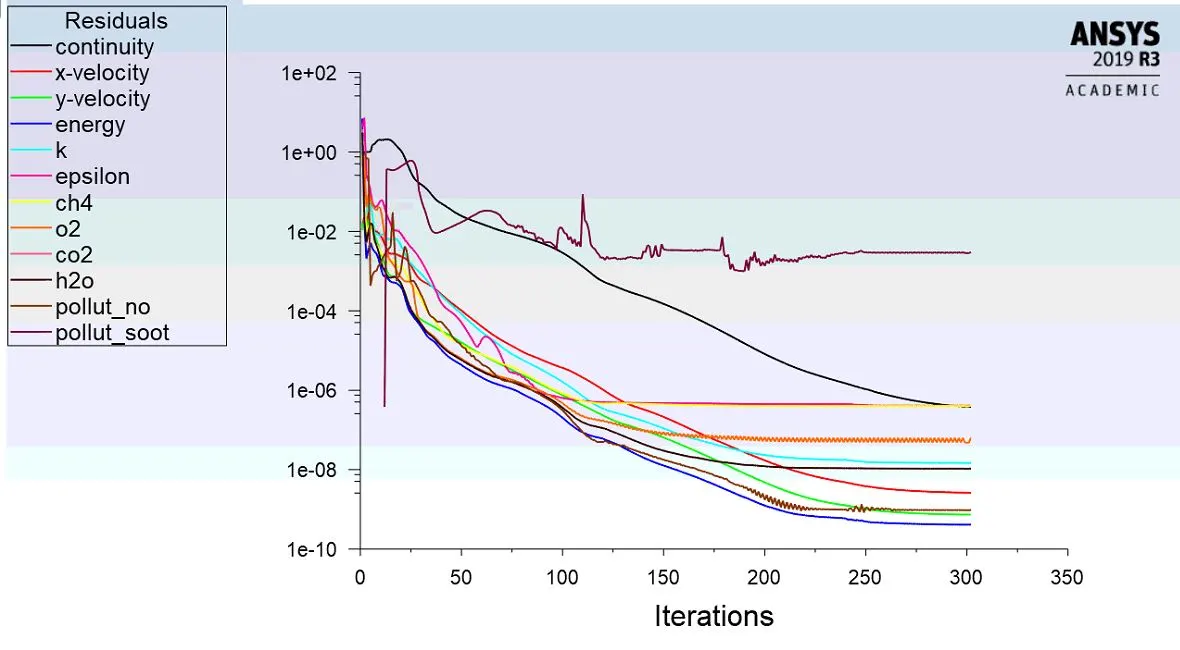
Residuals
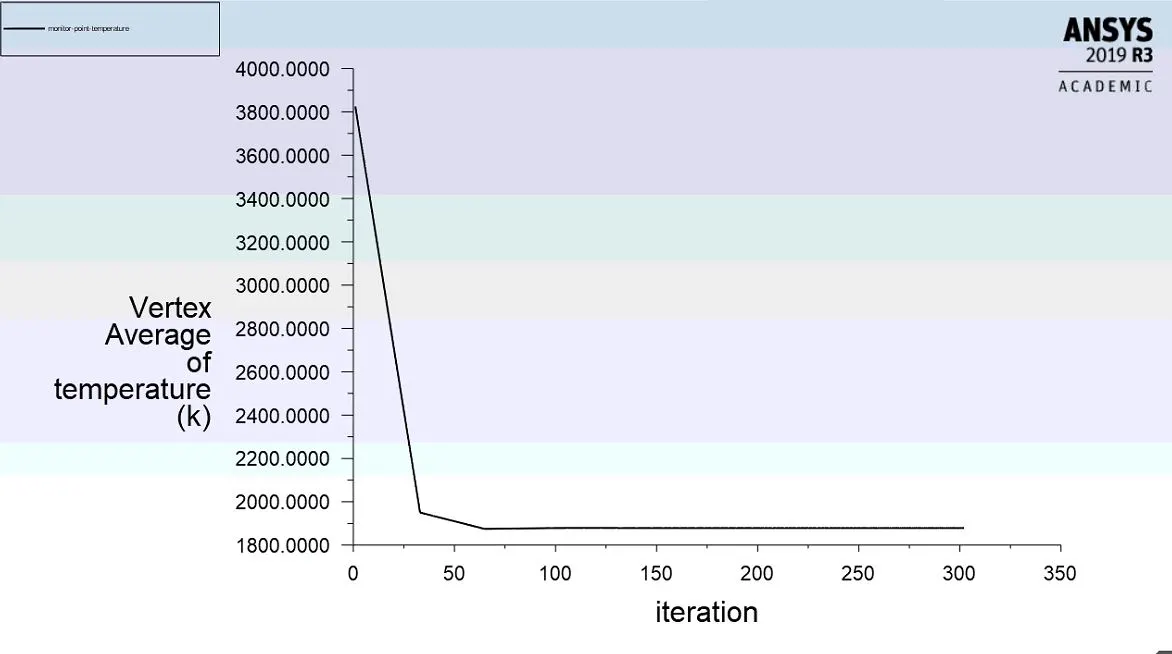
Monitor point temperature
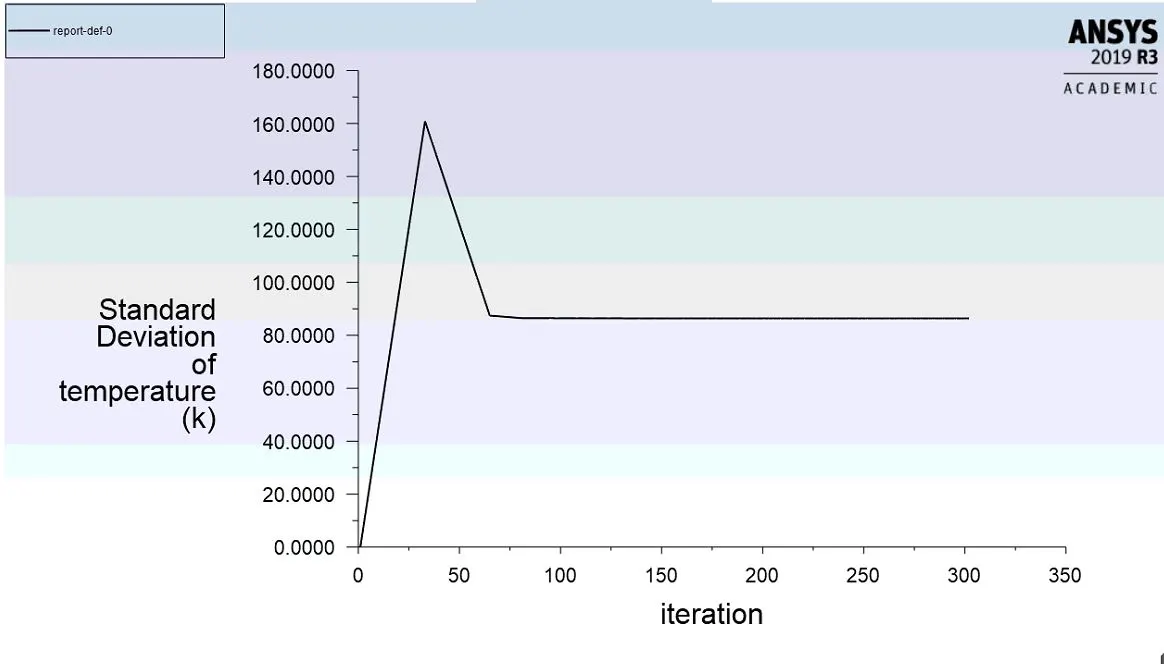
Temperature at outlet
Variation of CO2, H2O, N2 and O2
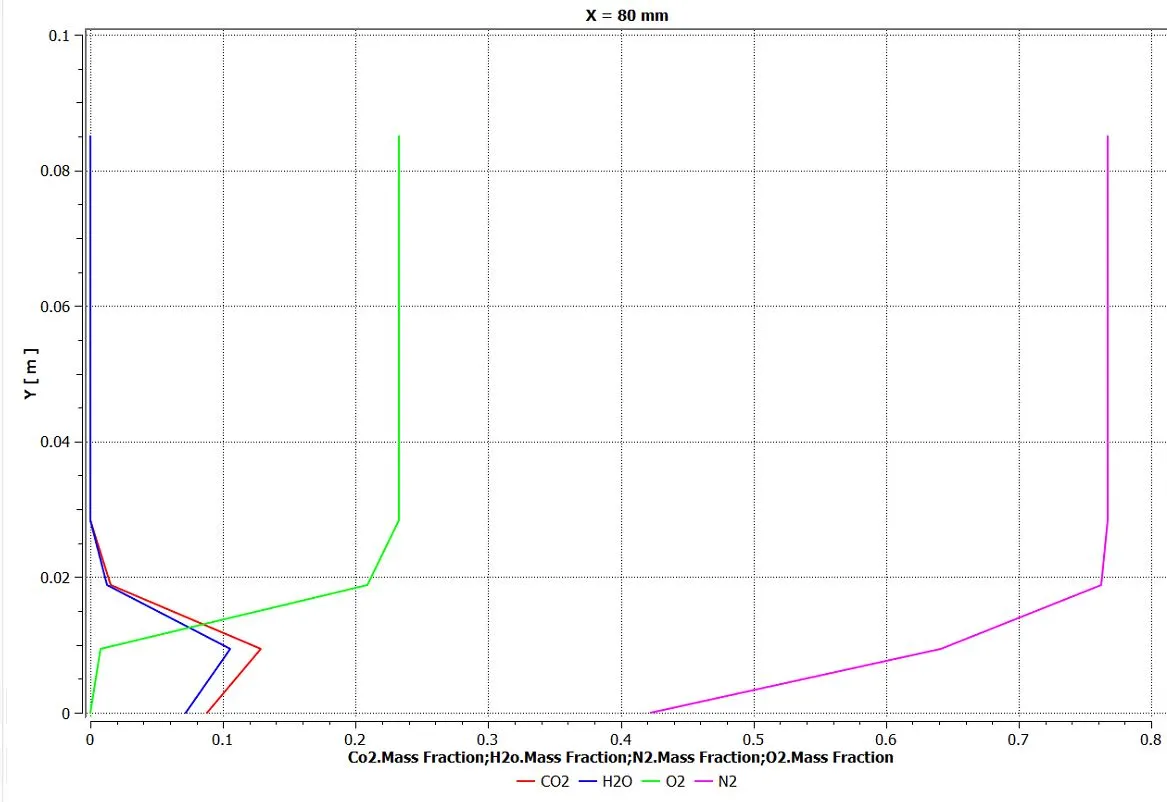
X = 80mm
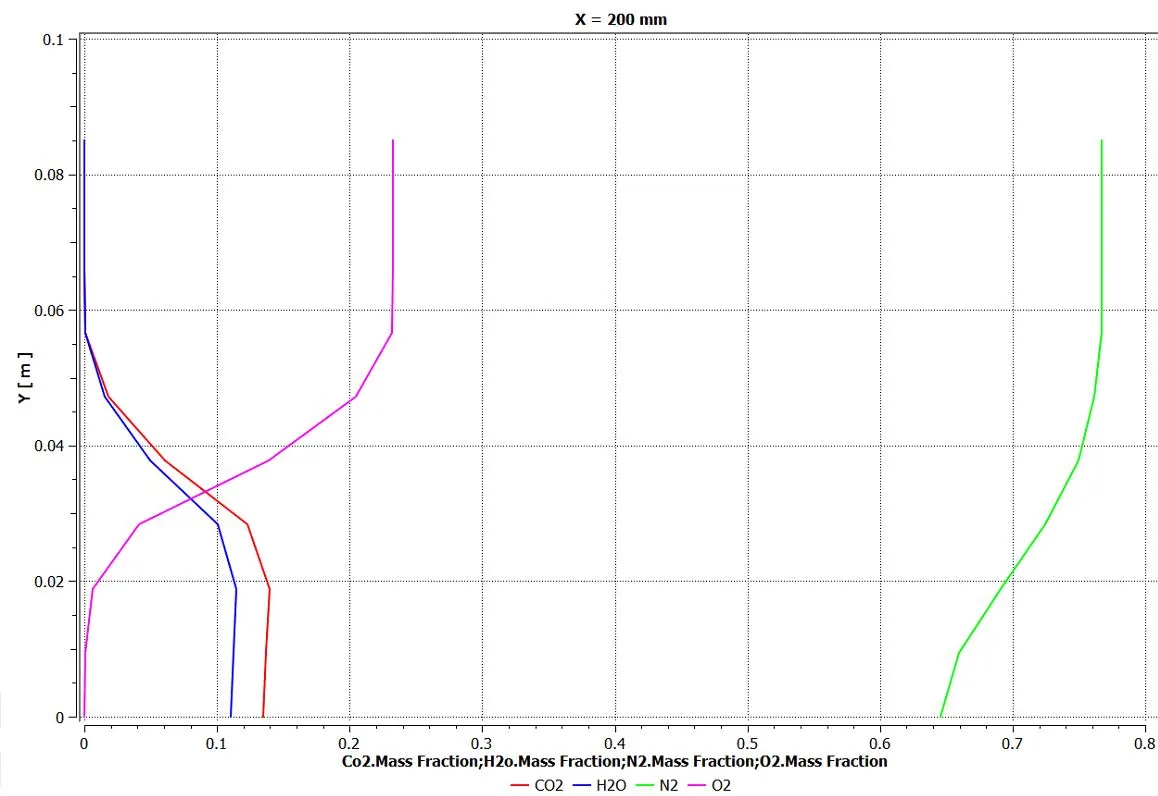
X = 200 mm
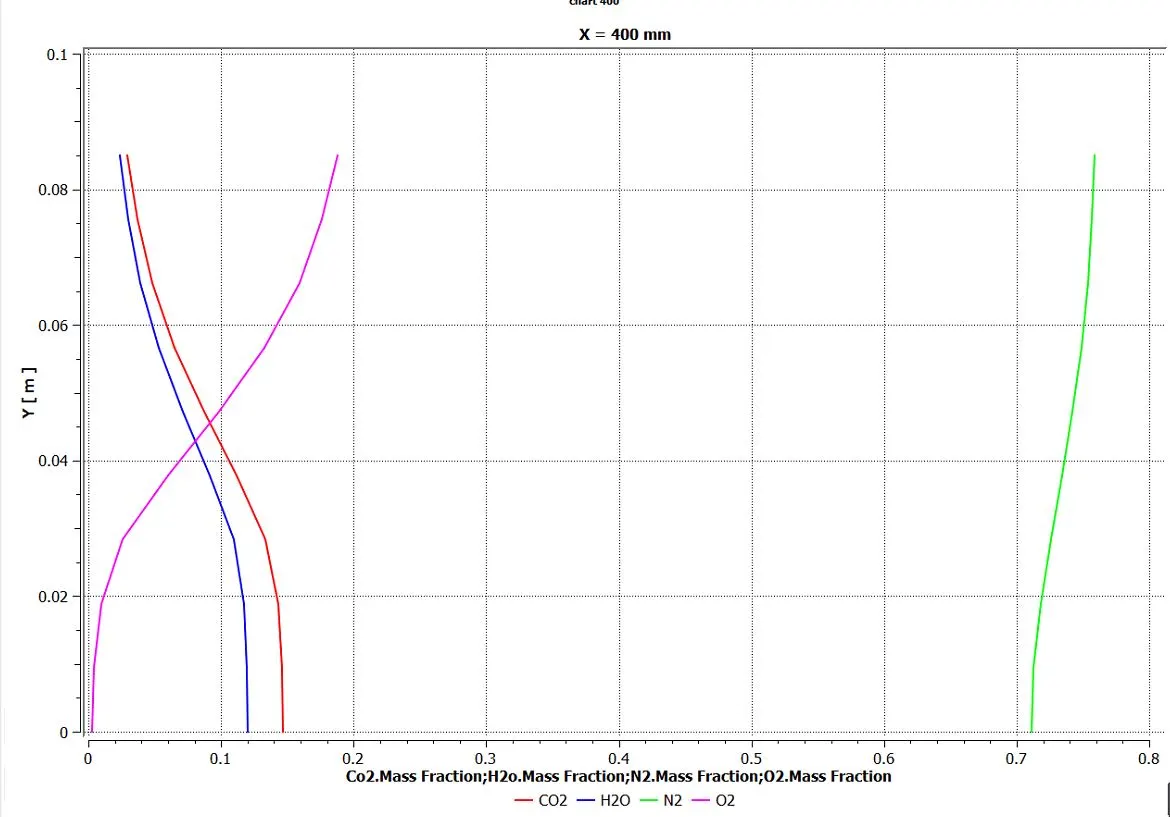
X = 400 mm
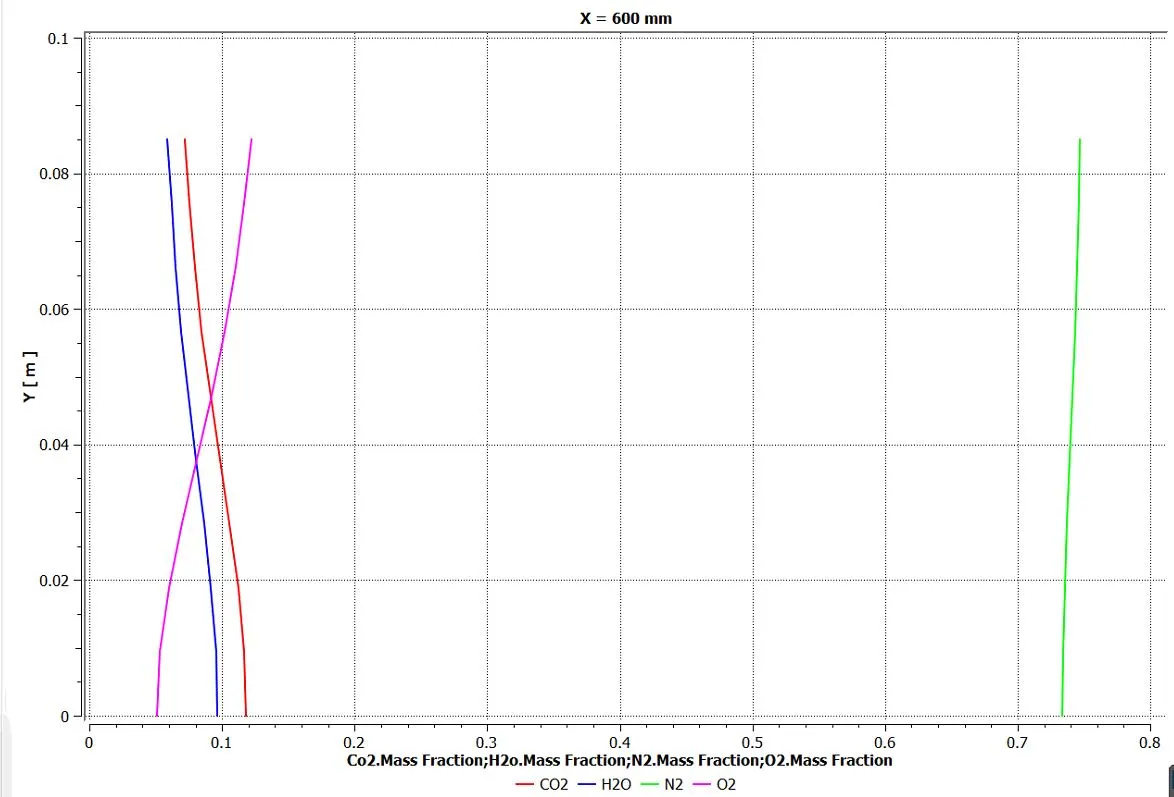
X = 600 mm
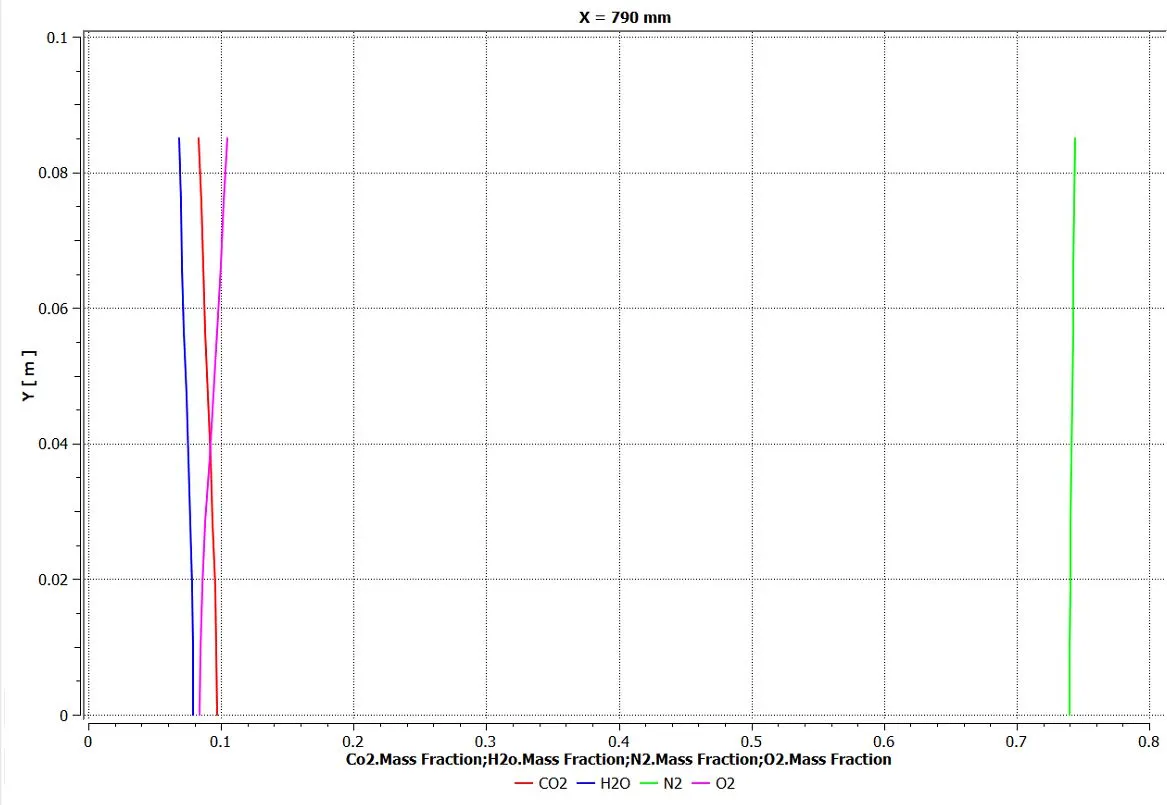
X = 770 mm
From the graphs we can see that the graph becomes linear as we move towards outlet. This shows that the flame gets developed as one moves towards outlet.
CH4 Mass fraction
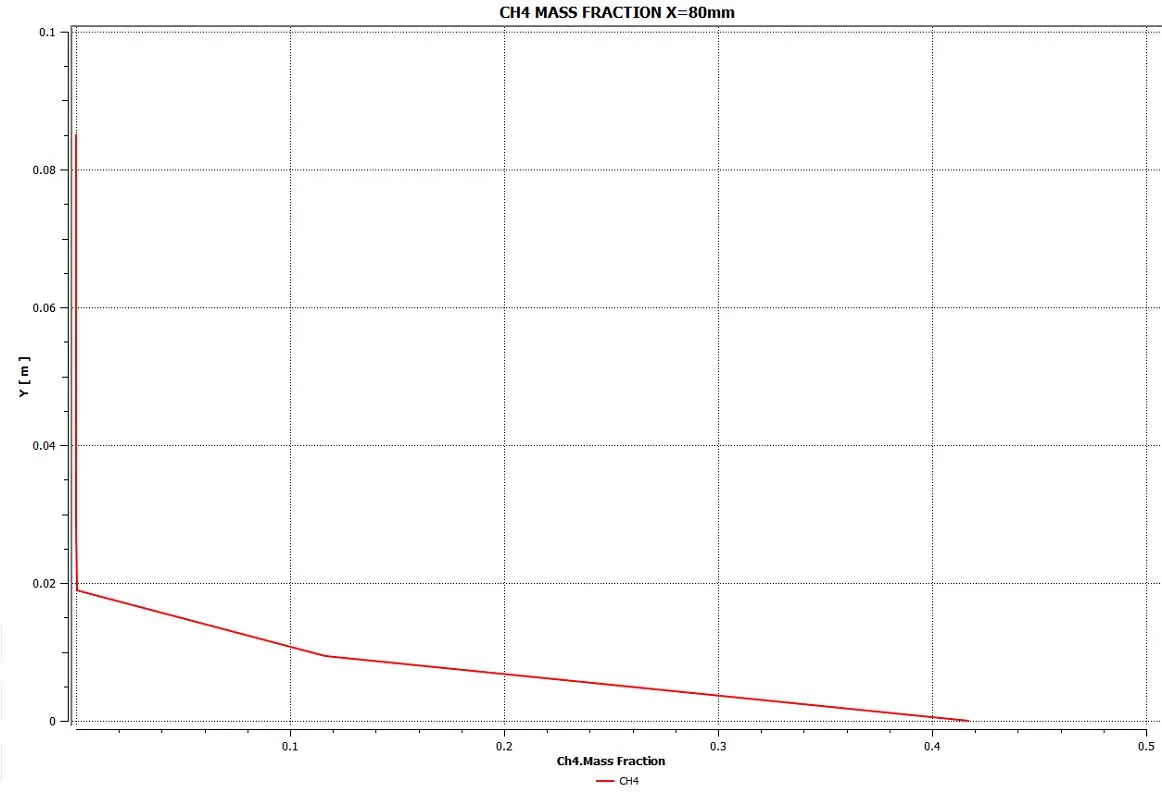
X = 80mm
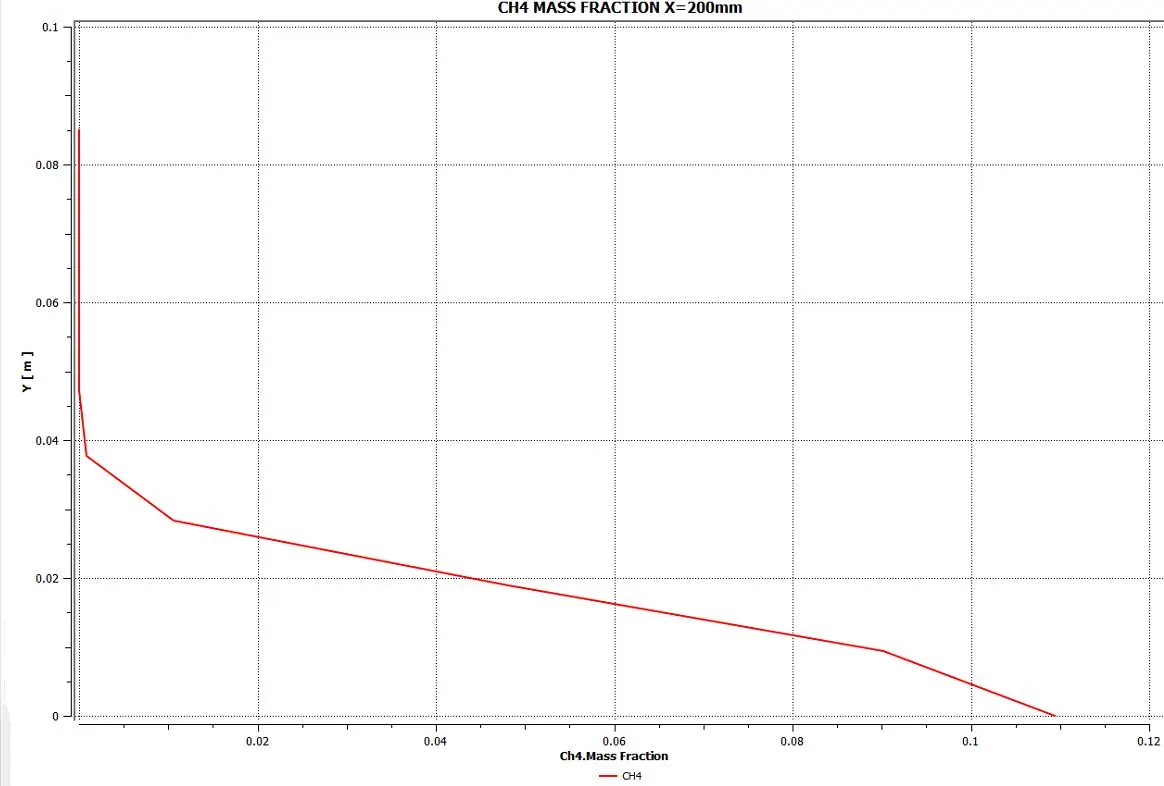
X = 200mm
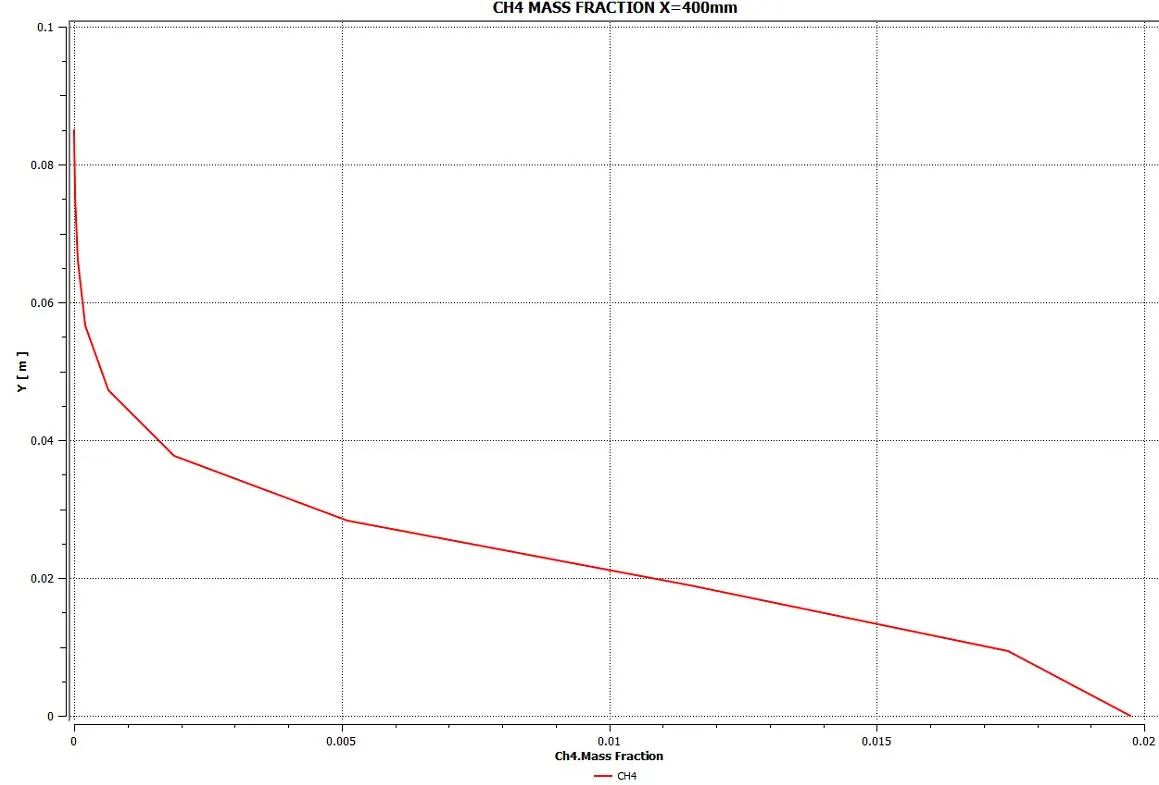
X = 400mm
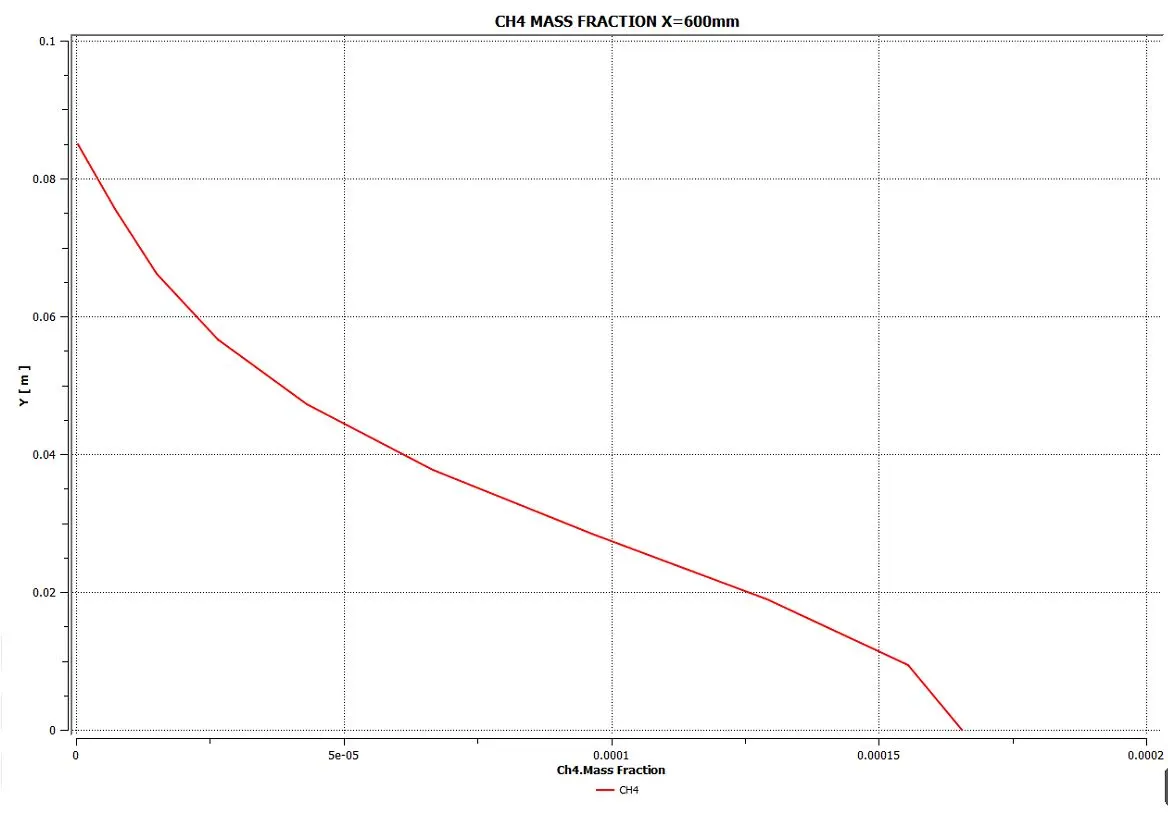
X = 600mm
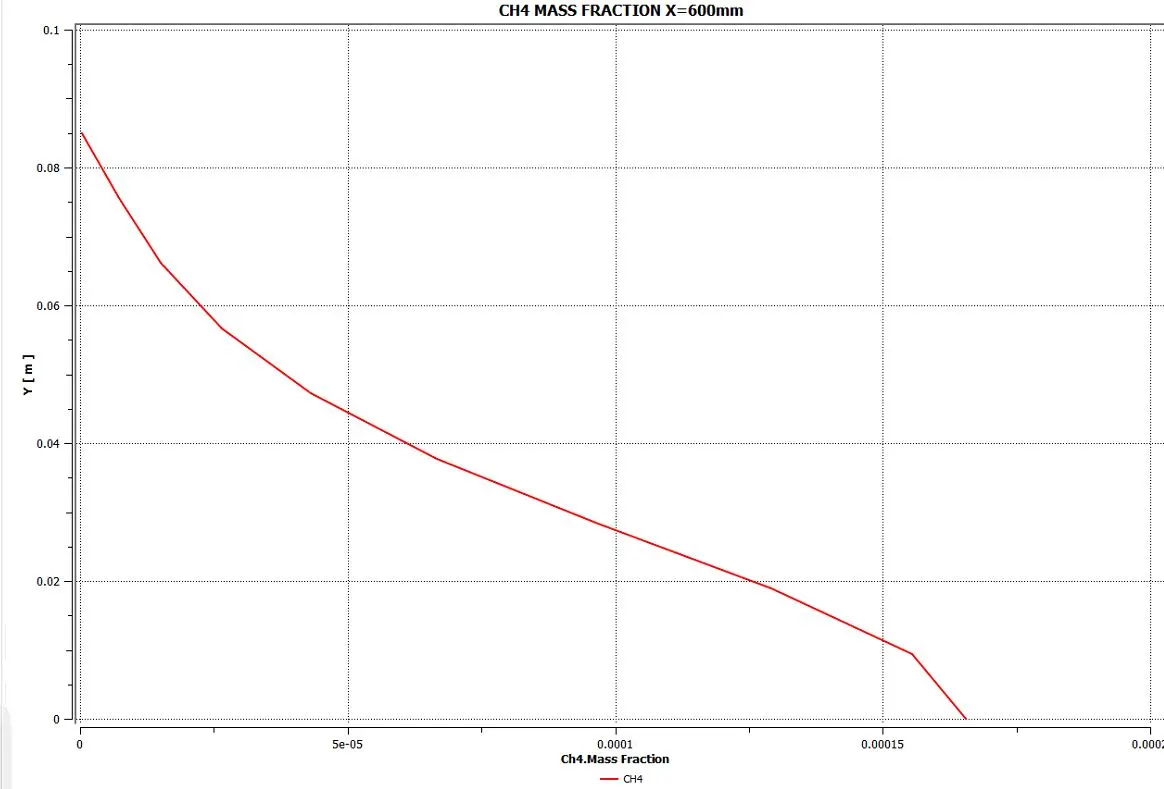
X = 770mm
From the charts we can see that the CH4 mass fraction decreases as we moves towards outlet showing combustion taking place the methane being burned.
NOx Mass Fraction
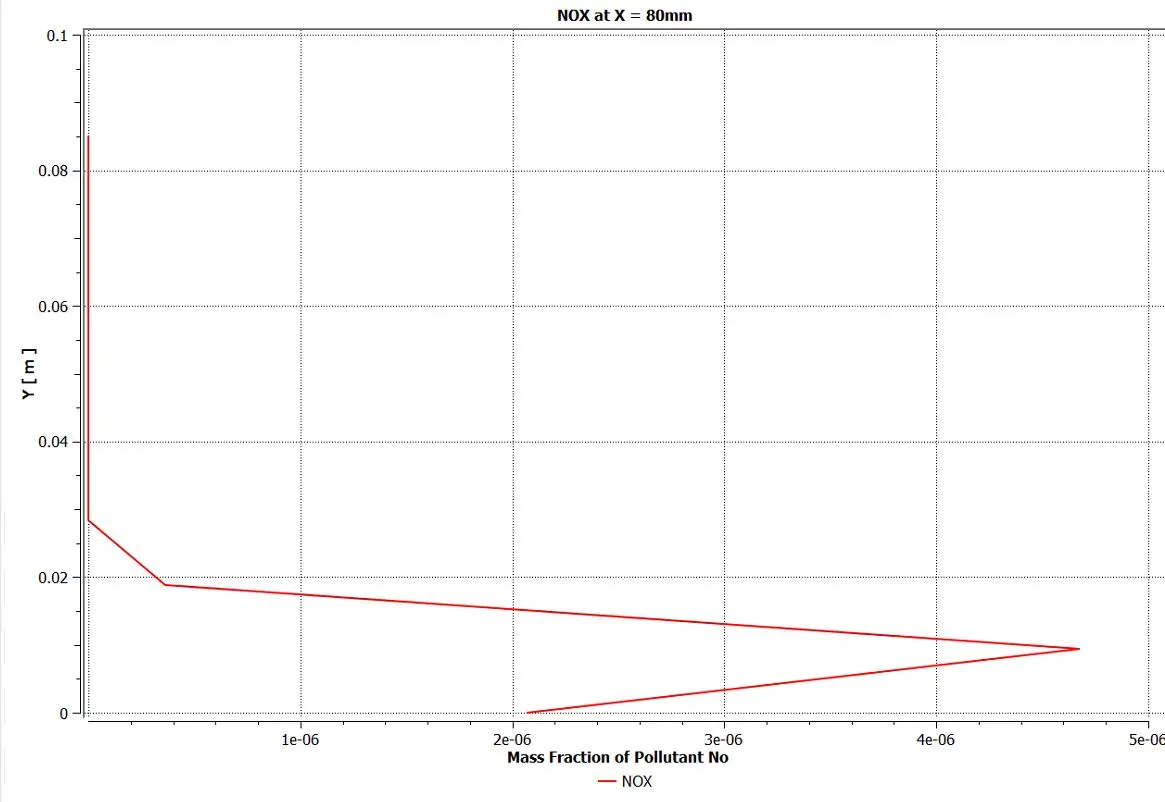
X = 80mm
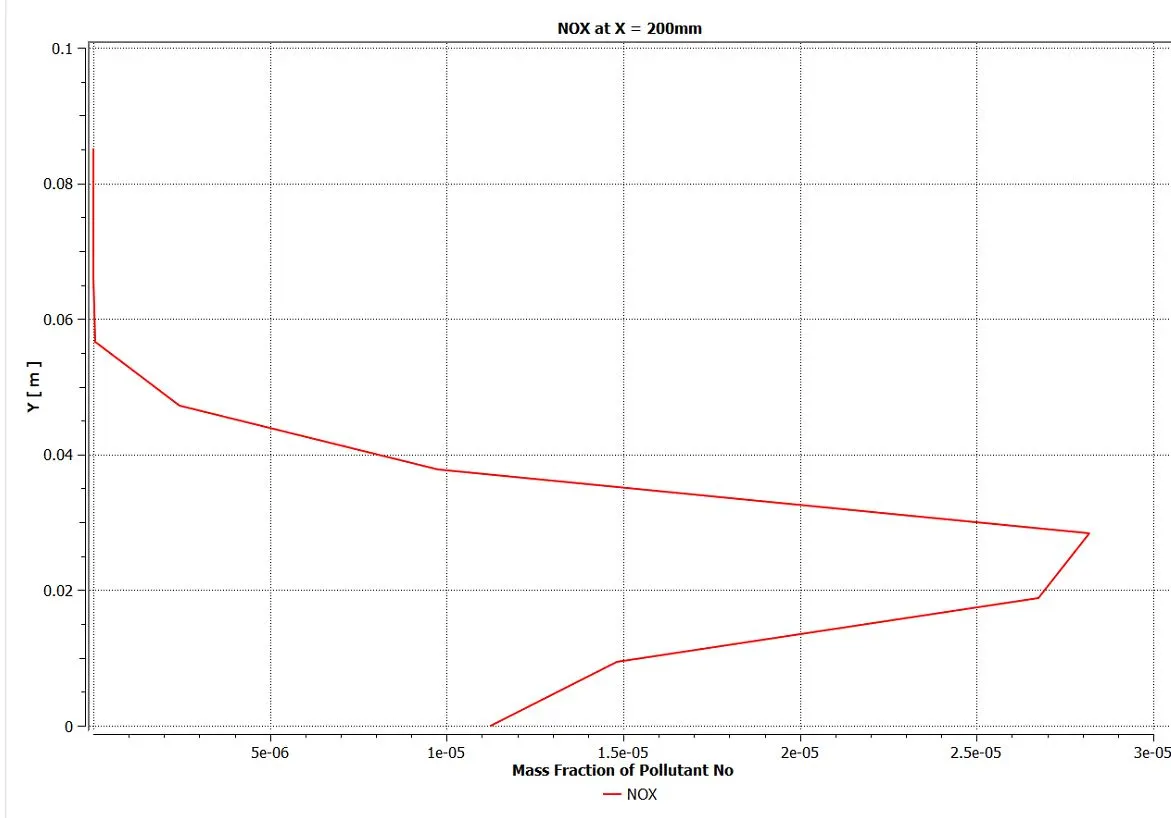
X = 200mm
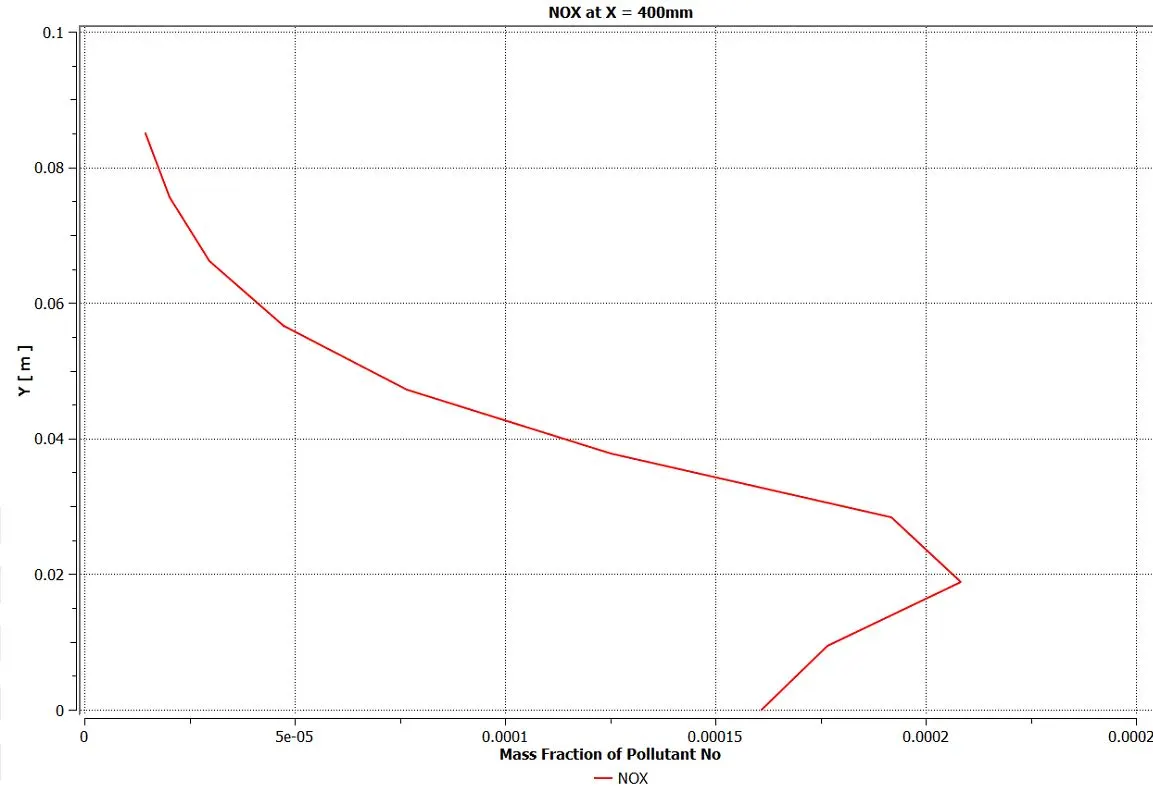
X = 400mm
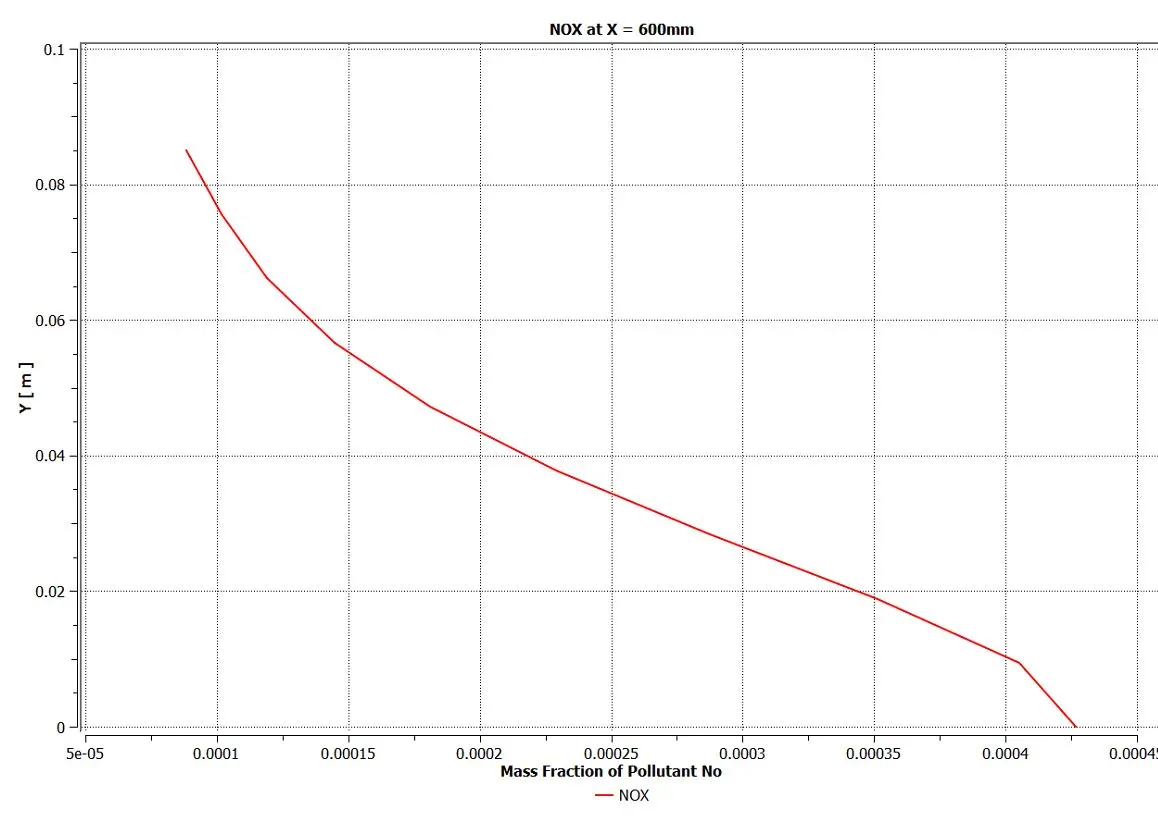
X = 600 mm
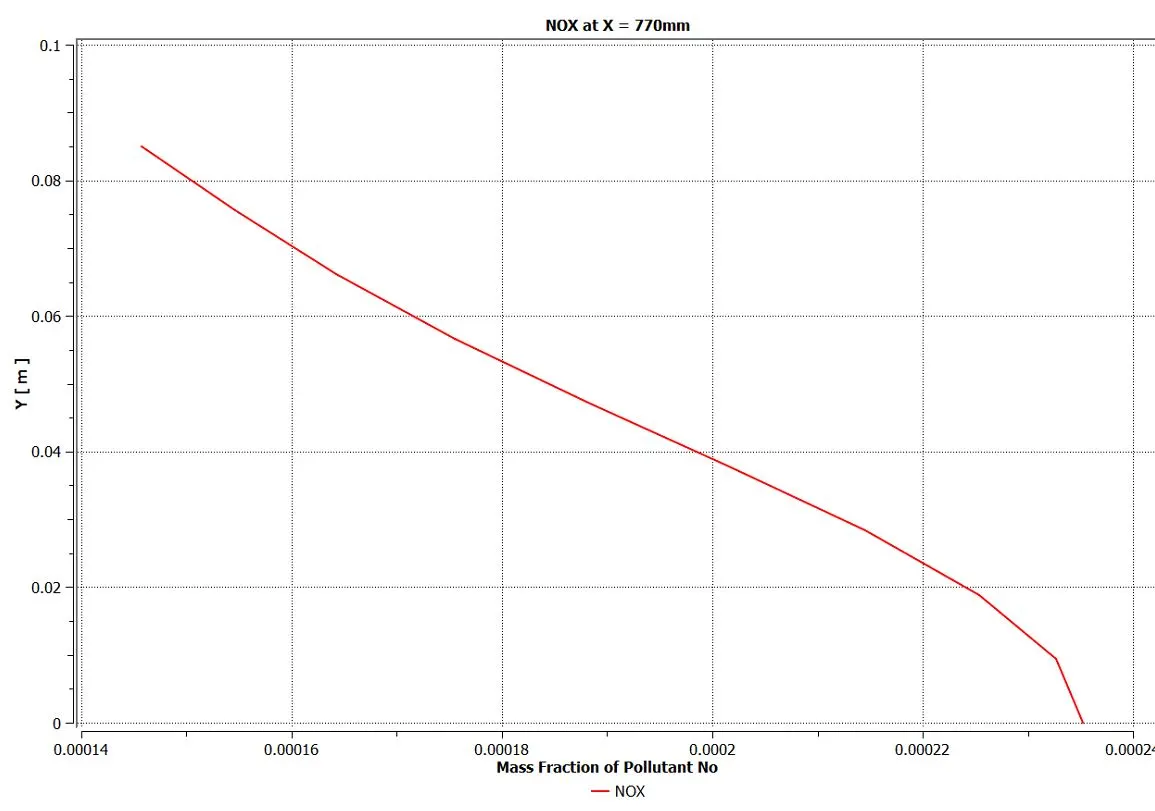
X = 770mm
Soot Mass Fraction
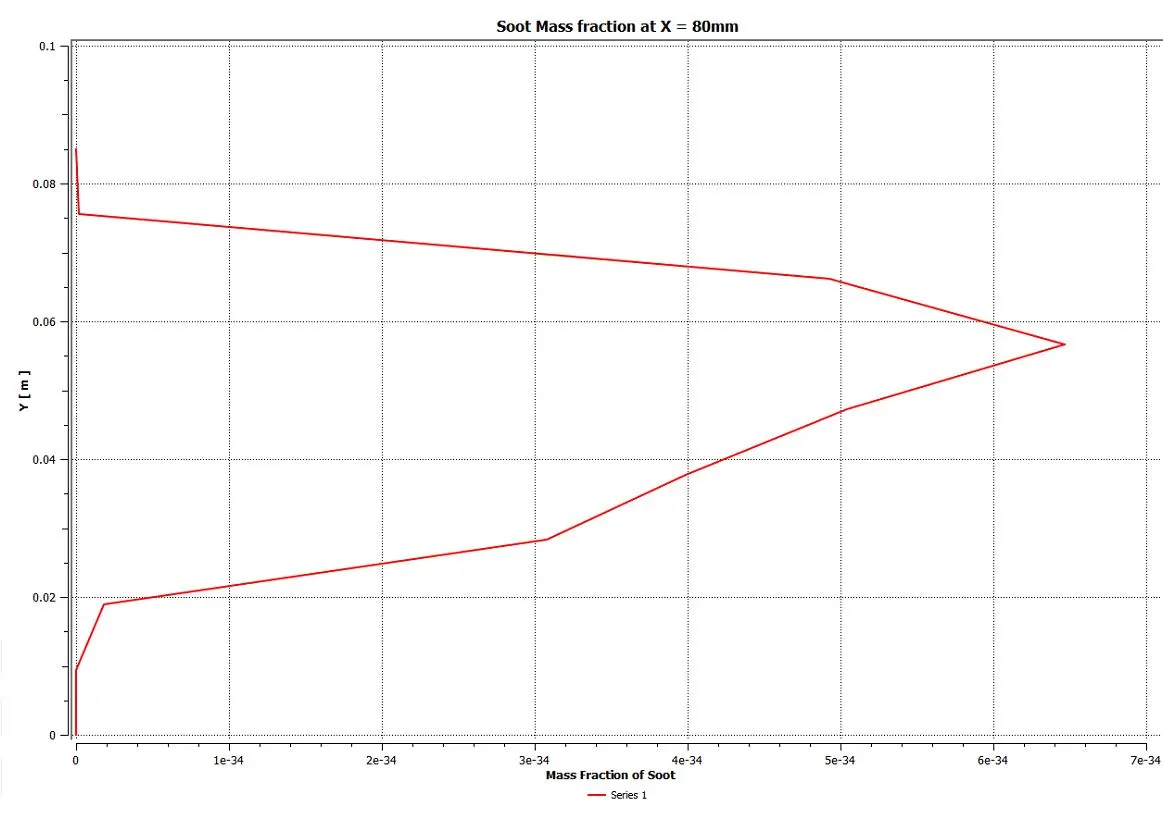
X = 80mm
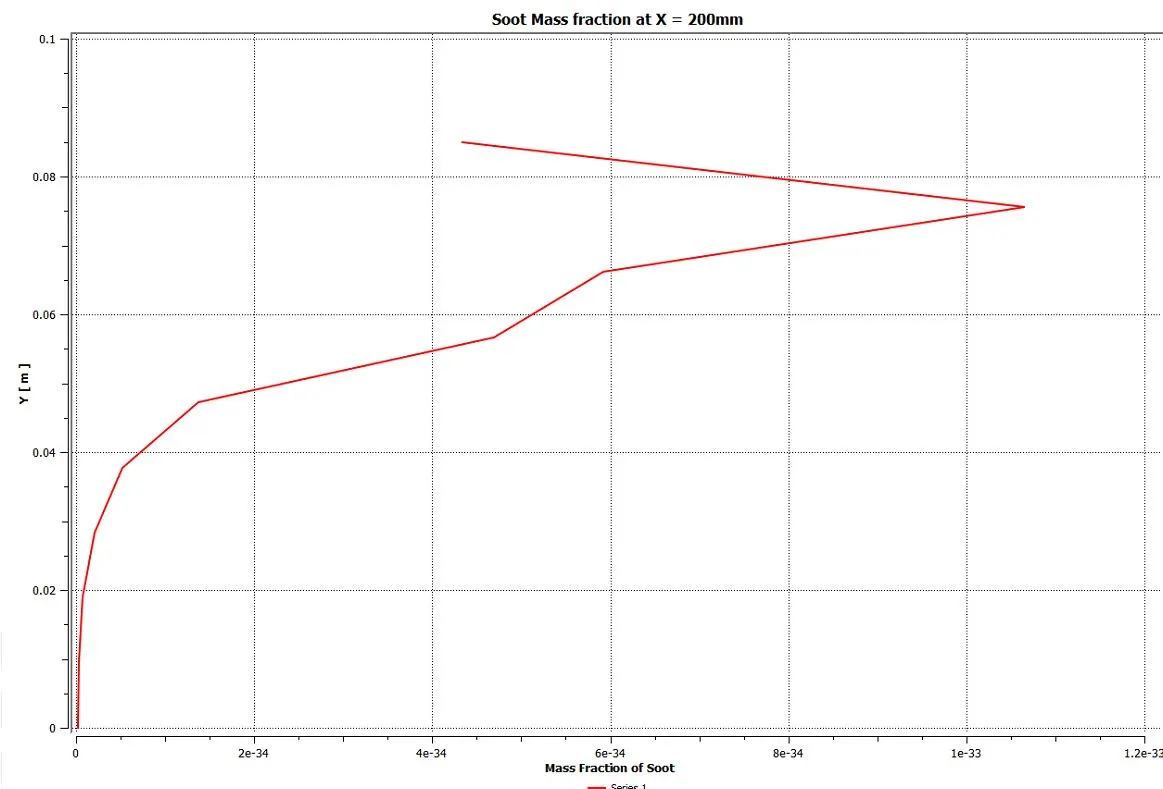
X = 200mm
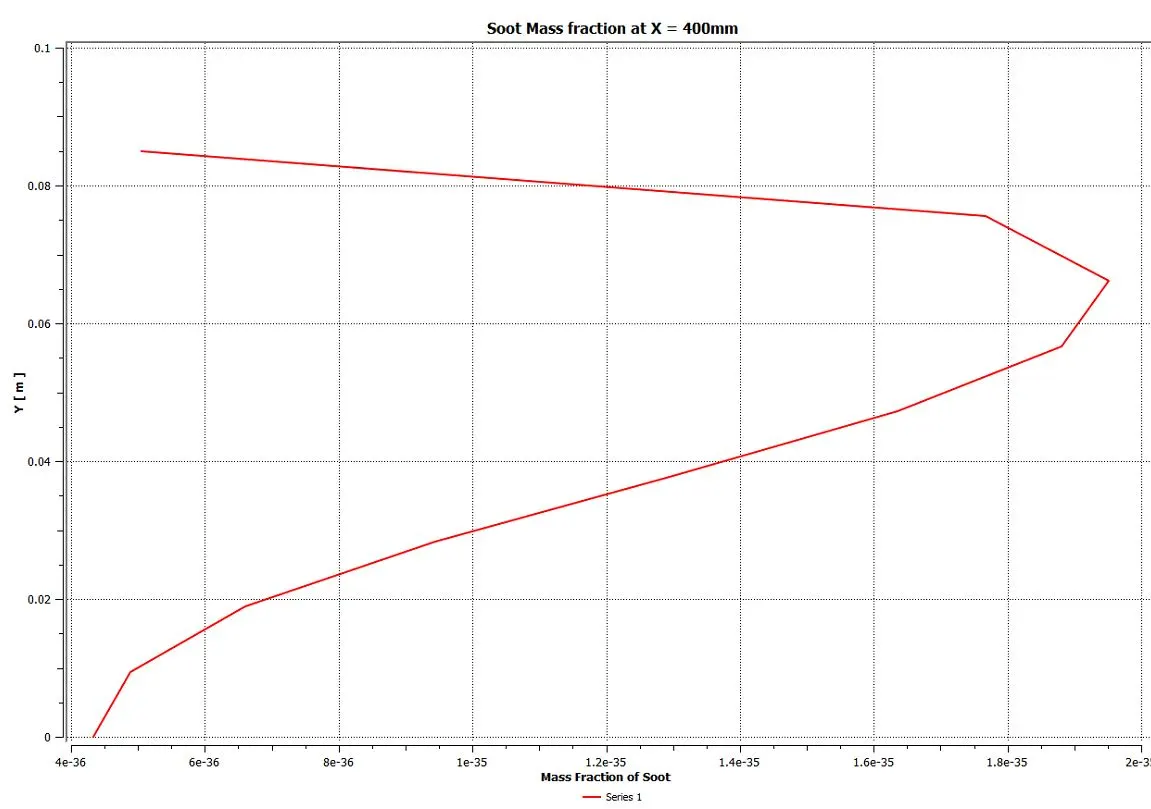
X = 400mm
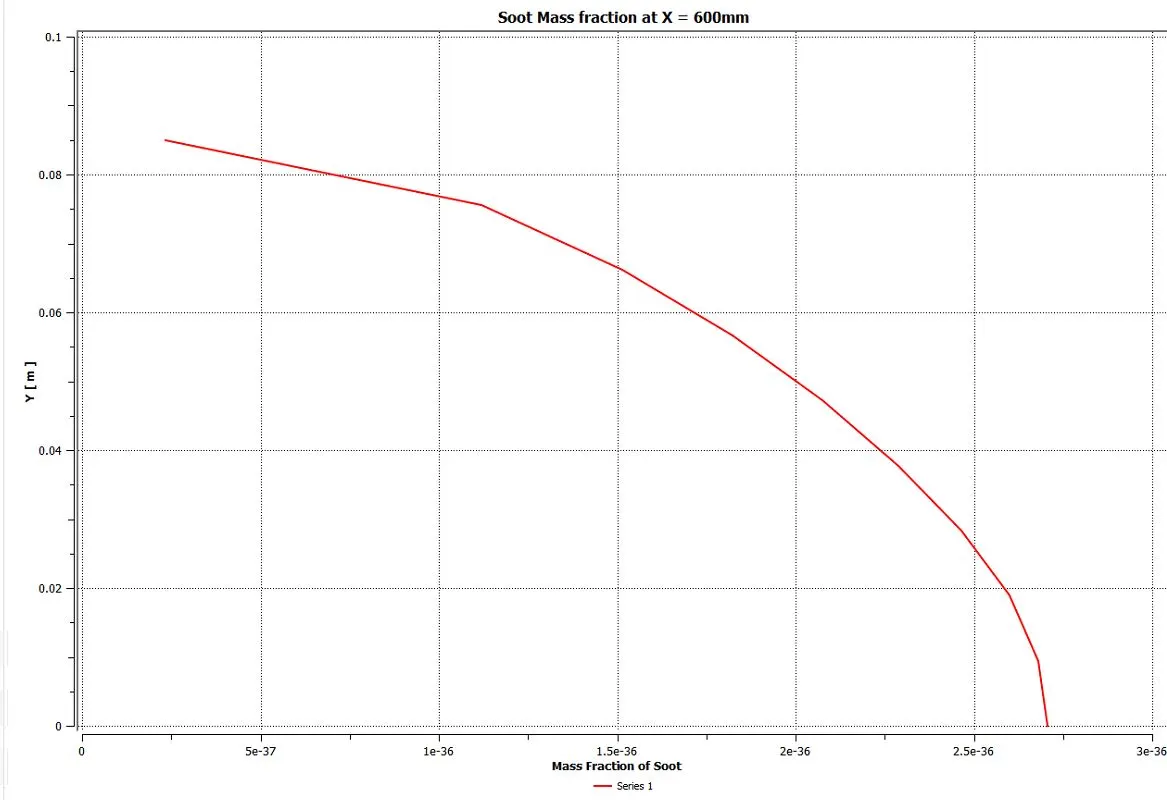
X = 600mm
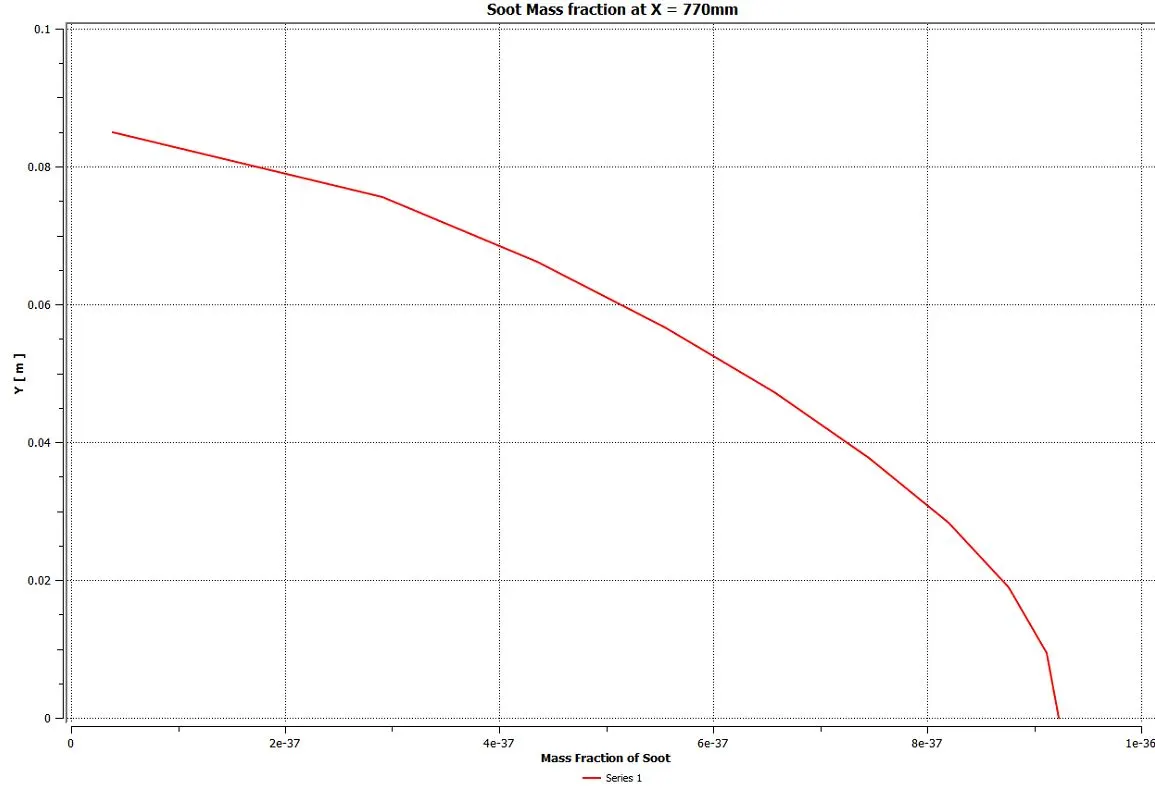
From the graphs we can see that both soot and NOx mass fraction increases as we move out, however soot shows irregular variation in y direction. This shows that combustion is not proper and there is formation of unburned carbon and NOx. In the second part addition of water and its affect on NOx and soot formation is studied.
PART 2 : Methane Air 2 step mixture model is used to add water in the combustion model. The mass concentration of water is varied from 5% to 30% and its affect on NOx and soot formation at the outlet is studied.For this parametric study approach is used. Temperation variation at outlet and a monitor point is plotted against iterations to identify convergence.
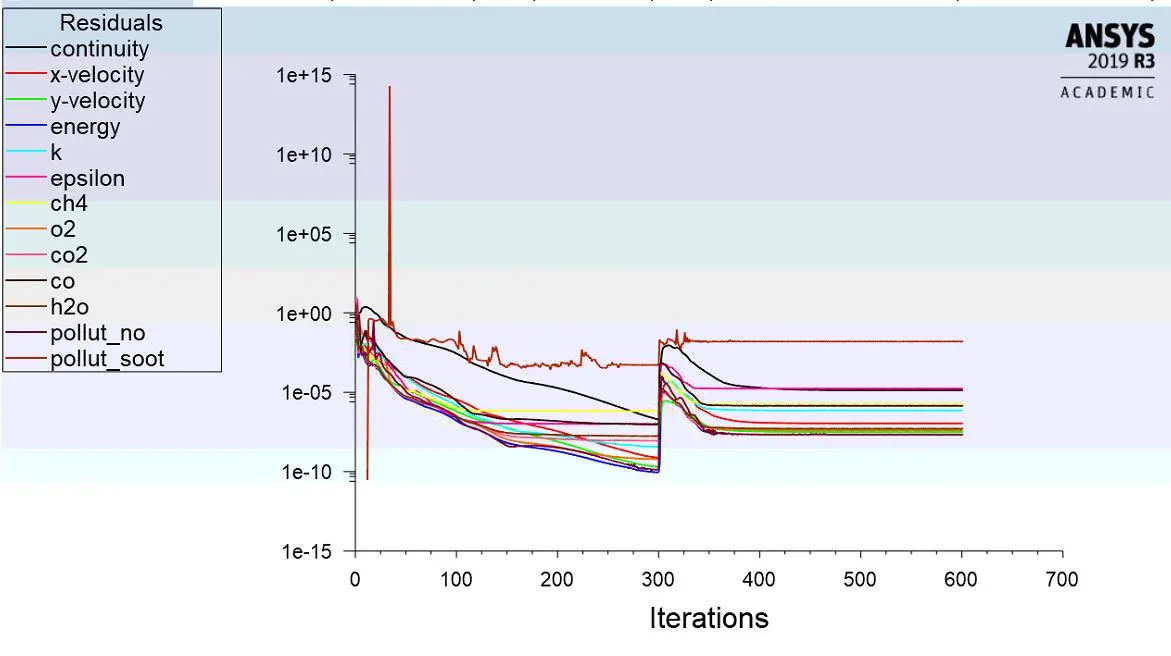
Residuals
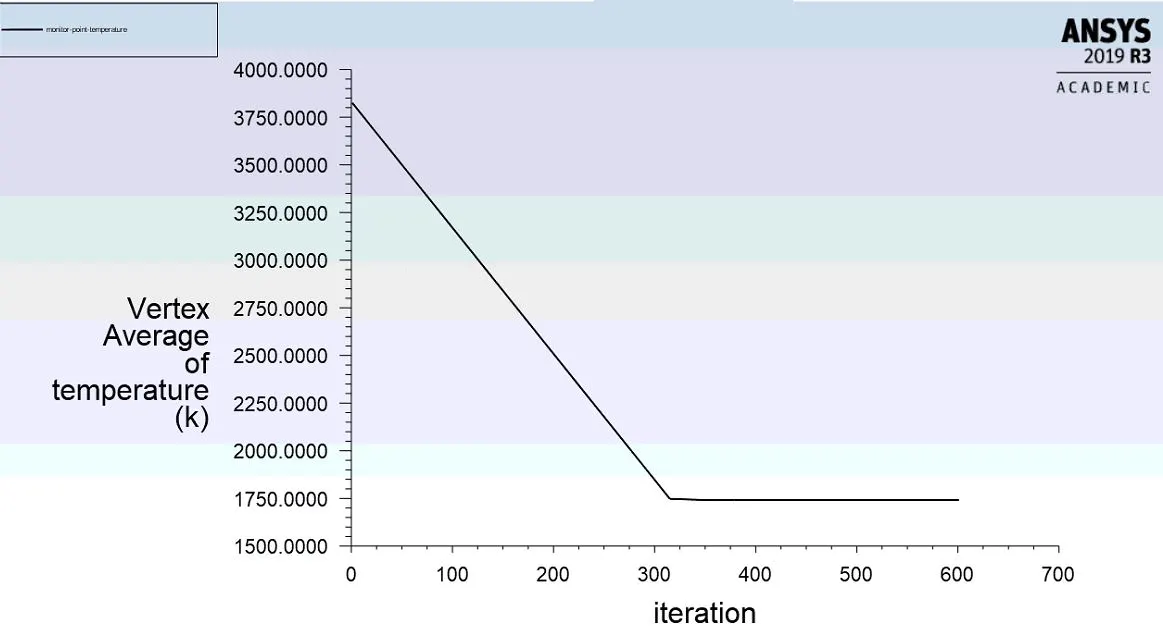
Temperature at monitor point ( x = 400 mm)
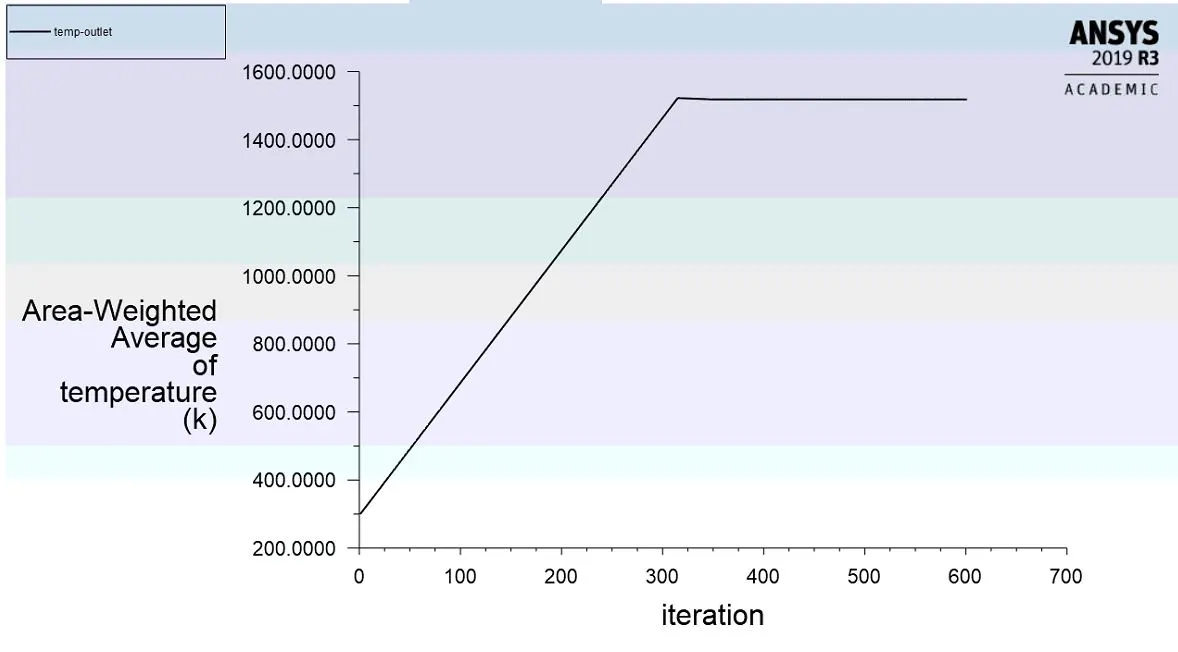
Temperature at outlet
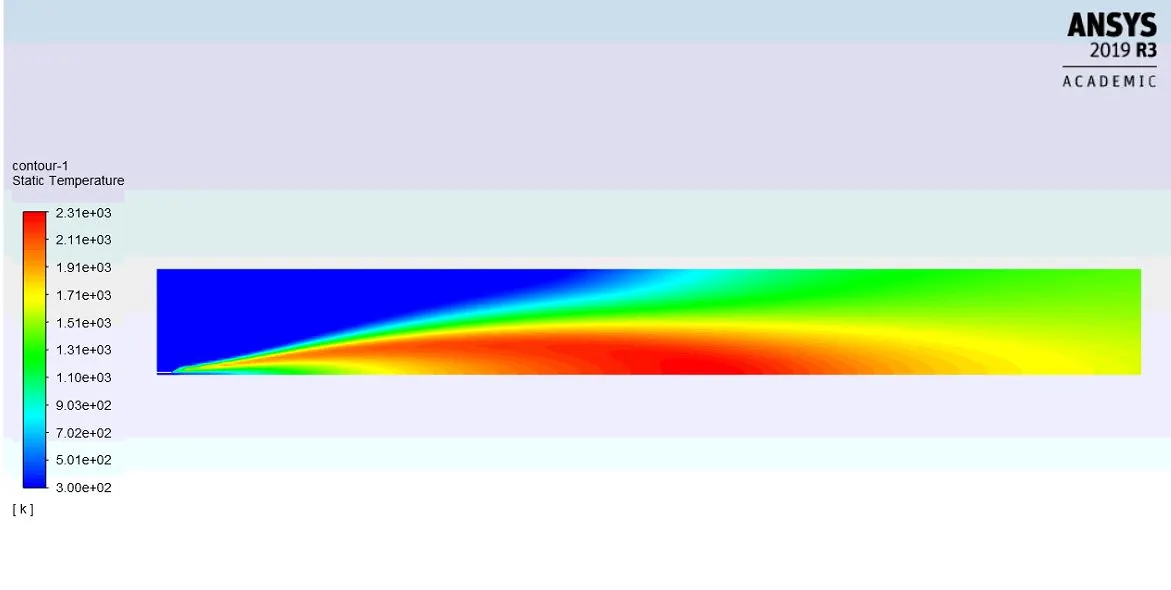
Temperature contours
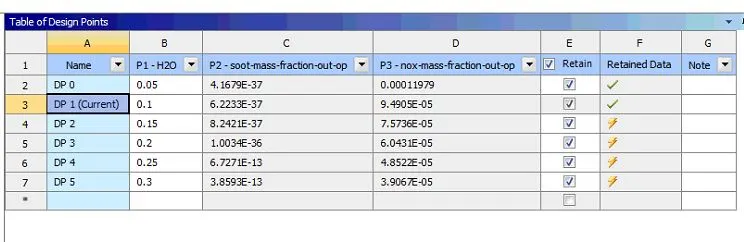
Results of parametric study.
From the results we can see that with increase in H2O mass fraction the soot mass fraction increases. This may be due to incomplete combustion of fuel. On the contrary the NOx mass fraction decreases as the concentration of water increases. This may be due to availability of oxygen due to dissociation of H2O.
Based on the two studies we can say that along the length of flame the CH4 mass fraction decreases due to combustion and soot and NOx mass fraction increases. From the results of second simulation it can be concluded that with increase in water concentration there is increase in soot concentration and decrease in NOx concentration.