Challenge on Combustion
Objective
- Perform a combustion simulation on the combustor model and plot the variation of the mass fraction of the different species.
- add the water content in the fuel from 5% to 30% by mole and observe the effect of it on the results.
Introduction
Exothermic oxidation reaction of any substance is called combustion. Combution of any fuel in presence of air is chemical reaction where molecules get oxidised.
`CH_4+2(O_2+N_2)->CO_2+2H_2O+2N_2`
Different types of fuel used in different types of engine. The combution of hydrocarbon in presence of air produce gases which pollute our environment. Pollutant like `NO_X` is formed at high temperature during combution which is harmful to the environment. The mole fraction of `NO_X` and soot in the product should be reduced which can be achieved by adusting mole fraction of `CH_4` and `H_2O`.
Geometry
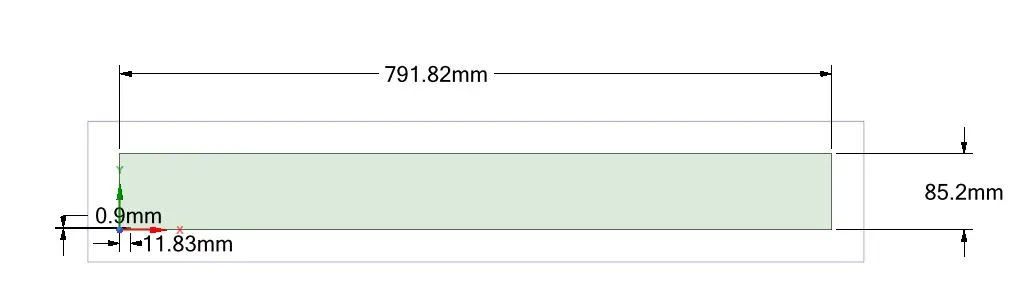
2-D surface created in such a way that is which can form complete 3-D geometry when pulled `360^o` about x-axis.
 Meshing
Element size is 5mm with capture proximity on.
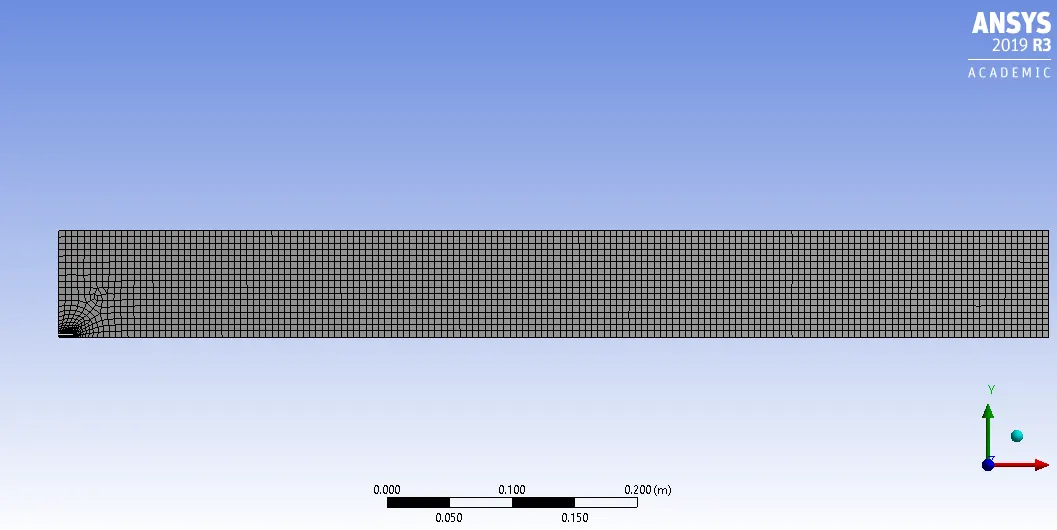
Total numberof nodes=3,117
Total number of elements=2,904
Simulation Setup
The simulation is steady state and axis symmetric about X-axis.
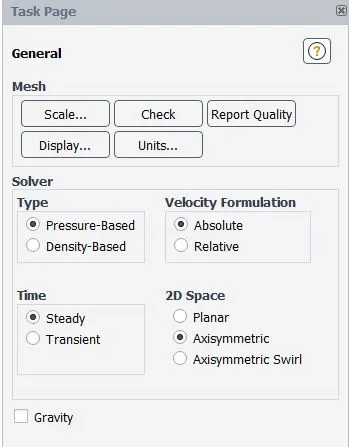
Energy equation also solved heat is involved due to combustion.
Model is solved considering a tubulent model.
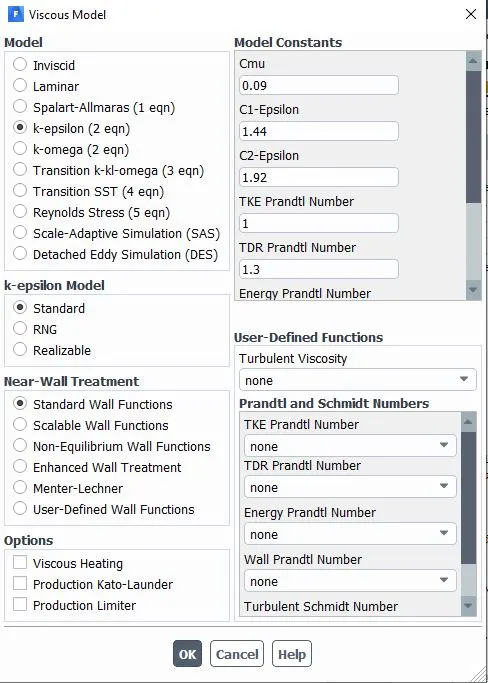
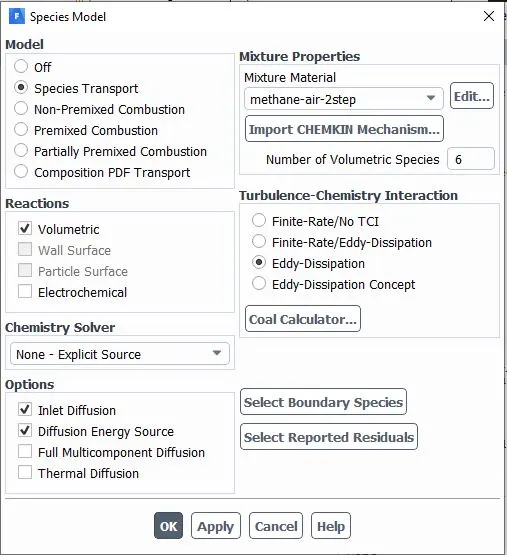
In order to predict the transport of all species and their consumption/production in the combustion zone, species transport model is used. Methane-air-2step is used as material.
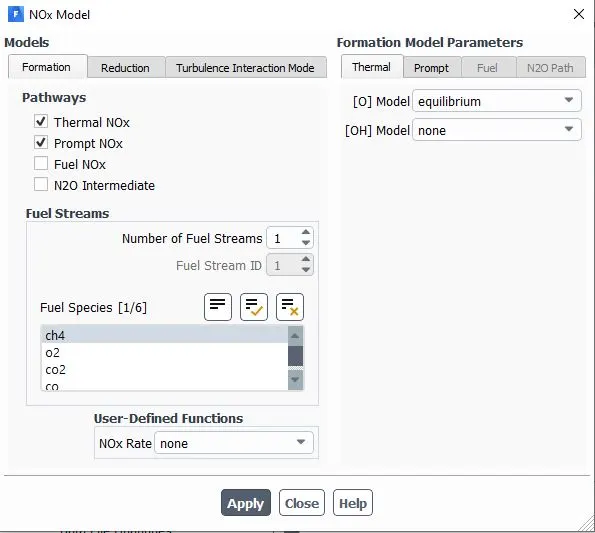
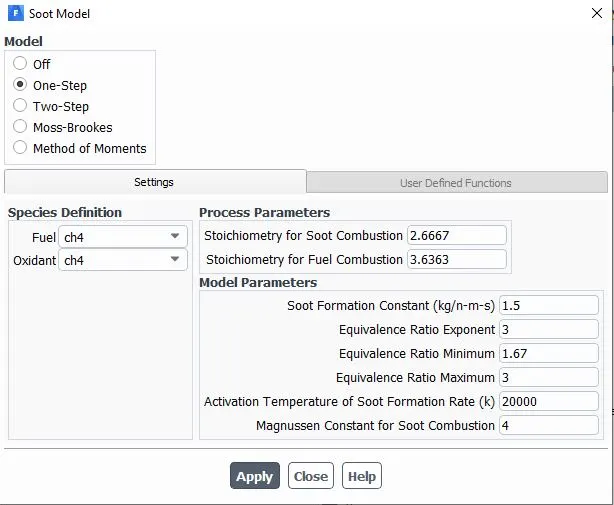
Switching on `NO_X` model and Soot model
Boundary Conditions
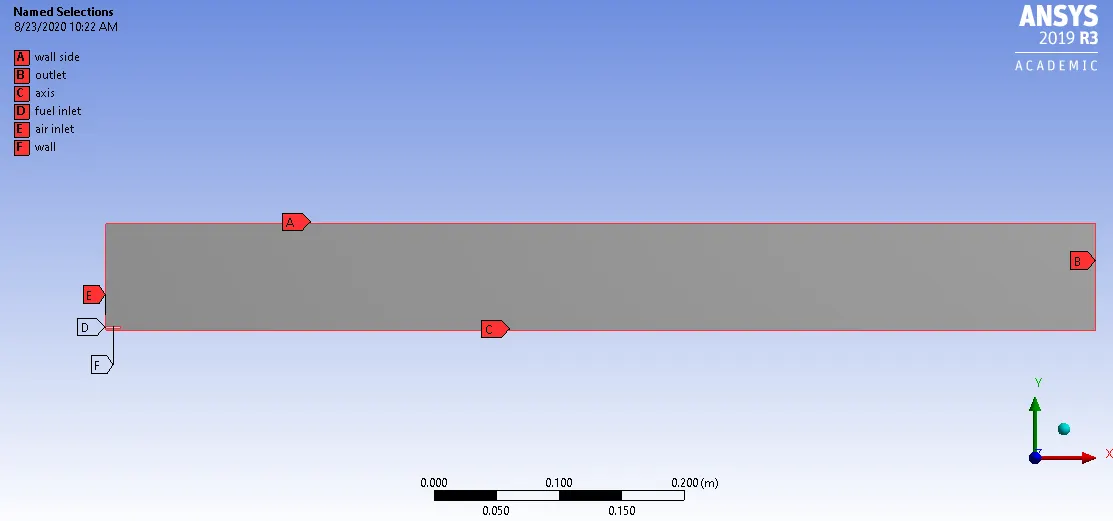
Fuel Inlet
velocity=80m/s
mole fraction of `CH_4`=1
mole fraction of `H_2O`=0
Air Inlet
Velocity=0.5m/s
mole fraction of `O_2`=0.21
Outlet
gaugae pressure=0
Result
The simulation is run for 1000 iterations.
Residual Plot
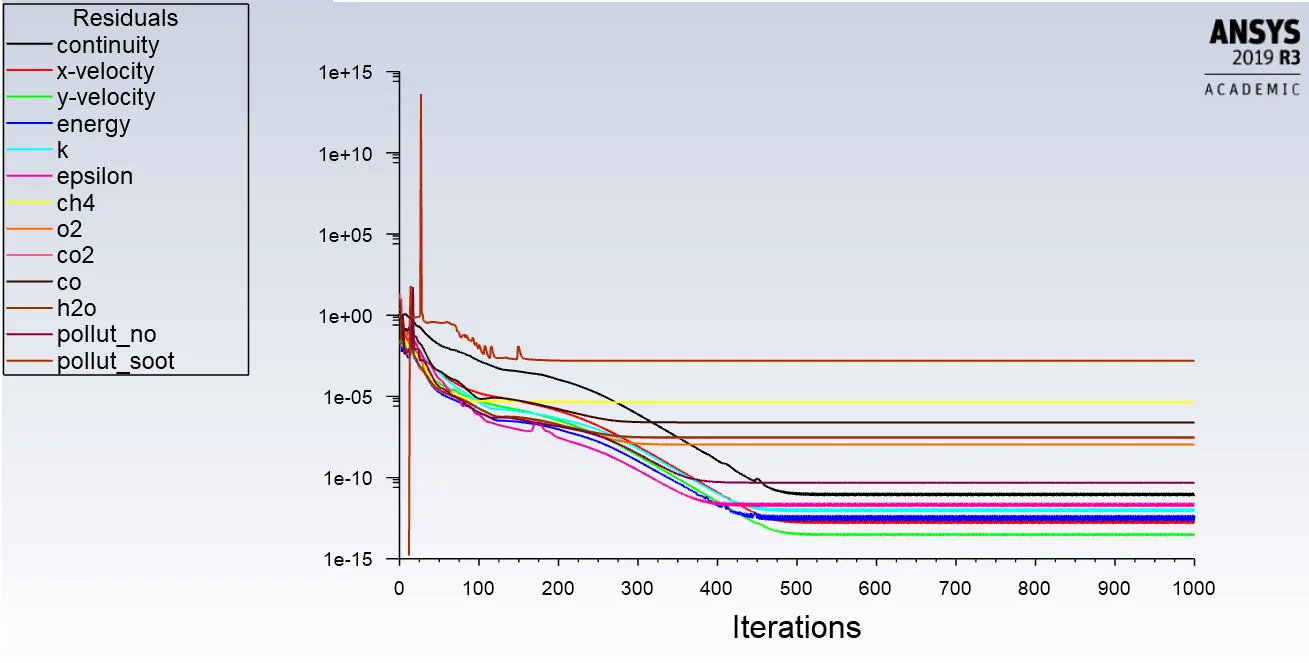
The simulation get converged at around 550 number of iterations.
Temperature contour
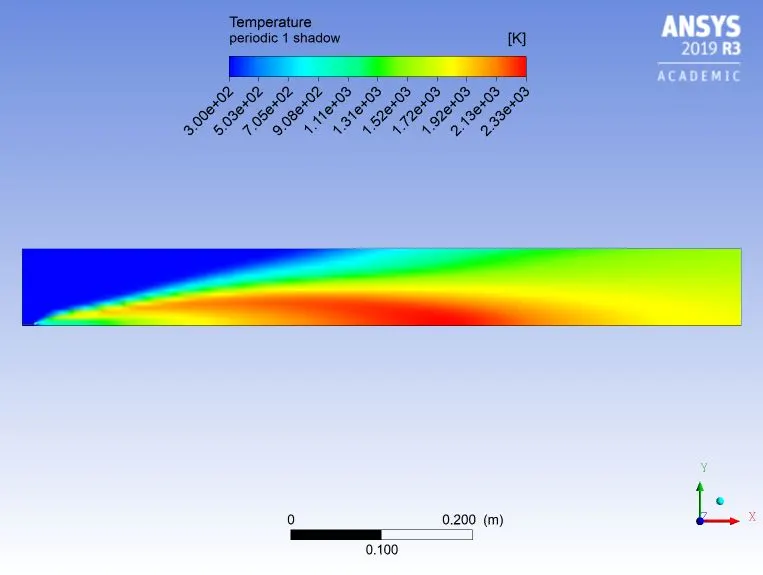
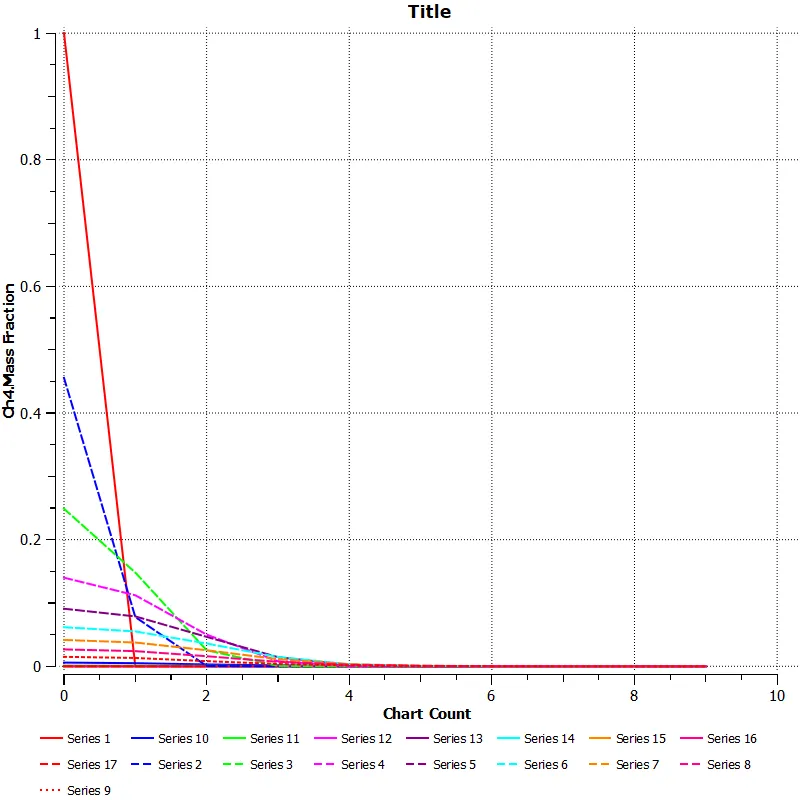
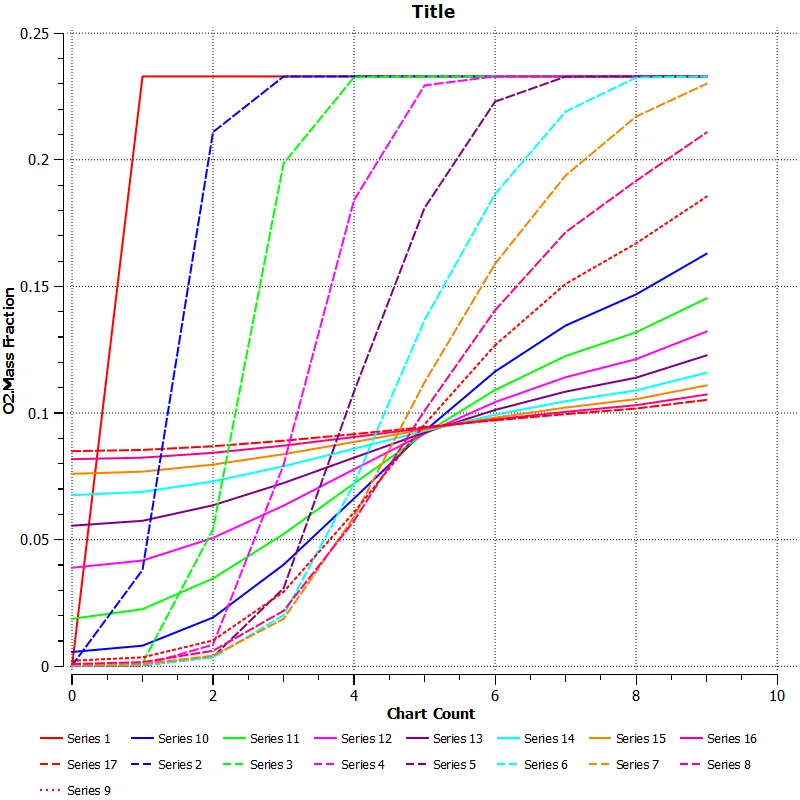
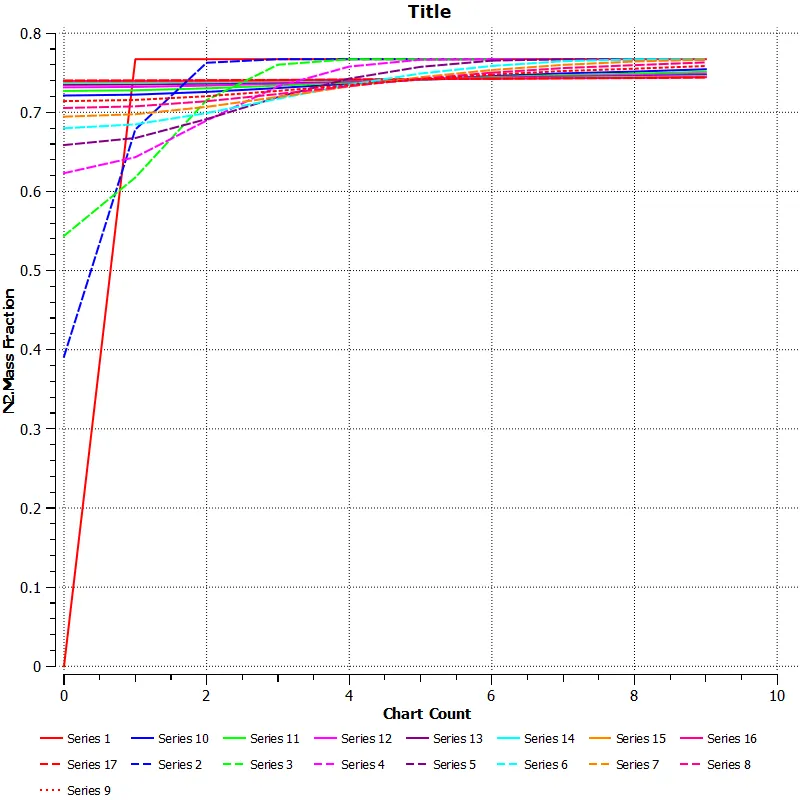
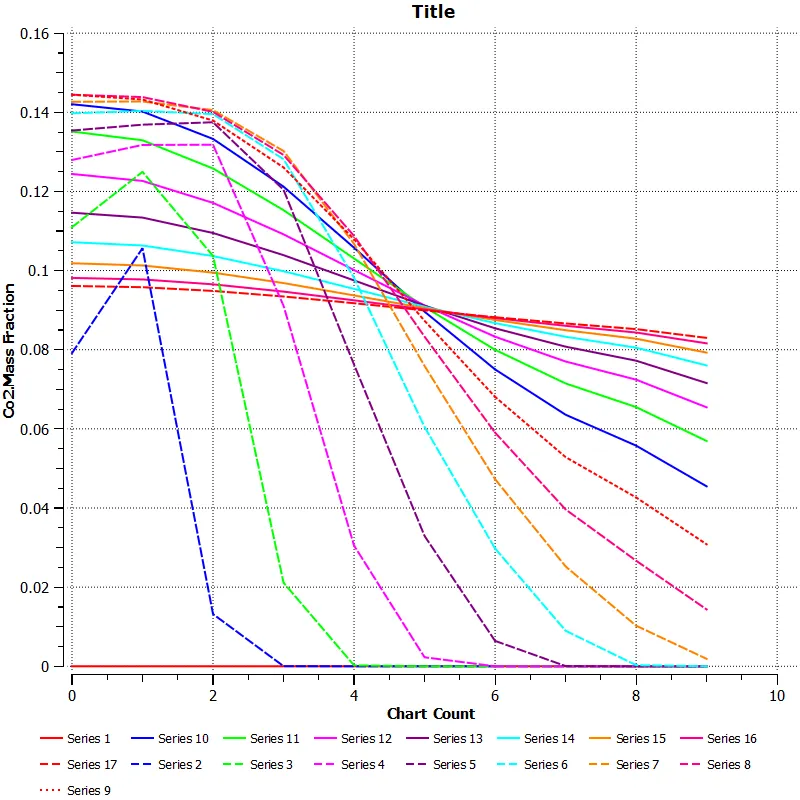
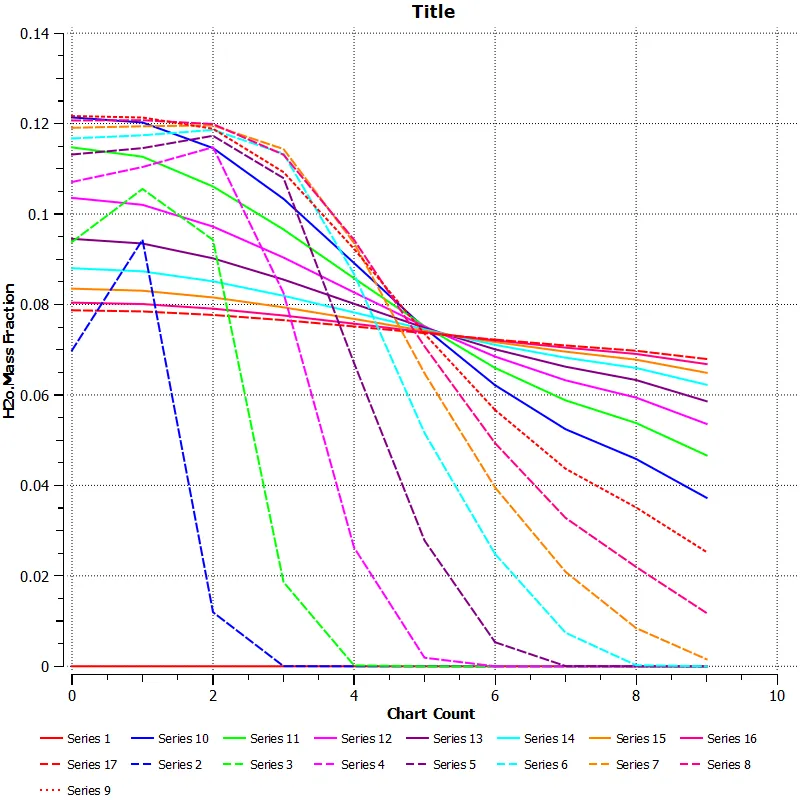
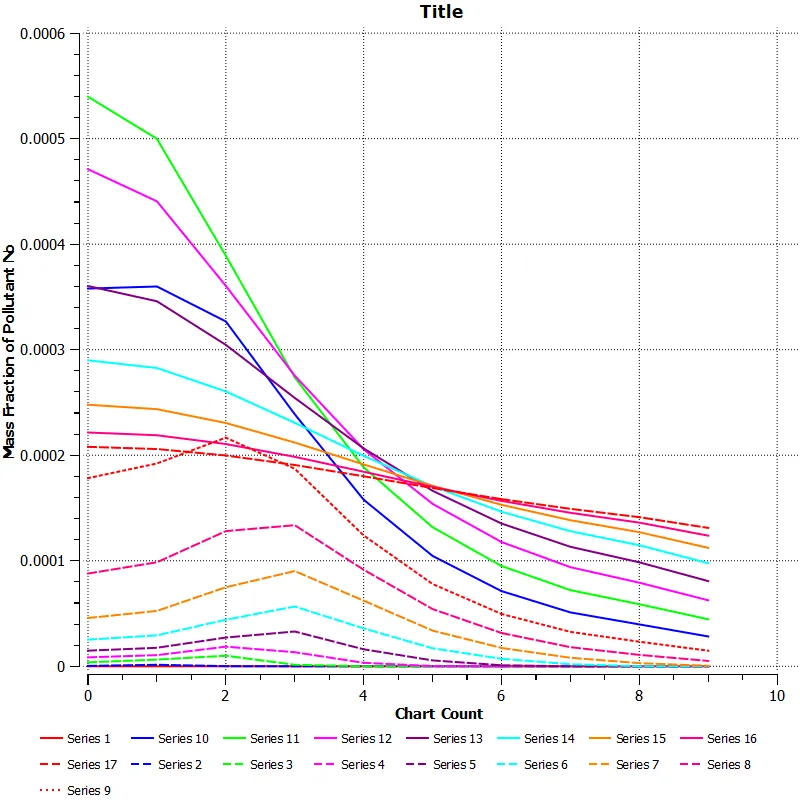
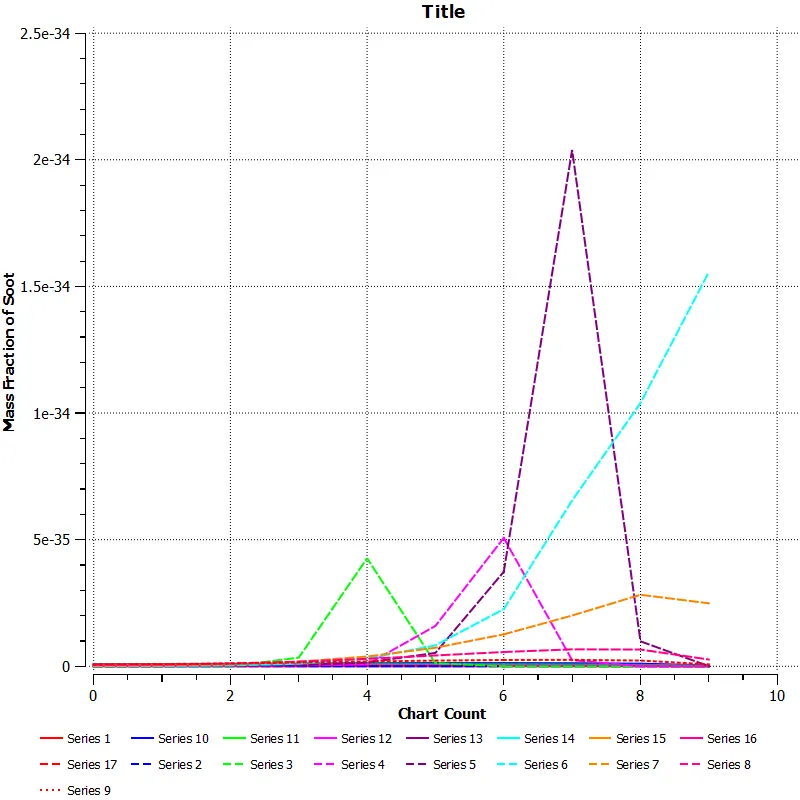
Mass fraction of all the species are ploted at different locations (at X (in m)=0, 0.05, 0.1, 0.15, 0.2, 0.25, 0.3, 0.35, 0.4, 0.45, 0.5, 0.55, 0.6, 0.65, 0.7, 0.75, 0.79).
Mass fraction of `CH_4`
Mass fraction of `O_2`
Mass fraction of `N_2`
Mass fraction of `CO_2`
Mass fraction of `H_2O`
Mass fraction of `NO_X`
Mass fraction of Soot
Parametric Study
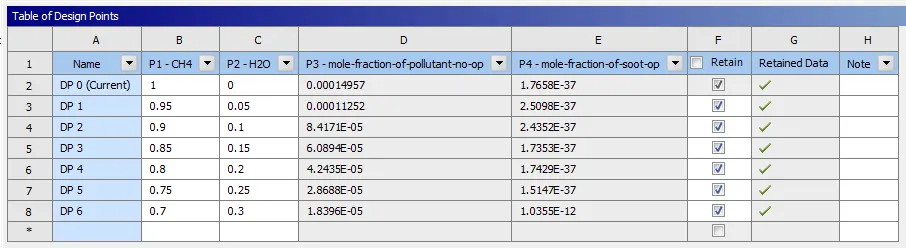
`NO_X` and Soot can be reduced by using proper composition of methane and water. Parametric study is conducted adding water content in the fuel from 5% to 30%.
Conclusions
Plotting the data obtained from parametric study.
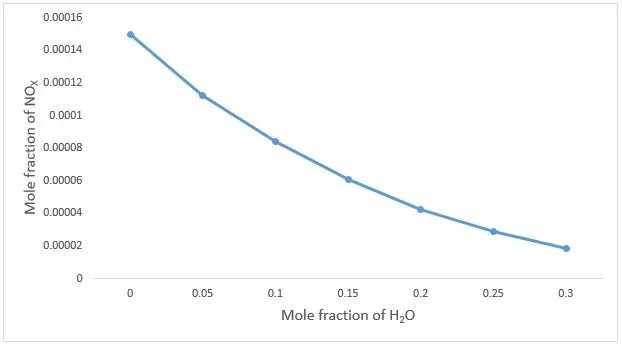
Plot of mole fraction of `NO_X` with mole fraction of `H_2O`
Plot of mole fraction of Soot with mole fraction of `H_2O`
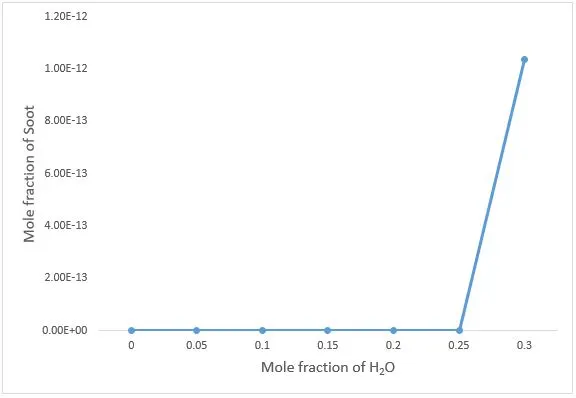
From parametric study we can conclude that mole fraction of `NO_X` continues to drop as the content of water in the fuel increases but mole fraction of soot starts to increase after the content of water in the fuel is more than 25%.