Simulating Combustion of Natural Gas.
Objective:
- To perform a combustion simulation on the combustor model
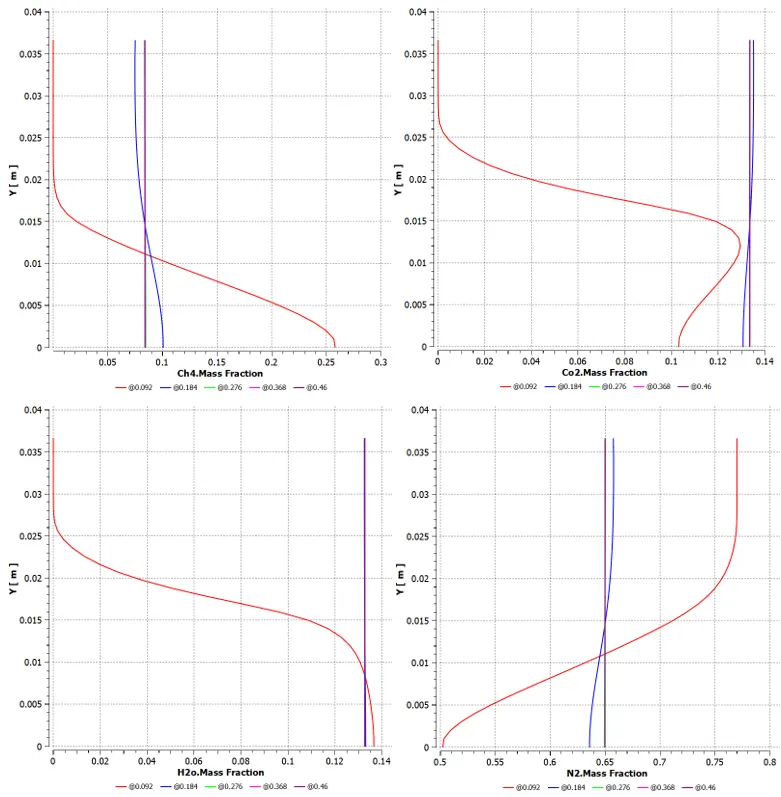
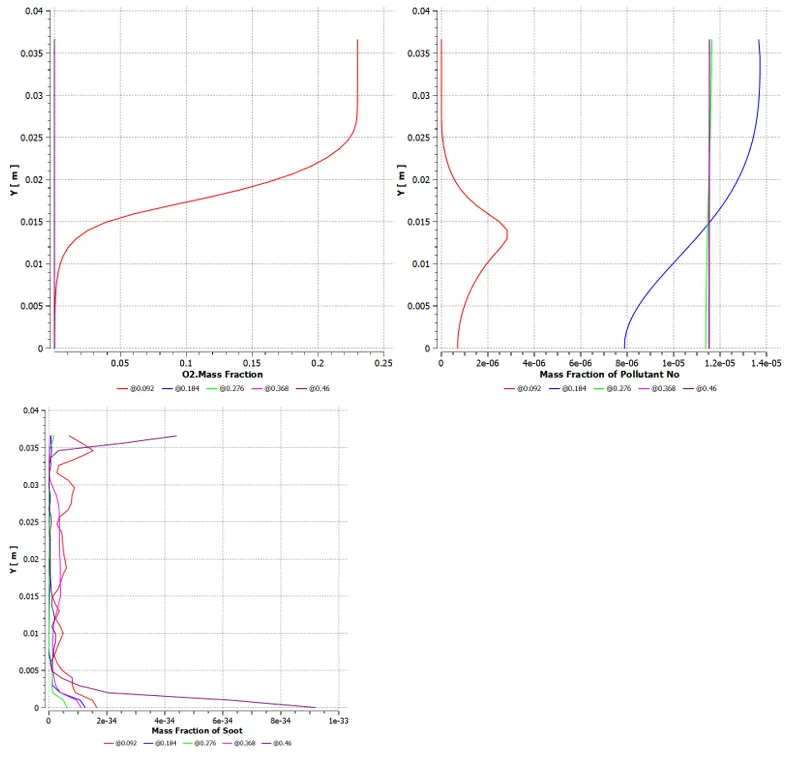
- To plot the variation of the mass fraction of the different species in the simulation
- To check the effect of adding the water in the fuel by adding the water content in the fuel from 5% to 30% by mole
Description:
Combustion or burning is a high-temperature exothermic redox chemical reaction between a fuel (the reductant) and an oxidant, usually, atmospheric oxygen.
Complete combustion is stoichiometric concerning the fuel, where there is no remaining fuel, and ideally, no residual oxidant. Thermodynamically, the chemical equilibrium of combustion in air is overwhelmingly on the side of the products. However, complete combustion is almost impossible to achieve, since the chemical equilibrium is not necessarily reached, or may contain unburnt products such as carbon monoxide, hydrogen and even carbon (soot or ash). Any combustion at high temperatures in atmospheric air, which is 78 percent nitrogen, will also create small amounts of several nitrogen oxides, commonly referred to as NOx. Thus, the produced smoke is usually toxic and contains unburned or partially oxidized products.
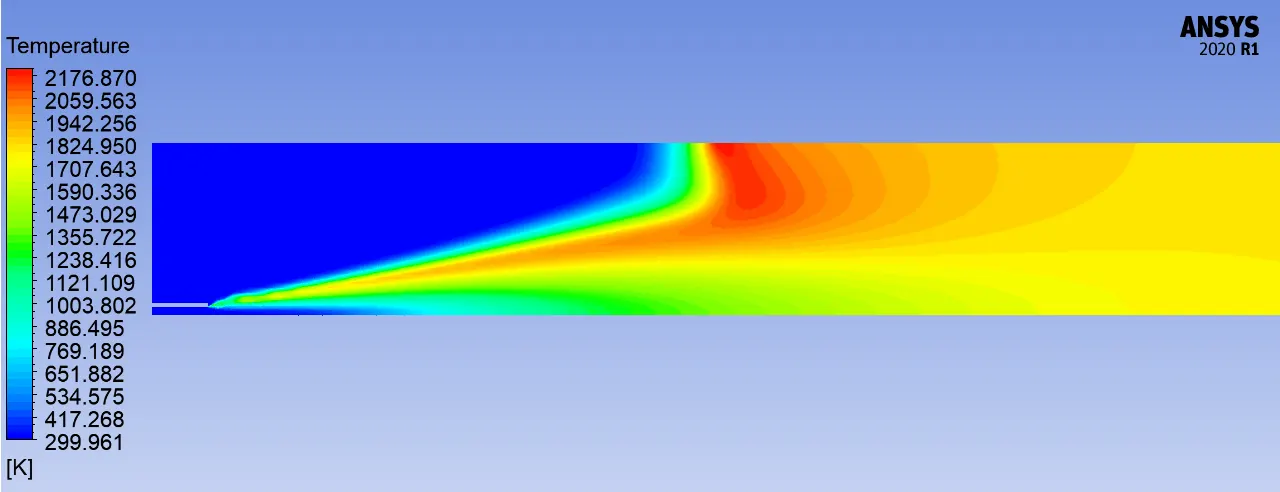
In this project we will observe the burning of methane in the air inside a cylindrical combustor using the eddy-dissipation model in ANSYS. Here, the source term was modelled using the Eddy dissipation model where the beginning of the ignition is calculated using the turbulent time scale. This means that the ignition will start when and where there is turbulence. This is a crude approximation but helps us to visualize the steady-state temperature distribution in the combustion chamber at a faster rate. This type of mixing based model is called a Turbulence Chemistry interaction (TCI) model.
Geometry:
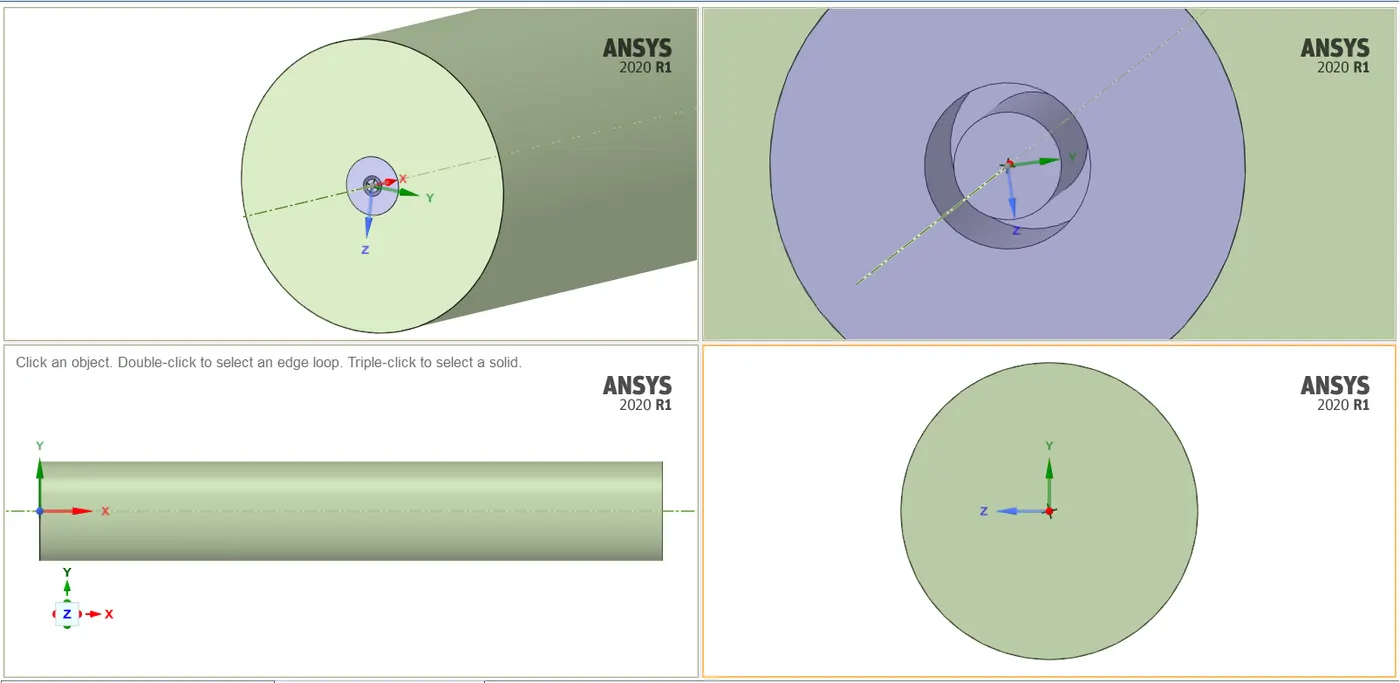
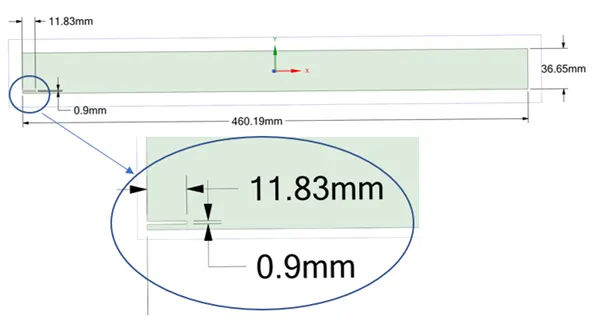
Meshing:
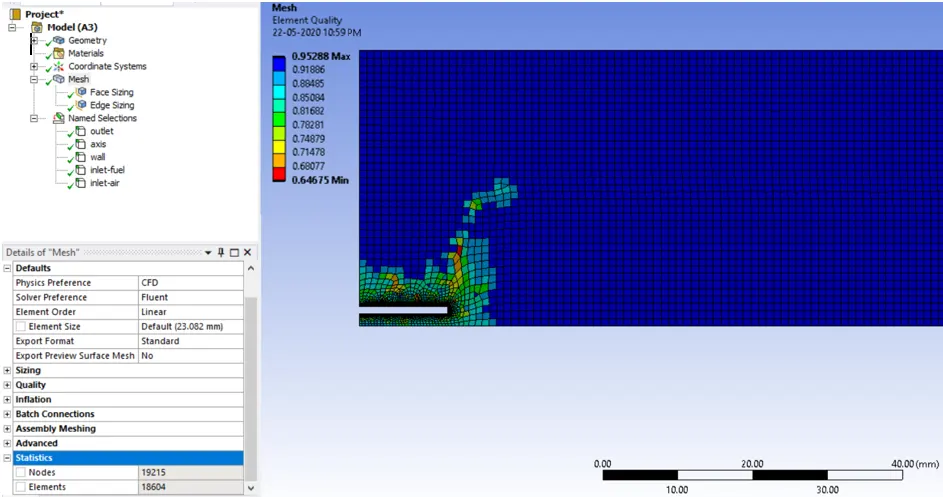
Mesh size: Default (28.082mm)
No. of elements: 18604
Min Element quality: 0.646
Note: Named selections must be created to assign proper boundary conditions
Setup & Solution:
A small nozzle in the centre of the combustor introduces methane at 80 m/s and ambient air enters the combustor coaxially at 0.5 m/s
Solver: Pressure based
Time: Steady
2D space: axisymmetric
Check Energy
Turbulence model: K-epsilon – Standard
Species: Species transport > Volumetric
Check inlet diffusion as we are not interested to calculate at inlet
Mixture Material: methane-air-2step
Turbulence chemical interaction: Eddy-dissipation
Turn on NOx(prompt and thermal - Ch4) and soot (one step)
Boundary conditions: Inlet-1
velocity(air) – 0.5m/s
Species mass fraction: O2 =0.23
Inlet-2
velocity(fuel) – 80m/s
Species mass fraction: Ch4 =1 (Parameter-1)
Species mass fraction: H2O =0 (Parameter-2)
Note: Parameter-1 decreases by .05% and parameter-2 increases by .05% in further cases
Initialization: Hybrid
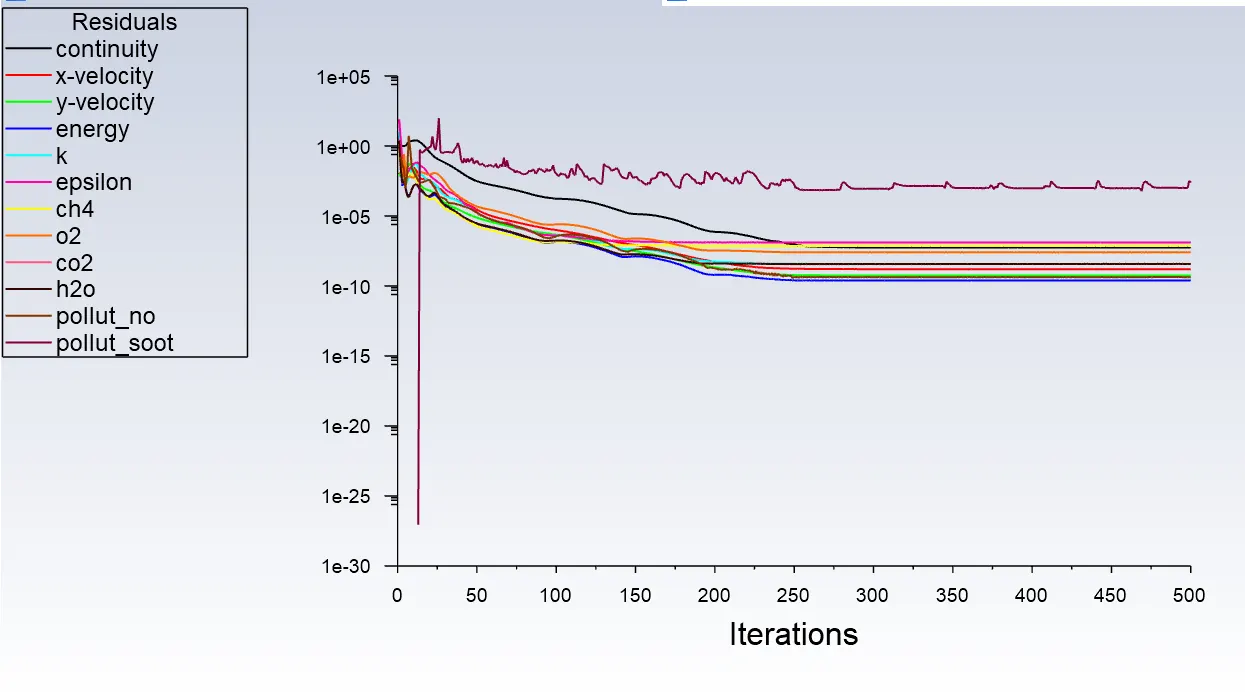
Iterations: 500
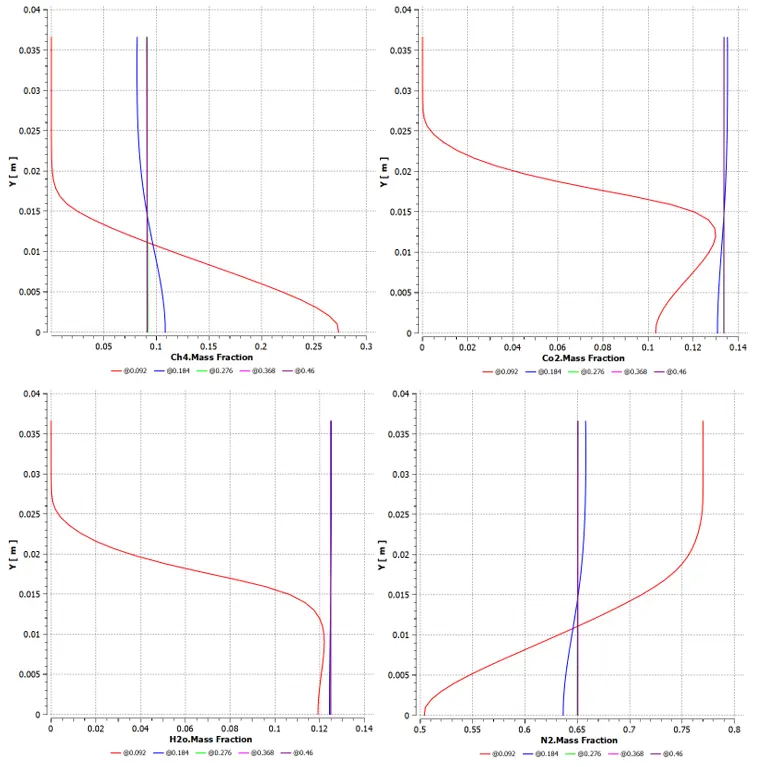
Contours and Charts using line probes:
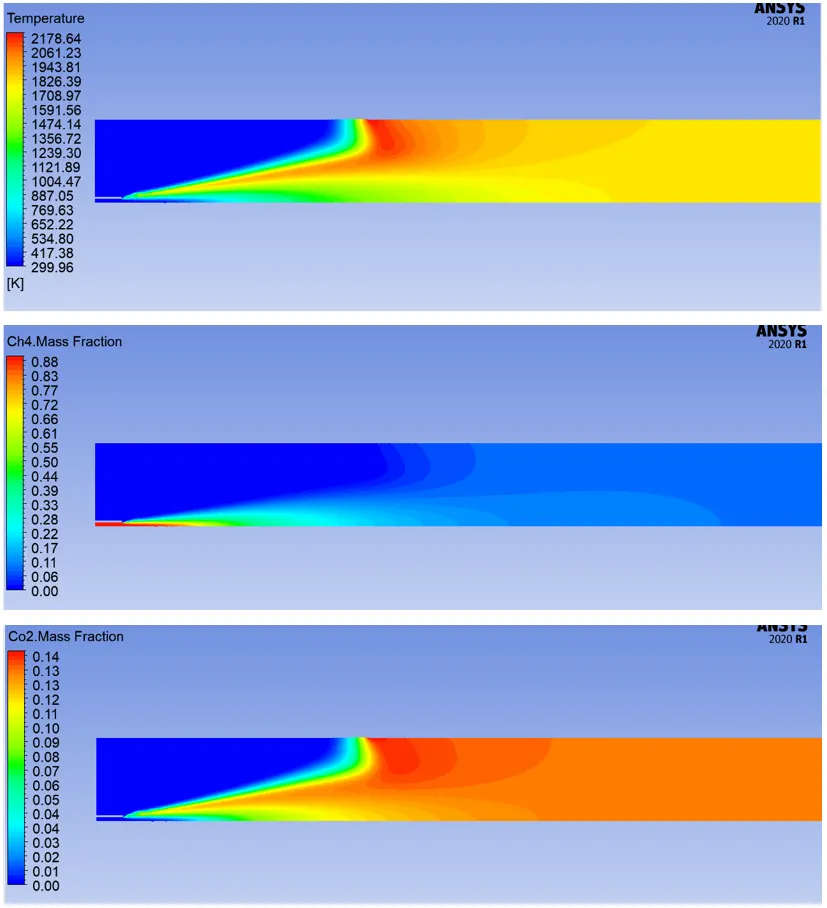
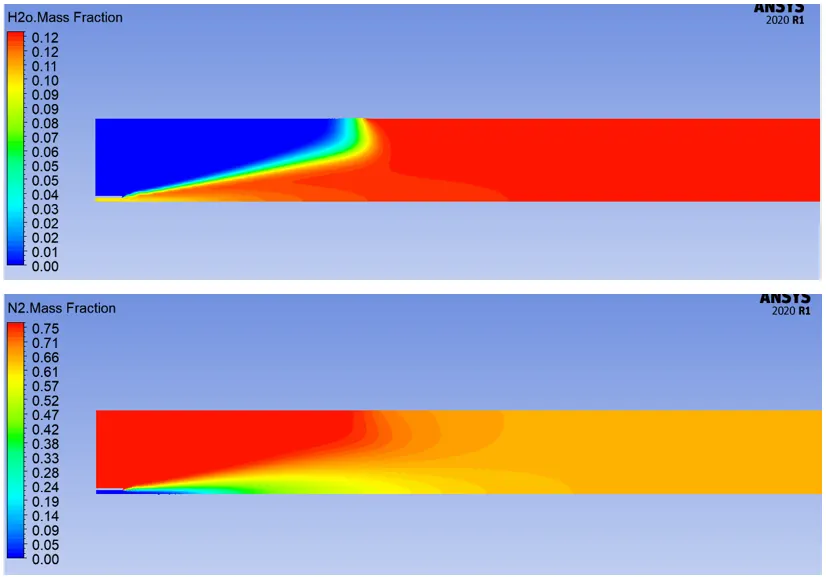
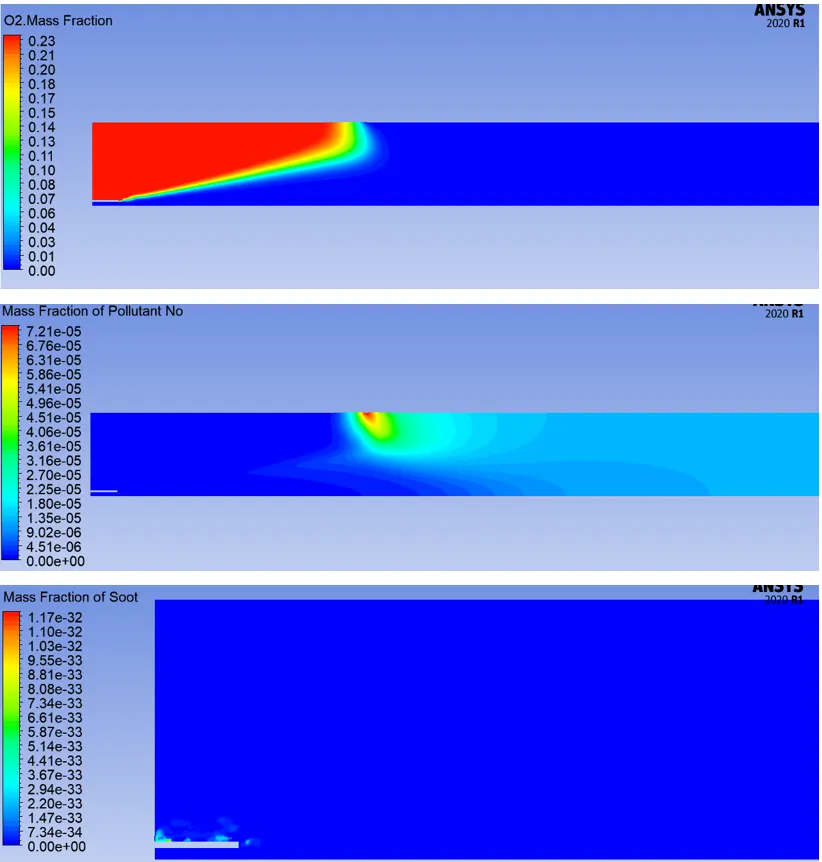
@0% H2O
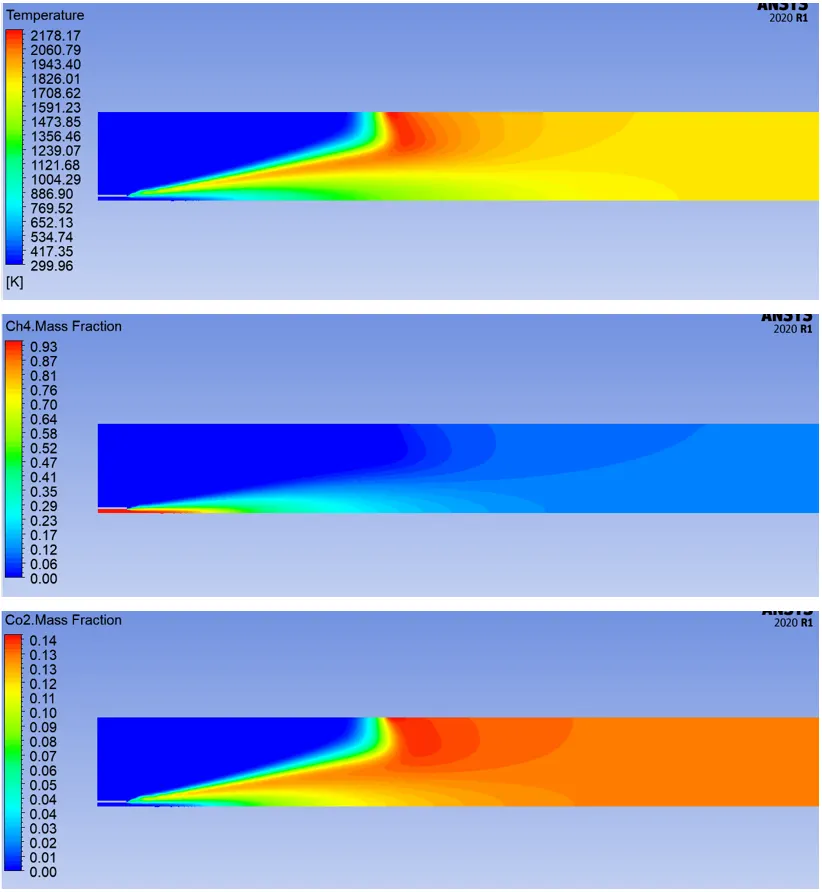
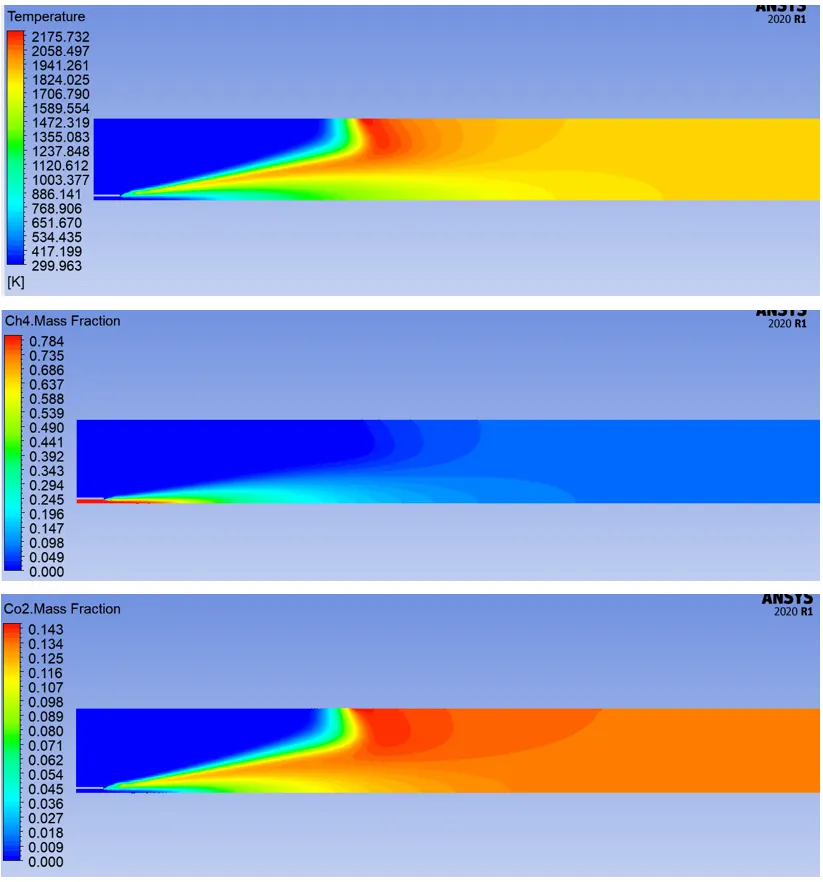
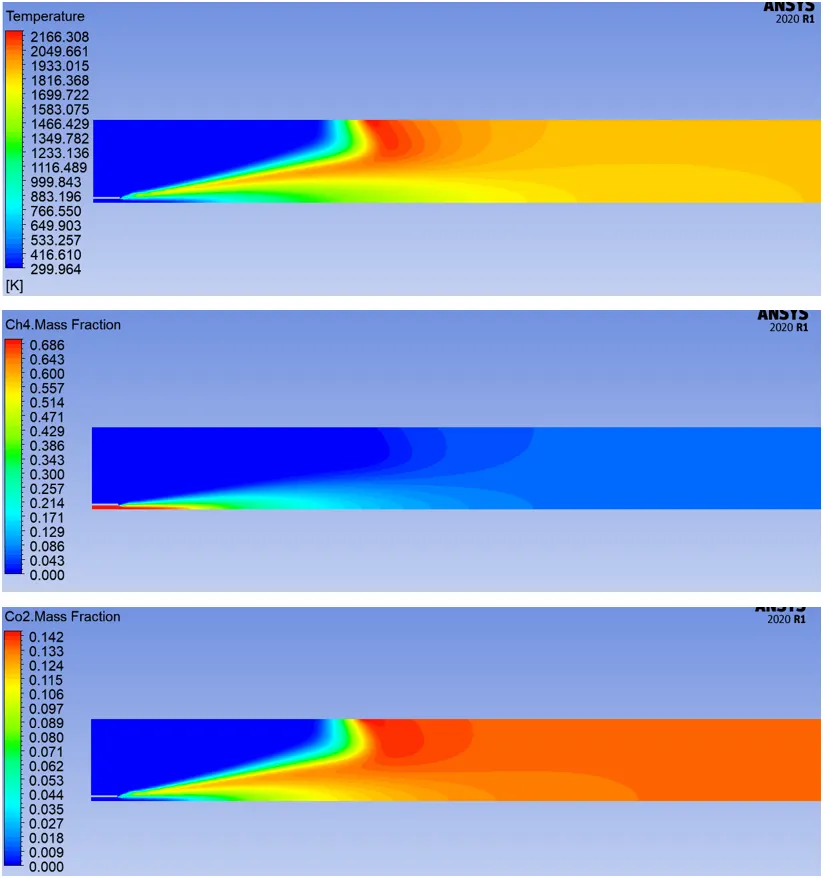
Temperature contour plot
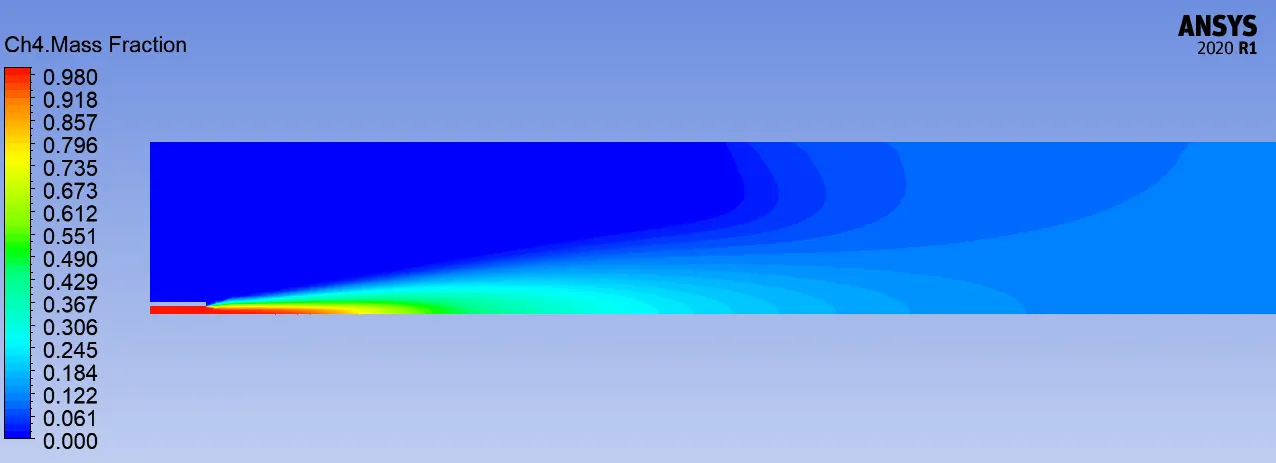
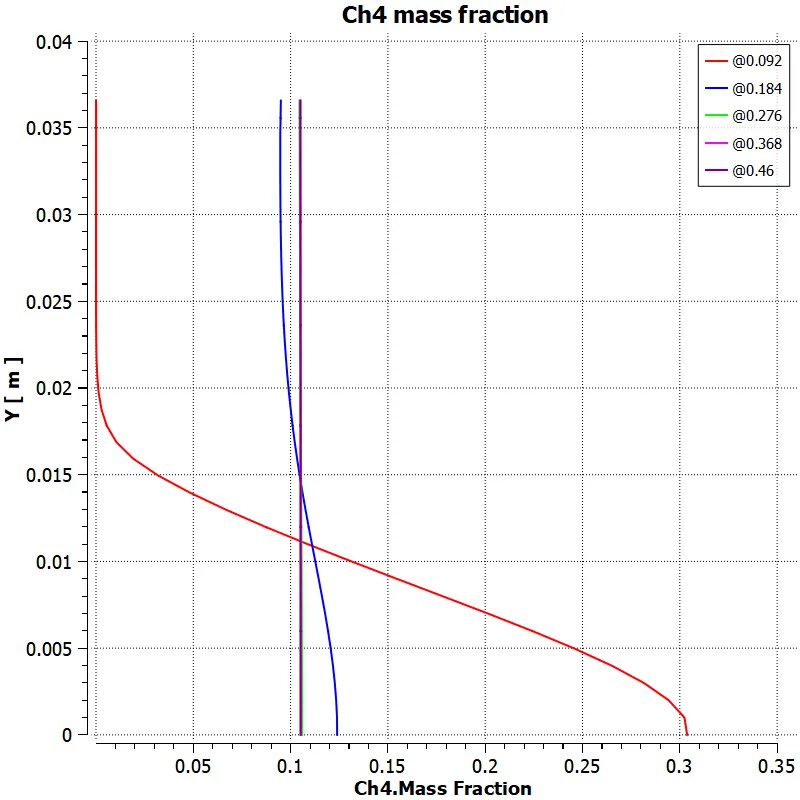
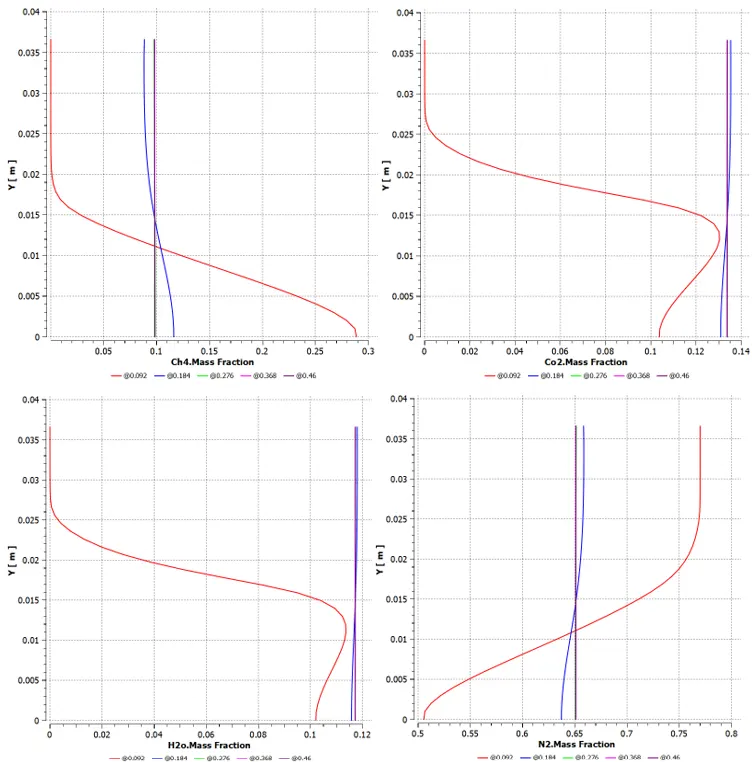
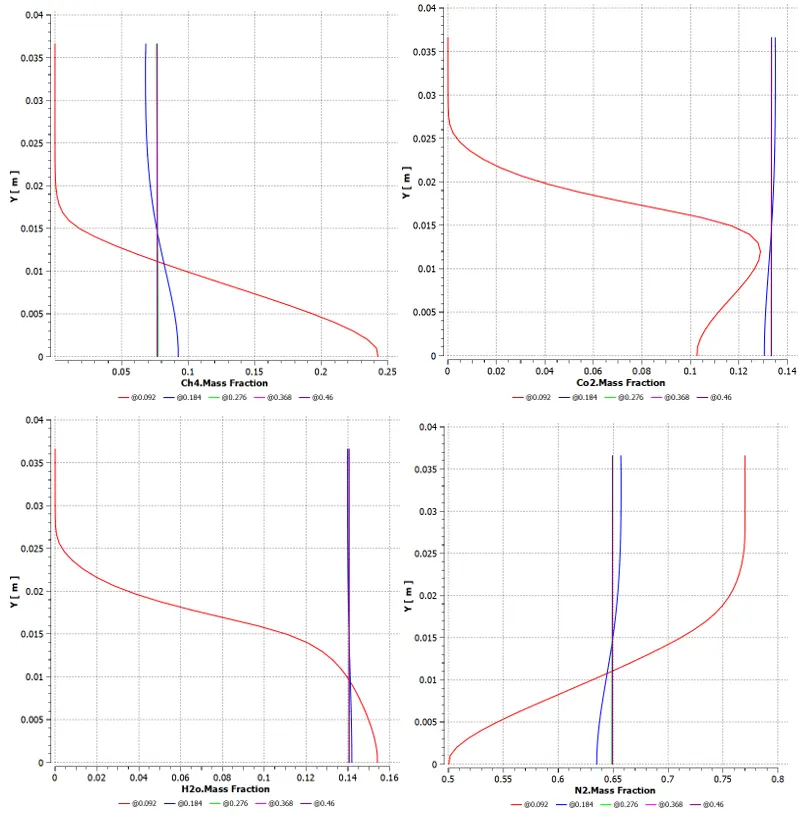
Ch4 mass fraction
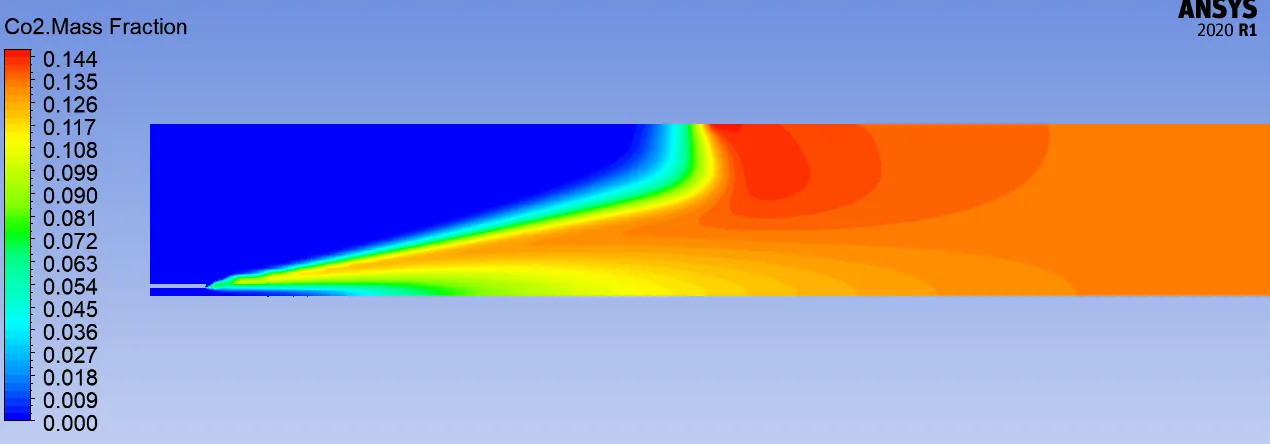
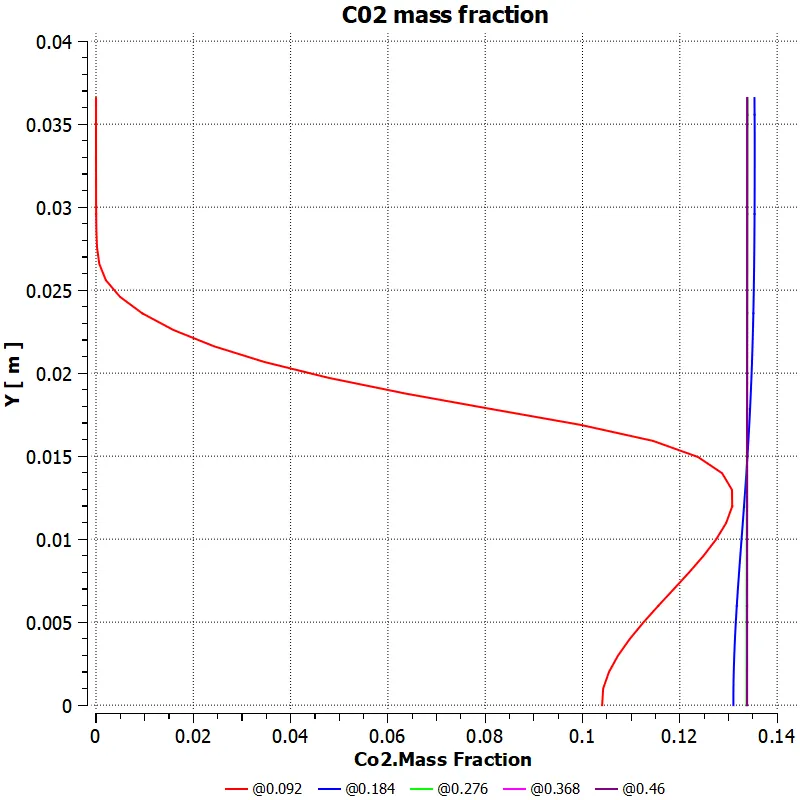
Co2 mass fraction
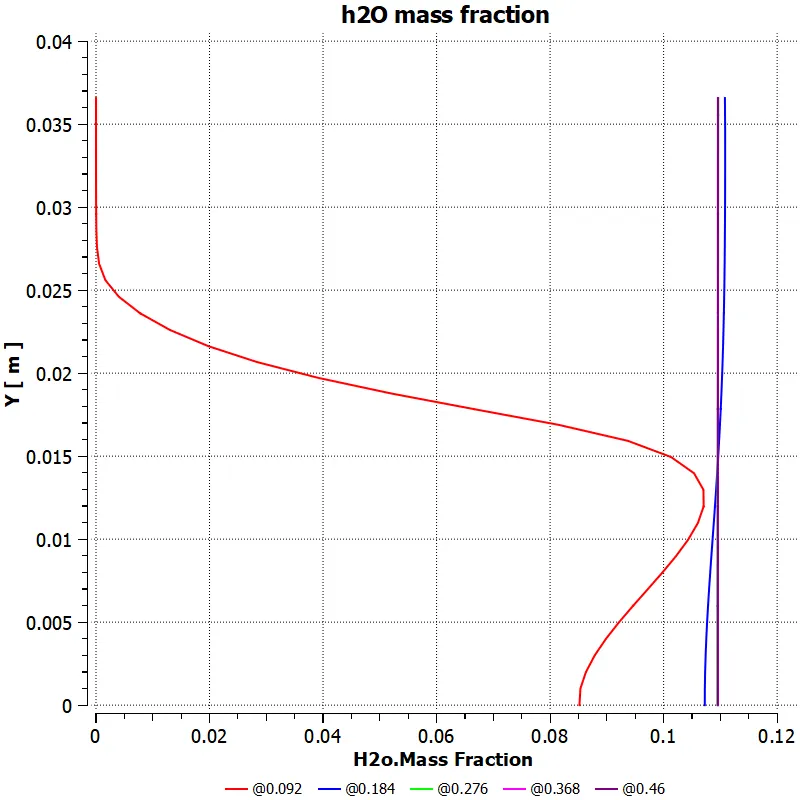
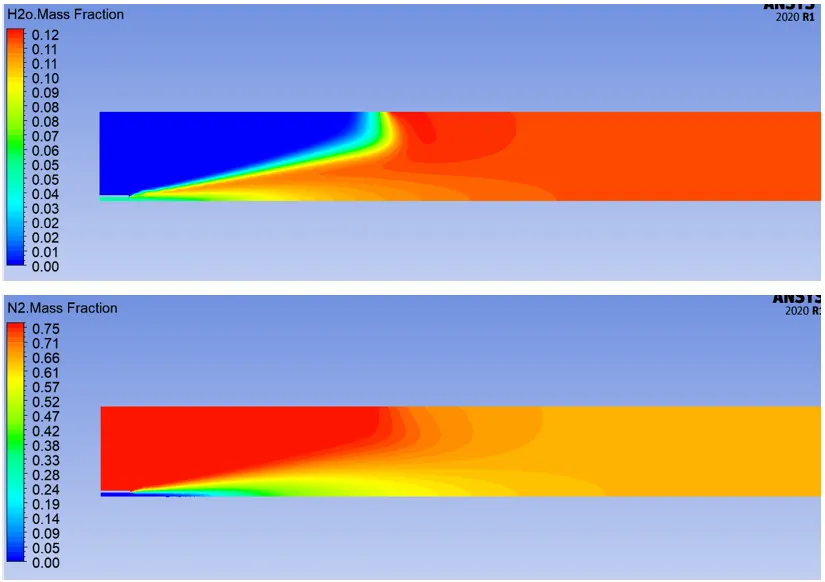
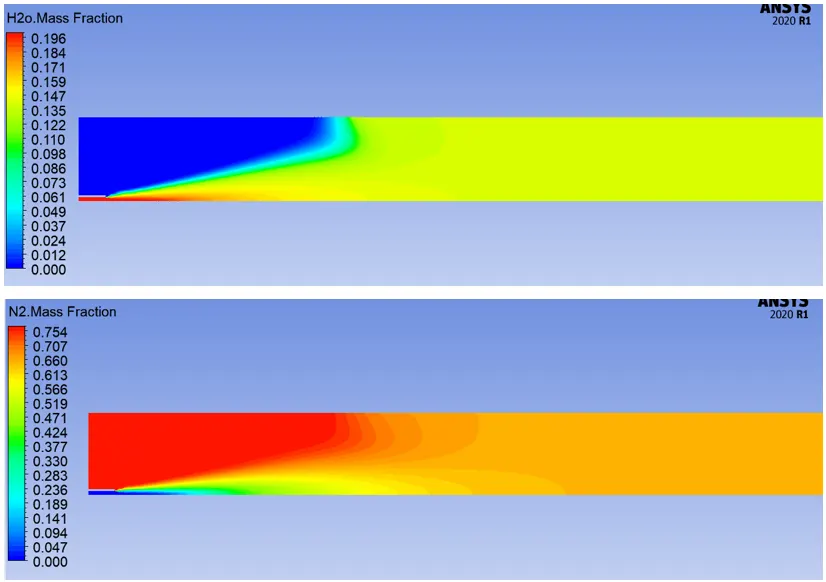
H2o mass fraction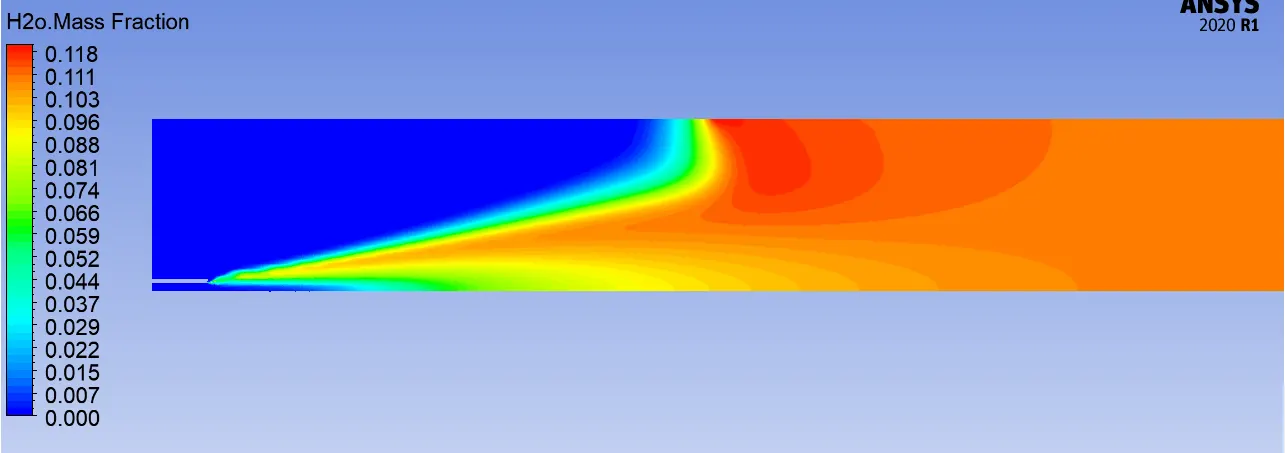
N2 mass fraction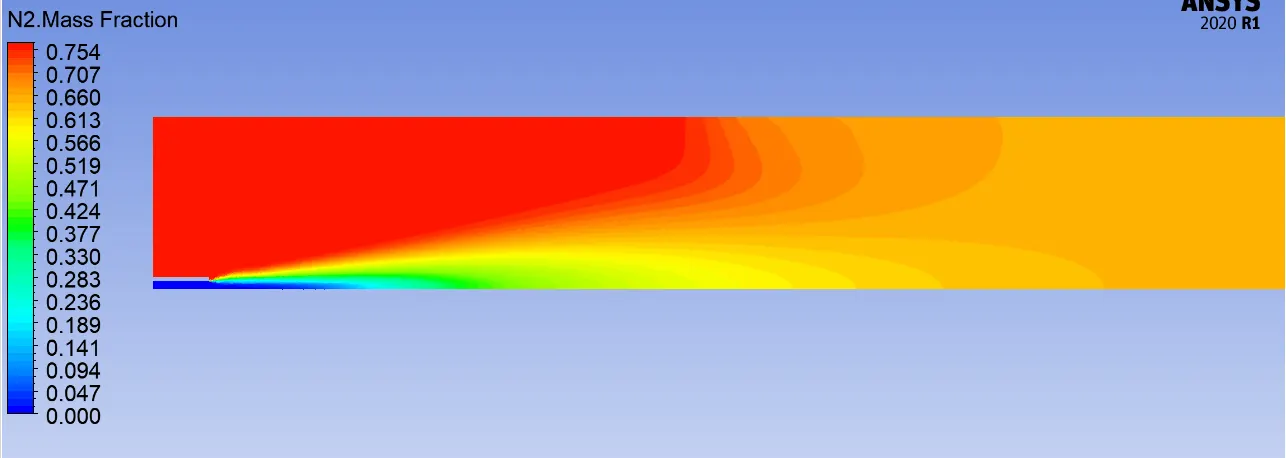
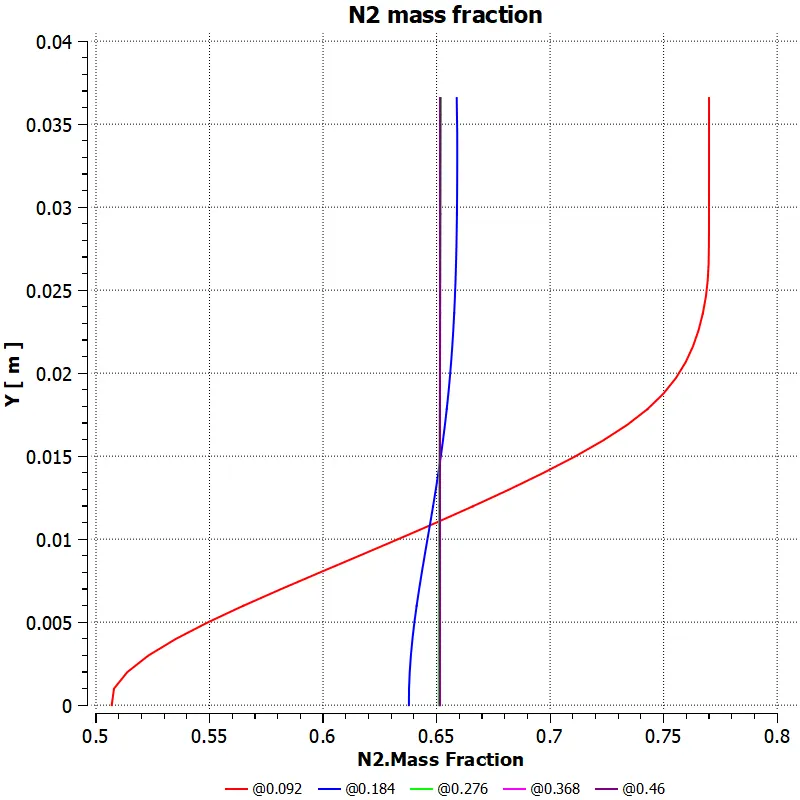
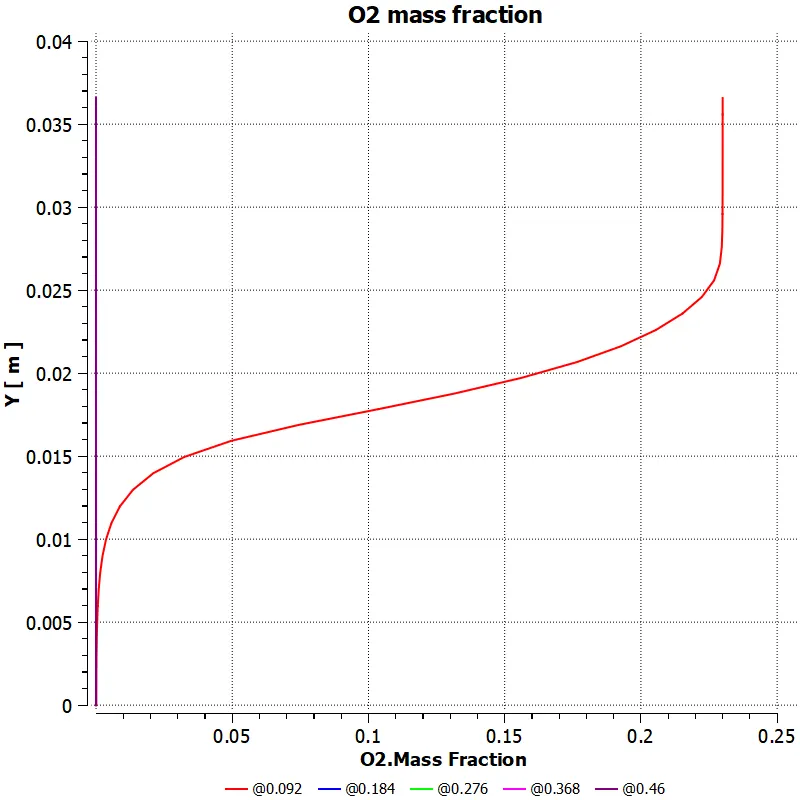
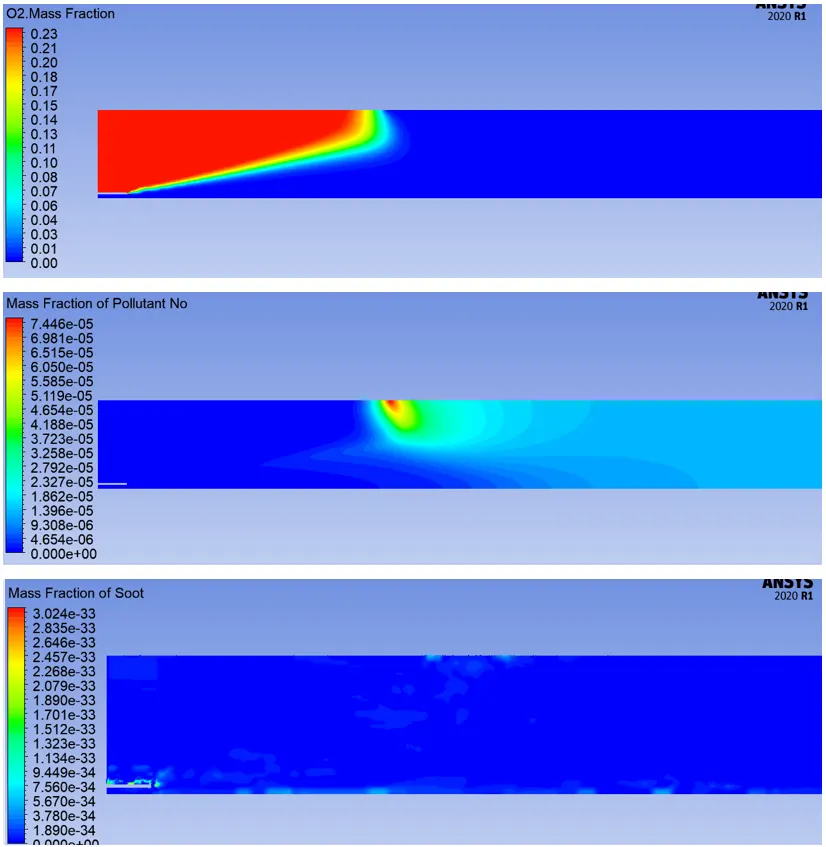
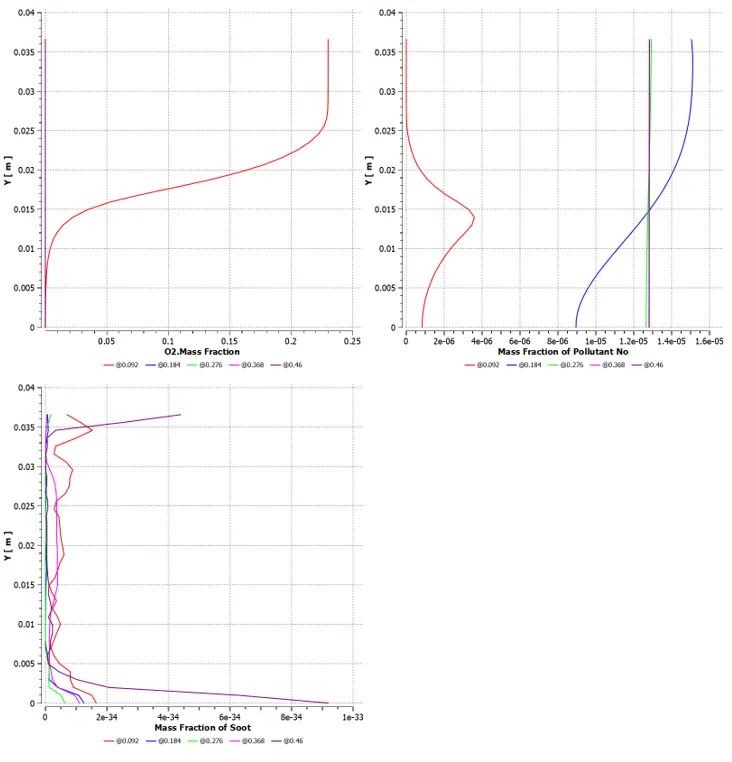
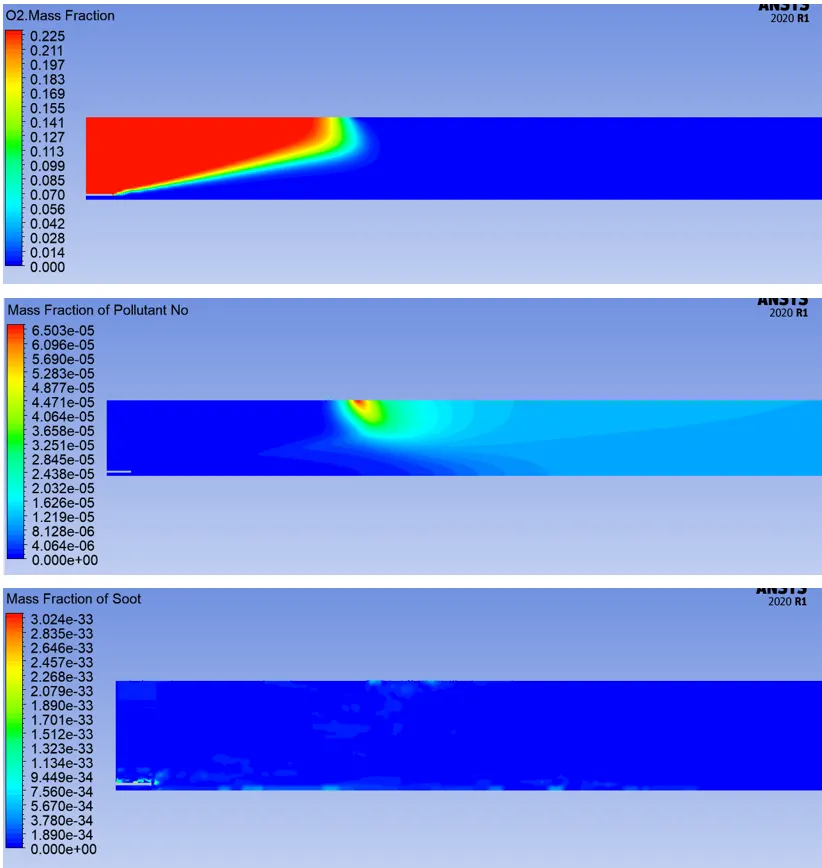
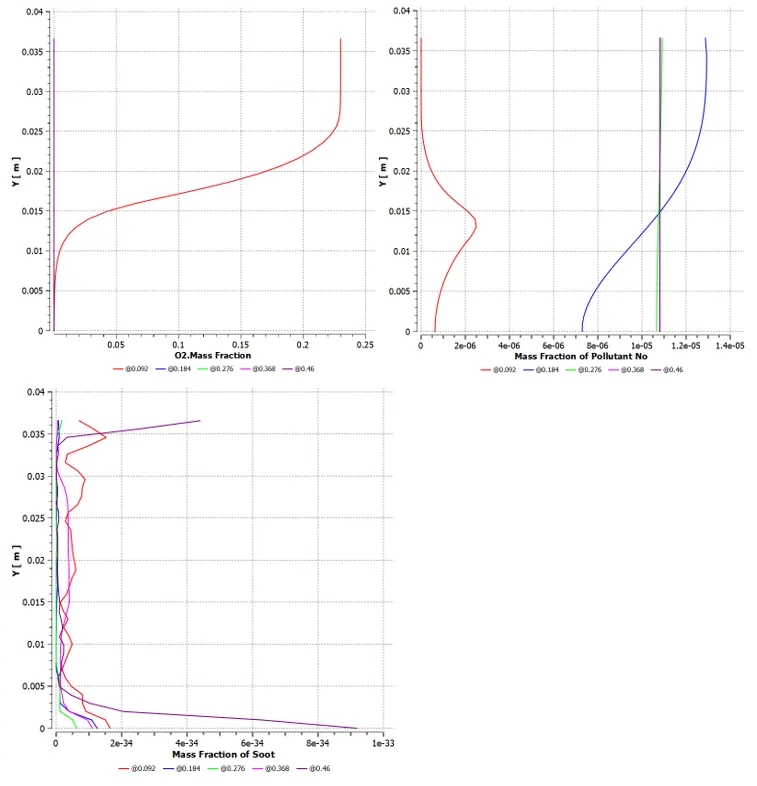
O2 mass fraction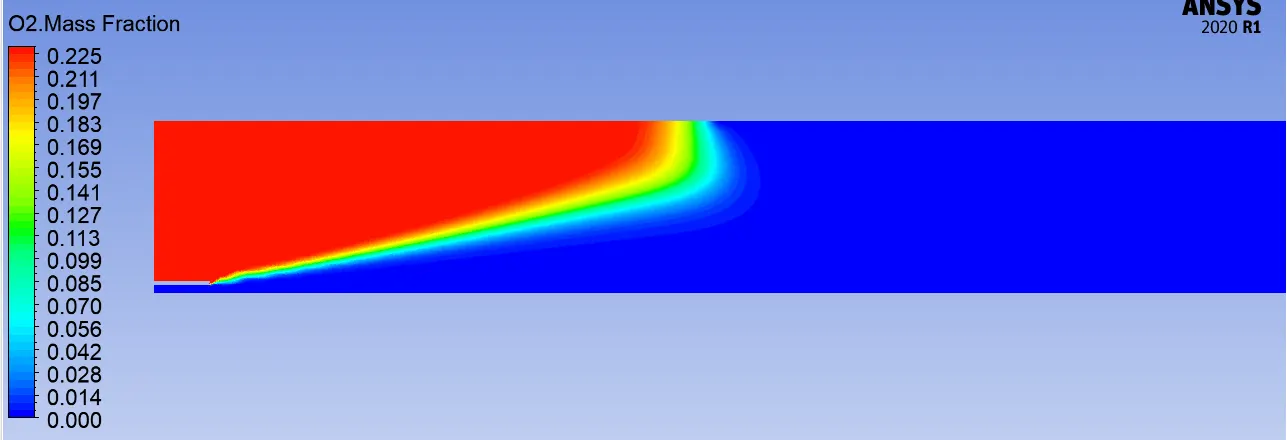
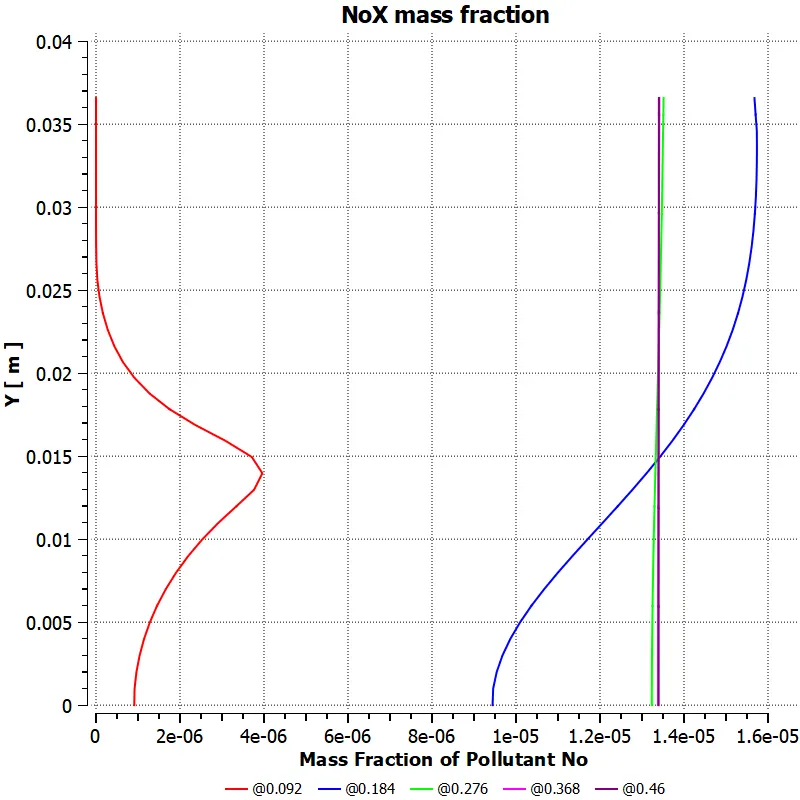
NOx mass fraction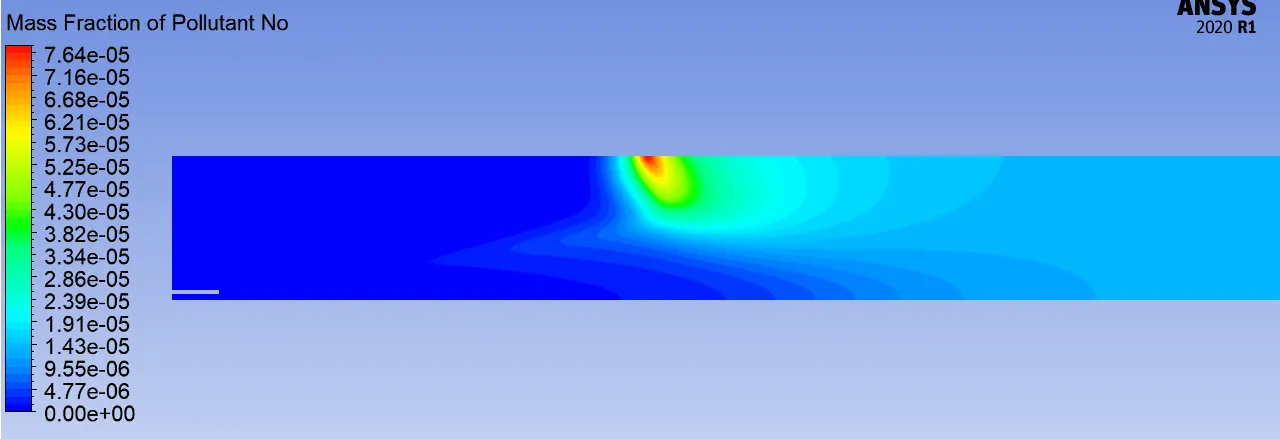
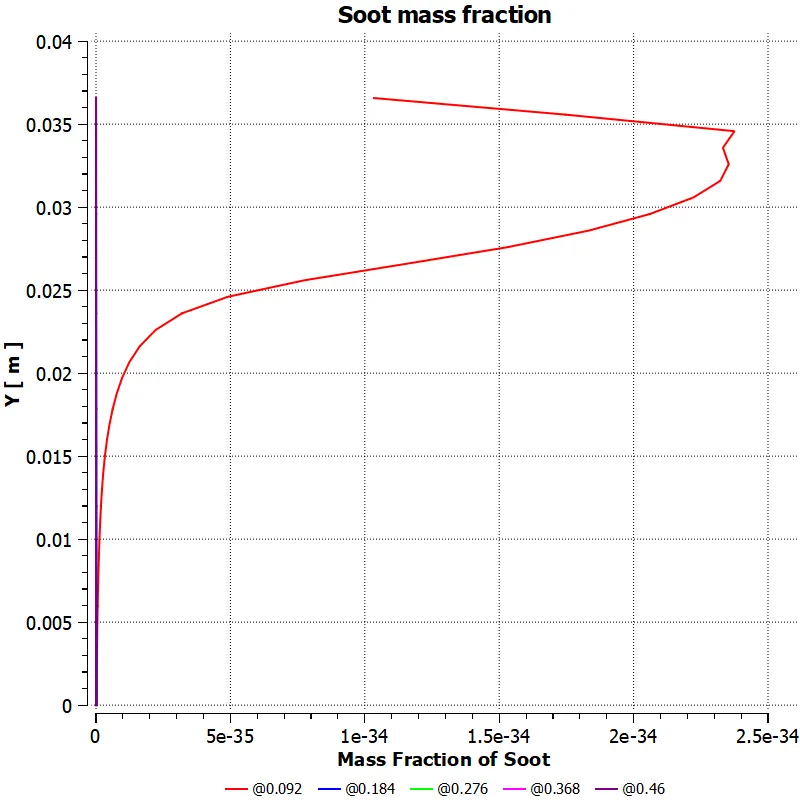
Soot mass fraction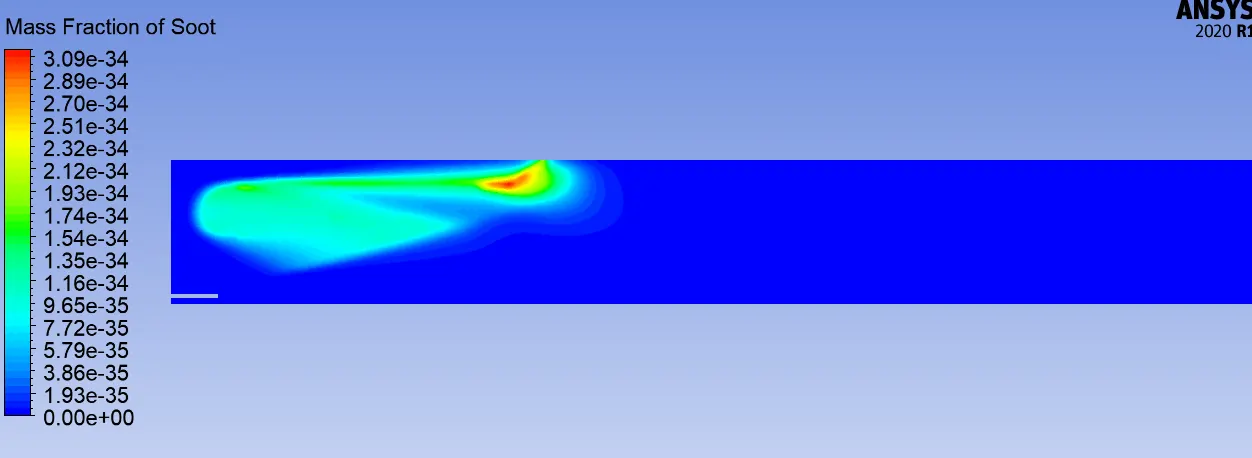
==========================================================
5% H20
==========================================================
@10% H2O
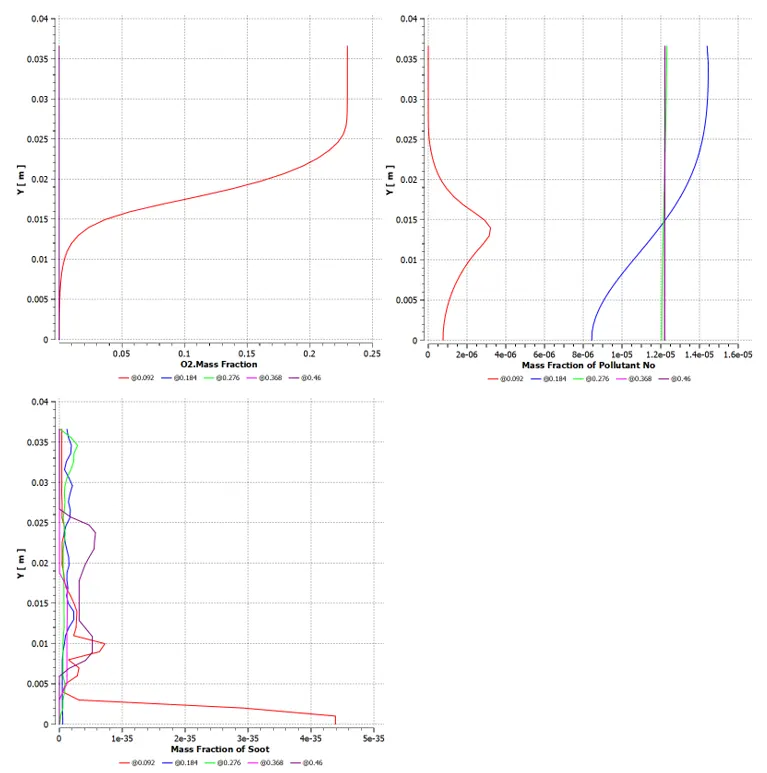
==========================================================
@15% H2O
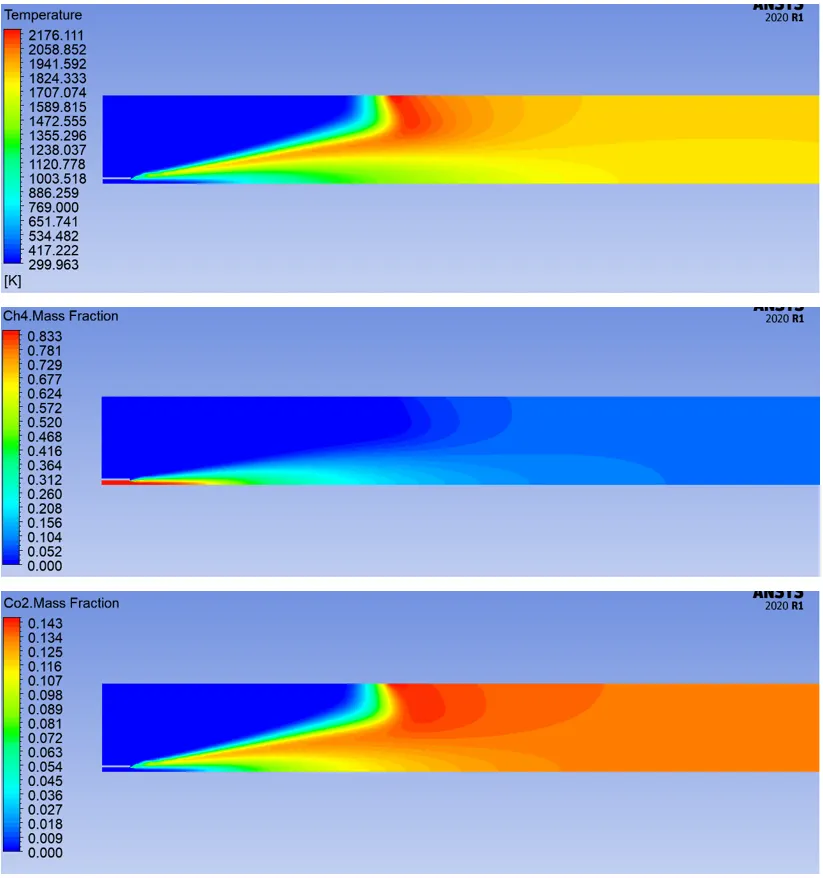
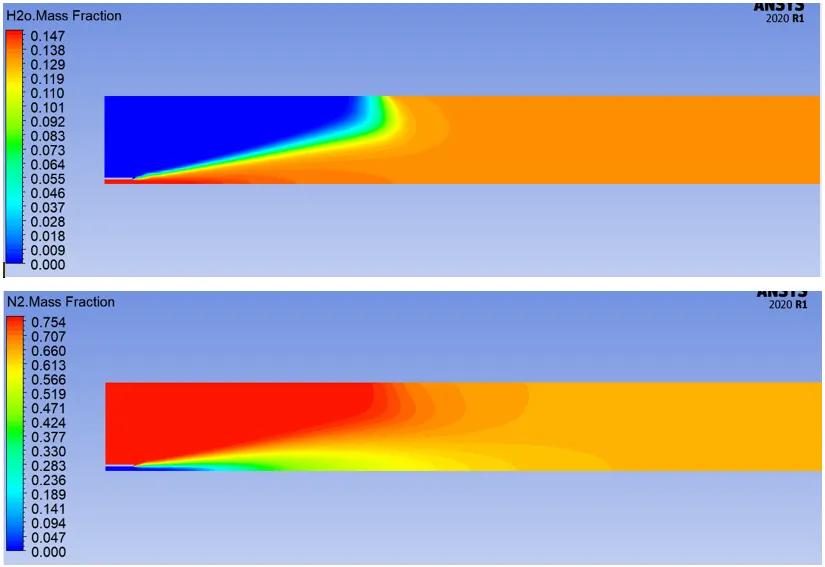
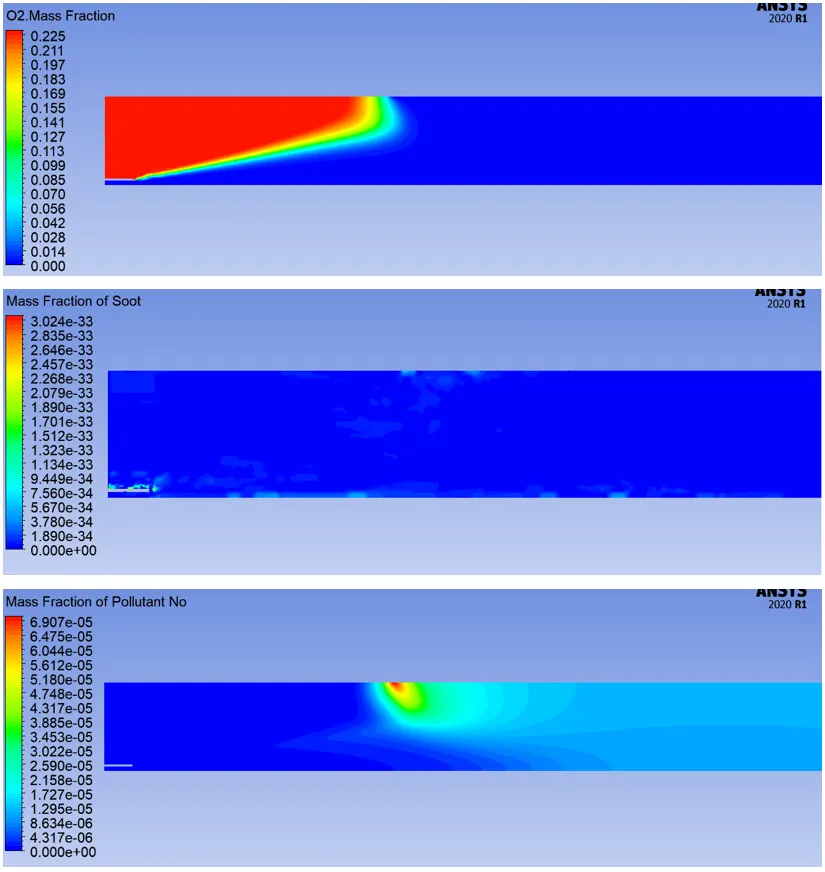
==========================================================
@20% H2O
==========================================================
@30% H2O
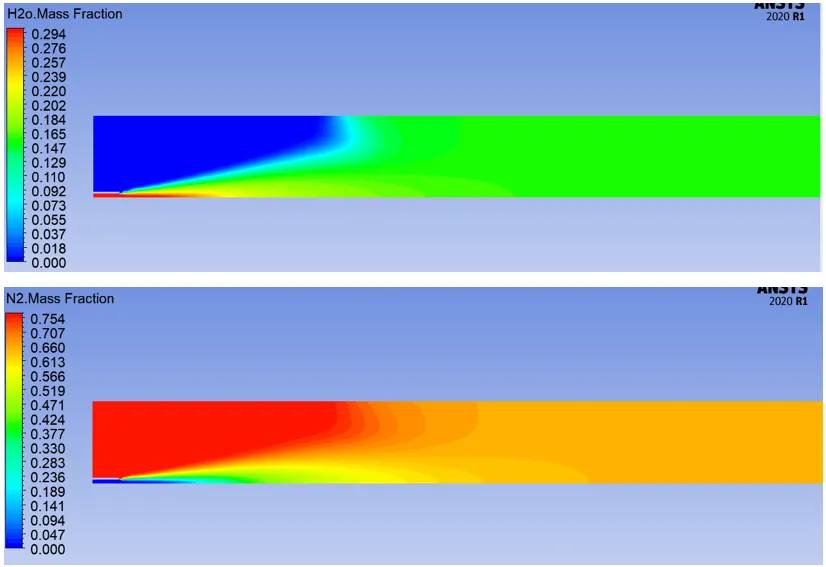
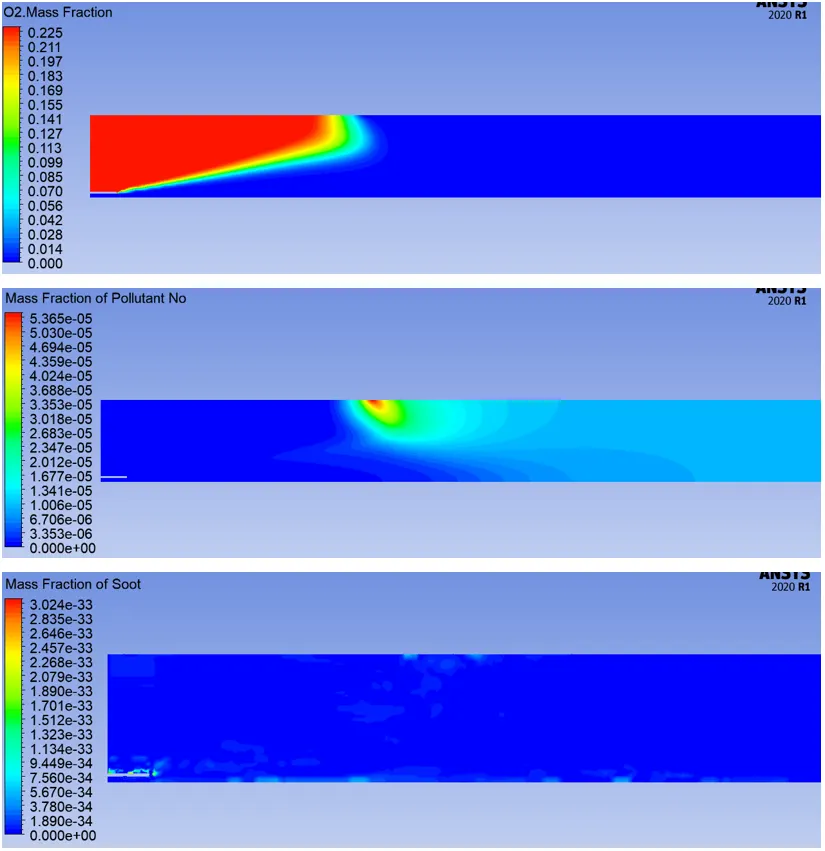
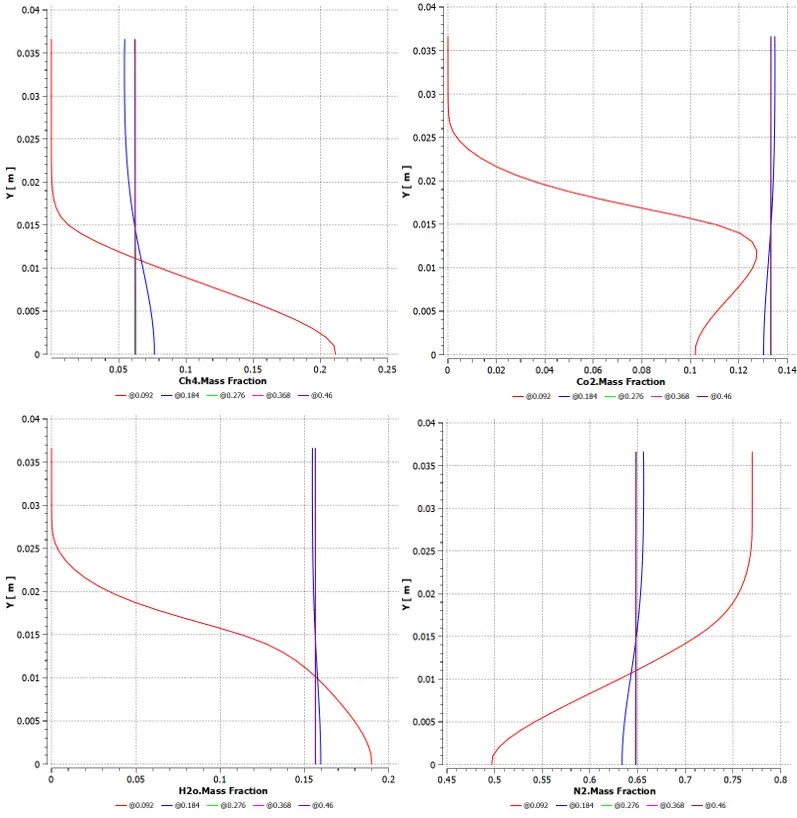
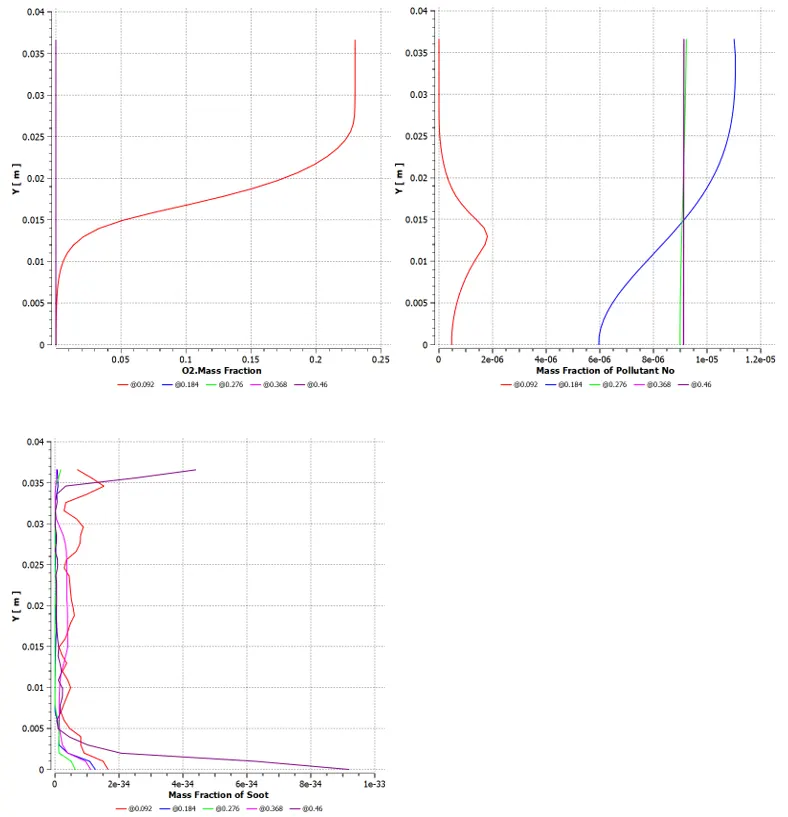
Results:
Conclusion:
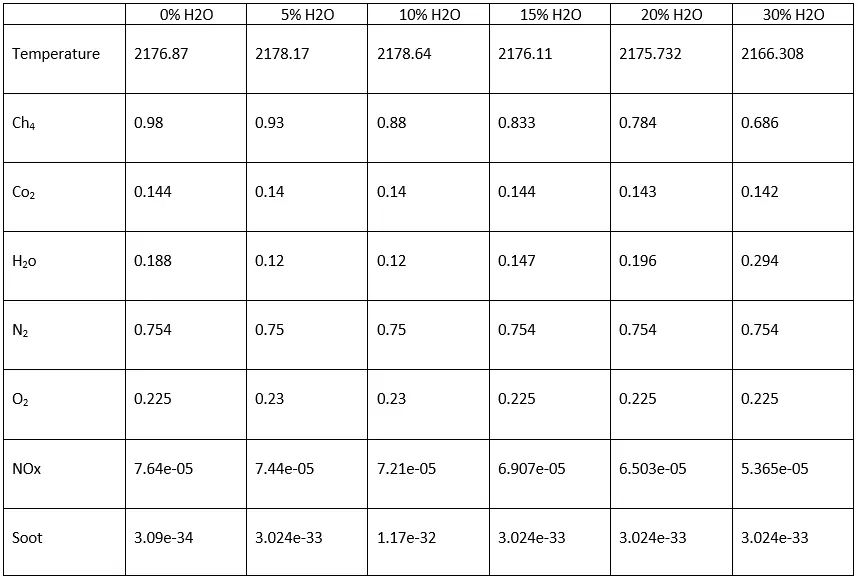
From the above table we can observe
- The levels of Co2, N2 and Maximum temperature obtained are not much varied
- As the water percentage is increasing in the fuel, Ch4 level decreased and H2o level increased
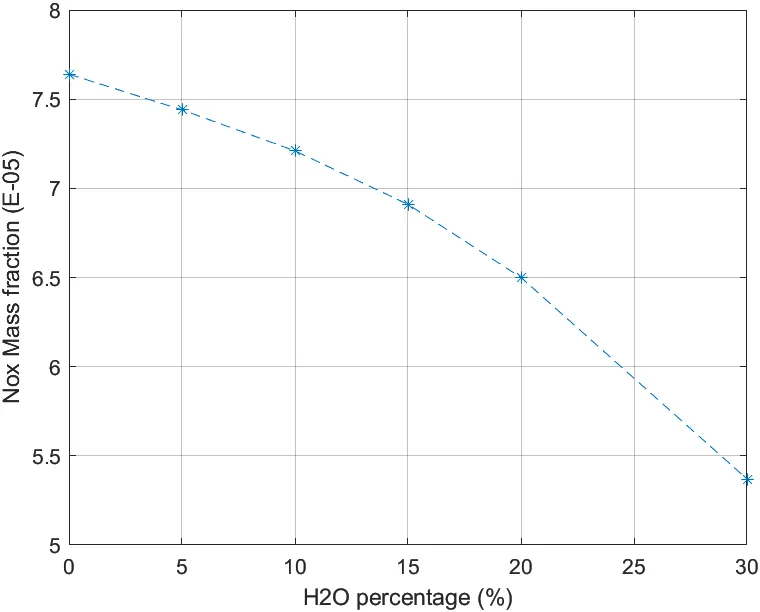
- As the water percentage is increasing in the fuel, NOx emission level is reduced.
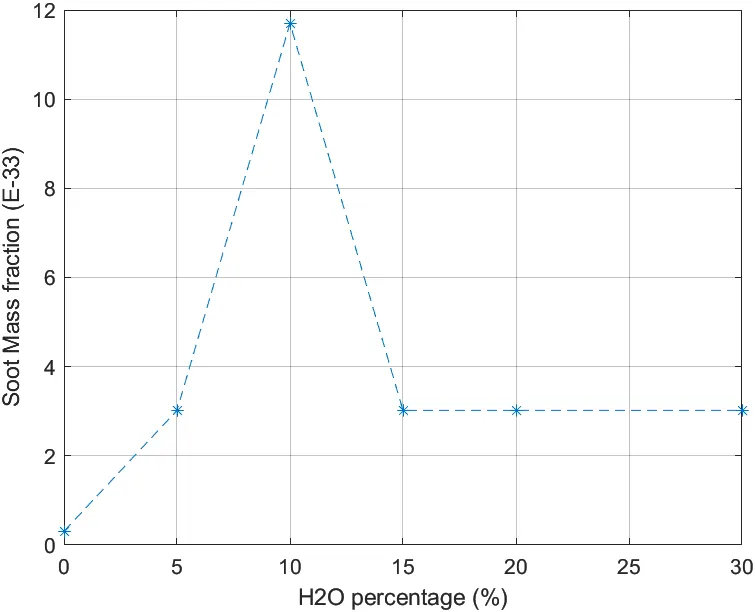
- As the water percentage is increasing in the fuel, Soot emission level initially raised and then dropped and settled as constant.