Bird Strike - Project - 2
Project - 2 - Bird Strike
Aim: This project bird striking a blade of aero engine is a classic nonlinear transient dynamics problem similar to car crash and mobile drop. While accurate modeling of the problem requires advanced techniques such as SPH, this problem is solved using generic explicit solver.
Procedure:
Given Requirements:
The blades rotates at a constant velocity.
The casing remains stationary.
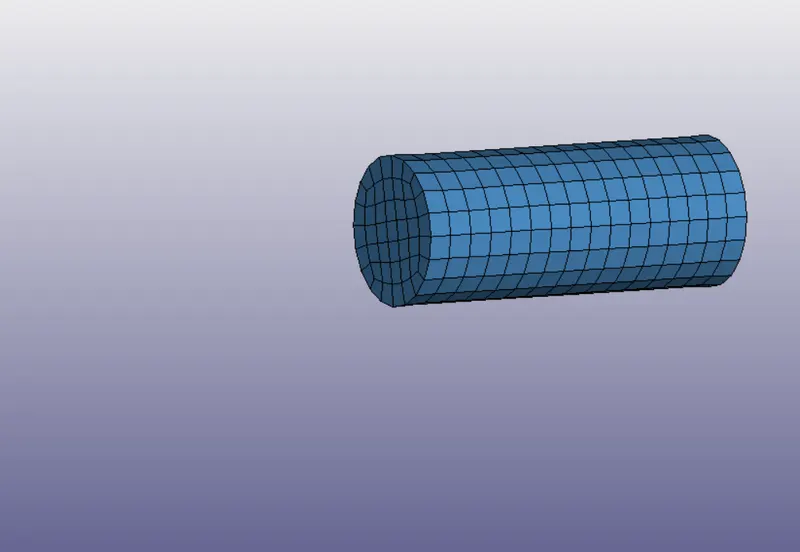
The cylindrical bird model travels along its own axis and hit the blades.
The bird, casing, and the blades are kept in different input files and in one main file referencing all the input files is done.
Control cards and boundary conditions in another separate file.
Intially the given bird_strike.k file is imported into LS PrePost from File -> Open -> Keyword file
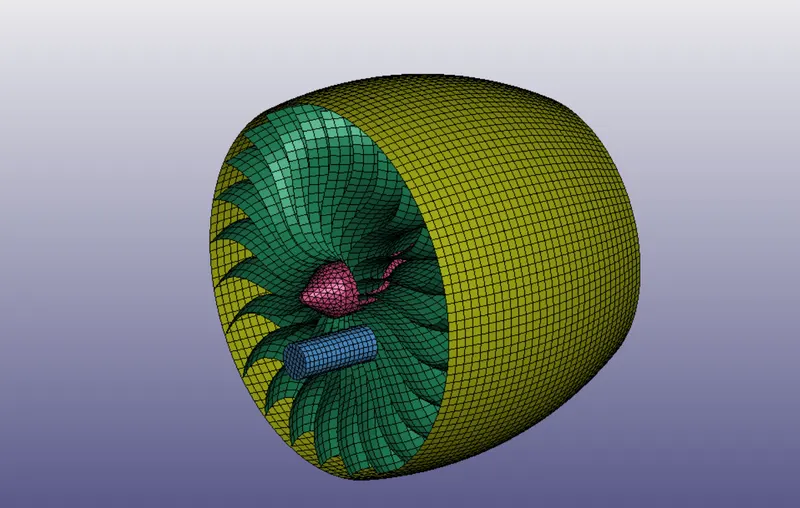
According to the requirements, these four parts Casing, Hub, Blades and bird are seperated are saved to seperate .k files
form Part Data and selecting and deleting the other parts and saving the files.
The renumbering of the nodes, elements, parts and other keycards are done at end of each keyword file.
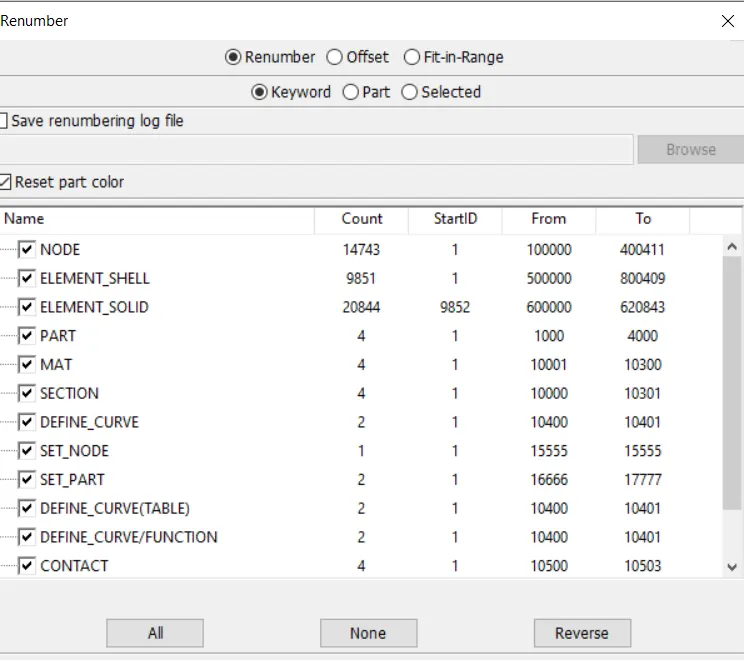
The material and section ID are created for each part seperately in their own .k files
Casing.k:
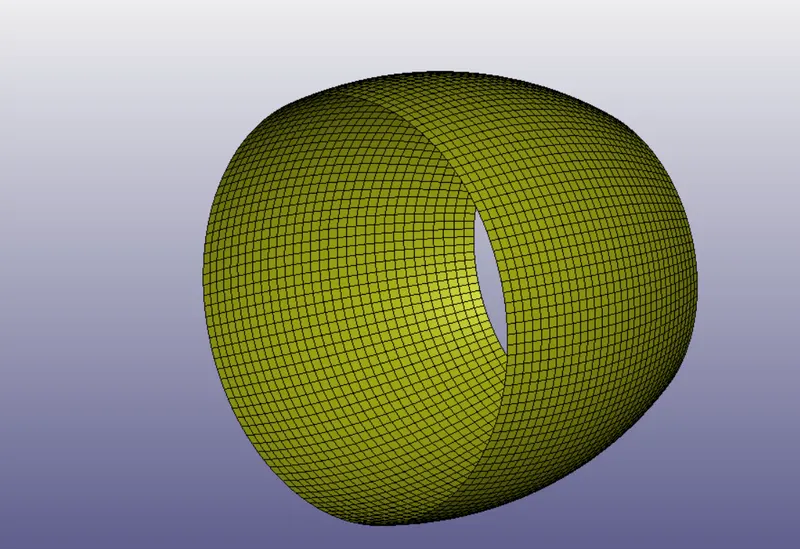
Section:
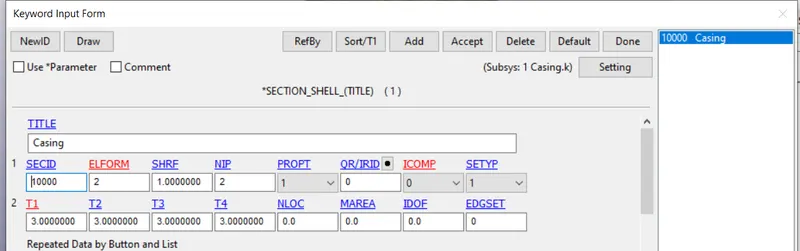
Material:
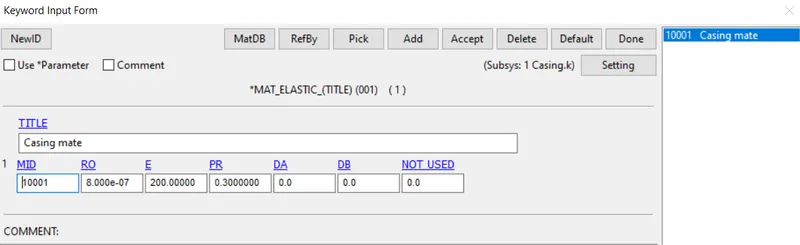
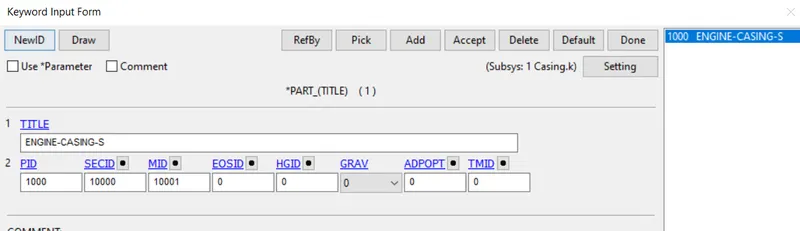
Part:
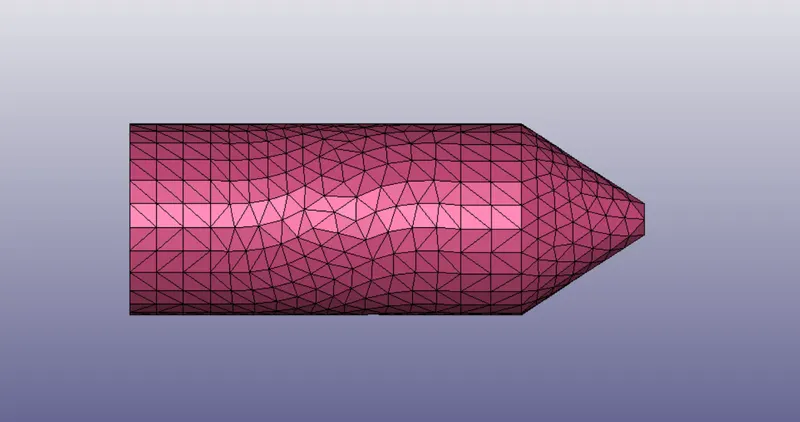
Hub.k:
Section:
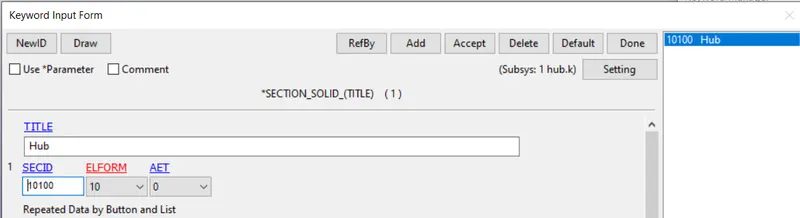
ELFORM 10 is taken due to tetrahedrons present.
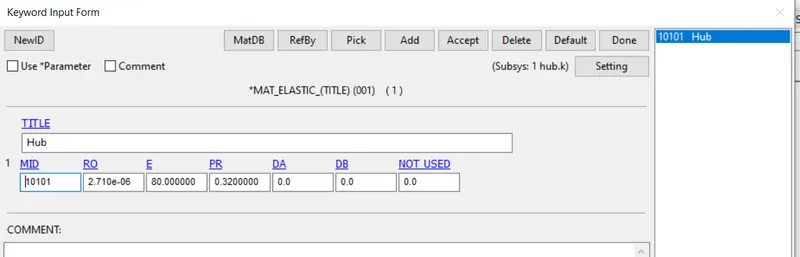
Material:
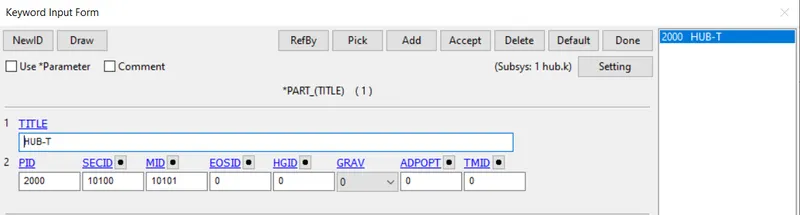
Part:
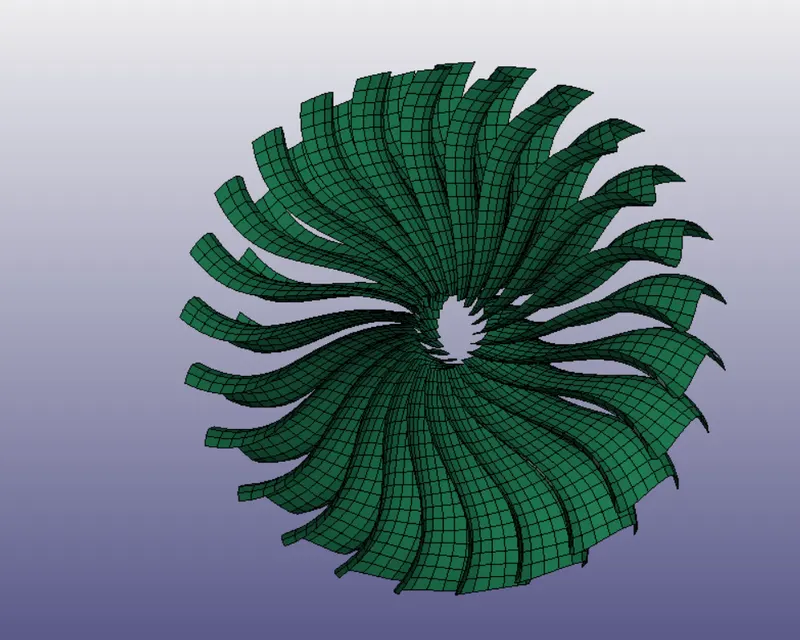
Blades.k:
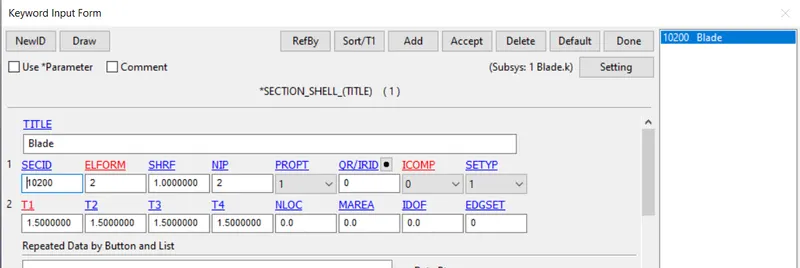
Section:
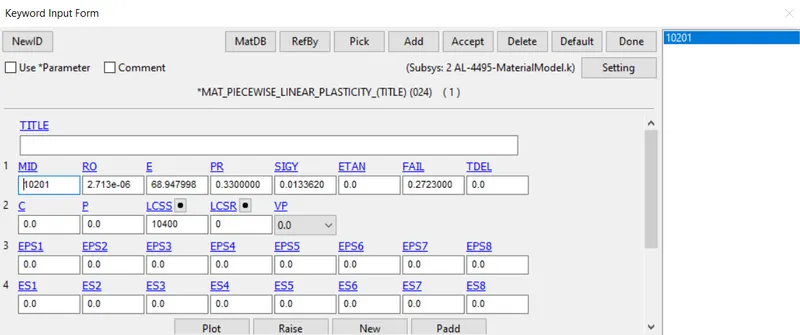
Material:
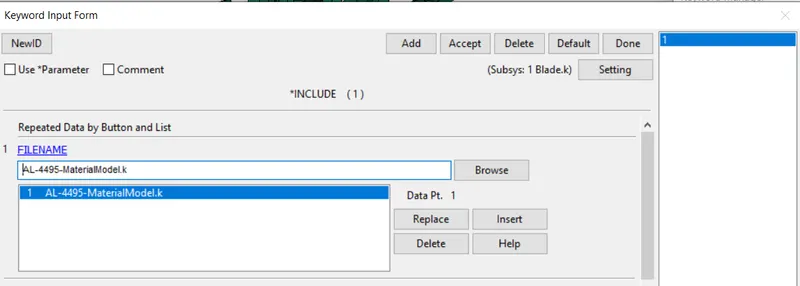
AL-4495-MaterialModel.k
Here material is given in the requirements and is referenced into this blades.k file using Include card
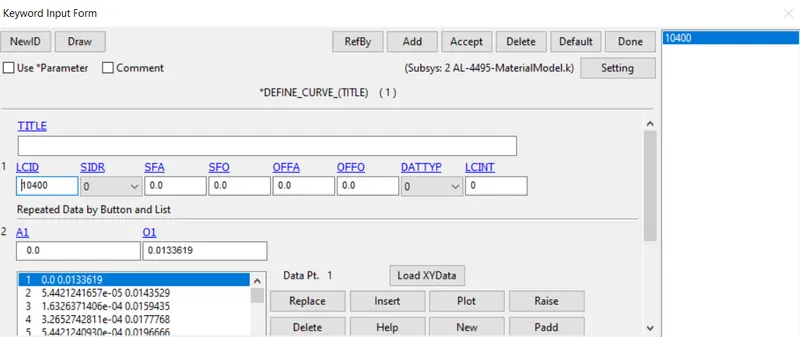
Curve for material data:
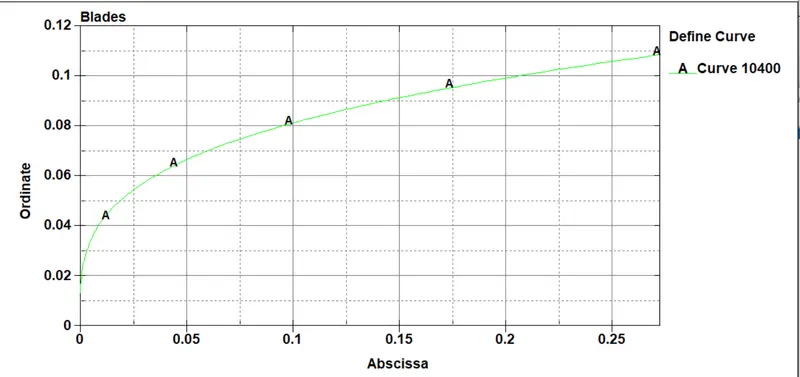
Plot of the curve:
Part:
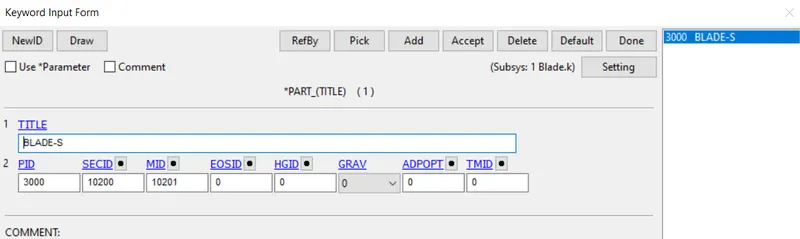
Bird.k:
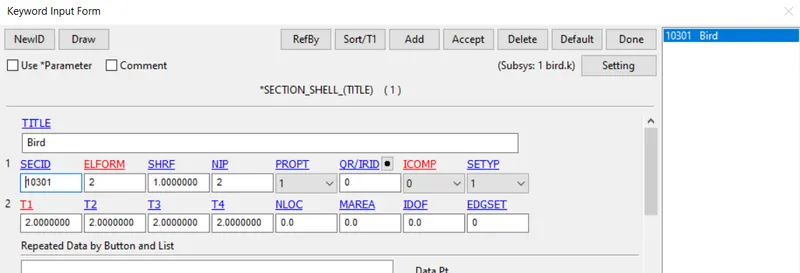
Section:
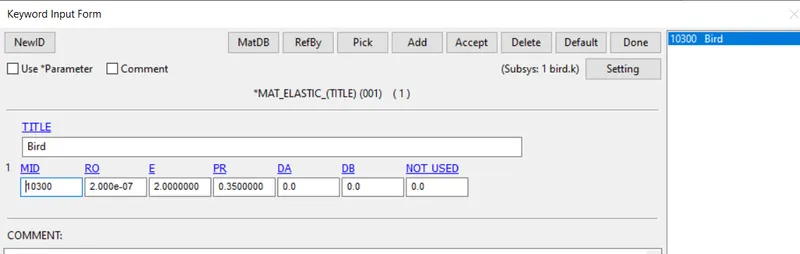
Material:
Part:
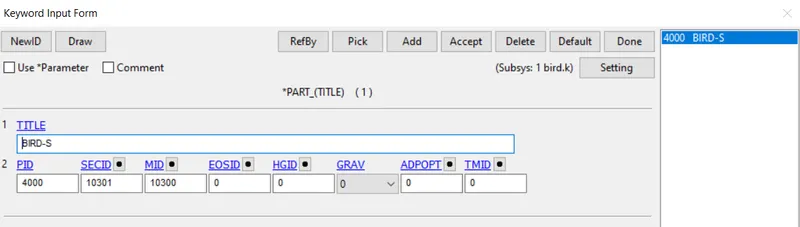
Intial Velocity Generation:
For the movement of the blades and movement of bird along its axis intial velocity generation card is used and stored in another .k file along with the boundary condtion for constraining casing.
Movement of bird:
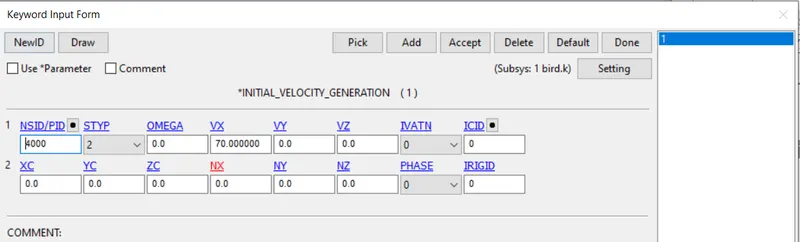
Movement of Blades:
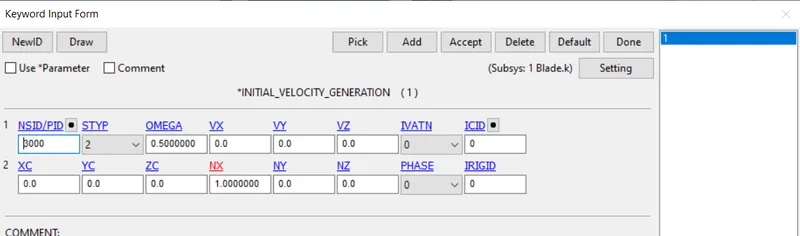
Constraining Casing:
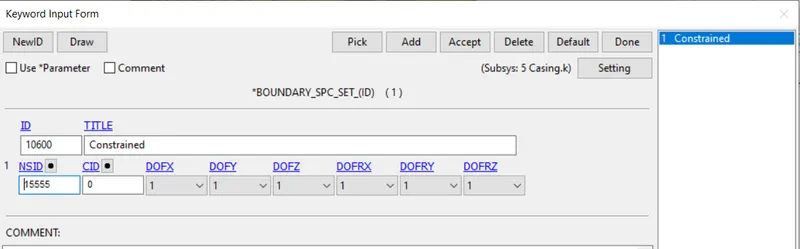
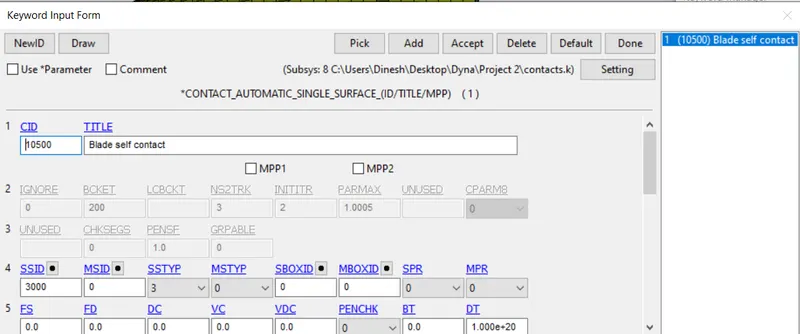
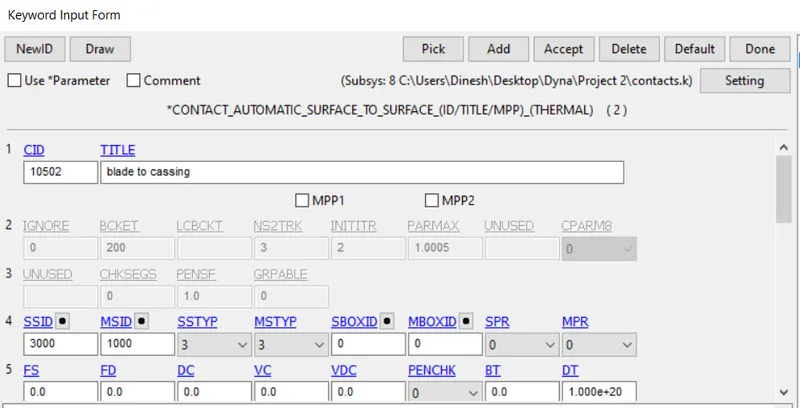
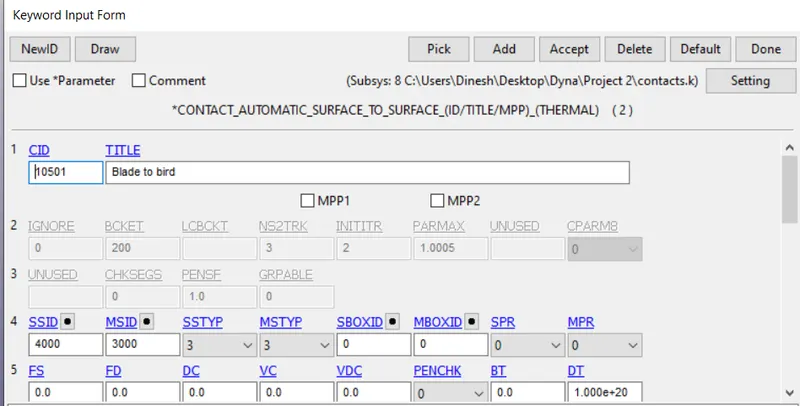
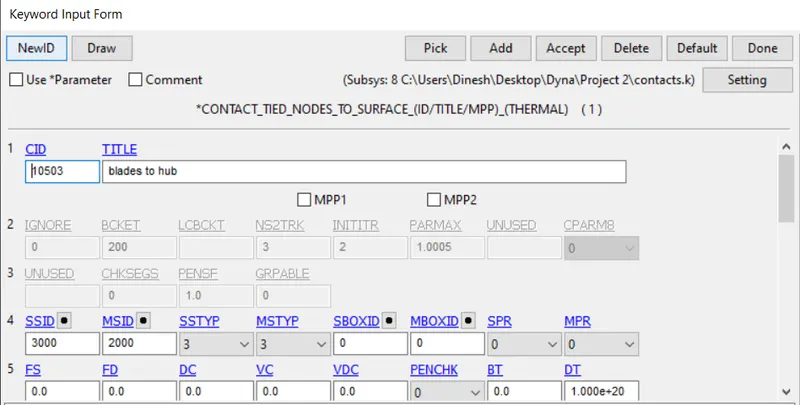
Contacts.k:
For the contact between blades and bird contact is defined along with other necessary contact in this keyword file
Contact between the blades(Self contact:
Contact between blade and casing:
COntact between blade and bird:
Tied contact between hub and blades:
Control and database keyword file:
For the time step, end time and output requests a different keyword file is created
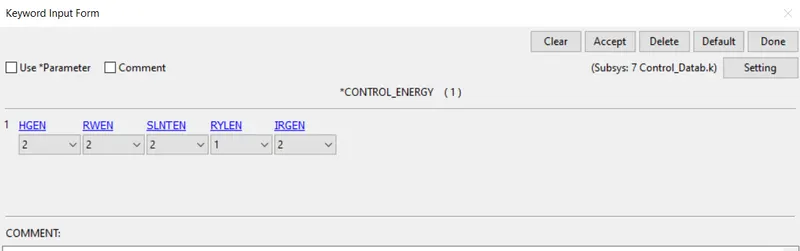
To include hourglass and energy dissipation into calculation.
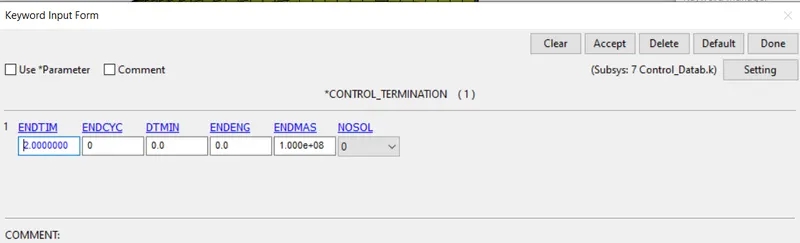
Termination time for before and after collision
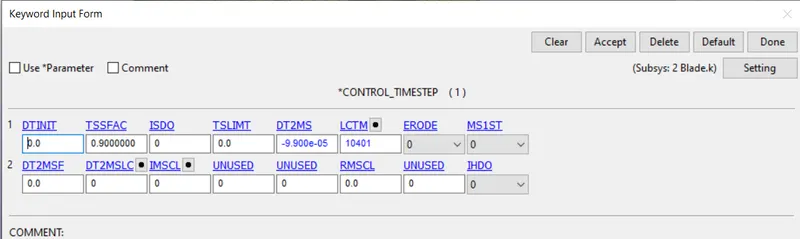
For mass scaling and reducing total time needed for simulation.
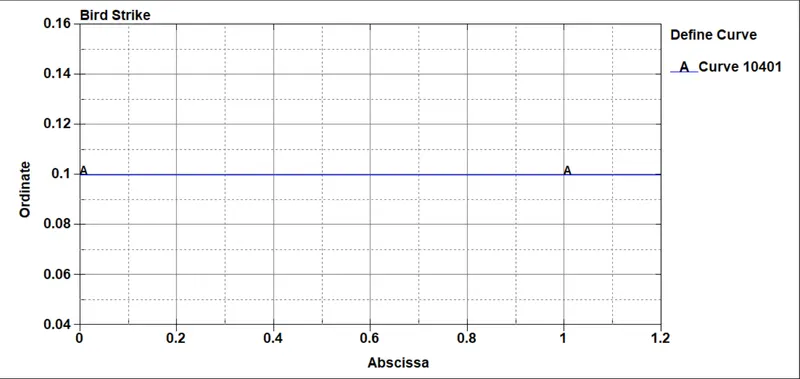
LCTM curve for controlling timestep
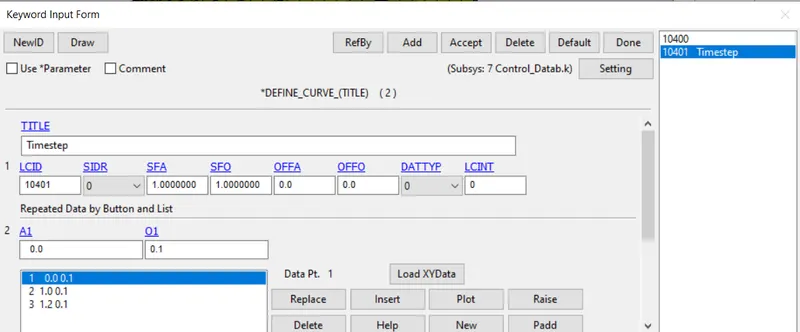
Curve
In database card, d3plot is taken for animation file
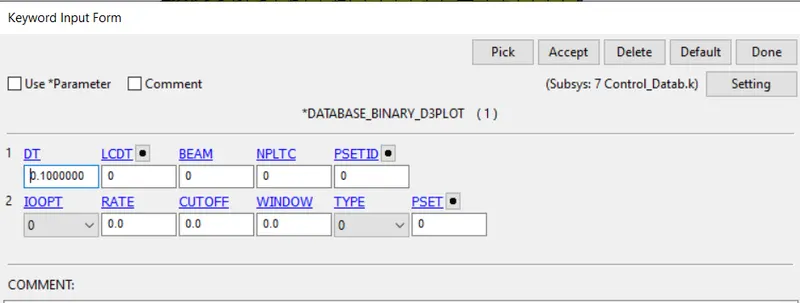
ASCII cards are taken for
GLSTAT and ELOUT file.
These keyword files are imported into main bird_strike .k file using Include card and it contains only the references for these files.
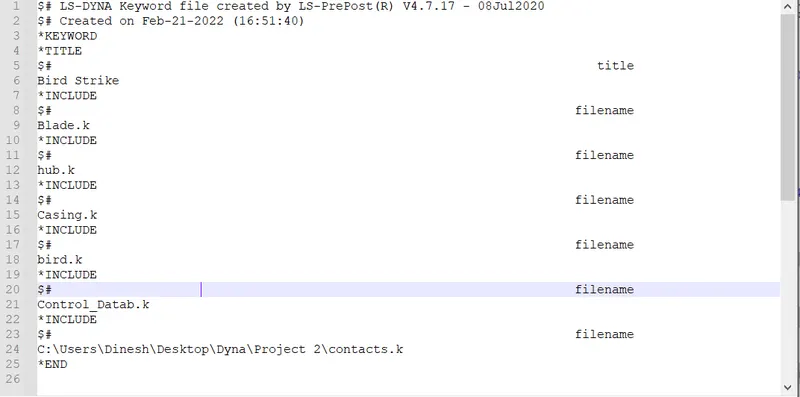
Then this main keyword file is run in LS RUN.
Debugging:
Mass scaling is done after the first run with different dt2ms and tssfac and appropriate values are kept with atmost order of 10-5 with the termination time.
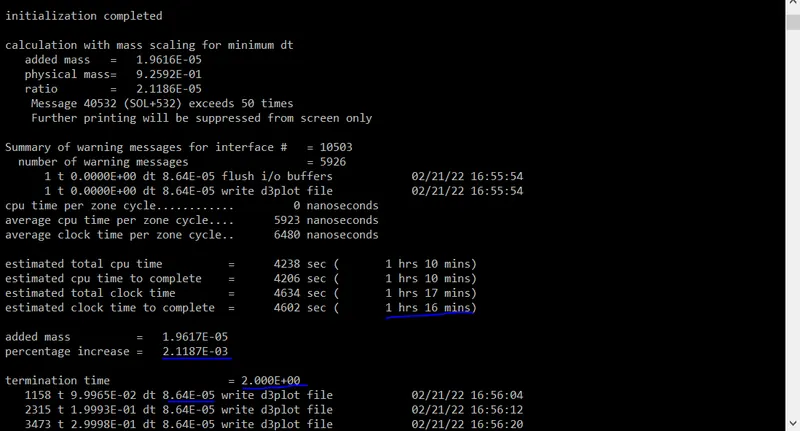
Since dt and termination are in range of 10-5 we take this dt2ms and tssfac = 0.9 as optimim values.
Results:
Stress contour of the file before collision, at collison and after collison
Before Collision:
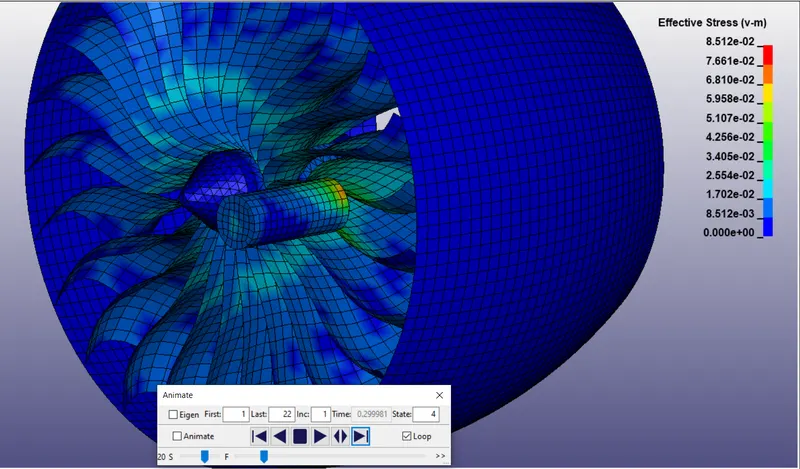
At Collision we can see the deflection of blade edge:
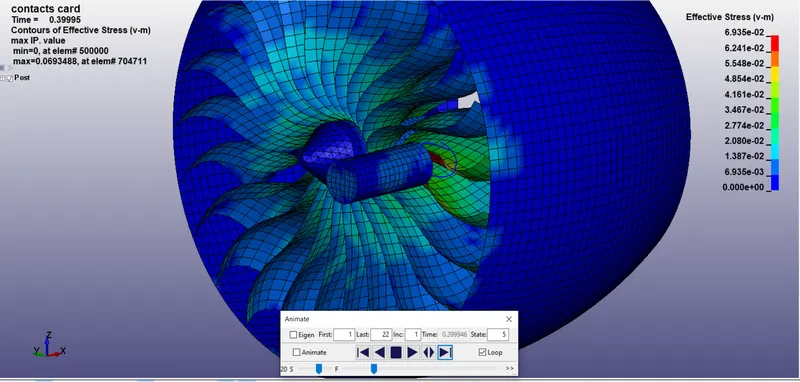
After collision when bird is deflected away:
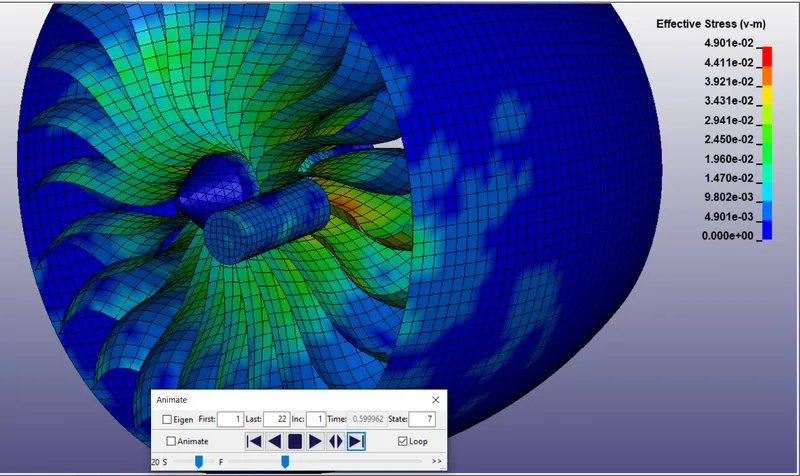
Contact force when bird strikes blade from blade:
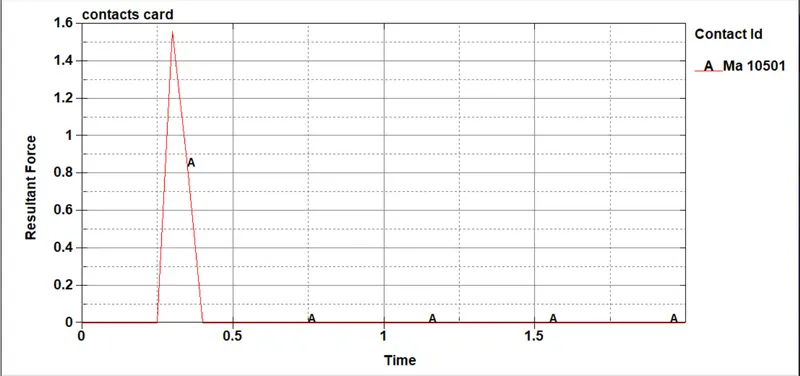
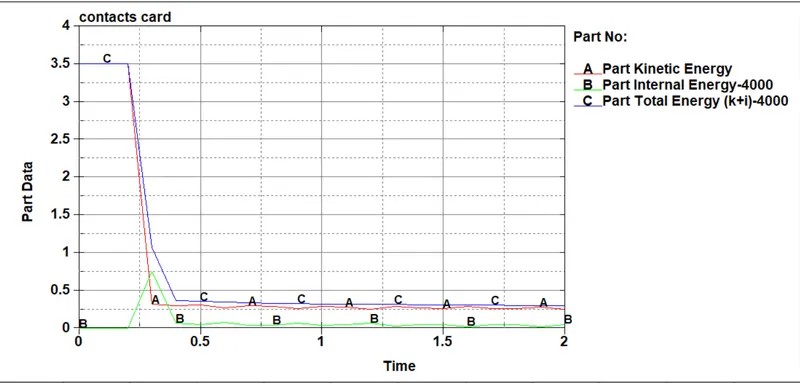
Energy data for bird:
Plastic strain for elements deflected and the blades non distubed:
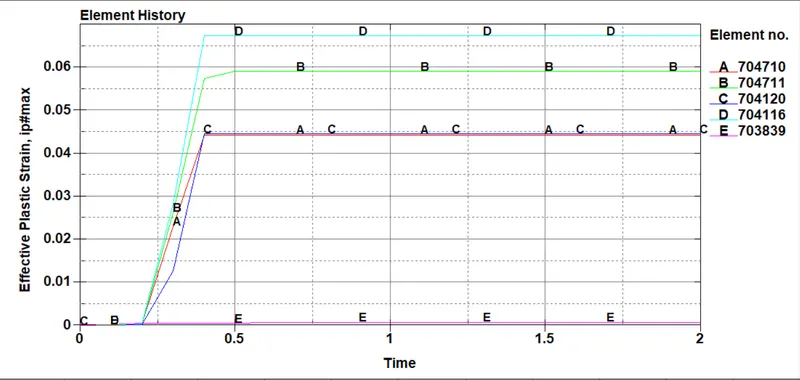
A,B,C,D are elements where contact occured and D is out of any contact:
Conclusion:
The crash simulation og bird with blades of aero engine is successfully simulated in LS Dyna.