Benchmarking
Benchmarking: The term benchmark, originates from the history of guns and ammunition, in regards to the same aim as for the business term; comparison and improved performance. It was used to measure performance using a specific indicator like cost per unit of measure, productivity per unit of measure, defects per unit of measure, cycle time per unit of measure, resulting in a metric of performance that is then compared to others. It is all nothing but comparing the business processes and performance metrics to industry bests and best practices from other companies. Dimensions typically measured are quality, time and cost.
Benchmarking may be a one-off event, but is often treated as a continuous process in which organizations continually seek to improve their practices. In project management benchmarking can also support the selection, planning and delivery of projects. Benchmarking is appropriate in nearly every case where process redesign or improvement is to be undertaking so long as the cost of the study does not exceed the expected benefit.
Benchmarking can be internal, comparing the performance between different groups or teams within an organization or external, comparing performance with companies in a specific industry or across industries. There are 3 specific types of benchmarking
- Process benchmarking
- Financial benchmarking
- Benchmarking from an Investor perspective
- Benchmarking in the public sector
- Performance benchmarking
- Product benchmarking
- Strategic benchmarking
- Functional benchmarking
- Best-in-class benchmarking
- Operational benchmarking
- Energy benchmarking
In business, benchmarking is a process used to measure the quality and performance of your company’s products, services, and processes. The objective of benchmarking is to use the data gathered in your bench marking process to identify areas where improvements can be made by:
Determining how and where other companies are achieving higher performance levels than your company has been able to achieve.
Comparing the competition’s processes and strategies against your own.
Using the information, you gather from your analyses and comparisons to implement changes that will improve your company’s performance, products and services.
Common are s that need to target for benchmarking analysis include cost per unit, time to produce each unit, quality of each unit, and customer satisfaction. The main 8 steps in the benchmarking process are
- Select a subject to benchmark
- Decide which organizations or companies you want to benchmark.
- Document your current processes.
- Collect and analyse data.
- Measure your performance against the data you have collected.
- Create a plan.
- Implement the changes.
- Repeat the process.
When the Person decides to buy a new car, as a buyer point of view what will his benchmark before bought a neew car.
Mr. D.S. Pughazhyendhii is a married man who lives in Bangalore which is a highly crowded city. His Family comprises five members including his wife, five-year-old boy, his father, and his mother. He visits his native place Madurai which is 500kms away from Bangalore once in a month. Also, he will be using his car to commute to his office. His budget falls between 8 to 10 lakhs on road. Please suggest to him with options so that he will buy a good car for his family.
When a person wants to buy a new car, he will compare the features of the cars which are available latest models in the market by different companies and which company product running in the trend as per her budget. He doesn’t look only the features to buy a car instead of looking features he will take a review of live running car who will buy around him like Family member’s, Friend’s.
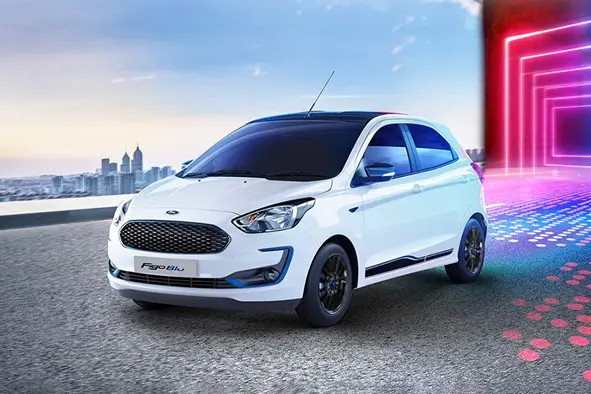
1.Ford Figo:
The price of For Figo starts at RS. 5.82 Lakhs and goes up to Rs. 8.37 Lakhs. Ford Figo is offered in 7 variants the base model is Ambiente and the top variant Ford Figo is Titanium Blu Diesel which comes at price tag of Rs. Around 9.55 Lakhs. The Ford Figo has 1 Diesel Engine and 1 Petrol Engine on offer.
The Diesel Engine is 1499 cc while the Petrol Engine is 1194 cc. It is available with Manual and Automatic transmission. Depending upon the variant and fuel type the Figo has a mileage of 16.0 to 24.4 kmpl. The Figo is a 5-seater 4-cylinder car and has a length of 3941mm, width of 1704mm, wheelbase of 2490mm and Height of 1525mm.
Key Specifications of Ford Figo:
ARAI Mileage: 24.4 kmpl
Fuel Type: Diesel
Engine Displacement(cc): 1499
No. of cylinders: 4
Max Power (bhp@rpm): 98.96bhp@34750rpm
Max Torque (nm@rpm): 215Nm@1750-2500rpm
Seating Capacity: 5
Transmission Type: Manual
Fuel Tank Capacity: 40.0
Body Type: Hatchback
Engine Type: TDCi Diesel Engine
Fuel Supply System: CRDI
Gear Box: 5 Speed
Drive Type: FWD
Emission Norm Compliance: BS VI
Suspension, Steering and
Breaks: Independent Macpherson
Rear Suspension: Semi Independent (Twist beam type)
Shock Absorbers Type: Twin Gas and Oil Filled
Steering Type: Electric
Steering Gear Type: Rack and Pinion
Front Brake Type: Ventilated Disc
Rear Brake Type: Drum
Turning Radius (Metres): 4.9
Kerb Weight (Kg): 1056-1067
No of Doors: 5
No of Air bags: 6
Wheel base (mm): 24900
Key Features of Ford Figo:
Power Steering
Power Windows Front
Anti-Lock Braking System
Air conditioner
Driver and Passenger Airbag
Automatic Climate Control
Fog Lights-Front
Alloy Wheels
Turbo Charger
Vanity Mirror
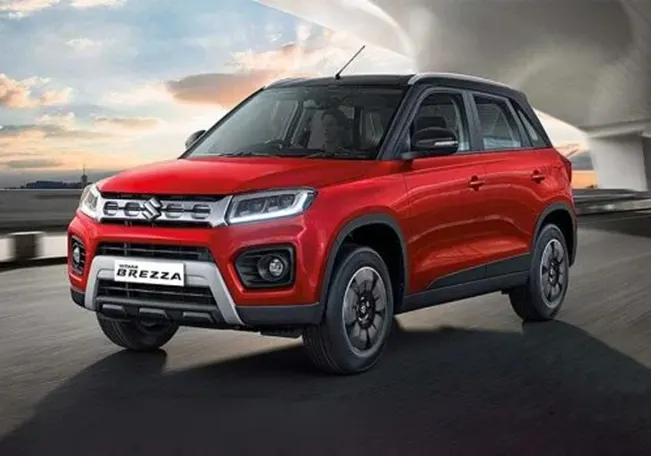
- Maruti Vitara Brezza:
The Maruti Vitara Brezza has 1 Petrol Engine on offer. The Petrol Engine is 1462 ccc. It is available with Manual and Automatic transmission. Depending upon the variant and fuel type the Vitara Brezza has mileage of 17.03 to 18.76kmpl. The Vitara Brezza is a 5seater 4-cylinder car and has length of 3995mm, width of 1790mm and wheelbase of 2500mm. The Market price is around Rs. 8.50 Lakhs.
Key Specifications of Maruti Vitara Brezza:
ARAI Mileage: 18.76 kmpl
Fuel Type: Petrol
Engine Displacement(cc): 1462
No. of cylinders: 4
Max Power (bhp@rpm): 103.26bhp@6000rpm
Max Torque (nm@rpm): 138Nm@4400rpm
Seating Capacity: 5
Transmission Type: Automatic
Fuel Tank Capacity: 48.0
Body Type: SUV
Engine Type: K15B ISG Petrol Engine
Fuel Supply System: CRDI
Gear Box: 4 Speed
Drive Type: FWD
Emission Norm Compliance: BS VI
Front Suspension: Macpherson Strut with coil spring
Rear Suspension: Torsion Beam with Coil Spring
Steering Type: Electronic
Steering Gear Type: Rack and Pinion
Front Brake Type: Ventilated Disc
Rear Brake Type: Drum
Turning Radius (Metres): 5.2
Kerb Weight (Kg): 1600
No of Doors: 5
No of Air bags: 2
Wheel base (mm): 2500
Key Features of Maruti Vitara Brezza:
Anti-Lock Braking System
Central Locking
Driver and Passenger Airbag
Automatic Climate Control
LED Fog Lights-Front
Alloy Wheels
Electric Folding Rear View Mirror
Adjustable Headlights
Dual Tone Body Colour
Hill Assist
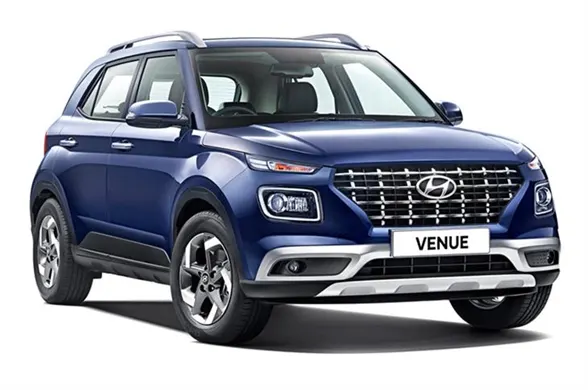
3.Hyundai Venue:
The Hyundai Venue has 2 Diesel Engine and 3 Petrol Engine on offer. The Diesel Engine is 1493 cc and 1498 cc while the Petrol Engine is 1197 cc and 999 cc and 998 cc. It is available with Manual and Automatic transmission. Depending upon the variant and fuel type the venue has mileage of 17.52 to 23.7 kmpl. The venue is a 5-Seater 3 Cylinder car and has length of 3995 mm, width of 1770mm and a wheelbase of 2500 mm. The Market price is around Rs. 9 Lakhs
Key Specifications of Hyundai Venue:
ARAI Mileage: 18.15 kmpl
Fuel Type: Petrol
Engine Displacement(cc): 998
No. of cylinders: 3
Max Power (bhp@rpm): 118.35bhp@6000rpm
Max Torque (nm@rpm): 171.6Nm@1500-4000rpm
Seating Capacity: 5
Transmission Type: Automatic
Fuel Tank Capacity: 45.0
Body Type: SUV
Engine Type: Kappa 1.0 L Turbo GDi Petrol
Fuel Supply System: GDi
Gear Box: 7 Speed DCT
Drive Type: FWD
Emission Norm Compliance: BS VI
Front Suspension: Macpherson Strut with coil spring
Rear Suspension: Coupled Torsion Beam Axle with Coil Spring
Steering Type: Tilt
Steering Gear Type: Rack and Pinion
Front Brake Type: Ventilated Disc
Rear Brake Type: Drum
Turning Radius (Metres): 5.2
Kerb Weight (Kg): 1600
No of Doors: 5
No of Air bags: 2
Wheel base (mm): 2500
Key Features of Hyundai Venue:
Power Steering
Power Windows Front
Anti-Lock Braking System
Air conditioner
Driver and Passenger Airbag
Automatic Climate Control
Fog Lights-Front
Alloy Wheels
Turbo Charger
Vanity Mirror
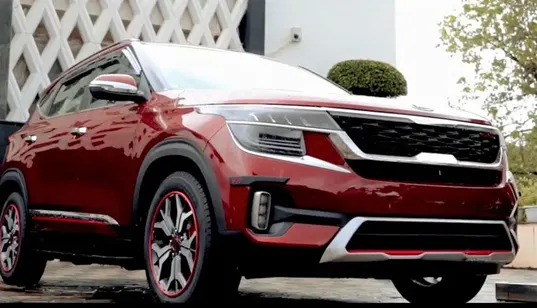
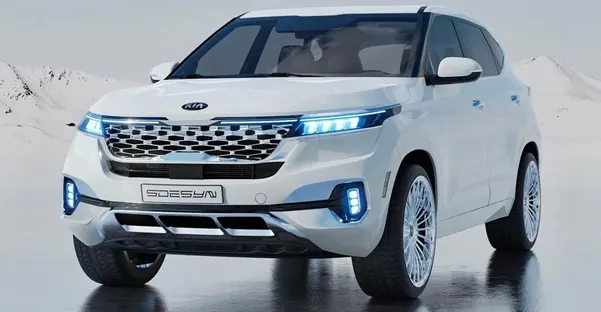
4.Kia Seltos:
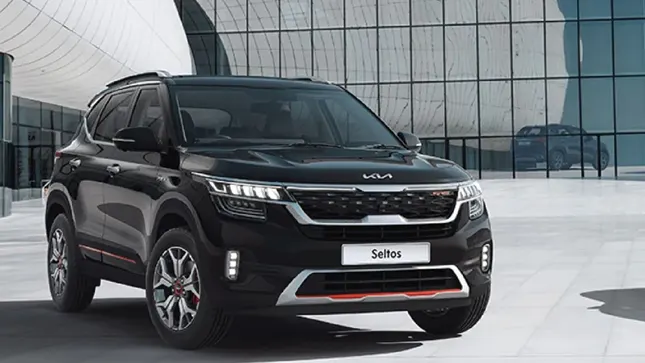
The Kia Seltos has 1 Diesel Engine on offer. The Diesel Engine is 1493 cc while the Petrol Engine is 1497 cc and 1353 cc. It is available with Manual and Automatic transmission. Depending upon the variant and fuel type the Kia Seltos has mileage of 16.01 to 80.8 kmpl. The Kia Seltos is a 5-seater 4-cylinder car and has length of 4315mm, width of 1800mm and wheelbase of 2610mm. The Market price is around Rs. 10 Lakhs.
Key Specifications of Kia Seltos:
ARAI Mileage: 20.8 kmpl
Fuel Type: Diesel
Engine Displacement(cc): 1493
No. of cylinders: 4
Max Power (bhp@rpm): 113.43bhp@4000rpm
Max Torque (nm@rpm): 250Nm@1500-2750rpm
Seating Capacity: 5
Transmission Type: Automatic
Fuel Tank Capacity: 50.0
Body Type: SUV
Engine Type: 1.5 L Turbo CRDi VGT
Fuel Supply System: CRDi
Gear Box: 6 Speed AT
Drive Type: 2FWD
Emission Norm Compliance: BS VI
Front Suspension: Macpherson Strut with coil spring
Rear Suspension: Coupled Torsion Beam Axle with Coil Spring
Steering Type: Tilt and Telescopic
Steering Gear Type: Rack and Pinion
Front Brake Type: Disc
Rear Brake Type: Disc
Turning Radius (Metres): 5.2
Kerb Weight (Kg): 1600
No of Doors: 5
No of Air bags: 2
Wheel base (mm): 2610
Key Features of Kia Seltos:
Power Steering
Power Windows Front
Anti-Lock Braking System
Air conditioner
Driver and Passenger Airbag
Automatic Climate Control
Fog Lights-Front
Alloy Wheels
Turbo Charger
Vanity Mirror
Adjustable Steering
Remote Engine Start/Stop
Parking Sensors Front and Rear
Rear AC Vents
Height adjustable Front Seats
Leather Seats
Ventilated seats
Sun Roof
Moon Roof
Roof Rail
Conclusion:
I recommend to Mr. D.S. Pughazhyendhii to buy a KIA Seltos SUV car.
The reasons are now it was becoming the best-selling Utility Vehicle in the Indian market surpassing the Maruti Suzuki Vitara Brezza. The Seltos has been outselling the Creta since its launch in the market. This is the third month since the launch of the Seltos in the Indian market and the third consecutive time that the Kia Seltos has outsold the juggernaut Creta in the market. What makes it so popular in the market and why is it selling so much? Well, we have six reasons that makes the Kia Seltos much more than the Hyundai Creta in the Indian market.
Fresh and Futuristic
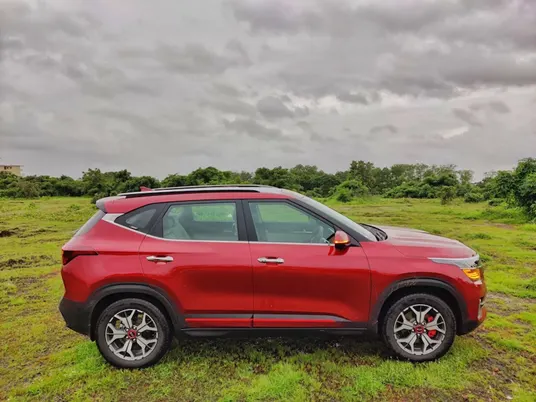
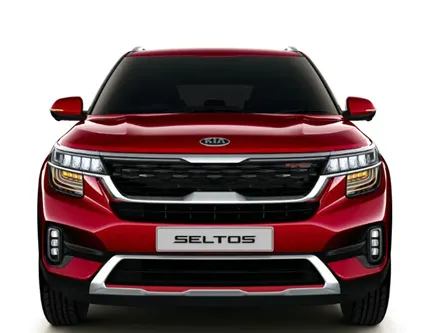
In India, a car is all about how it looks on the road and the Seltos looks intimidating and quite futuristic. The all-new Seltos has been designed to grab the eyes. The car gets all LED lamps on the outside and inside of the car. It also gets LED light bar integrated to the grille and an attention-grabbing look all around. The Seltos stands out in the crowd and that’s something, which is loved by the buyers.
Loaded with features
The Indian customers go all gaga over the features and the Seltos offers a bucket load of them! Starting from all-LED headlamps, all-LED tail lamps, diamond-cut alloy wheels, the light bar on the front grille and many others such features. The Seltos also offers an integrated air purifier, Heads-Up Display, connected ambient light, Bose speaker system, blind-spot warning, front parking sensors and many other such features. It makes the customers choose it over any other vehicle in the segment since no other car offers such a long list of features yet.
Cheaper than Creta:
The base variant of the Kia Seltos is priced at Rs 9,69 lakhs, making it much cheaper than the entry-level Hyundai Creta that is priced at Rs 9.99 lakhs! This creates a mental barrier of the Kia Seltos owners giving a feeling that it is cheaper than the Creta. Due to the long list of features, the higher variants are more expensive than the Creta but then you do get more features and a newer car in the market.
A wide combination of engine-transmission options
The Kia Seltos offers a wide range of engine and transmission combinations. In fact, it is the only car in India that offers three different types of automatic transmissions. The car is offered with a 1.5-litre petrol engine that offers a CVT automatic transmission, a 1.5-litre diesel engine that offers a torque converter automatic transmission and a 1.4-litre turbocharged petrol engine that offers 7-speed Dual-Clutch automatic transmission. All the three engine options offer a 6-speed manual transmission too. This makes the Kia Seltos a perfect choice for every kind of buyer in the market.
Just the right size
With the growing amount of traffic on the roads and the love of SUVs of the Indian buyers, it is often difficult to balance between the right size and the intimidating looks. At just over 4 meters, the Kia Seltos offers the best of both the world. It is a perfect vehicle to manoeuvre through the city traffic while it looks intimidating enough to turn the heads on the roads.