Benchmarking
What is Benchmarking?
Benchmarking is a very crucial step in the Vehicle Development Process (VDP). It falls under the Pre-Design and Development stage of the VDP. Benchmarking in the automobile industry involves a structured comparison between similar products, services or processes on same dimensions of performance.
For Example,
It can be used to compare the availability and delivery of features in a product and in this form often provides the basis of consumer tests and reviews. These look at products and services and provide recommendations based on which is best or some form of ranking amongst competitors.
It is particularly useful when comparing not only performance but also practice- in other words what do the different organizations do to enable that performance to be delivered? And applied in this way it is a powerful tool in process innovation on studying how the ‘best’ achieve their performance and can provide powerful clues for changing the way processes operate.
Process Benchmarking of this kind can operate at several levels:
- Between similar processes in the same factory or service branch
- Between different factories or service branches
- Between different competing organizations
- Between different sectors using the same process
Benchmarking is a process of measuring the performance of a company’s products, services, or processes against those of another business considered to be the best in the industry, aka “best in class.” The point of benchmarking is to identify internal opportunities for improvement. By studying companies with superior performance, breaking down what makes such superior performance possible, and then comparing those processes to how your business operates, you can implement changes that will yield significant improvements.
That might mean tweaking a product’s features to more closely match a competitor’s offering, or changing the scope of services you offer, or installing a new customer relationship management (CRM) system to enable more personalized communications with customers.
There are two basic kinds of improvement opportunities: continuous and dramatic. Continuous improvement is incremental, involving only small adjustments to reap sizeable advances. Dramatic improvement can only come about through reengineering the whole internal work process.
Step-by-Step Benchmarking
Benchmarking is a simple, but detailed, five-step process:
- Choose a product, service, or internal department to benchmark
- Determine which best-in-class companies you should benchmark against – which organizations you’ll compare your business to
- Gather information on their internal performance, or metrics
- Compare the data from both organizations to identify gaps in your company’s performance
- Adopt the processes and policies in place within the best-in-class performers
Benchmarking will point out what changes will make the most difference, but it’s up to you to actually put them in place.
In order to benchmark anything, you need to have quantitative data available to study. That means breaking down internal processes to calculate performance metrics. Quantify everything, because only quantifiable information can be accurately compared.
Key Benefits:
In addition to helping companies become more efficient and profitable, benchmarking has other benefits, too, such as:
- Improving employee understanding of cost structures and internal processes
- Encouraging team-building and cooperation in the interests of becoming more competitive
- Enhancing familiarity with key performance metrics and opportunities for improvement company-wide
In essence, benchmarking helps employees understand how one small piece of a company’s processes or products can be the key to major success.
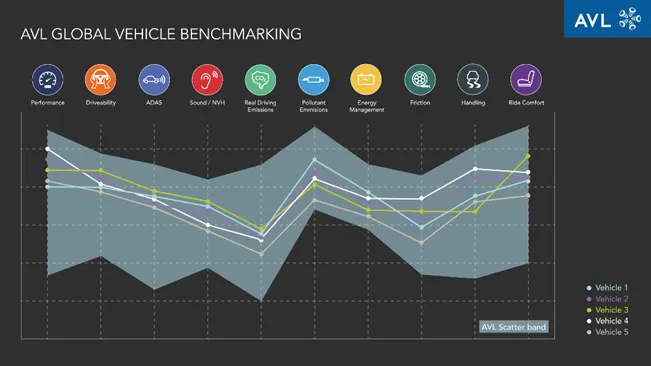
What is Product Benchmarking?
Product Benchmarking, also referred to as “best practice benchmarking” is an evaluation process of a manufacturer that is measured against the process of its competitors or peers within a given industry. The goal is to create and implement improvement plans and best practices to increase performance in the production lifecycle, and/or other manufacturing and business processes and practices. By discovering the best achievable performance, process gaps can be eliminated.
While product benchmarking in the automotive industry traditionally involves other manufacturers, its primary purpose is to positively impact internal processes. Often benchmarking is focused on the manufacturing process itself to:
- Improve quality
- Decrease manufacturing times
- Reduce Scrap and rework
- Increase production
Clearly in any benchmarking study, the choice of which attributes to measure is of paramount importance. This centers on a set of performance measures and often how closely a plant adhered to the “lean production model”. This would involve three primary areas including productivity, quality and time. From this the following best practices can be applied for benchmarking to ensure the right approach and the right outcome measurement.
CASE STUDY:
- Mr. D.S. Pughazhyendhii is a married man who lives in Bangalore which is a highly crowded city. His Family comprises five members including his wife, five-year-old boy, his father, and his mother. He visits his native place Madurai which is 500kms away from Bangalore once in a month. Also, he will be using his car to commute to his office. His budget falls between 8 to 10 lakhs on road. Please suggest to him with options so that he will buy a good car for his family.
Note: Pughazhyendhii is fond of big cars
From the given problem statement, the following objectives can be inferred which forms the basis of the benchmarking process:
- Five-seater car since there are five members in the family
- Budget falls between 8 to 10 lakhs on road
- Low maintenance cost since daily commute is involved and better fuel economy to sustain in a metropolitan city like Bangalore
- High Ground Clearance for Indian road conditions
General Aspects while purchasing a vehicle
- Safety
- Performance
- Comfort
- Styling
- Ownership Cost & after sales service
The following factors are taken into consideration and the following cars are shortlisted for the Benchmarking process.
| Parameters | Hyundai Aura SX Plus 1.2 CRDi | Renault Kiger RXZ Turbo | Honda Amaze 1.5 S MT | Ford Figo 1.5 TDCi | Maruti Suzuki Dzire VXi AGS |
| Body Type | Compact Sedan | SUV | Sedan | Hatchback | Sedan |
| Price on road (lakhs) | 9.36 | 9.89 | 9.28 | 8.37 | 8.83 |
| Mileage (kmpl) | 25 | 20.53 | 24.7 | 24.4 | 24.12 |
| Transmission | AMT | Automatic (CVT) | Manual | Manual | AMT |
| Fuel Type | Diesel | Petrol | Diesel | Diesel | Petrol |
| Engine (CC) | 1186 | 999 | 1498 | 1499 | 1197 |
| Fuel Tank Capacity (litres) | 37 | 40 | 35 | 40 | 37 |
| Ground Clearance (mm) | 165 | 205 | 170 | 174 | 163 |
| Safety features | NCAP Rating of 2 star, Overspeed Warning, 2 Airbags, Child Safety Lock | NCAP Rating of 4 star, Overspeed Warning, 4 Airbags, Child Safety Lock | NCAP Rating of 4 star, Overspeed Warning, 2 Airbags, Child Safety Lock | Overspeed Warning, 6 Airbags, Child Safety Lock | NCAP Rating of 2 star, Overspeed Warning, 2 Airbags, Child Safety Lock |
| Overall Rating/5 | 4.6 | 4.4 | 4 | 4.6 | 4.6 |
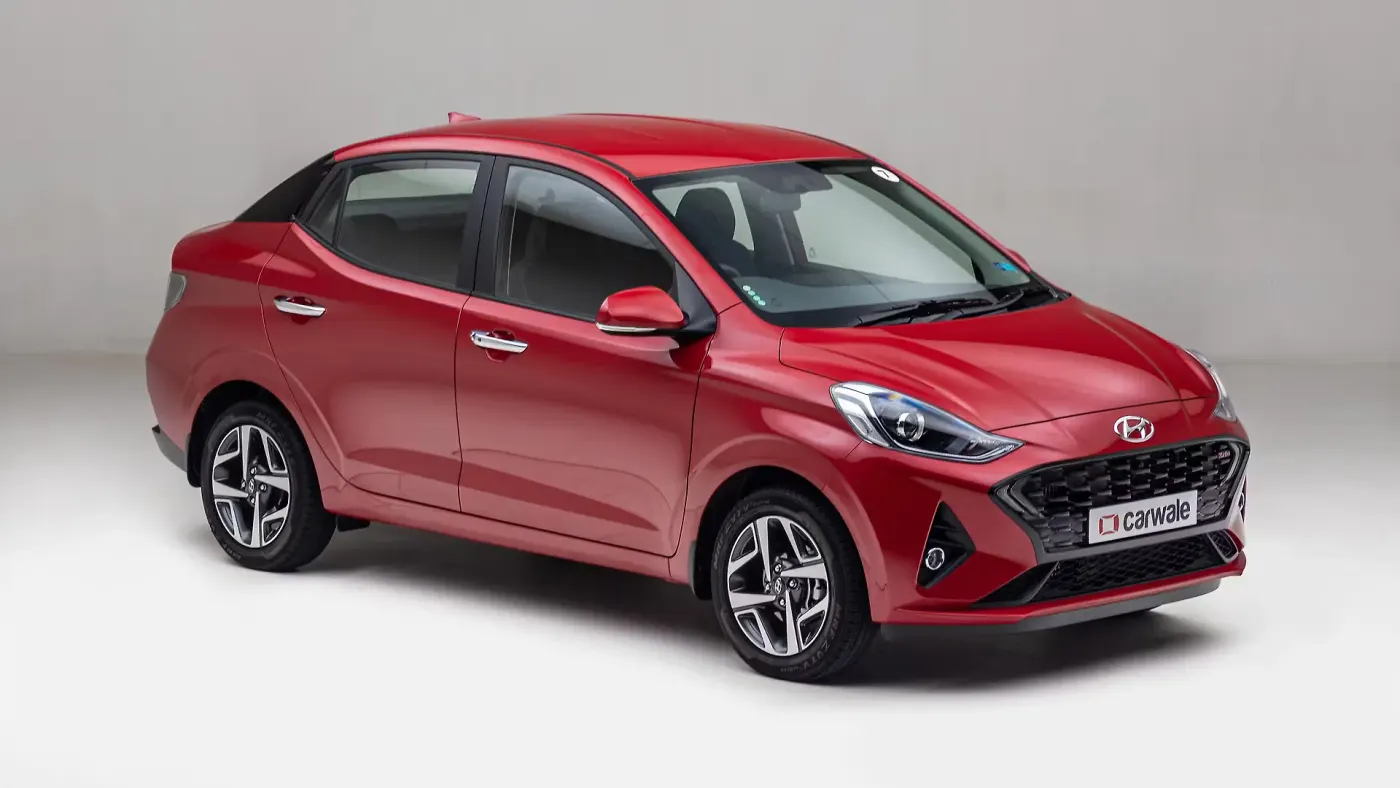
Hyundai Aura
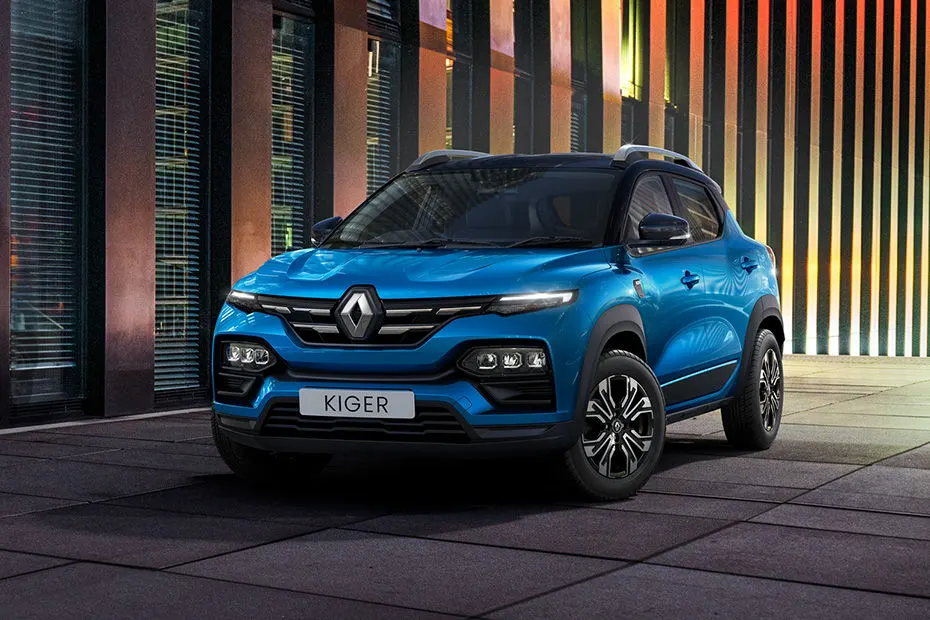
Renault Kiger
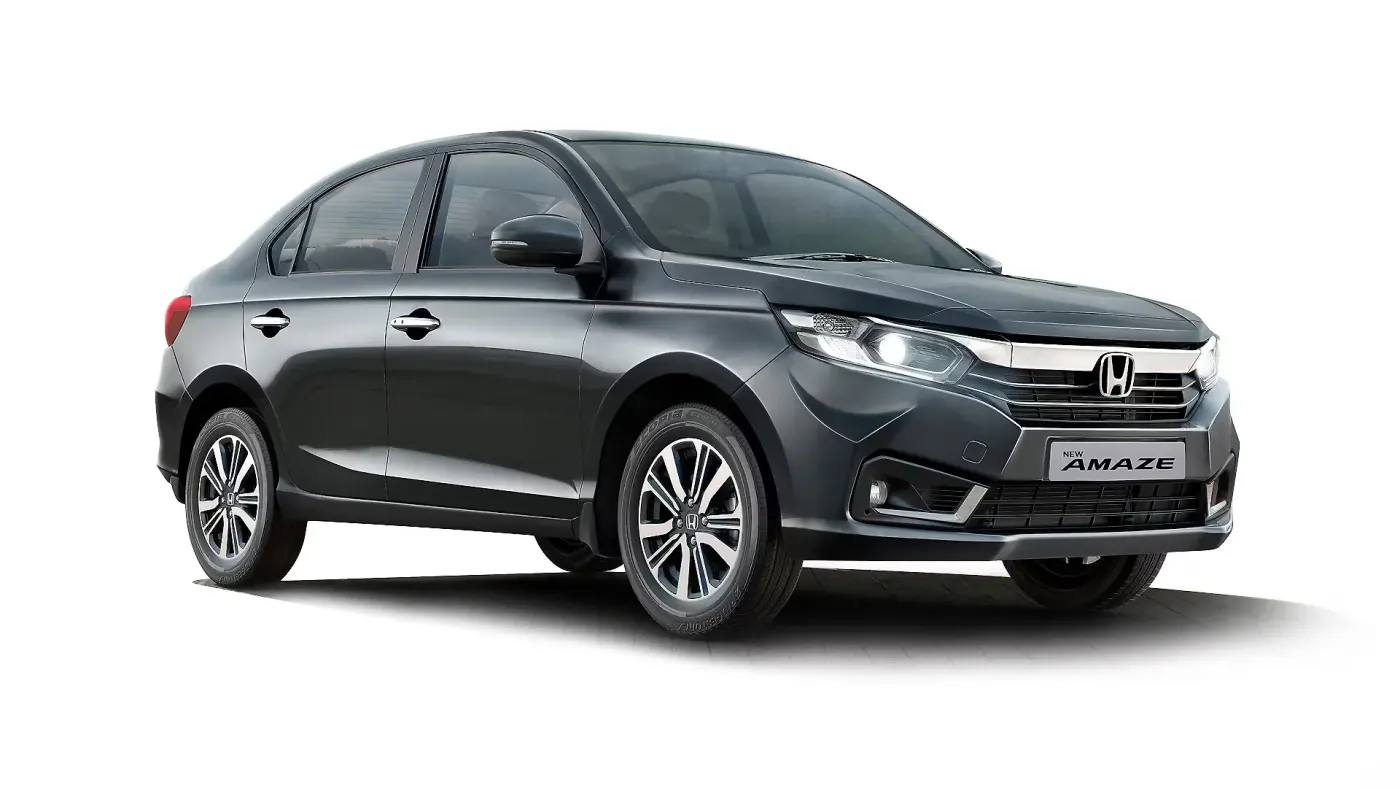
Honda Amaze
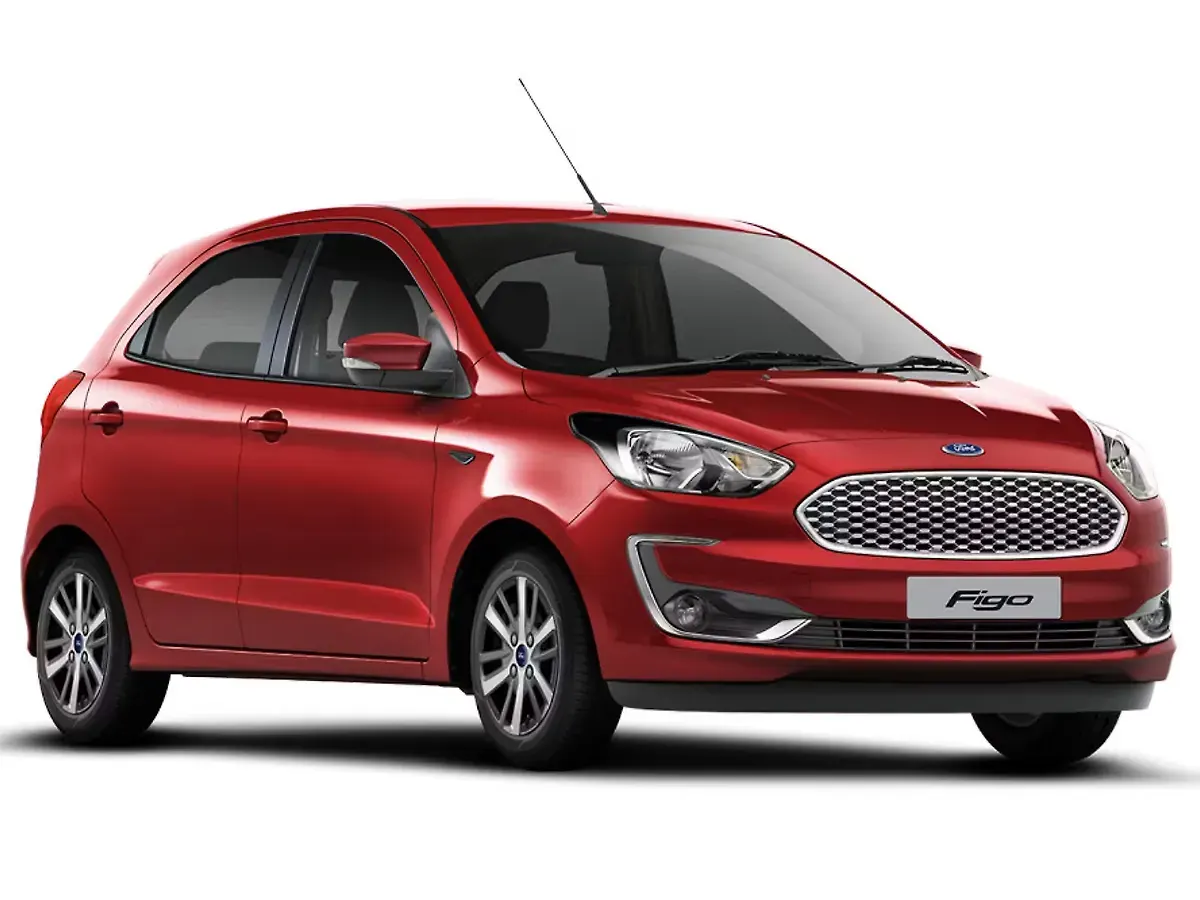
Ford Figo
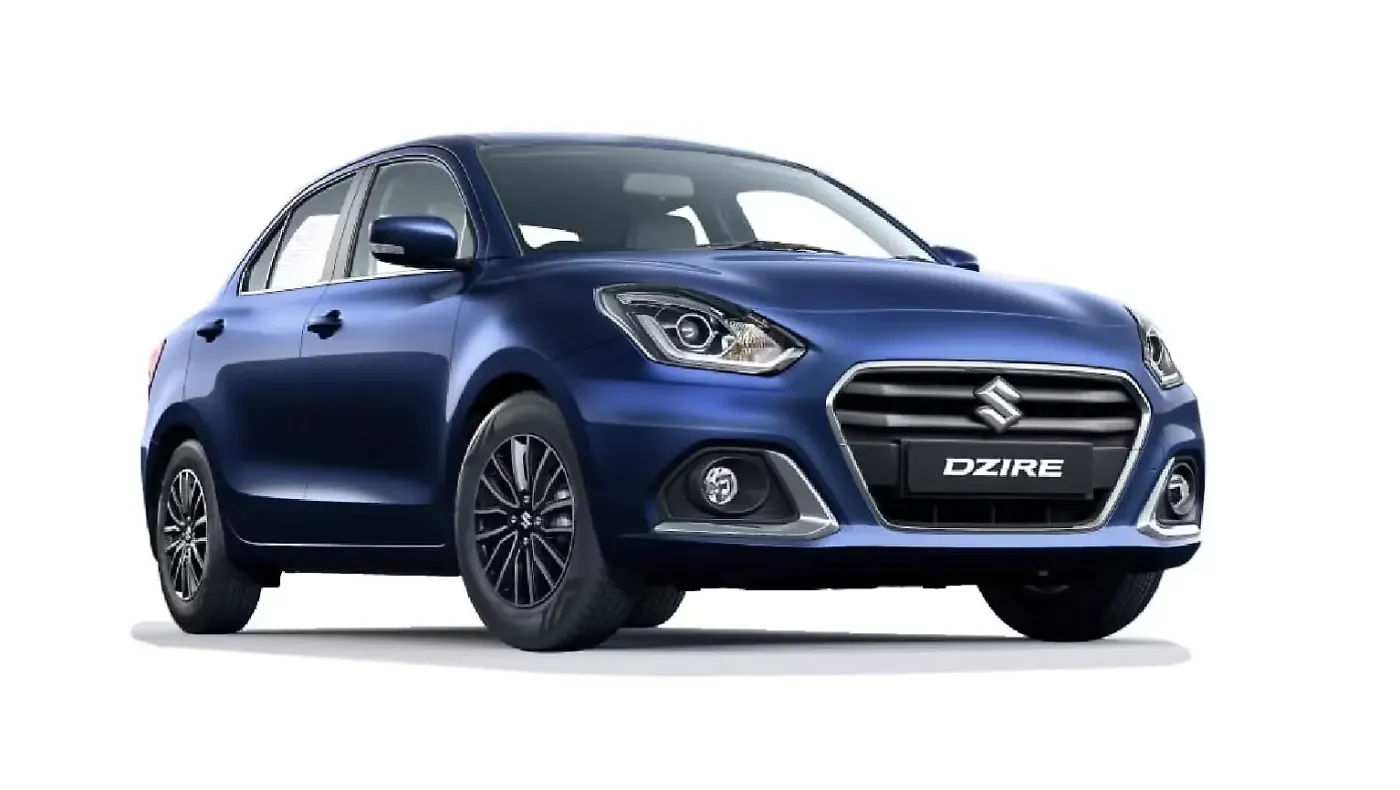
Maruti Suzuki Dzire
Conclusion: As it is clearly evident from the table, Ford Figo stands out in the maximum number of attributes considered as compared to others. But I would not suggest it because as per records, it has not been tested for safety standards (NCAP Rating) and since Mr Pughazhyendhii has a five year old boy, safety should be given an utmost priority. Also, Ford Figo is a small/compact car i.e. of Hatchback type which differs from the liking of Mr. Pughazhyendhii.
The next car that follows are Renault Kiger, Hyundai Aura, Maruti Suzuki Dzire and Honda Amaze in that order. Renault Kiger is the most expensive of all, yet it offers the least mileage and has the least engine capacity amongst all.
Hence, Mr. Pughazhyendhii can go for Hyundai Aura or Maruti Suzuki Dzire. If Mr. Pughazhyendhii wants to go budget friendly, then he can choose Maruti Suzuki Dzire as there are very less differences in specifications between Hyundai Aura and Maruti Suzuki Dzire.
Mr. Pughazhyendhii can very well choose Honda Amaze which because of its overall ratings (based on customer satisfaction and reviews) is the last on the list.