Benchmarking
Benchmarking:
Benchmarking is a process where you measure your company’s success against other similar companies to discover if there is a gap in performance that can be closed by improving your performance. Studying other companies can highlight what it takes to enhance your company’s efficiency and become a bigger player in your industry.
Benifits of Benchmarking:
- Compitative Analysis:
By identifying areas you wish to improve on in your business and benchmarking your existing performance against competitors, your business can strive to enhance your execution tenfold. Using benchmarking this way has allowed businesses to gain strategic advantages over competitors and grow industry averages.
- Monitor Performance:
Benchmarking involves looking at current trends in data and projecting future trends depending on what you aim to achieve. In order to know you have been successful, benchmarking needs to be a continuous process. Monitoring performance is an inherent characteristic of it.
- Continuous Improvement
As well as monitor performance, continuous improvement is an essential attribute of benchmarking. This is because the aim of benchmarking is to improve a certain element of a business. This improvement should not merely be something that improves once and is forgotten, but something that improves over time and is continuous.
- Planning and Goal Setting
Once benchmarking has been carried out, goals and performance metrics are set in order to improve performance. These goals are new, more competitive targets for a company but they must be achievable. If goals are unrealistic to achieve teams become demotivated and goals are destined to remain unfulfilled.
- Encourage Ownership
When companies look at their processes and metrics they need to ask hard questions to get all the answers they need. This includes talking to everyone in the business and understanding their roles. By asking these questions and gaining a better understanding of everyone’s role, ownership for processes and performance is encouraged. This means that employees will take pride in their job and the work they do. This pride leads to better performance and higher-quality end results.
- Understand Your Companies Advantages
Benchmarking identifies where your company is right now compared to where you want it to go. If you are looking at improving any process in your business, benchmarking is a way of looking at how you can excel and become more successful through outlining the steps needed to achieve your goal.
Process of Benchmarking:
- Planning
The first stage of benchmarking is the most important in the process. Planning includes highlighting what you want to improve, who you will benchmark yourself against, and how you envisage success. Only once this step has been completed will you be able to move onto the next step as the results of planning will focus on the information you need to collect and what success will look like.
- Collection of Information
After planning, benchmarking is about collecting information on your processes and how competitors do them. If you are looking to improve your customer service satisfaction rating you should understand the processes involved in the department, how calls and communication are dealt with, and also how it differs from your competition. Maybe you can talk to someone in another call center, or call the center directly to gain first-hand knowledge of their processes. At this point, it is important to gather as much information as possible.
- Analysis of Data
Once you feel you have all the information you can gather, you can start to plot it and begin to understand the shortcomings you may have. It is important to remember at this point in the process that no business is perfect and you must have an open mind to be able to analyze information objectively. Once findings start to be uncovered you can draft a report and start discussing the next steps to achieve better performance in this area.
- Action
Presenting findings to a department is never an easy thing, especially when you are proposing changes. Gathering and analyzing information is only worthwhile when you can implement changes and better the company in the process. Gaining buy-in from a department can involve concessions so make sure the MVP you present is accepted and will likely equate to the success highlighted in the planning stage.
- Monitoring
No plan is ever complete without monitoring results to determine how successful the plan has been. The implementation phase will have highlighted metrics and goals for success within a time frame so monitoring these is the only way of knowing the efficacy of the change. Monitoring can be over a short or long period of time depending on the desired outcomes.
Examples:
Process Benchmarking: This type of benchmarking helps you to better understand how your processes compare to others in your industry. By looking at other companies in the industry you can improve your processes to make them more efficient and cost-effective.
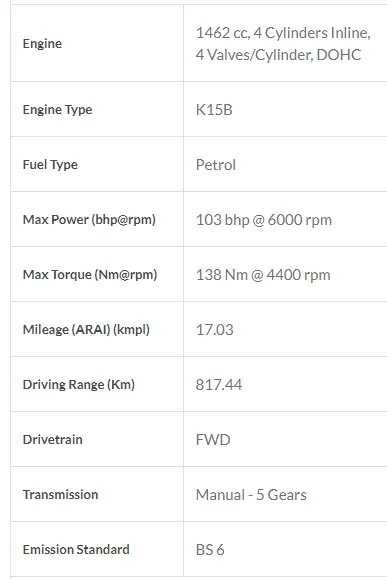
Vitara Brezza:

Model: Maruti Suzuki Vitara Brezza
Price:8.58lakhs (On road price)
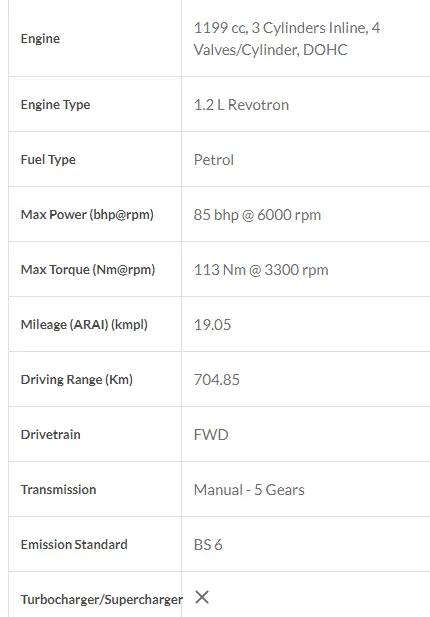
Tata Altroz:

Model:Tata Altroz XM plus
Price:7.75 lakhs(On road price)
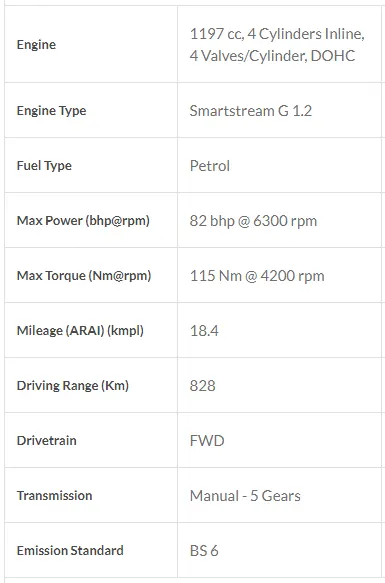
Kia Sonet:

Model: Kia Sonet 1.2 HTE
Price:7.92lakhs (On road price)
Hyundai Venue:

Model:Hyundai Venue E
Price:8.07laks( On road price)
The best suitable car for Mr. D.S. Pughazhyendhii's family is Tata Altroz XM plus. As they live in a city, tata altroz has good mileage with 19kmph, less price comparitive to competators at that range and the features given are good and more spacious.