Benchmarking
BENCH MARKING:
Benchmarking is defined as the process of measuring products, services, and processes against those of organizations known to be leaders in one or more aspects of their operations. Benchmarking provides necessary insights to help you understand how your organization compares with similar organizations, even if they are in a different business or have a different group of customers.Benchmarking can also help organizations identify areas, systems, or processes for improvements—either incremental (continuous) improvements or dramatic (business process re-engineering) improvements.
CLASSIFICATION OF BENCHMARKING:
Benchmarking has been classified into two distinct categories
1)Technical Benchmarking,
2)Competitive Benchmarking.
TECHNICAL BENCHMARKING:
Technical benchmarking is performed by design staff to determine the capabilities of products or services, especially in comparison to the products or services of leading competitors. For example, on a scale of one to four, four being best, how do designers rank the properties of your organization’s products or services? If you cannot obtain hard data, the design efforts may be insufficient, and products or services may be inadequate to be competitive.
COMPETITIVE BENCHMARKING:
Competitive benchmarking compares how well (or poorly) an organization is doing with respect to the leading competition, especially with respect to critically important attributes, functions, or values associated with the organization’s products or services. For example, on a scale of one to four, four being best, how do customers rank your organization’s products or services compared to those of the leading competition? If you cannot obtain hard data, marketing efforts may be misdirected and design efforts misguided.
BENCHMARKING PROCEDURE:
Considerations:
Before an organization can achieve the full benefits of benchmarking, its own processes must be clearly understood and under control.Benchmarking studies require significant investments of manpower and time, so management must champion the process all the way through, including being ready and willing to make changes based on what is learned.Too broad a scope dooms the project to failure. A subject that is not critical to the organization’s success won’t return enough benefits to make the study worthwhile.Inadequate resources can also doom a benchmarking study by underestimating the effort involved or inadequate planning. The better you prepare, the more efficient your study will be.
Plan:
Define a tightly focused subject of the benchmarking study. Choose an issue critical to the organization’s success.Form a cross-functional team. During Step 1 and 2, management’s goals and support for the study must be firmly established.Study your own process. Know how the work is done and measurements of the output.Identify partner organizations that may have best practices.
Collect:
Collect information directly from partner organizations. Collect both process descriptions and numeric data, using questionnaires, telephone interviews, and/or site visits.
Analyze:
Compare the collected data, both numeric and descriptive.Determine gaps between your performance measurements and those of your partners.Determine the differences in practices that cause the gaps.
Adapt:
Develop goals for your organization’s process.Develop action plans to achieve those goals.Implement and monitor plans.
SUITABLE CARS:
TATA NEXON:
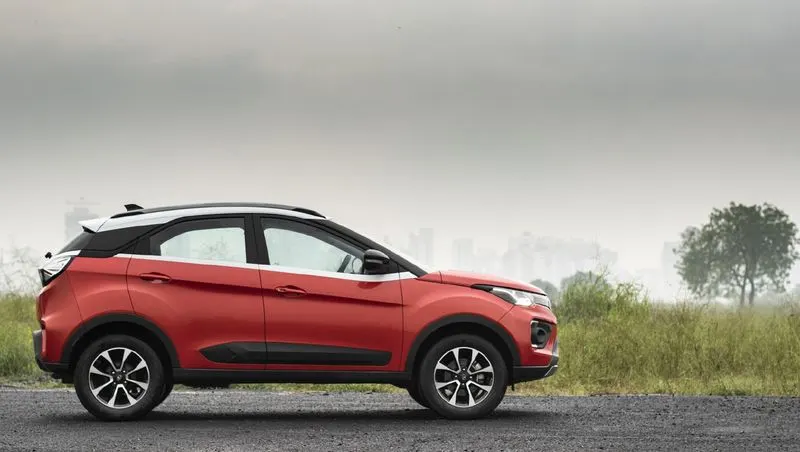
Pros:
- Best in class safety package
- Powerful engines (petrol & diesel)
- Ride and feels like a big vehicle
Cons:
- Quality of plastic inside the cabin
- Sluggish infotainment
- Slightly hard ride
|
MODELS / SPECIFICATIONS |
TATA NEXON |
|
ARAI Mileage |
21.5 kmpl |
|
Engine Displacement (cc) |
1497 |
|
Max Torque (nm@rpm) |
260Nm@1500-2750rpm |
|
Transmission Type |
Automatic |
|
Fuel Tank Capacity |
44 |
|
Max Power (bhp@rpm) |
108.5bhp@4000rpm |
|
Seating Capacity |
5 |
|
Boot Space (Litres) |
350 |
|
Body Type |
SUV |
|
Safety |
16.06/17 |
HYUNDAI VENUE :
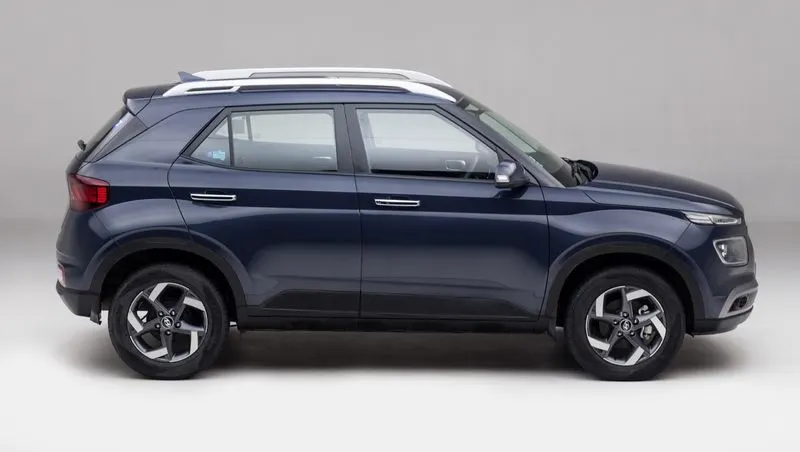
Pros:
- Ease of driving on offer
- Three different engine options
- Feature loaded
Cons:
- Isn't as big as rivals
- No diesel automatic on offer
- 1.2 petrol is weak on punch
|
MODELS / SPECIFICATIONS |
HYUNDAI VENUE |
|
ARAI Mileage |
18.14kmpl |
|
Engine Displacement (cc) |
998 |
|
Max Torque (nm@rpm) |
171.6Nm@1500-4000rpm |
|
Transmission Type |
Automatic |
|
Fuel Tank Capacity |
45 |
|
Max Power (bhp@rpm) |
118.35bhp@6000rpm |
|
Seating Capacity |
5 |
|
Boot Space (Litres) |
350 |
|
Body Type |
SUV |
|
Safety |
4 stars NCAP rating |
MARUTI SUZUKI VITARA BREZZA:
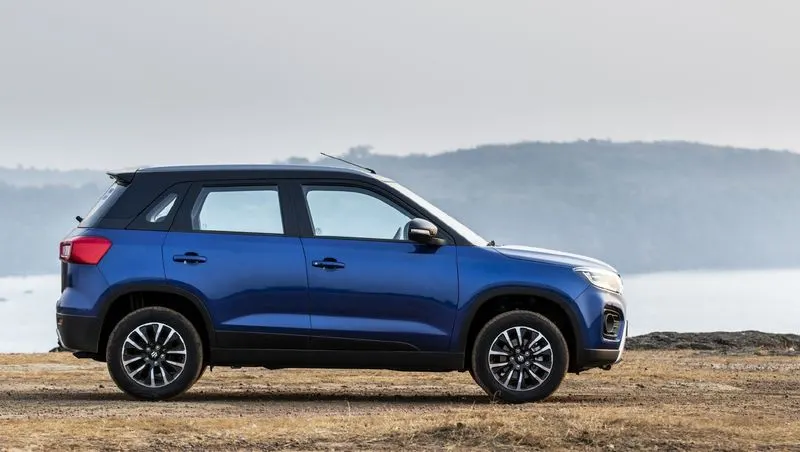
Pros:
- Peppy & efficient 1.5 petrol
- Good value for money
- Neutral ride, easy to drive
Cons:
- No more diesel option
- Rivals offer more space
- Design isn�t attractive as before
|
MODELS / SPECIFICATIONS |
MARUTI SUZUKI VITARA BREZZA |
|
ARAI Mileage |
18.76kmpl |
|
Engine Displacement (cc) |
1462 |
|
Max Torque (nm@rpm) |
138Nm@4400rpm |
|
Transmission Type |
Automatic |
|
Fuel Tank Capacity |
48 |
|
Max Power (bhp@rpm) |
103.26bhp@6000rpm |
|
Seating Capacity |
5 |
|
Boot Space (Litres) |
328 |
|
Body Type |
SUV |
|
Safety |
12.51/17 |
FORD ECO SPORT:
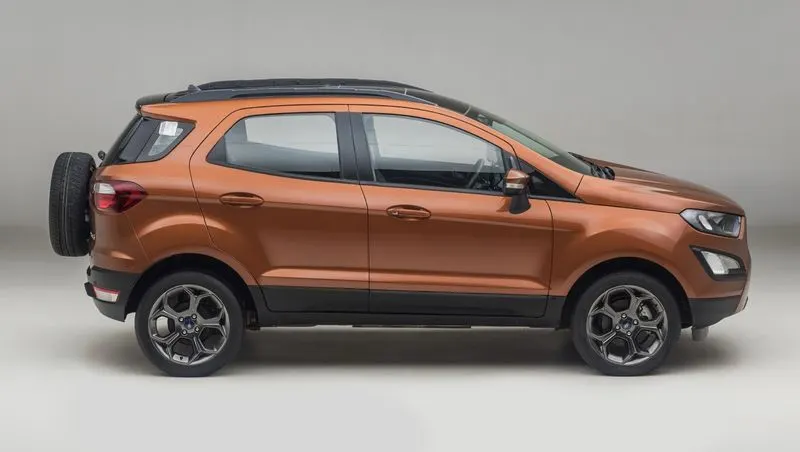
The Ford Ecosport is considered as one of the best sub-4m compact SUVs currently on sale in the Indian market. The car gets powerful and refined engines and also comes with an aggressive and appealing design language. If you in the market to buy a new compact SUV and wondering if the Ecosport is the best of all.
Pros:
- Build Quality
- Powerful and Responsive Engines
- Looks
- Driving Dynamics
- Long List Of Safety Features
Cons:
- Not So VFM
- Feels Dated
- Stiff Suspension Setup
- Narrow Second Row
- Thick A-Pillar Causes Blind Spot
|
MODELS / SPECIFICATIONS |
FORD ECO SPORT |
|
ARAI Mileage |
21.7kmpl |
|
Engine Displacement (cc) |
1498 |
|
Max Torque (nm@rpm) |
215Nm@1750-2500rpm |
|
Transmission Type |
Manual |
|
Fuel Tank Capacity |
52 |
|
Max Power (bhp@rpm) |
98.63bhp@3750rpm |
|
Seating Capacity |
5 |
|
Boot Space (Litres) |
352 |
|
Body Type |
SUV |
|
Safety |
4 stars NCAP rating |
COMPARISON OF VEHECLE:
|
MODELS / SPECIFICATIONS |
TATA NEXON |
HYUNDAI VENUE |
MARUTI SUZUKI VITARA BREZZA |
FORD ECO SPORT |
|
ARAI Mileage |
21.5 kmpl | 18.14kmpl | 18.76kmpl | 21.7kmpl |
|
Engine Displacement (cc) |
1497 | 998 | 1462 | 1498 |
|
Max Torque (nm@rpm) |
260Nm@1500-2750rpm |
171.6Nm@1500-4000rpm |
138Nm@4400rpm | 215Nm@1750-2500rpm |
|
Transmission Type |
Automatic | Automatic | Automatic | Manual |
|
Fuel Tank Capacity |
44 | 45 | 48 | 52 |
|
Max Power (bhp@rpm) |
108.5bhp@4000rpm | 118.35bhp@6000rpm | 103.26bhp@6000rpm | 98.63bhp@3750rpm |
|
Seating Capacity |
5 | 5 | 5 | 5 |
|
Boot Space (Litres) |
350 | 350 | 328 | 352 |
|
Body Type |
SUV | SUV | SUV | SUV |
|
Safety |
16.06/17 | 4 stars NCAP rating | 12.51/17 | 4 stars NCAP rating |
CONCLUSION:
I would suggest Tata Nexon for Mr. D.S. Pughazhyendhii family, Nexon is a excellent offering which is safest car in its segment. It is also value for money product with class leading features.