Benchmarking
BENCH MARKING:
Bench marking is a process of measuring the performance of a system, process, or product against a standard reference point or a competitor. This is typically done to identify areas where improvement is needed and to establish best practices that can be adopted to achieve better results.
Here's an example of bench marking step by step:
Let's say you are the manager of a software development team, and you want to improve the team's productivity. You decide to benchmark the team's performance against its competitors to identify areas for improvement.
*First, you would need to identify the competitors who are similar in size, industry, and have similar products or services. Once you have identified the competitors, you would gather data on their software development processes, such as the time taken to complete a project, the number of defects found, and the quality of the code.
*Next, you would measure your team's performance using the same metrics and compare it with the competitors. For instance, if your team completes a project in six weeks, and your competitor completes a similar project in four weeks, you can conclude that your team's performance needs improvement.
*After analyzing the bench marking results, you can identify areas of improvement, such as reducing the time taken to complete a project or improving the quality of the code. You can then develop a plan to implement changes and re-benchmark to measure the effectiveness of the improvements.
In this way, bench marking can help you to identify areas for improvement and make data-driven decisions to improve your team's productivity and competitiveness.
Advantages of bench marking:
1.Identification of best practices: bench marking allows companies to identify best practices that have proven successful. This knowledge can be used to improve processes, reduce costs, and improve efficiency.
2.Increased competitiveness: By comparing their performance with competitors, companies can determine where they stand in the market and take steps to improve their position. This can help increase their competitiveness and market share.
3.Improved decision making: bench marking provides objective data that can be used to make informed decisions about resource allocation, process improvements, and setting performance targets.
4.Increased innovation: By studying the practices of other companies, bench marking can stimulate innovation and new ideas that can be applied to improve operations.
There are several types of bench marking, including:
1.Internal bench marking:Comparing the performance of different departments or teams within an organization. For example, a company might compare the sales performance of different regions.
2.Competitive bench marking:Comparing the performance of your organization against direct competitors. For example, a company might compare its market share, pricing strategy, and product features against those of its competitors.
3.Functional bench marking:Comparing the performance of similar functions across different industries. For example, a hospital might compare its patient satisfaction ratings with those of other hospitals
4.Generic bench marking:Comparing the performance of an organization against other organizations regardless of the industry. For example, a company might compare its customer service practices, supply chain management, or financial performance with those of other businesses.
5.Process bench marking:Comparing the performance of a specific process within an organization with that of other organizations. For example, a company might compare its procurement process with that of other companies to identify ways to improve efficiency.
REQUIREMENT
Benchmark with presently available cars in the market for the following case.
Mr. D.S. Pughazhyendhii is a married man who lives in Bangalore which is a highly crowded city. His Family comprises five members including his wife, five-year-old boy, his father, and his mother. He visits his native place Madurai which is 500kms away from Bangalore once in a month. Also, he will be using his car to commute to his office. His budget falls between 8 to 10 lakh on road. Please suggest to him with options so that he will buy a good car for his family. Pughazhyendhii is fond of big cars
I would suggest Mr Pughazhyendhii following cars considering these major factor's such as mileage,safety,comfort,,entertainment etc
1.Mahindra XUV 300
2.Tata Nexon
3.Kia Sonet
4.Hyundai Venue
1.Mahindra XUV 300
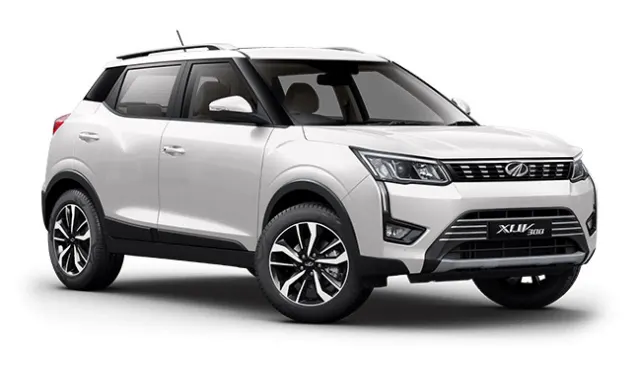
Positives:
Big feature list, looks handsome,NCAP safety rating,comfortable ride quality.
Negatives:
Average cabin space, small boot, noise/vibration levels (diesel).
|
MODELS / SPECIFICATIONS |
Mahindra XUV300 |
|
Fuel Type |
Diesel |
|
Diesel Fuel Tank Capacity (Litres) |
42 |
|
Diesel Mileage (ARAI) |
19.7 Kmpl |
|
Engine Displacement (cc) |
1497 cc |
|
Max Power (bhp@rpm) |
115.05bhp@3750rpm |
|
Transmission Type |
Manual |
|
Max Torque (nm@rpm) |
300Nm@1500-2500rpm |
|
Body Type |
SUV |
|
Seating Capacity |
5 |
|
Safety |
Anti-Lock Braking System,Central Locking,Power Door Locks,Child Safety Locks,Anti-Theft Alarm |
|
Boot Space (Litres) |
257 |
|
Airbags |
Driver, Passenger and Side Front |
|
Ground clearance |
180 mm |
|
Exterior dimensions(Length*Width*Height) |
3995*1821*1627 mm3 |
|
Entertainment & Communication |
USB & Auxiliary input,Bluetooth Connectivity,Apple Car Play. |
2.TATA NEXON
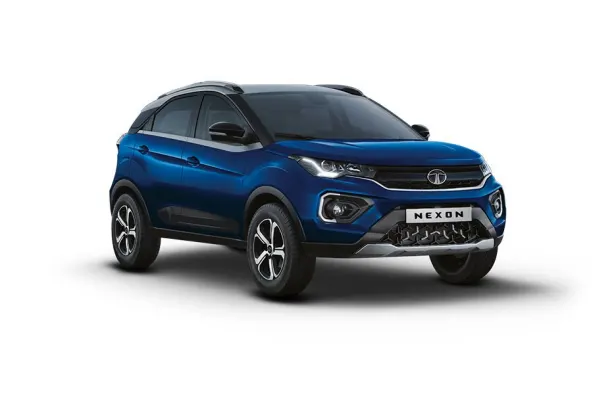
Positives:
Build quality is impressive, comfortable ride quality, well-loaded with features, A five-star NCAP safety rating.
Negatives:
Fit and finish could have been better.
|
MODELS / SPECIFICATIONS |
TATA NEXON |
|
Fuel Type |
Diesel |
|
Diesel Fuel Tank Capacity (Litres) |
44 |
|
Diesel Mileage (ARAI) |
24.07 |
|
Engine Displacement (cc) |
1497 cc |
|
Max Power (bhp@rpm) |
113.42bhp@3750rpm |
|
Transmission Type |
Automatic |
|
Max Torque (nm@rpm) |
260Nm@1500-2750rpm |
|
Body Type |
SUV |
|
Seating Capacity |
5 |
|
Safety |
Anti-Lock Braking System,Central Locking,Power Door Locks,Child Safety Locks,Anti-Theft Alarm |
|
Boot Space (Litres) |
350 Liters |
|
Airbags |
Driver and Passenger |
|
Ground clearance |
209 mm |
|
Exterior dimensions(Length*Width*Height) |
3993*1811*1606 mm3 |
|
Entertainment & Communication |
USB & Auxiliary input,Bluetooth Connectivity,Apple Car Play. |
3.KIA SONET
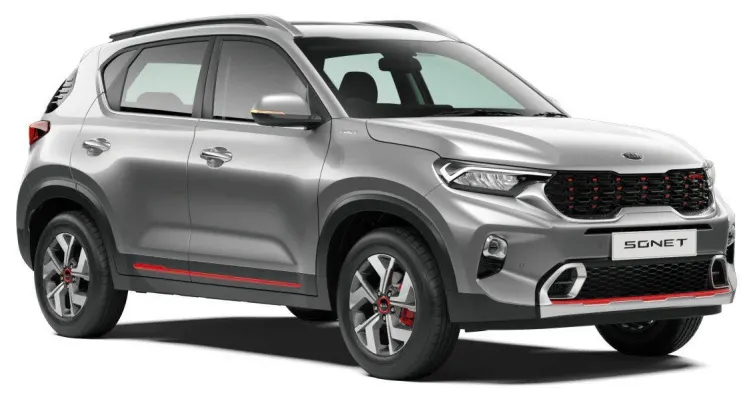
Positives:
Good built quality,smooth performance,good boot capacity,featured pack,comfort ride quality.
|
MODELS / SPECIFICATIONS |
KIA Sonet |
|
Fuel Type |
Diesel |
|
Diesel Fuel Tank Capacity (Litres) |
45 |
|
Diesel Mileage (ARAI) |
24.1 |
|
Engine Displacement (cc) |
1493 CC |
|
Max Power (bhp@rpm) |
98.63bhp@4000rpm |
|
Transmission Type |
Automatic |
|
Max Torque (nm@rpm) |
240nm@1500-2750rpm |
|
Body Type |
SUV |
|
Seating Capacity |
5 |
|
Safety |
Anti-Lock Braking System,Central Locking,Power Door Locks,Child Safety Locks,Anti-Theft Alarm |
|
Boot Space (Litres) |
392 |
|
Airbags |
Driver, Passenger and Side Front |
|
Ground clearance |
205 mm |
|
Exterior dimensions(Length*Width*Height) |
3995*1790*1642 mm3 |
|
Entertainment & Communication |
USB & Auxiliary input,Bluetooth Connectivity,Apple Car Play. |
4.HYUNDAI VENUE
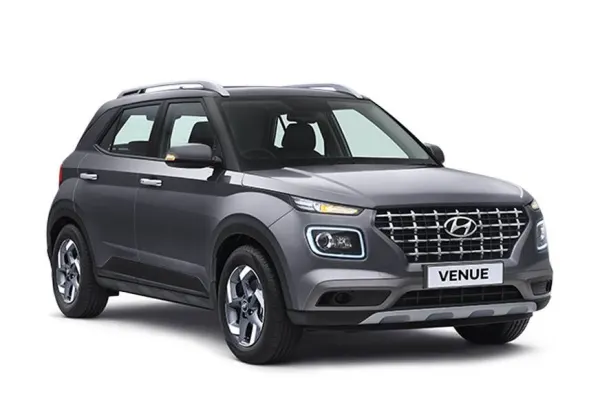
Positives
Attractive exterior, quality interior, comfortable , strong engine options
Negatives
Some wow features missing, sound insulation could be better, no diesel automatic
|
MODELS / SPECIFICATIONS |
HYUNDAI VENUE |
|
Fuel Type |
Diesel |
|
Diesel Fuel Tank Capacity (Litres) |
45 |
|
Diesel Mileage (ARAI) |
23.4 |
|
Engine Displacement (cc) |
1493 cc |
|
Max Power (bhp@rpm) |
98.56bhp@4000rpm |
|
Transmission Type |
Manual |
|
Max Torque (nm@rpm) |
240Nm@1500-2750rpm |
|
Body Type |
SUV |
|
Seating Capacity |
5 |
|
Safety |
Anti-Lock Braking System,Central Locking,Power Door Locks,Child Safety Locks,Anti-Theft Alarm |
|
Boot Space (Litres) |
343 |
|
Airbags |
Driver, Passenger and Side Front |
|
Ground clearance |
190 mm |
|
Exterior dimensions(Length*Width*Height) |
3995*1770*1617 mm3 |
|
Entertainment & Communication |
USB & Auxiliary input,Bluetooth Connectivity,Apple Car Play. |
|
Comparision |
||||
|
MODELS / SPECIFICATIONS |
Mahindra XUV300 |
TATA NEXON |
KIA Sonet |
HYUNDAI VENUE |
|
Fuel Type |
Diesel |
Diesel |
Diesel |
Diesel |
|
Diesel Fuel Tank Capacity (Litres) |
42 |
44 |
45 |
45 |
|
Diesel Mileage (ARAI) |
19.7 Kmpl |
24.07 |
24.1 |
23.4 |
|
Engine Displacement (cc) |
1497 cc |
1497 cc |
1493 CC |
1493 cc |
|
Max Power (bhp@rpm) |
115.05bhp@3750rpm |
113.42bhp@3750rpm |
98.63bhp@4000rpm |
98.56bhp@4000rpm |
|
Transmission Type |
Manual |
Automatic |
Automatic |
Manual |
|
Max Torque (nm@rpm) |
300Nm@1500-2500rpm |
260Nm@1500-2750rpm |
240nm@1500-2750rpm |
240Nm@1500-2750rpm |
|
Body Type |
SUV |
SUV |
SUV |
SUV |
|
Seating Capacity |
5 |
5 |
5 |
5 |
|
Safety |
Anti-Lock Braking System,Central Locking,Power Door Locks,Child Safety Locks,Anti-Theft Alarm |
Anti-Lock Braking System,Central Locking,Power Door Locks,Child Safety Locks,Anti-Theft Alarm |
Anti-Lock Braking System,Central Locking,Power Door Locks,Child Safety Locks,Anti-Theft Alarm |
Anti-Lock Braking System,Central Locking,Power Door Locks,Child Safety Locks,Anti-Theft Alarm |
|
Boot Space (Litres) |
257 |
350 |
392 |
343 |
|
Airbags |
Driver, Passenger and Side Front Total-6 |
Driver and Passenger Total-2 |
Driver, Passenger and Side Front Total-6 |
Driver, Passenger and Side Front Total-6 |
|
Ground clearance |
180 mm |
209 mm |
205 mm |
190 mm |
|
Exterior dimensions(Length*Width*Height) |
3995*1821*1627 mm3 |
3993*1811*1606 mm3 |
3995*1790*1642 mm3 |
3995*1770*1617 mm3 |
|
Entertainment & Communication |
USB & Auxiliary input,Bluetooth Connectivity,Apple Car Play. |
USB & Auxiliary input,Bluetooth Connectivity,Apple Car Play. |
USB & Auxiliary input,Bluetooth Connectivity,Apple Car Play. |
USB & Auxiliary input,Bluetooth Connectivity,Apple Car Play. |
Conclusion:
I would like to suggest KIA SONET for Mr. D.S. Pughazhyendhii family, as it meets all requirements like safety,comfort,mileage,entertainment with class leading features. On the other hands TATA NEXON is quite good in boot space which I recommend in cars to have and has similar features as KIA SONET. Comparing the safety features which could be better in NEXON, I would suggest you to go for KIA SONET.
THANK YOU