Benchmarking
BENCH-MARKING
Bench-marking similar goods, services, or procedures on certain performance criteria, benchmarking is used. It is frequently used in this form as the foundation for consumer testing and evaluations and may be used, for instance, to evaluate the availability and delivery of features in a product. These evaluate goods and services and provide recommendations based on the best ones or some sort of rating among rivals.
When comparing performance and practise, it is very helpful to consider what the various organisations are doing to make that performance possible. And when used in this manner, it is an effective tool for process innovation since learning how the "best" accomplish their performance can yield useful hints for altering how processes work.
This type of process benchmarking can function on a number of levels:
- Between similar processes in the same factory or service branch
- Between different factories or service branches
- Between different competing organizations
- Between different sectors using the same process
Although it offers a substantial learning opportunity, benchmarking across competing firms is more difficult than it is for the other three since rivals are reluctant to share information about their processes because it gives them a competitive edge. Therefore, this form of benchmarking frequently involves a third party who can gather the data, do the comparison, and offer comments while keeping everything private.
CASE STUDY
Mr. D.S. Pughazhyendhii is a married man who lives in Bangalore which is a highly crowded city. His Family comprises five members including his wife, a five-year-old boy, his father, and his mother. He visits his native place Madurai which is 500kms away from Bangalore once a month. Also, he will be using his car to commute to his office. His budget falls between 8 to 10 lakhs on road. Please suggest to him options so that he will buy a good car for his family.
Before starting this benchmarking we need to make some bullet about the requiremt of Mr. D.S. Pughazhyendhii.
• He uses his automobile for both his daily commute to work and a monthly trip back to his hometown. There are five commuters total, including a toddler, so the car has to be roomy and have appropriate leg room. As a result, the overall projection would be greater than 2500 km/month and 20 000 km/year.
• He also enjoys driving large automobiles, and the budget is between 8 and 10 lakhs.
• Choosing an SUV vehicle would be advised based on these supporting aspects.
It would be advisable to use an automatic gear gearbox in a congested metropolis like Bengaluru.
Based on these standards, a thorough benchmarking is conducted to compare the features, benefits, and other important aspects.The following are the top ten characteristics:
Performance
Driveability
modernised driver assistance technologies (ADAS)
Real-world fuel usage, CO2 emissions, and NVH RDE
pollution discharges
Friction
energy and thermal management
vehicle handling and dynamics
Comfortable Ride
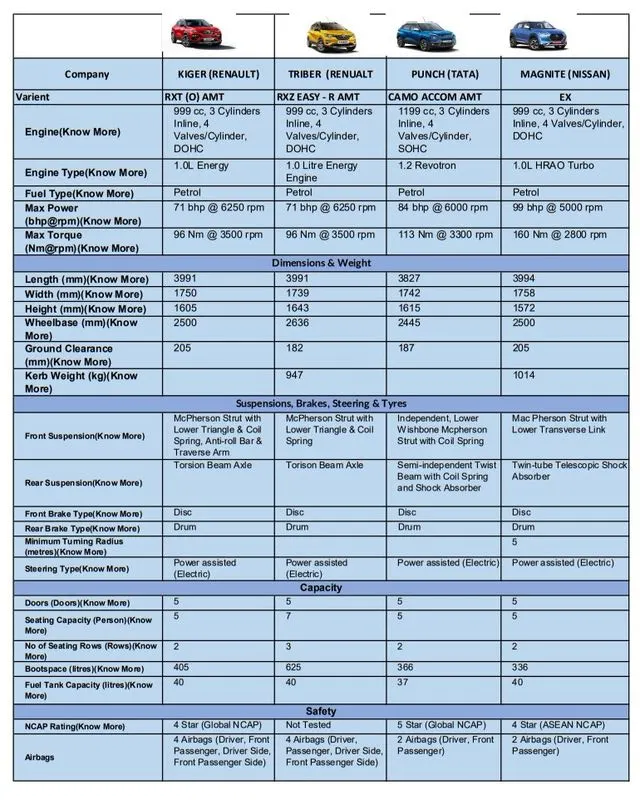
How does Kiger's performance compare to those of Triber, Punch, and Magnite?
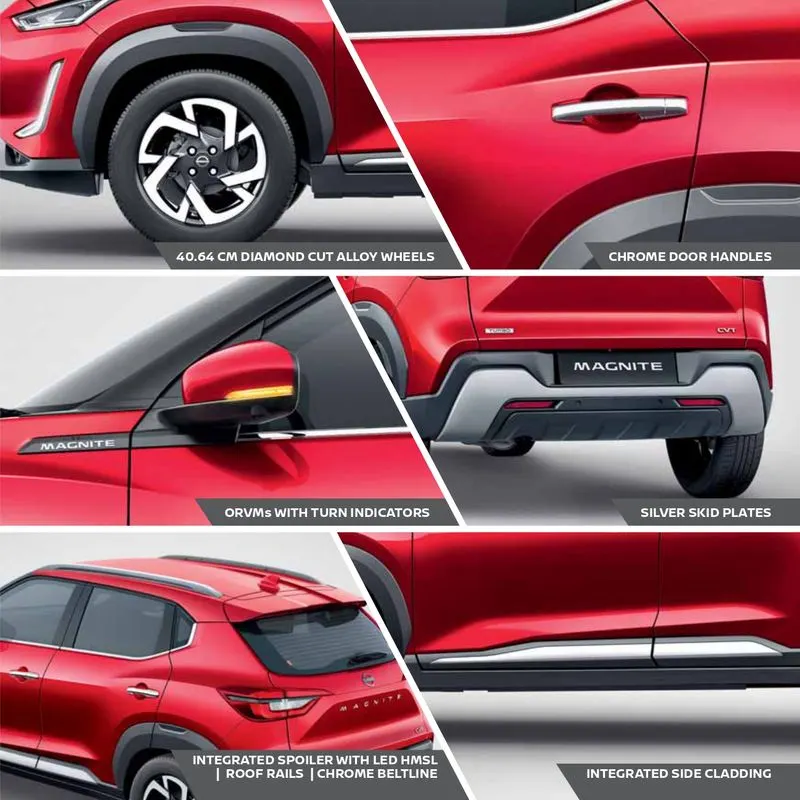
Ans. The 999 cc Petrol engine from Kiger delivers 96 Nm @ 3500 rpm of torque and 71 bhp @ 6250 rpm of power for the RXT (O) AMT variant. The Triber 999 cc Petrol engine generates 96 Nm of torque at 3500 rpm and 71 horsepower at 6250 rpm for the RXZ EASY-R AMT Dual Tone variant. Punch's 1199 cc Petrol engine generates 84 bhp at 6000 rpm and 113 Nm at 3300 rpm for the Camo Accomplished AMT version. The 999 cc Petrol engine of Magnite generates 160 Nm of torque at 2800 rpm and 99 horsepower at 5000 rpm for the XV Executive Turbo variant.
Which vehicle, out of the Kiger, Triber, Punch, and Magnite, has the best fuel efficiency?
Ans.Kiger's mileage for the RXT (O) AMT version is 19 kmpl, Triber's for the RXZ EASY-R AMT Dual Tone version is 18.2 kmpl, Punch's for the Camo Accomplished AMT version is 18.8 kmpl, and Magnite's for the XV Executive Turbo version is 20 kmpl. Magnite is therefore more fuel-efficient than Kiger, Triber, and Punch.
Which among the Renault Kiger, Renault Triber, Tata Punch, and Nissan Magnite is the least expensive car?
Ans.Tata Punch costs $9.54 lakh, Renault Kiger costs 9.83 lakh, Renault Triber costs 10 lakh, and Nissan Magnite costs 9.30 lakh. Nissan Magnite is therefore the most affordable of these vehicles. thorough comparison of Kiger, Triber, Punch, and Magnite.
CONCLUSION
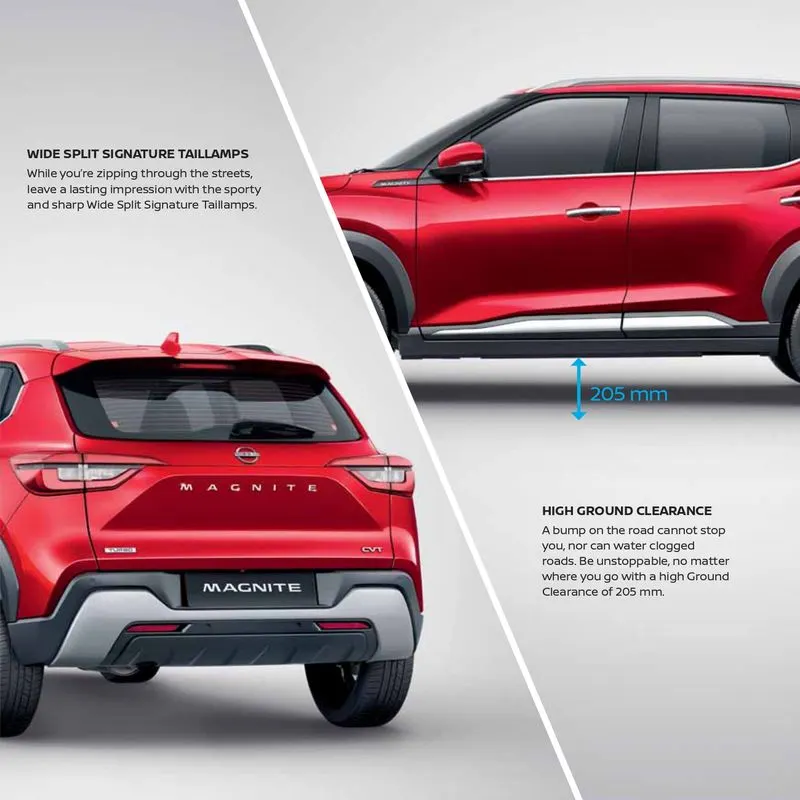
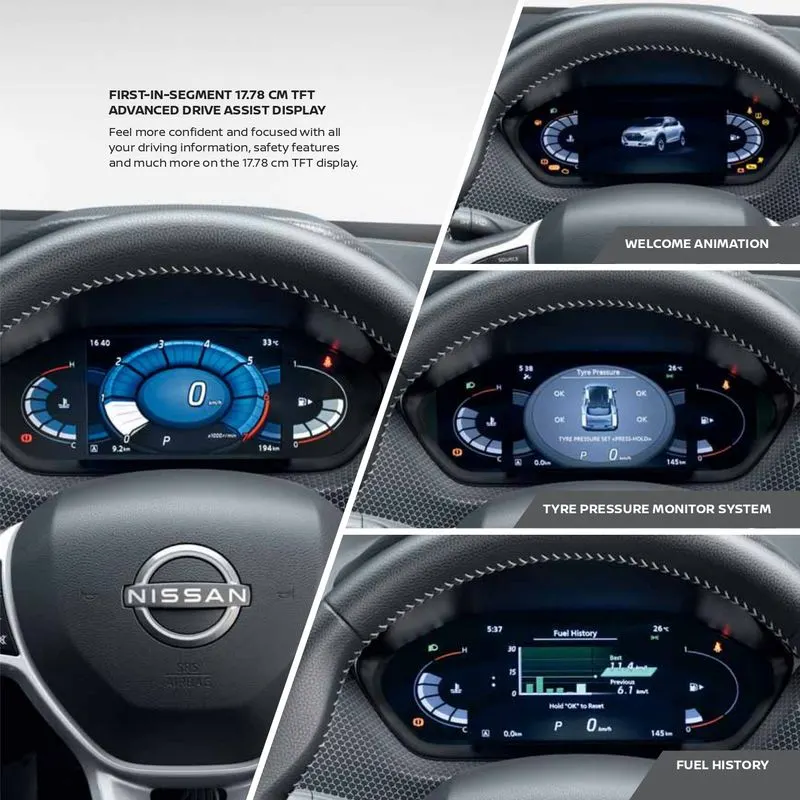
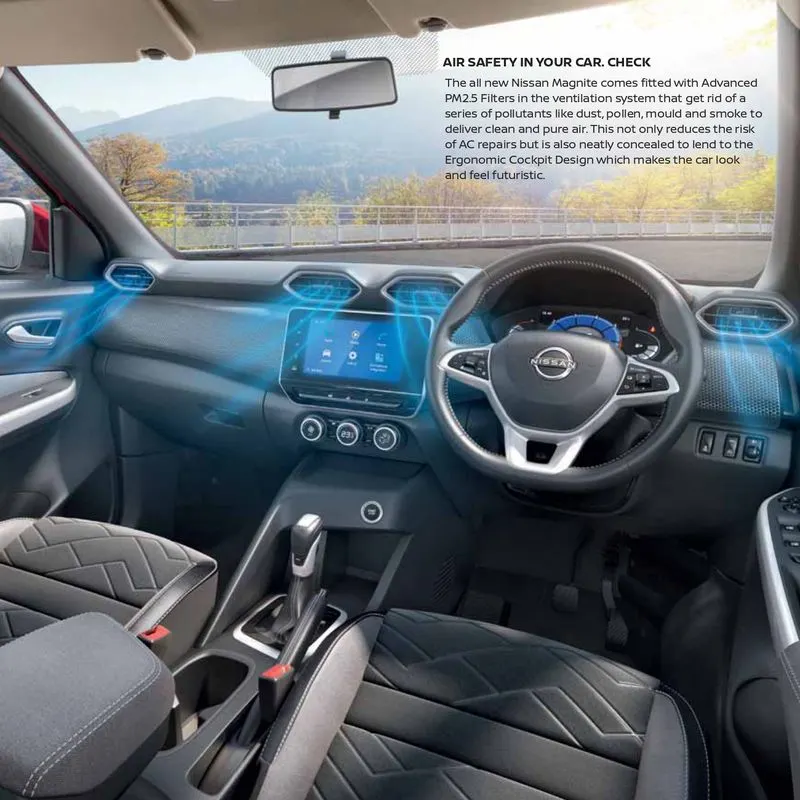
Finally, the Nissan Magnite appears to be a device with outstanding promise from Nissan. It boasts a wonderful design, a tonne of amenities, a fantastic turbo engine, and a similarly tuned CVT transmission. For those looking to upgrade from hatchbacks or who desire their first SUV, the Nissan Magnite makes a lot of sense. All we can now do is wait for Nissan to organise its dealerships.