Assignment 6-Frontal Crash Simulation Challenge
ASSIGNMENT 6- FRONT CRASH-BIW
OBJECTIVES :
To perform a crash analysis for the given car model and plot respective graph requested for output.
Output requests:
- Sectional force in the rails at location of indicated node 174247.
- Axial force received on the rails from bumper.
- Shotgun cross sectional forces.
- A pillar cross section.
- Acceleration curve received on the accelerometer at base of B pillar (on B pillar rocker).
- Intrusions on the dash wall 66695,66244.
PROCEDURE :
1. Import the neon_front_0000.rad into Hypermesh Radioss.
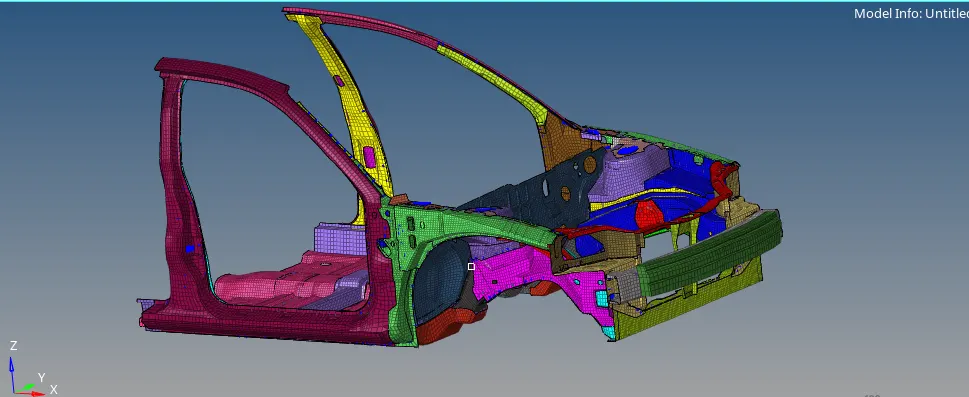
2. The unit system followed is Kg mm ms KN.
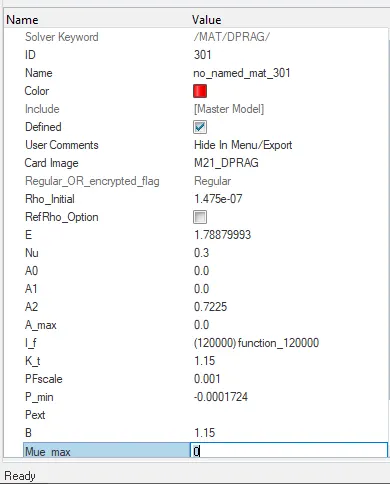
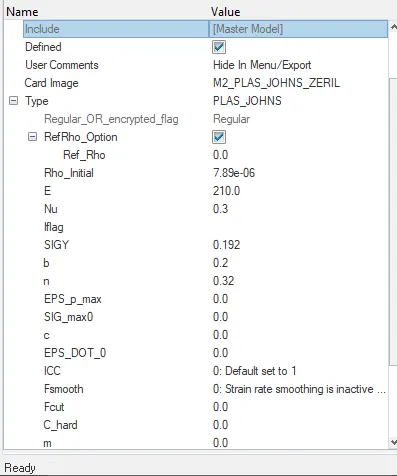
3. The Materials used in the model are :
4. Right click on Solver browser and create Type7 contact interface. Since Hypercrash can handle only 10K nodes, it is impossible to run export the model. Hypercrash has better user interface for crash analysis.
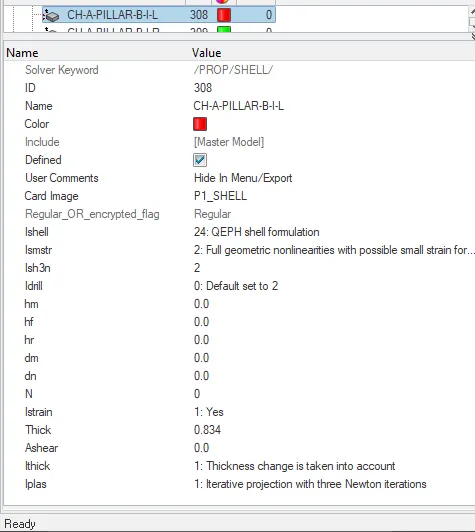
5. The Property for the model is made as per recommended values. QEPH elements are used to avoid Hourglass errors and negligible contact error.
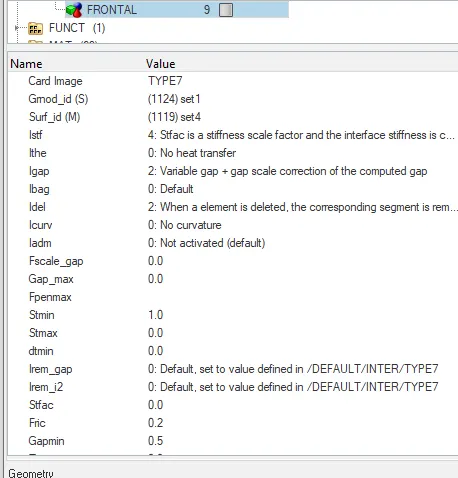
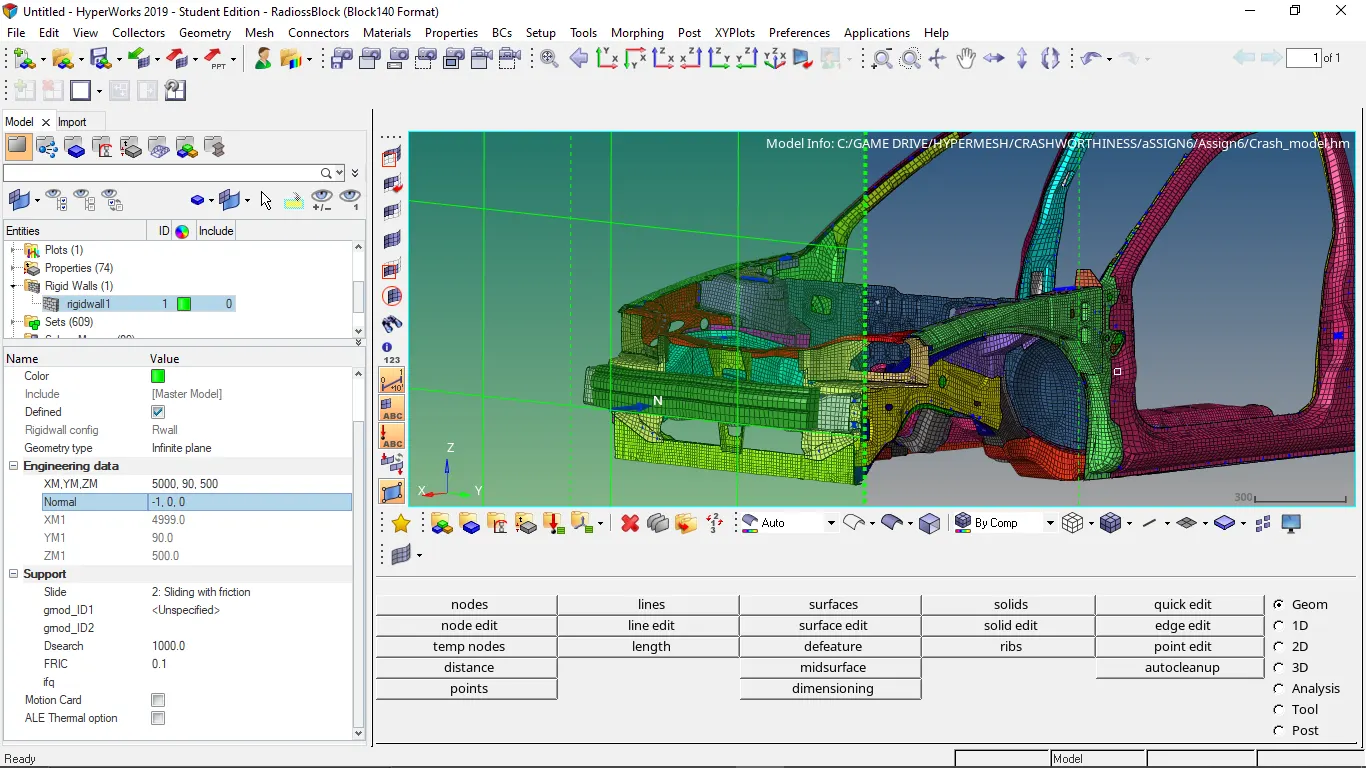
6. Create the rigid wall with friction 0.1.
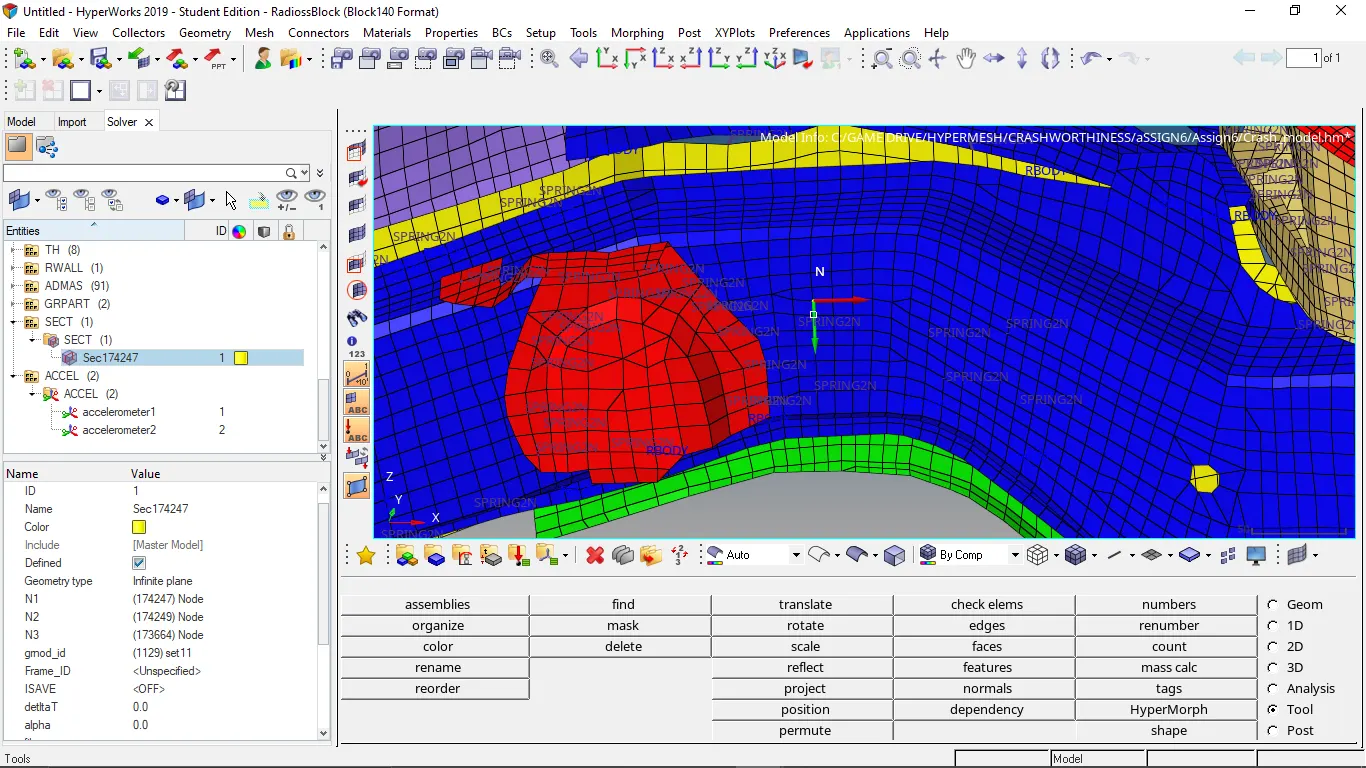
7. Create Sections at
- Sectional force in the rails at location of indicated node 174247.
- Axial force received on the rails from bumper.
- Shotgun cross sectional forces.
- A pillar cross section.
Select nodes and elements related to the section. Create TH for all the sections.
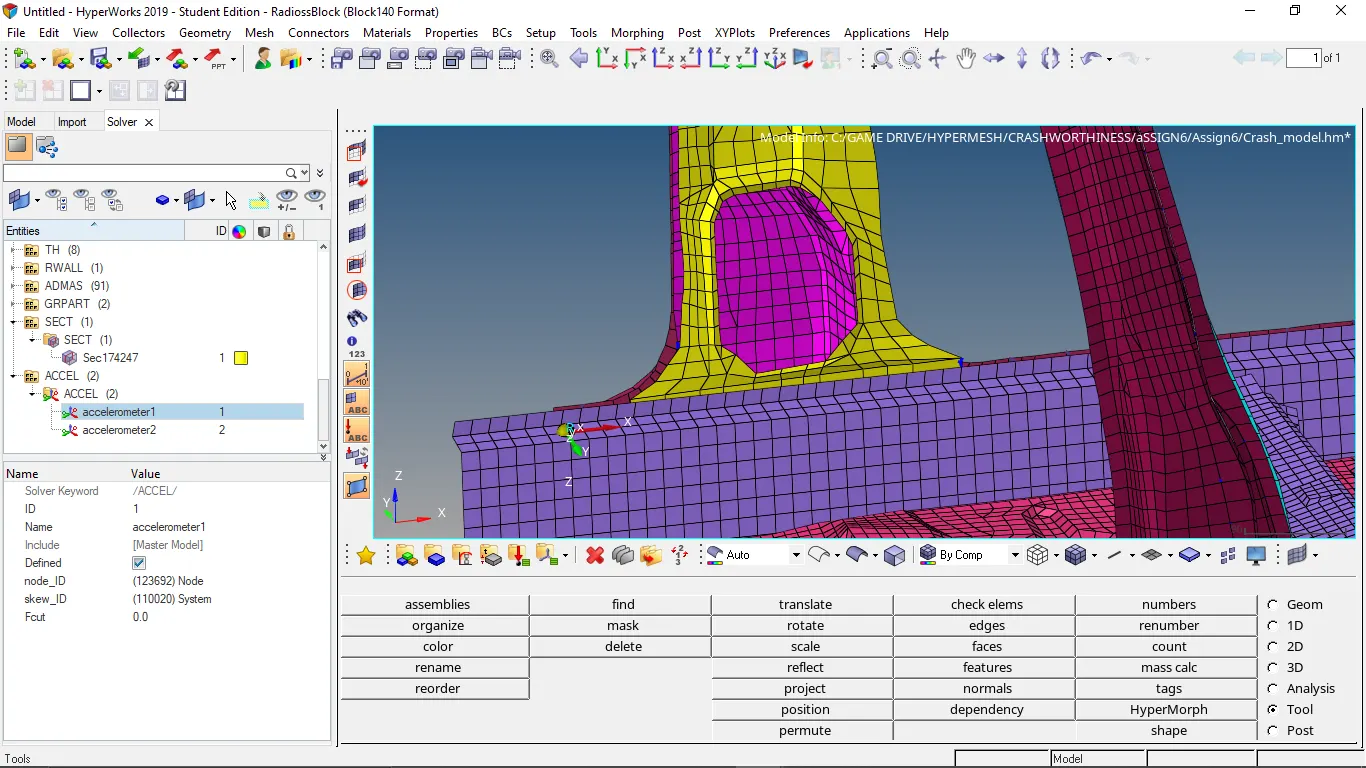
8. Create accelerometer at base of B pillar (on B pillar rocker) on both sides. Create TH for both.
9. Create Initial velocity on entire model with 35mph or 15.64mm/s. INVEL can also be created in Hypercrash.
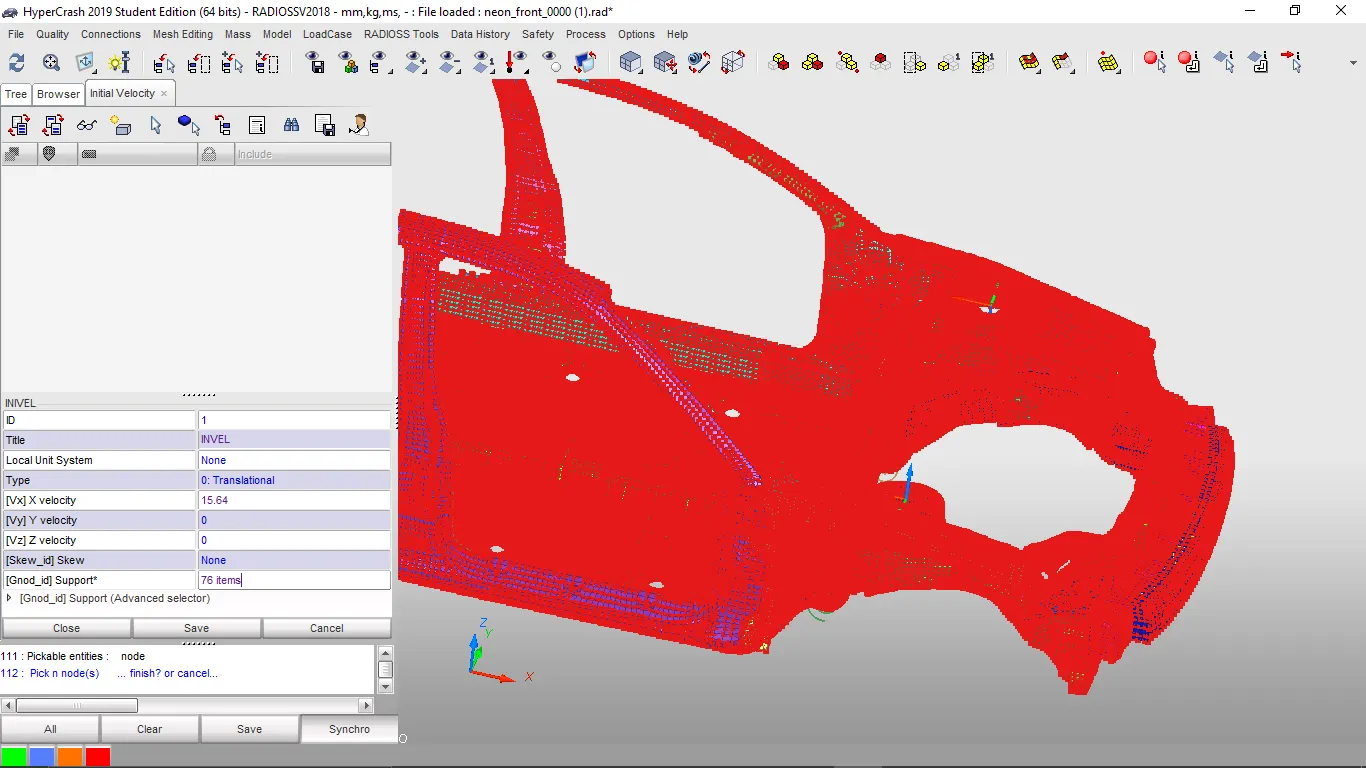
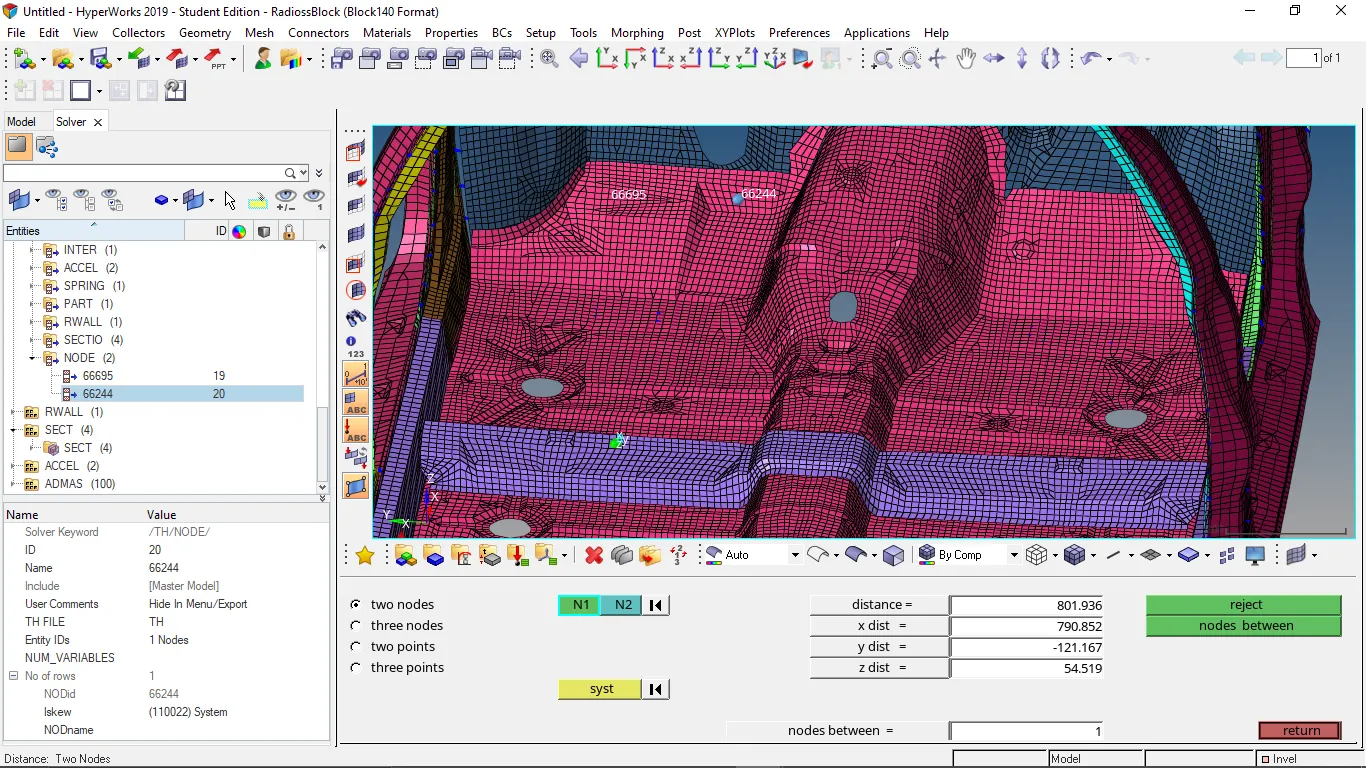
10. Create intrusion on the dash wall 66695,66244. Create moving skews on the nodes and create TH of nodes.
12. Add Mass to the model to 700kg using ADMAS card on solver while maintaining COG point at desired location.
13. Run the Model Checker and correct the errors.
14. Time-step :0.5 to 0.1 microseconds. Run 80 ms.
15. Run the simulation Analysis > Radioss with -nt 4.
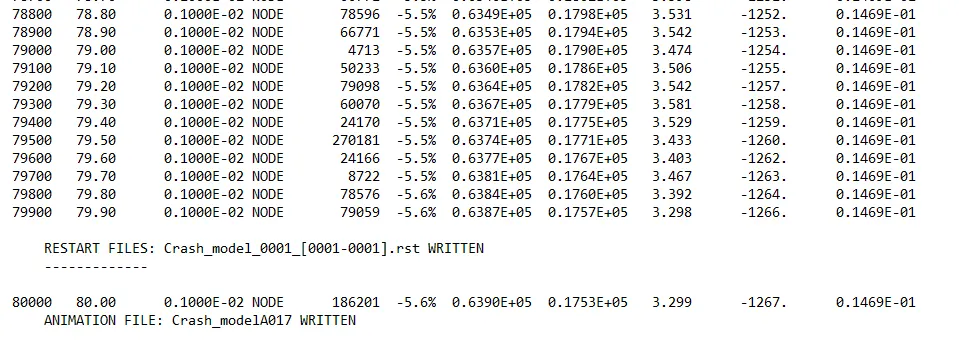
16. The error is -5.6% and mass error is 0.1469E-01. So the crash anaysis is acceptable. No. of cycles is 80001. Time taken is 4323.96 s. Also there is no sudden jump in values.
INITIAL TIME STEP. . . . . . . . . . . . . . . . 0.000000
MAXIMUM TIME STEP. . . . . . . . . . . . . . . . 0.1000000E+31
17. Open Hyperview and run the .h3d file.
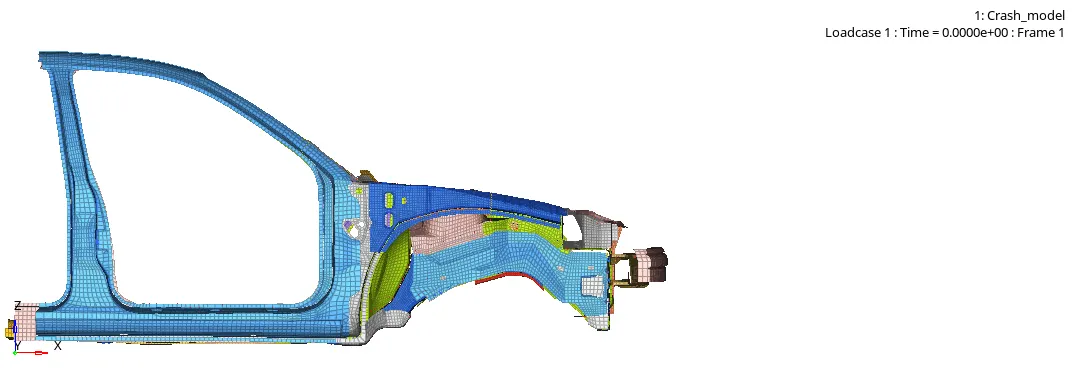
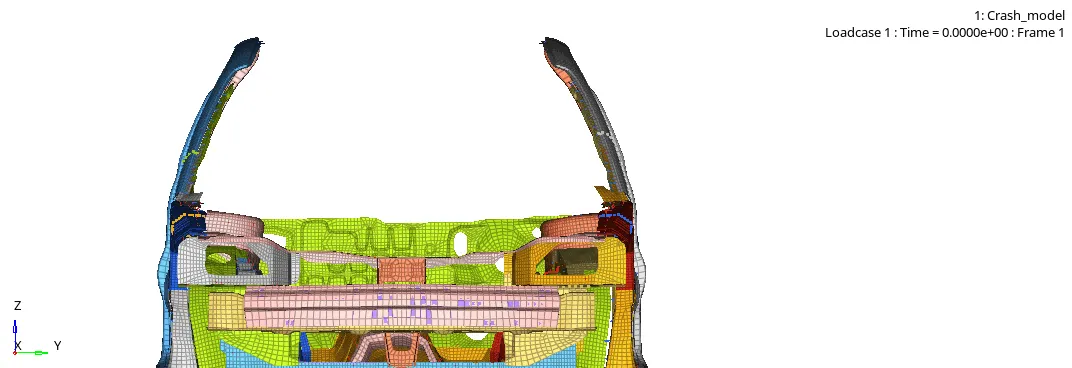
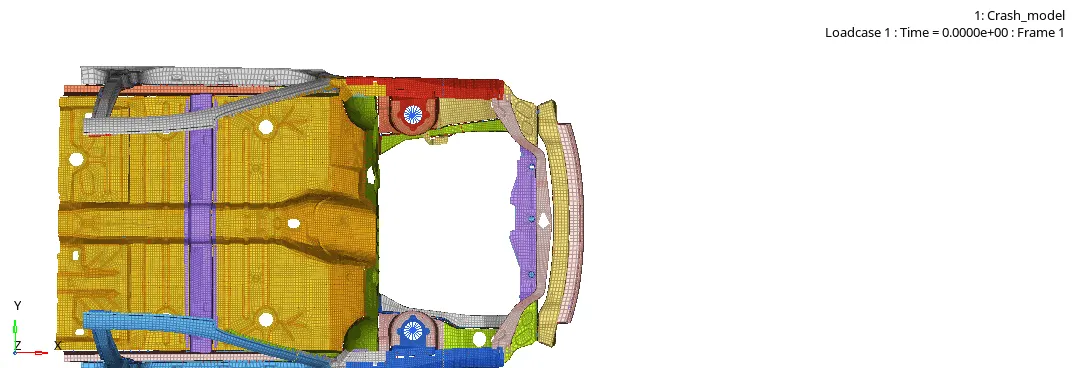
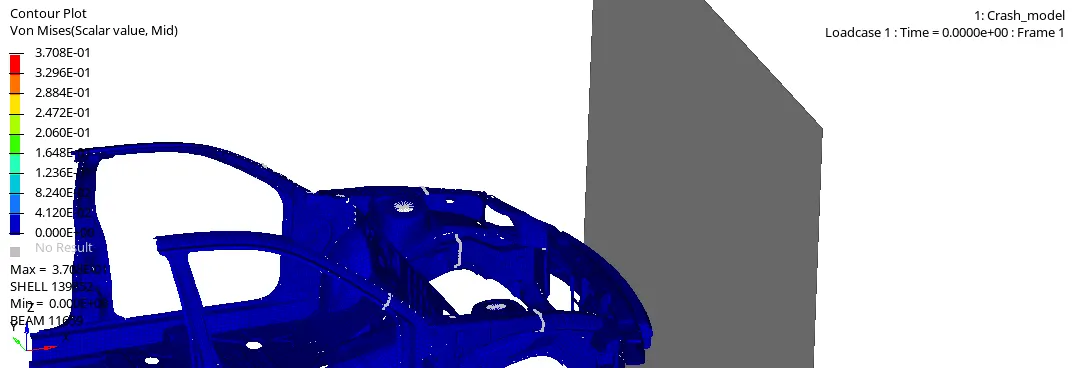
18. Create contour with Von misses Stress.
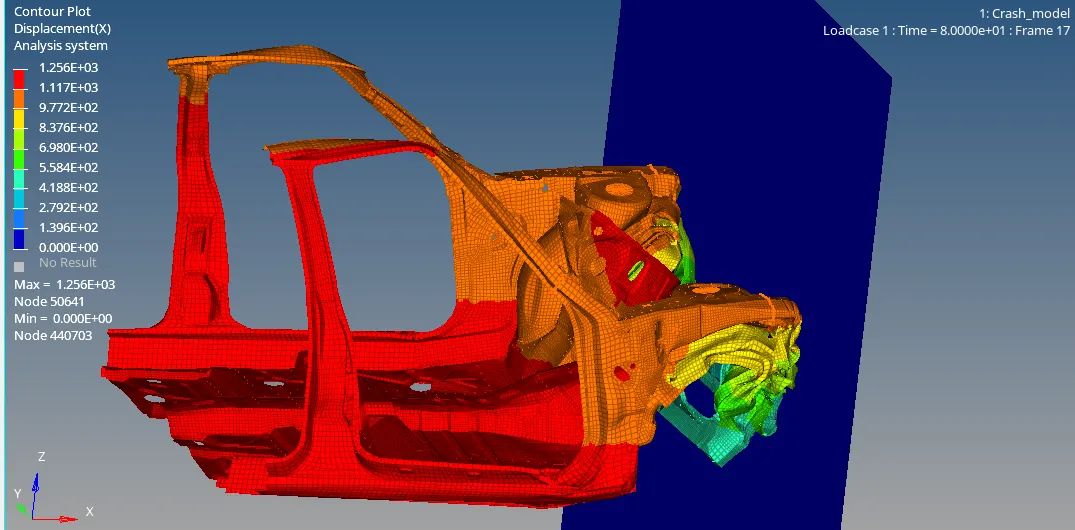
19. The Displacement contour.
20. Switch to Hypergraph. Plot for Energies and Time.
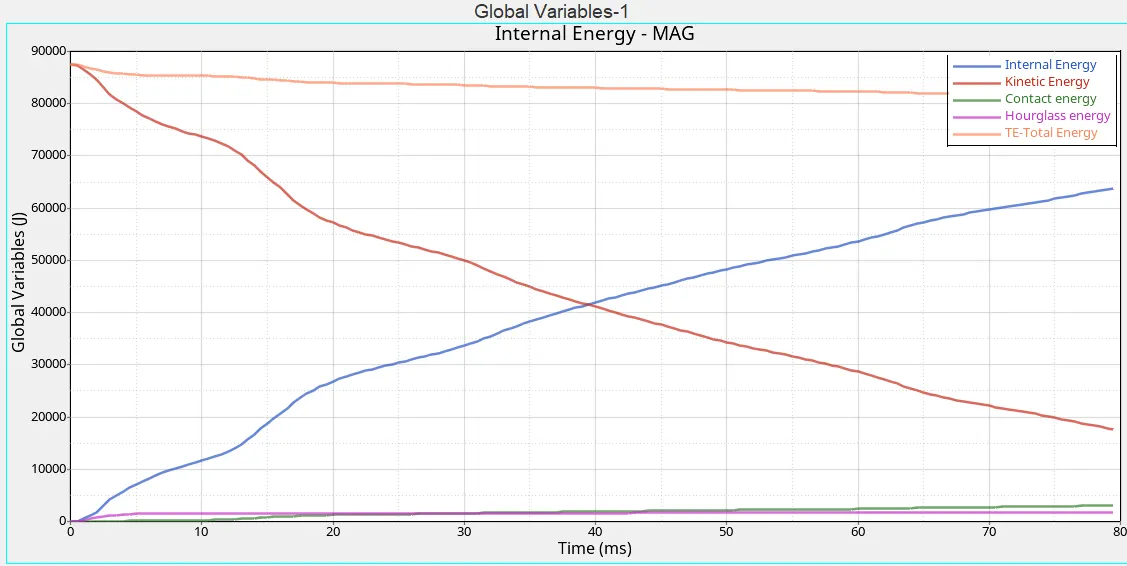
The Total energy is 90000J and remains stable. When the car moves there is only Kinetic energy and decreases when it hits the rigid wall ,there would be sharp rise in internal energy. The Internal energy rises to 60000J for 80ms of simulation. Kinetic energy is at 20000J at end of 80ms. Some of the energy gets dissipated during the crash and transferred to rigid wall.
Contact energy and Hourglass energy are negligible.
21. Plot Total resultant force acting on body and check with simulation.
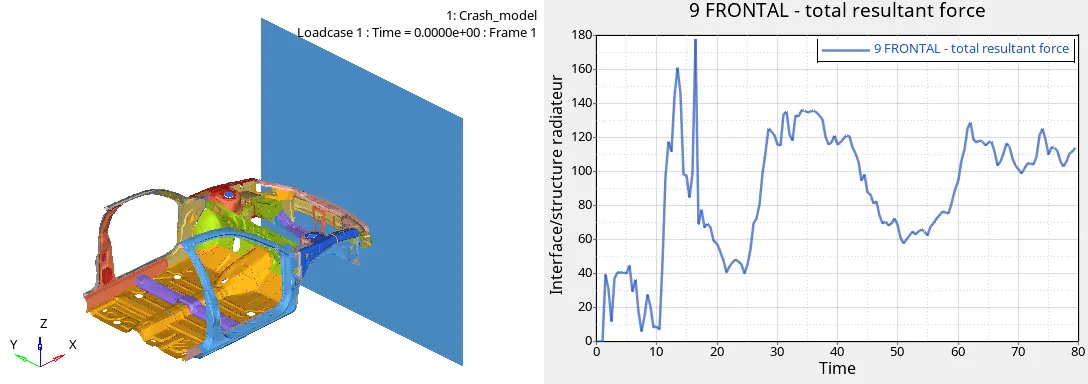
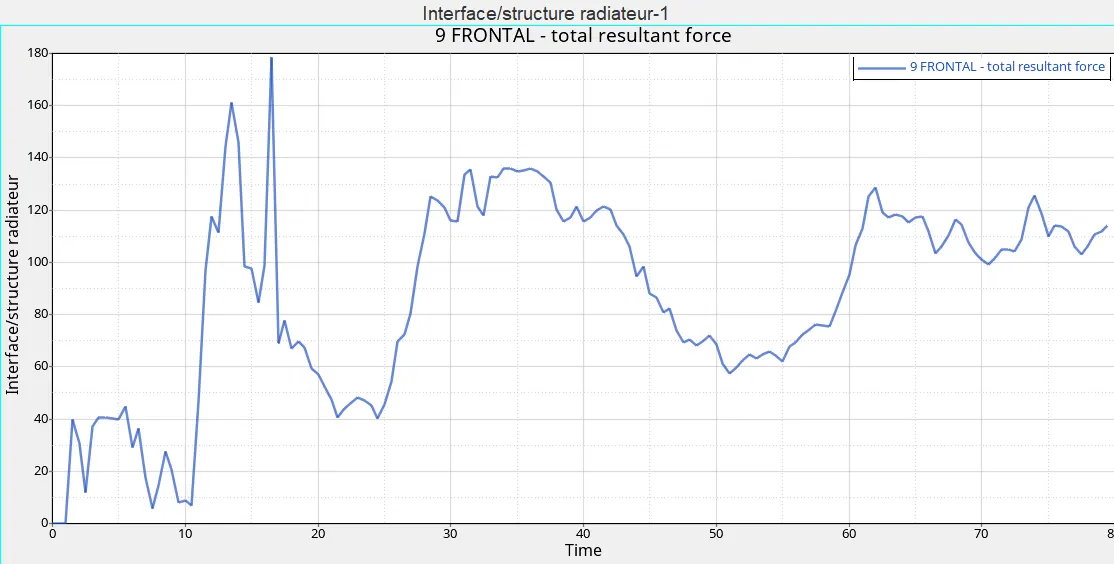
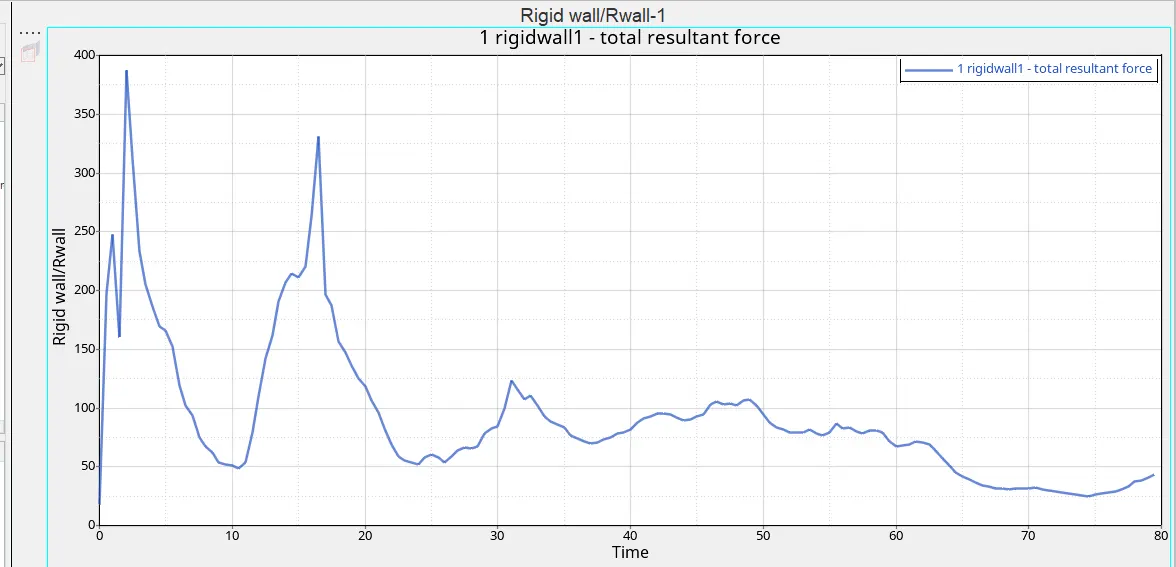
22. Total Resultant force acting on Rigid wall.
23. Plot the Total resulatant forces acting on
- Sectional force in the rails at location of indicated node 174247.
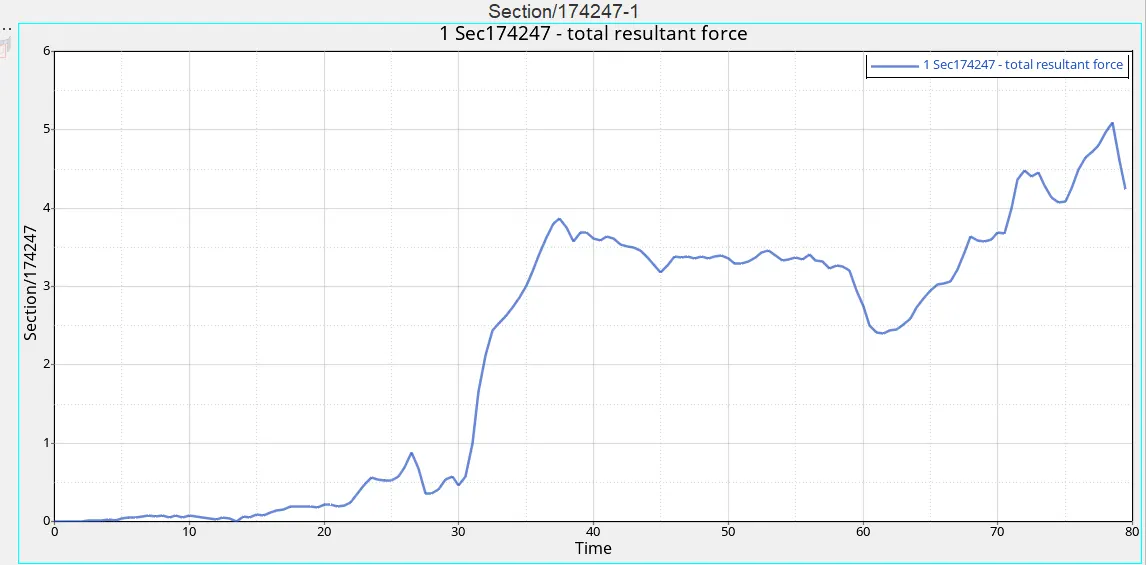
The Force acting on the rail is more important for a frontal crash as it decides the vehicle's rigidity near the Engine.
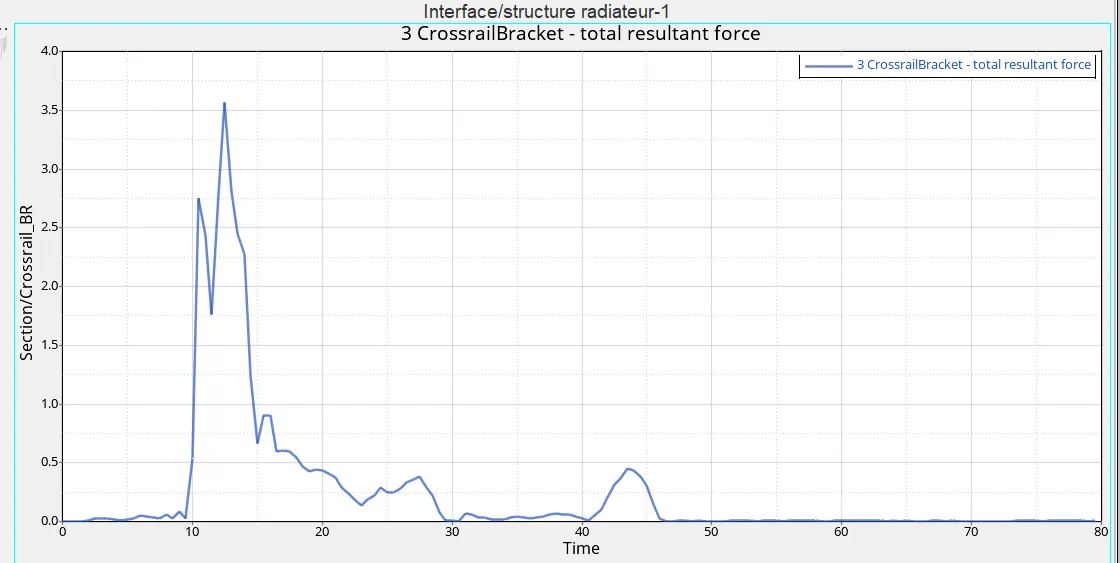
- Axial force received on the rails from bumper (Headlight bracket).
- Shotgun component Left and Right- cross sectional forces.
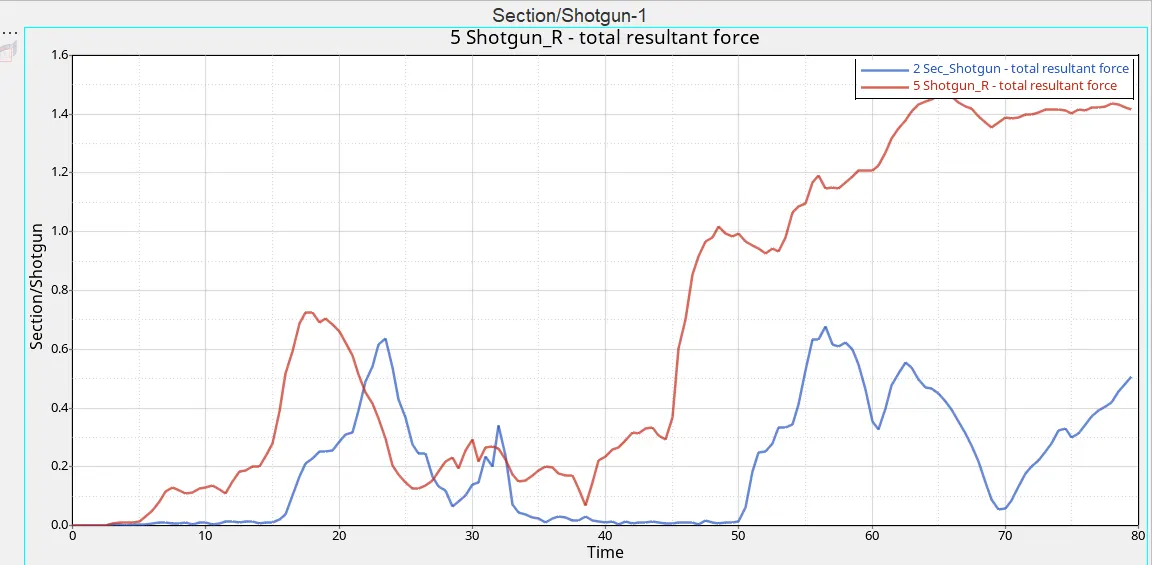
The shotgun structure is made to deform in away that it guides the engine to move up during a crash so that the passengers on front seats wont have to face a rigid body thrashing against their leg.The Left shotgun structure is more stiffer.
- A pillar cross section both Left and Right of the car.
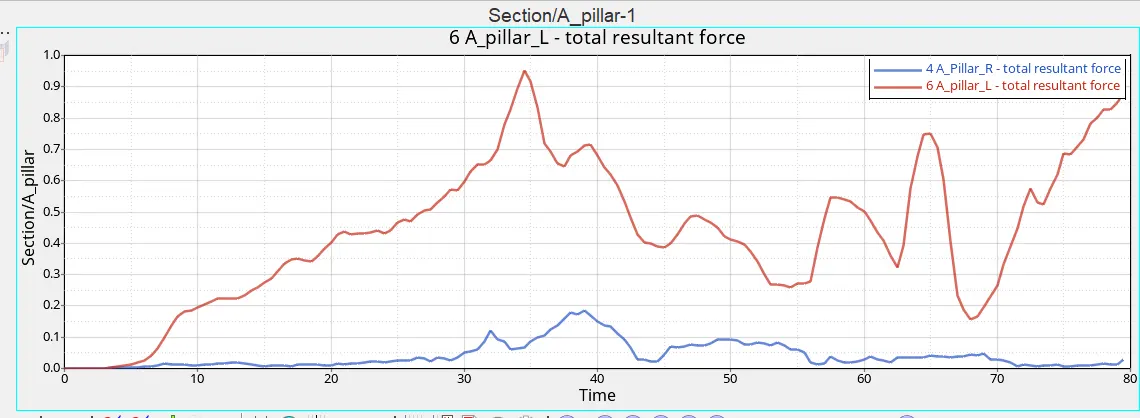
A-Pillar on Left is less stiffer due to design requirements and deformation is so large in right A-pillar.
24. Plot Accelerometer curves for B-Pillar rockers on both sides.
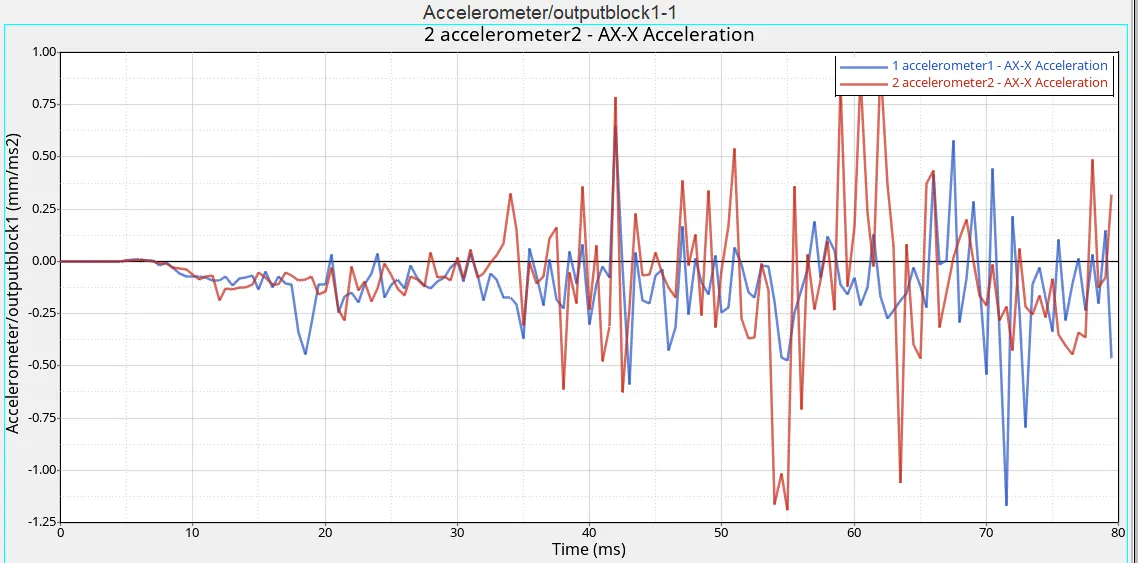
The acceleration during crash experienced by the nodes near passenger area on rear seat is calculated and right seat experience less acceleration changes.
25. Intrusions on dash wall 66695,66244. Plot X-X Displacement to time graph.
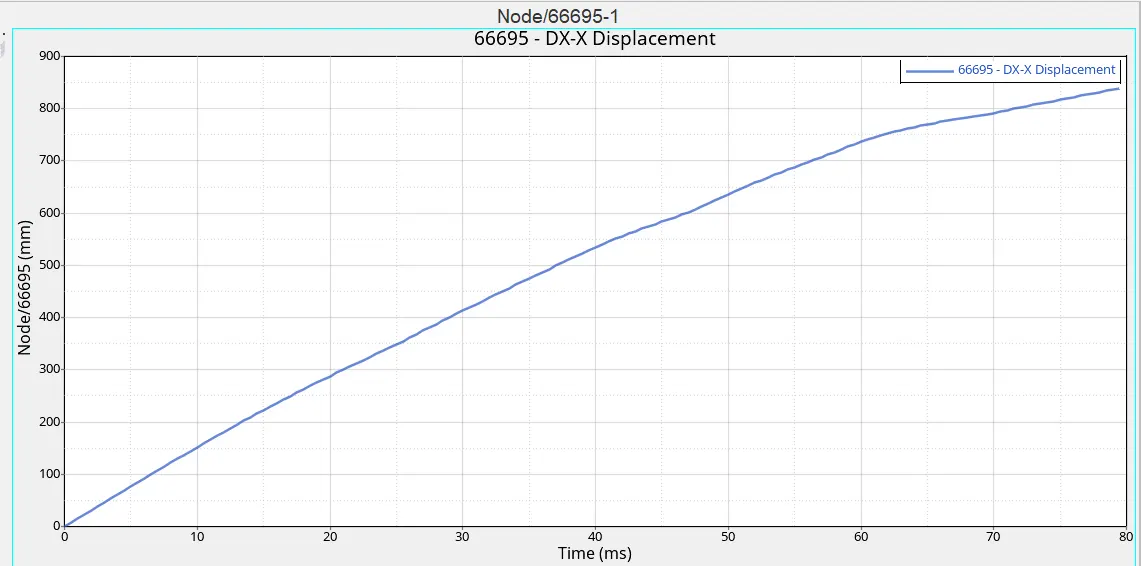
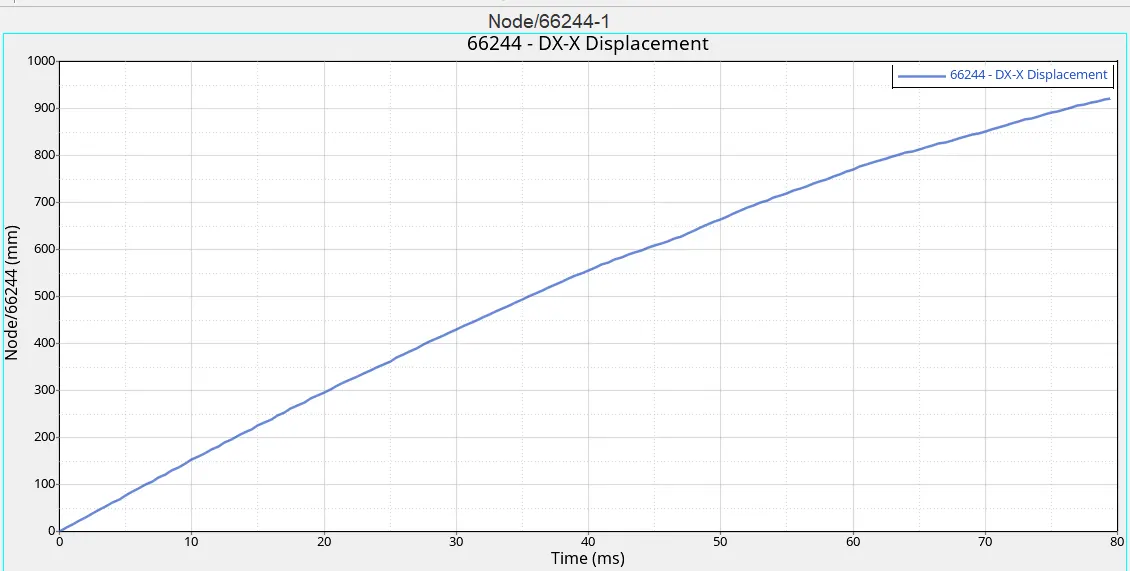
The displacement caused on the nodes where brake pedal and acceleration pedal are plotted and difference is calculated.
CONCLUSION : The initial velocity applied to the car body in X-direction at 15.64mm/ms.
The Errors throwed by Model Checker for moving skews is corrected manually and recommended material property values are used to avoid hourglass error.
1. The Maximum Sectional force in the rails at location of indicated node 174247 is 5KN during 70-80 ms of simulation.
2. The Maximum Axial force received on the rails from bumper (Headlight bracket) is 3.5KN during 10-20ms of simulation.
3. The Maximum Sectional force exerted on Shotgun component Left and Right- cross sectional forces is 0.7KN and 1.5KN respectively.
4. The Maximum Sectional force excerted on A pillar both Left and Right of the car is 0.9 KN and 0.2 KN respectively.
5. The acceleration experienced peak at left B-pillar rocker is 0.6mm/ms2 during 65ms and peak deceleration of 1.2mm/ms2 at 70ms of simulation.
The acceleration experienced peak at right B-pillar rocker is 0.75 mm/ms2 during 60 ms and peak deceleration of 1.2mm/ms2 at 55ms.
6. The intrusion at Brake pedal as information is obtained from graph, 850-778 = 72 mm for 80ms of simulation.
7. The intrusion at acceleration pedal as information obtained from graph, 910-801 = 109 mm for 80ms of simulation.