Assignment 4-RADIOSS Material Laws Challenge
Aim –
To simulate the plate and rigid ball by using Jhonson cook material and elastoplastic material with brittle failure as per cases given in the question by using Radioss solver.
Objective –
Simulate all the 7 cases as given in the question
Simulate by changing the material shell properties and failure parameters
Simulate by converting the failure Jhonson model to law1.
Tabulate the total number of cycles, energy error mass error and simulation time
Plot the graph for all the 7 cases
Compare all the 7 cases results
Theoretical framework –
in FEA, the material is specified to conduct simulation and analyze how a particular material behaves under certain stress and loading condition.
attention should be provided to the material type chose and the material properties provided. there could be different material properties needed as input to fully characterize a material for analysis purposes. Any unclear or illogical data provided during material characterization will lead to uncertain results
choosing the right material and providing reliable material data in performing a simulation is very important.
RADIOSS provides one of the most comprehensive material and rupture libraries in the industry. the material laws and rupture criteria span across definitions for concrete, foam, rubber, steel composite, biomaterials and more.
Then, materials are categorized in two forms called.
1)In the form of material card / material laws
2) in the form of material properties.
In the form of material cards/laws
Law 1 – elastic.
Law 2 – Jhonson-cook
Law 27 – elastic-plastic brittle
Law 36 – elastic-plastic tabulated
Law 42 – ogden (visco hyperelastic )
Law 70 – foam
In the form of material properties
Isotropic elastic
Isotropic Elastoplast
Composite and anisotropic
Viscous
Hydrodynamic
Explosive.
Important LAW & PROPERTIES
1-Isotropic Elastic (law 1).
In this, there is a card for “elastic hooks law ”as the name suggest .in this card material only follows hooks law that is when we deform material it will regain its shape and size once force is removed
But in the large deformations, it is most likely that material goes beyond elastic and yield limit
So it is recommended to avoid this card for large deformation
On other hand, it is useful when we have to analyze vibration or simple static analysis where the material comes under the elastic region
And yield point is failure criteria for this
2-Isotropic Elasto-plastic (law 2)
This law represents an isotropic elastic-plastic material using Jhonson cooks material model
This model expresses material stress as a function of strain rate and temperature. A built-in failure criterion based on the max plastic strain is available
In this model, the material behaves as a linear-elastic material when the equivalent stress is lower than the plastic yield stress. For higher stress values, the material behaviour is plastic, and the true stress is calculated as:(1)
σ=(a+bεp^n)(1+cln*ε˙/ε0)(1−(T∗)^m)
Where,(2)
T∗=T−Tr / Tmelt−Tr
Where,
εp Plastic strain
ε˙ Strain rate
T Temperature
Tr Ambient temperature
Tmelt Melting temperature
Jhonson cooks model allows us to use the failure model
3-Elastic Plastic Piecewise linear material (PLAS_TAB/LAW 36)
It is the most used property card in the industry
In real-life situations, we are not always able to determine the exact properties of the material
So what happened is in simulation from Jhonson cook or any other we might not get the result as close to lab results because it has some limitation
Therefore it is important to stick close to lab data as close as possible
Basically, the idea is
- To test the material at a different strain rate
- Input these values to user-defined PLAS_TAB card
- Which gives more mature results
LAW 27 (PLAS_BRIT)
Elastoplastic material for brittle use for layered-glass/glass
LAW 42 (OGDEN)
It is a viscoelastic material used for rubber-like material
LAW 70 (FOAM_TAB)
I
Procedure:
Case 1- law 2 _epsmax_failure
Import the given FAILURE_JHONSON_0000.rad file into radioss, using import solver deck option
Verify below recommended shell properties and material properties
Ishell = 24, Ismstr = 2 , Ish3n = 2 , N = 5 , Ithick = 1 , Iplas = 1
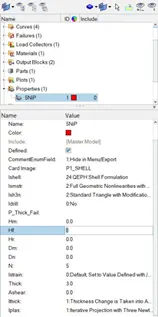
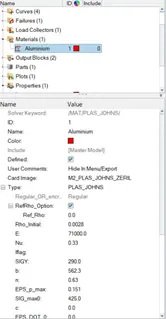
In this case, we run the simulation without changing anything
Go to –analysis –radioss
Change the input file location and rename it
As law2 _epsmax_failure_0000.rad

From the above pic, -nt 4 means 4 CPUs runs simulation at a single time
Click on radioss
After running simulation open law2_epsmax_failure_0001.out file
And note the value
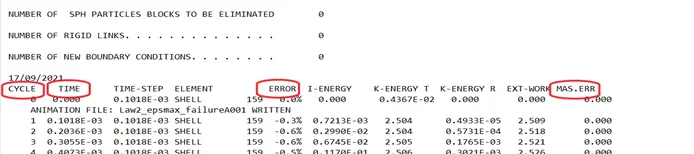
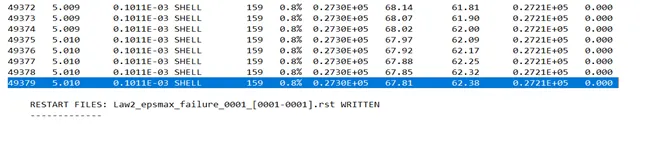
Here we number of cycles as 49379 energy error as -0.3 to 0.8 mass error as 0.00 ,
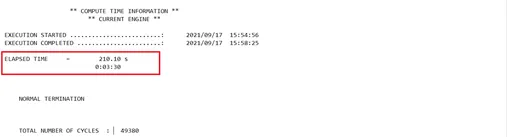
And simulation time as 210.10 sec
After checking the errors, open the then case, 1 model, in hyper view and view it in von misses contour
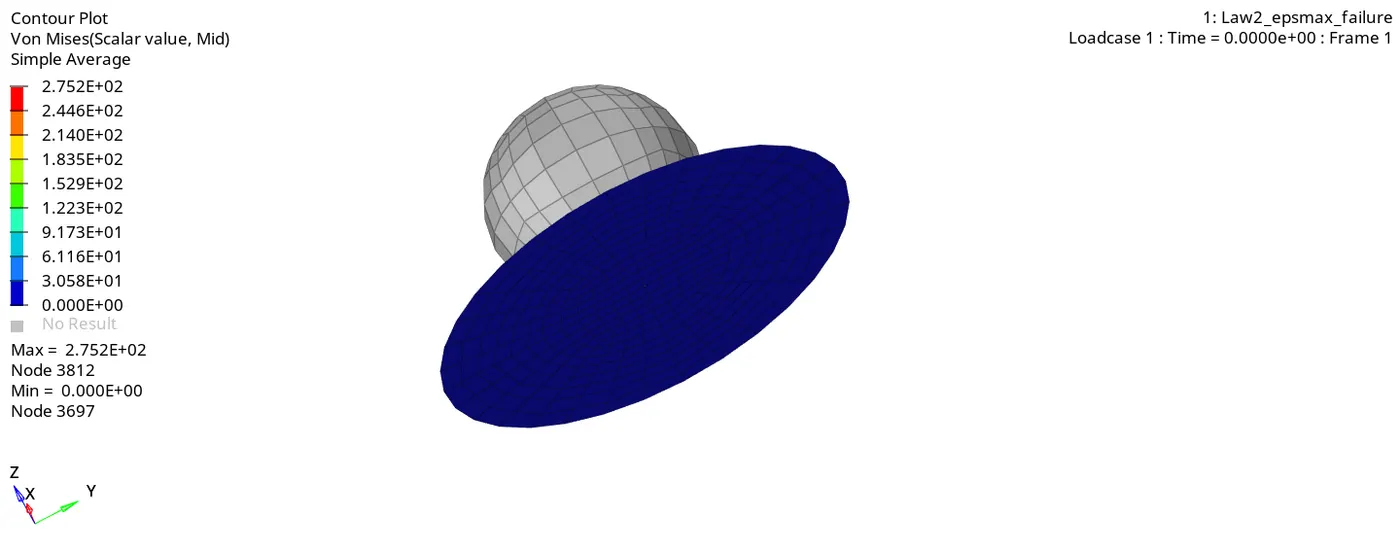
Max von misses stress is 275.5 mpa at node 3812
In this case, we took M2_PLAS_JHONS as a card
M2_PLAS_JOHNS is an elastoplastic material so element is deleted once it reaches the EPS_p_max value
In this case EPS_p_max is 0.151. it means elements will be deleted when plastic strain energy reaches 15% of total strain energy.
To plot graphs switch to hypergraph
Upload the TO1 file
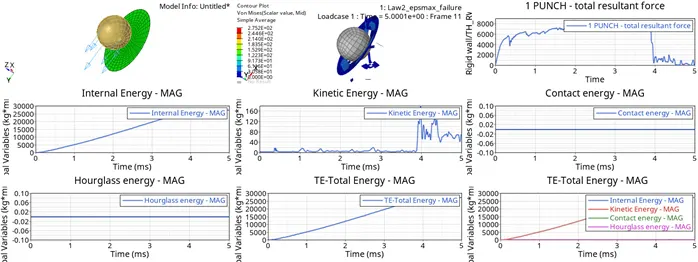
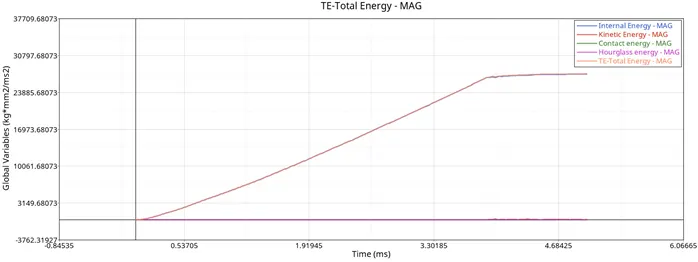
Before element deletion, internal energy increases linearly this increase is due to the formation of strain energy
Max internal energy is nearly 28000 j
Max kinetic energy is 180
Total energy = internal energy + kinetic energy + potential energy (negligible)
Compare to internal energy, kinetic energy is very less i.e total energy curve coincides with the internal energy
And hourglass energy and contact energy remained constant as we have used QEPH shell formation.
Case 2 – law2_epsmax_crack
Changes the properties of fail_johnson card to Ifail_sh=1 , Dadv = 1 , Ixfem = 1
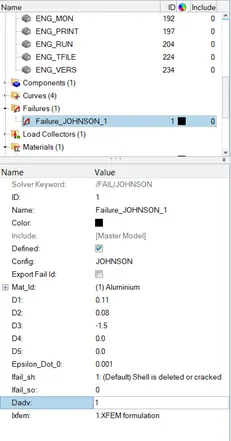
Following the above-mentioned procedure to run the simulation and rename it as law2_epsmax_crack _0000.rad
After completing the simulation open law2_epsmax_crack_0001.out
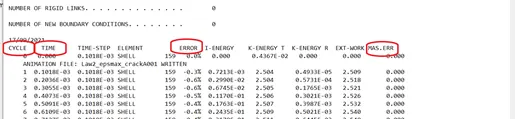

This have number of cycle as 49216 , energy error as -0.3 to 4.1 % , mass error 0.000
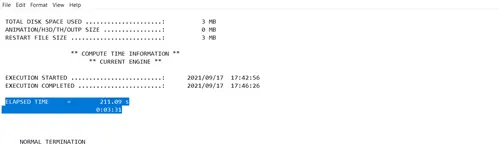
And simulation time as 211.09 sec
After checking the errors, open the then case, 2 model, in hyper view and view it in von misses contour
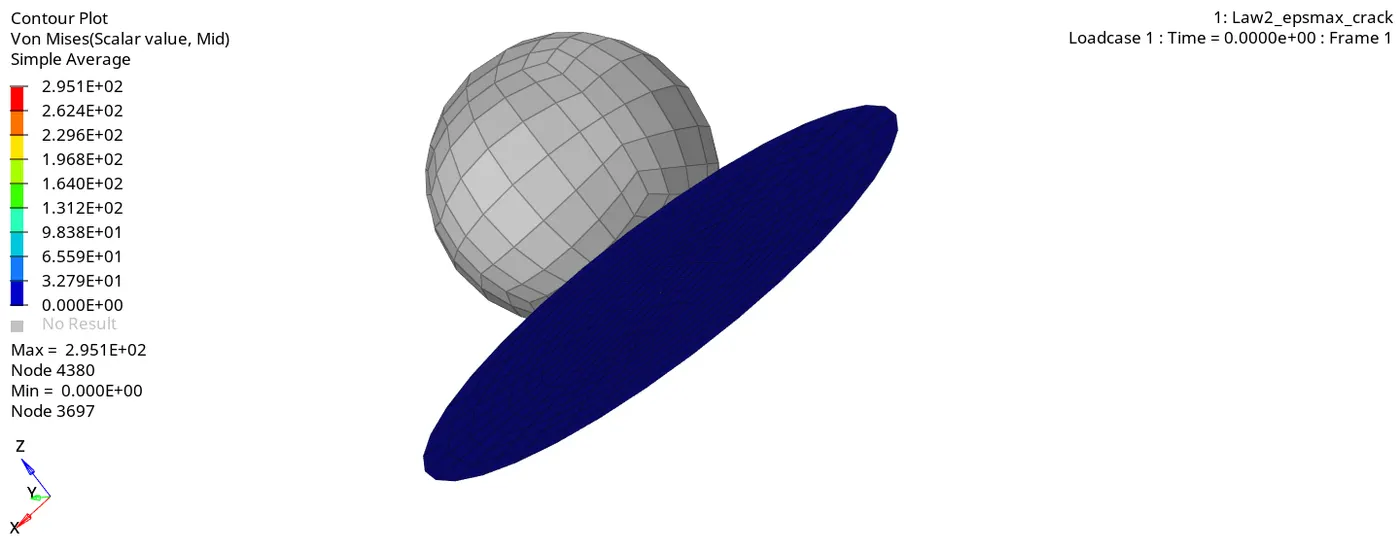
Max von misses stress is 295.1 mpa at node 4380
In this case, we took M2_PLAS_JHONS as a card
M2_PLAS_JHONS is an elasto plastic material so element are deleted once the reaches the EPS_p_max value
In this case, EPS_p_max is 0.151 it means the element will be deleted when plastic strain energy reaches 15 % of the total strain energy
Because of Ixfem =1 element is not scattered similar to case 1
Compare to case 1, stresses are generated a little more in this case
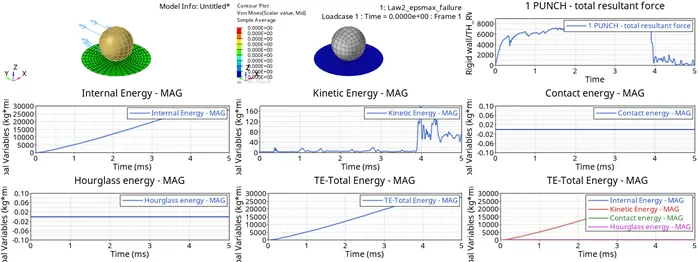
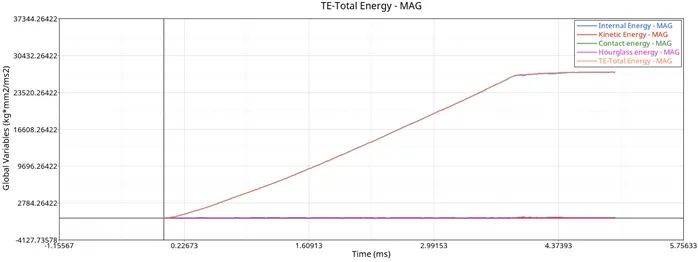
The behaviour of the graph is similar to case 1
Max. internal energy more than 30000j
Max. kinetic energy is 210
Compare to internal energy, kinetic energy is very less i.e total energy curve almost coincides with the internal energy curve
Case 3- law2_epsmax_nofail
In this case, delete the failure_johnson 1 card, name this file as Law2_epsmax_nofail_0001.out and run the simulation.
After completing the simulation open
Law2_epsmax_nofail_0001.out file
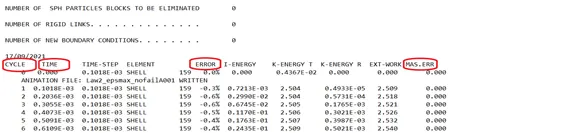
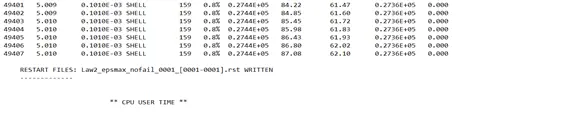
This has a number of the cycle as 49407, energy error as -0.3 to 0.8 %, mass error 0.000
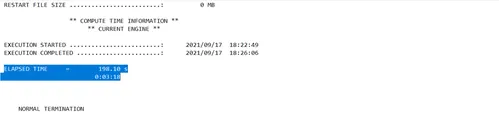
And simulation time as 198.10 sec
After checking the errors, open the then case 3 model in hyper view and view it in von misses contour
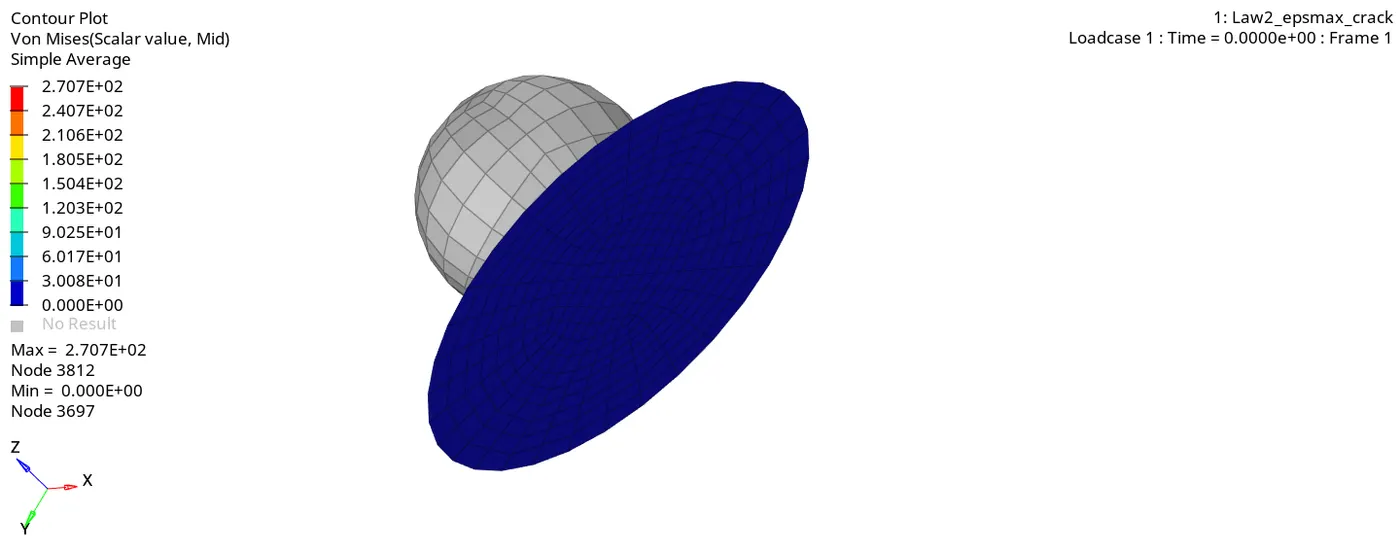
Max von misses stress is 270.7 mpa at node 3812
In this case, we have taken M2_PLAS_JHONS as a card
M2_PLAS_JHONS is an elasto plastic material so element are deleted once the reaches the EPS_p_max value
In this case EPS_p_max is 0.151 it means the element will be deleted when plastic strain energy reaches 15 % of the total strain energy
Compare to case 1, stress is generated a little less in this case.
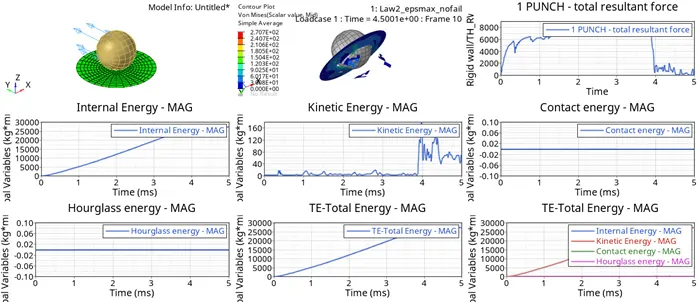
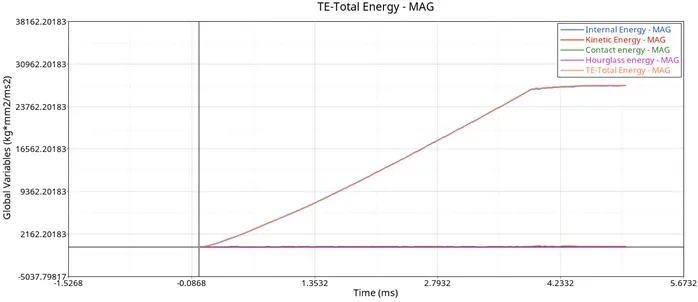
The behaviour of the graph is similar to case 1
Max. internal energy is more the 27500j
Max kinetic energy is 340
Compare to internal energy, kinetic energy is very less i.e total energy curve almost coincides with the internal energy cuvre
Case 4: law2
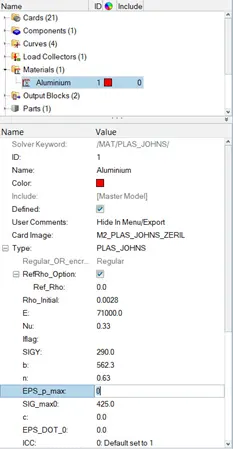
In this case, delete the EPS_P_MAX value and run the simulation with name law2
After completing simulation open law2_0001.out file
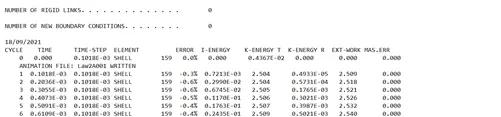

This has a number of cycles as 48736, energy error as -0.3 to 3.0 %, mass error 0.000
After checking the errors, open the then case 4 model in hyper view and view it in von misses contour
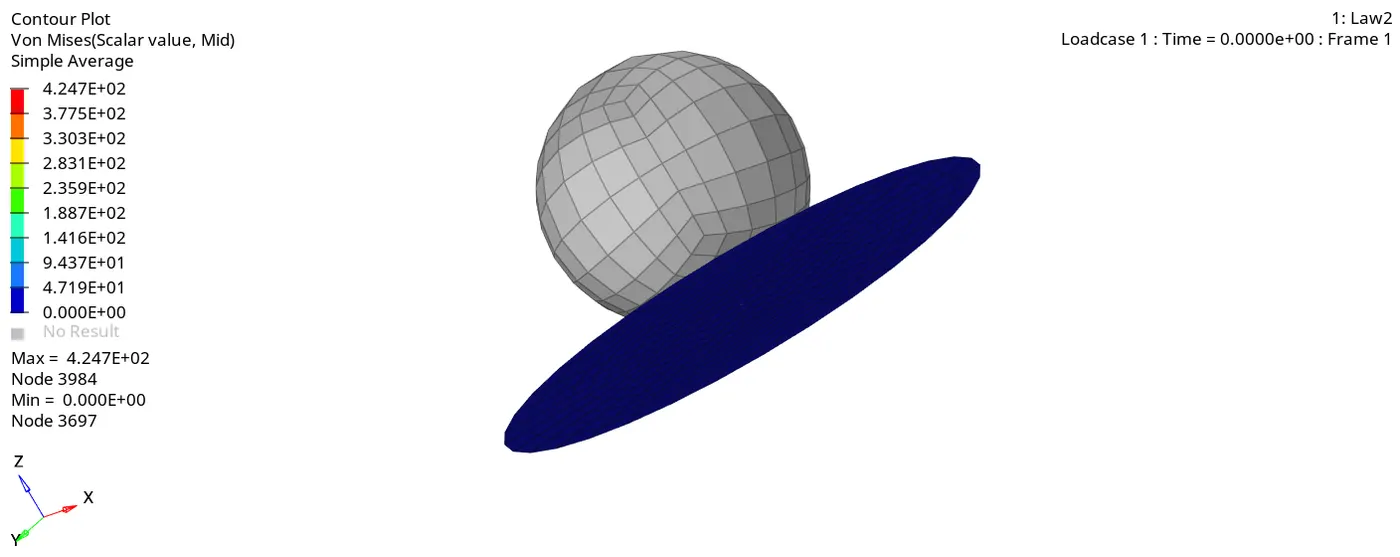
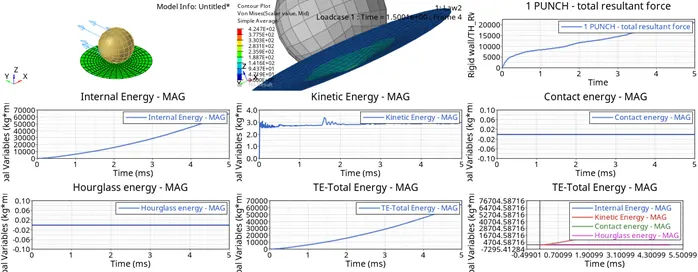
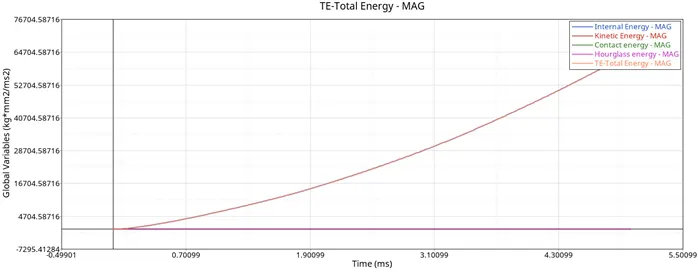
Max von misses stress is 424.7 mpa at node 3+984
In this case, elements are not deleted, because EPS_P_MAX is zero it means the material will fail when it reaches its 100% strain energy
Due to elements are not getting deleted, the resistance of the plate is increased hence more stresses are generated
Max internal energy is more than 65000j
Max kinetic energy is 3.75
Internal energy generated in this case is more than cases 1,2,3
In previous cases, element gets deleted so less internal energy was generated but in this case, elements are not deleted hence more internal energy developed
Case 5 – law1_ elastic
In this case convert the material model to law1 with the same density, E and nu
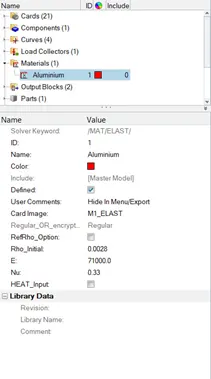
After completing the running simulation, open law1_ 0001.out
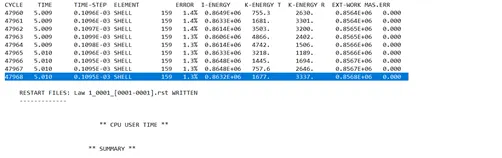
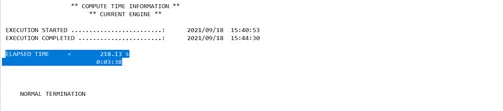
This has number of the cycle as 47968, energy error as -0.3 to 1.3 %, mass error 0.000
After checking the errors, open the then case 5 model in hyper view and view it in von misses contour
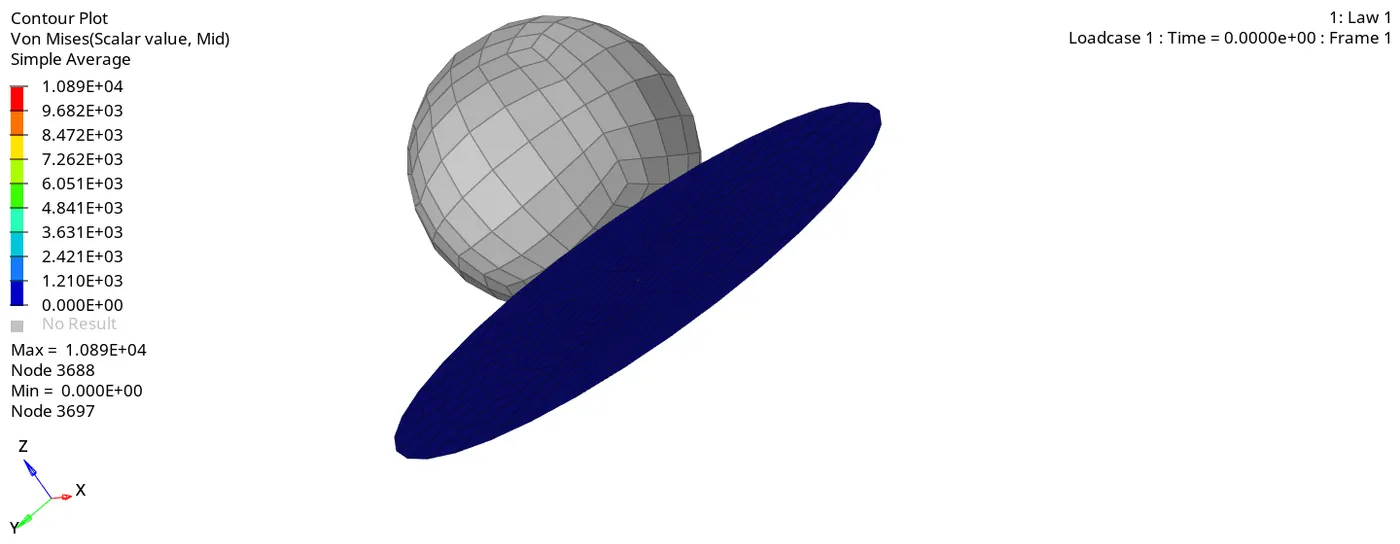
Max von misses stress is 10890 mpa at node 3688
We taken law1 as a card image, law 1 is an isotropic–elastic material
In this element are not deleted and high stresses are generated
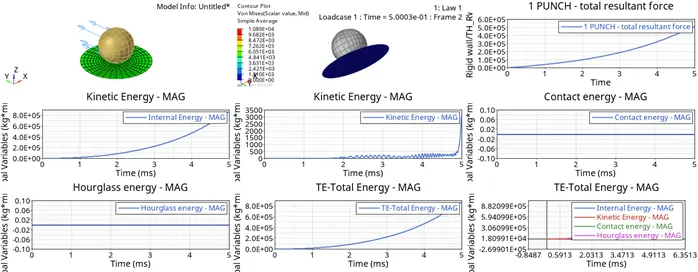
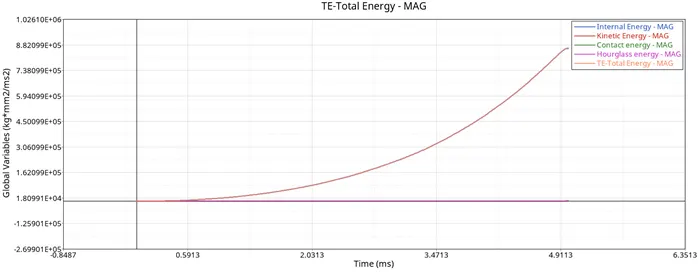
Max internal energy more than 850000j
Max kinetic energy is 3250
Internal energy generated in this case is more than cases 1,2,3,4
Case 6- law 27
Open the model law 27_0000.rad
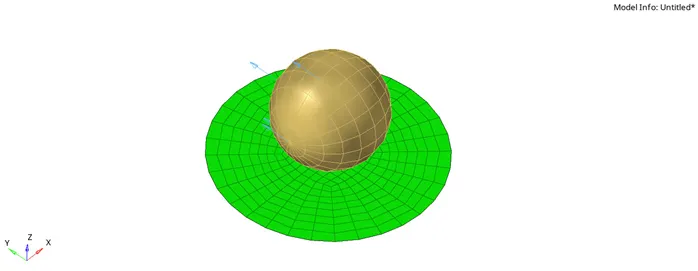
and use below material card and shell properties
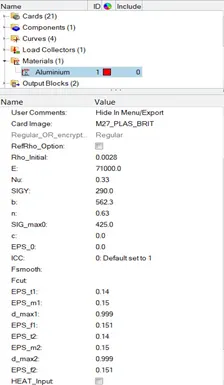
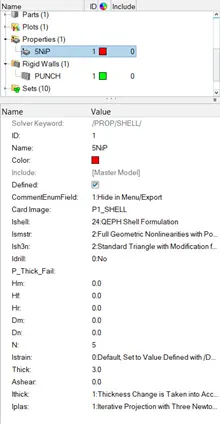
And run the simulation once it is done .open law27_0001.out file

 \
\
This has a number of the cycle as 49506, energy error as -0.3 to 0.8 %, mass error 0.000
After checking the errors, open the then case 6 model in hyper view and view it in von misses contour
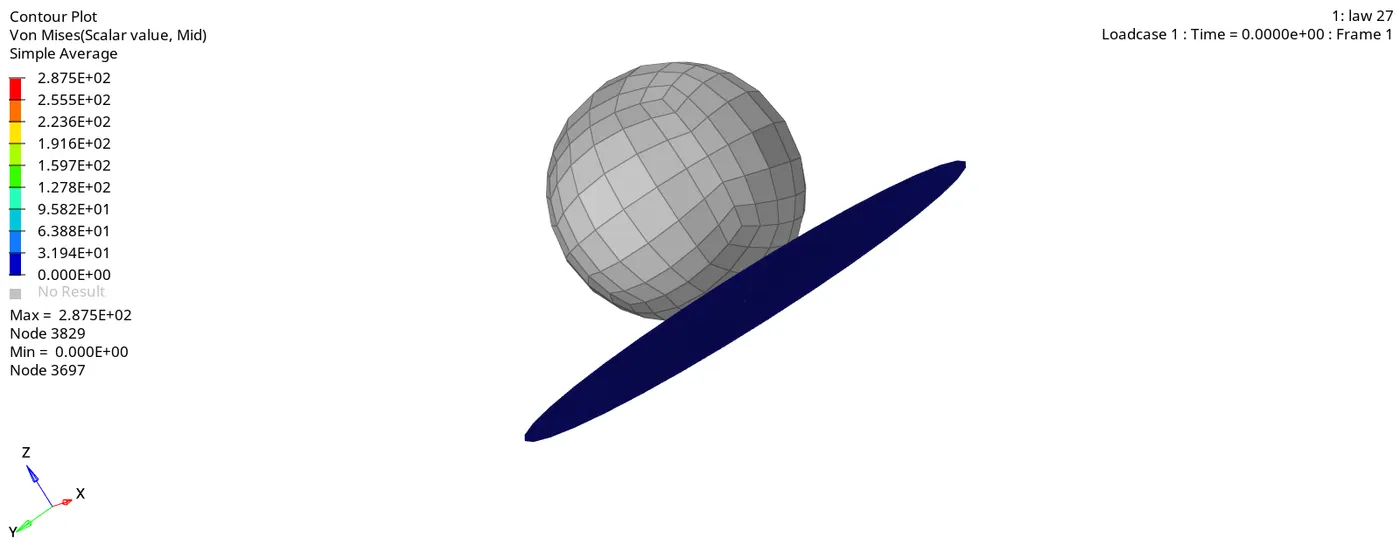
Max von misses stress is 287.5 mpa at node 3829
Law 27 is isotropic elastic _plastic brittle material,in this case, element get cracked not deleted
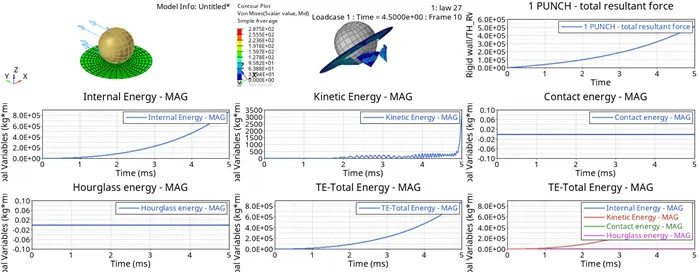
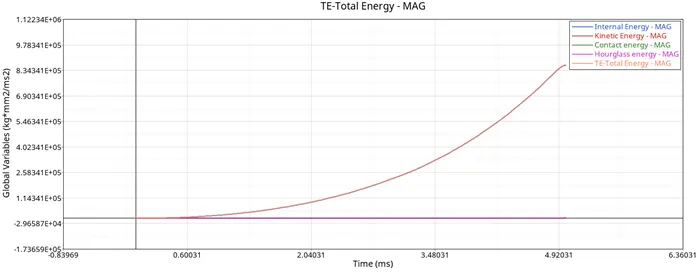
Max internal energy is nearly 30000j
Max kinetic energy is 425
Case 7 _ law 36 elasto _ plastic
Select M36_PLAS_TAB card image, take the value as same as in before cases
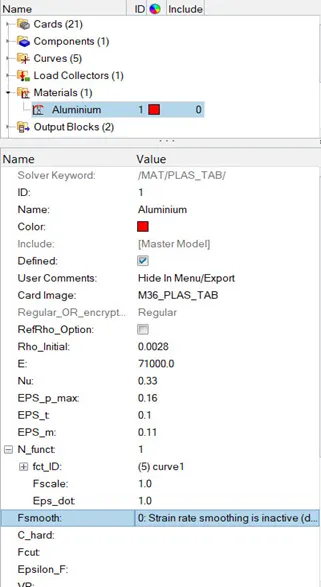
In N_function below data is used to generate curve
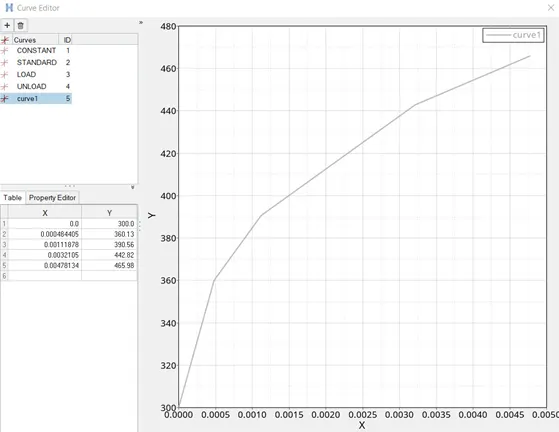
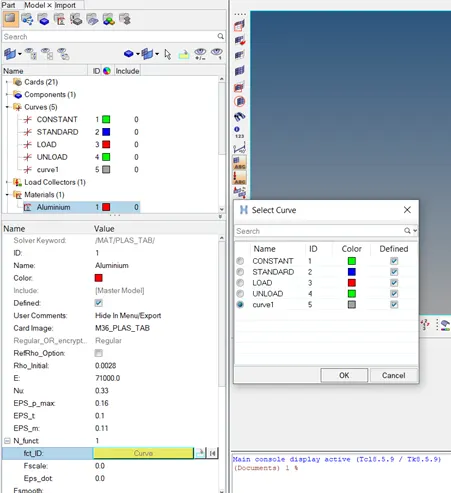
After creating the curve assign to material
Run the simulation
After running simulation open law 36 _0001.out
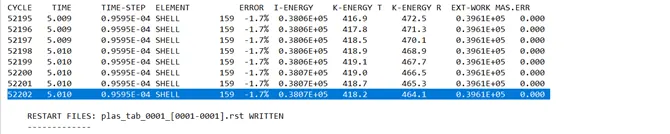
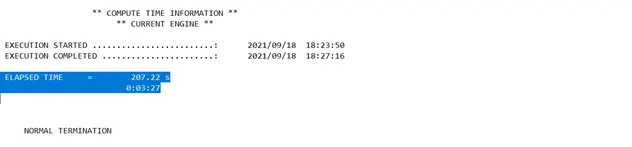
This have number of cycle as 52174 , energy error as -0.3 to -1.7 % , mass error 0.000
And simulation time as 207.22
After checking the errors , open the then case 7 model in hyper view and view it in von misses contour
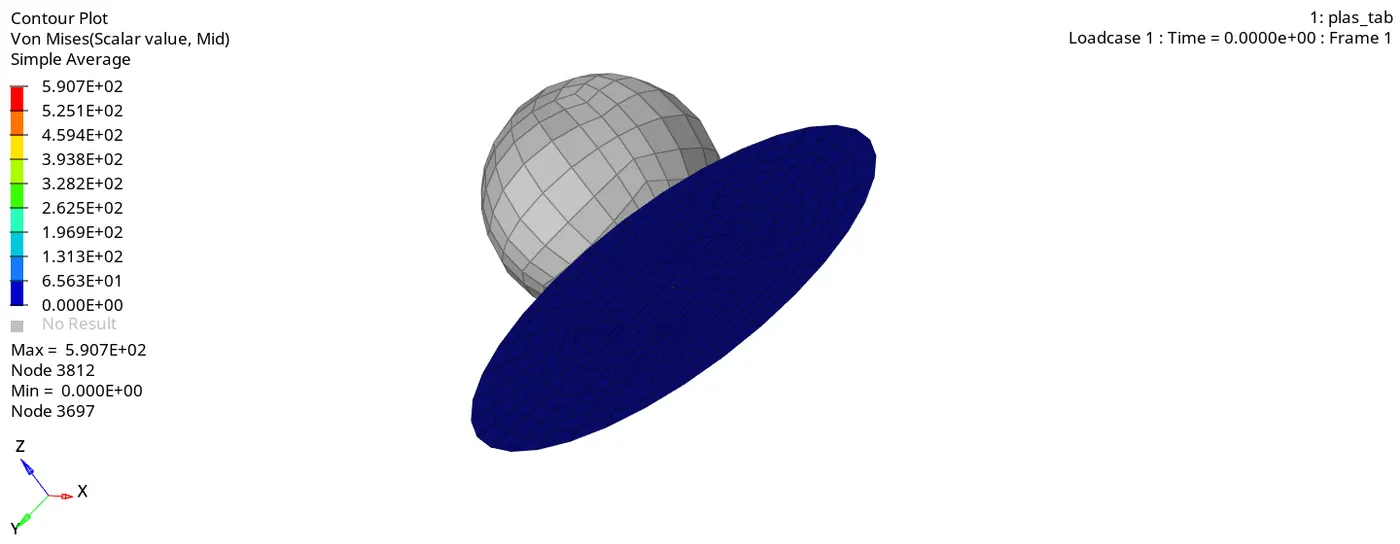
Max von misses stress is 596.5 mpa at node 3562
Elements are deleted
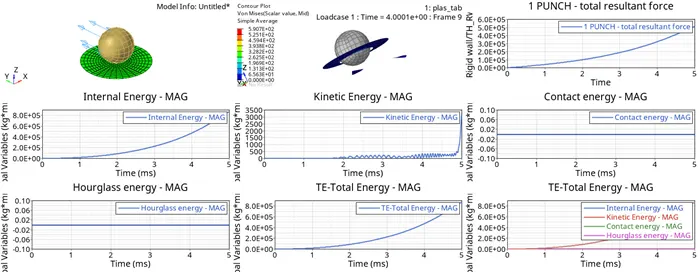
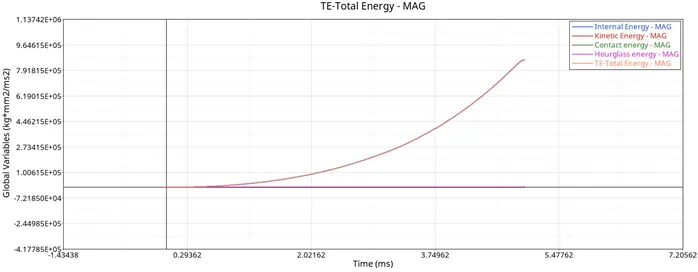
Max internal energy is nearly 40000j
Max kinetic energy is 1900
Total energy = internal energy + kinetic energy + potential energy (negligible )
Compare to internal energy kinetic energy is very less i.e. total energy curve almost coincides with the internal energy curve
Conclusion
Elastic materials are not deleted and they produce max stress and max energy
Element delete depends on EPS_P_MAX value
Brittle material elements is cracked
Simulation time is constant for all materials
Law 36 material takes more no. of the cycle but energy error is minimum in this case
The selection of material cards is based on their application