Assignment 4-RADIOSS Material Laws Challenge
Aim
To run the analysis on the model for different material laws and material failure settings of different cases and compare the results of failure of elements, total number of cycles, energy error, mass error, and simulation time. And plot energies of different cases of material laws and elemental properties
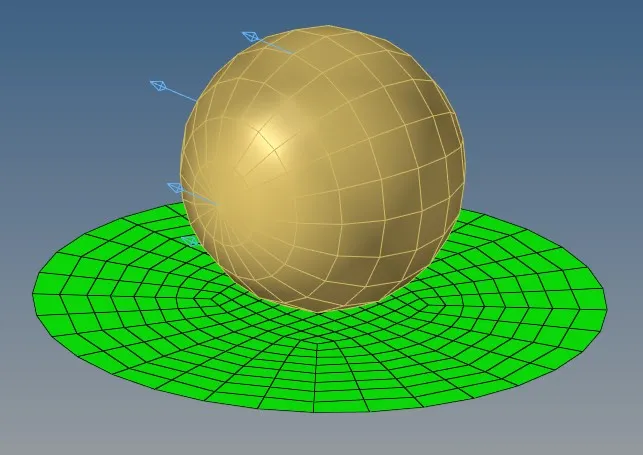
Objective
- Law 2 (file:Law2_epsmax_failure) - base simulation.
- Law 2 (file: Law2_epsmax_crack)Fail/Johnson card ifall=1, Dadv=1, ixfem=1
- Law 2 (file: Law2_epsmax_nofail) with fail/Johnson card deleted.
- Law 2 (file: Law2_epsmax_nofail) Remove Eps_p_max and failure Johnson card
- Law 1 (file: Law1_epsmax_nofail) change material card to Law1
- Law 36 (file: Law1_epsmax_failure) change material card to Law36
- Law 27 (file: Law27_000.rad) change to recommended shell properties.
Material & Element Parameters
For the base simulation the elemental parameters of the meshed shell elements are as below

Ishell-24 :- QEPH element formulation
Ismstr-2 :- small strain formulation with geometric nonlinearities
N(NPT)-5 :- number of integration of integration points(5 integration points)
Ithick-1 :- to account for thickness change over the elements during deformation
Iplas-1 :- to consider the stiffness change over the thickness due to plastic strain
material card and units
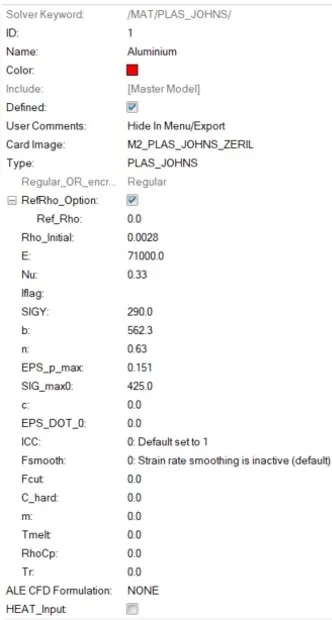
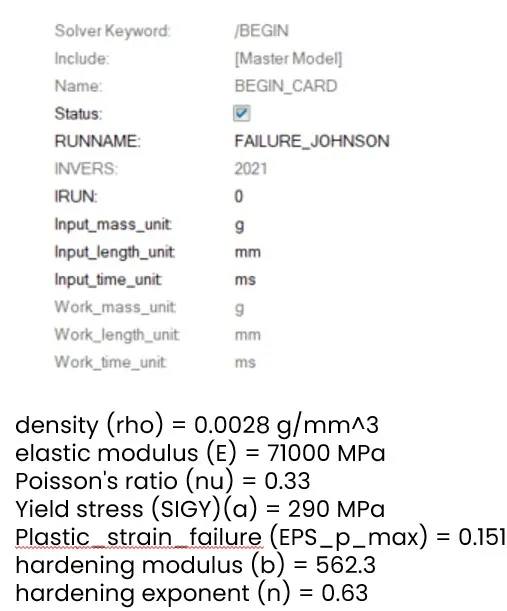
Eps_p_max is plastic strain failure is a parameter in which elements will get deleted when the material crosses the plastic strain of given limit.
Case1
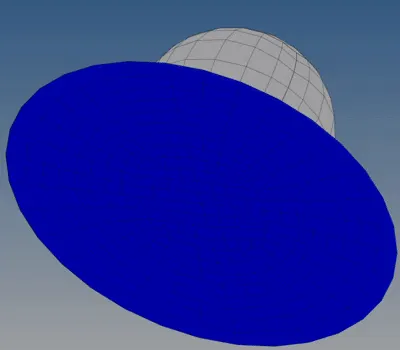
run the base simulation
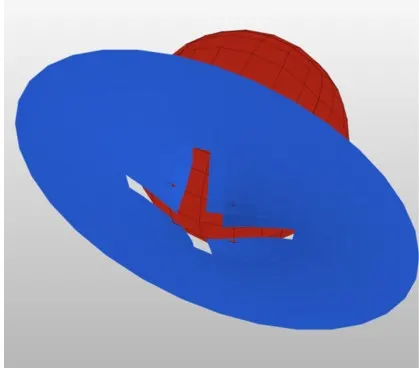
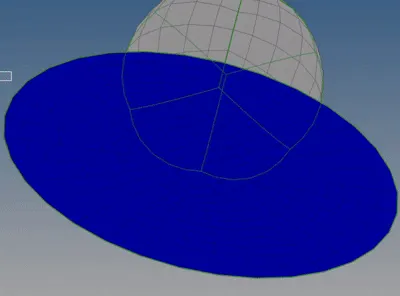
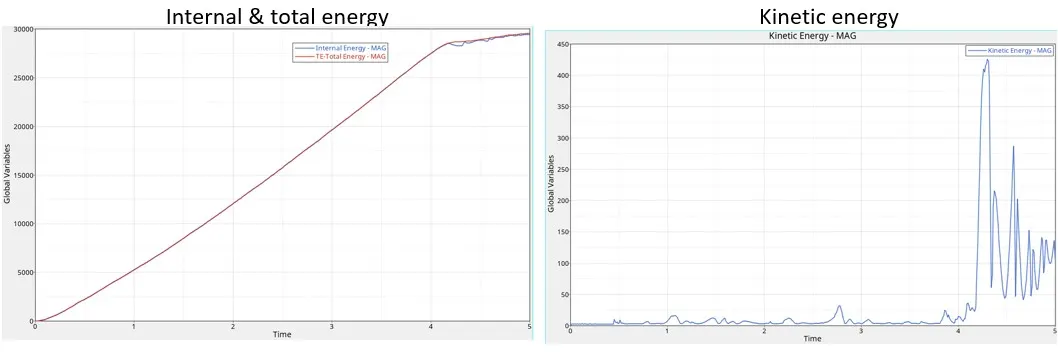
In the Hyper graph2D derived plots for different forms of energy and forces are derived by opening T01 files from simulation files after running the simulation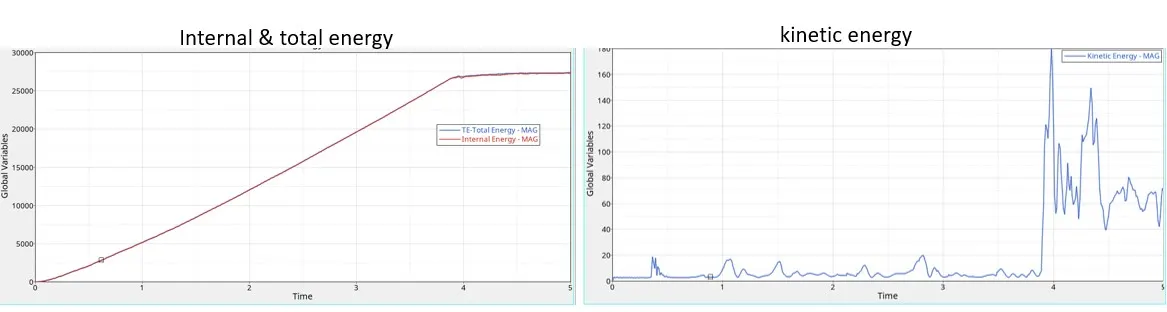
- As the element formulation is QEPH element formulation there will not be any hourglass energy for QEPH elements
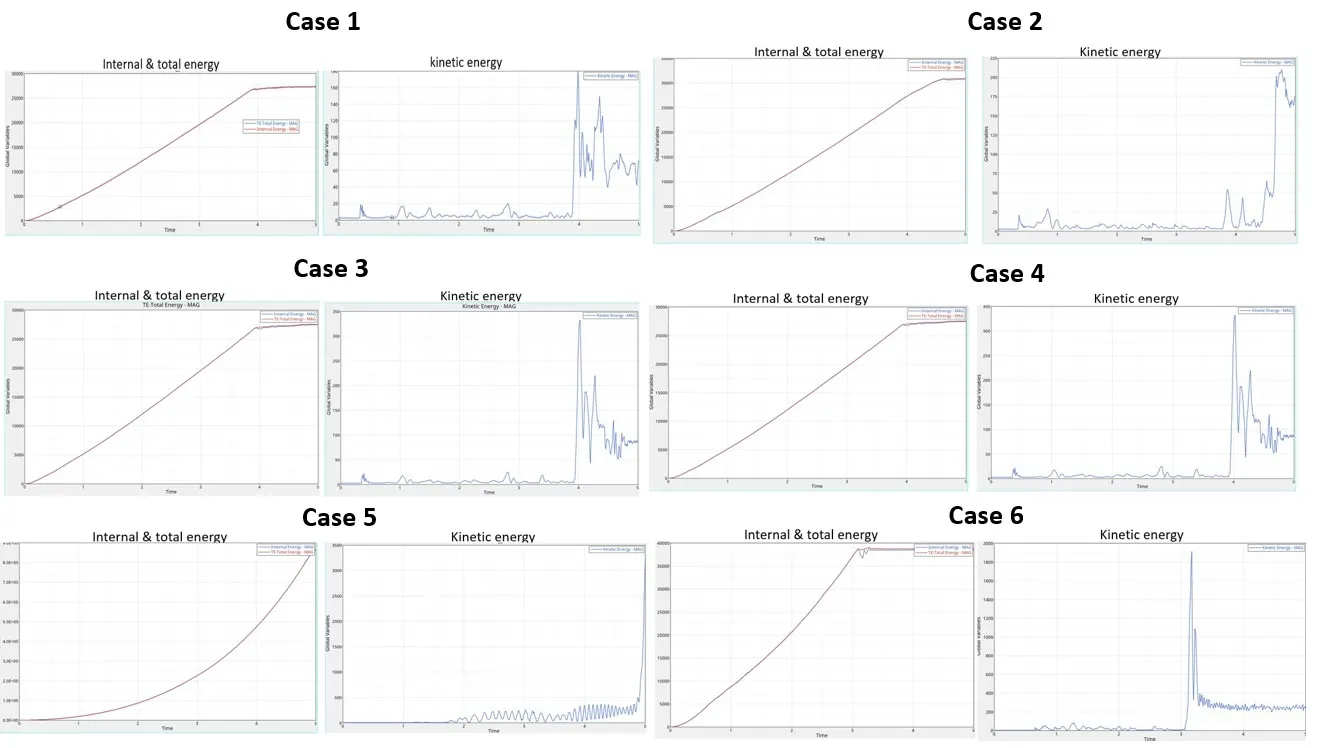
- From the plots as the deformation increases the internal energy increases nearly up to 4ms and the graph gone constant as the elements under impact reached plastic strain(EPS_p_max) elements get deleted at 4 ms.
- Total energy is almost overlap to internal energy as no other parts are connected and all the kinetic energy lost will be converted to internal energy.
- kinetic energy increased when the internal energy stops increasing at near to 4ms from the graph which lead to increase kinetic energy.
Rigid wall Forces
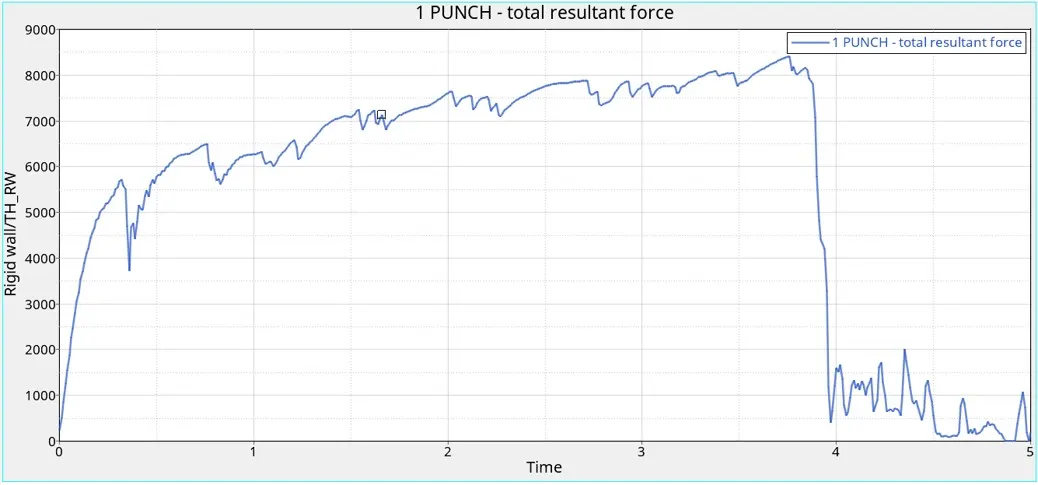
As the elements deleted due to plastic strain reached max limit the forces on the rigid dropped drastically as shown near to 4ms
Energy Error & mass error

Energy error for the simulation is recorded +0.8% which is under +5% is acceptable
mass error recorded for the simulation is 0.0%
Case2
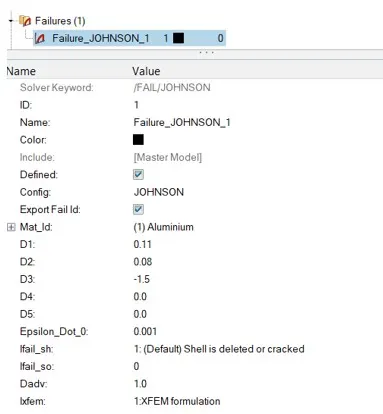
perform the simulation with failure plastic strain and fail_Jhonson card by changing the parameters in the fail_Jhonson_card Ifall_sh=1, Dadv=1, Ixfem=1
Ixfem=1 :- Ixfem can effectively simulate crack initiation and propagation
Ifall_sh=1 :- Ifall_sh will determine how the elements should fail
Dadv=1 :- The Dadv determines weather damage is transferred to neighboring elements after erosion this is important for crack propagation if Dadv=1 damage will be transferred to neighboring elements
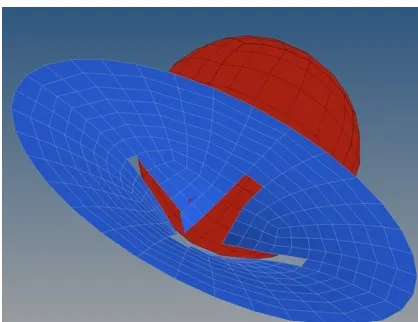
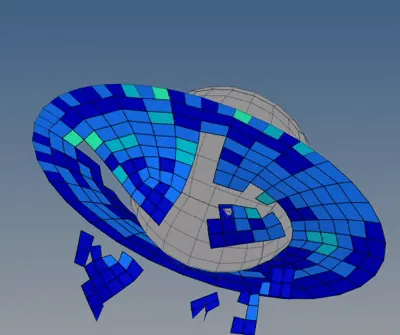
In the Hyper graph2D derived plots for different forms of energy and forces are derived by opening T01 files from simulation files after running the simulation
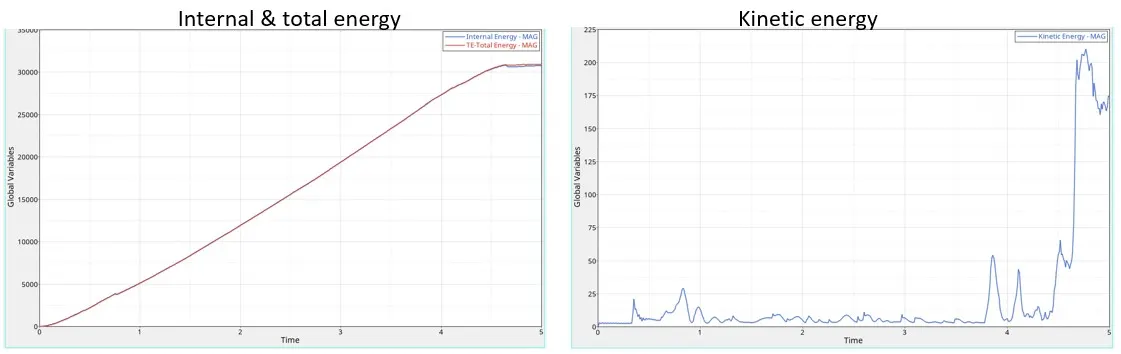
- As the element formulation is QEPH element formulation there will not be any hourglass energy for QEPH elements
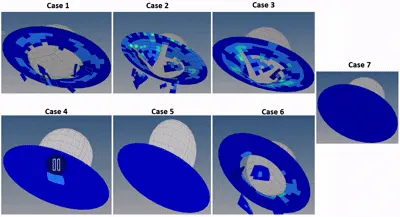
- From the plots as the deformation increases the internal energy increases nearly up to 4.5ms and the graph gone constant as the elements under impact reached plastic strain(EPS_p_max) elements get cracked at 4.5 ms. due to Ixfem=1
- Total energy is almost overlap to internal energy as no other parts are connected and all the kinetic energy lost will be converted to internal energy.
- kinetic energy increased when the internal energy stops increasing at near to 3.8ms from the graph which lead to increase kinetic energy. after this there is spike in the graph which shows initiation of crack in the model.
Rigid wall forces 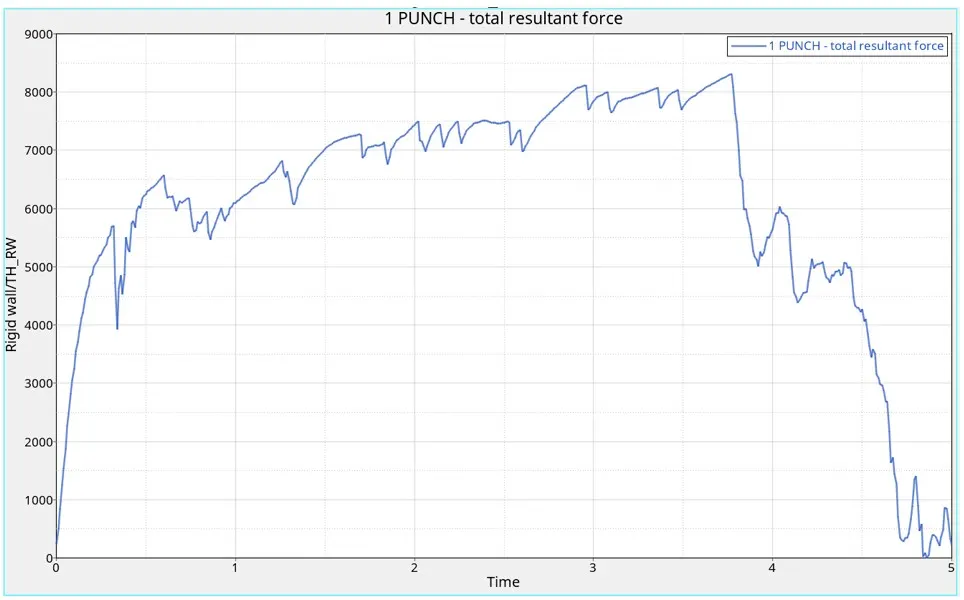
As the elements cracked due to plastic strain reached max limit the forces on the rigid dropped drastically as shown near to 3.8ms
Energy Error & mass error

Energy error for the simulation is recorded +4.1% which is under +5% is acceptable
mass error recorded for the simulation is 0.2980e+5
Case3
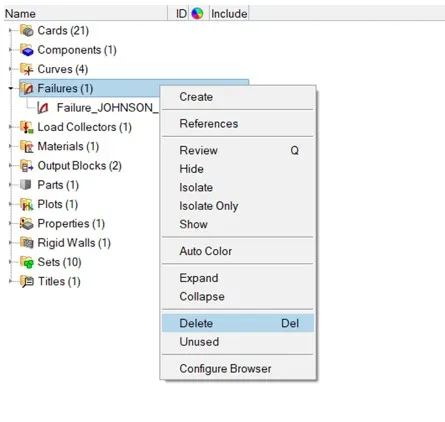
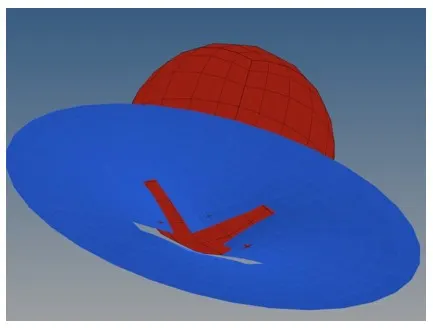
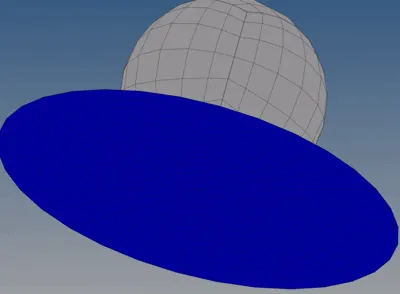
remove Johnson failure card and run the simulation
In the Hyper graph2D derived plots for different forms of energy and forces are derived by opening T01 files from simulation files after running the simulation
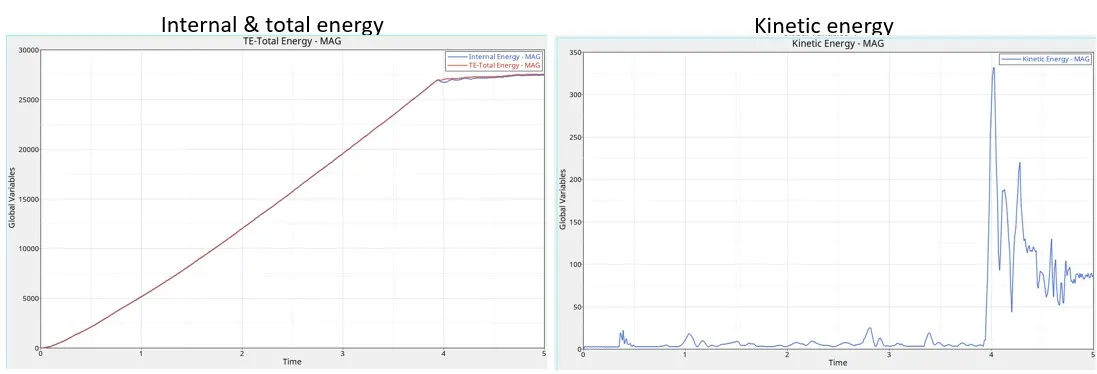
- As the element formulation is QEPH element formulation there will not be any hourglass energy for QEPH elements
- From the plots as the deformation increases the internal energy increases nearly up to 4ms and the graph gone constant as the elements under impact reached plastic strain(EPS_p_max) elements get deleted at 4 ms.
- Total energy is almost overlap to internal energy as no other parts are connected and all the kinetic energy lost will be converted to internal energy.
- kinetic energy increased when the internal energy stops increasing at near to 4ms from the graph which lead to increase kinetic energy.
- with deletion of failure card the energy plots almost matched to the energy plots of case1
Rigid wall forces
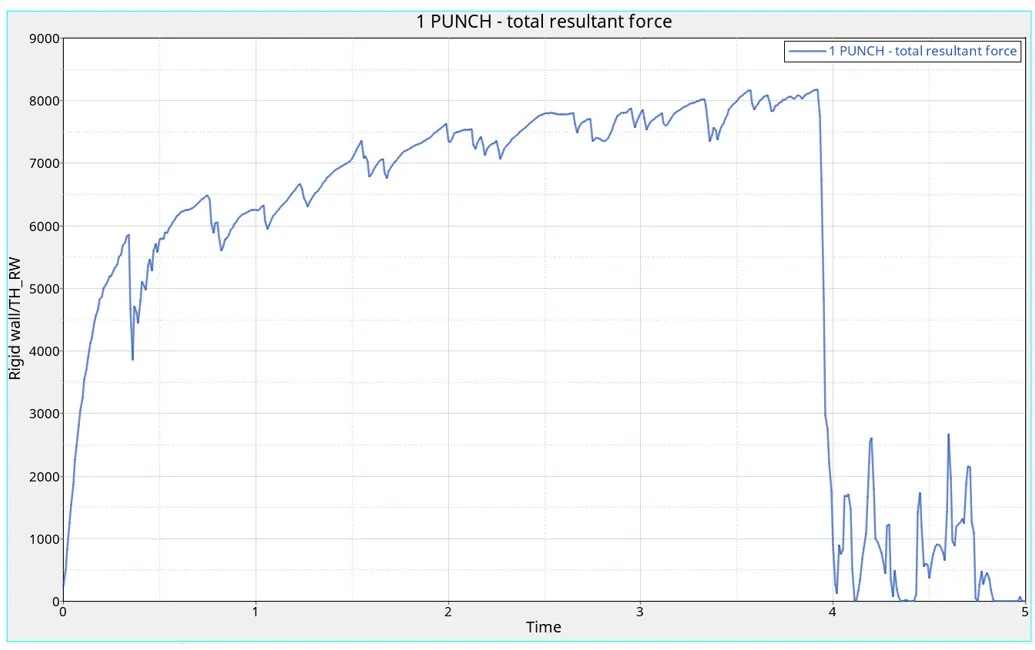
As the elements deleted due to plastic strain reached max limit the forces on the rigid dropped drastically as shown near to 4ms
Energy Error & mass error

Energy error for the simulation is recorded +0.8% which is under +5% is acceptable
mass error recorded for the simulation is 0.2736e+5
energy error and mass error are similar to case1 and as Eps_p_Max is enabled elements got deleted as they reach failure plastic strain.
Case4
For the case3 remove failure plastic strain(Eps_P_max) and run the simulation
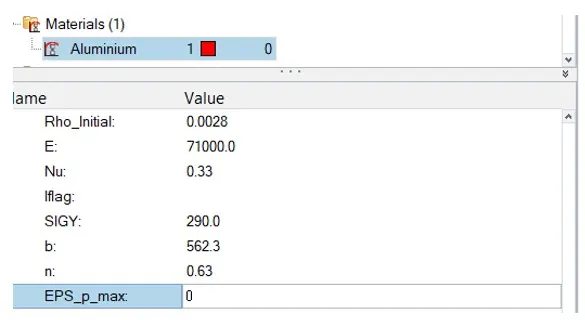
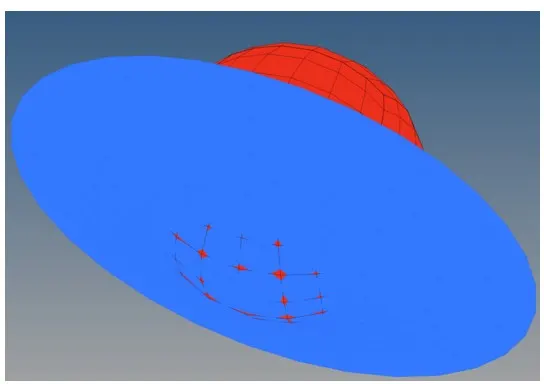
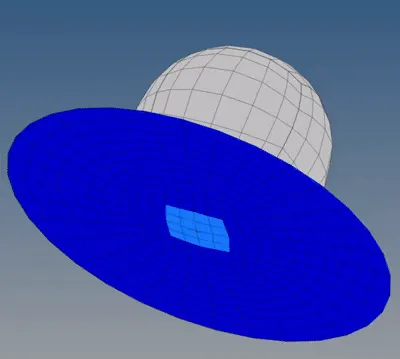 In the Hyper graph2D derived plots for different forms of energy and forces are derived by opening T01 files from simulation files after running the simulation
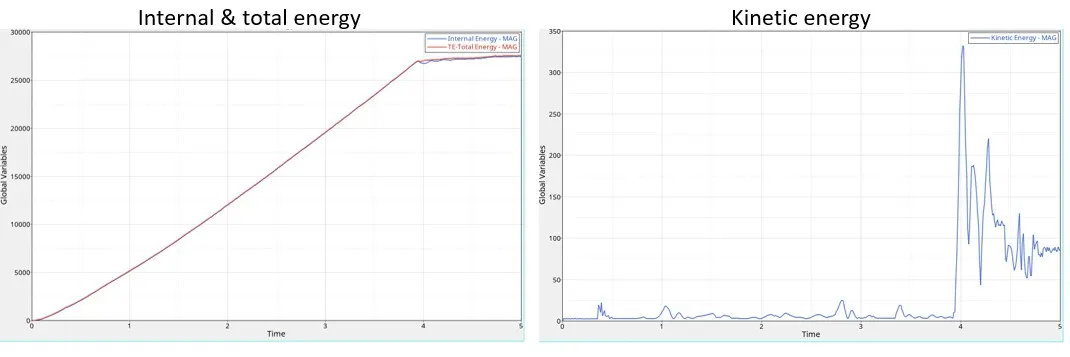
- As the element formulation is QEPH element formulation there will not be any hourglass energy for QEPH elements
- From the plots as the deformation increases the internal energy increases nearly up to 4ms and the graph gone constant as the elements under impact reached plastic strain as Eps_p_max is 0 the deletion of elements will not happen and therefore there will be any crack propagation visible in the model
- Total energy is almost overlap to internal energy as no other parts are connected and all the kinetic energy lost will be converted to internal energy.
- kinetic energy increased when the internal energy stops increasing at near to 4ms from the graph which lead to increase kinetic energy. after this there is spike in the graph.
Rigid wall forces
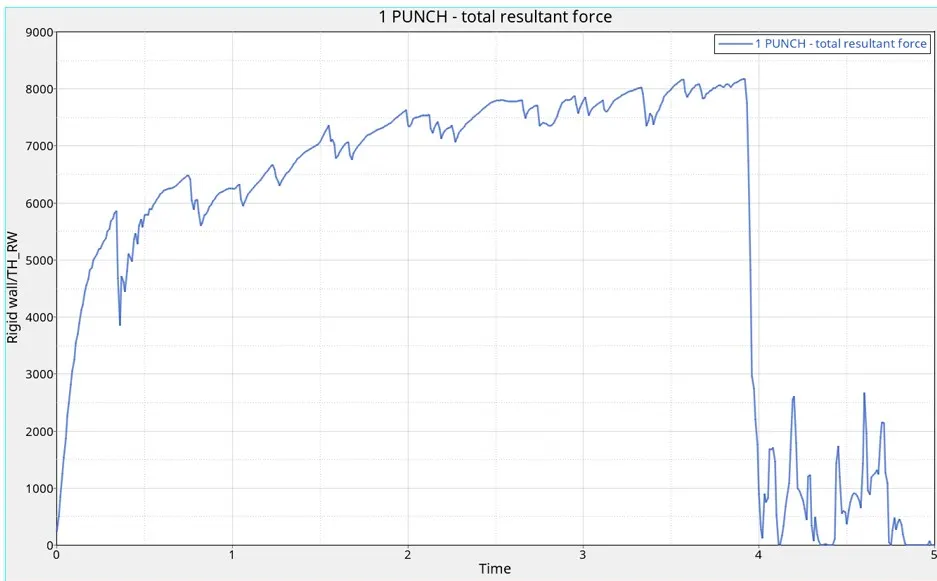
As the elements deleted due to plastic strain reached max limit the forces on the rigid dropped drastically as shown near to 4ms
Energy Error & mass error

Energy error for the simulation is recorded +3% which is under +5% is acceptable
mass error recorded for the simulation is 0.6297e+5
Case5
For the case 4 change the material law from m2(Johns cook law) to m1(elastic)
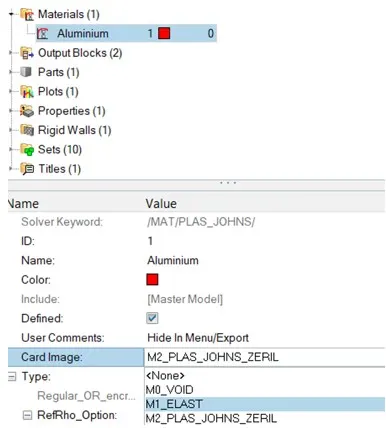
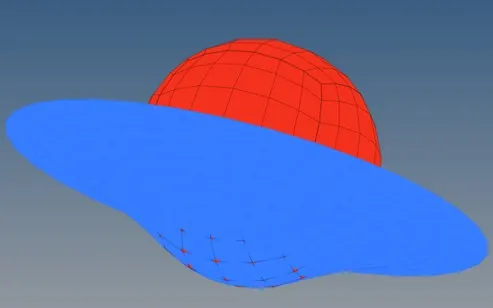
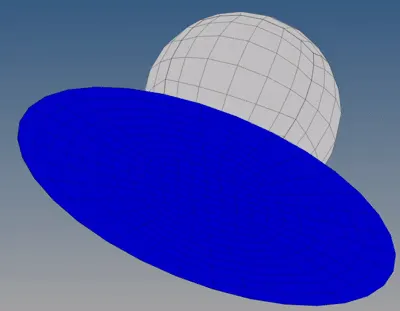 In the Hyper graph2D derived plots for different forms of energy and forces are derived by opening T01 files from simulation files after running the simulation
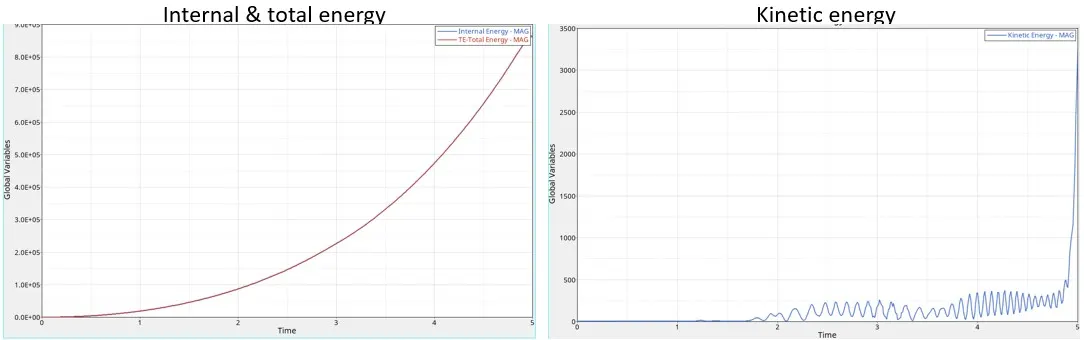
From the plot internal energy and total energy are similar increases exponentially
Rigid wall forces
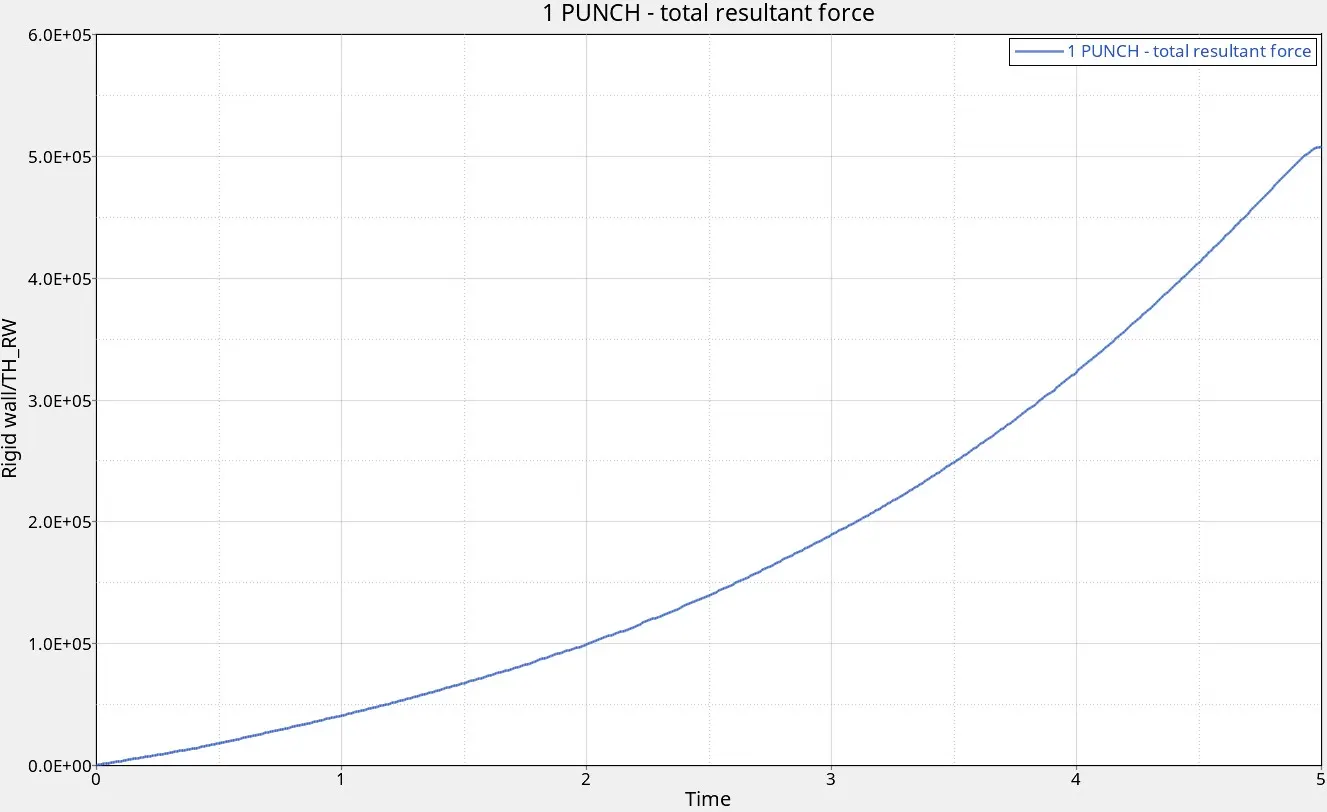
rigid wall forces are increases exponentially nonlinearly
Energy Error & mass error

Energy error for the simulation is recorded +1.3% which is under +5% is acceptable
mass error recorded for the simulation is 0.8566e+6
Case6
For the case 1 change the material law from m2(Johnson cook ) to m36(elastic plastic piecewise linear material)
law36(M36) elastic plastic piecewise linear material
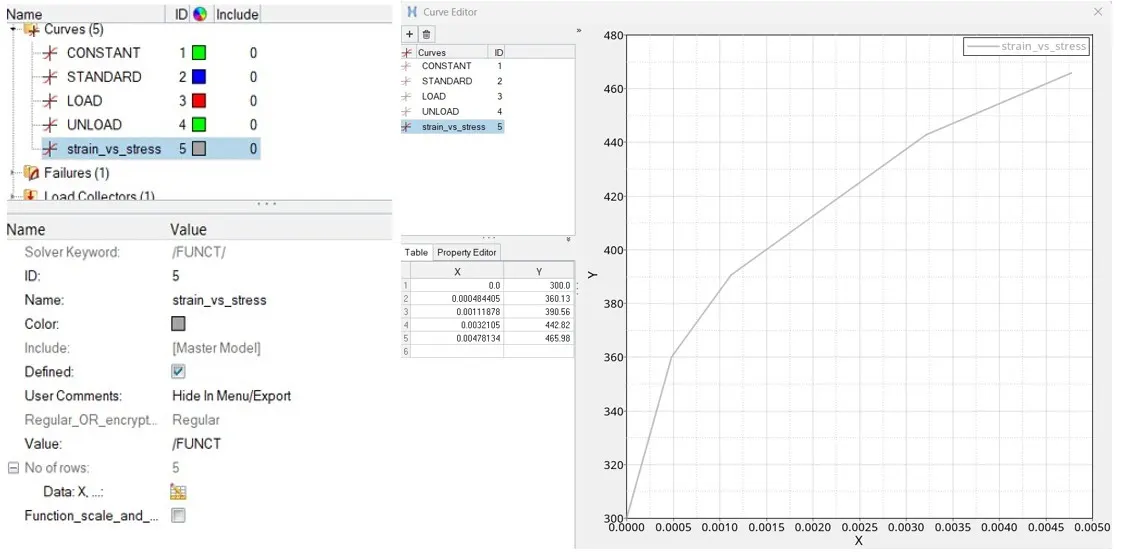
law36 models an isotropic elastic plastic material using user defined functions for the work hardening portion of the stress strain curve for different strain rates.
Material properties
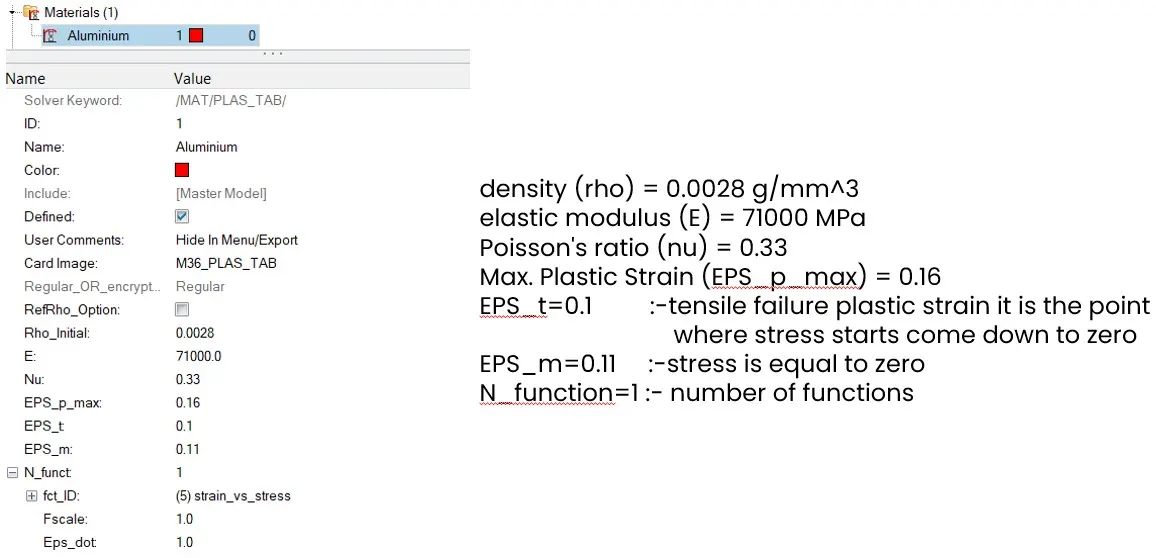
user defined function that is load curve or stress strain curve can be define for Law36 material. The model is defined by plastic strain and plastic stress curve as shown
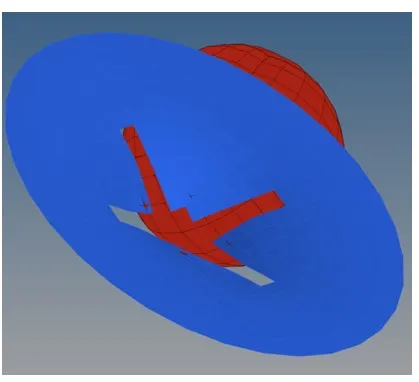
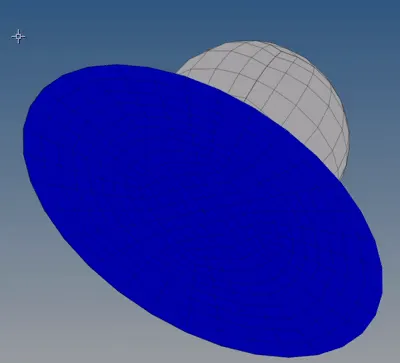
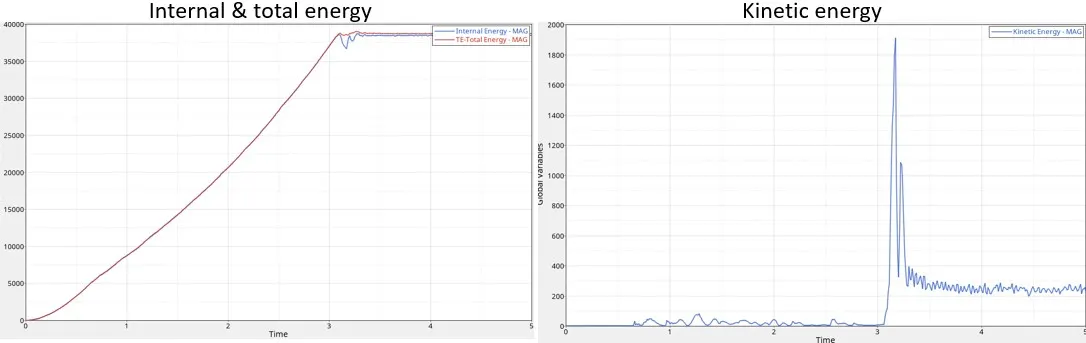
- As the element formulation is QEPH element formulation there will not be any hourglass energy for QEPH elements
- From the plots as the deformation increases the internal energy increases nearly up to 3ms and the graph gone constant as the elements under impact reached plastic strain as Eps_p_max is 0 the deletion of elements happend and therefore there will be failure propagation visible in the model
- Total energy is almost overlap to internal energy as no other parts are connected and all the kinetic energy lost will be converted to internal energy.
- kinetic energy increased when the internal energy stops increasing at near to 3ms from the graph which lead to increase kinetic energy as the elements scattered
- Compared to remaining 5 cases due to change in the loading of material and Eps_p_max values failed earlier than remaining cases.
Rigid wall forces
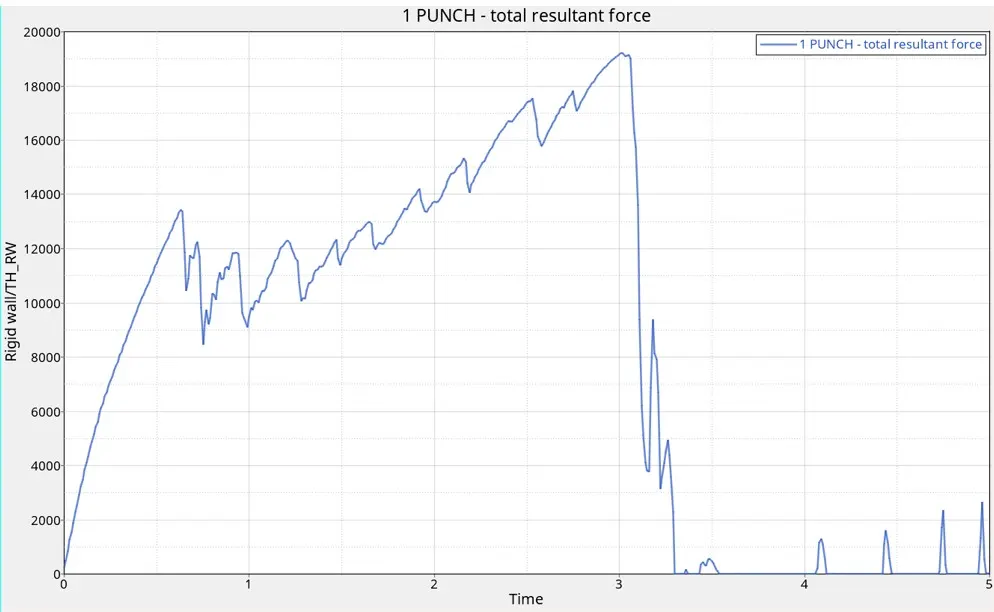
As the elements deleted due to plastic strain reached max limit the forces on the rigid dropped drastically as shown near to 3ms
Energy Error & mass error

Energy error for the simulation is recorded -1.8% which is under +5% is acceptable
mass error recorded for the simulation is 0.3982e+5
Case7
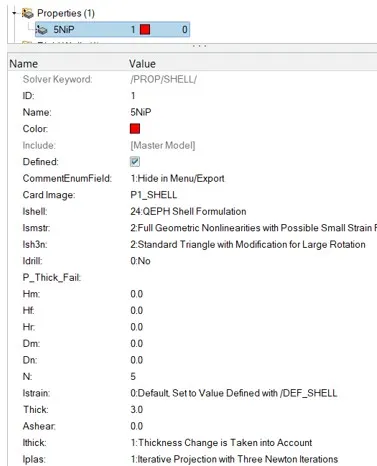
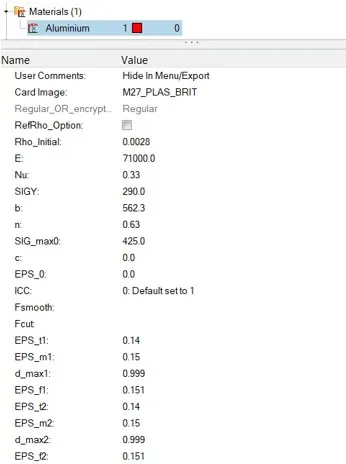
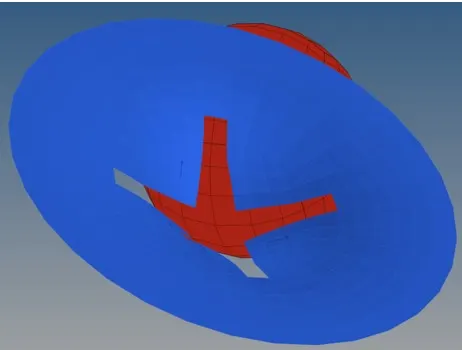
changed element properties to recommended material card with plast\brit material card of material law27
Energy Error & mass error

Energy error for the simulation is recorded +0.8% which is under +5% is acceptable
mass error recorded for the simulation is 0.2940e+5
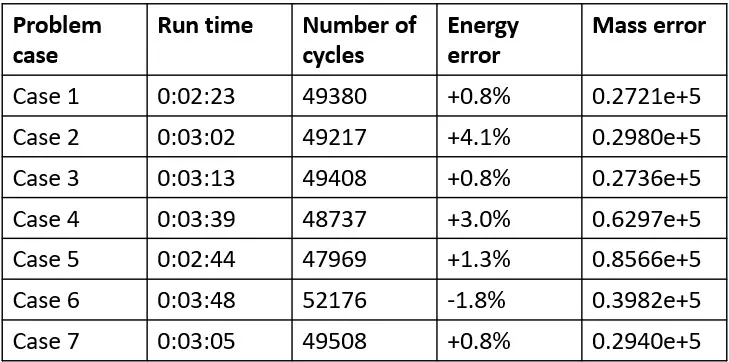
CONCLUSION:
Out of all the four law material cards (i.e Law 1,2,27,36) which were used in the above 7 cases, the Law36 PLAS_TAB or Elastic plastic piece wise linear material card is the most widely used material card in the industries because the failure can easily be managed and it can be used for all types of elements. Thus this material card is recommended to use when compared to the above mentioned material cards.