Assignment 4-RADIOSS Material Laws Challenge
AIM: To run the different material models on the plate when the solid rigid sphere hits the plate and check the variation in results.
PROCEDURE:
Case 1:
- First FAILURE_JOHNSON model is imported using the solver desk imported into the HYPERMESH software and run the same file using the ANALYSIS-->Radioss using the -nt 4, and run the file.
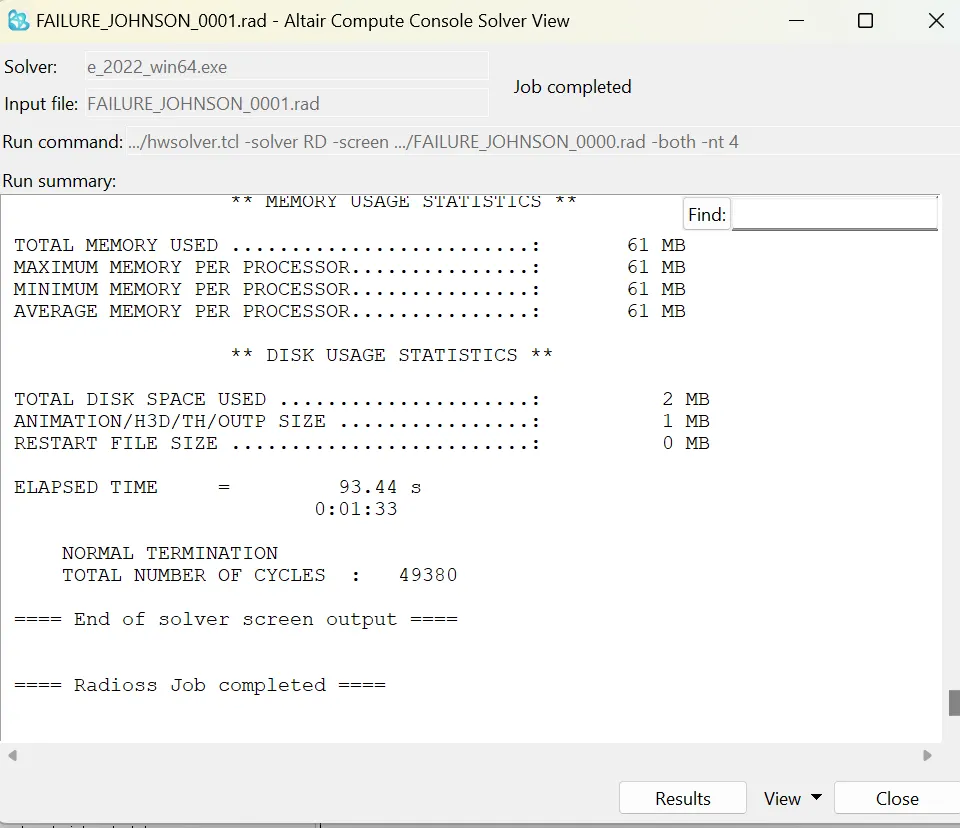
- Number of cycles used to run the simulation is shown in the figure, mass and energy errors are also within the limit i.e., 0.8% and 0 respectively.

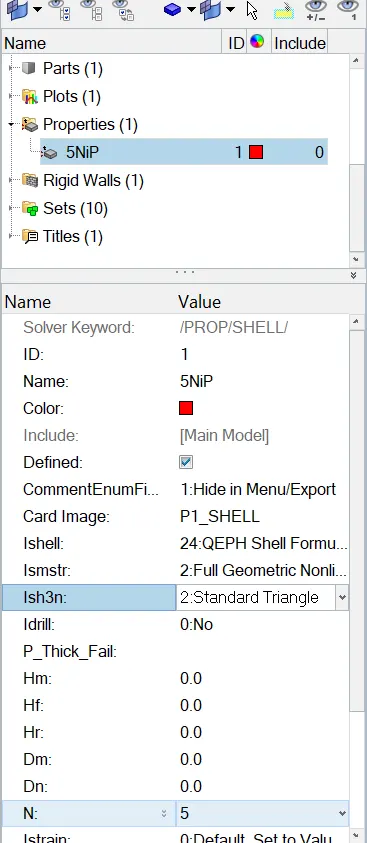
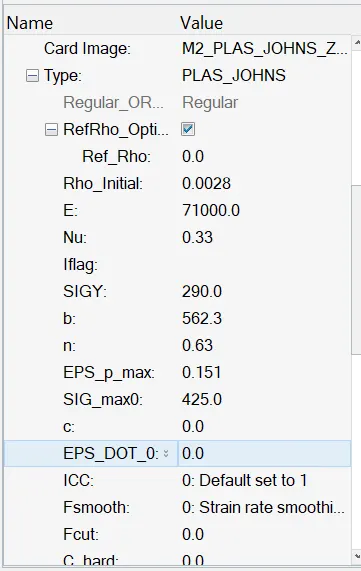
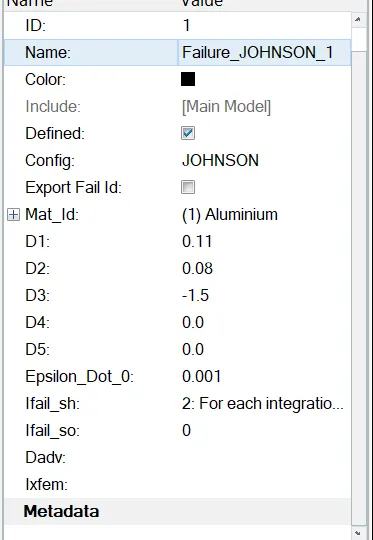
- The property card,material model and Failure criteria used for this simulation is shown in the figure.
- The total energy, internal energy, kinetic energy and rigid wall forces are plotted in the graphs and shown in the figures.
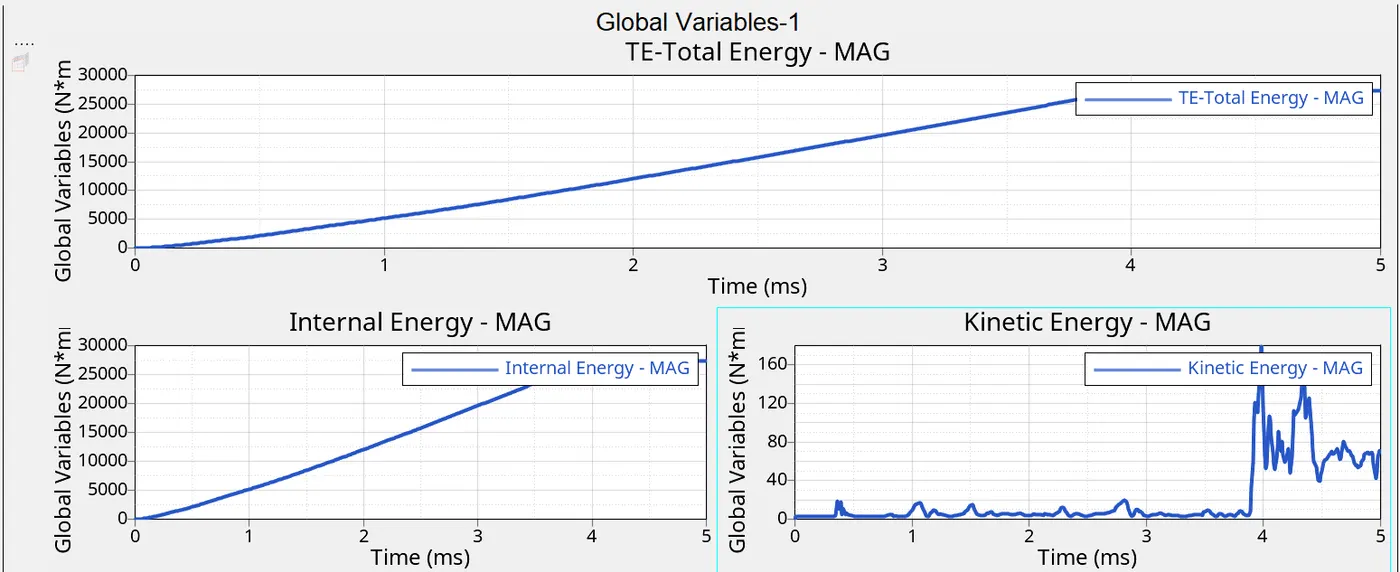
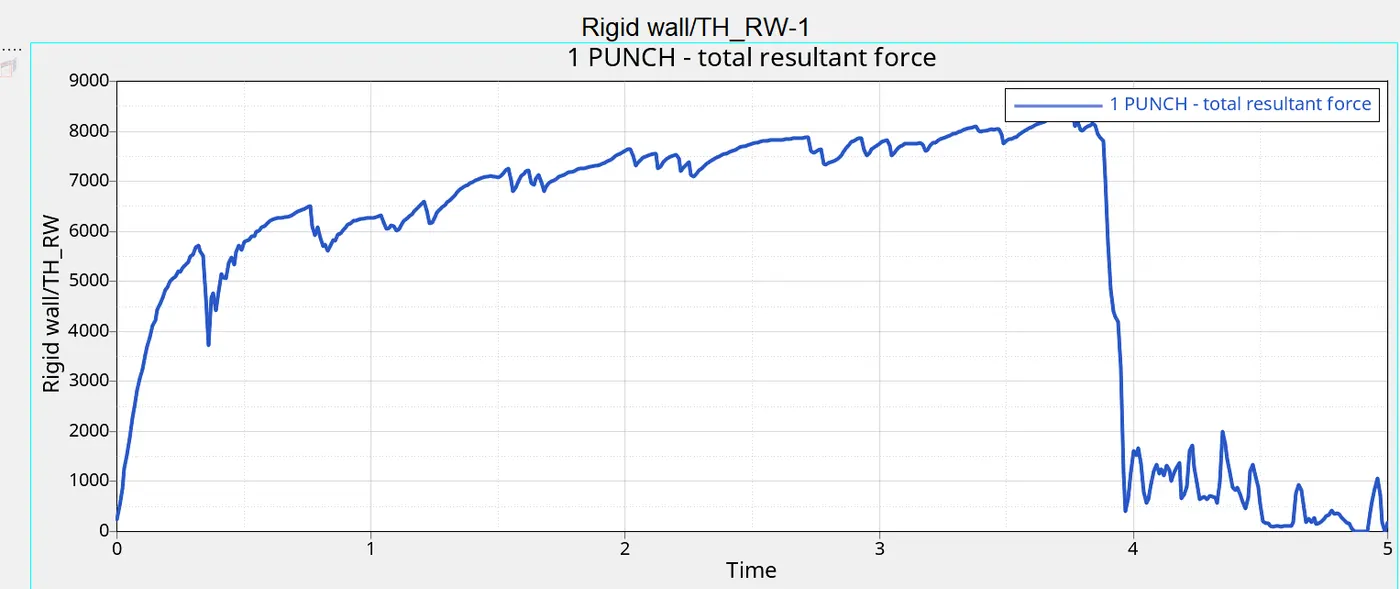
- The total energy and internal energy are increasing in the form of strain energy until the end of the simulation. The kinetic energy is very low until 4 ms, then it rises due to element failure. In the case of rigid wall forces, the plate opposes the rigid sphere for 4 ms, so the forces are high, after the element deletion, there is no opposing force, so there is less rigid wall forces.
CASE 2:
- Now in case 2, take the FAILURE_JOHNSON file and change ifail_sh = 1, Dadv = 1, Ixfem = 1, these properties in the failure card and save this file as Law2_epsmax_crack_0000.
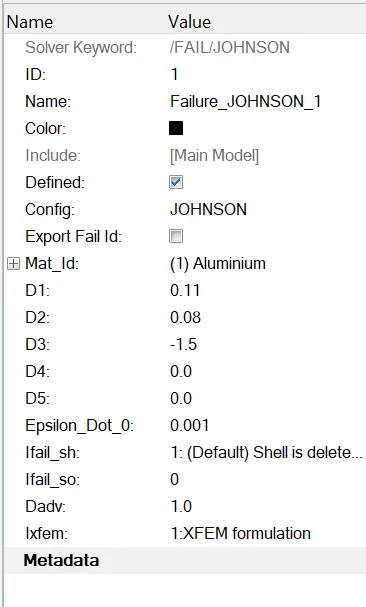
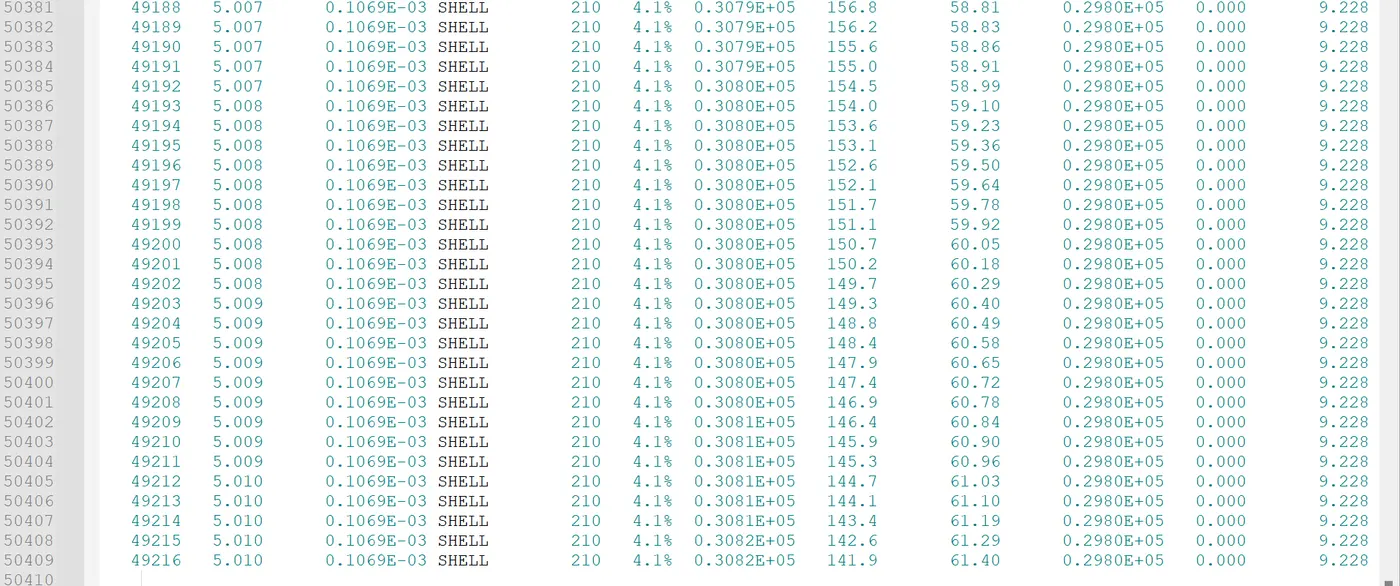
- The number of cycles it took to complete the simulation for this case is shown in the figure.
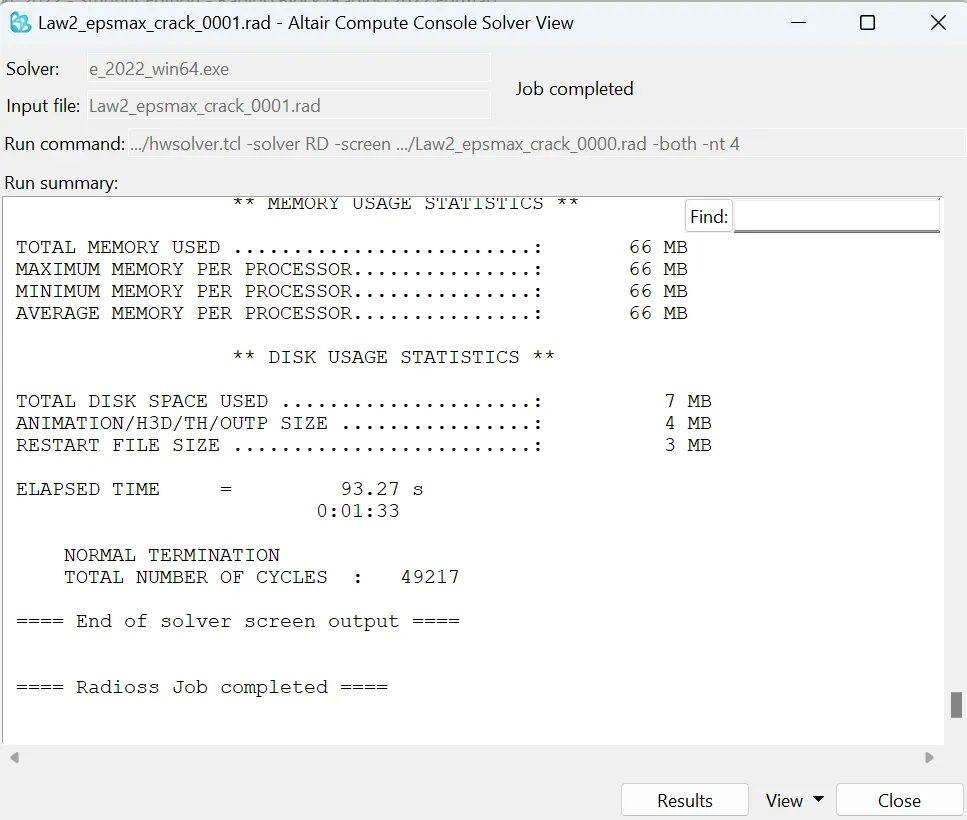
- The mass and energy errors are 4.1% and 0, which are in an acceptable range.
- The energies and rigid wall forces are plotted for this case are shown in the figure.
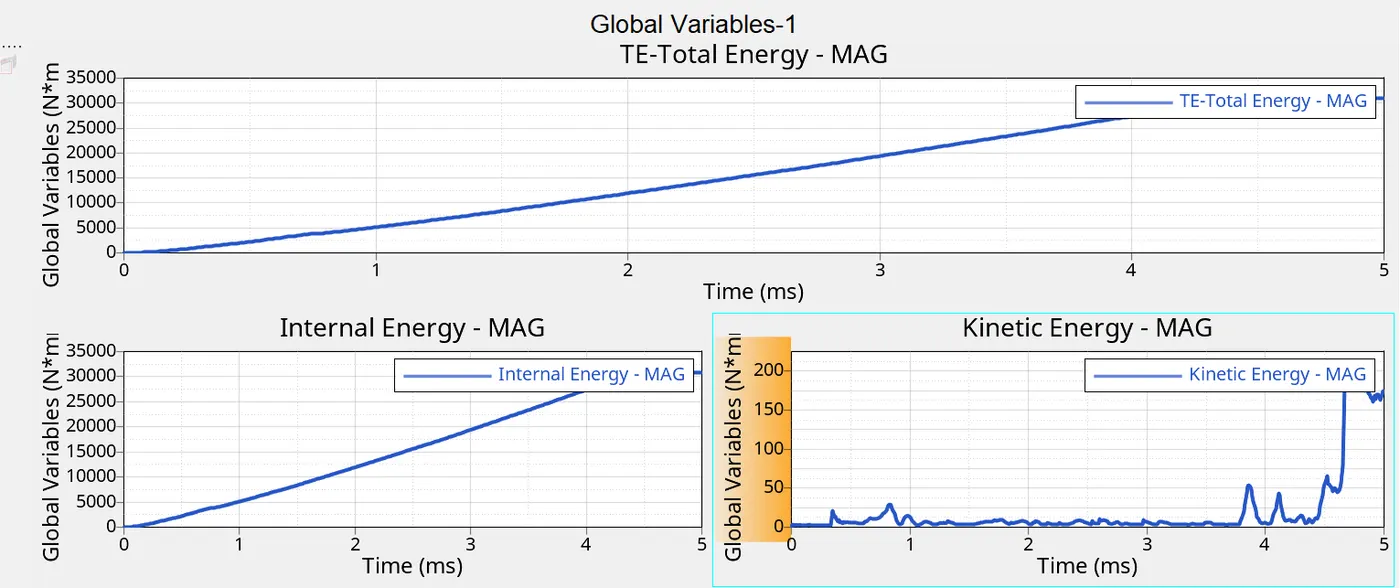
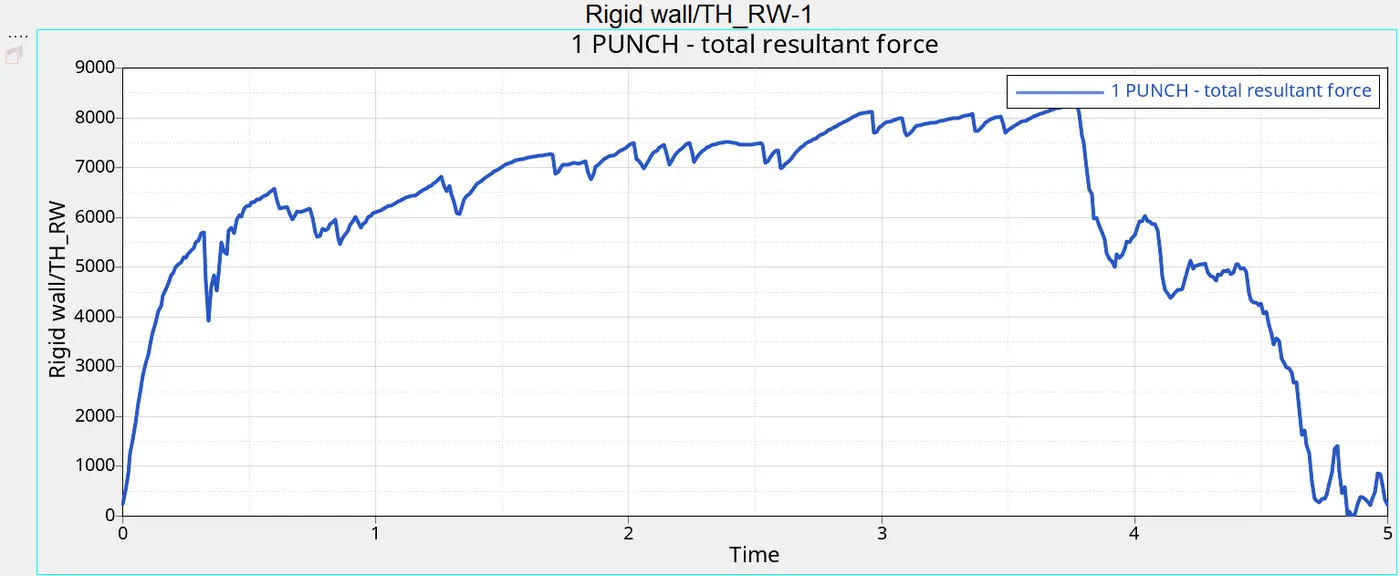
- The total, kinetic and internal energies and rigid wall forces are behaving like this at around 5 ms because the element was not deleted immediately because of the crack propagation, which took time to propagate and failed.
CASE 3:
- In this case, take the file Law2_epsmax_crack_0000 remove the failure model completely and name the file Law2_epsmax_nofail_0000.
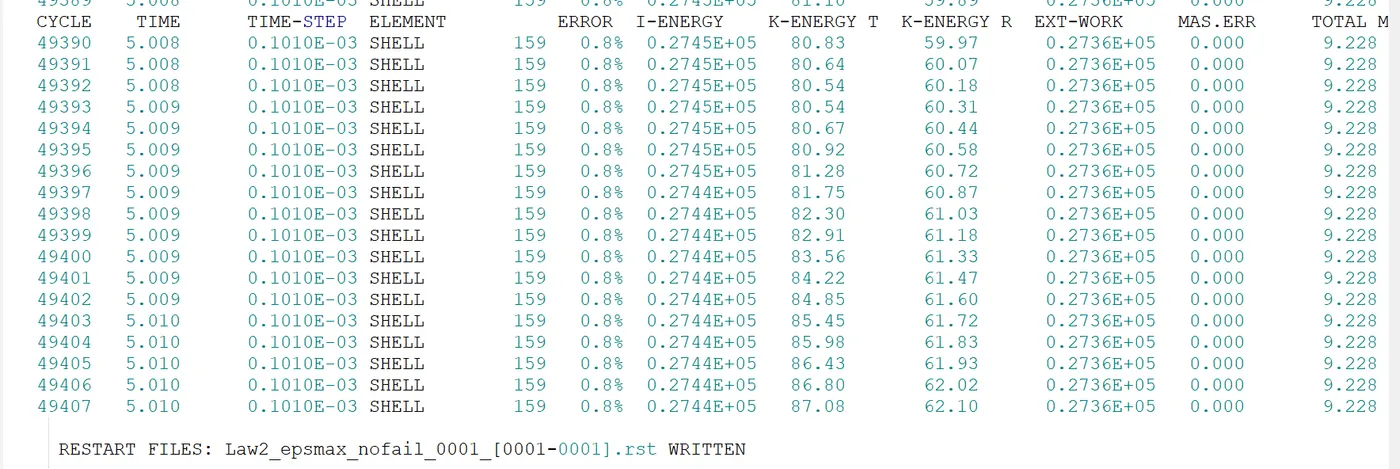
- The number of cycles it took to complete the simulation for this case is shown in the figure.
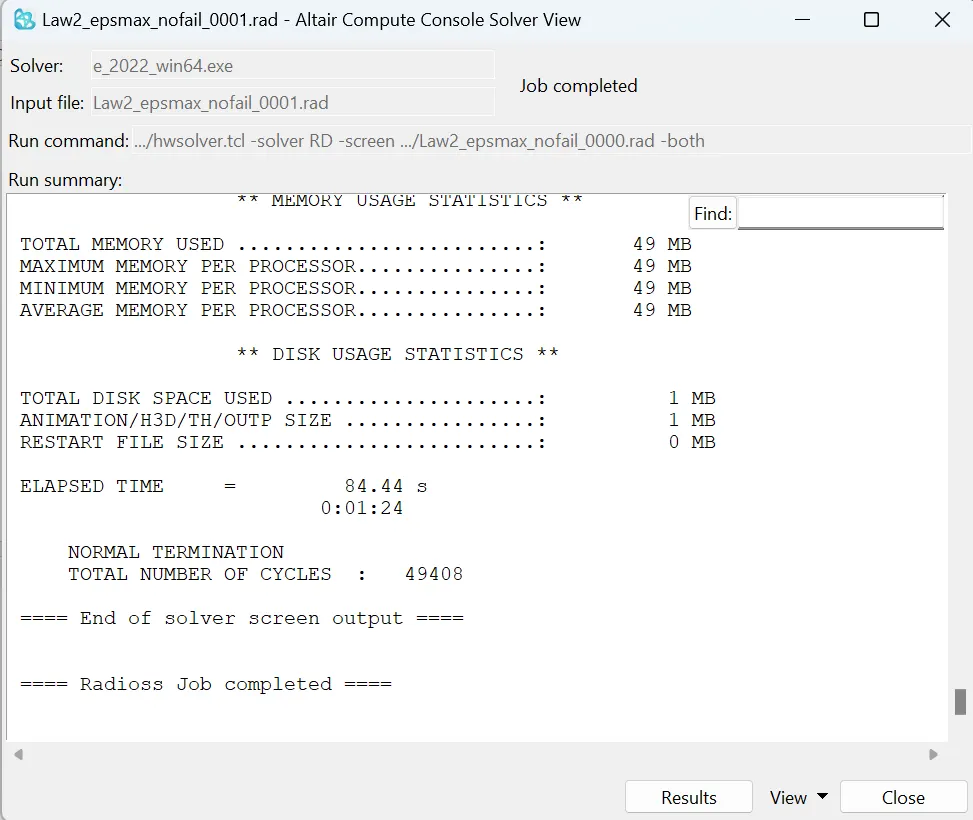
- The mass and energy errors are 0.8% and 0, which are in an acceptable range.
- The energies and rigid wall forces are plotted for this case are shown in the figure.
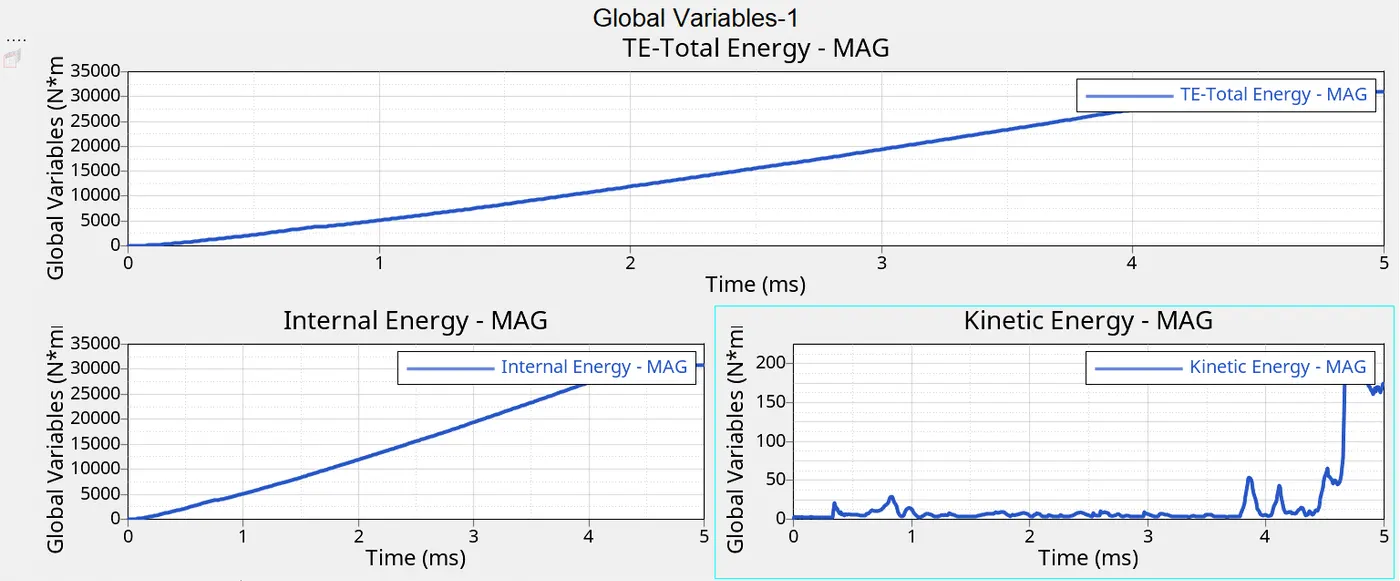
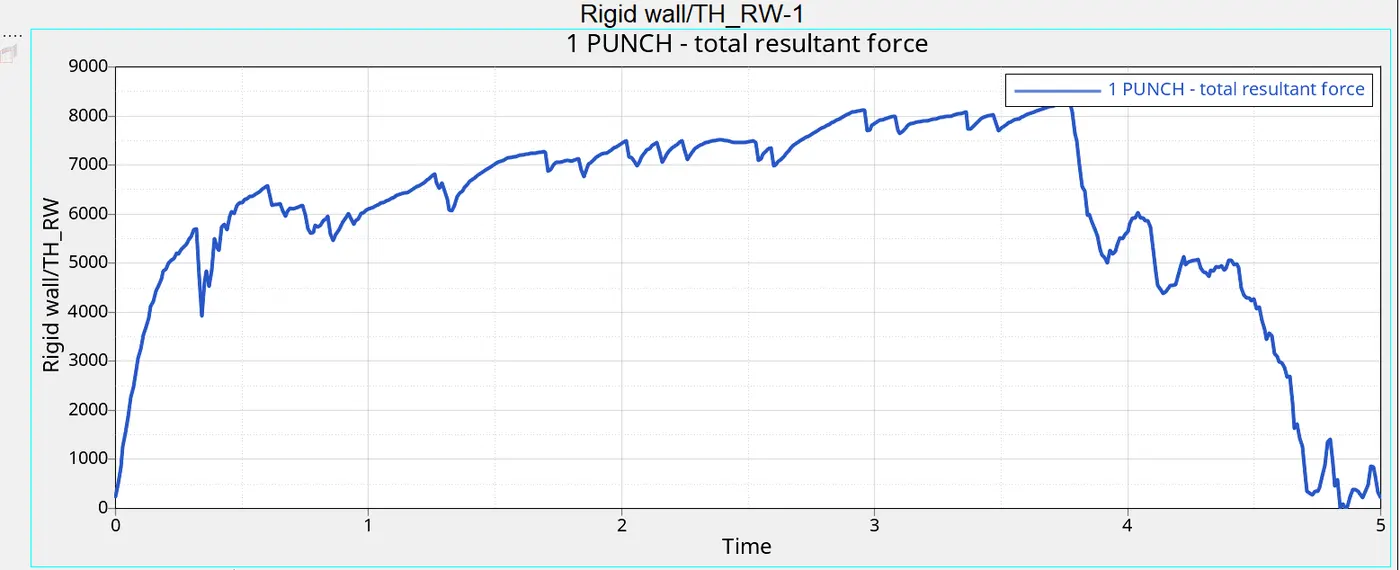
- The total, kinetic and internal energies and rigid wall forces are behaving like this at around 5 ms because the element was not deleted immediately because of the crack propagation, which took time to propagate and failed.
CASE 4:
- In this case, take the file Law2_epsmax_nofail_0000. along with the failure model the eps max is also removed completely and name the file Law2_epsmax_nofail4_0000.
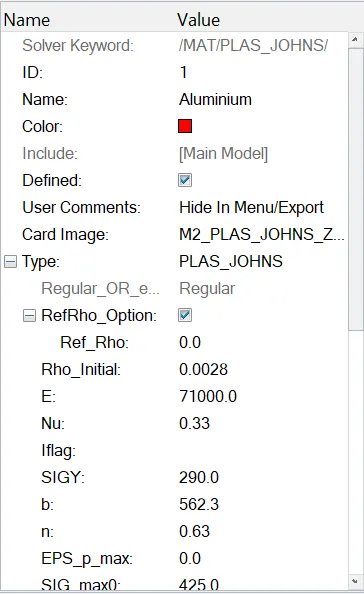
- The number of cycles it took to complete the simulation for this case is shown in the figure.
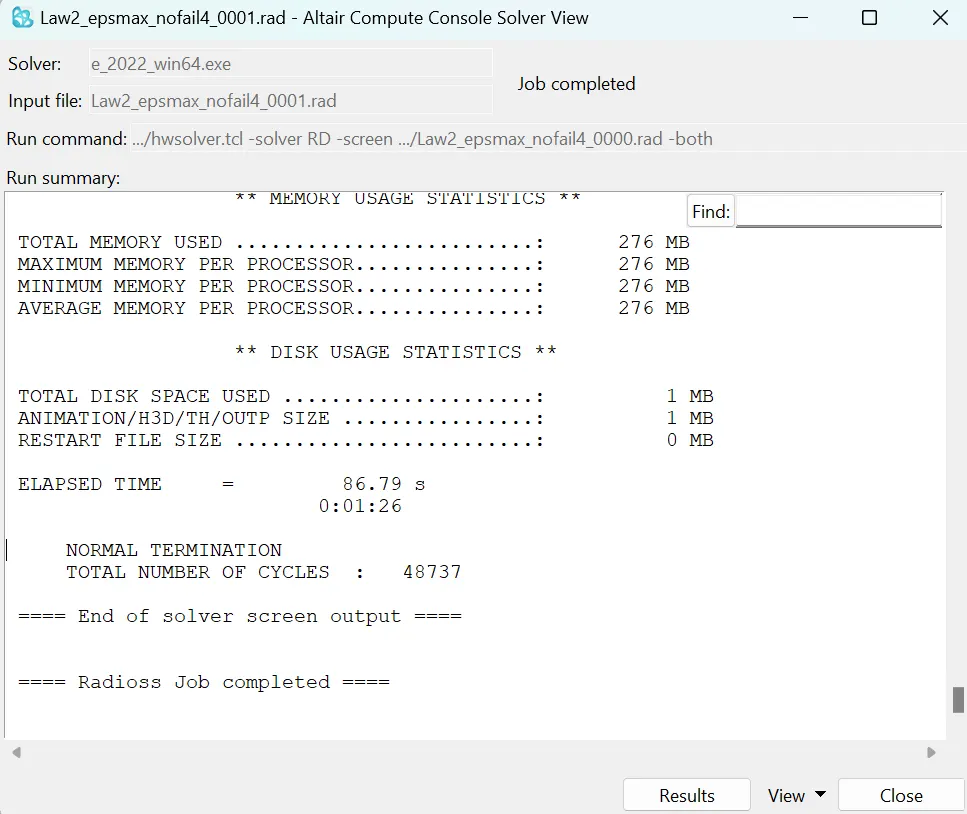
- The mass and energy errors are 3% and 0, which are in an acceptable range.

- The energies and rigid wall forces are plotted for this case are shown in the figure.
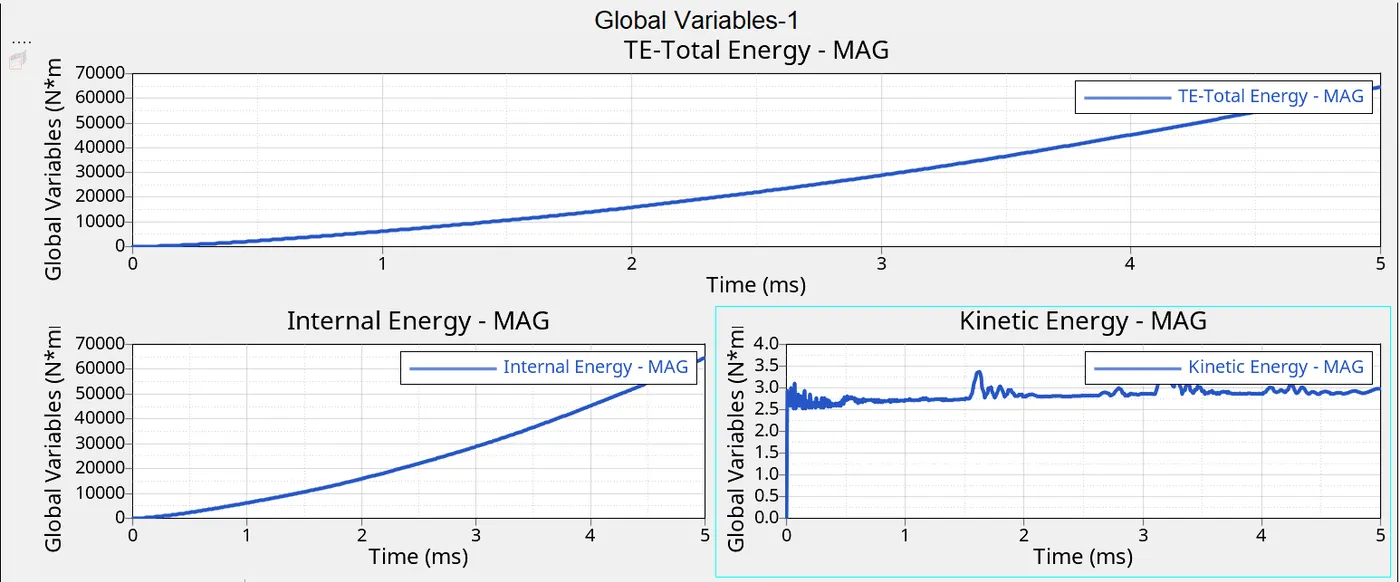
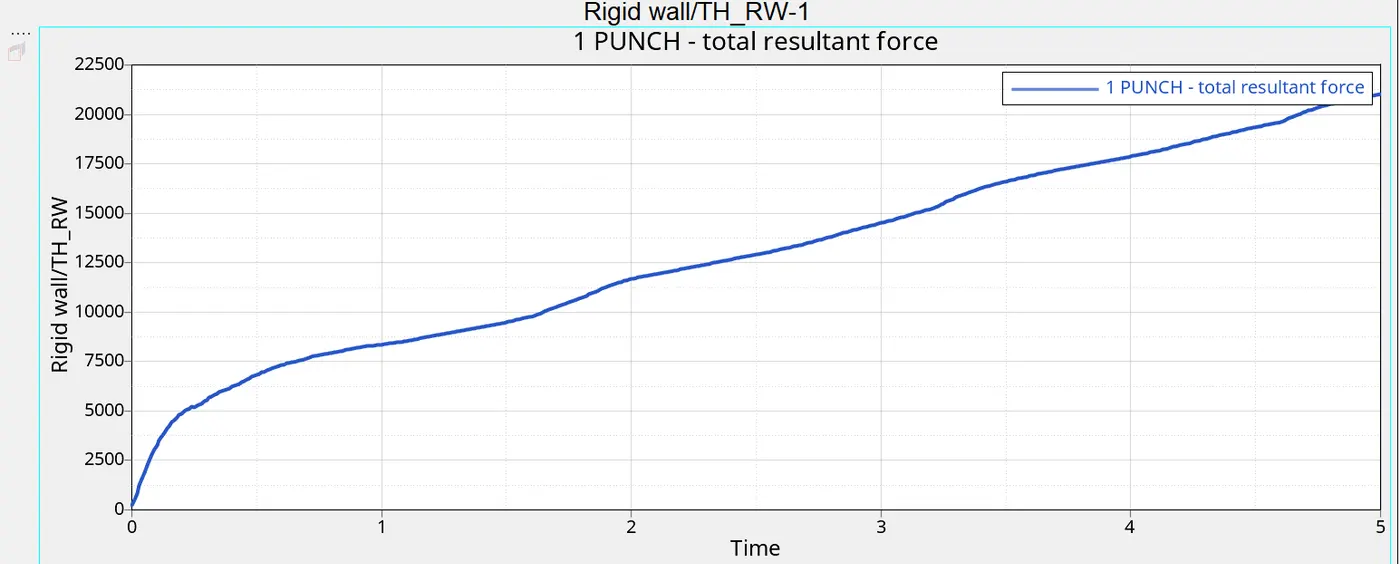
- if we are not giving the eps max the elements will not gets deleted, but it will keep on stretching, so the kinetic energy is increased and constant, and the rigid wall forces are going to increase gradually and never decreases. The total and internal energy variation is gradually increasing.
CASE 5:
- In this case, take the file Law2_epsmax_nofail4_0000 and change the material model to Law1 i.e., elastic and name the file Law1_0000.
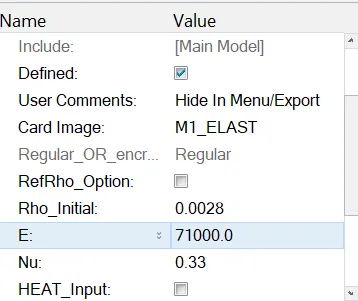
- The number of cycles it took to complete the simulation for this case is shown in the figure.
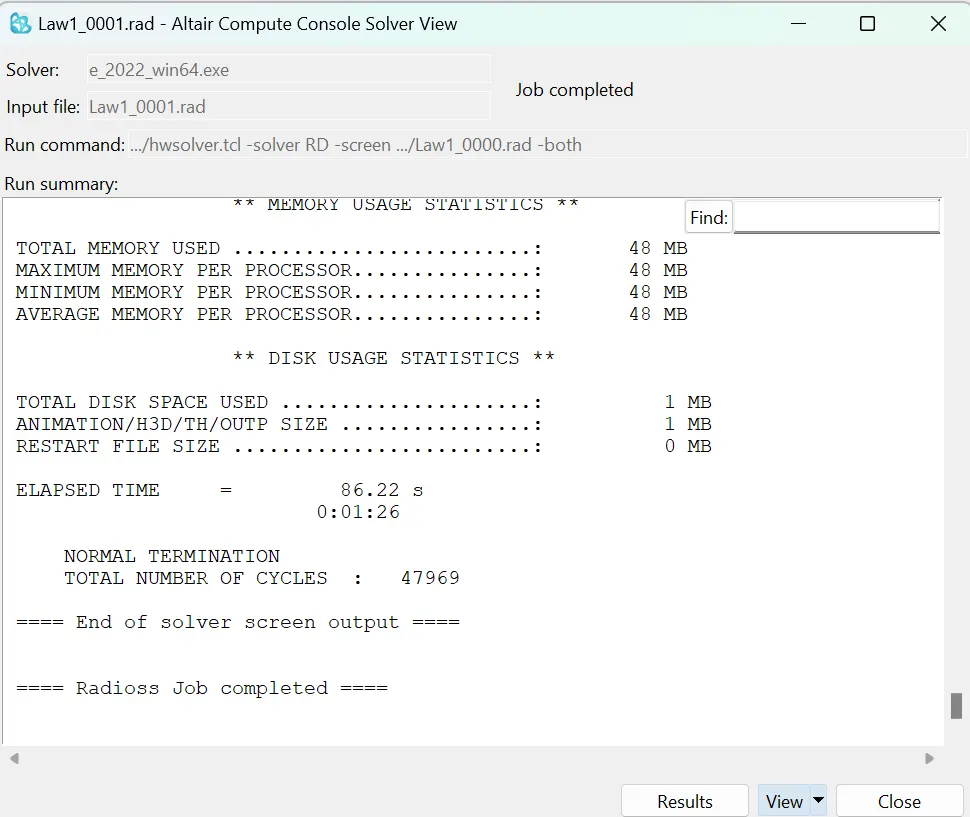
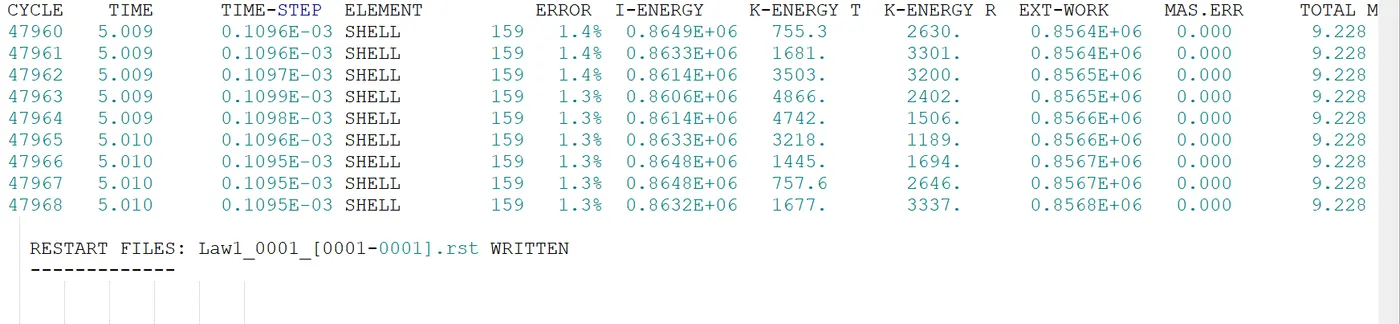
- The mass and energy errors are 1.3% and 0, which are in an acceptable range.
- The energies and rigid wall forces are plotted for this case are shown in the figure.
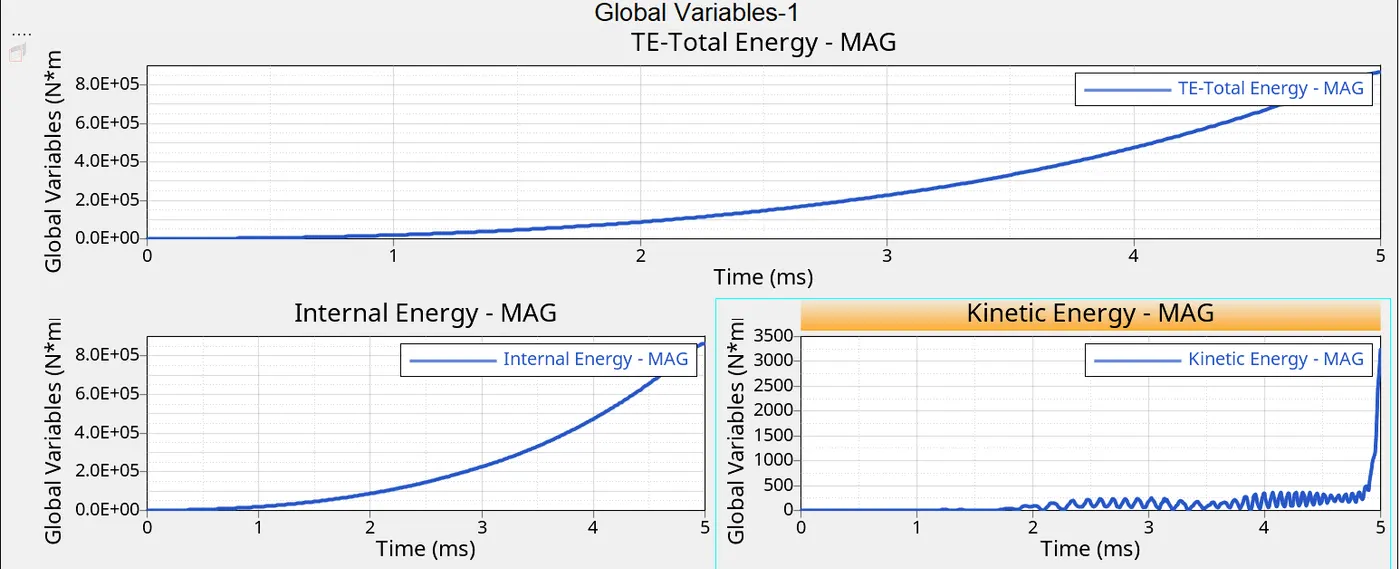
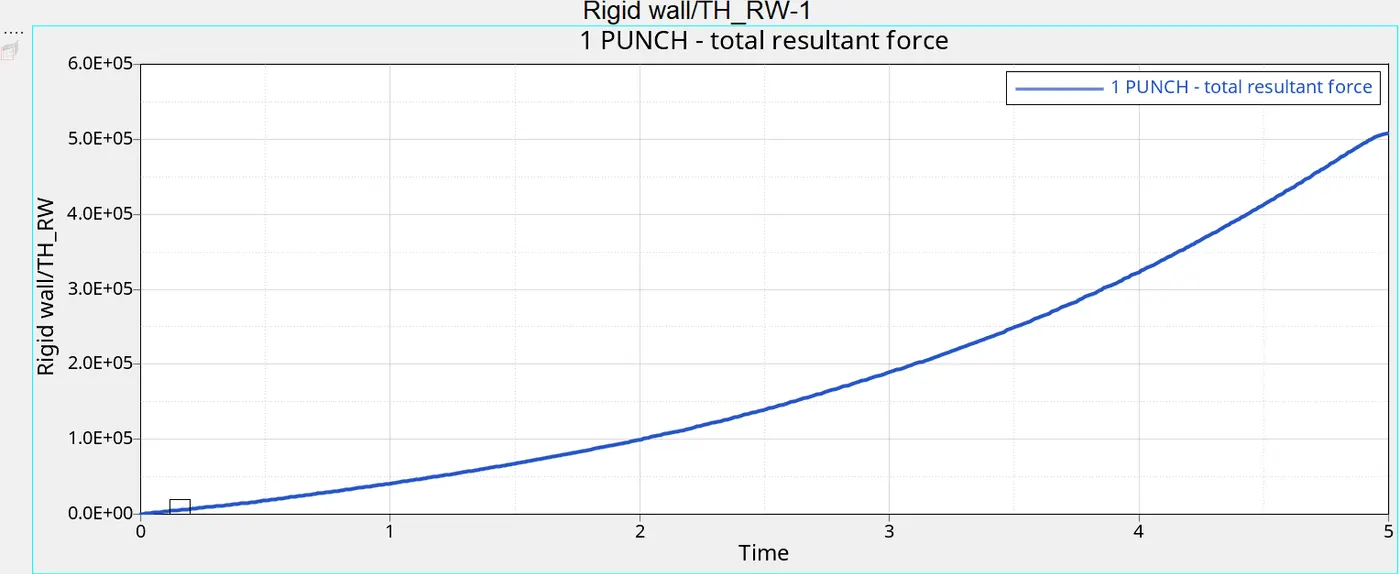
- Here in the elastic material also same as in case5 the elements in plate will not gets deleted but stretch, so the Kinetic energy is almost 0 and rigid wall forces will continue to increase. The total and internal energy variation is gradually increasing.
CASE 6:
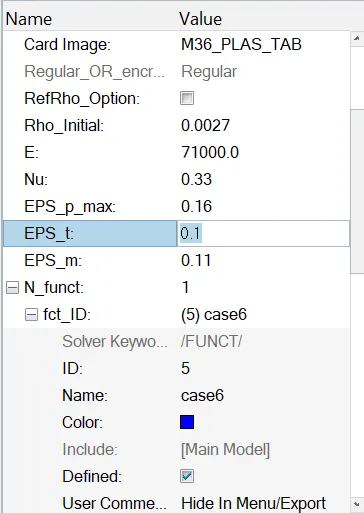
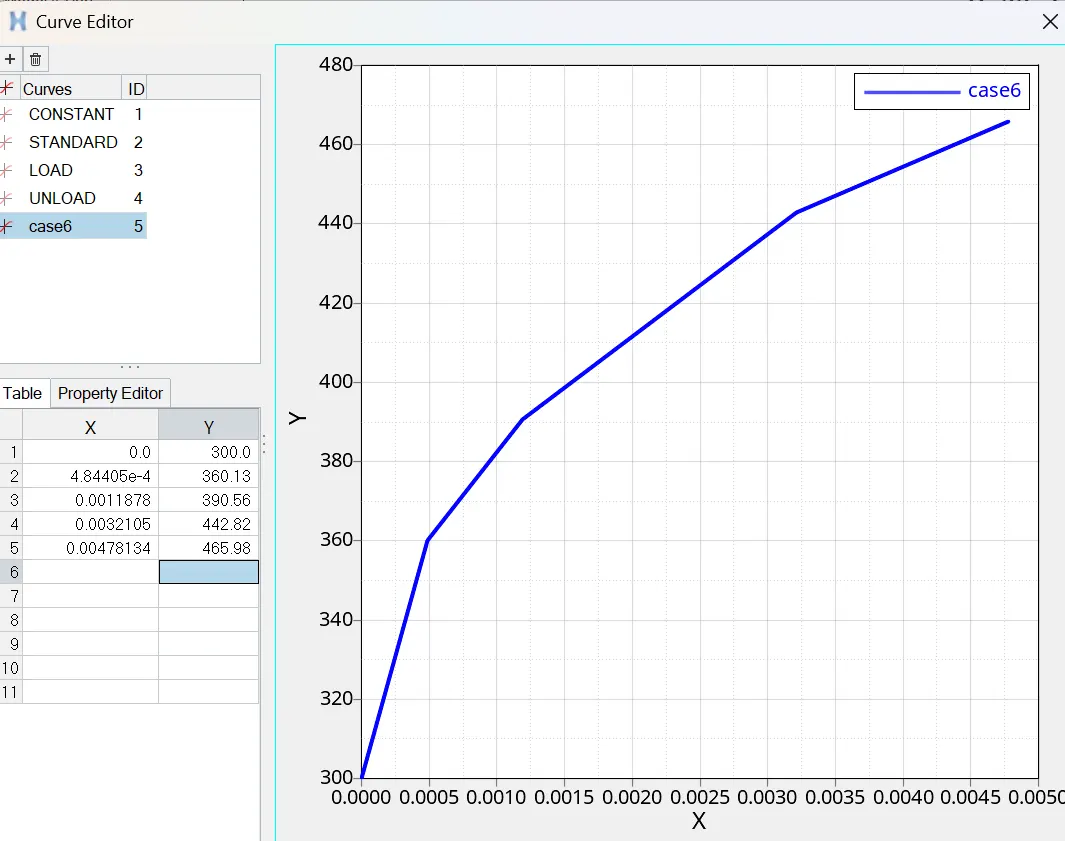
- In this case, take the file FAILURE_JOHNSON and change the material model to Law36 and give the function value as given in the video and name the file Law36_0000.
- The number of cycles it took to complete the simulation for this case is shown in the figure.
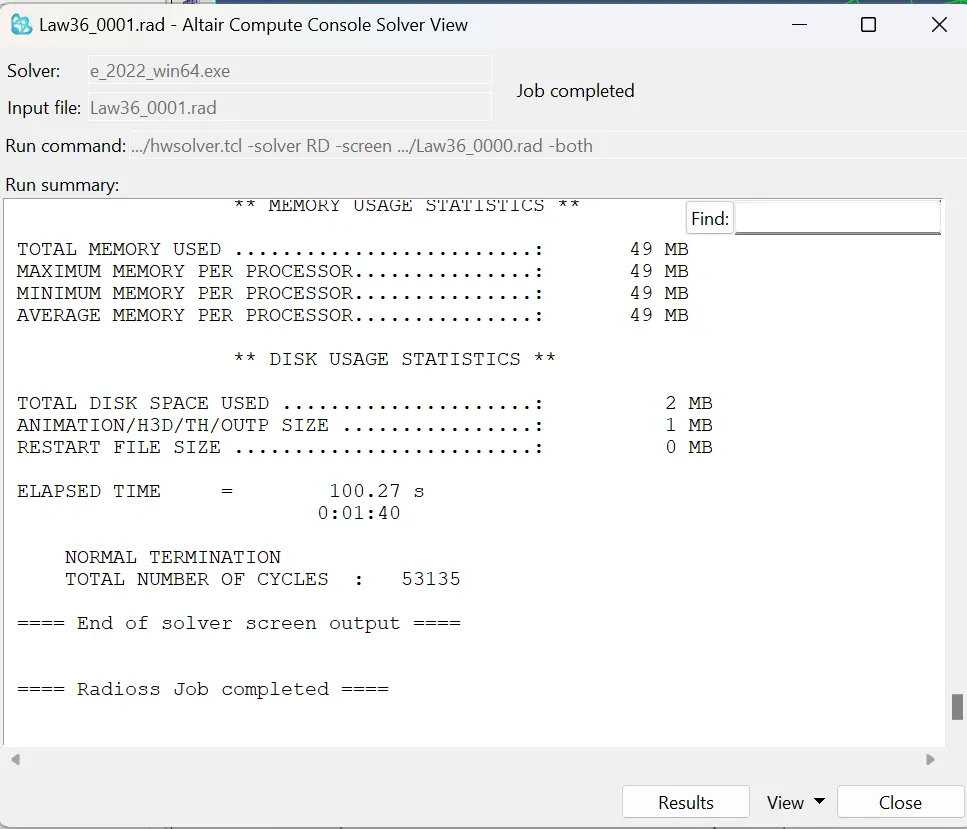
- The mass and energy errors are 1.6% and 0, which are in an acceptable range.

- The energies and rigid wall forces are plotted for this case are shown in the figure.
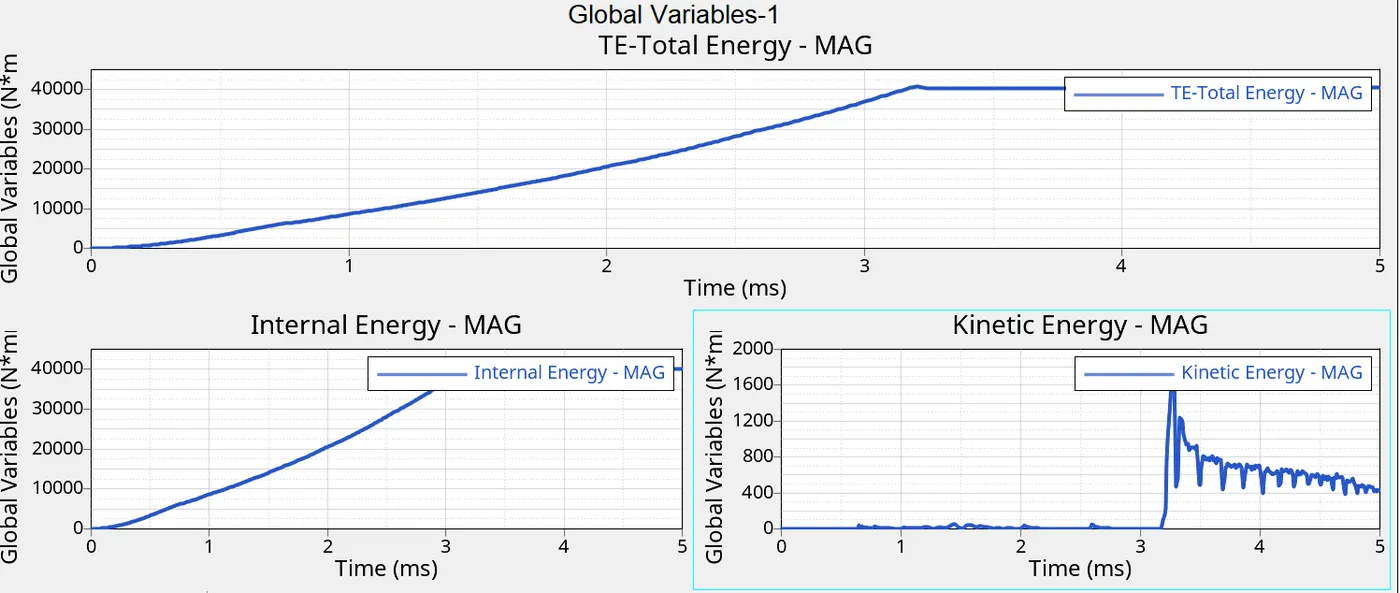
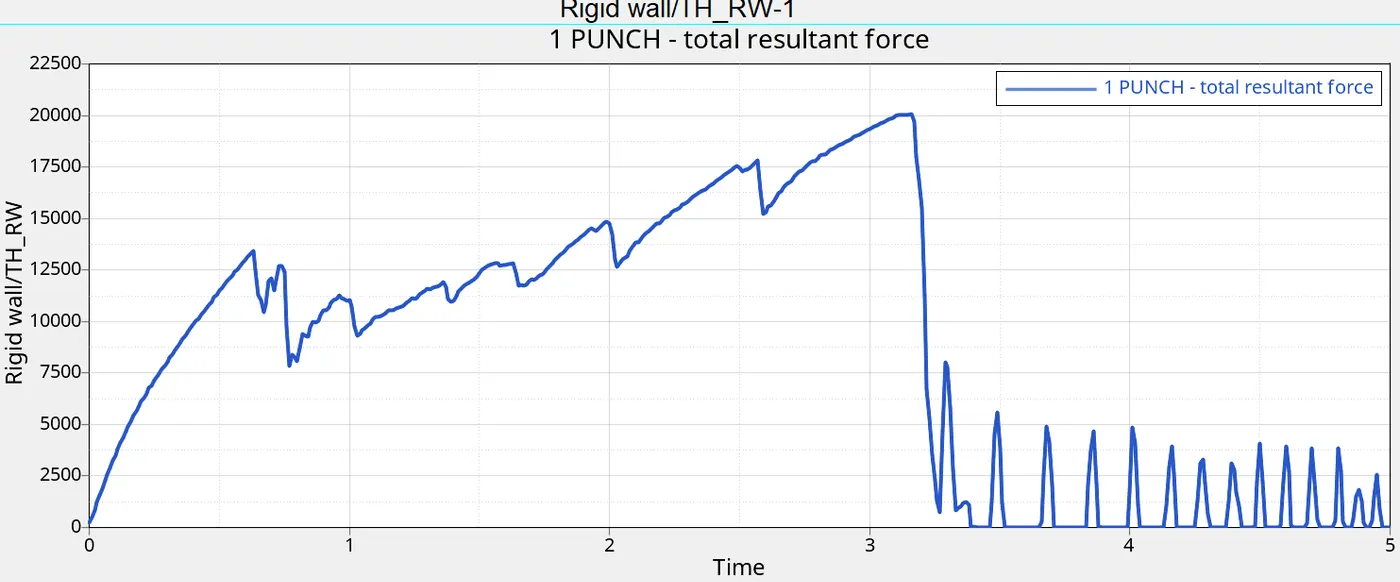
- Just after 3 ms the total, internal, kinetic energy and the rigid wall forces are behaving like this because of the introduction of the Law 36 material model. here the elements gets deleted because the eps max, but this behaviour is due to the material model and failure criteria.
CASE 7:
- In this case, take the file Law27_0000, import it into the HYPERMESH, change the shell propeties to the recommended properties and run the file using Radioss.
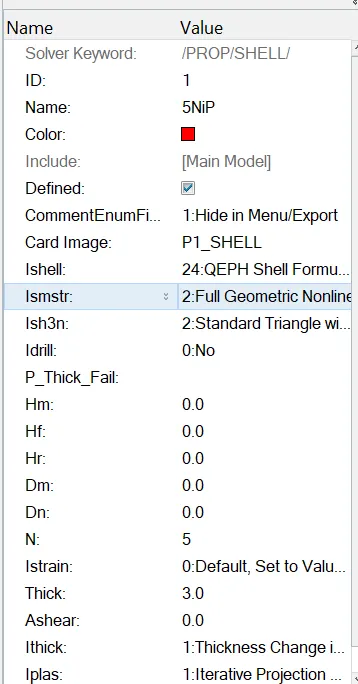
- The number of cycles it took to complete the simulation for this case is shown in the figure.
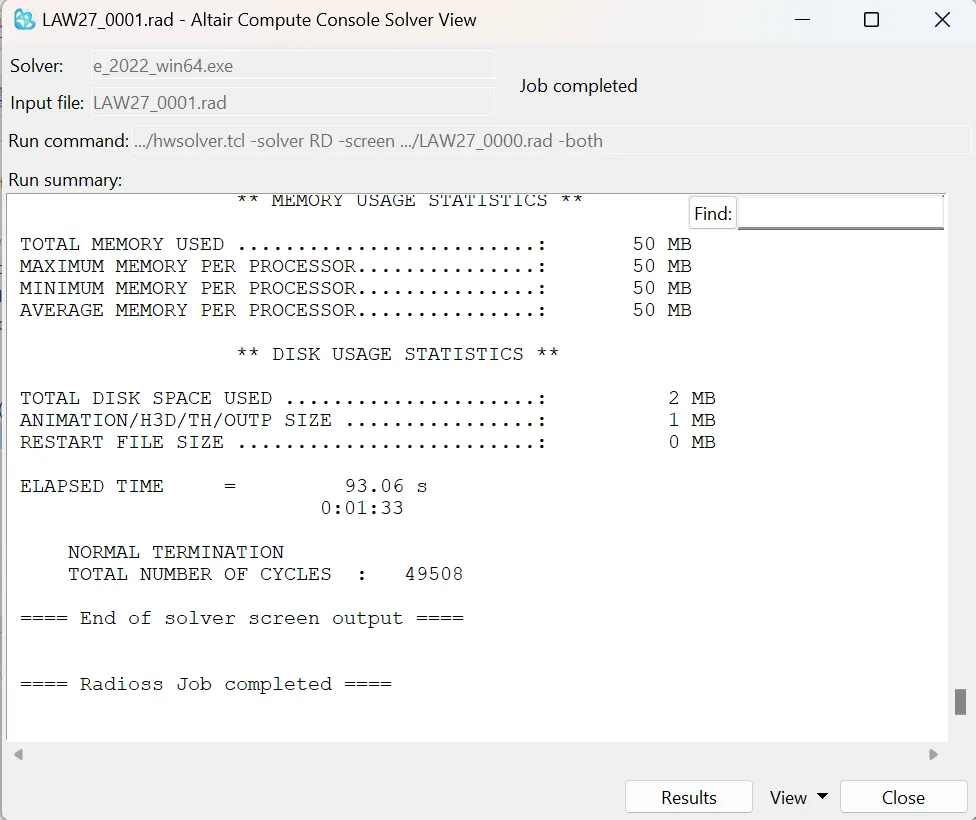
- The mass and energy errors are 0.8% and 0, which are in an acceptable range.

- The energies and rigid wall forces are plotted for this case are shown in the figure.
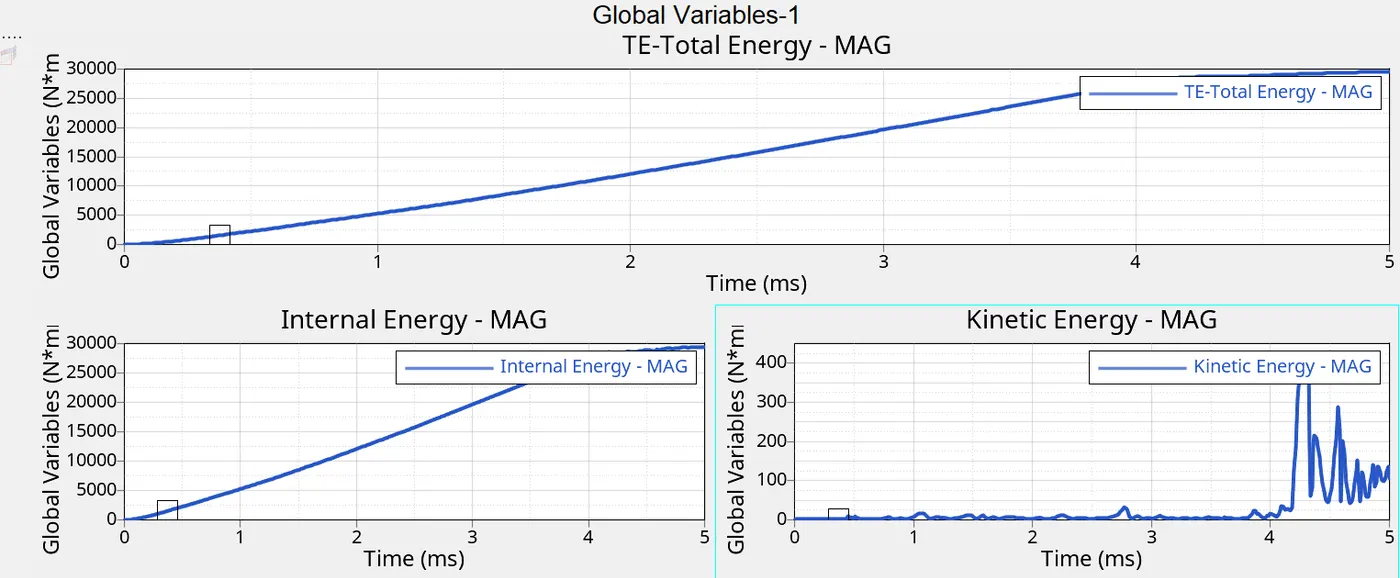
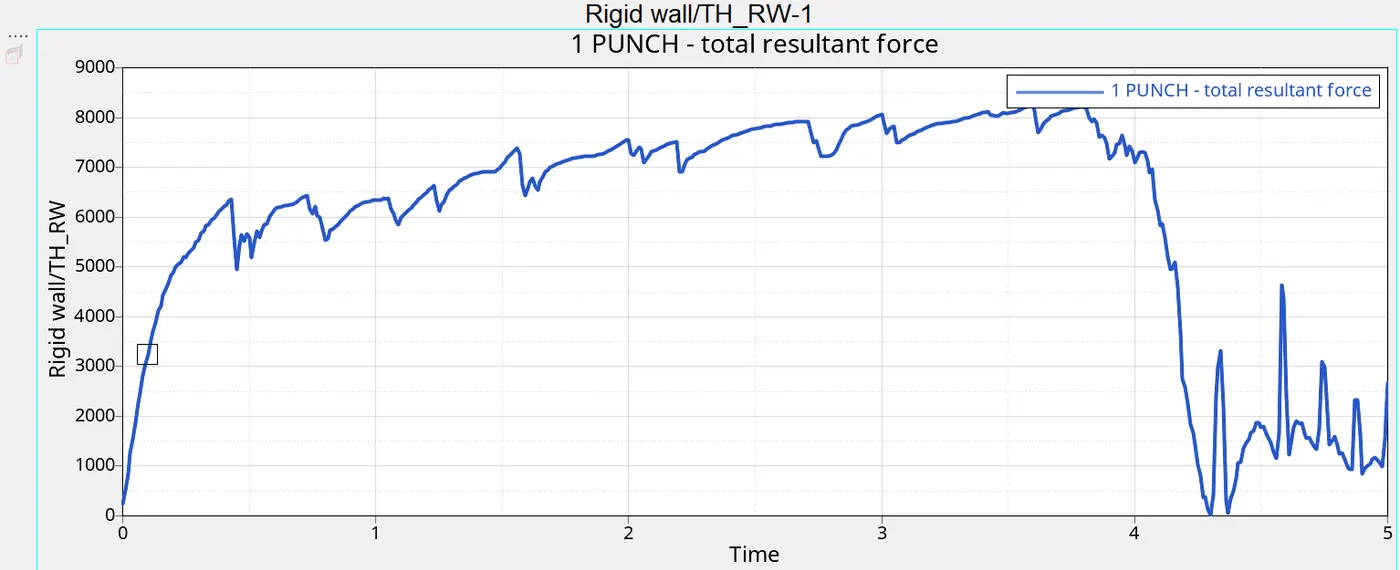
- The total, internal, kinetic energy and the rigid wall forces are deviating at 4.3 ms, because of the Law 27 material model.
LEARNING OUTCOMES:
- I learned how to give different material models.
- I learned what is variation in the energies and rigid wall forces if material model is changed.
CONCLUSIONS: Different material models on the plate when the solid rigid sphere hits the plate are simulated and variation in results if material model is changed has been noted.