Assignment 4-RADIOSS Material Laws Challenge
OBJECIVE
- Comparison of results with LAW 2, Failure mode and LAW 27.
- Run the model as it is. Name it Law2_epsmax_failure.
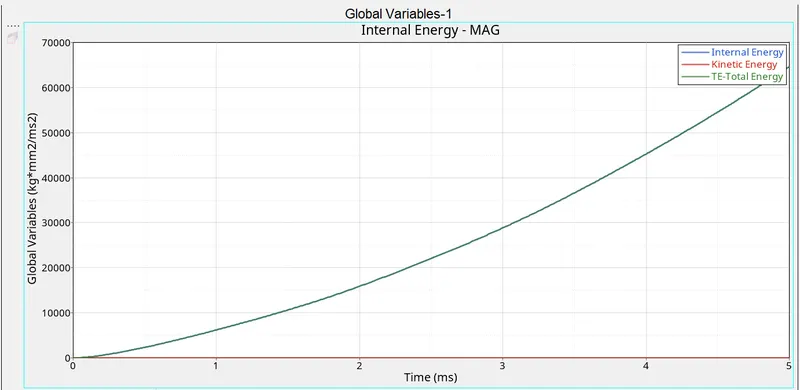
- In FAIL/JOHNSON, change Ifail sh=1, Dadv=1 and Ixfem=1.Run the model as Law2_epsmax_crack.
- Delete FAIL/JOHNSON card.Run the model as Law2_epsmax_nofail.
- Delete the value of EPS_p_max and run the model with name Law2.
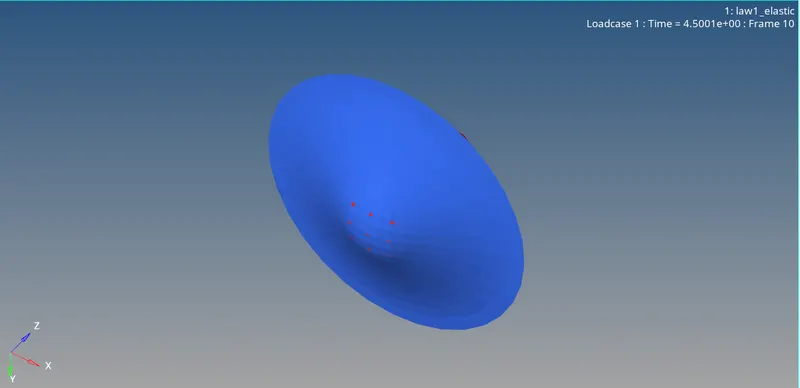
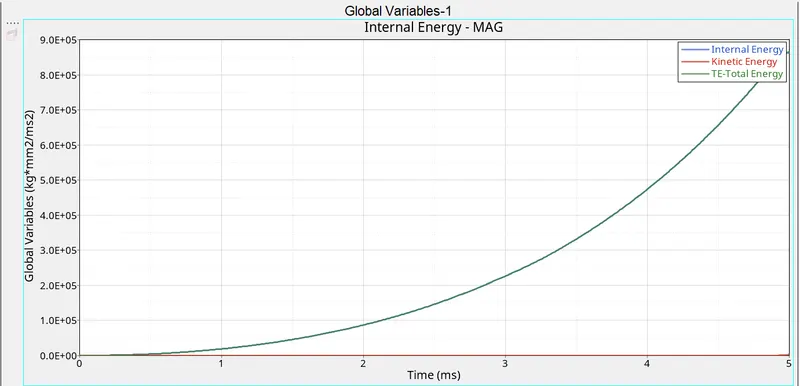
- Convert the material model to LAW1 elastic with same density,E, nu and run.Check the result.
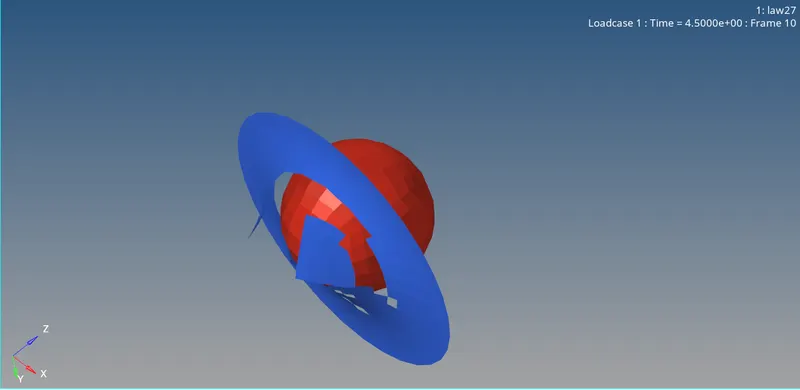
- Open the LAW 27 model and change the shell properties to recommended shell properties.Run the model with LAW 27.
Compare 6 cases as above on the basis of:
1. Total number of cycles, Energy error, mass error and simulation time.
2. Notice the animation of all 5 and describe the animations in brief on the basis of whether the elements are being deleted or cracked.
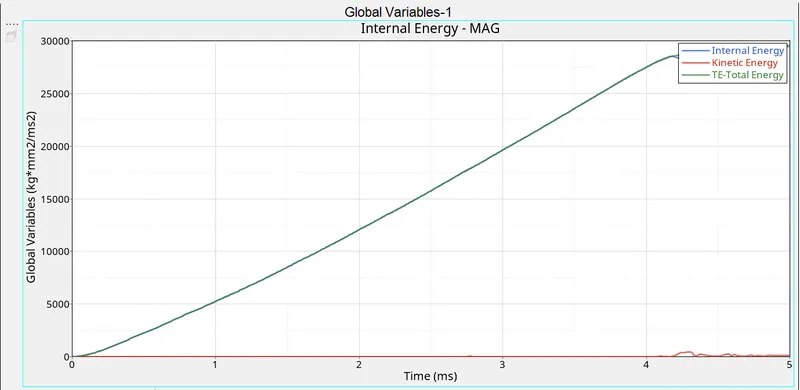
3. Plot energies and notice any difference.
4. Based on all the results, which case would represent the on-field scenario.
PROCEDURE
- Open Hyperworks.Go to import- solver deck-FAILURE_JOHNSON_0000.rad file.
- Check the properties and run the simulation.
- Go to model-failure-johnson.Change the values of Ifail sh, Dadv and Ixfem.Again run the simulation.
- Delete the failure card and run the simulation.
- Go to model-properties-change eps_p_max to 0.Run the simulation.
- Right click on the material card and create new material.give density,E and nu of the previous material to the newly created material.
- Assign the new material to the component.Run the simulation.
- Open LAW 27_0000.rad file.Go to model-Properties.Change Ishell=24, Ismstr=2,Ish3n=2,Iplas=1,Ithick=1.
- Run the simulation.
RESULTS
Energy Error:
Case 1= 0.8%
Case 2= 4.1%
Case 3= 0.8%
Case 4= 3%
Case 5=1.3%
Case 6=0.8%
Simulation Time:
Case 1= 5.01 mS
Case 2= 5.01 mS
Case 3= 5.01 mS
Case 4= 5.01mS
Case 5=5.01 mS
Case 6=5.01mS
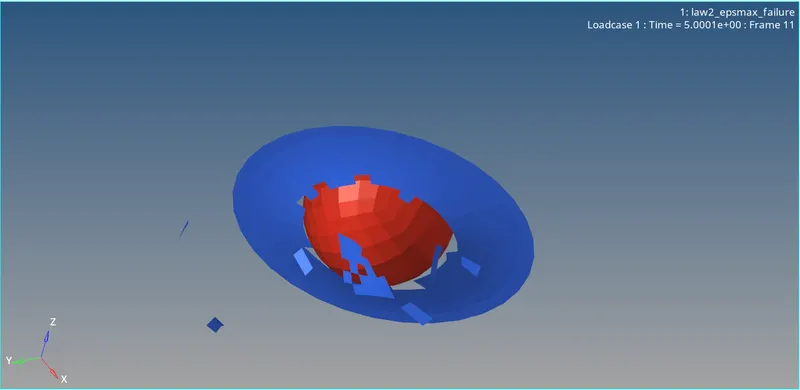
CASE 1:
CASE 2:
CASE 3:
CASE 4:
CASE 5:
CASE 6:
CONCLUSIONS
In case 1 we run the simulation without change any values.The crack generates randomly.In case 2 we have given the value of Dadv and Ixfem.
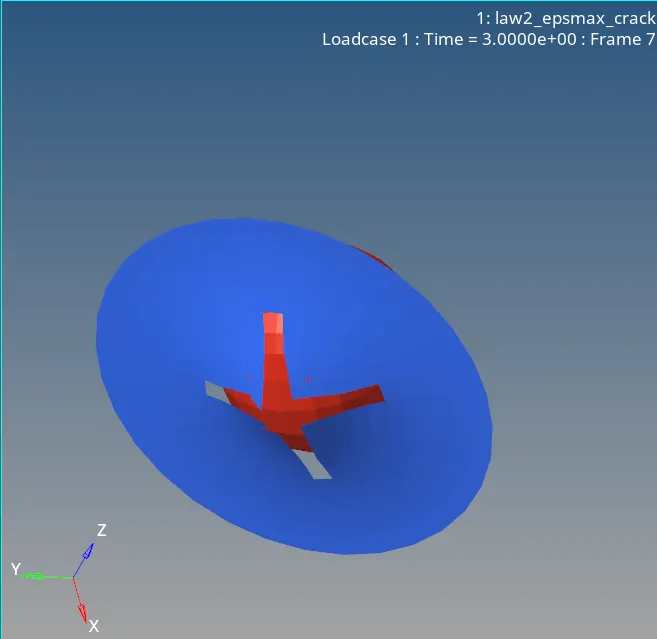
Dadv= Criterion for crack advancement.Only active when Ixfem=1.
So that in the case 2 we can see the crack advancement.When Ixfem = 1 elements are not deleted it cracks.
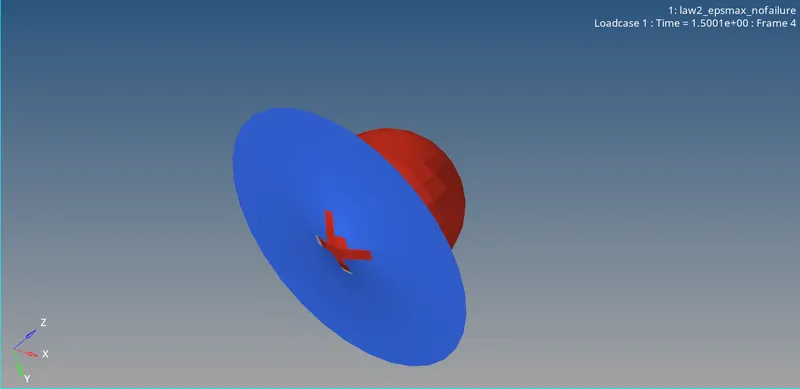
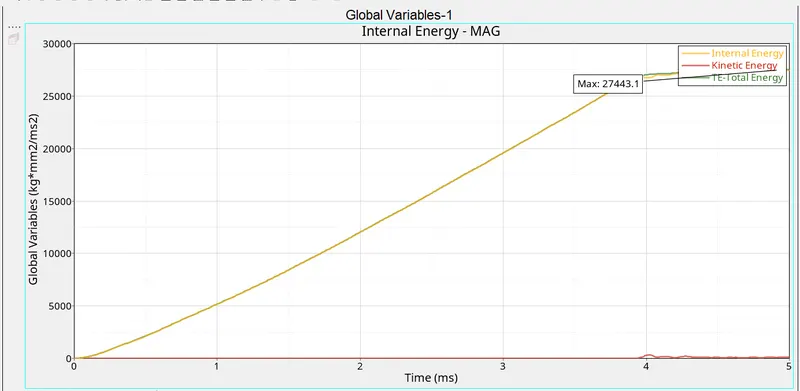
In case 3 we deleted the failure card.because of eps_p_max =0.151 material got failed.ie any element having more than 15.1% plastic strain gets failed.
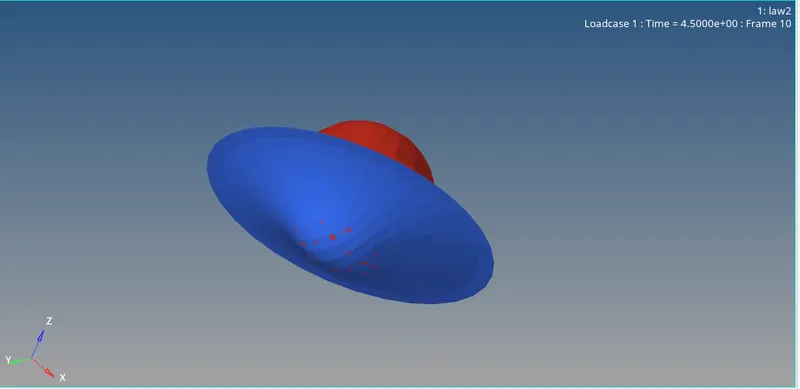
In case 4 we deleted eps_p_max.So that material gets infinte strain.So that material wont fail.
In case 5 material changed to isotropic elastic.So whatever the strain given to the material will removed after the removal of load and regains its original shape.
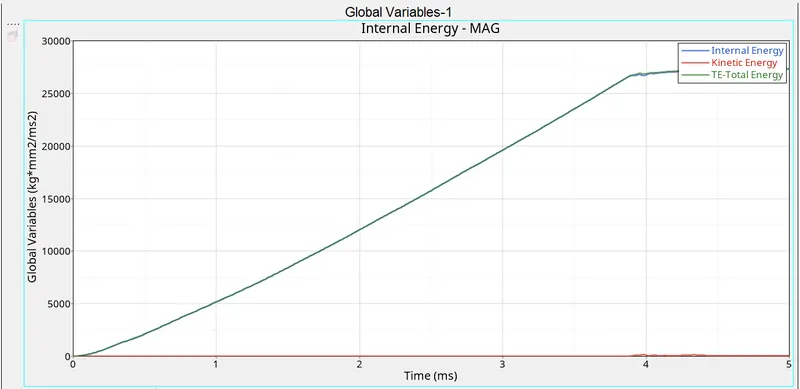
Case 1: Maximum internal energy = 27322.4 Kgmm^2/mS^2
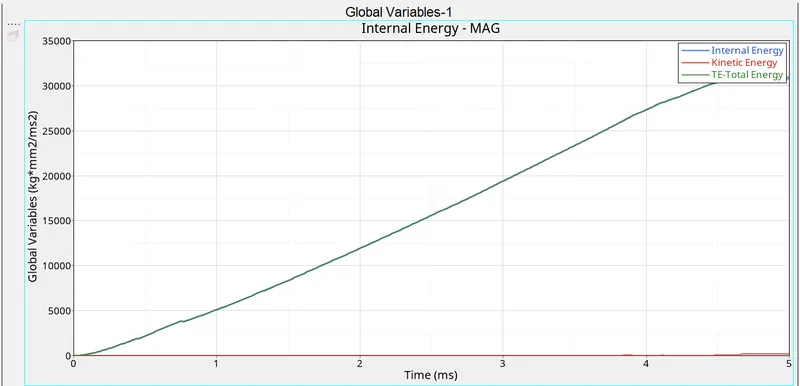
Case 2: Maximum internal energy = 30812.5 Kgmm^2/mS^2
Case 3: Maximum internal energy = 27443.1 Kgmm^2/mS^2
Case 4: Maximum internal energy = 64665.5 Kgmm^2/mS^2
Case 5: Maximum internal energy = 862533 Kgmm^2/mS^2
Case 6: Maximum internal energy = 29476.7 Kgmm^2/mS^2
Changes in internal energy occurs due to change in strain.
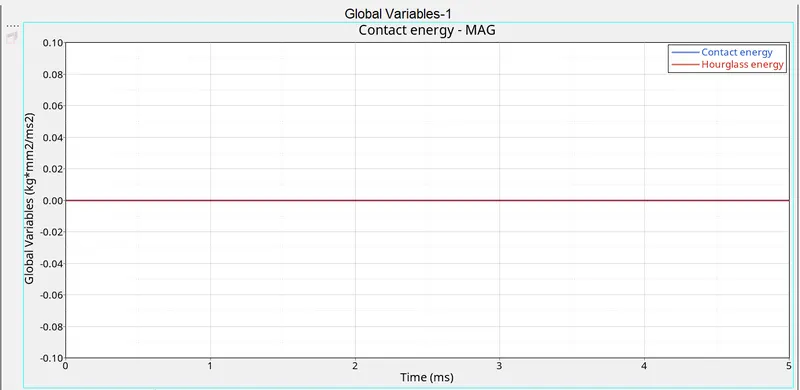
In all cases because of QEPH=24 we used,hourglass energy and contact enegy will be zero.
Law2_epsmax_crack represents the onfield scenerio.Because rupture plate is a pressure relief device.If the pressure exceeds a certain limit material must break and release the pressure.So If we use a brittle material it wont be safe for the operator.If we use a purely elastic materialit will cause straining only.So we should use an elasto-plastic material.So it is better with case 2