Assignment 4
OBJECTIVE
- Perform simulation using different material conditions as shown in the below image
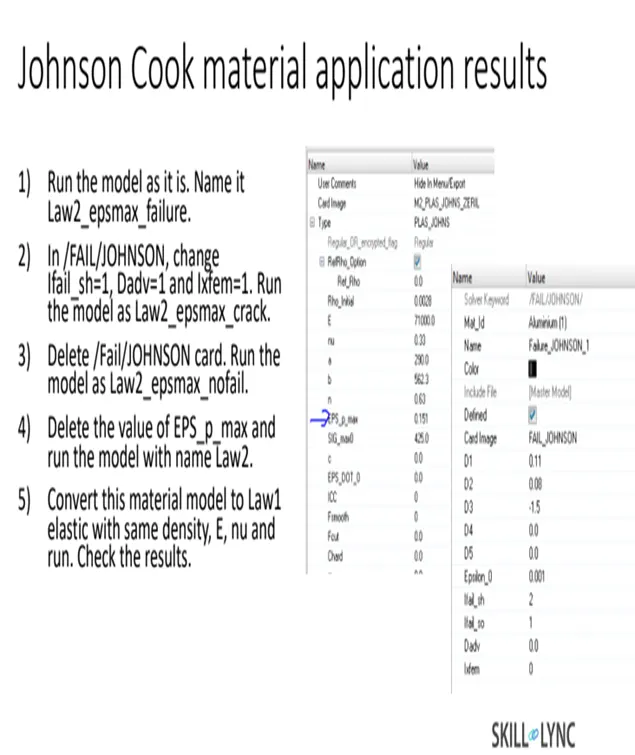
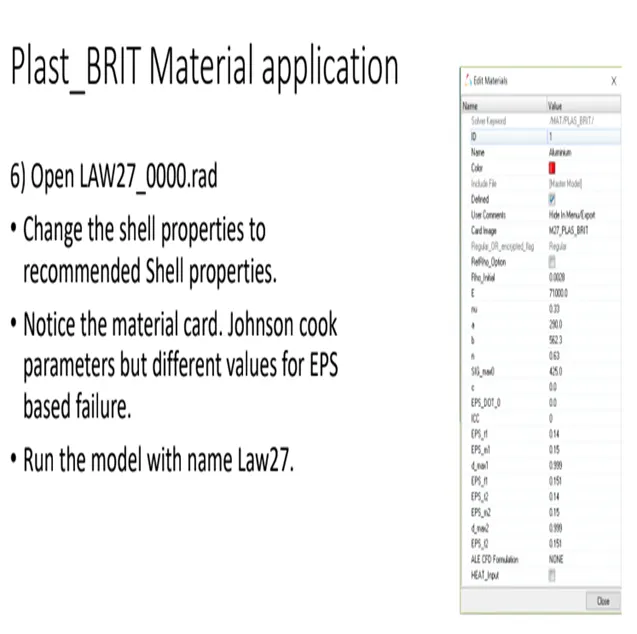
- Observe the energy, rigid wall force, stress, and strain
- compare the results and choose the suitable one for practical application
THEORY
Material Models
Different Material models discussed in our study are as follows.
1) Law 1 - Linear Elastic
This keyword defines an isotropic, linear elastic material using Hooke's law. This law represents a linear relationship between stress and strain. It is available for truss, beam (type 3 only), shell, and solid element.
In order to define this material, only 3 inputs are required i.e. Density, Young's Modulus, and Poissons Ratio
2) Law 2 - Plas/Johns
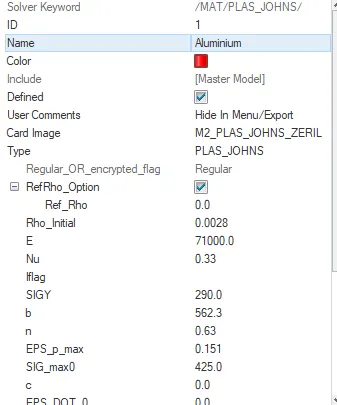
This law represents an isotropic elastoplastic material using the Johnson-Cook material model. This model expresses material stress as a function of strain, strain rate, and temperature. A built-in failure criterion based on the maximum plastic strain is available.

The required constants to be defined to use this material card are a, b, εp = plastic strain, n = hardening constant, E = young's modulus, density, and Poissons ratio
3) Law 27 - Plas_Brit
This law combines an isotropic elastoplastic Johnson-Cook material model with an orthotropic brittle failure model. Material damage is accounted for prior to failure. Failure and damage occur only in tension. This law is applicable only for shells. This material card is similar to Law 2 with the addition of a failure criterion. Along with all the inputs required in LAW2 additional input like tensile failure strain (failure begins) and maximum tensile failure strain and max tensile strain (element deletion) is also defined to govern material failure based on strain values. The material exhibit brittle behavior in this model.
4) Law 36 - Plas_Tab
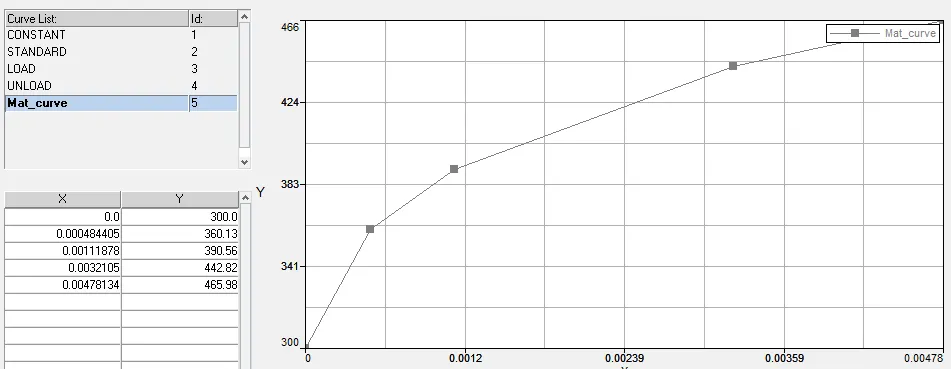
This law models an isotropic elastoplastic material using user-defined functions for the work-hardening portion of the stress-strain curve (for example, stress vs. plastic strain) for different strain rates. Here density, young's modulus, Poissons Ratio, Failure plastic strain, tensile failure strain (stress starts reducing), Tensile failure strain (stress = 0) are the required inputs to use this material model. Multiple functions can be used based on the number of input data available to increase the accuracy of the card.
5) Failure Models
Material failure criteria can be defined in addition to the above-mentioned material models using the failure models.
PROCEDURE, RESULTS, AND DISCUSSION
The general procedure for setting up any simulation is as follows. The procedure is followed in each case.
- Import the starter file in Radioss
- Assign shell and material properties
- Assign animation and run time
- Run the simulation and wait for the normal termination
- Check engine out the file for energy and mass errors. Confirm if the values are within acceptable range i.e. error<=15 %
- Open Hyperview to check for the animation, stress, strain, and displacement using the .h3d file
- Open hypergraph to extract energy, forces, etc. using the T01 file.
Case 1 – Law 2 with EPS Max Failure and Failure Johnson card
failed elements will be deleted.
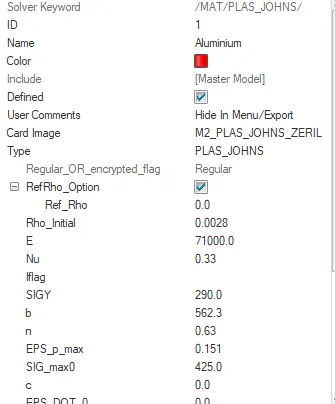
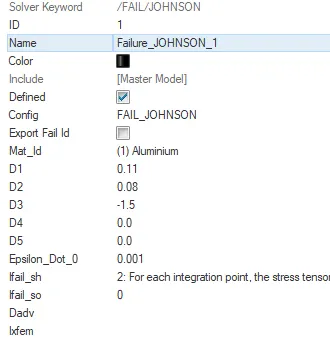
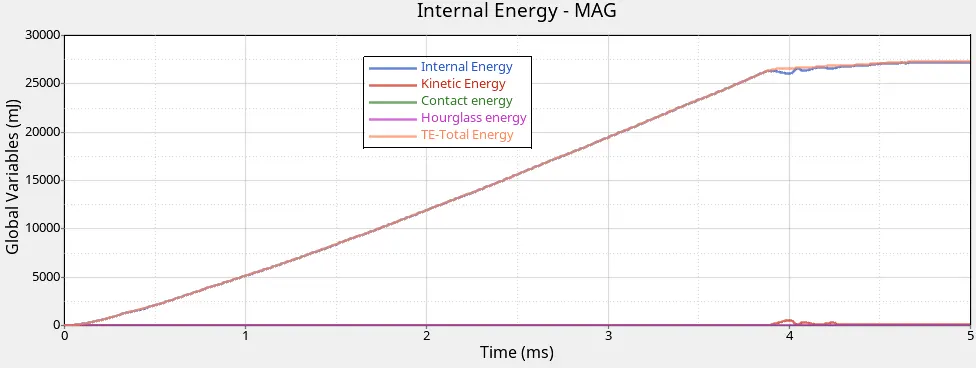
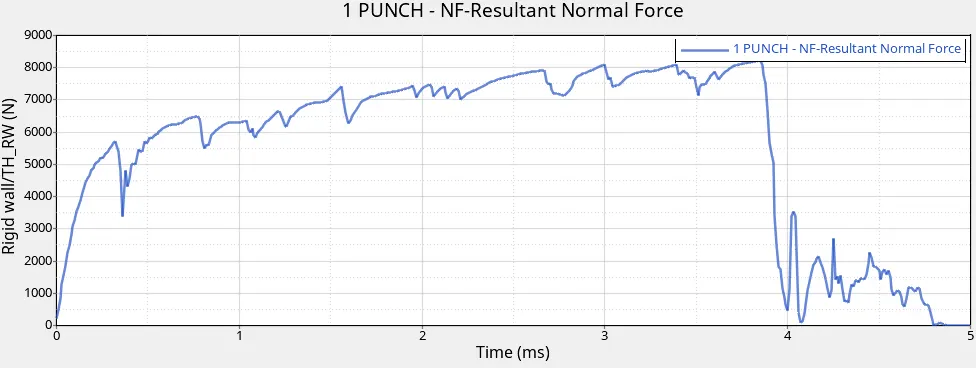

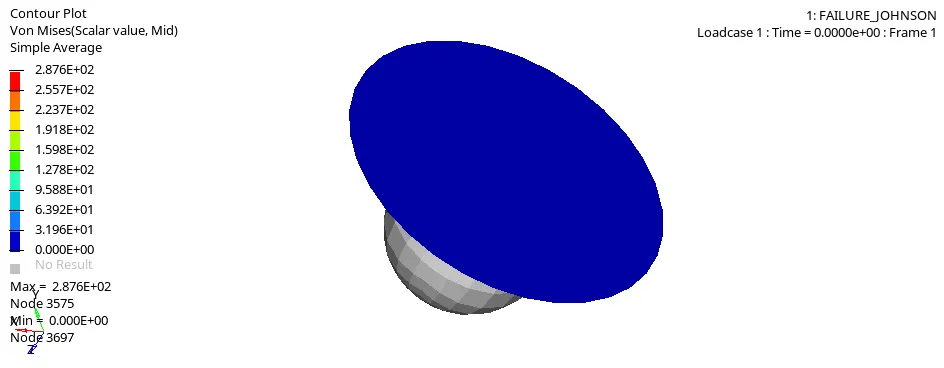
We can observe that elements are getting deleted as the maximum plastic strain values are reached in the elements. But there is no crack propagation in the elements
Case 2 - Law 2 with EPS Max Failure and Ifail =1, Dadv =1 and Ixfem = 1 (crack)
failed elements will be cracked.
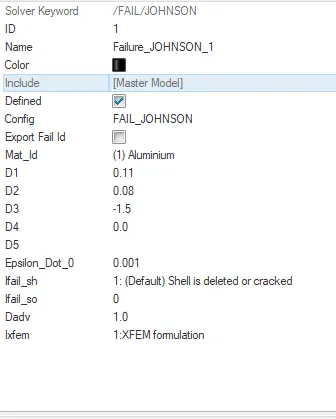
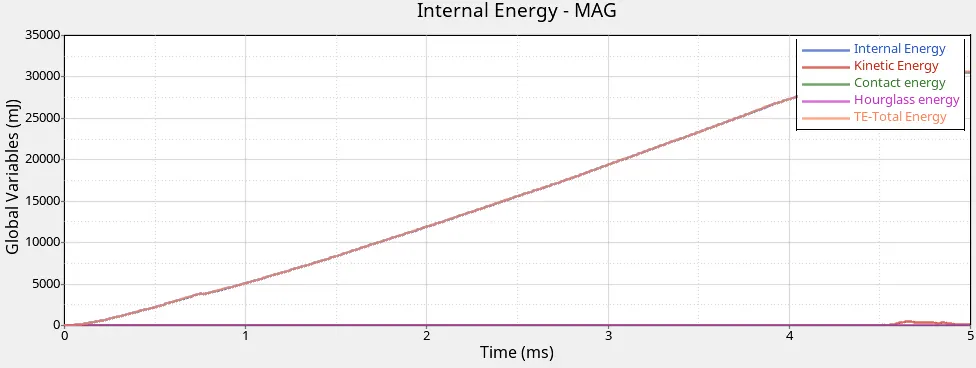
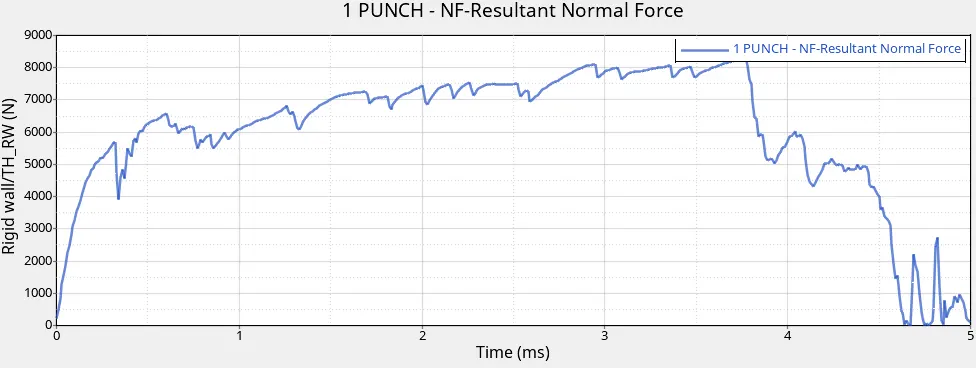

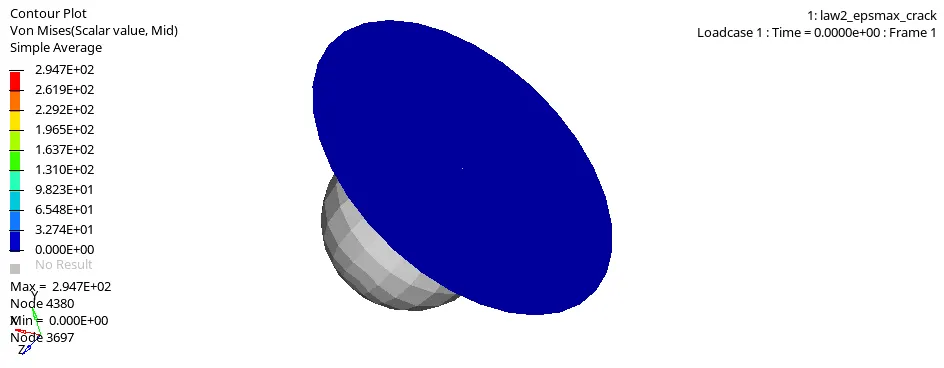
Here since we have enabled few crack parameters in failure card we see a detailed elemental failure during failure. Also energy is peaked after sometime as compared to Case 1 which is due to the deletion of elements only after crack propagation. This is more realistic scenario if the failure criterion is known.
Case 3 – Law 2 with deleted Fail Johnson card with EPS max
no condition defined for failure. The maximum plastic strain is defined.
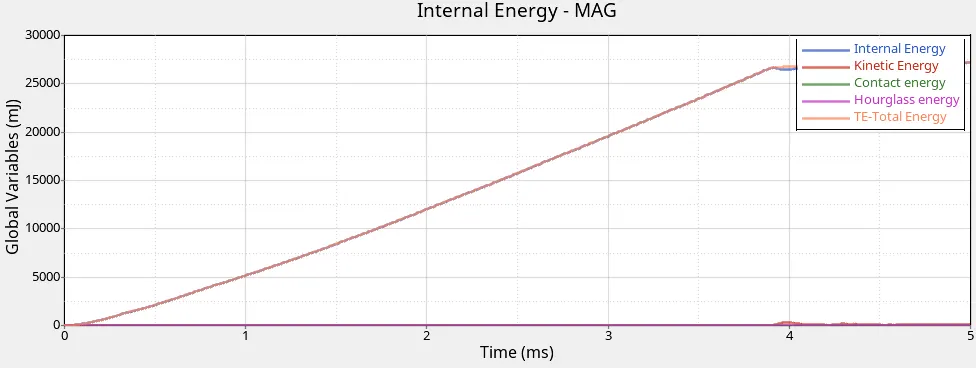
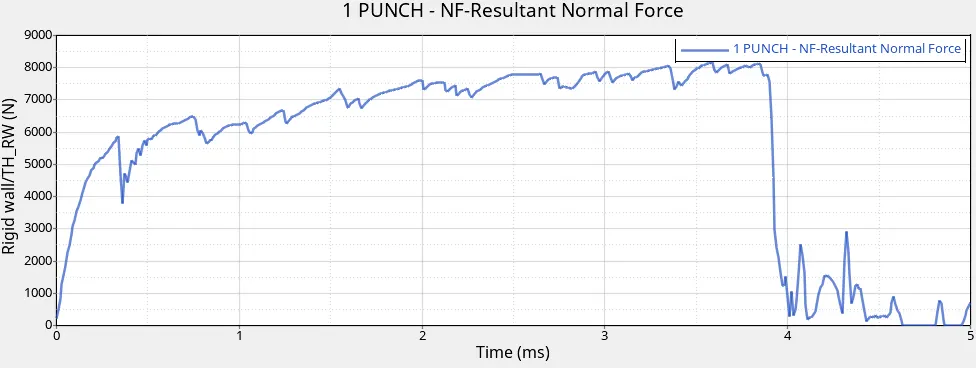

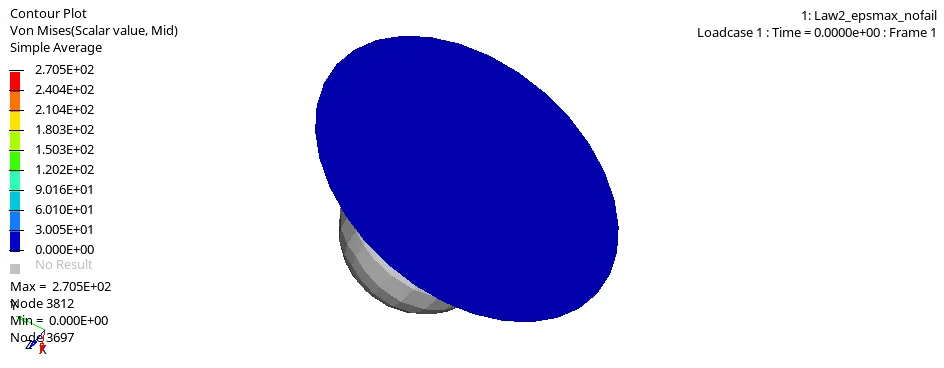
The scenario is very similar to the case 1. The ball penetrates until max strain is reached and then the material fails and elements are deleted without any crack propagation among the elements.
Case 4 – Law 2 with deleted Fail Johnson and no EPS Max Failure
no failure condition defined. Also, no max plastic strain defined so it can go indefinite.
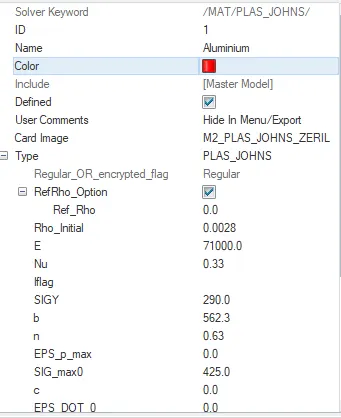
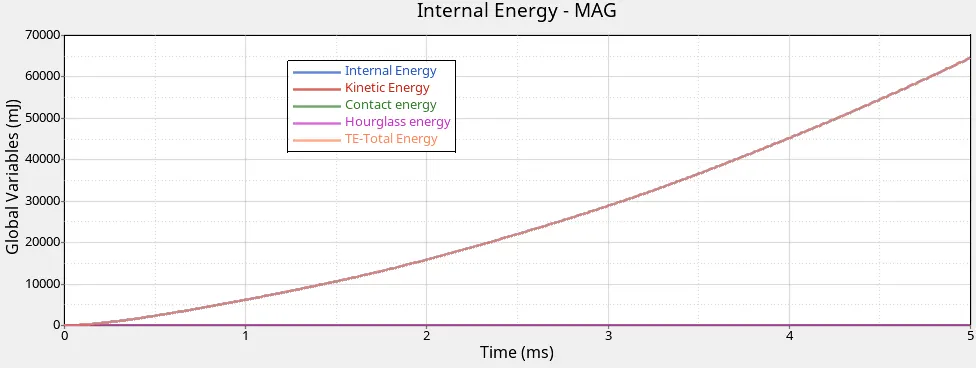
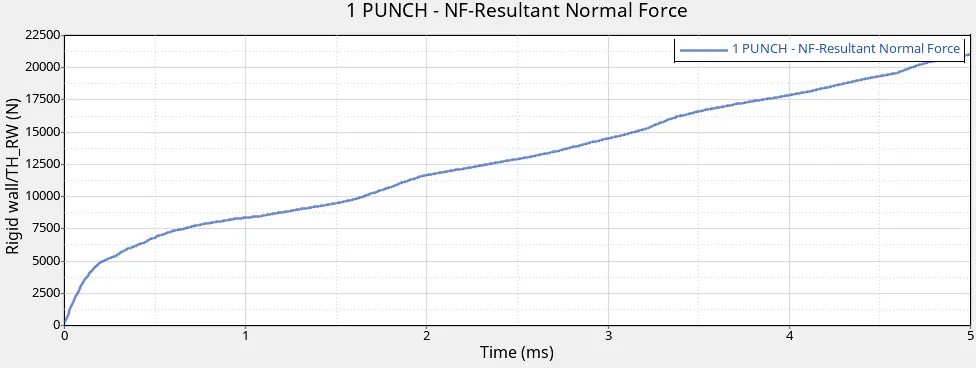

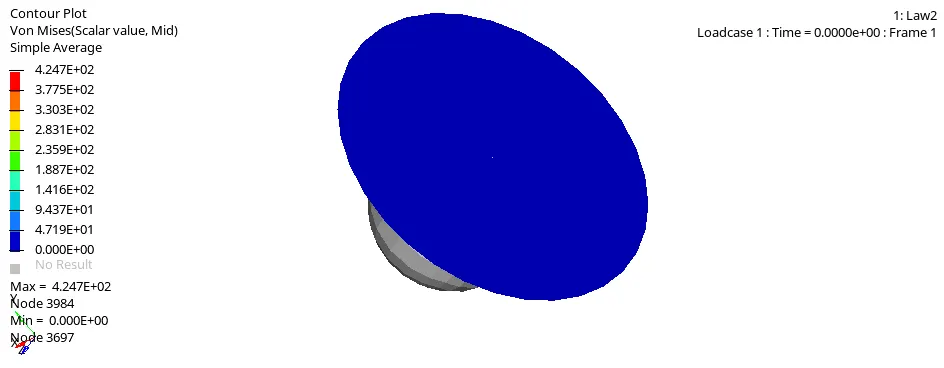
Since there is no failure criterion, the ball keeps on pentrating but shows some resistance and stress is discipitated due to the plastic card defined. Also energy and force are higher then previous cases. Ideally we will see the failure at young's modulus of the material
Case 5 - Law 1 with density, E, nu
The elastic material is used
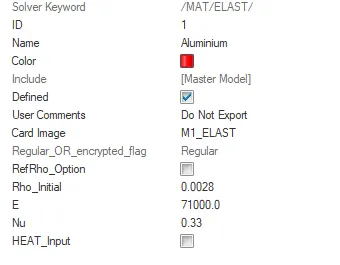
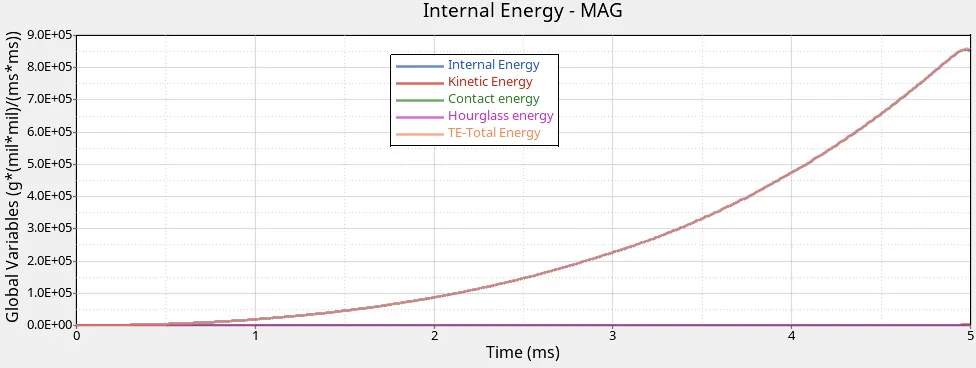
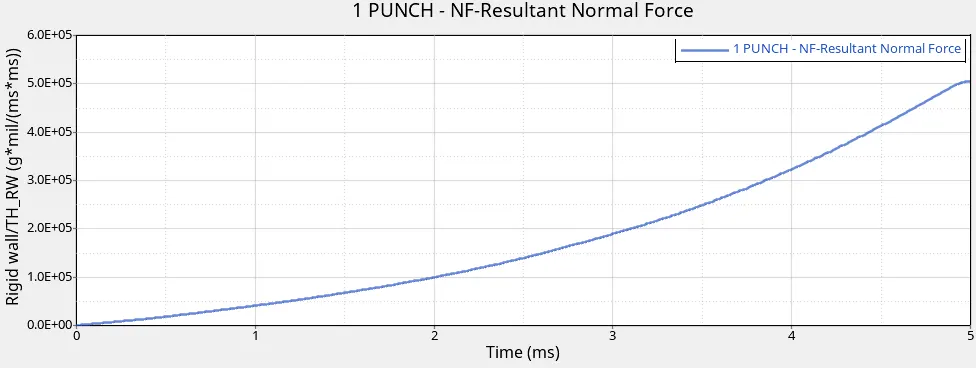

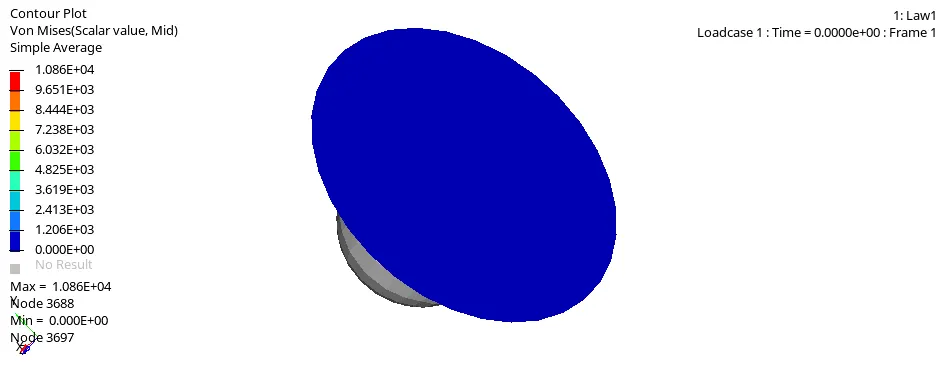
Here since we can see that the ball keeps on penetrating without any failure as the material is elastic and there is no failure criterion for that. Also the energy and force has no peak and they keep on increasing linearly till the end of simulation. The material will fail when the stress reaches elastic limit. The stresses are higher as there is no stress dissipation in elastic limit.
Case 6 – Law 27 with EPS based Failure
elastoplastic brittle material is used.
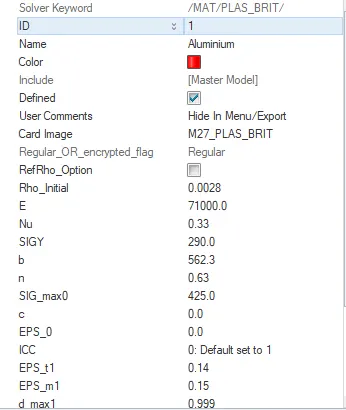
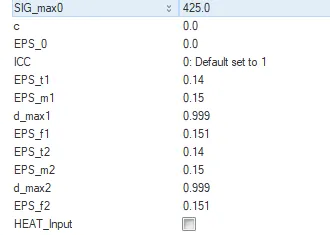
Recommended shell formulation
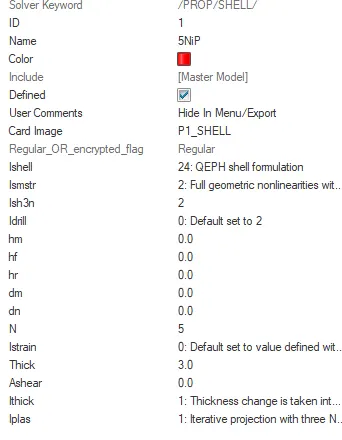
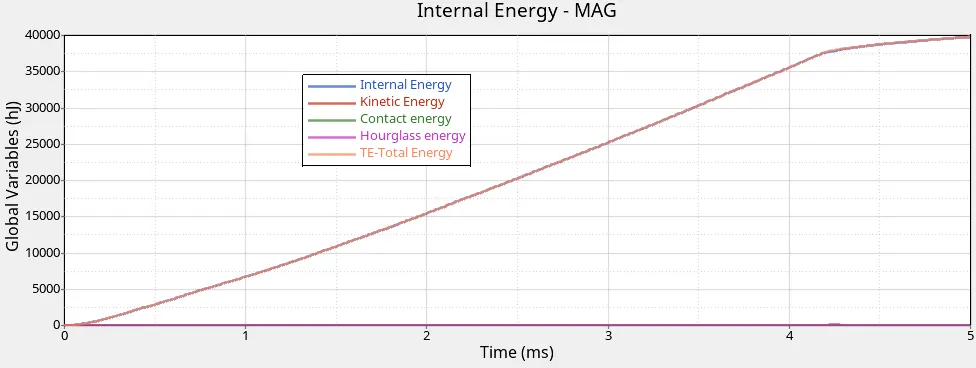
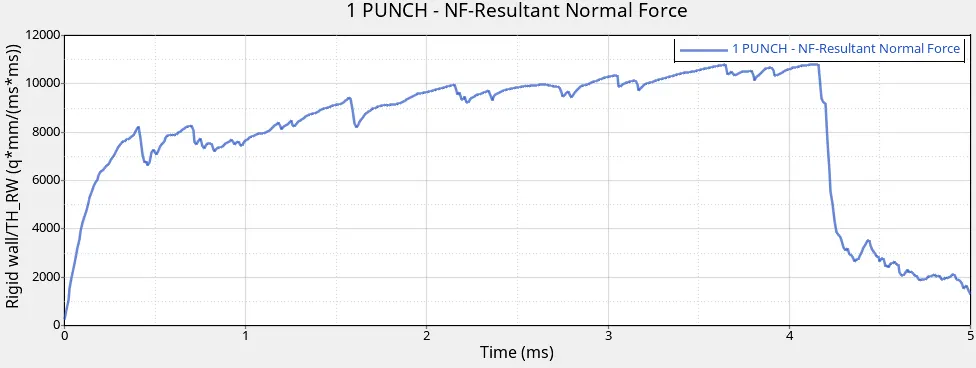

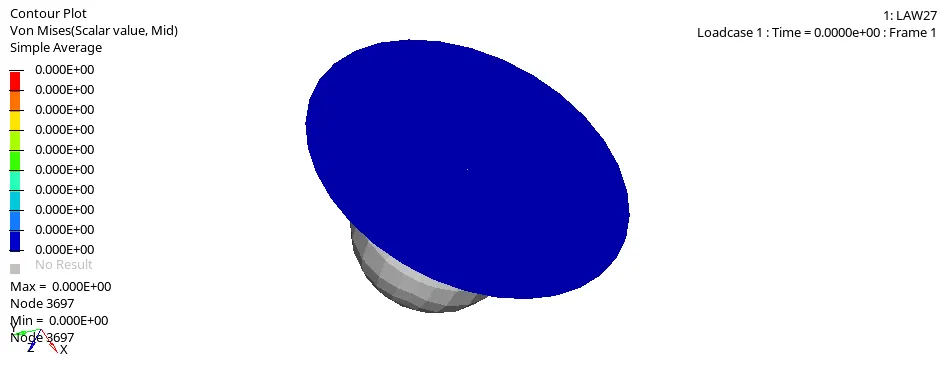
Here we can see the plate breaks into two parts as we have used brittle material. Also we see the energy rise even after the failure showing the strain dissipation in stressed elements. Elements are deleted once failure criterion is reached.
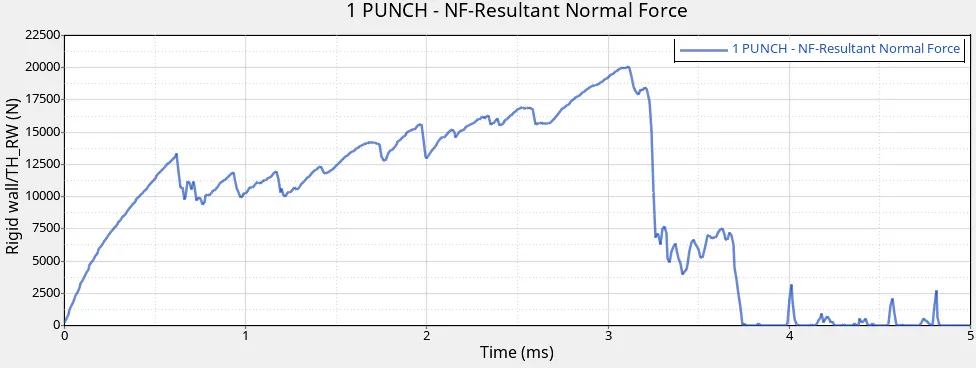
Case 7 – Law 36 with Strain rates curve
material is defined based on the curve discussed. Failure criterion is also used as per the below images.
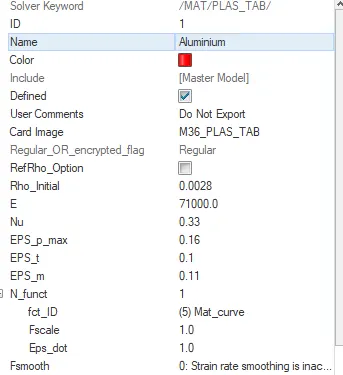
Material Curve

DISCUSSION
| Cycles | Simulation Time | Energy Error | Mass Error | |
| Case 1 | 494 79 | 92.40 | 0.2 % | 0 |
| Case 2 | 49396 | 92.13 | 4 % | 0 |
| Case 3 | 49404 | 141.25 | 0.8 % | 0 |
| Case 4 | 48736 | 161.90 | 3 % | 0 |
| Case 5 | 47968 | 97.28 | 0.3 % | 0 |
| Case 6 | 49355 | 92.54 | 1.1 % | 0 |
| Case 7 | 52202 | 116.08 | -1.5 % | 0 |
Since the energy error is less than 15 %, all the simulation cases were executed as expected and there was not much error.
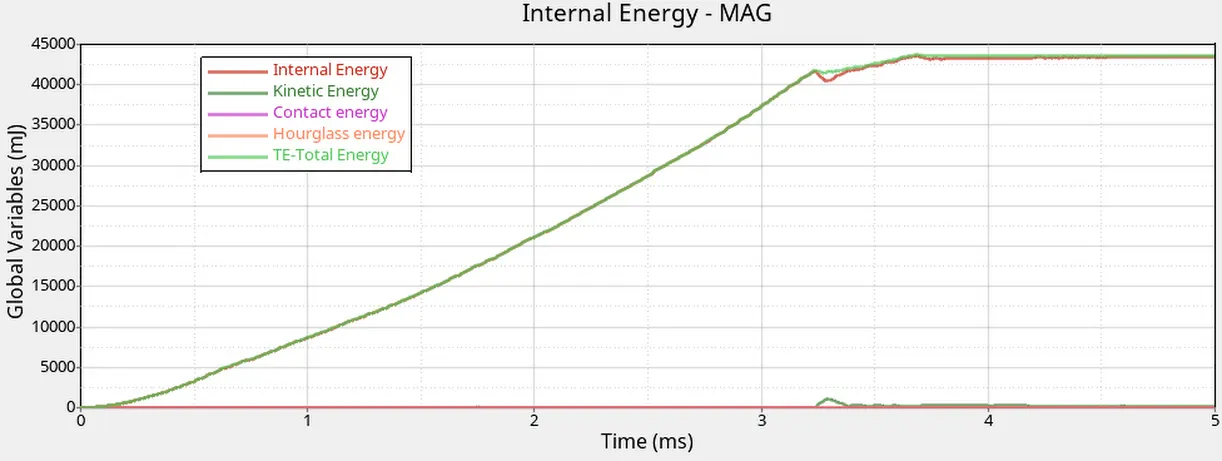
Also we ca see from energy plots that there is almost negligible hourglass energy which confirm that there was no unwanted behaviour of elements during the simulation.
CONCLUSION
From the above study we can conclude few points which are as follows
- Case 2 is more realistic compared to other cases for same material card as we see the elements cracking.
- We do not see any failure for elastic material as it will keep stretching until the young's modulus of the material.
- If the material is brittle, then using Law 27 is advisable as it is able to replicate the brittle behaviour of the material.
- If the test data is available for different strain rates, then Law 36 is useful in real life applications like crash or durability test.
LINK
https://drive.google.com/drive/folders/1-MGWDYy1vS6ZUIOWUQsmJdy97V_7wfZb?usp=sharing