Assignment 4
Objective:
Explore the model of a DI engine and compare it with SI engine. Also, list down differences and change mass fuel burn to 50% and observe its impact on the performance.
Case 1: Comparision of SI vs DI at 1800 RPM.
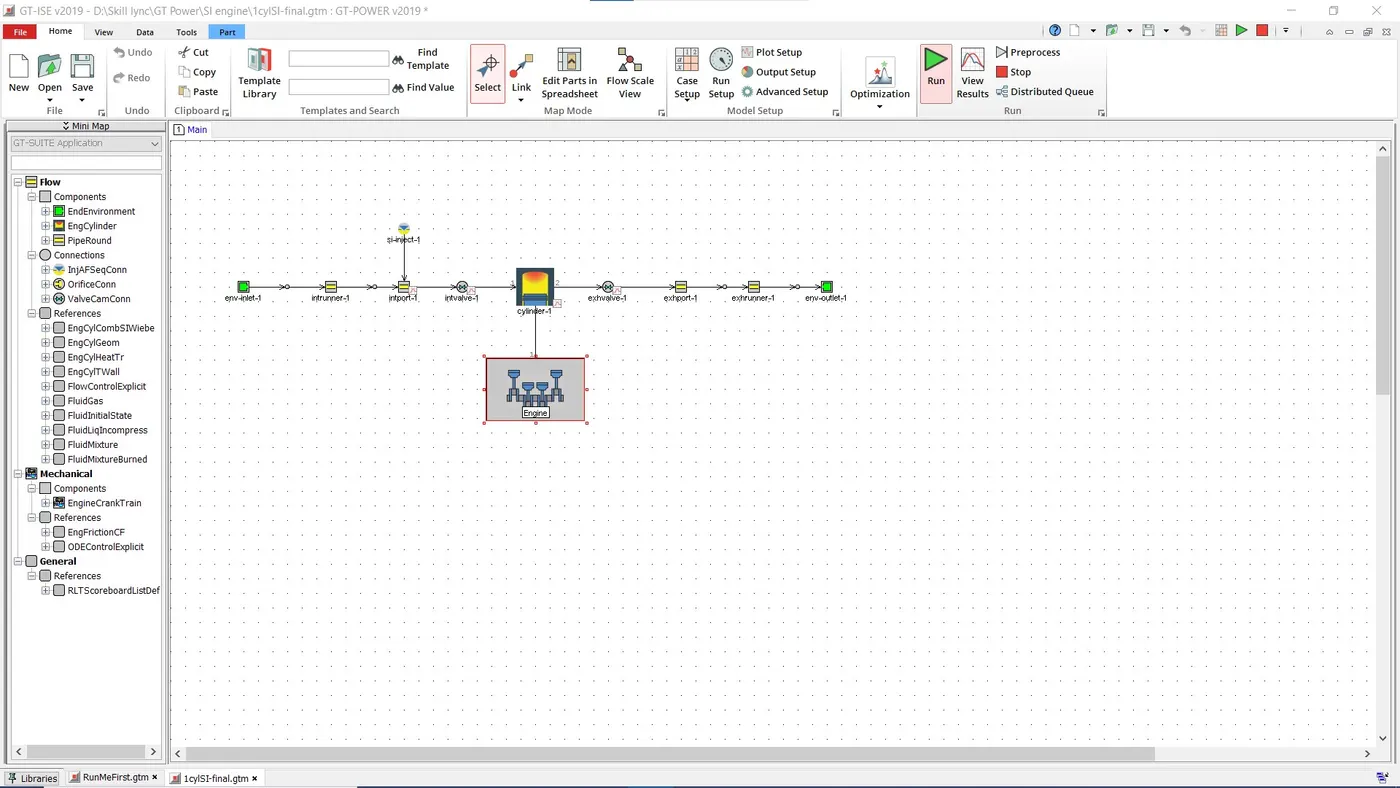
SI engine model:
DI engine model:
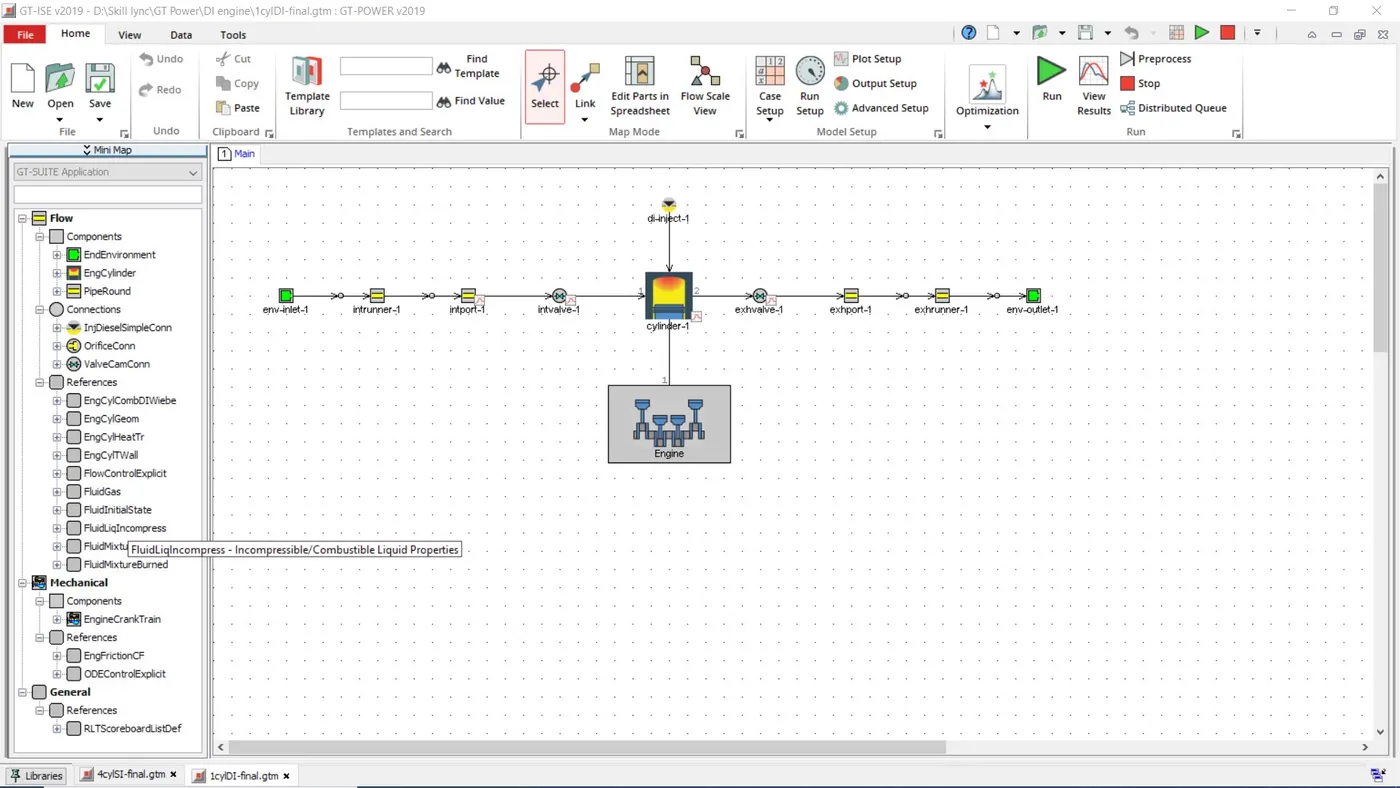
Engine speed is adjusted to 1800 RPM for both the SI as well as DI engine. Both the models were simulated and their results were compared.
| Characteristics | SI | DI |
| Compression ratio | 9.5 | 16.5 |
| Brake power(kW) | 8.3 | 19.5 |
| Brake Torque(N-m) | 44.2 | 103.6 |
| Air flow rate(kg/hr) | 28.8 | 82.8 |
| BSFC(g/kW-hr) | 238.2 | 221.3 |
| A/F ratio | 14.5 | 19.18 |
| NOx in ppm | 73.59 | 997.92 |
| CO in ppm | 258.38 | 2.89 |
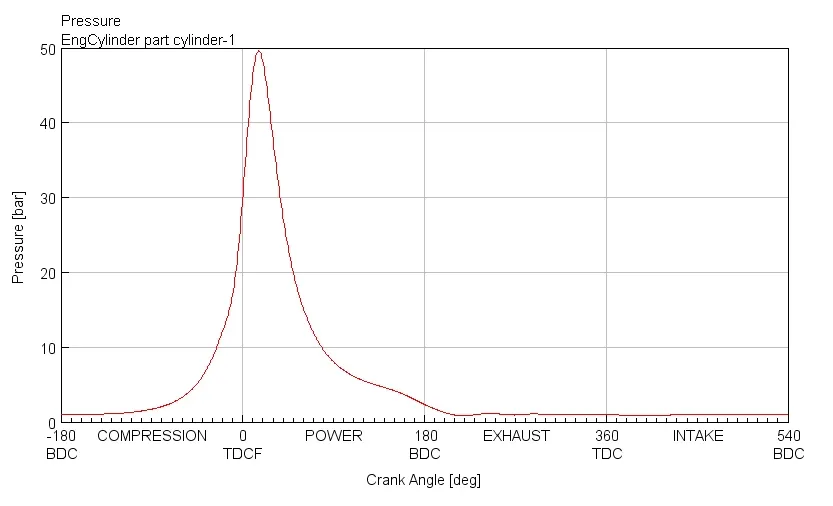
In-cylinder pressure of SI engine:
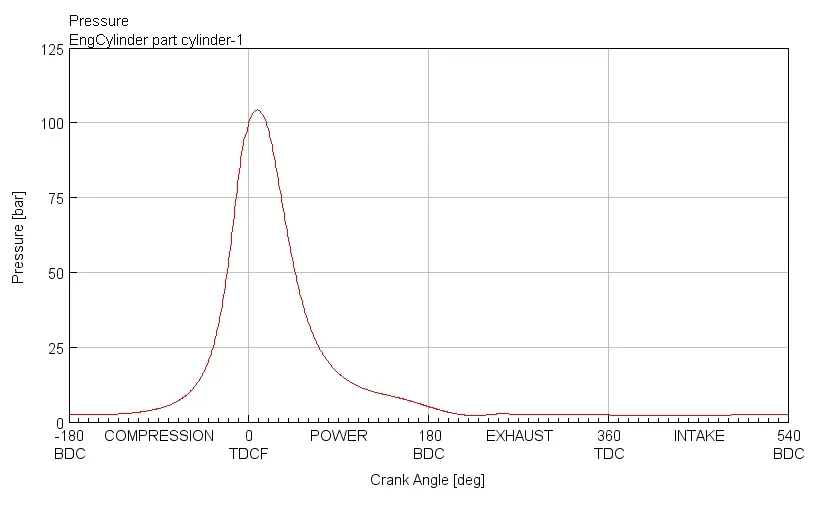
In-cylinder pressure of DI engine:
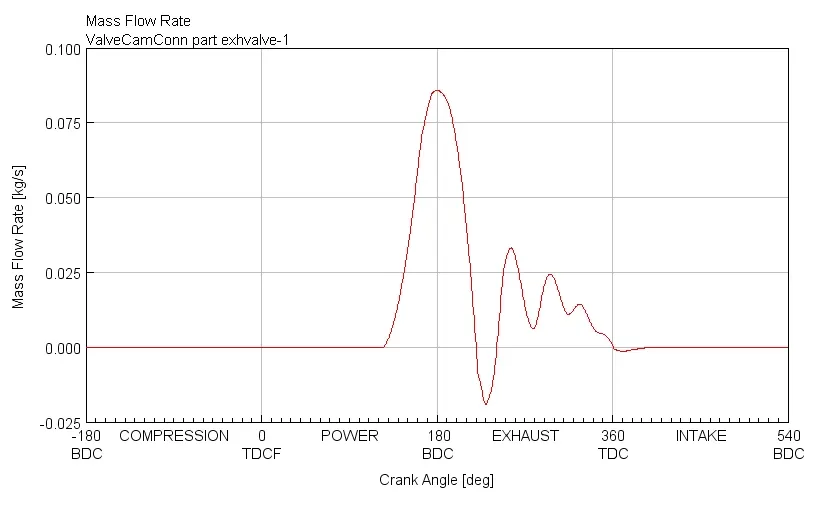
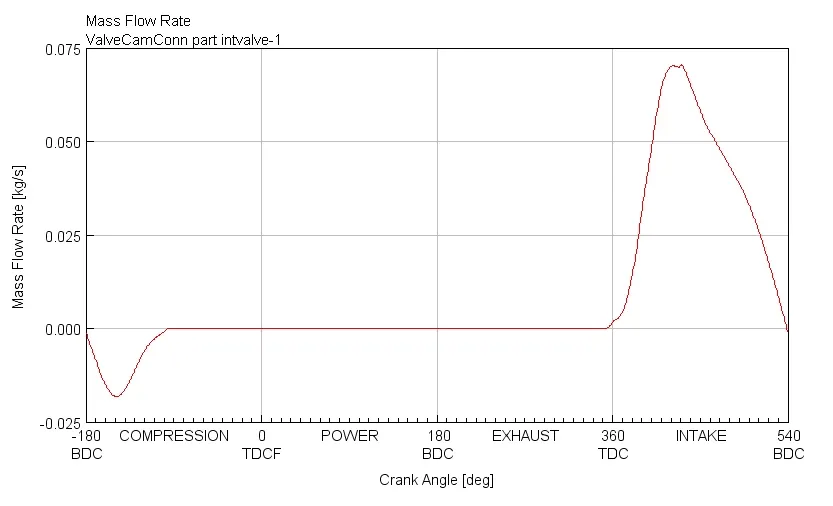
Mass flow rate of SI engine:
Exhaust:
Intake:
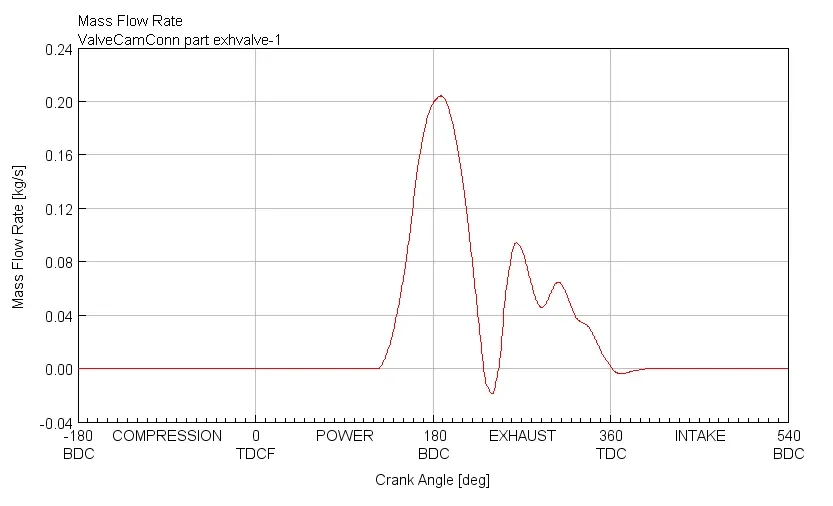
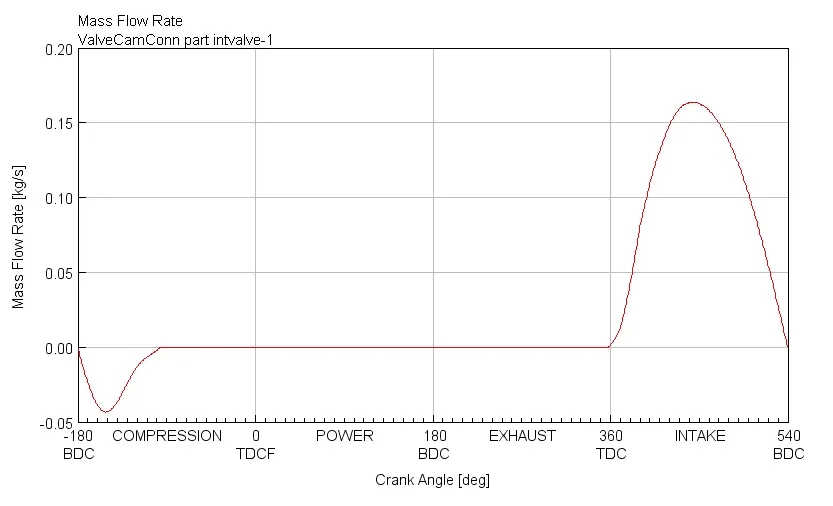
Mass flow rate of DI engine:
Exhaust:
Intake:
BSFC:
BSFC of a DI engine is lower compared to a SI engine because even though the power output is high but the fuel consumption is also higher. Hence, the ratio is less than that of a diesel engine.
Exhaust temperature:
Exhaust temperature of DI engine is 1045K.
Air-fuel ratio:
The quantity of fuel present in 1kg of air is known as air-fuel ratio. In DI engines, lean mixture is used. Hence, a higher air-fuel ratio is used compared to SI engines.
Case 2:
Main duration of fuel combustion was increased to 50 and the model was run at 1800 RPM.
| Characteristics | DI at 50% | DI |
| Brake power(kW) | 17.3 | 19.5 |
| Brake Torque(N-m) | 91.8 | 103.6 |
| Air flow rate(kg/hr) | 82.8 | 82.8 |
| BSFC(g/kW-hr) | 249.6 | 221.3 |
| A/F ratio | 19.18 | 19.18 |
| NOx in ppm | 1100.4 | 997.92 |
| CO in ppm | 3.76 | 2.89 |
Conclusion:
Due to increase in combustion duration, every major performance parameter was reduced such as power and torque. Hence, BSFC is increased also the NOx and CO emmisions were increased.