Assignment 4
AIM: To study the failure behavior of a punch and plate model by using different material models.
PROCEDURE:
CASE 1:Run the model without any changes.
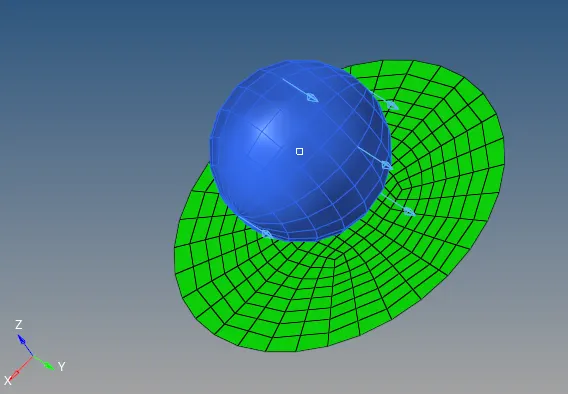
Model:
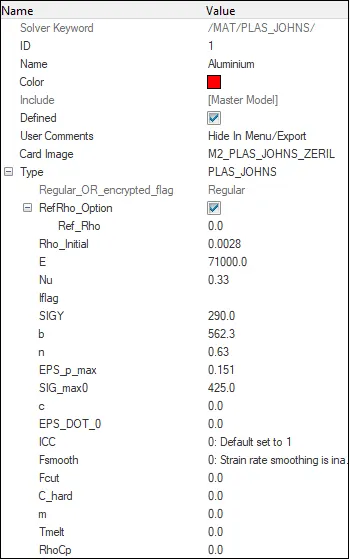
Material card for case 1:
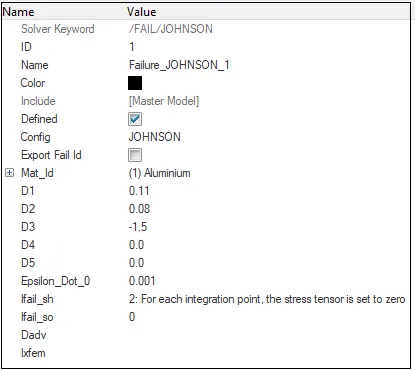
Case 1 Failure card:
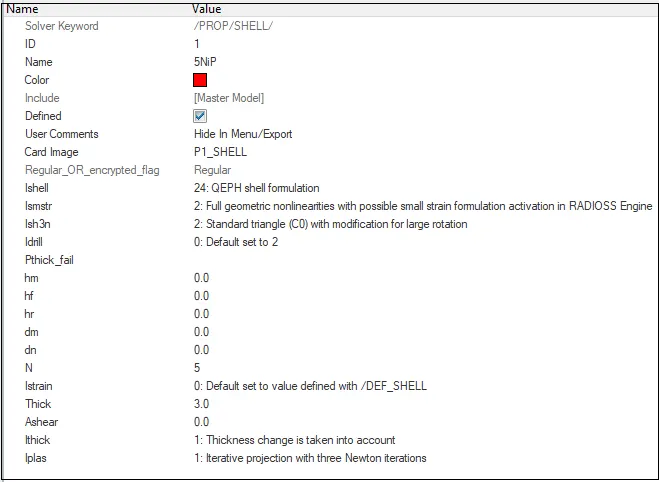
Case 1 Property Card:
- Run the radioss file and save the file by the name Law2_epsmax_failure_0000.rad for case 1.

As shown above, the energy error is 0.8% which is within the acceptable range and the Mass error is zero.
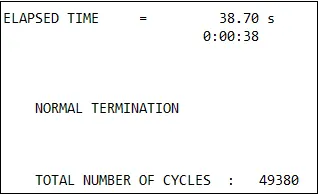
Also, the Total elapsed time is 38.70s and the Total number of cycles is 49380.
Now let's observe the Hyperview and Hypergraph results.
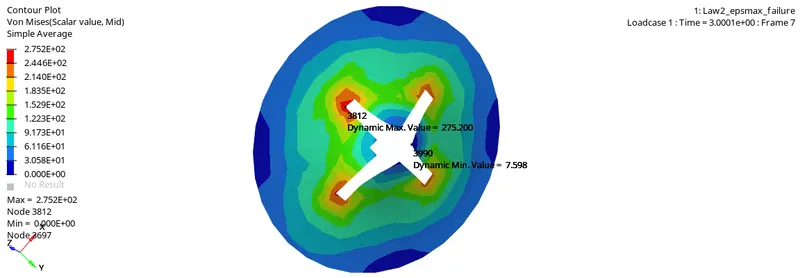
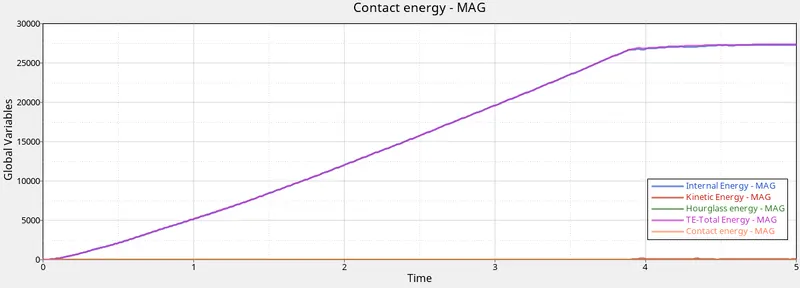
The max value of von-mises stress is 275.5 Gpa
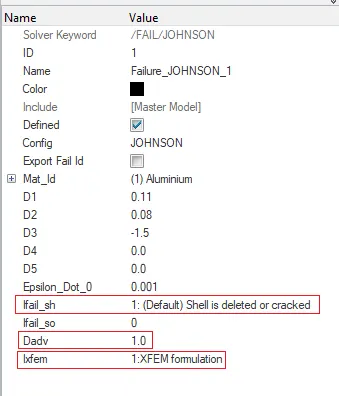
Case 2: In /FAIL/JOHNSON, change ifail_sh=1, Dadv=1 and ixfem=1. Run the model as Law2_epsmax_crack.
- Recommended changes made to the material card.

- Energy error is 4.1% which is an acceptable range and Mass error is zero
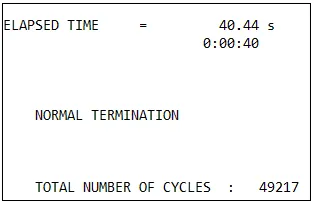
- The total elapsed time is 40.44s and the Total number of cycles is 49217.
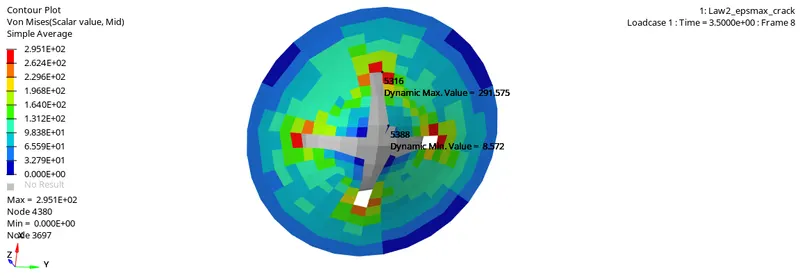
- The maximum von Mises stress value observed for this case is 291.5 Gpa.
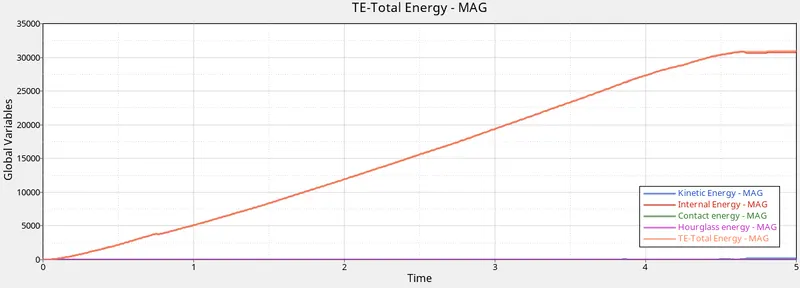
- Kinetic energy and Internal energy varies from 0 to 32000 within 4.5s
Case 3: Delete FAIL/JOHNSON card. Run the model as Law2_epsmax_nofail.

- Failure card is deleted as per the recommendation which can be observed in the above image.
- Run the radioss file
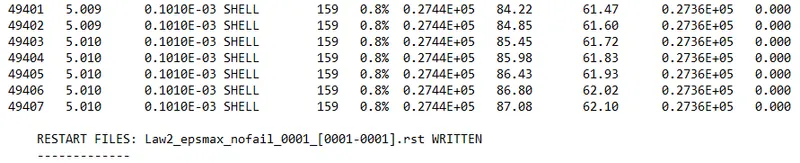
- The energy error is 0.8% which is within the acceptable range.
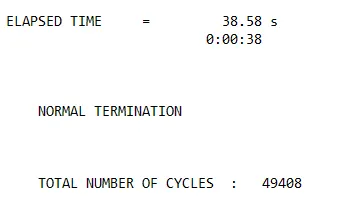
- The total elapsed time is noted as 38.58s and the total number of cycles is 49408.
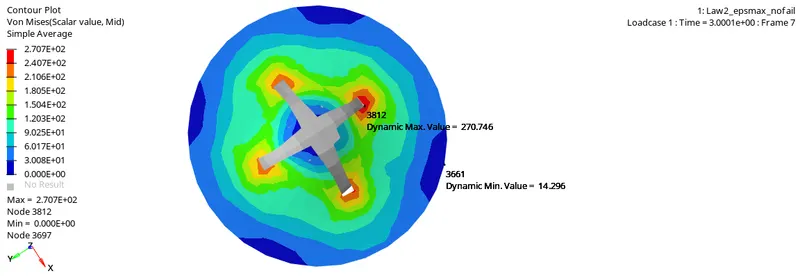
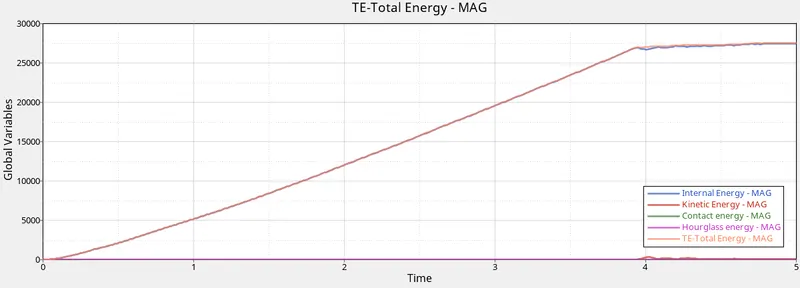
For this case the failure card is deleted. The max value of Von Mises stress is 270.7 Gpa. The kinetic energy rising from 0, at t=0 to a value of 27500 at 4ms.
Case 4: Delete the value of EPS_p_max and run the model with the name Law2
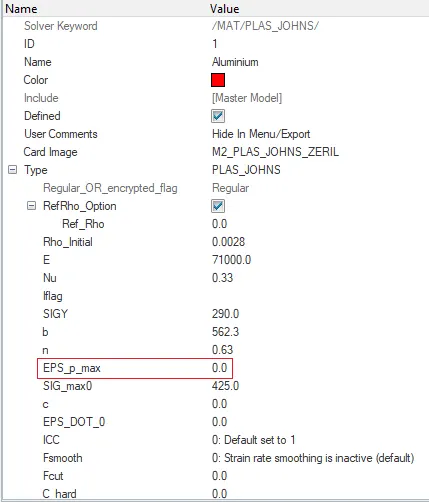
- The value of EPS_p_max value is removed as recommended.
- Run the radioss

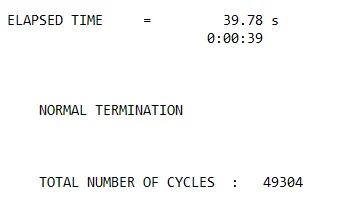
The energy error is observed as 1.1% which is within the acceptable range. The total elapsed time is noted as 39.78s and the total number of cycles is 49304.
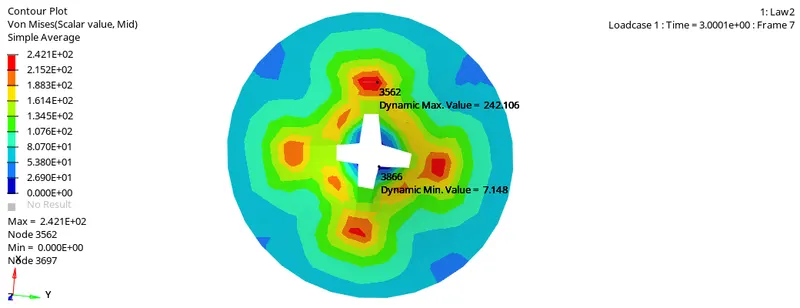
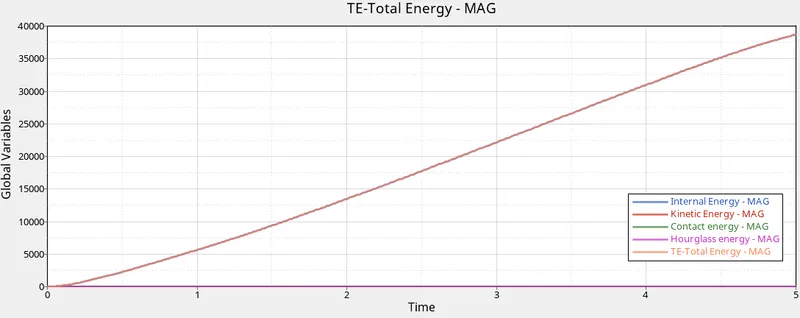
Here we have set the plastic strain value as zero as there will not be deletion of elements. The max value of Von Mises stress is 242.106 Gpa. In the plot, it can be observed that the kinetic energy is increasing up to a value of 4000 by the end.
Case 5: Convert this material model to Law1 elastic with the density, E, nu and run. Then check the results.
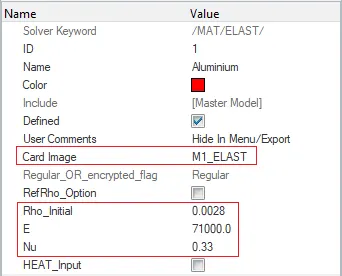
- Material card changed to Law1 with the density, E, nu.
- Run the radioss

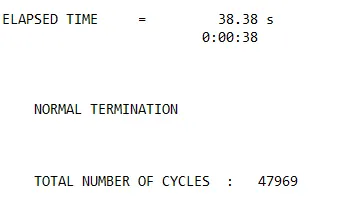
The energy error is 1.3% which is within the acceptable limit. The elapsed time is 38.38s and the total number of cycles is 47969.
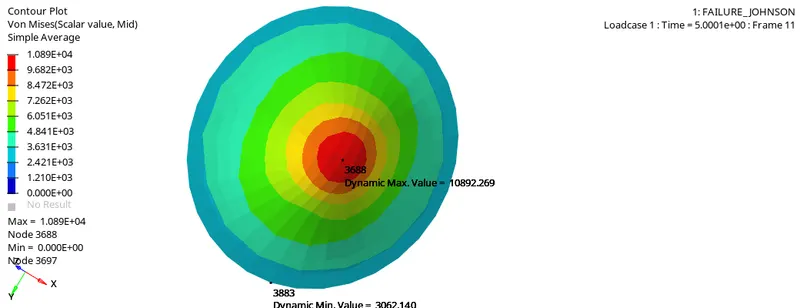
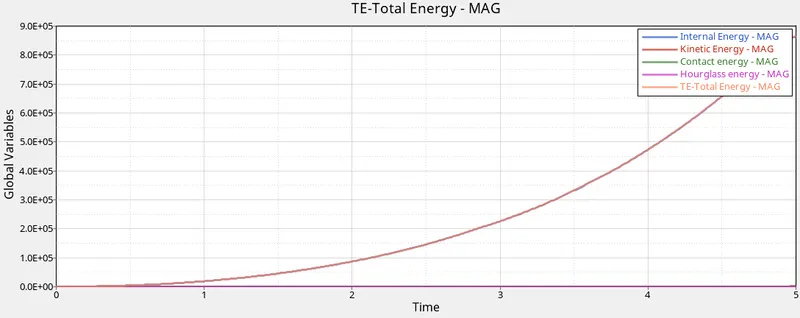
In this case, the material type is changed from M2 PLAS_JOHN to LAW1 M1_ELAST with the same value for rho, E, and nu.
Maximum Von Mises stress value is 10892 Mpa at node 3688.
Case 6: Open Law27_0000.rad. Change the shell properties to recommended shell properties. Notice the material card. Johnsoncook parameters but different values for EPS based failure. Run the model with Law27.
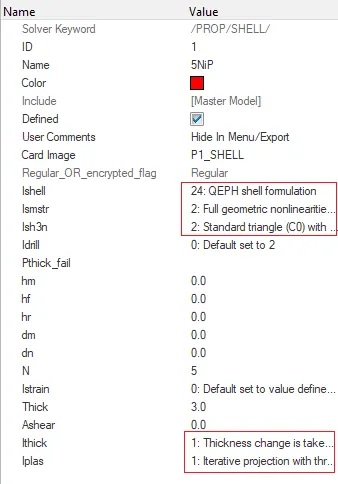
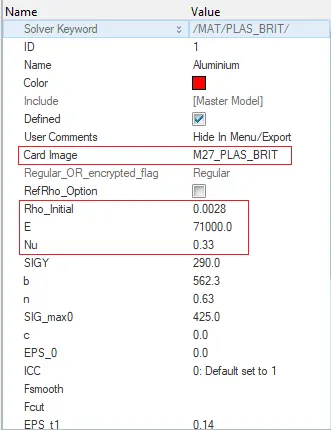
- Keeping the material card and property card details as recommended.
- Run the radioss

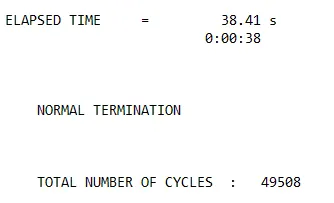
Energy error is 0.8% and mass error is zero. The elapsed time is 38.41s and the total number of cycles is 49508.
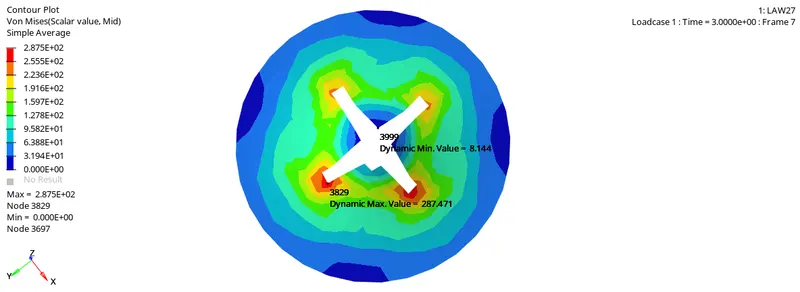
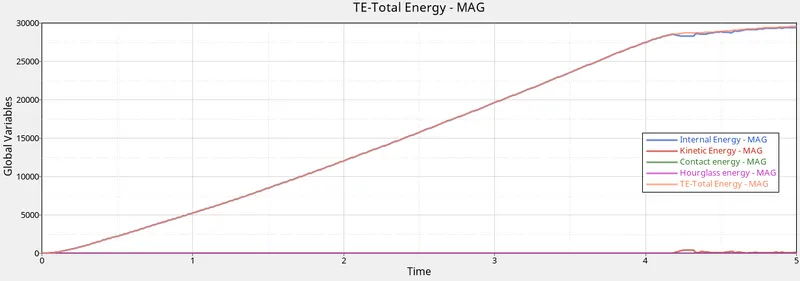
For this case, the material card used is /MAT/LAW27(PLAS_BRIT) which is mainly used for brittle materials. This law is applicable to shell elements. The max Von Mises stress value is 287 Mpa. Kinetic energy increases up to 29000 overtime as observed from the plot.
Case 7: Run the Simulation after changing the material law as LAW36 (PLAS_TAB).
LAW36 (PLAS_TAB) card
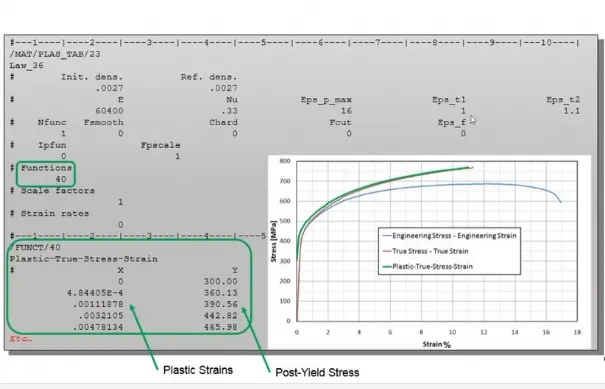
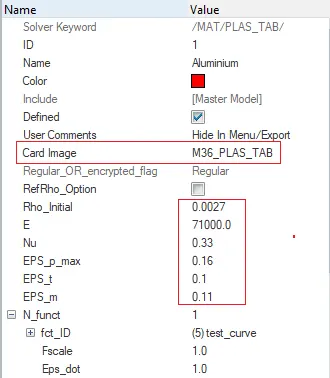
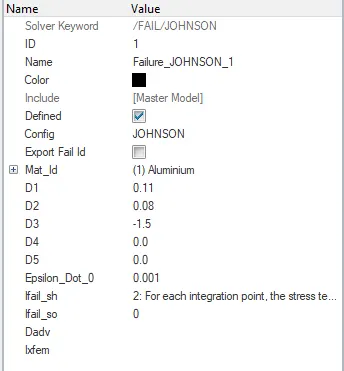
Material card(M36_PLAS_TAB) and failure card details are shown above for the case7
And we need to create test_curve data for fct_ID as shown below.
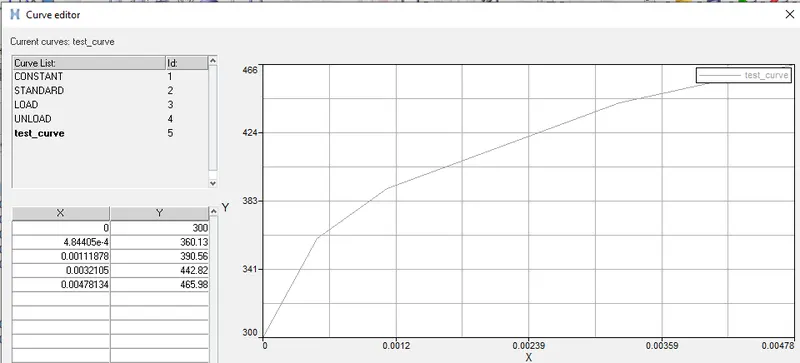
Run the radioss and the output file as given below.

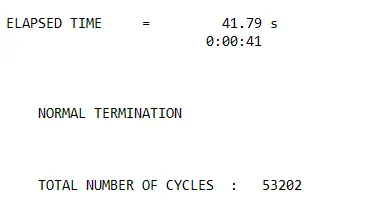
The energy error is -1.4% and the mass error is zero which is within the acceptable range. The elapsed time is 41.79s and the total number of cycles is 53202.
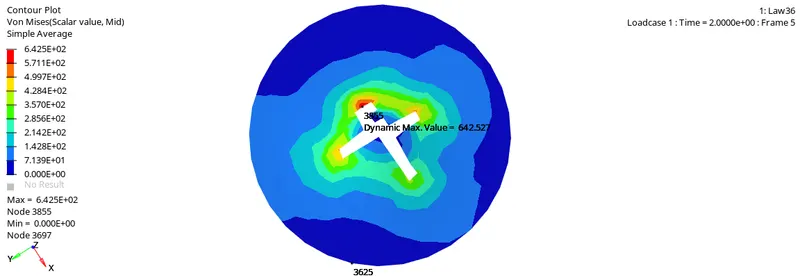
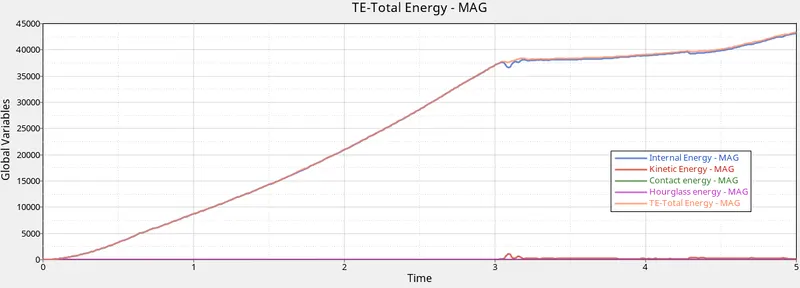
Here we changed the material type as LAW36 with a test curve with data. From the simulation, it's observed that a row of an element after the impact gets deleted because of high strain. Energy error is -1.7% which indicates energy dissipation. The maximum value of Von Mises stress is equal to 642.5 Mpa at node 3855. Kinectic energy reaches 37500 after 3ms.
Conclusion
There are a number of material cards available according to different requirements. From the above 7 cases the case seven has the most realistic results while comparing with the other results. This task helped to Learn the use of the material cards, property cards, and failure cards and their requirements.