Analysis of Ball hitting shell with various Material laws, and comparing the post processing Results.
Case 1 – Law 2 with EPS Max Failure and Failure Johnson card
Case 2 - Law 2 with EPS Max Failure and Ifail =1, Dadv =1 and Ixfem = 1
Case 3 – Law 2 with deleted Fail Johnson card
Case 4 – Law 2 with EPS Max Failure
Case 5 - Law 1 with density, E, nu
Case 6 – Law 27 with EPS based Failure
Case 7 – Law 36 with Strain rates curve
Setting up Base template:
- Import Solver Deck > FAILURE_JOHNSON_0000.rad > Import
- Go to Model > Properties > Enter the parameters to be changed.
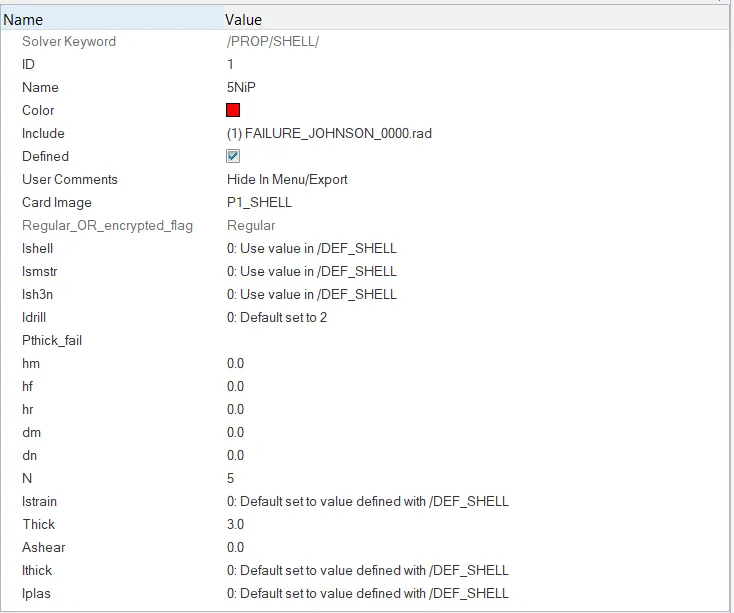
> Saved as failure_johnson_base
CASE 1 :
RUN THE MODEL AS IT IS AND NAME IT Law2_epsmax_failure:
- Go to Model > materials > In materials data check for Law2.
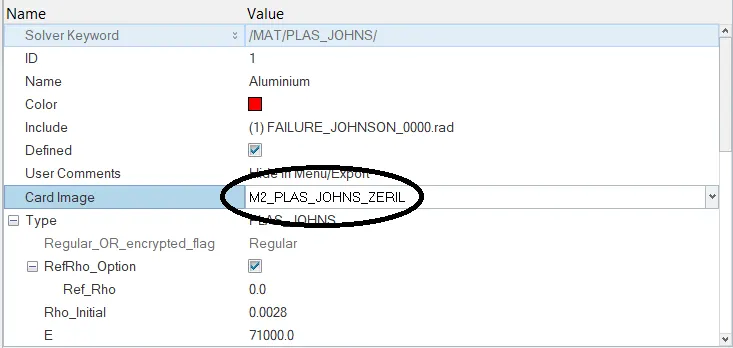

- In next windows select radioss, in which solver runs the data to be analysed.
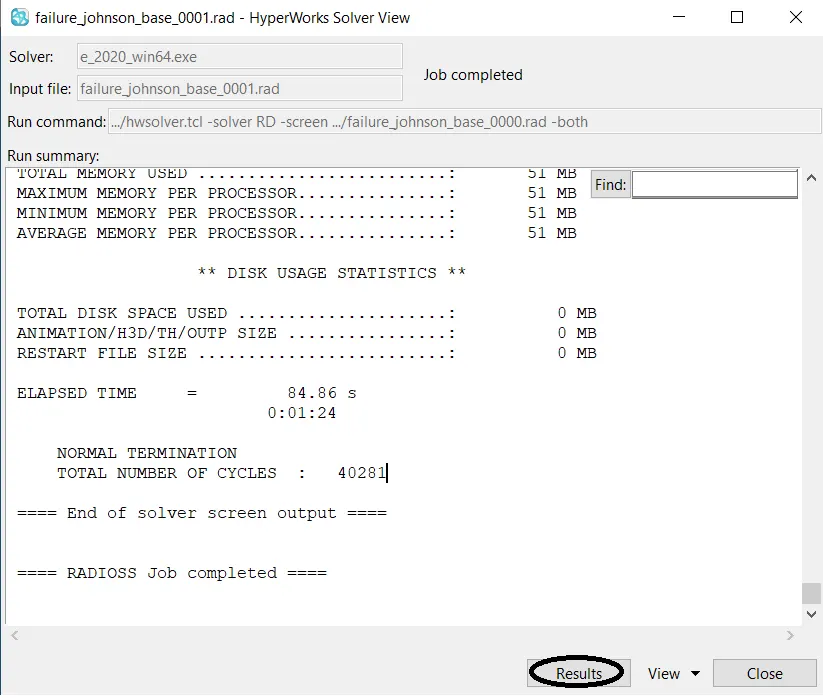
Energy Error and Mass Error:
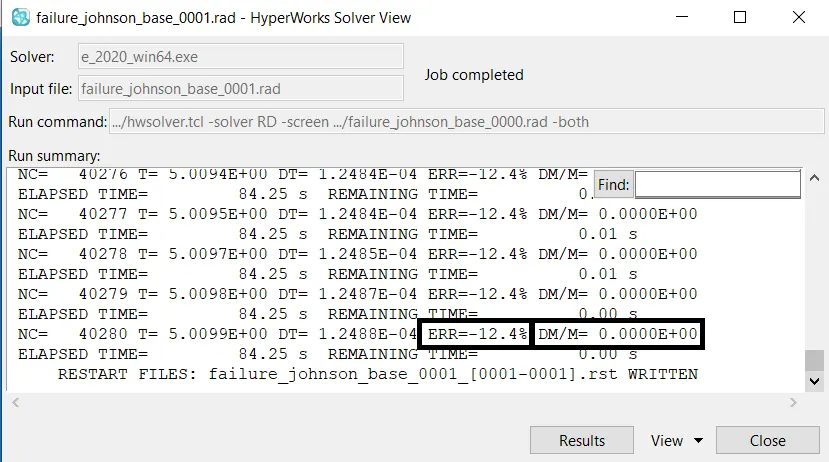
Energy Error =12.4 % (Acceptance limit upto -10 to -15%)
Mass Error = 0
The solver output is displayed as animation,
- 1 represented is used to split the window.
- 2 represented is used to represent, graphical datas can be extracted from hypergraph 2D.
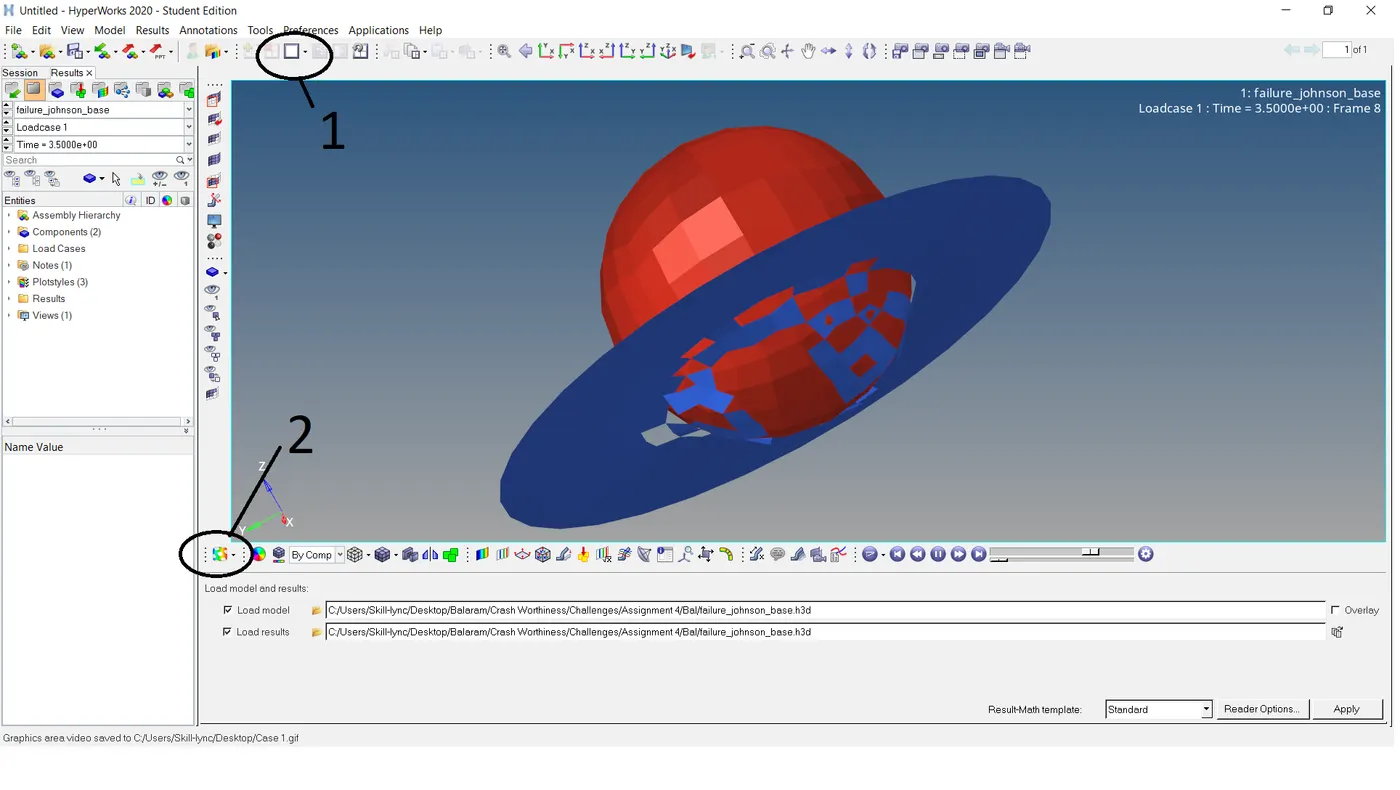
Hyperview Animation:
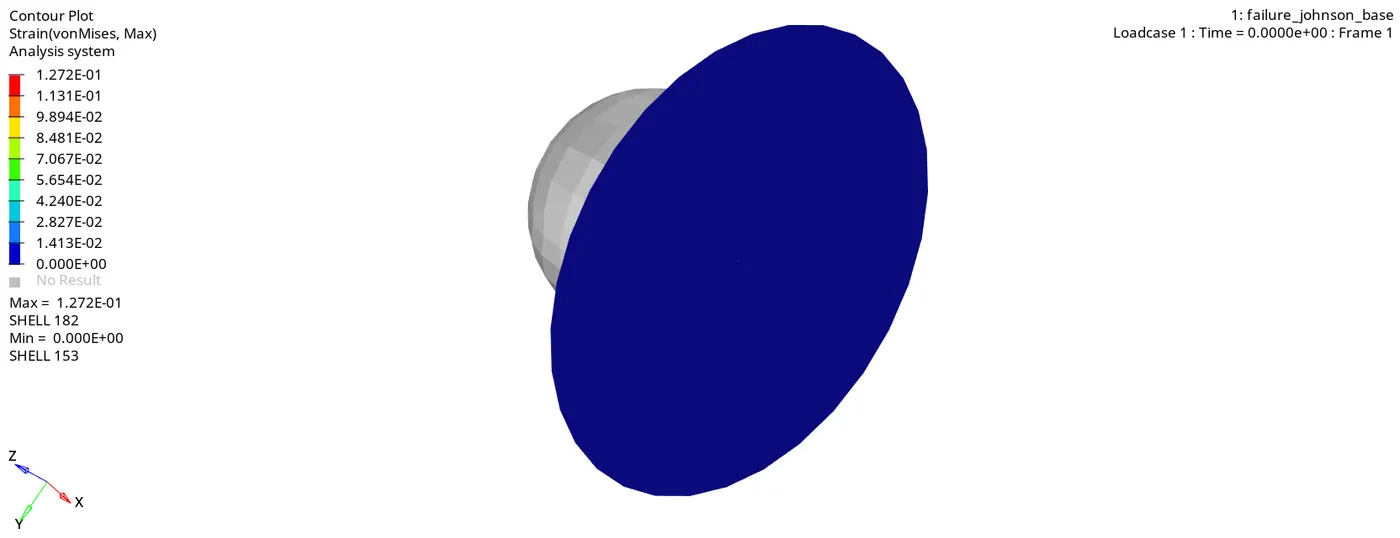
Rigid ball component breaks the aluminium component.
SOLVER ANALYSED DATA:
DESCRIPTION :
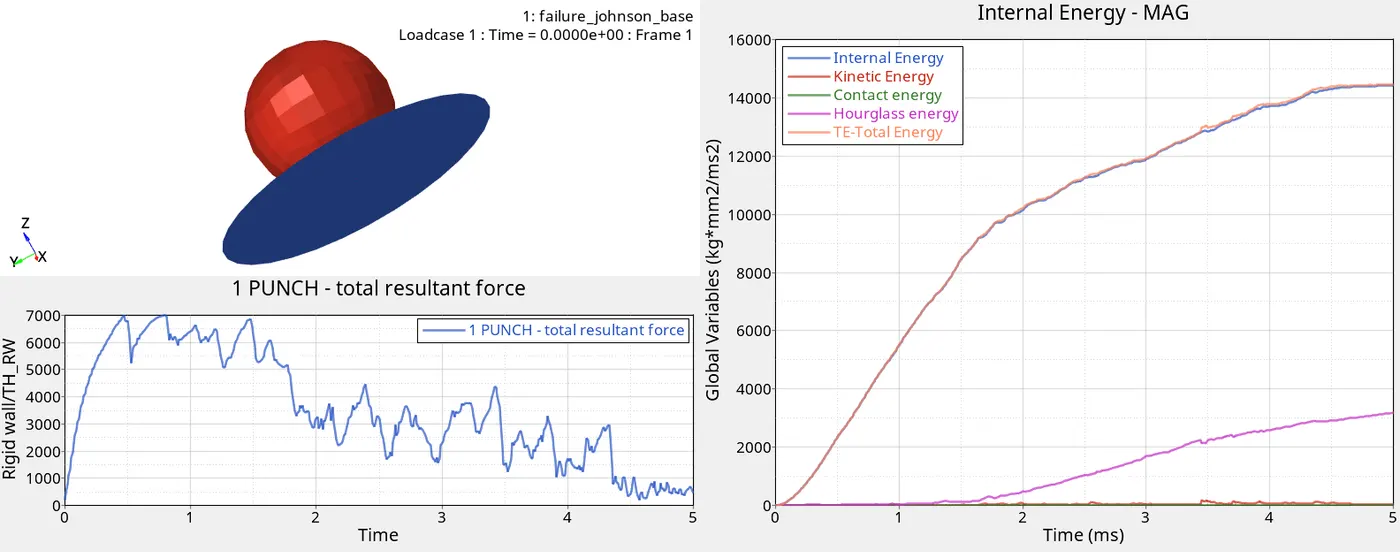
- The graph (RHS) define the energy activities carried out during rupturing of plate which at strain value of 0.1272
- All the energy levels are initially 0,internal energy which is work done increases linearly to approx 10000, and then attains curve which 14543, which shows reduction in internal energy at the time of 2-5 ms.
- Hourglass energy is very small till the rupturing of plates, at the time of 1.4ms, the Hourglass energy tends to rise as the rigid body breaks the plates, which the elements in the components deforms uneven manner.
- Contact energy is found to be zero all over the process.
- The Kinetic energy is found to be max at 3.44ms of 170. the component is fixed and so exhibits very less kinetic energy.
- Total energy of the component is the sum of all the energies occuring in the process, it is stably rising and reaches peak
- The Graph below the animation shows the data of the resultant force, Max resultant force of 7000 acting, in which the ball ruptures the aluminium component , continously passing through creates spikes along the timeline.
----------------------------------------------------------------------------------------------------------------------------------
CASE II
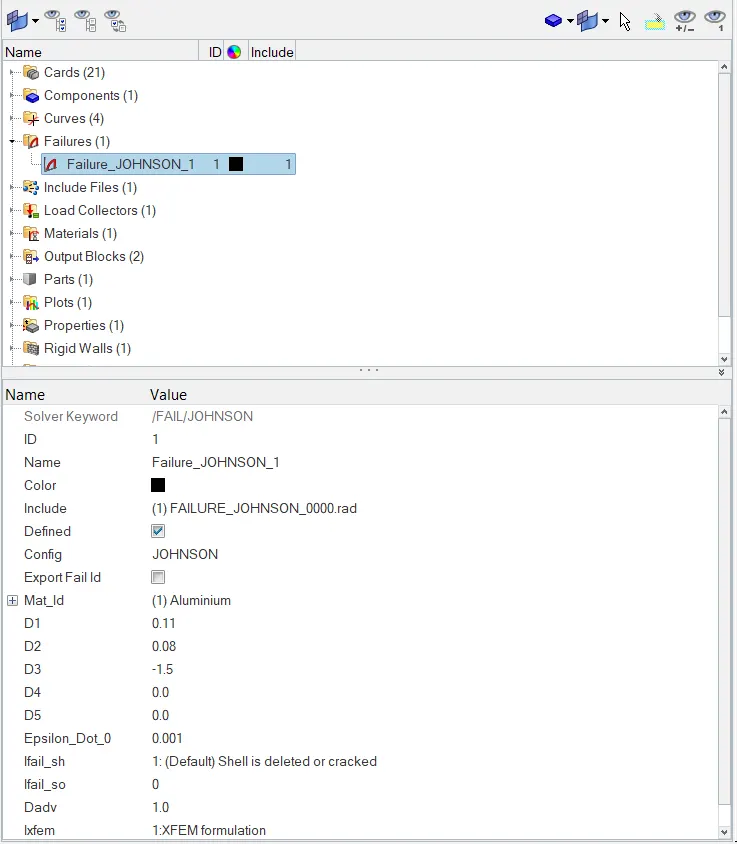
In /FAIL/JOHNSON, Change Ifail_sh=1, Dadv=1 and Ixfem=1. Run the model as Law2_epsmax_crack.
Locate Failure > Failure_Johnson_1 , In the data change the value as,
- Ifail_sh=1
- Dadv=1
- Ixfem=1
Go to Analysis > Radioss > Radioss
On completion of analysis, solver gives data output
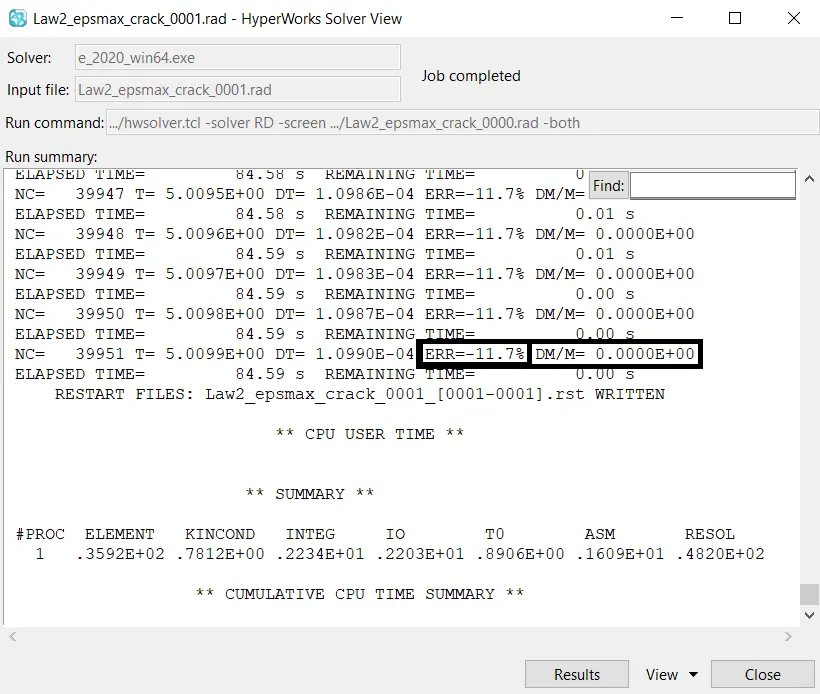
Energy Error =-11.70 % (Acceptance limit upto -10 to -15%)
Mass Error = 0
click on Results.
Hyperview Animation: 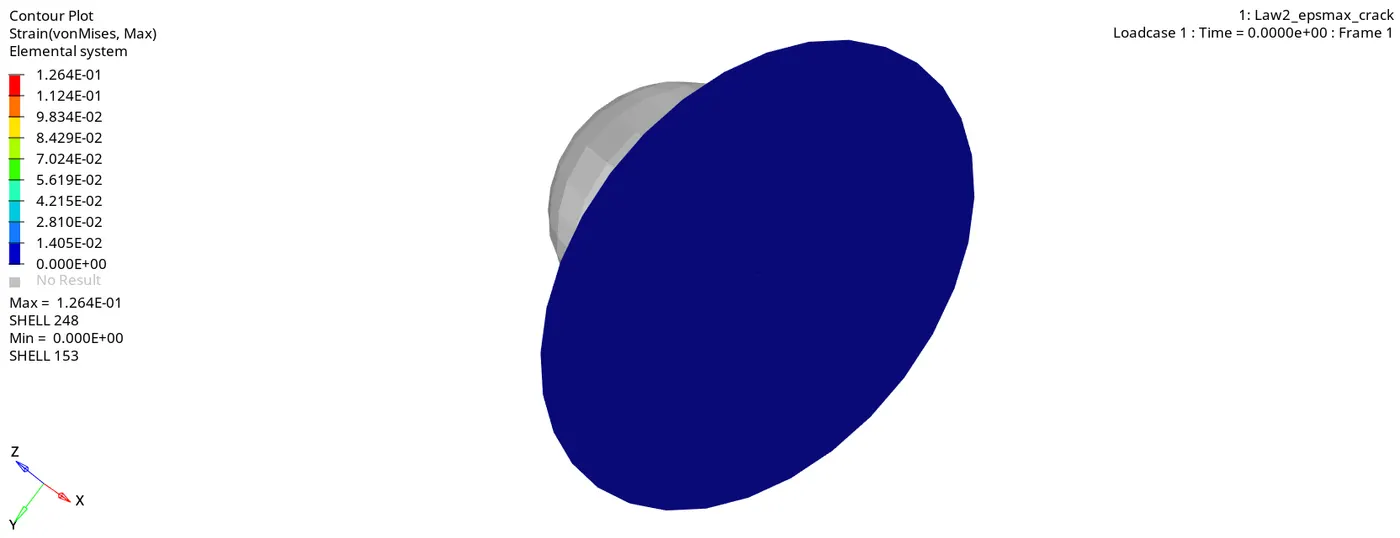
SOLVER ANALYSED DATA:
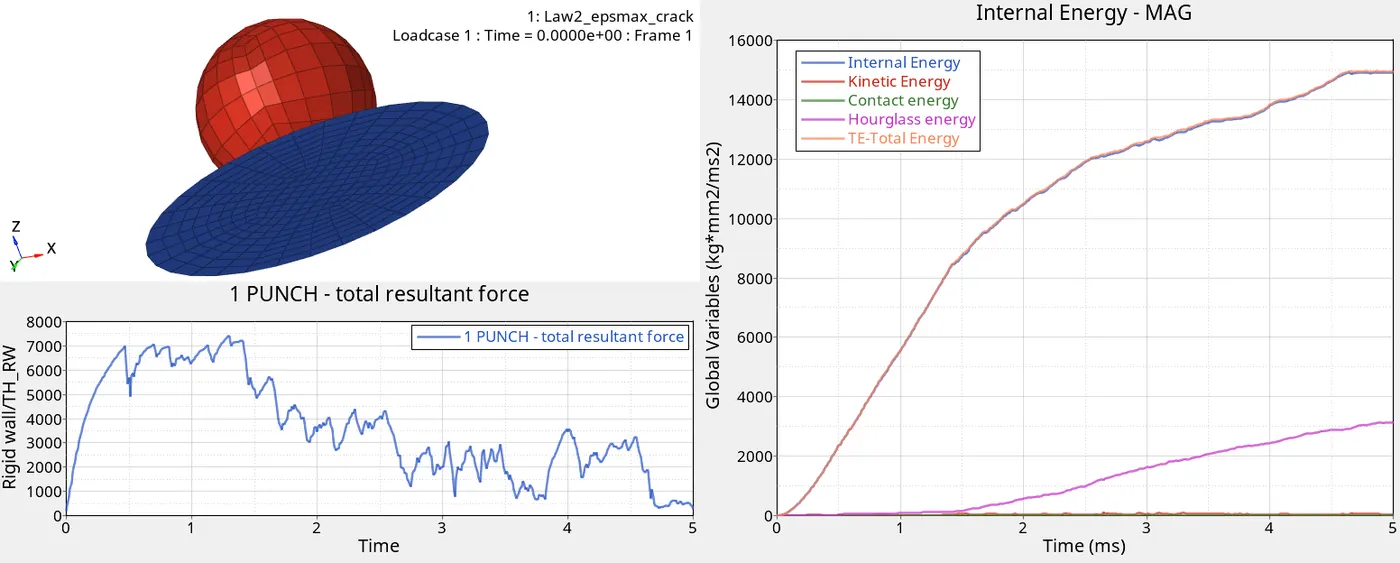
DESCRIPTION :
- The element failure occurs at 0.1264
The analysed is similar to the previous result, but due to change in /FAIL/JOHNSON properties, we can able to find the split of elements here rather than deletion of elements due to the factors such as,
Ifail_sh (Shell failure flag) : If Ixfem =0: failure - element deleted.
If Ixfem =1: failure - element cracked.
Assigned as 1.
Dadv : Criterion for the crack advancement (Only active if with Ixfem =1).
D=∑Δ(εp/εf)≥1
Sumation of Strain Plasticity to Strain Elasticity Greater than or equal to 1,
Assigned as 1.
Ixfem = 0 (Default) Without XFEM
XFEM formulation= 1
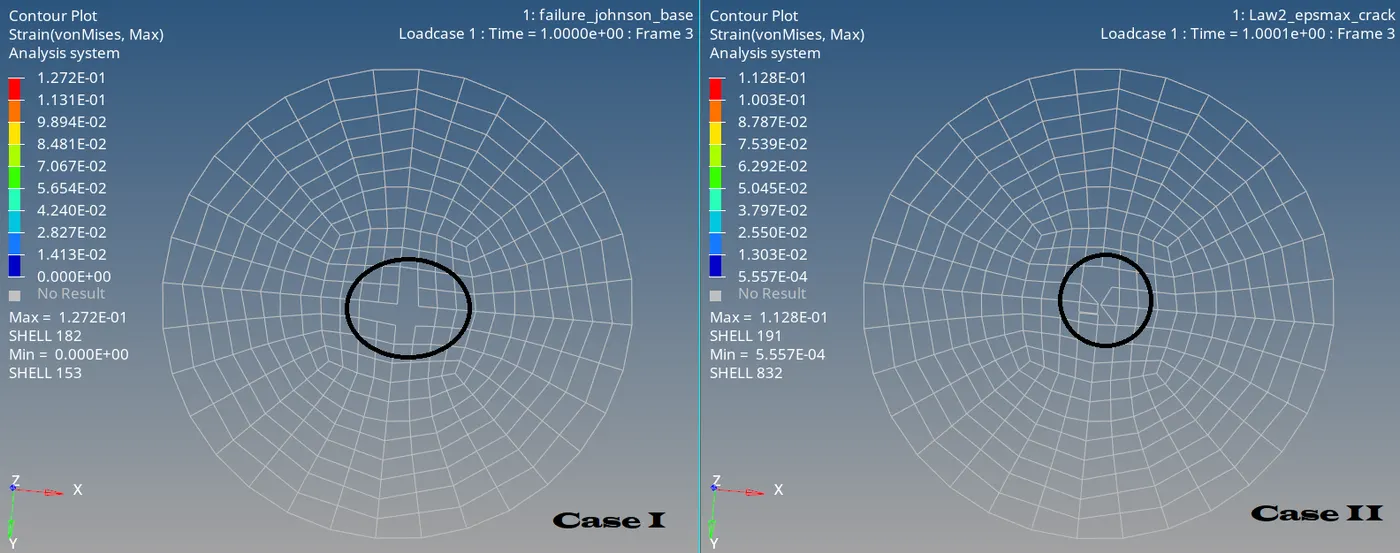
- In Case 1, The elements get deleted when they pass the train value exceeds the maximum strain value.
- In case 2, Ixem, I fail Formulation, Dadv are employed to split the elements thereby it only deletes the failed portions by splitting the elements.
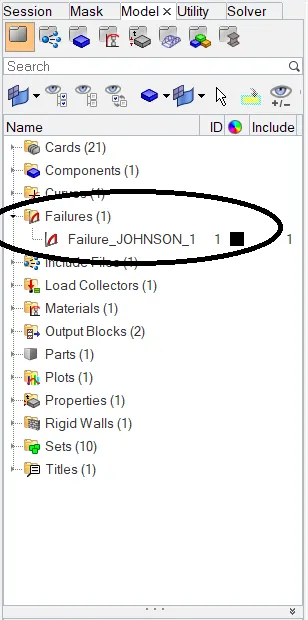
- Go to Model > Failure > Failure_JOHNSON_1 > Delete
- Run the analysis using Radioss
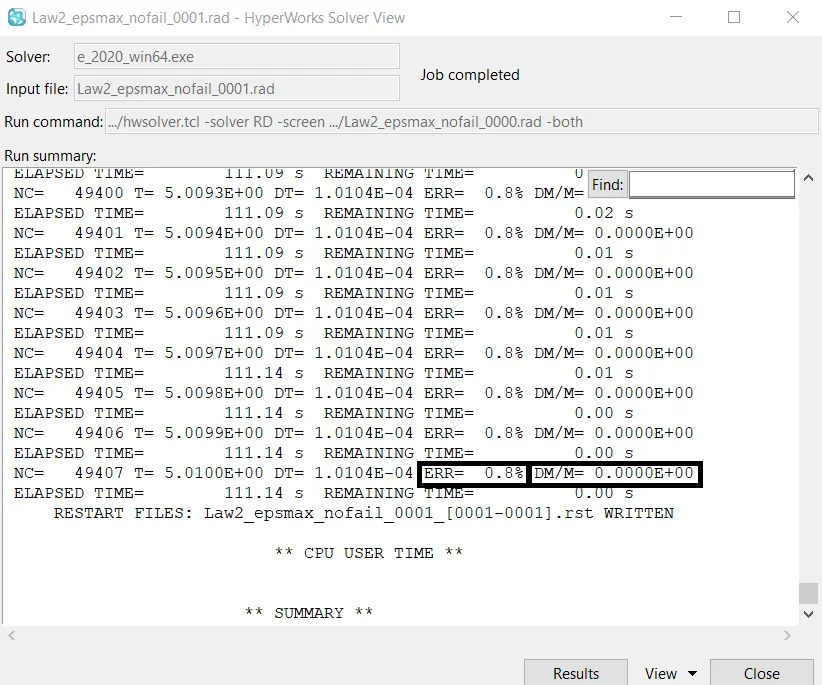
Energy Error =0.8 % (Acceptance limit of +1% or +2% is acceptable)
Mass Error = 0
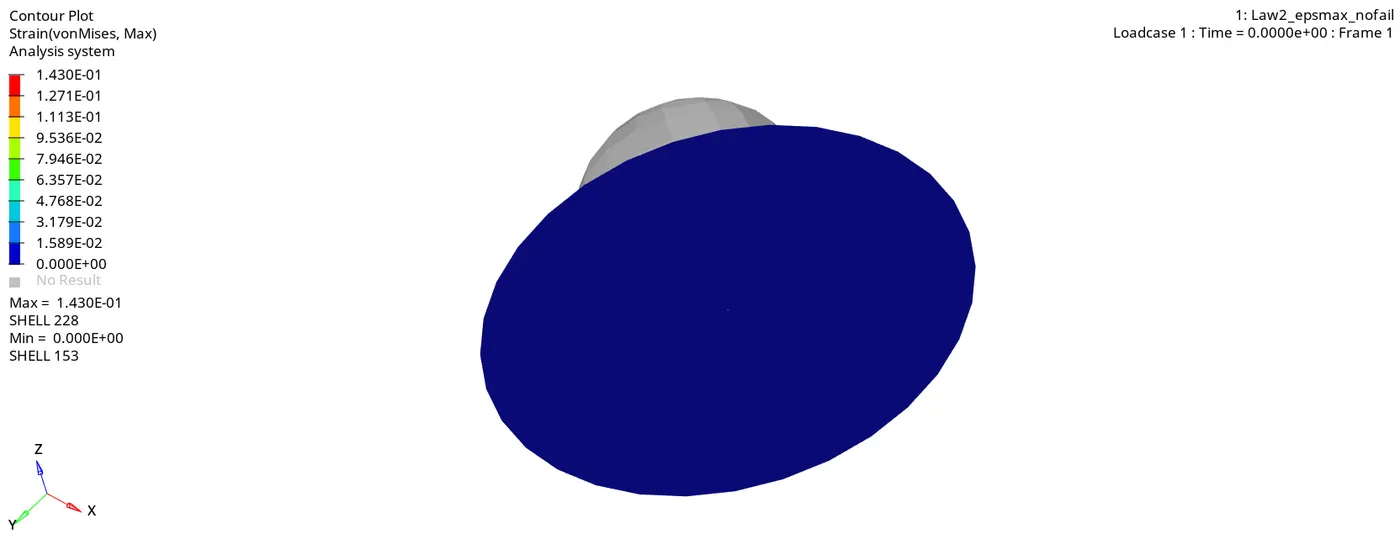
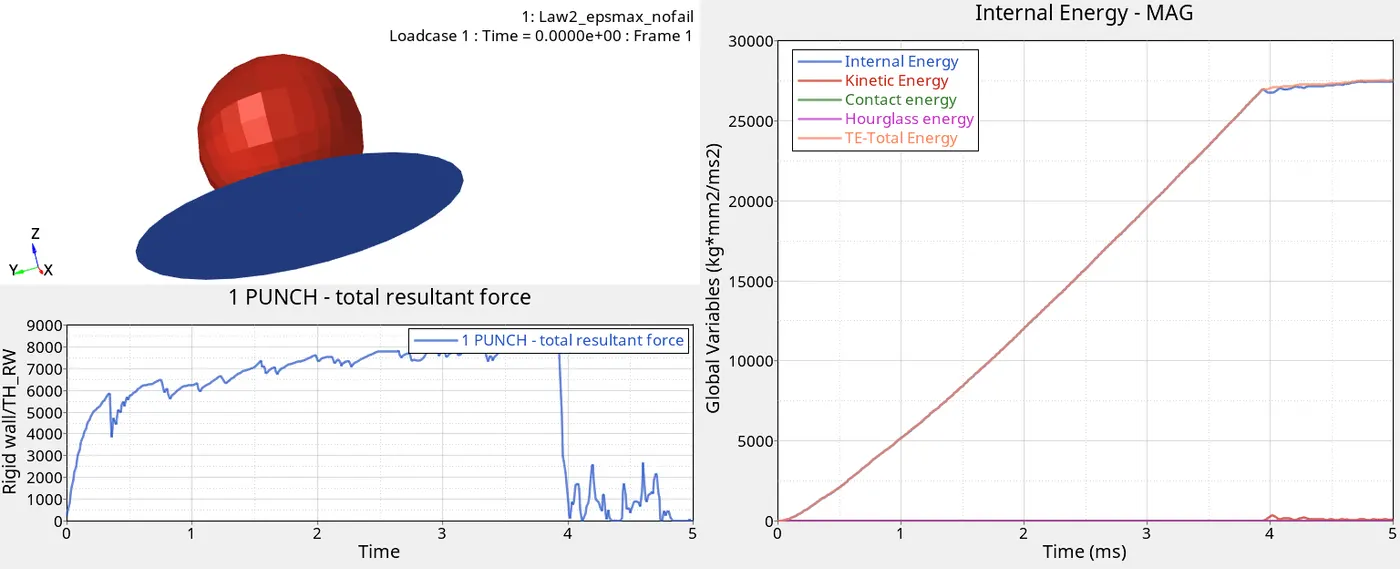
DESCRIPTION:
- As failure card is deleted, Eps_max is considered, in which the deletion of elements occurs at strain value of 0.1430.
- Strain>=Eps_max Element deletion occurs.
- The Work done on the aluminium pate falls constant as the rigid ball ruptures the material at 4 seconds.
- The internal energy shows the work done on the element in which it is deformation of the plate.
- As the failure formulation is deleted here, instead of elemental cracking, the elements gets deleted.
- Hour glass is not observed.
- Kinetic energy of the aluminium plate is very little.
----------------------------------------------------------------------------------------------------------------------------------
CASE IV - Law 2 with EPS Max Failure
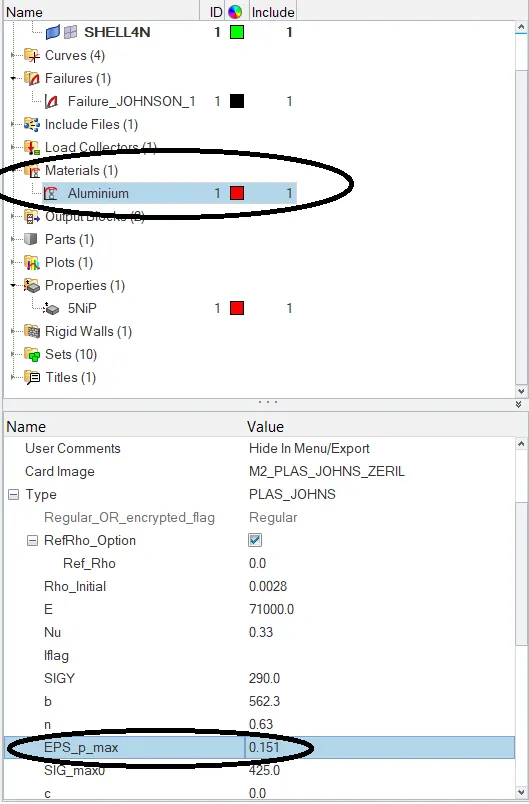
Material >Aluminium > Properties > EPS_p_max =0.151
Run the solver > Radioss
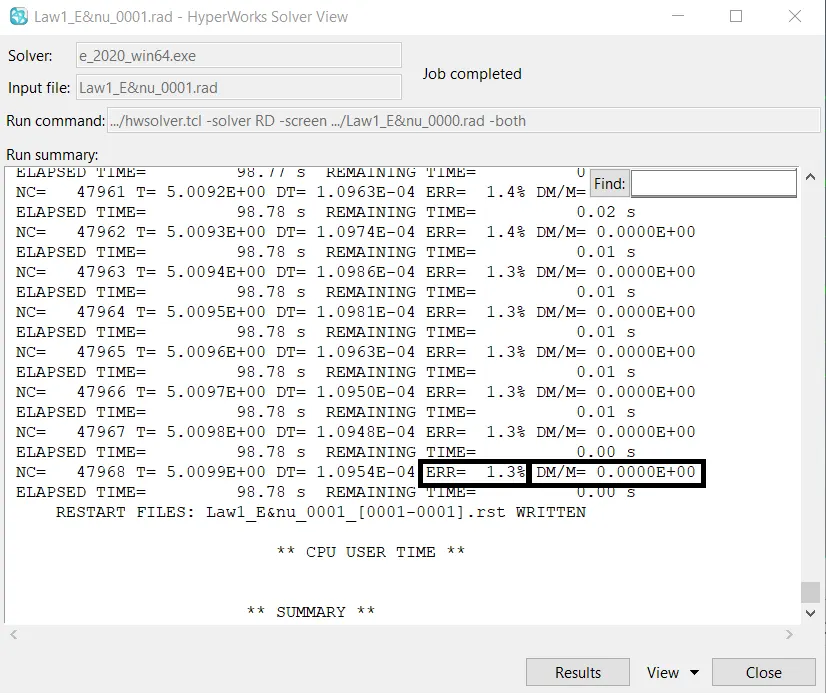
Energy Error =1.3% (Acceptance limit of +1% or +2% is acceptable)
Mass Error = 0
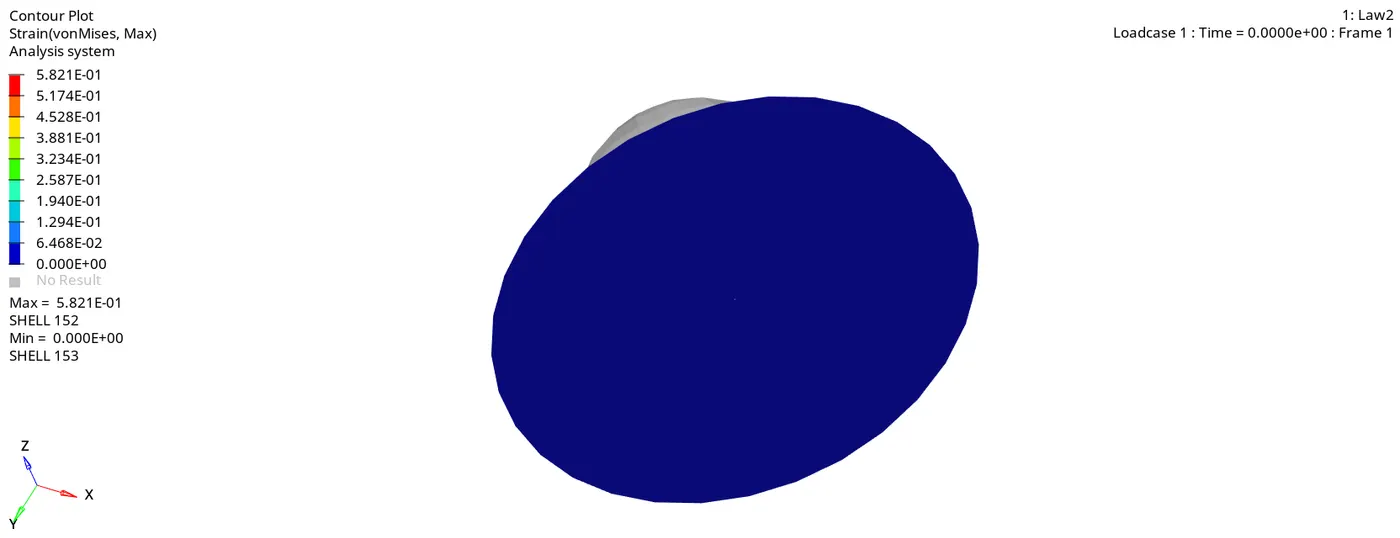
Hyperview Data:
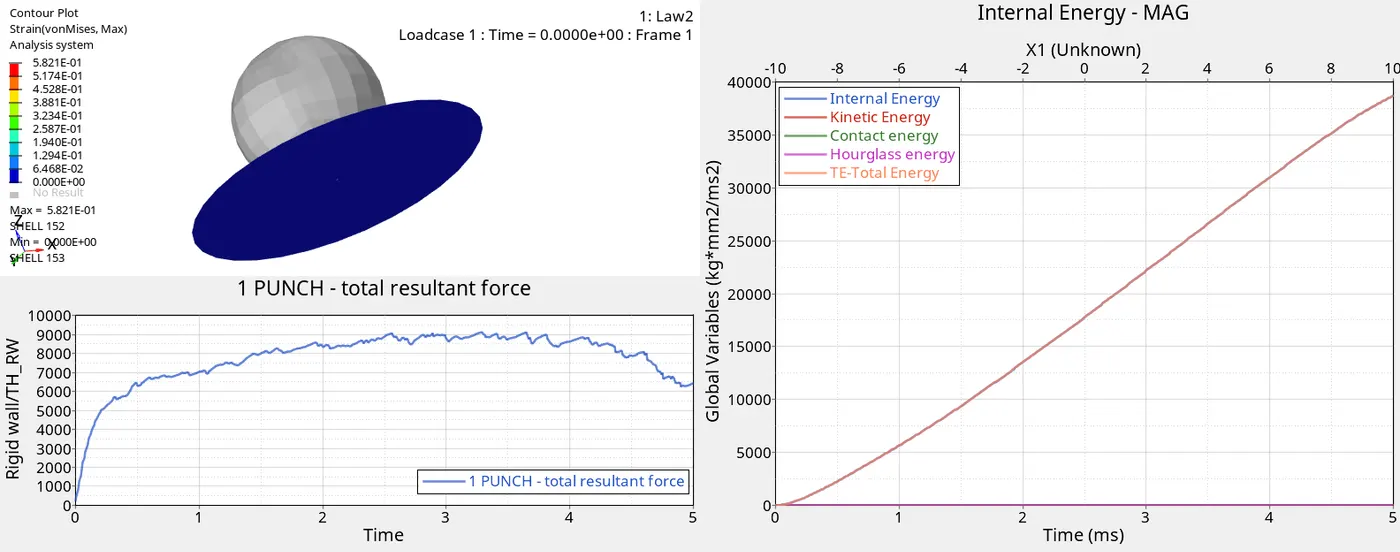
Graphical Representation of solver Data:
DESCRIPTION:
- The Elements are getting deleted when it exceeds the strain rate at 0.5821
- Internal energy increases linealrly, in which the total enegy sums up, stably over IE.
- The elements acting under the influence of rigid balls when the strain gets above EPS_p_max.
- There is no involvement of hourglass energy, contact energy and kinetic energy in aluminum component.
---------------------------------------------------------------------------------------------------------------------------------
CASE V
Law 1 with density, E, nu
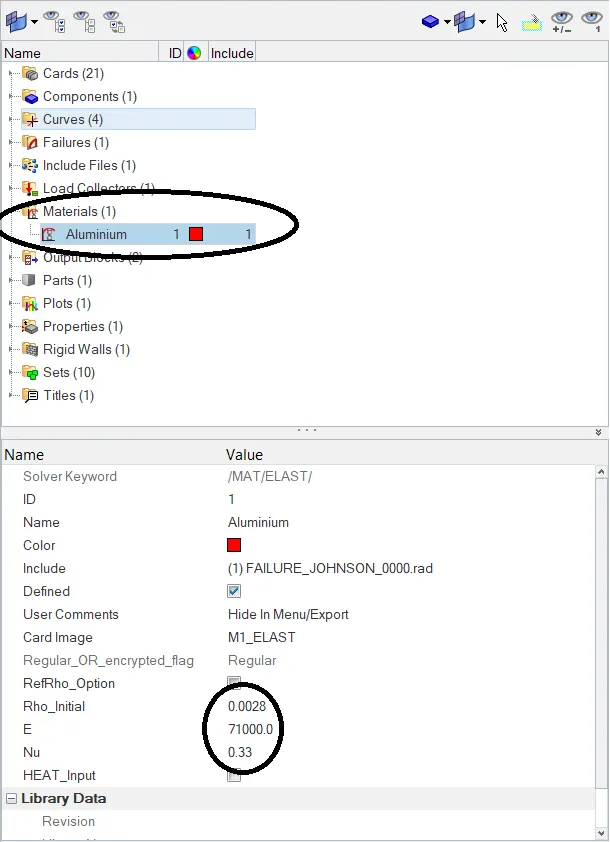
Go to > Materials > Aluminium > In properties >Specify Density, E and Nu.
- Run the analysis using Radioss
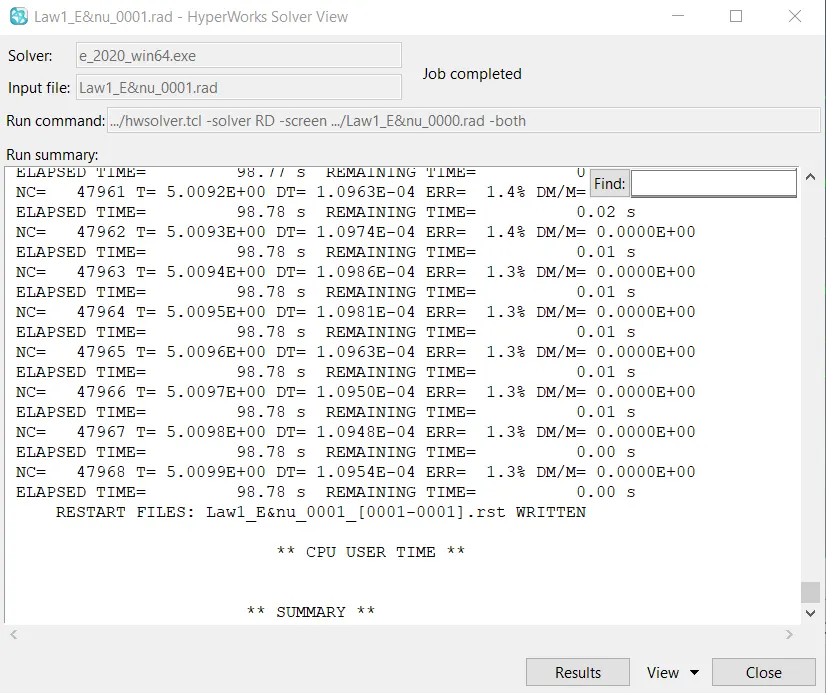
Energy Error =1.3 % (Acceptance limit of +1% or +2% is acceptable)
Mass Error = 0
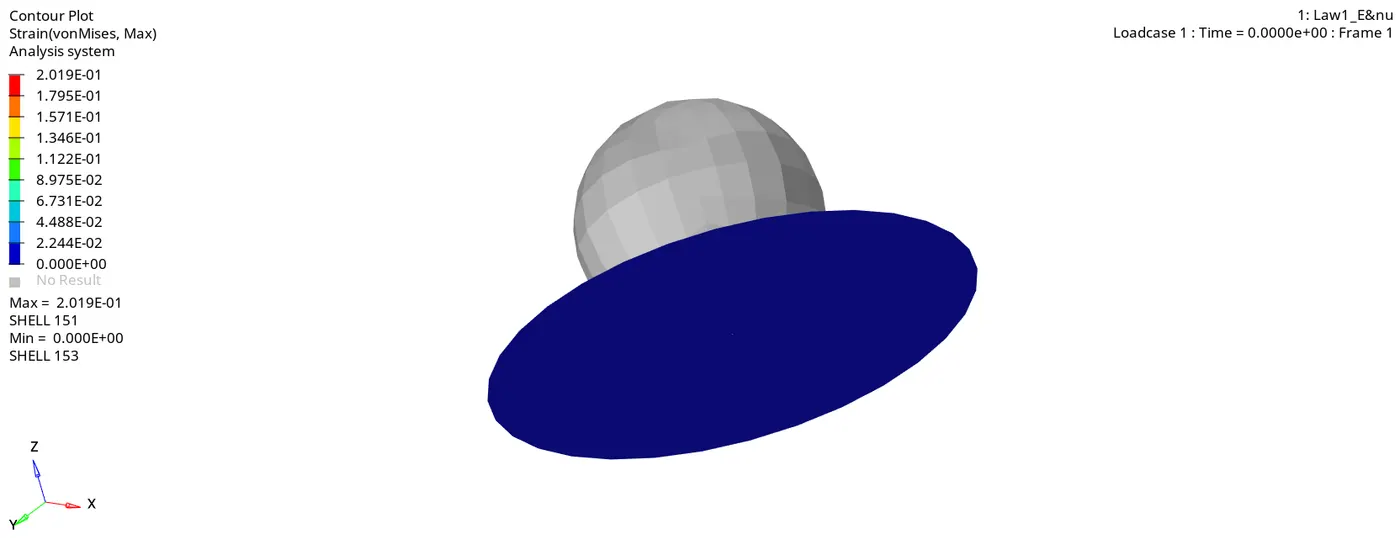
Hyperview Simulation:
Solver Analysed Data:
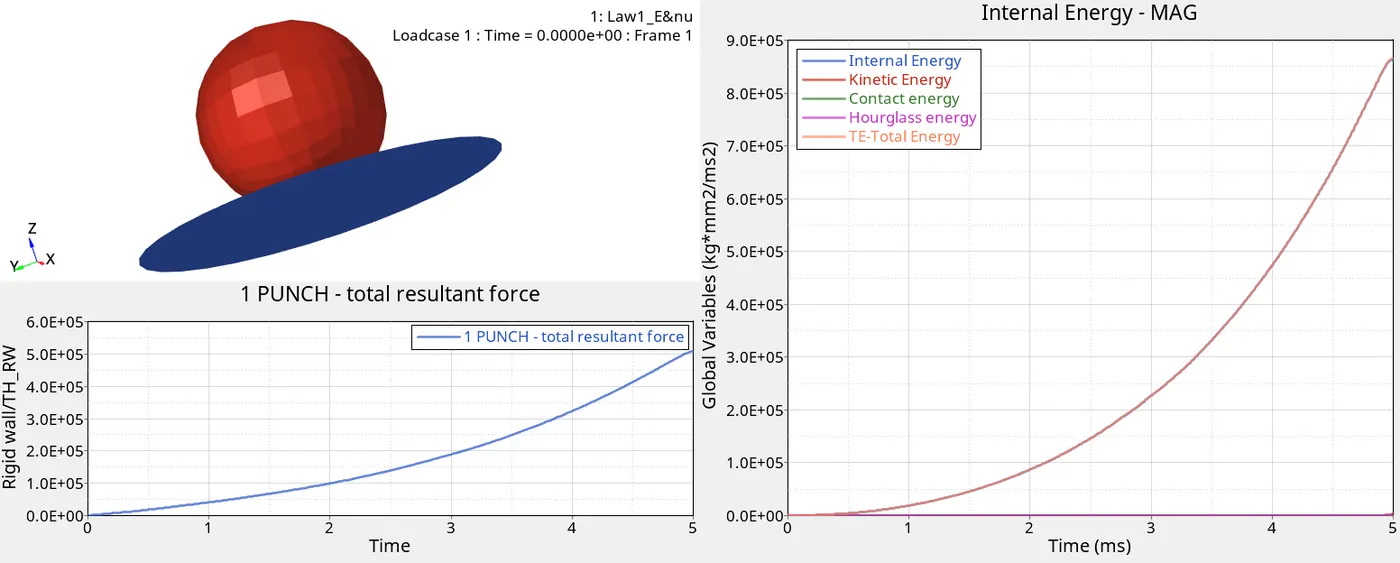
Description:
- The element failure occurs at 0.2019
- There is No contact energy & Hour glaass energy observed.
- The curve is found to be smooth based on the resultant force of the rigid ball, which is an area of elasticity.
- The internal energy is following the smooth curve attains peak at 5.6E+05.
- The total energy is constant through out the process, as the mass error is found to be zero.
- Due to elasticity the components found to have kinetic energy of approx 3250.
----------------------------------------------------------------------------------------------------------------------------------CASE VI
Open LAW27_0000.rad
- Change the shell properties to recommended shell properties.
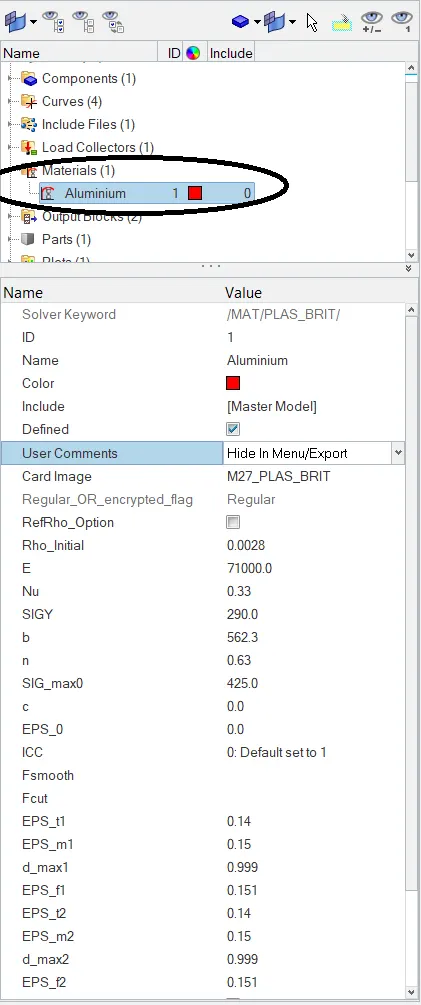
- Notice the material card . Johnson cook parameters but different values for EPS based failure
- Run the model with name Law27.
Materials > Aluminium > Properties > Change material properties as given,
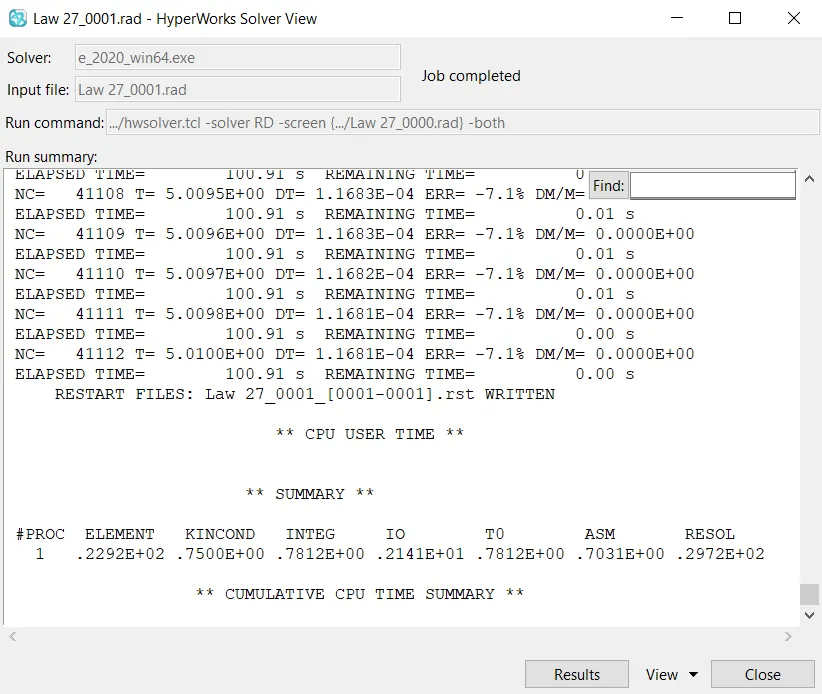
Energy Error = -7.1 % (Acceptance limit of -10% or -15% is acceptable)
Mass Error = 0
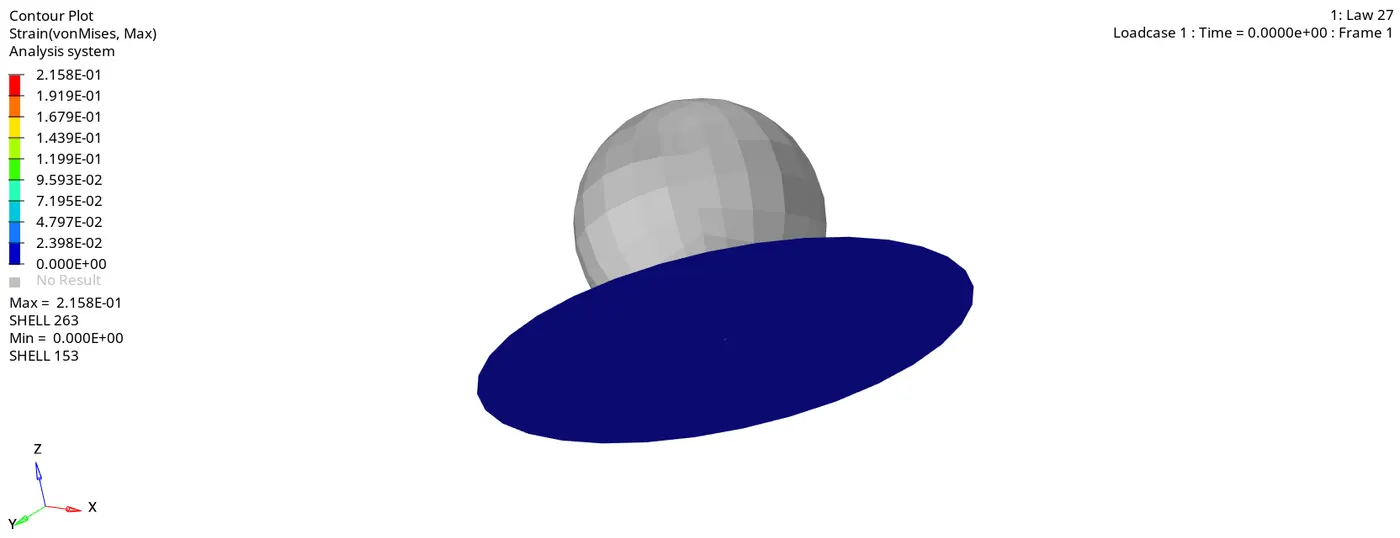
Hyperview Simulation:
Solver Analysed Data:
Description:
- The element failure occurs at 0.2158
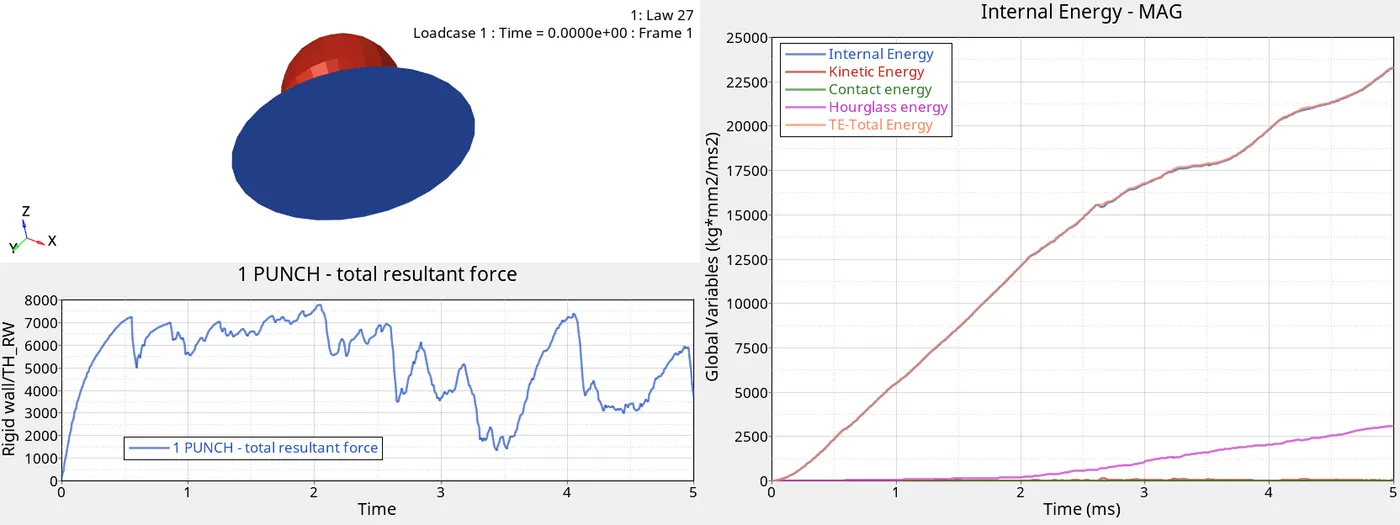
- The Resultant forces shows the ball striking the aluminum component and rupturing it.
- Hourglass energy is produced and when the deformation occurs in the component.
- Internal energy shows the deformation takes place as work done.
- Kinetic energy is very low during the process.
- Total energy is bit unstable as there is considerable amount of hour glass energy acting on the component.
- When Different values of EPS_p_max is provided, The component takes, nearest value, which processes for Et, Em,Ef.Other parameters are ignored.
----------------------------------------------------------------------------------------------------------------------------------
CASE VII:
Convert the card to a LAW36 elastoplastic based on the details:
Material >Aluminium > Properties > Change card image to M36_PLAS_TAB
- Input the parameters as presented in the slides.
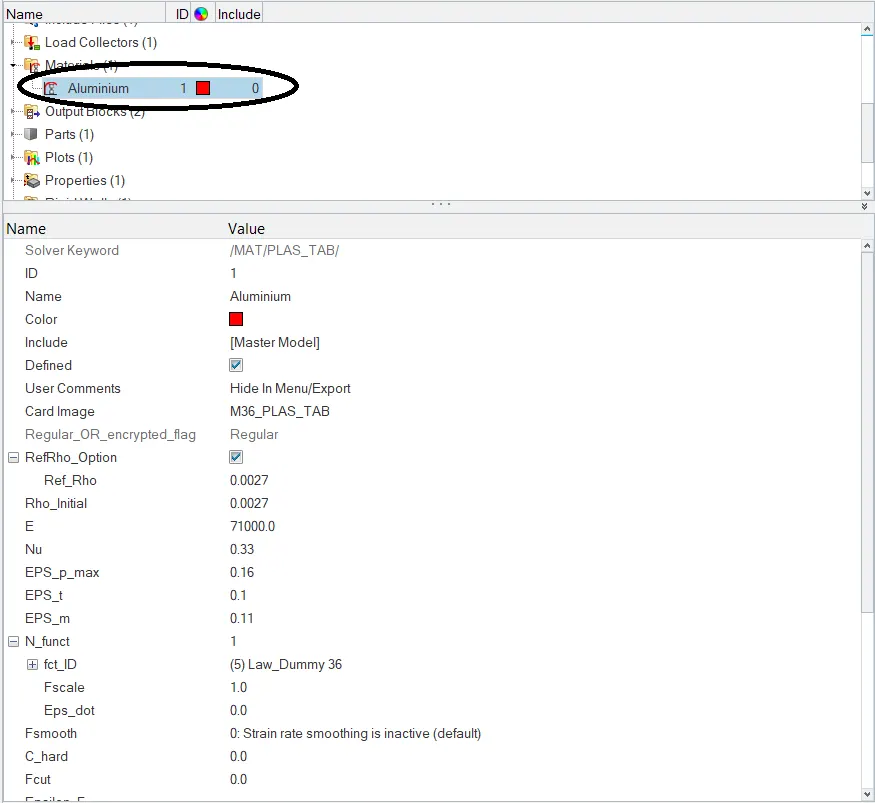
Right click on curve to give graph data parameters to the solver, 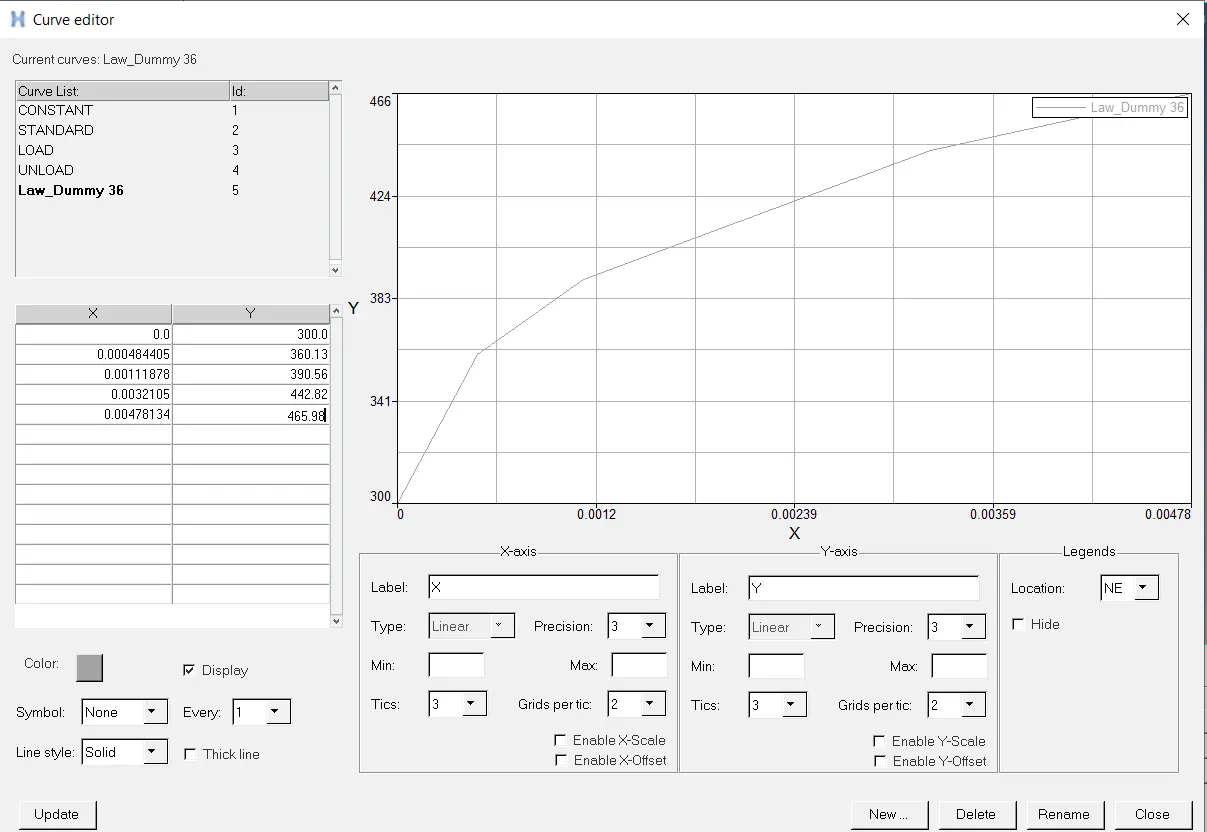
The graph, in which the datas are given are taken as shape function
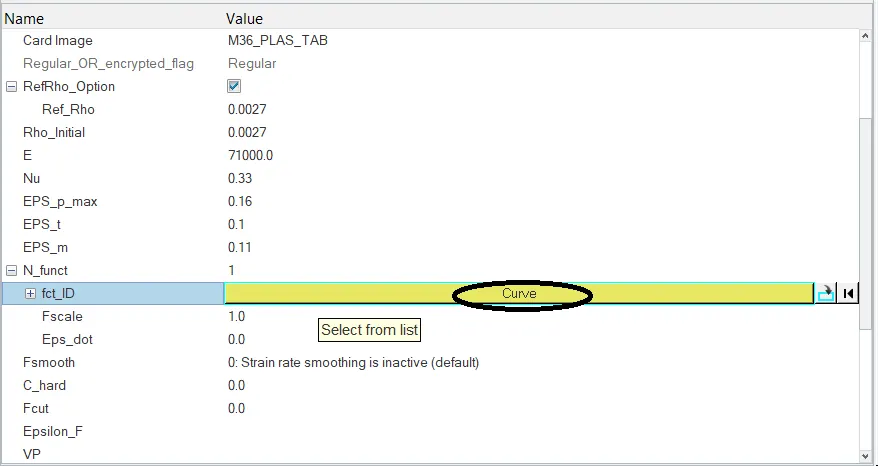
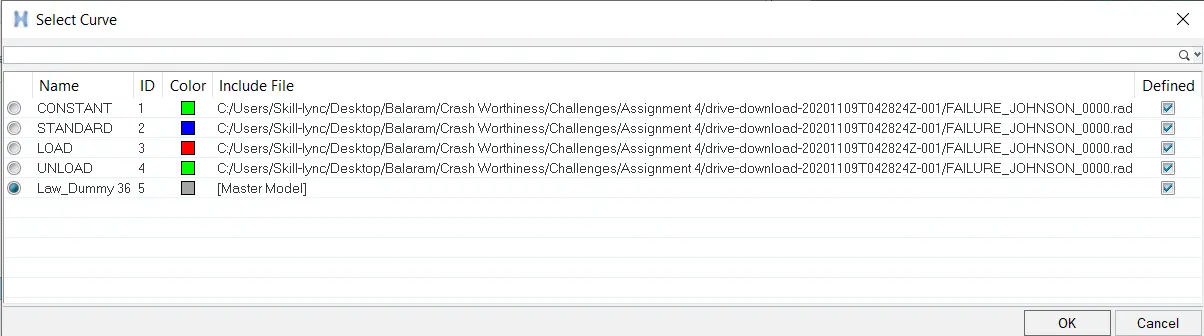
- Select the curve created, press ok.
- Run the solver radioss.
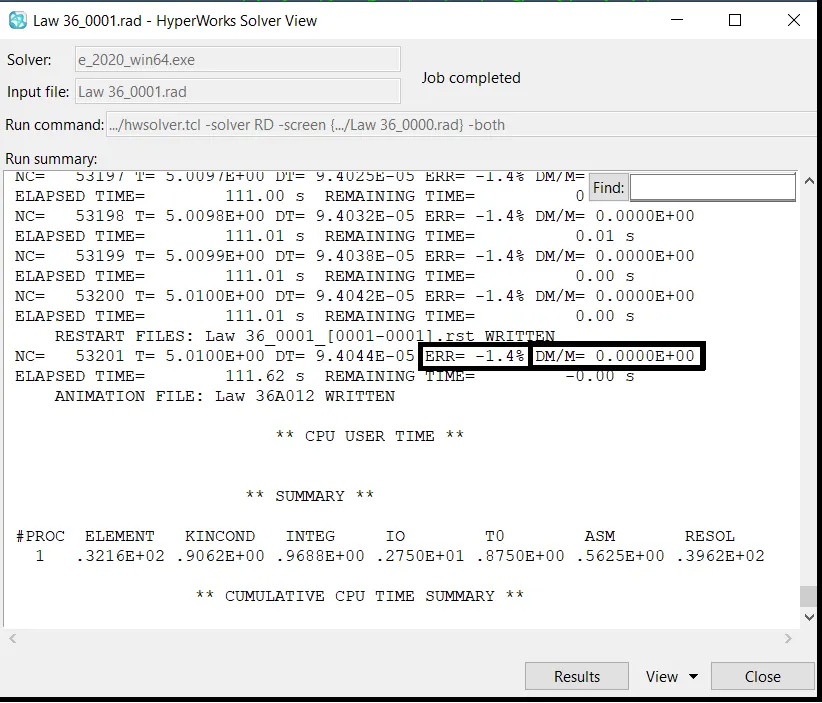
Energy Error =-1.4 % (Acceptance limit of -10% to -15% is acceptable).
Mass Error = 0
Hyperview Simulated Result:
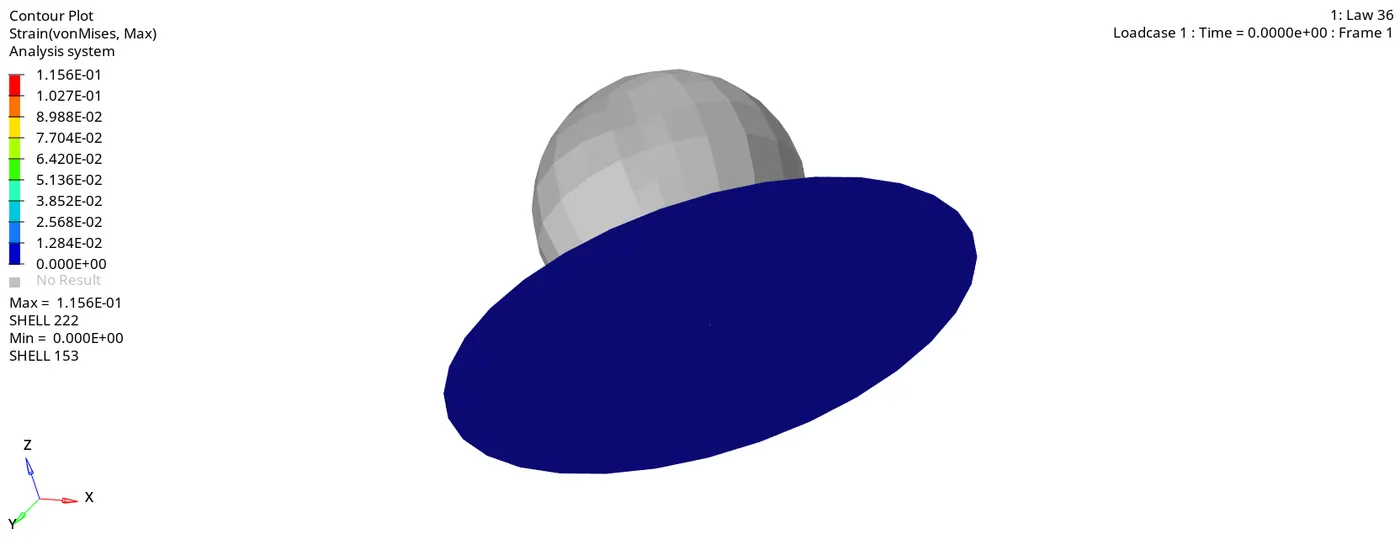
Solved Solved Result:
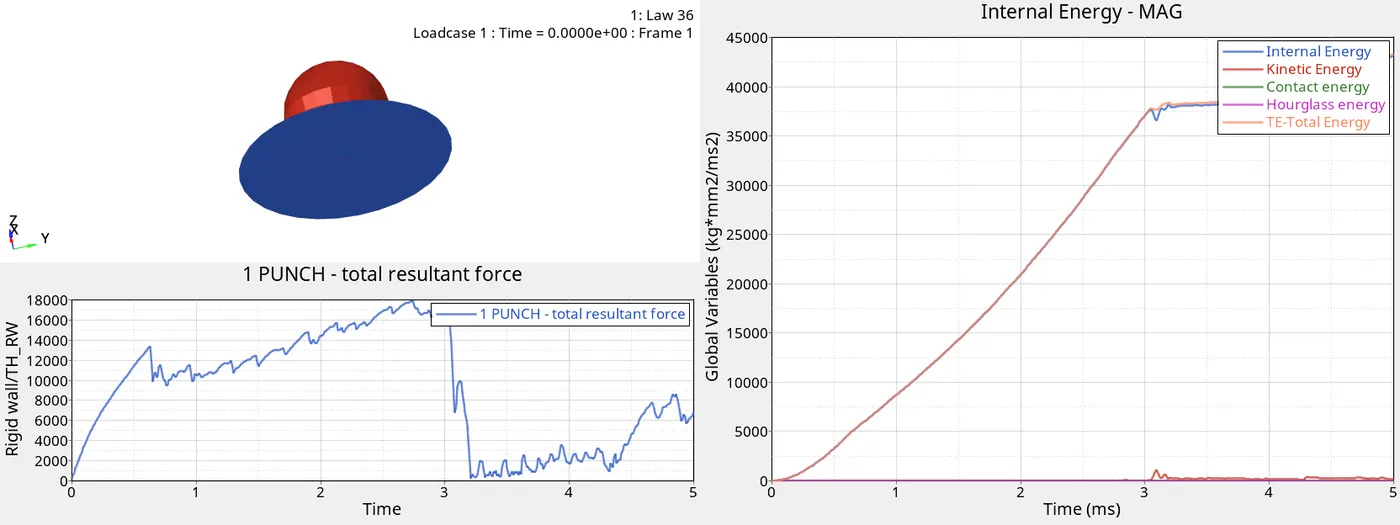
DESCRIPTION:
- The element failure occurs at 0.1156
- Contact energy is found to be 0 and hourglass energy is not not observed.
- Thr rigid ball ruptures the components at 3ms and it continues its motion.
- All the energies act on the component till it reaches 3ms. and maintains constantly after that.
Case 2 & 7 Would represent the field scenario, in which case 2 with failure parameters such as ixfem, they shows realistic element split up. The Law 36, which we give real stres strain data to the solver to process, which can be closely related to field scanario too.
----------------------------------------------------------------------------------------------------------------------------------