Assignment 4
Rupture Plate Analysis using Hypermesh (Radioss)
CASE 1: LAW2 Eps_max_failure
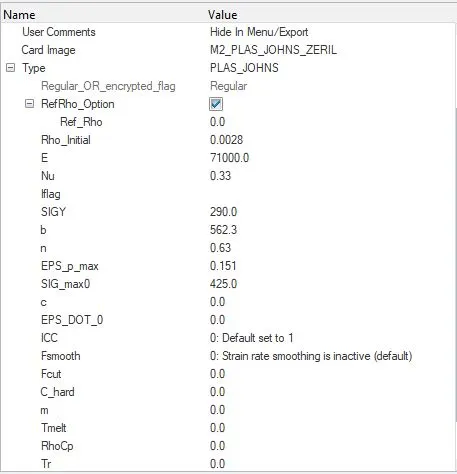
In this case the material is considered as elastoplastic with the parameter as shown below and jhonson failure card is used for failure method. The file (.rad) with the components is ran and following results were obtained,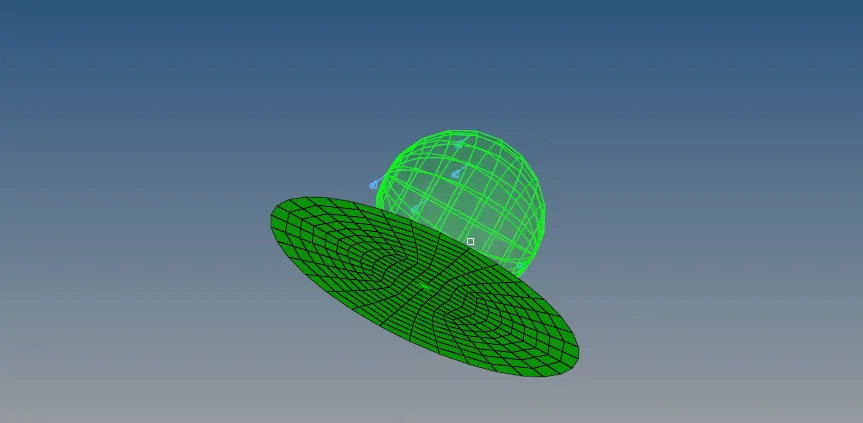
Following are the material properties and the shell element properties applied to the system,
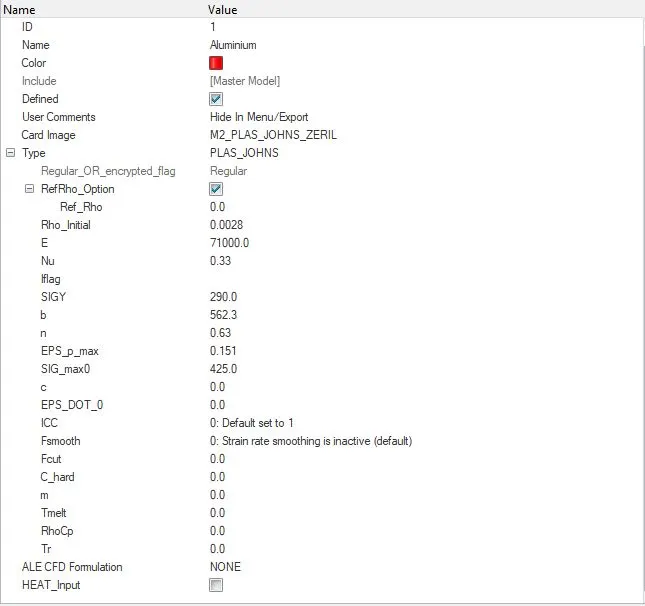
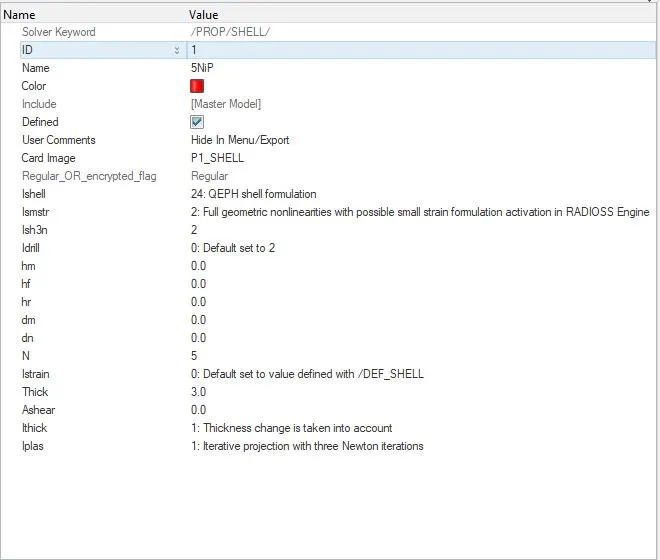
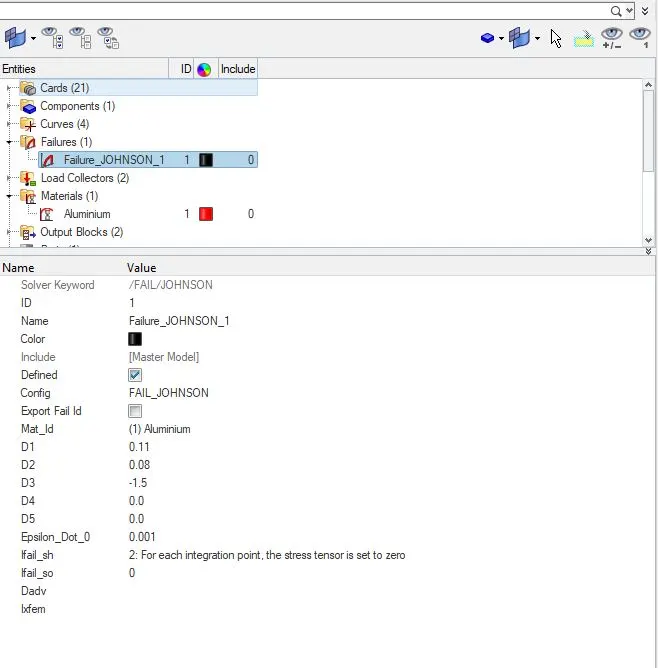
After runnig the analysis with the above properties with the name Law2_eps_max_fail.
we get a .out file with the same name as given while running the analysis. Opening this file to check for the enrgy error, following were the observations.
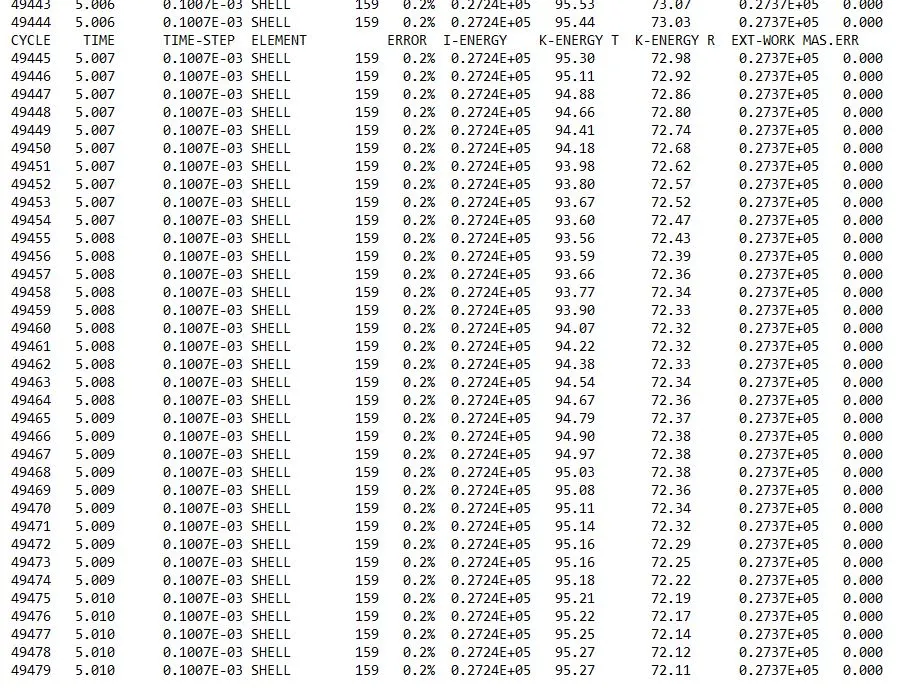
This file gives us following results,
- Total Number of Cycles for 5.010 ms analysis time : 49479
- Energy Error : 0.2%
- Mass Error: 0%
It can be observed that internal energy is has increased exponentially till 4ms and after that its oscillates due to the strain hardening process.
2. Kinetic Energy:
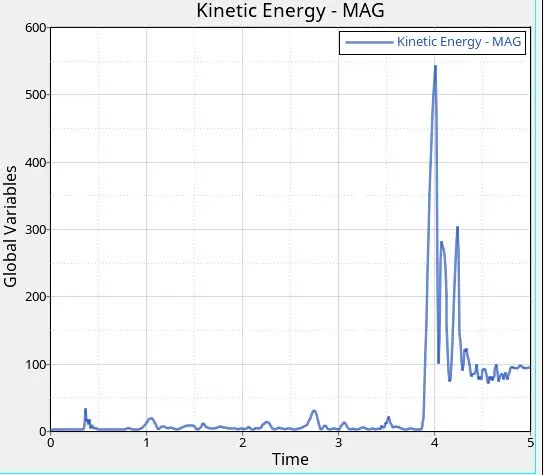
We observe small peaks these are due to the increase in KE of the elements and deletion of those due to the reaching of eps max value i.e 15% of plastic strain and after 4ms larger peak is seen as the elements strat getting deleted.
As we have used QEPH Shell element so there is no Hour glass energy seen in the system.
Animations:
Displacement:
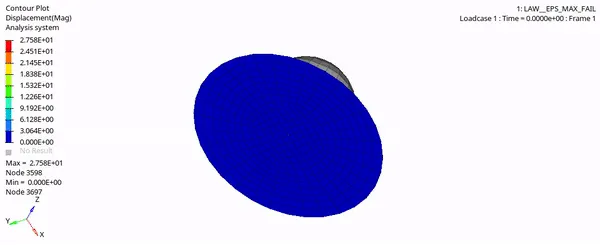
Von Misses Stress
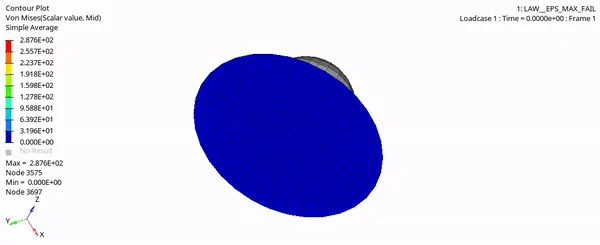
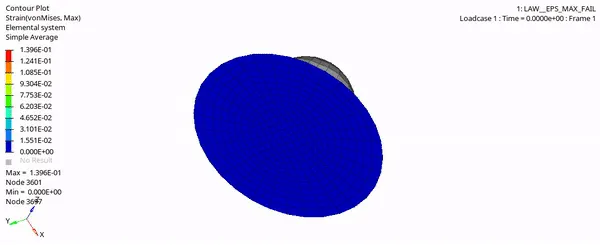
Strain
Plast Strain
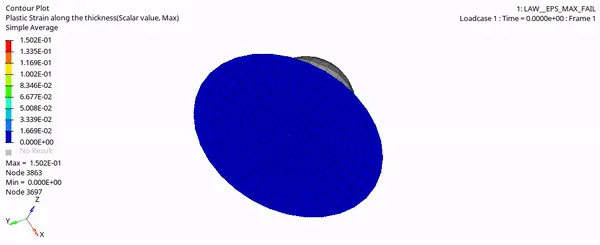
The elements are deleted once the reach the max limit i.e 15% plastic strain. No crack can be observed here as element is directly deleted.
CASE 2: LAW2_EPS_MAX_CRACK
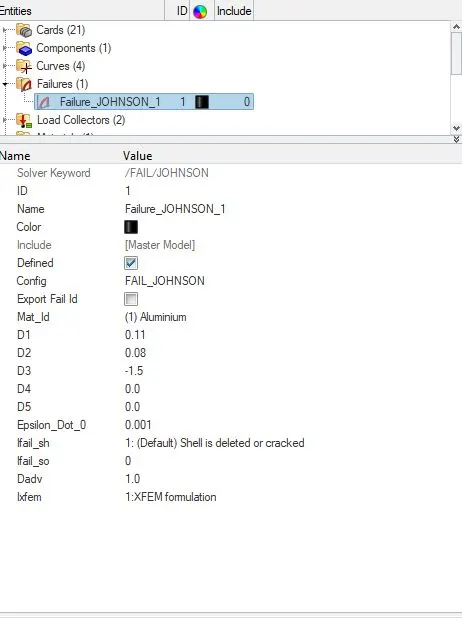
In addition to case 1 here we are changed only few parameter for failure model, i.e we have turned on Ixfem=1 which is used to crack propagation rather than element deletion. And also Ifail_sh and Dadv are defined which helps us to visulaise crack.
Following images show the material card and the failure card,
Failure Card:
Run the model with name as law2_epsmax_crack, THen open the corresponding .out file and check the results are acceptable or not, Following are the results obtained
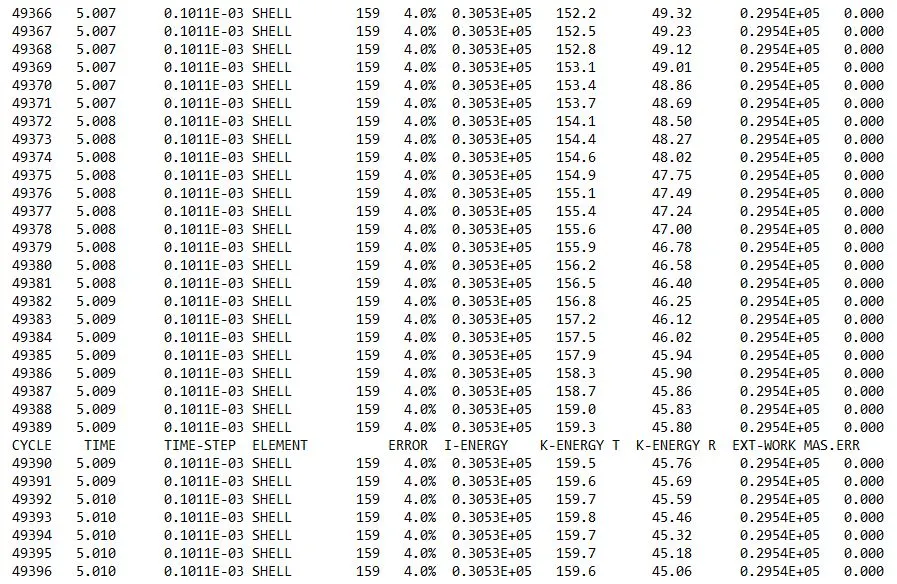
- Total Number of Cycles for 5.010 ms analysis time : 49396
- Energy Error : 4%
- Mass Error: 0%
Hence the obtained results are acceptable
Hypergraph results
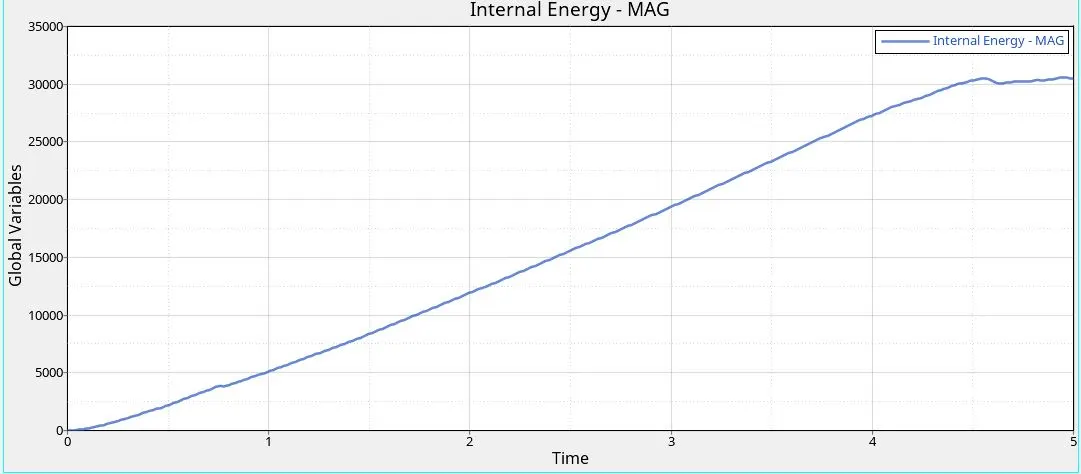
Internal Energy:
We observe higher IE compared to Case 1, as the elements absorb more energy than Case 1. This is because due to crack propogation higher stresses are recorded as entire plate cracking is taken into consideration.
Kinetic Energy:
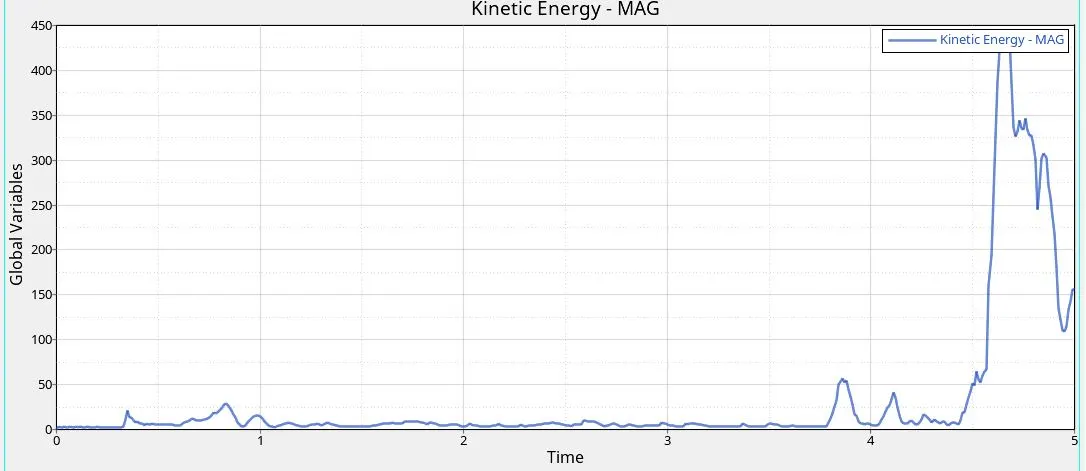
Due to Conservation of enery law we observe lower KE compared to Case1, as IE energy in this case is larger eventually we get lower KE.
Hourglass Energy and Contact Energy both are Zero.
Animations:
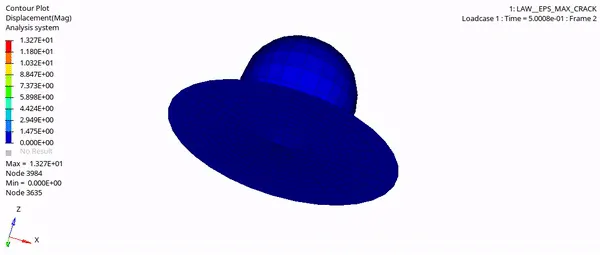
Displacement
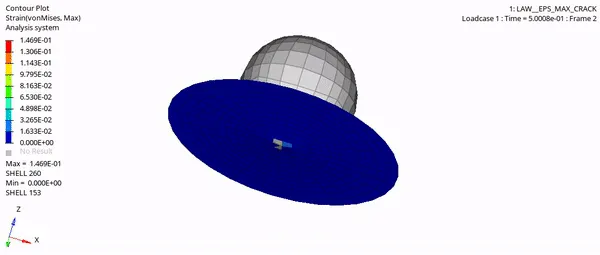
Strain:
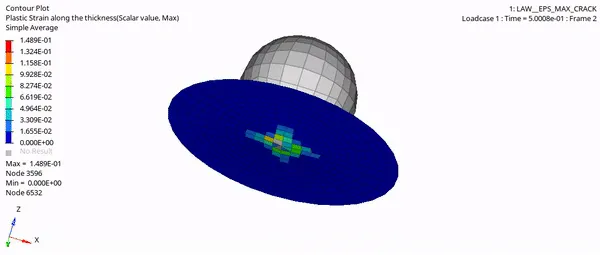
Plastic Strain
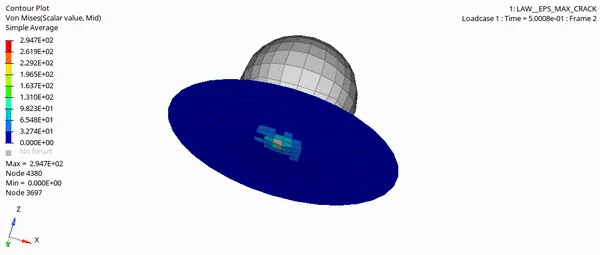
Stress
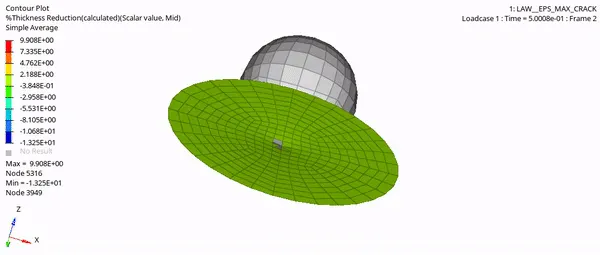
Thickness Reduction:
Important Observations:
Here we se a crack visulaisation compared to Case 1 where elements were deleted once eps_ma value was reached, Crack propogation is uniform and has less resistance so the rupture got delayed and we recorded more stress compared to Case1
CASE 3 : Law2_epsmax_nofail:
In this case, the material card is kept same only failure card is deleted to check the variation in the results,In Failure section delete the Johnson Failure model, Run the model and name it as Law2_epsmax_nofail.
After running the file, open the Corresponding .out file from the folder and check for the results.
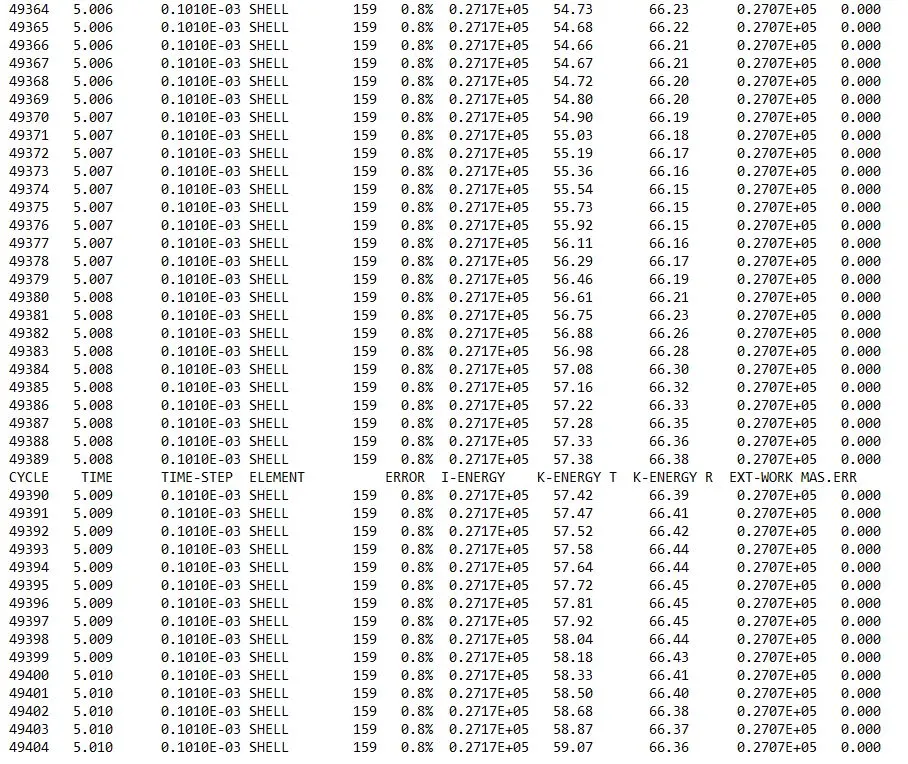
- Total Number of Cycles for 5.010 ms analysis time : 49404
- Energy Error : 0.8%
- Mass Error: 0%
All the results are acceptable as they are within the limits.
HyperGraph Results:
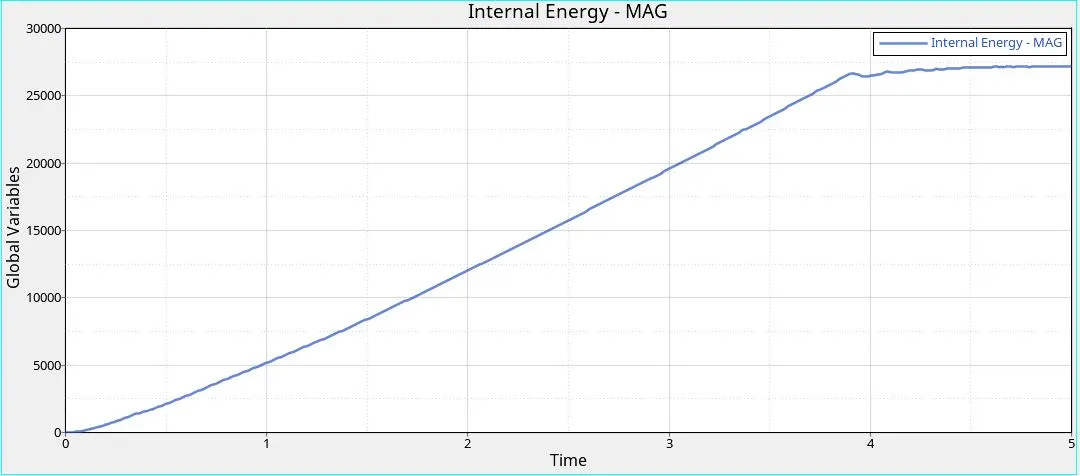
Internal Energy:
There is no major change in IE compared to Case 1
Kinetic Energy:
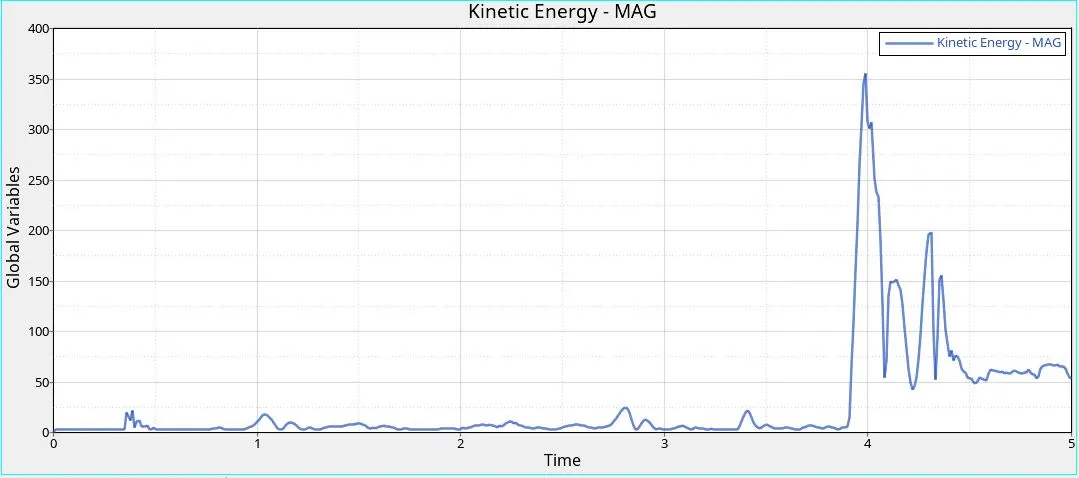
There is decrease in KE as compared to Case 1 as the Failure Card is deleted and the elements get deleted once eps_p_max value is reached rather than following Johnson cook failure model. Hence lower KE is observed
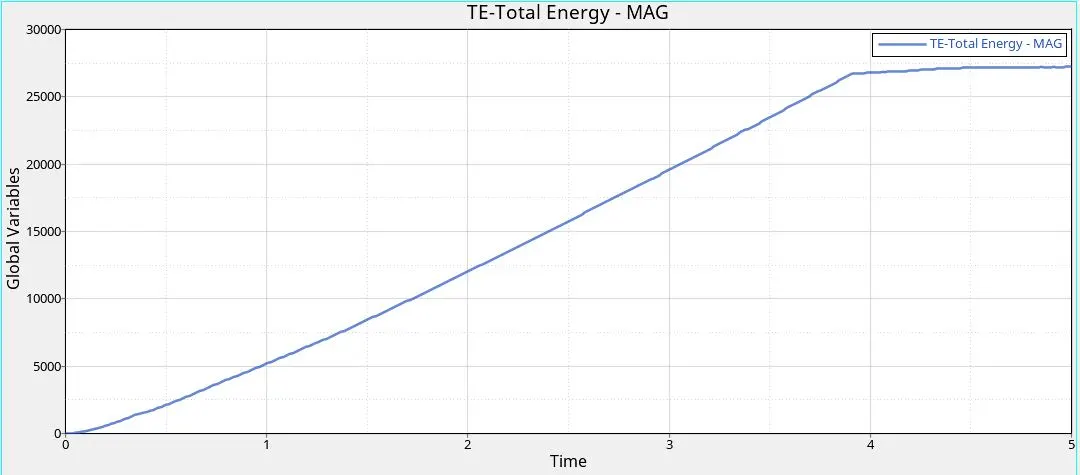
Total Energy:
Animations:
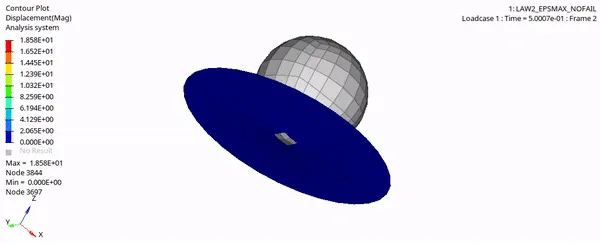
Displacements:
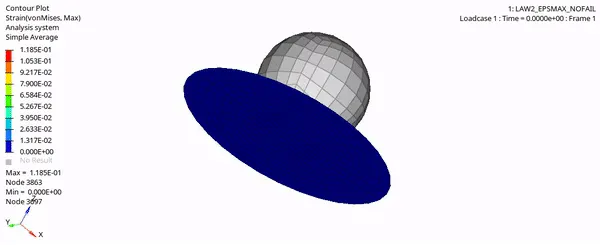
Strain:
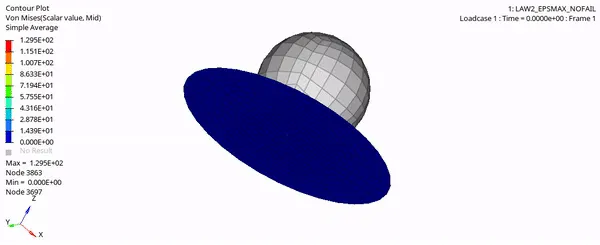
Stress:
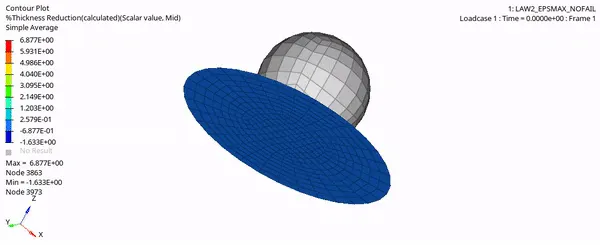
Thickness Reduction:
Plastic Strain:
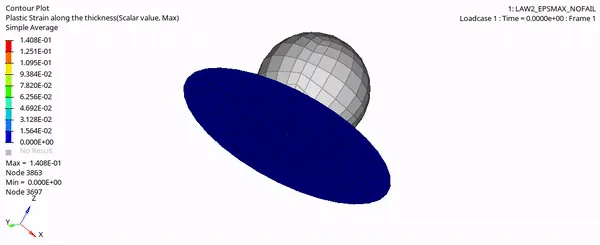
Important Observation:
As element reaches 15% of the total strain energy it will be deleted, as the failure card is deleted, there is less strain compared to case 1 as it doesnt follow johnson cook failure model.
CASE 4 LAW2
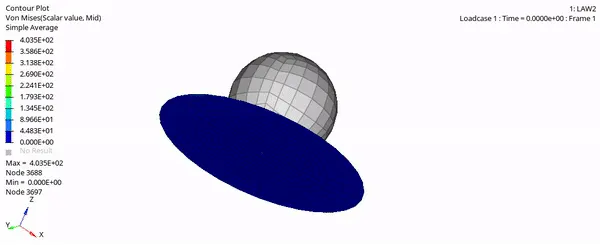
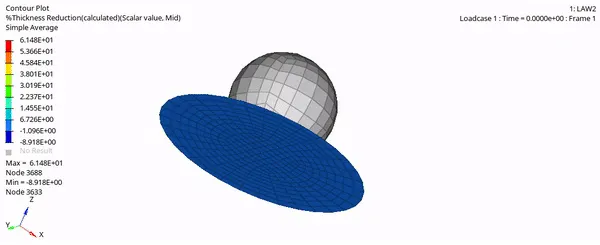
In this case the eps_max value is deleted, which results into behaviour of elasto plastic, so we dont have any maximum allowed strain value. The strain is computed but there is no failure possible due to plastic deformation beyond the limit.
Material card shown below, shows that eps_p_max value is deleted
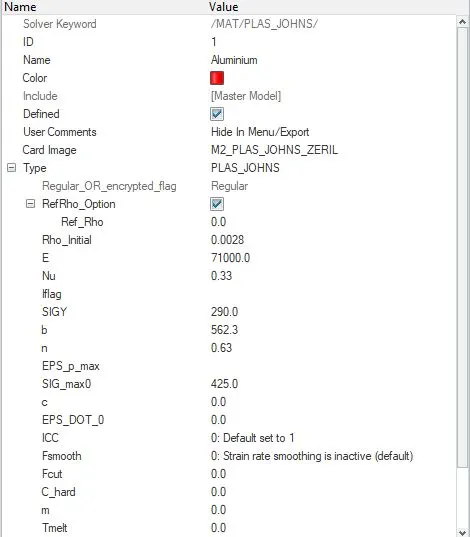
Run this model with name as Law2.
Then open the .out file and check the results ,
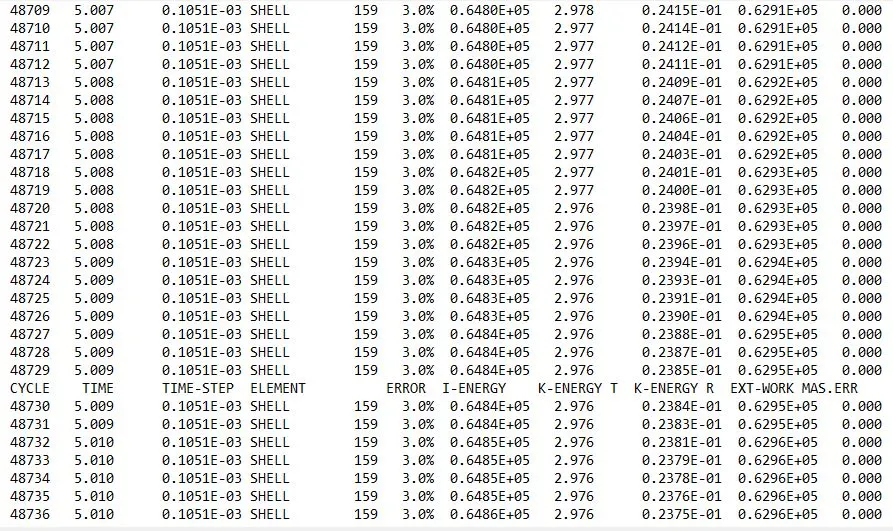
- Total Number of Cycles for 5.010 ms analysis time : 48736
- Energy Error : 3%
- Mass Error: 0%
The .out file shows that the results are within permissible limit.
Hypergraph Results:
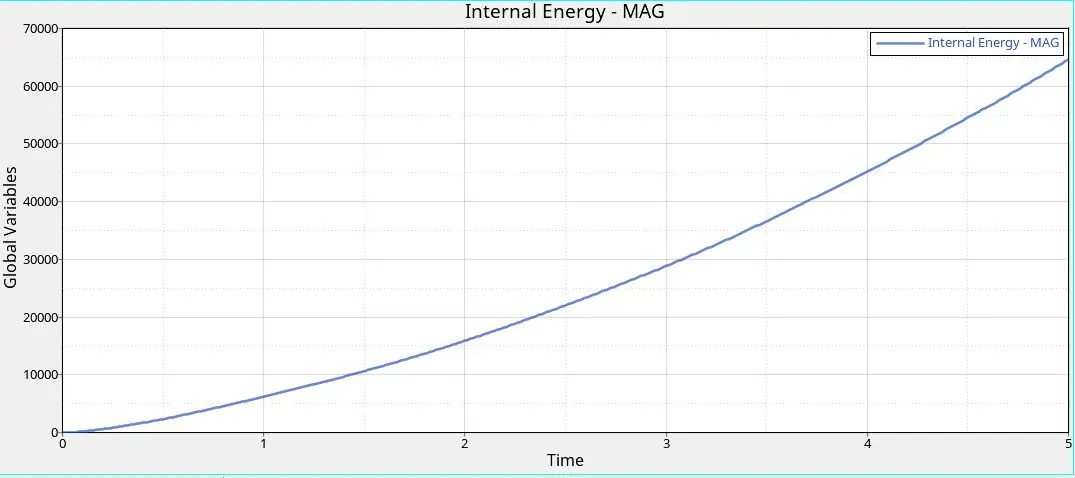
Internal Energy:
Due to no failure , exponential rise of Internal Energy is observed.
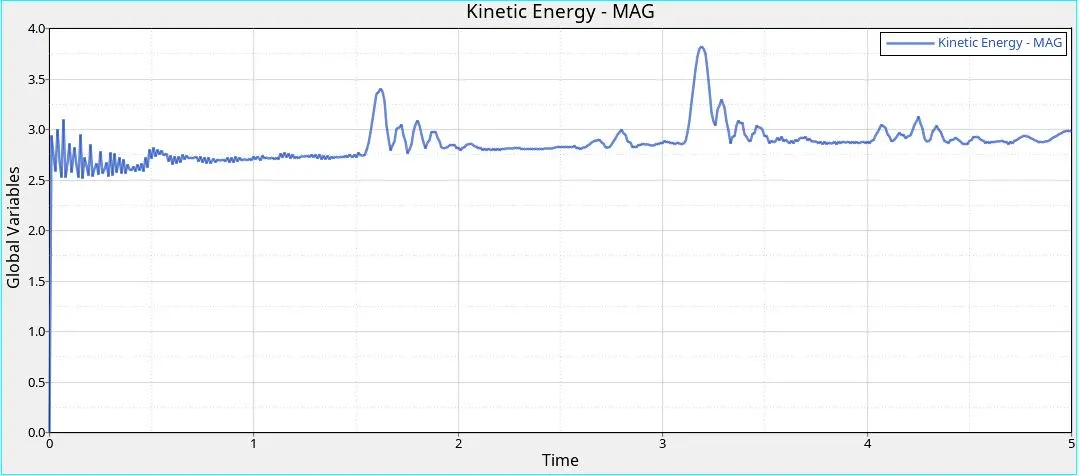
Kinetic Energy:
There is very low amount of Kinetic Energy compared to all the above cases.
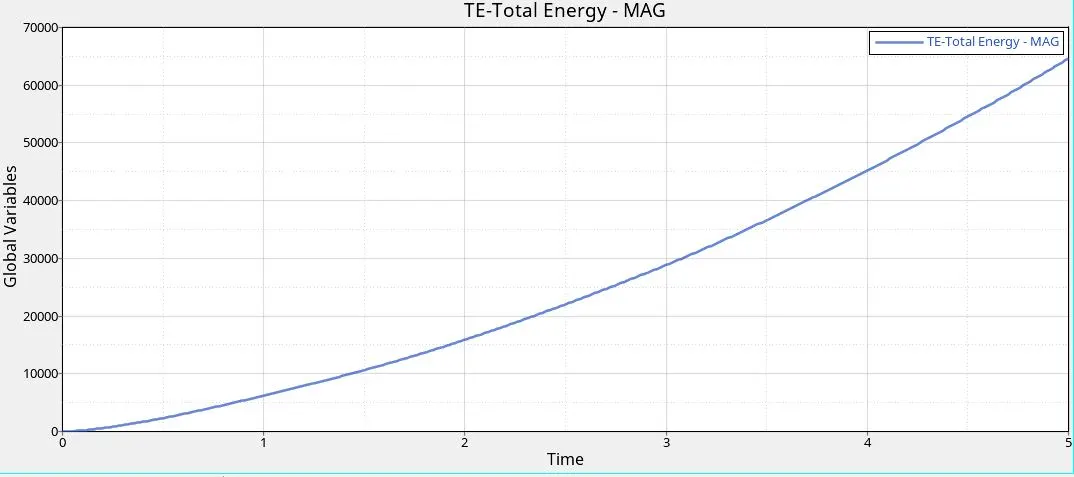
Total Energy :
Contact Energy and Hourglass Energy are Zero.
Results from Hyperview,
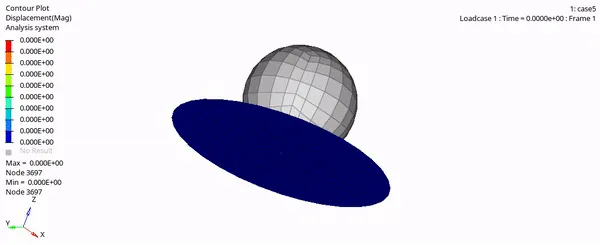
Displacement:
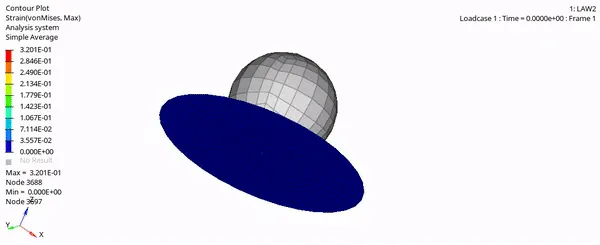
Strain:
Stress
Thickness Reduction:
Important Observation:
As Eps_p_max is not defined there is no failure defined so it shows more elastic strain than plastic strain. Internal Energy and Kinetic Energy are increasing exponentially and become stable.
Case 5 : Law1_elastic
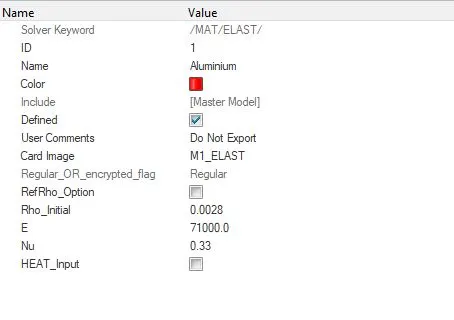
In this case, the material of the model is changed to ideal elastic law, which follows hooke law upto elastic limit. Basic values such as E, nu and Rho are defined.
Card Image is selected as M1_ELAST and E= 71000 Nu= 0.3 and Rho= 0.0028
After running this mode with named as LAw1_elastic.
The .out file from the corresponding folder is examined for the acceptancy of the results.
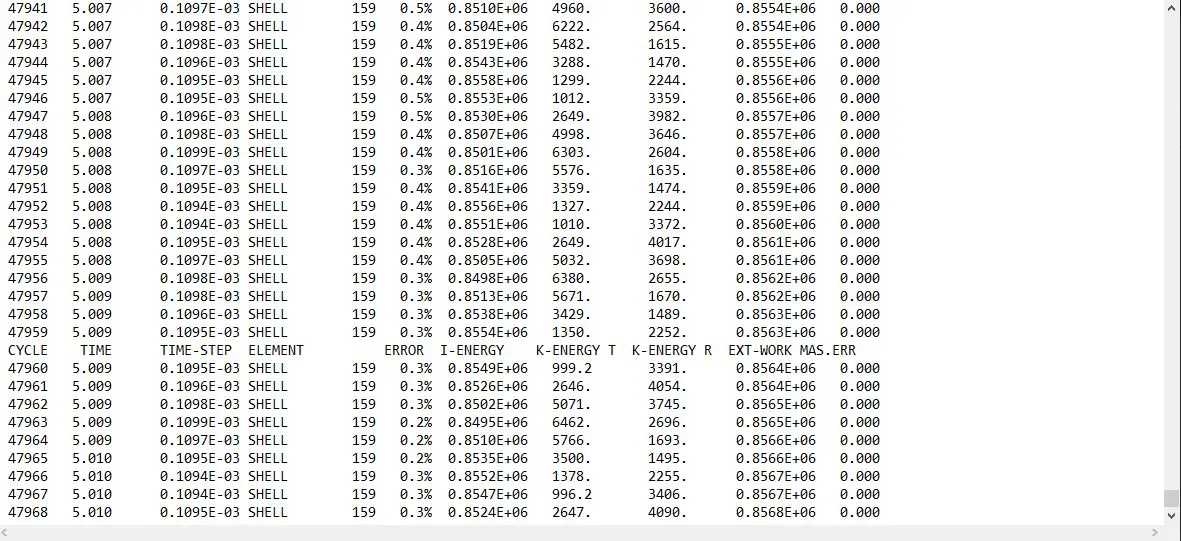
- Total Number of Cycles for 5.010 ms analysis time : 47968
- Energy Error : 1.8%
- Mass Error: 0%
All the results are under limits.
Hypergraph Results:
Internal Energy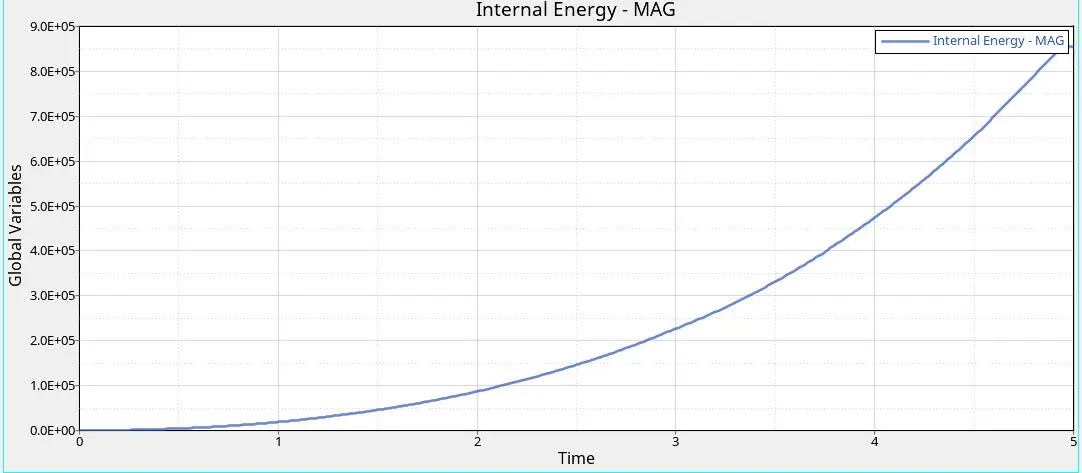
Kinetic Energy
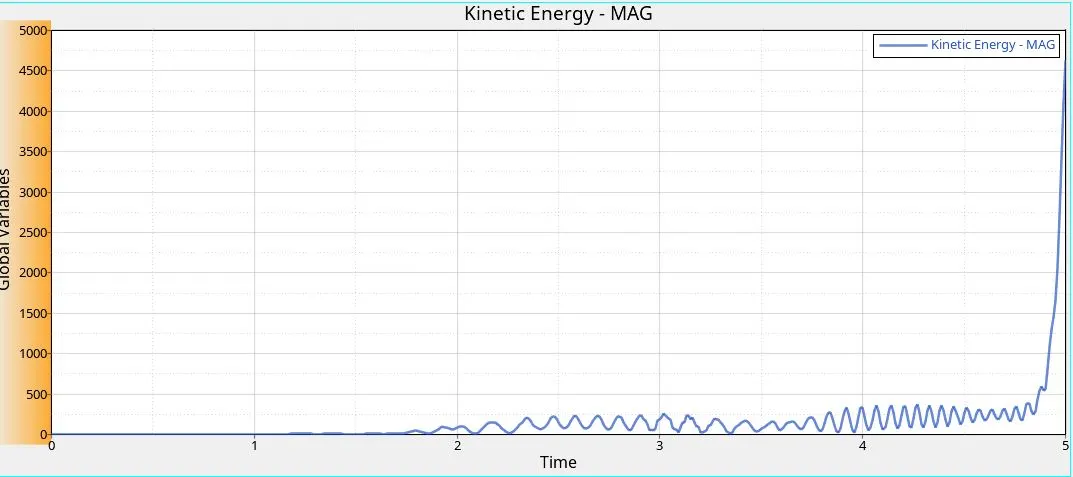
Total Energy
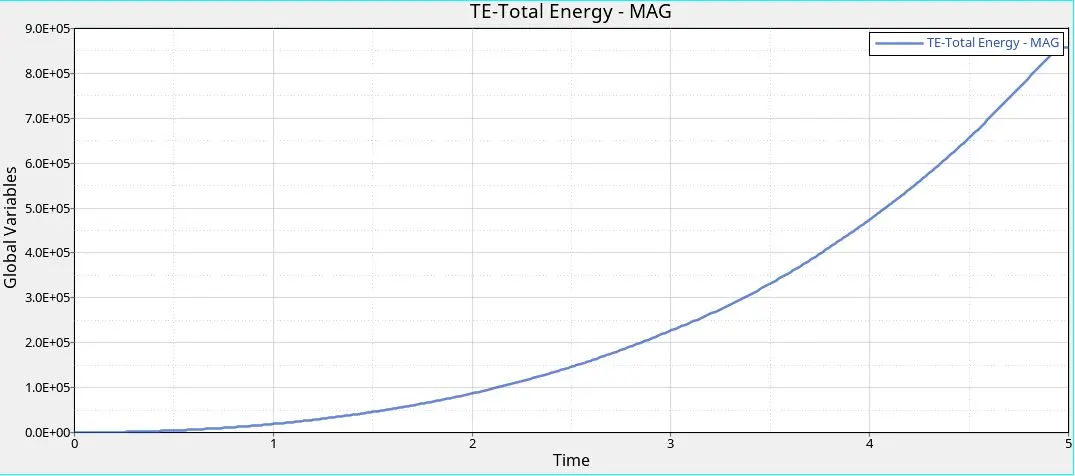
Hour Glass and COntact Energy are Zero.
Hyperview Results:
Displacement:
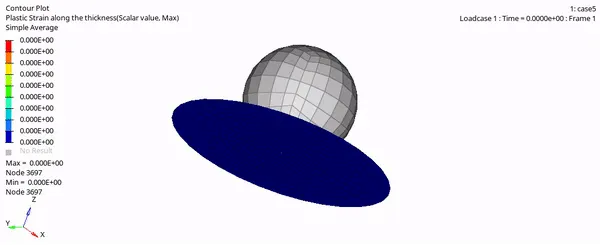
Plastic Srain:
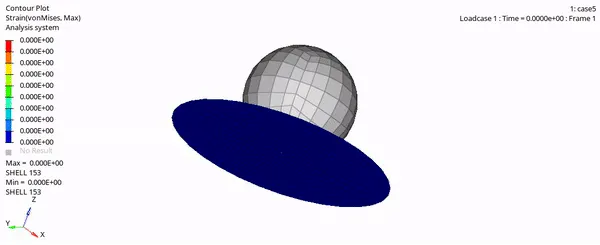
Strain
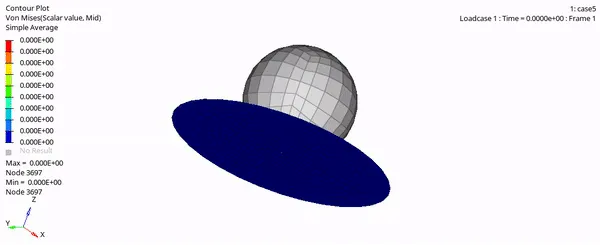
Stress:
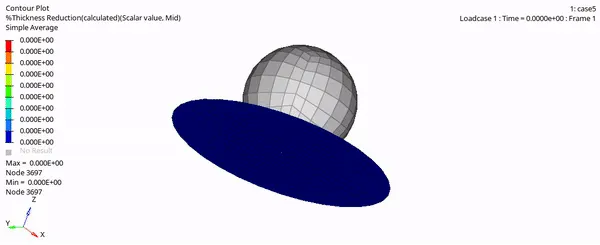
Thickness Reduction:
Observations:
The material will have only elastic strain and no failure occurs.
CASE 6: LAW36_elasto_plastic
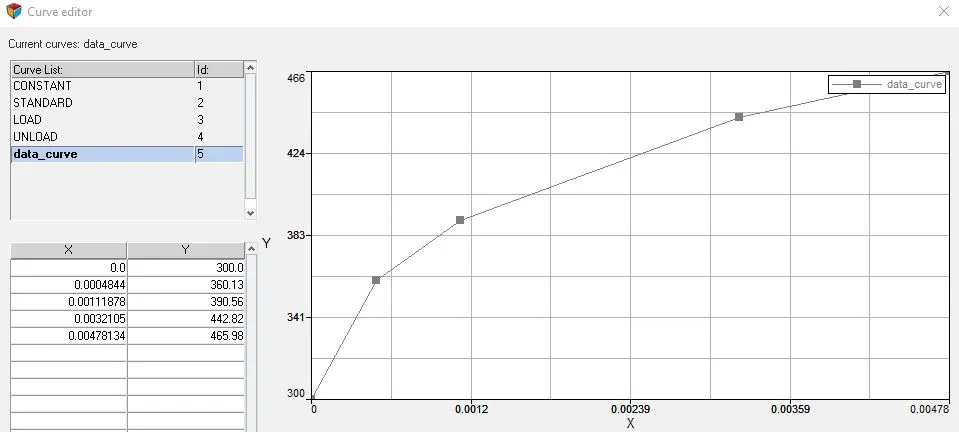
In this case, the material is changed to M36 PLAS_TAB and the given data is used to plot the curve for stress-strain behaviour.
In this case E=71000, Rho=0.0027 and Nu=0.33 and additional to this, Stress-Strain curve is added with the help of given data, this helps us to input the manual curve and also we can add scaling factor, hardening coefficients, etc can be added to get better analysis.
EPS_T = 0.11, EPS_m= 0.11
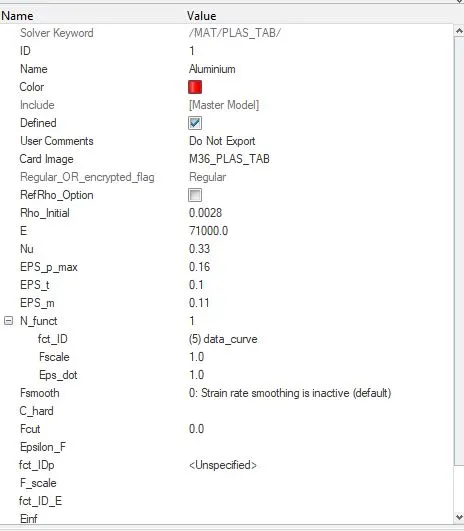
For this card, a function card is called in material card. To add the function curve is plotted, with help of x and y values curve is plotted and also F_Scale and Eps_dot is added.
Run the model with name LAW36_elasto_plastic.
The .out file is accessed from the corresponding folder and the results are checked,
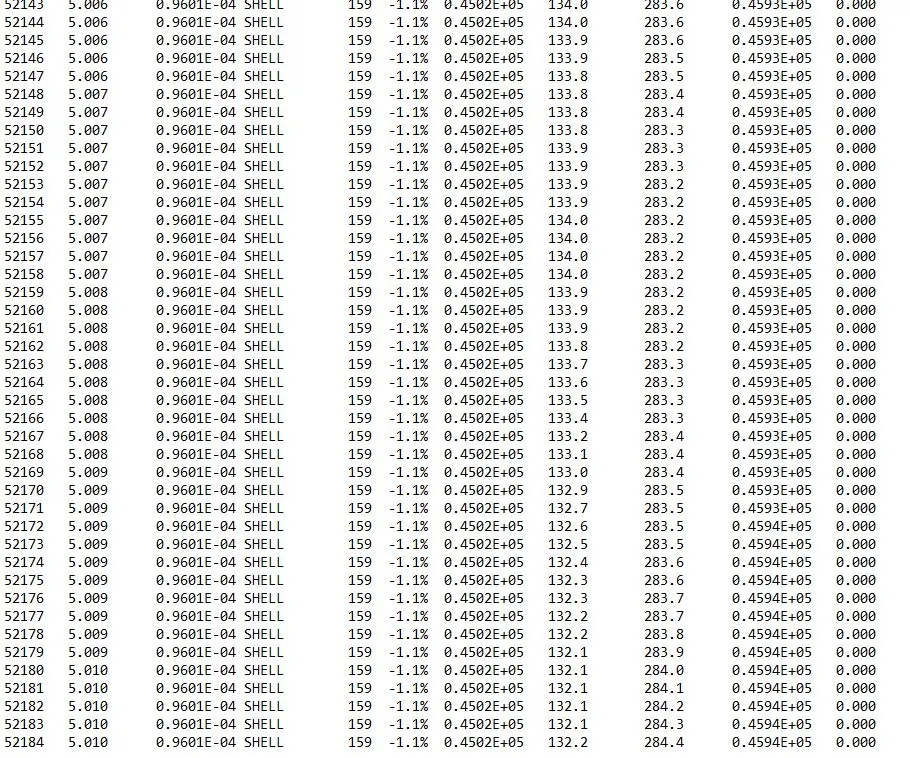
- Total Number of Cycles for 5.010 ms analysis time : 52184
- Energy Error : -1.1%
- Mass Error: 0%
All the results are under limits.
HyperGraph Results:
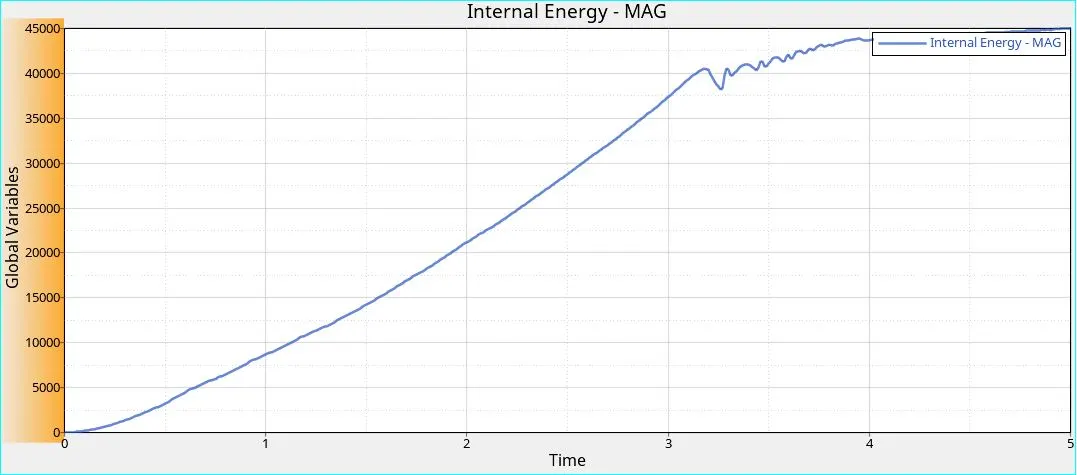
Internal Energy
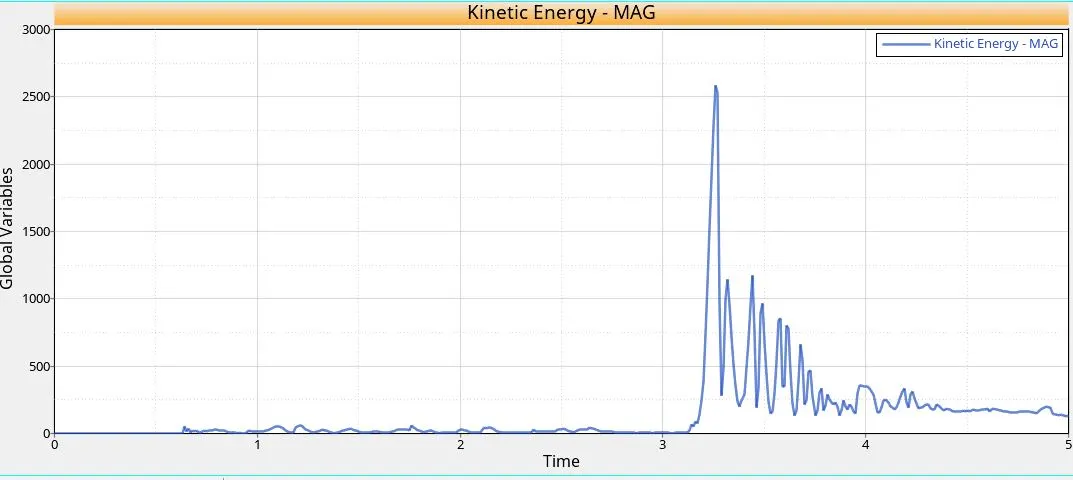
Kinetic Energy
Total Energy
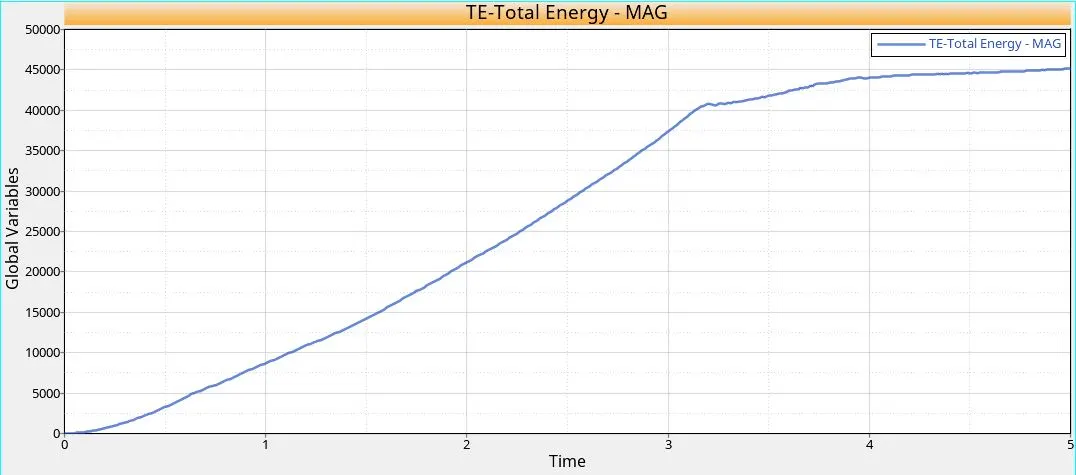
Hourglass and Contact Energy are Zero
Hyperview Results
Displacement:
Strain
Plastic Strain
Stress
Observation
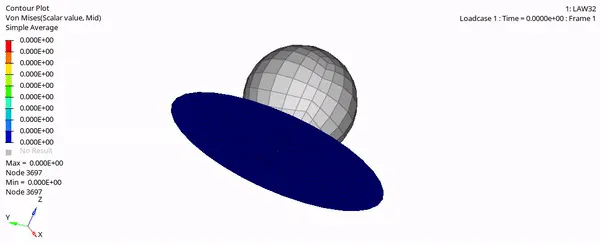
Here the element behaves as Elasto Plastic material, the element deletion is occured in slightly different way as the initially centre part is damaged andd then it breaks into small fragments. This is resultant of the True Stress-Strain defined at given strain rate.
Case 7 Law27
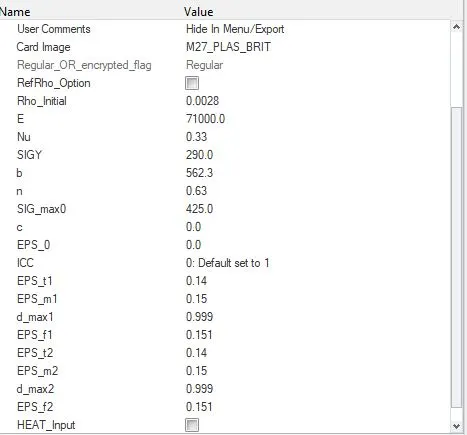
Open the givenfile LAW27_0000.rad. The material defined is PLAS_BRIT which is an Elastic-Plastic material with some extra parameters such as, EPS-t1, EPS_m1,d_max1, EPS_f1, EPS_t2, EPS_m2, d_max2 and EPS_f2
After importing the file and applying the material card,
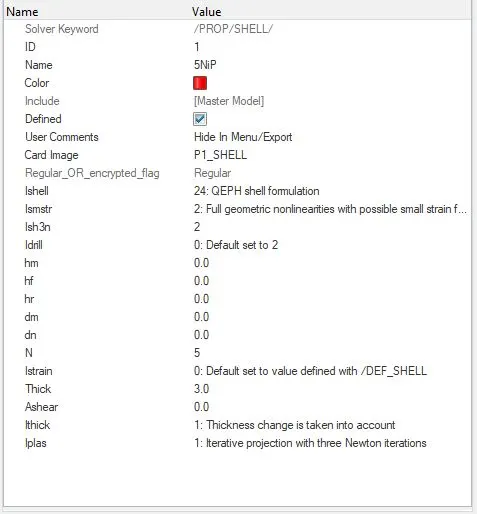
After running the model and name it as LAW27. LAW27_0001.out and check for the acceptance of the results,
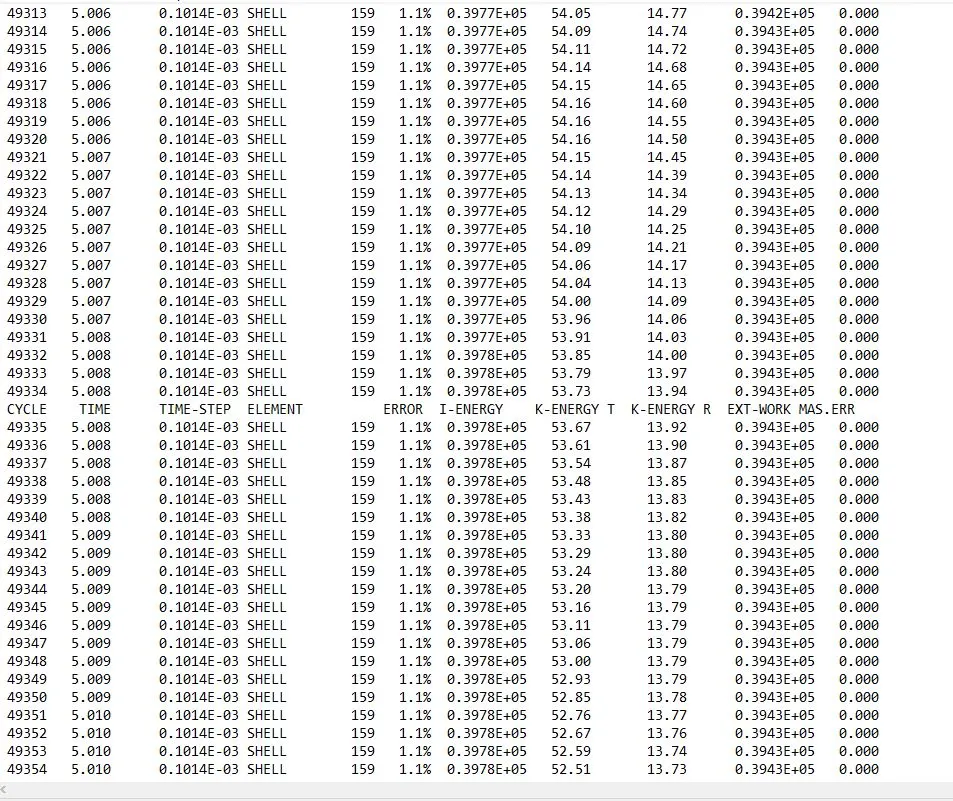
- Total Number of Cycles for 5.010 ms analysis time : 49354
- Energy Error : 1.1%
- Mass Error: 0%
All the results are within limit.
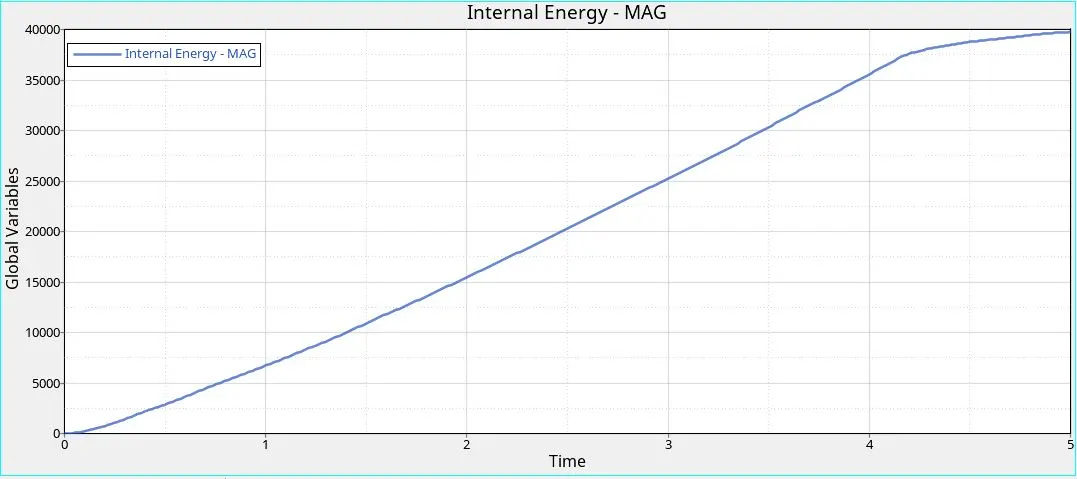
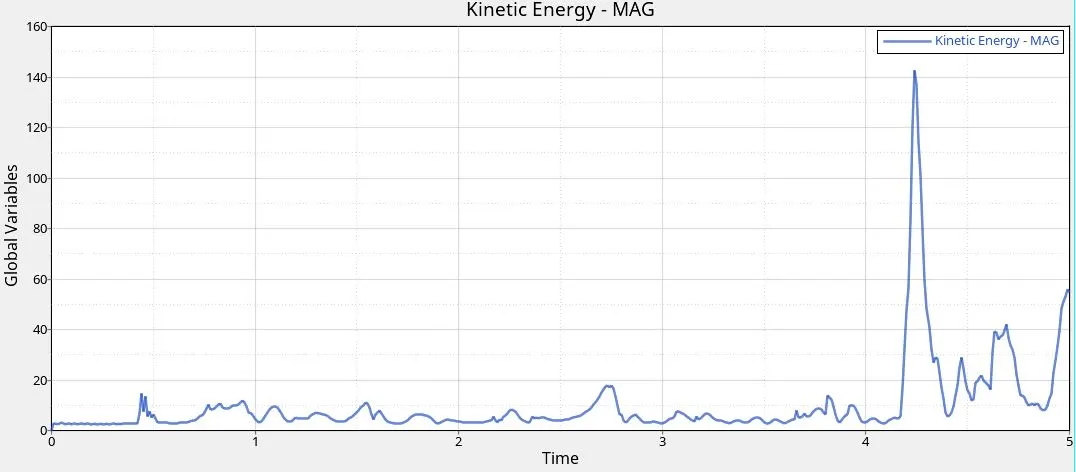
Hypergraph Results
Internal Energy
Kinetic Energy
Total Energy
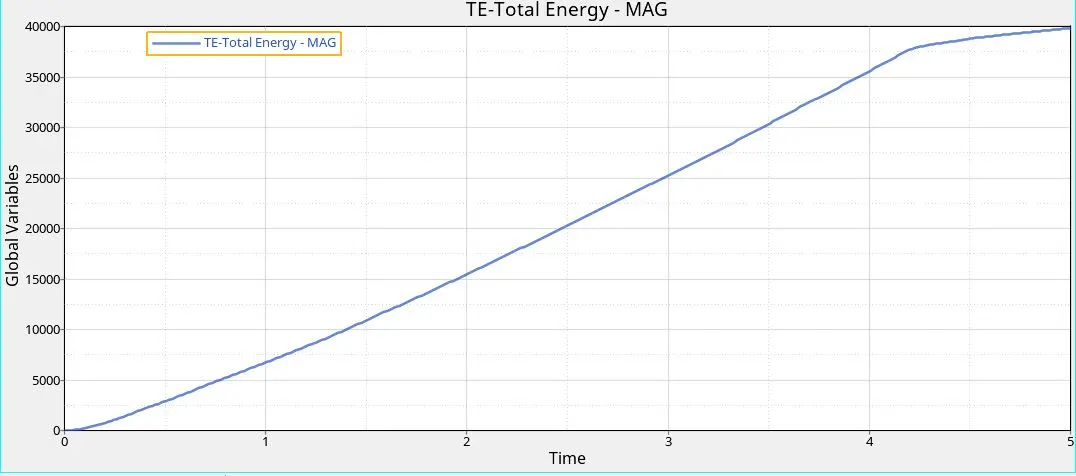
Hourglass and Contact Energy are Zero.
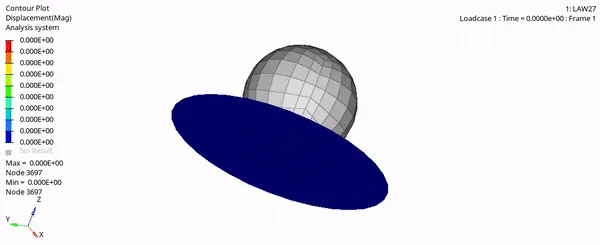
Hyperview Results
Displacement
Plastic Strain
Strain
Stress
Observations
Element deletion is completely different than other cases as brittle material is used. Complete breaking of the plate can be observed.
Conclusion:
The rupture of a circular plate was observed for different material models with an without failure model. Law1, Law2, Law27 and Law36 were compared. Following table represents the summary of all the models.

After performing this experiment a proper understanding of all the material laws in Radioss can be obtained.
Law1 can be used for perfectly elastic model
Law2 can be used for model with isotropic elasto-plastic behaviour using Jhonson Cook model. The Material stress is a function of strain, strain rate and temperature. Optimum for Crash Tests.
Law27 can be used only for shell elements with brittle nature which follows Jhonson Cook material model.
Law36 can be used for the case where user defined values are supposed to be used, to define stress strain curve in the strain hardening range.
Following link has all the cases with their corresponding files,
https://drive.google.com/drive/folders/1LsE0LLoESAURl2EXE59AnIw2nH1jtlp8?usp=sharing