Assignment 3-2D Element Formulation Challenge
Case1 From question 1 to 3
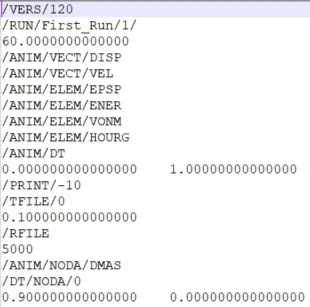
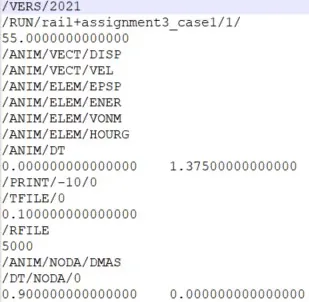
Changed the simulation time from 60 ms to 55 ms and Anim dt has been changed from 1 to 1.375 to limit the animation steps to 41
Input Modified
Case2 From question 4 to 9
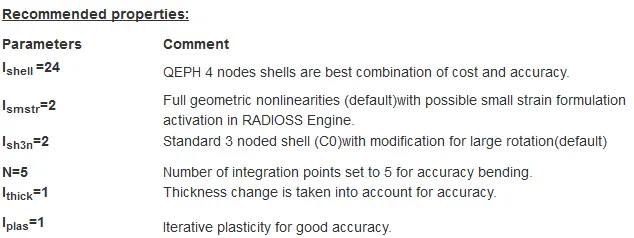
Change all the shell elements properties to recommended properties, save this as separate, rad files and run the simulation.
Given elemental properties
Answer from Question 4 to 9
Element Properties for the Given Rail model(Default)
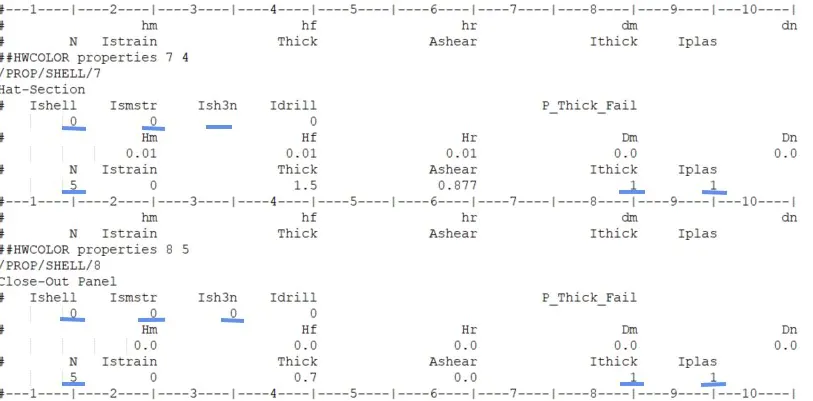
Element Properties modified as per provided elemental properties for the given rail model(modified)
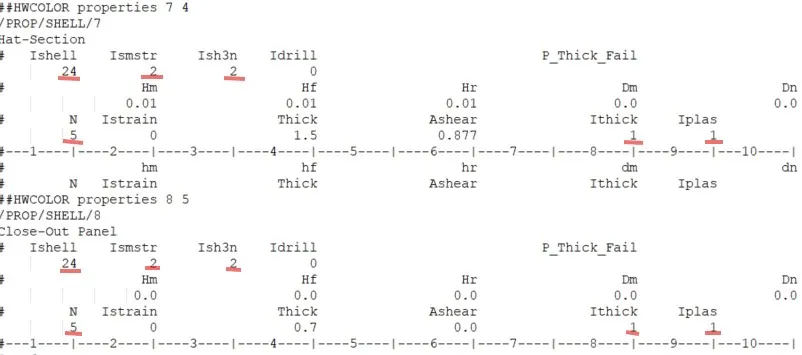
For the Existing and modified(provided) element properties results are plotted and compared below
Kinetic energy
kinetic energy is developed in a body when the body in motion. Before the crash the kinetic energy of a moving body is at maximum when a body collides another body its kinetic energy will reduce as from kinetic energy formula 1/2Mv^2 in the formula as velocity(v) is variable if the velocity reduces kinetic energy reduces.
The initial kinetic energy of the rail is transformed into deformation energy through plastic deformation
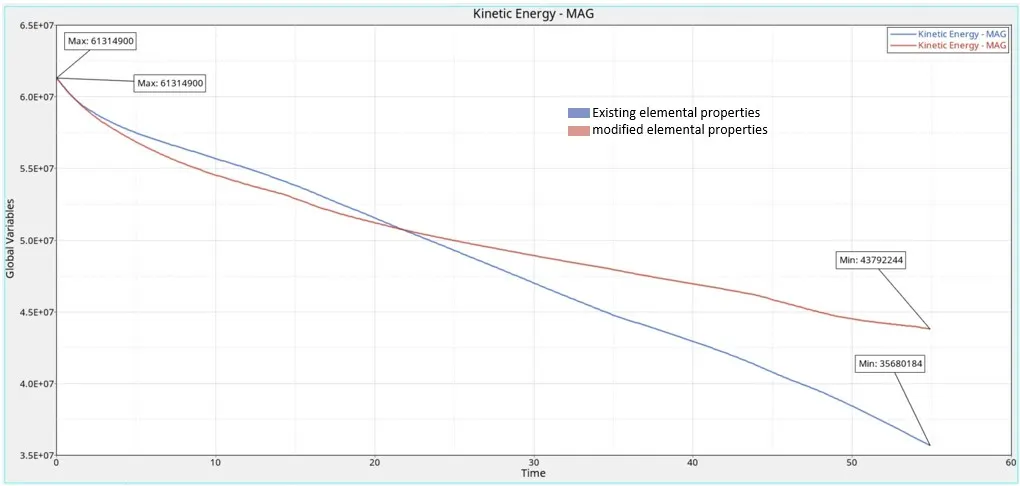
Kinetic energy lose in the default elements is more compared to iShell-24(QEPH elements) as shown in the kinetic energy plots above
Internal Energy
internal energy is the energy stored in body due to work done the lost kinetic energy in the crash of the rail is converted in to deformation in the rail will increase the internal energy the plots of the rail crash shown there is increase in the internal energy
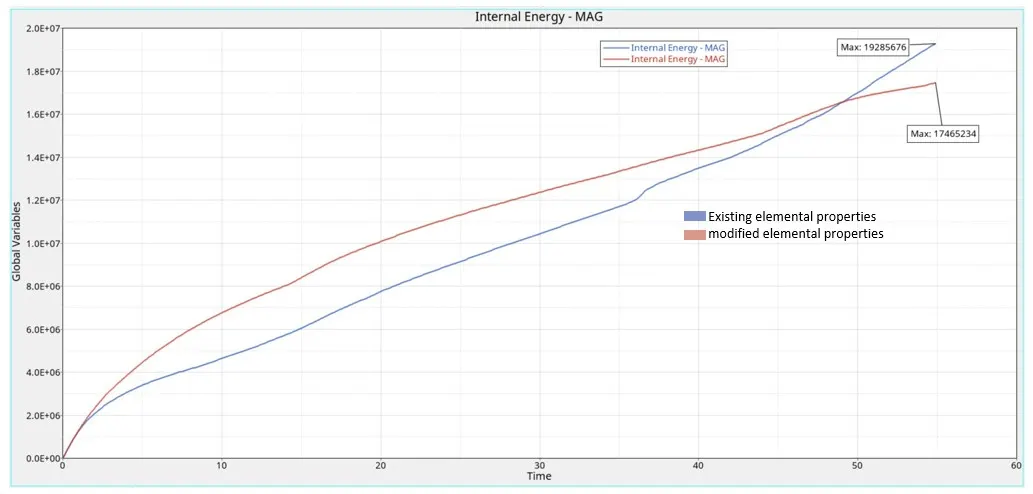
from the plot Internal energy initially will be zero before crashing when the crash happens deformation will occur and energy will be stored
energy stored is more in the material for the model with iShell-24(QEPH elements) shell elements compared to default ishell elements
contact Energy
Contact energy is the energy spent to enable contact force and avoid penetration between elements it is not physical energy it can be positive or negative. positive due to friction and negative due to sliding or initial penetration.
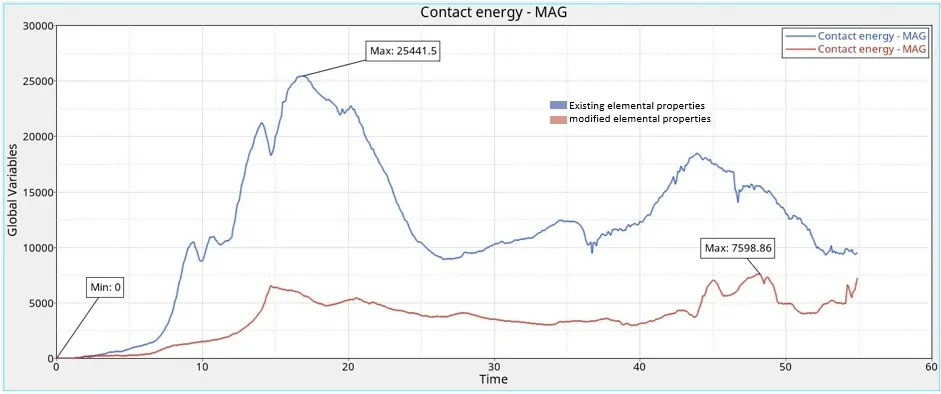
From the plot for existing elemental properties at initially the contact energy increases and suddenly drops as the penetration of elements happened from there contact energy is dropped as the contact energy will be converted to other forms of energy
Rail Crushing of Existing elemental properties
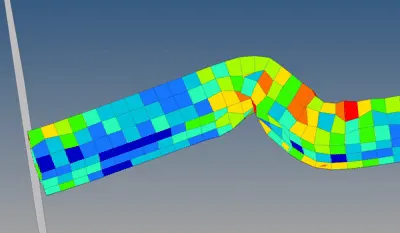
for the existing elemental properties penetration of elements happened
Rail Crushing of modified elemental propertie
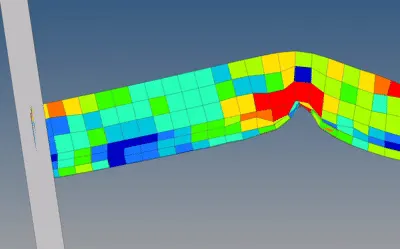
For the modified elemental properties penetration of elements did not happened
Hourglass Energy
Hourglass energy is the energy generated artificially with zero deformation which results in unrealistic deformation of the mesh which results in inaccurate results.
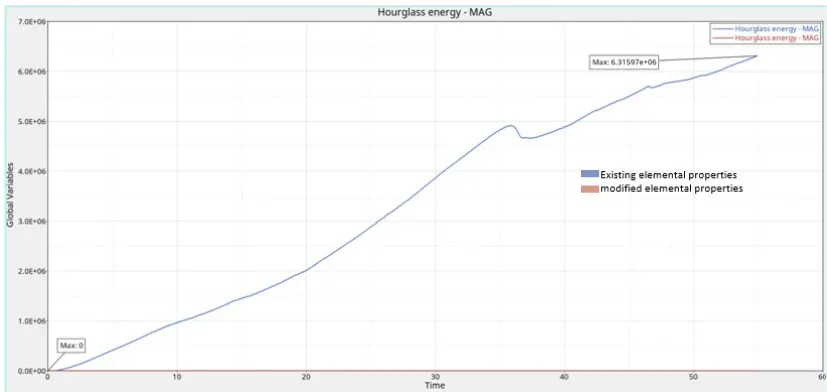
From the plot for the existing elemental properties ishell=0 there is record of hourglass which results unrealistic deformation of mesh
for ishell=24&12 intigrated elements there will be no Hourglass as the result for the modified elemental properties no hourglass energy is recorded.
Total Translational Energy
Total Translational energy refers to to the sum of the kinetic energy of all objects in the linear motion
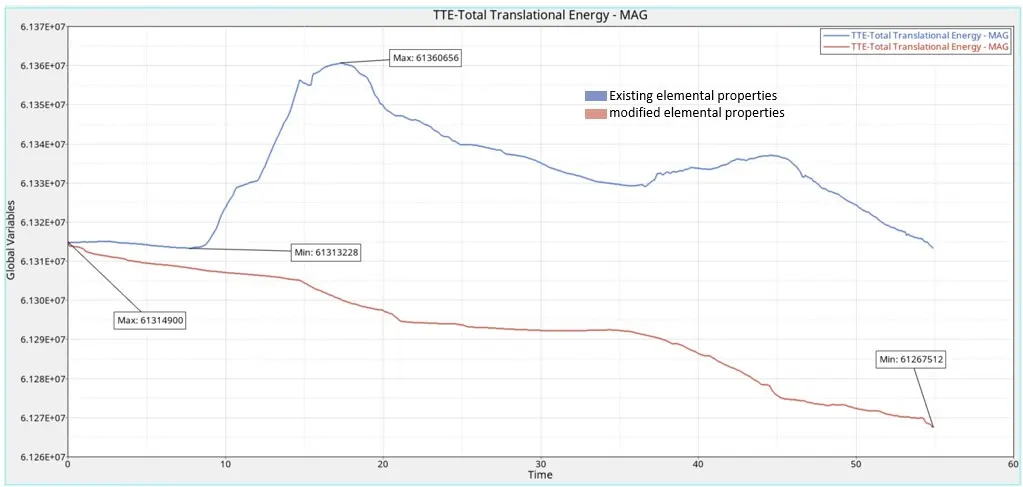
Existing elemental properties recorded higher Total Translational Energy compared to QEPH element formulation as total translational energy is the kinetic energy it will rapidly decreases but ishell=0 elements recorded increase in the energy
Energy Error
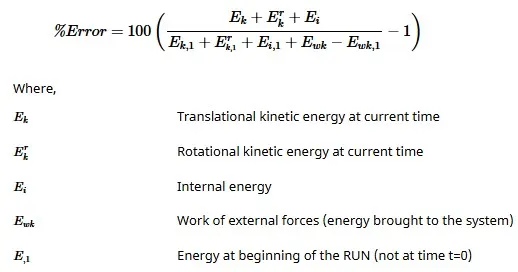
Energy error is deviation from the expected conversion of energy during the simulation process indicating potential issues with the simulation setup
Mass Error
mass error is the deviation between total mass of the model and the total mass calculated by simulation software expressed in percentage. it indicates how much mass the simulation or gained during the calculation impacting accuracy of results
For the Existing elemental properties max energy error is recorded is -10.3%
For the Existing elemental properties max mass error is recorded is 0.1659e^-03
Existing elemental properties

For the Existing elemental properties max energy error is recorded is -10.3%
For the Existing elemental properties max mass error is recorded is 0.1659e^-03%
modified elemental properties

For the Existing elemental properties max energy error is recorded is -0.1%
For the Existing elemental properties max mass error is recorded is 0.1659e^-03%
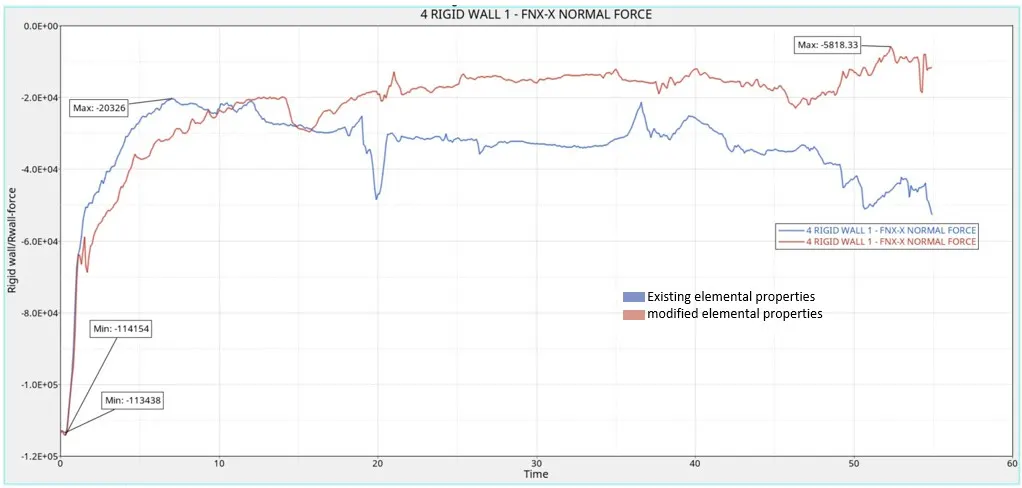
Rigid wall forces
A rigid wall is a boundary condition that simulates a stationary impenetrable wall used to analyze forces and deformations of a moving object.
Von mises stress
Von mises stress in known as equivalent stress is a scalar value derived from the stress state at a point used in engineering to predict the yeilding of ductile material under complex loading
vonmises stress is combined effect of normal and shear stress acting on a material
von mises stress for existing elemental properties
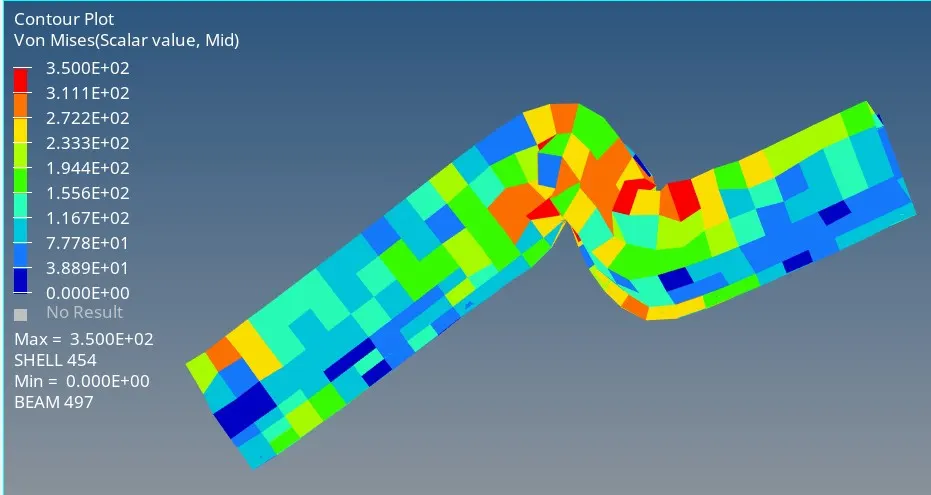
max Von mises Stress is 350 mpa
von mises stress for modified elemental properties
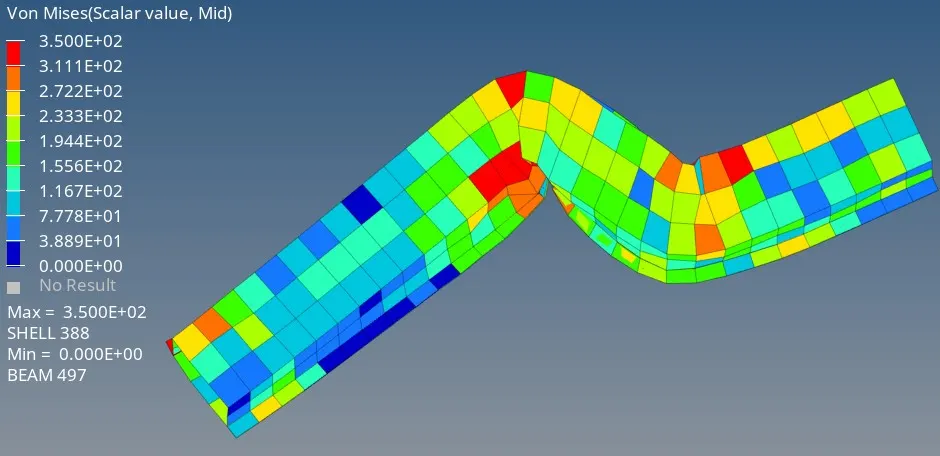
max Von mises Stress is 350 mpa
for the vonmises stress the stress in both the elemental properties found to be same