Assignment 3-2D Element Formulation Challenge
AIM: For the given simulation of radioss, run it as per the given properties and simulation time and compare the energy error, mass error, total energy, internal energy, hourglass energy, contact energy and rigid wall forces.
PROCEDURE:
- Import the crashbeam file into the Hypermesh using the import solver desk.
- Then change the ENG_RUN time to 55ms and ENG_ANIM_DT to 1 ms for 55 simulation steps.
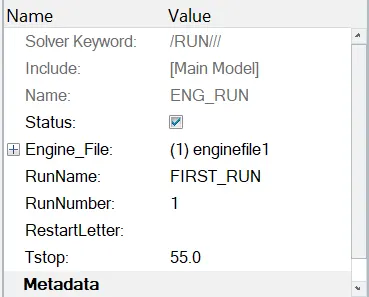
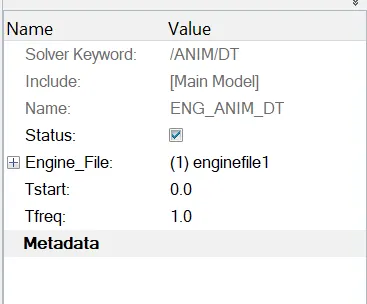
- After changing the simulation time and DT, go to ANALYSIS-->RADIOSS-->run the simulation.

- After the simulation is complete, check the simulation file for energy and mass errors at the end of the simulation.
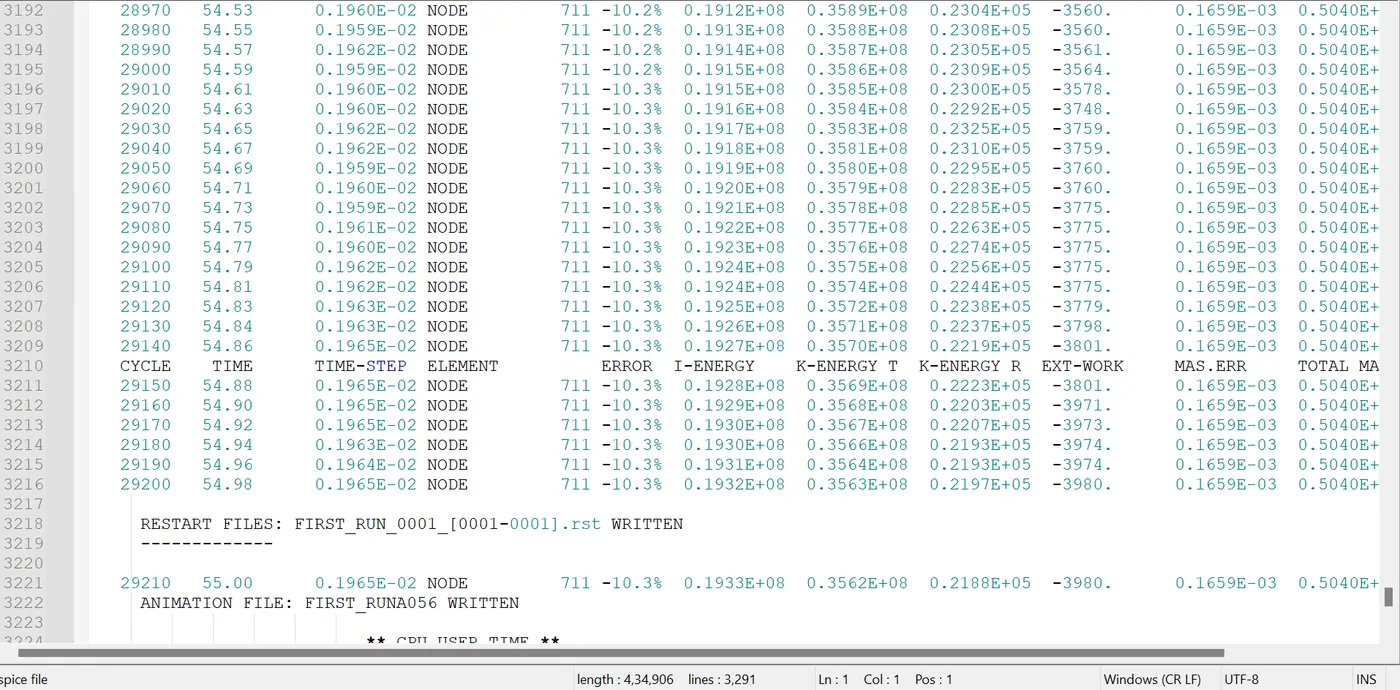
- The acceptable energy error is -15 to 5% from the we can see that the energy error is varying from 0 to -10.3% it is well within the acceptable range.
- The mass error is 0.165e-3 it is also acceptable error.
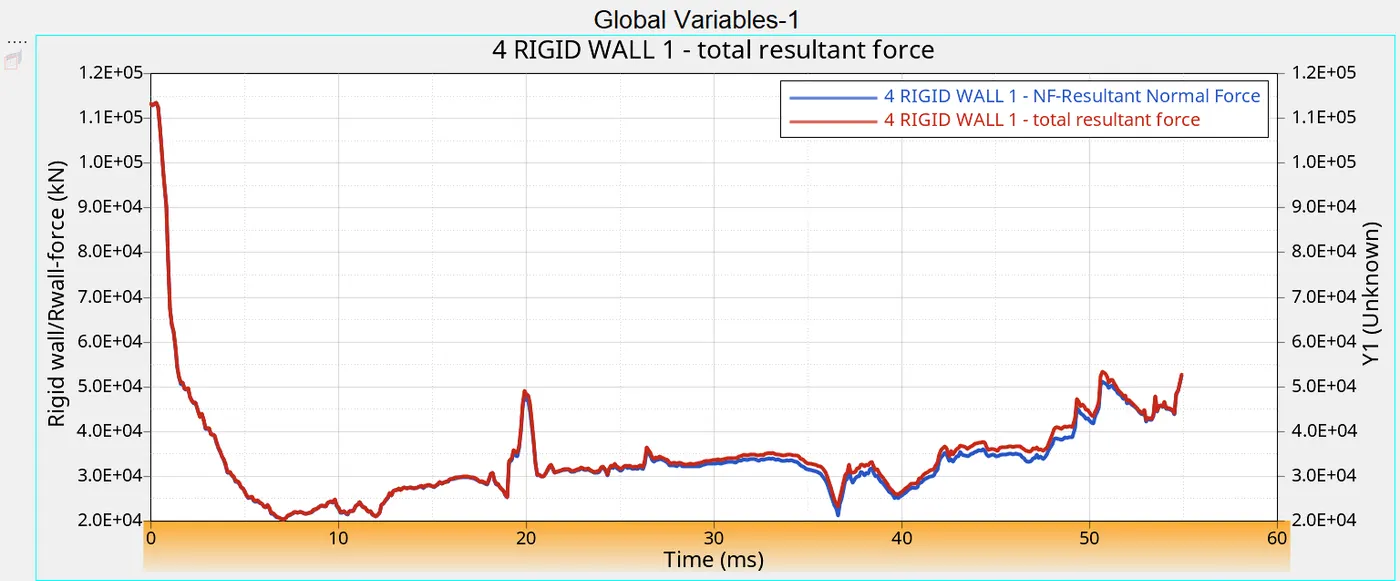
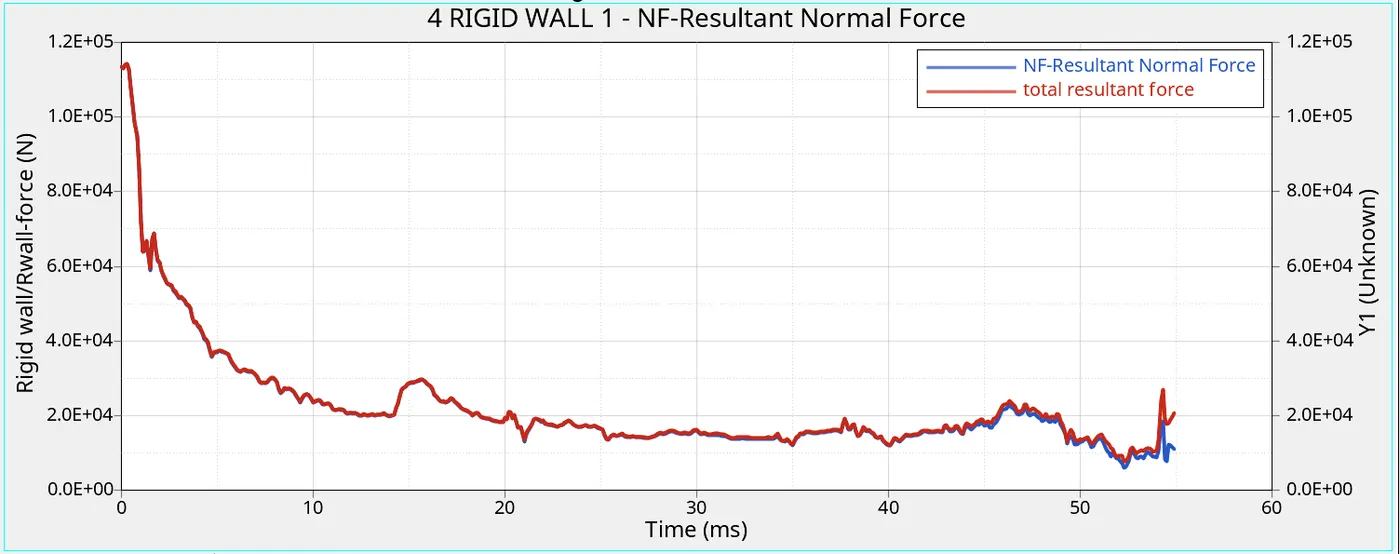
- The resultant and total rigid wall forces are plotted, there is small variation as one can see from the graph, this is due to non-linear forces exerted by the tube over the rigid wall.
- The total energy is reduced slightly because of the reduced integration, and the hourglass energy is also increased because of the reduced integration.
- The internal energy is increase beacause of the force exerted on the tube, and there is negilgible contact energy.
- The graphs are plotted using the HYPERGRAPH2D and the contours are taken from the HYPERVIEW.
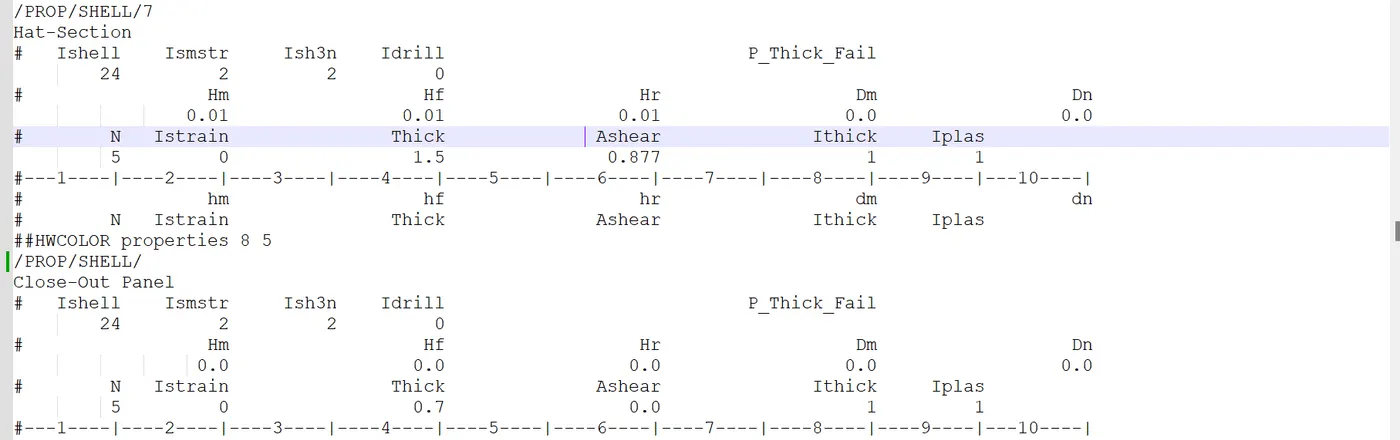
CASE2: Change the properties to the given properties in the property card.
|
Ishell =24 |
QEPH 4 nodes shells are best combination of cost and accuracy. | |
|
Ismstr=2 |
Full geometric nonlinearities (default)with possible small strain formulation activation in RADIOSS Engine. | |
|
Ish3n=2 |
Standard 3 noded shell (C0)with modification for large rotation(default) |
|
| N=5 | Number of integration points set to 5 for accuracy bending. | |
|
Ithick=1 |
Thickness change is taken into account for accuracy. |
|
|
Iplas=1 |
Iterative plasticity for good accuracy. |
- Load the same file in another folder, go to property card and change the cards according to the recommended properties.
- Repeat the same procedure and get the results from the simulation.
- The mass error and energy error are 0.165e-3 and 0.1% respectively, are well within the acceptable range.
- The rigid wall forces are also plotted for resultant and total, there is a slight variation due to the non-linear forces exerted on the wall by the tube.
- The total energy, internal energy, contact energy and hour glass energy is plotted and shown in the figure.
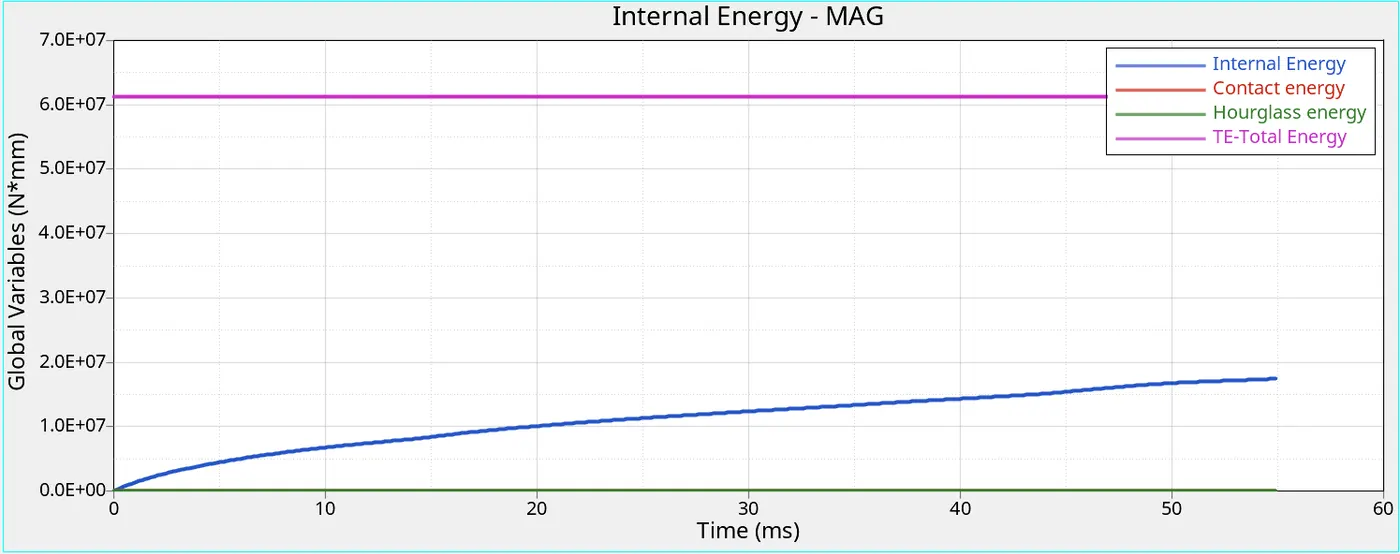
- The total energy and hourglass energy plots have no change because the error is less( full integration is used).
- The contact energy is almost zero.
- The internal energy increases as the external force is applied over the component.
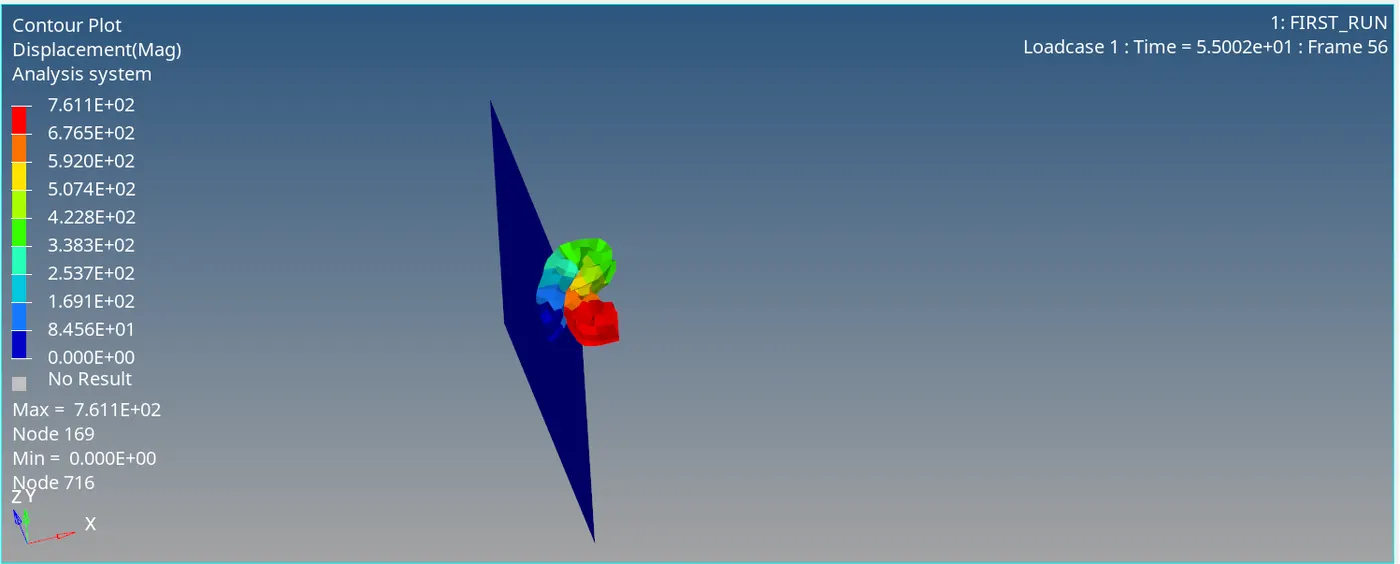
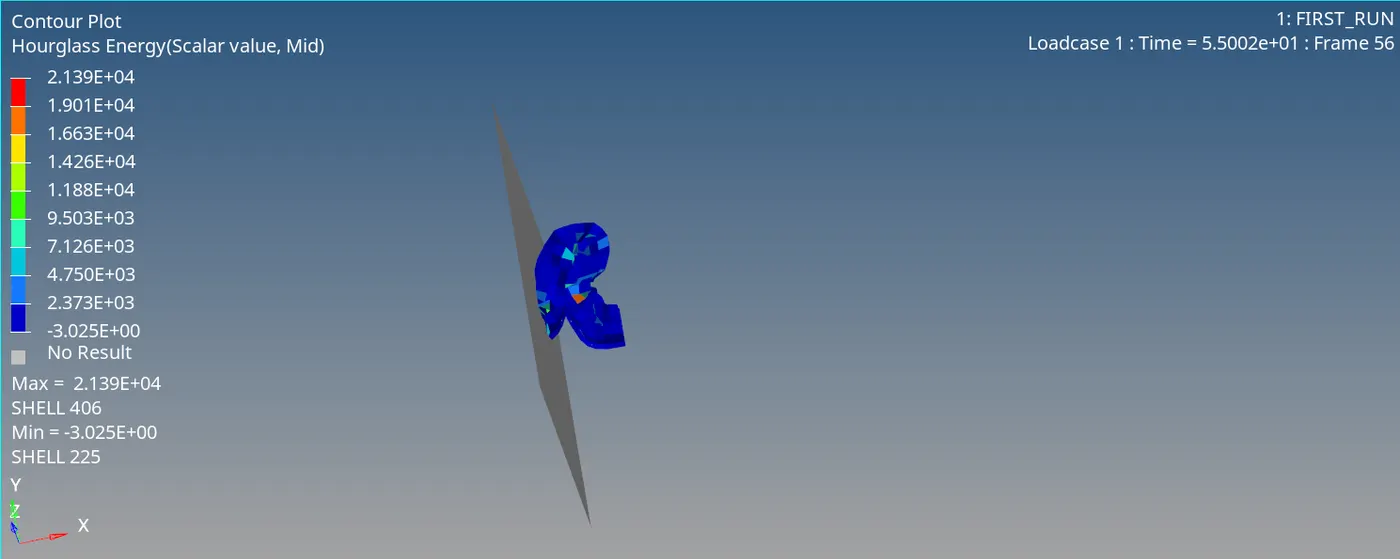
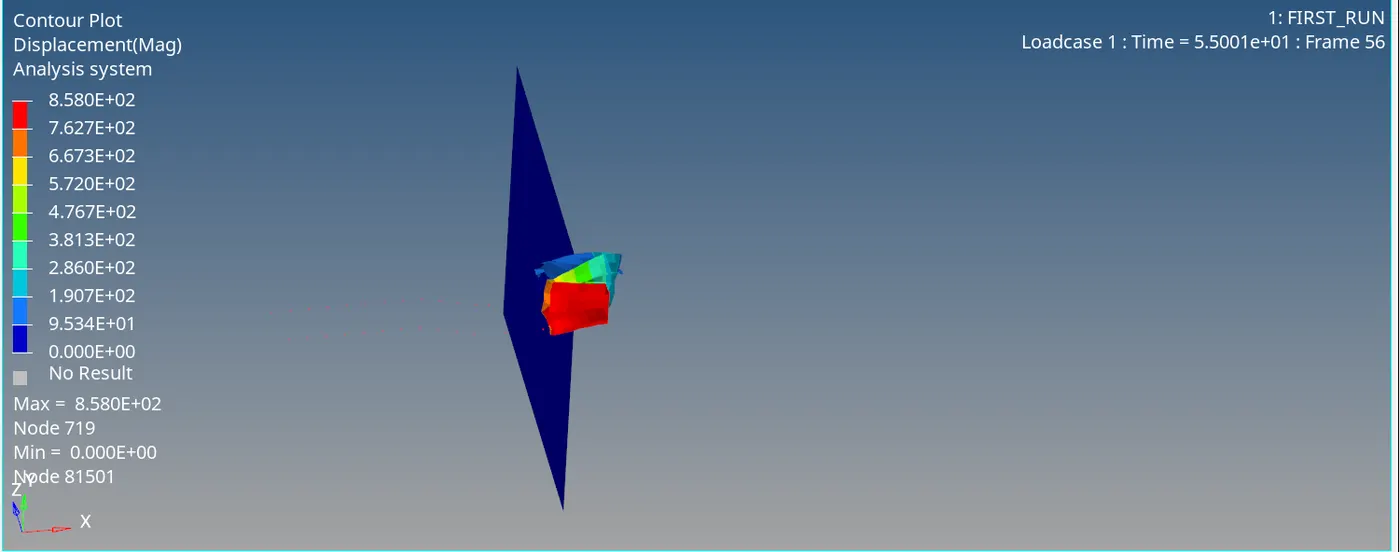
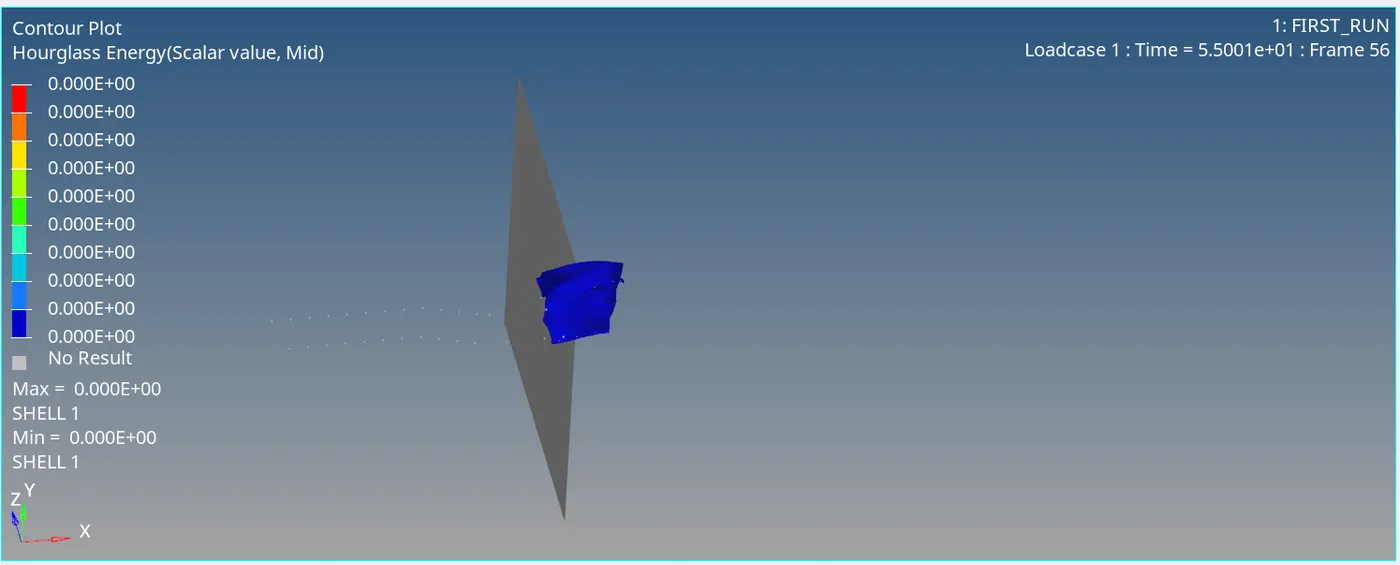
- The displacement contour and hourglass energy contour is shown in the following figures. As one can observe that the hourglass energy is zero because of the usage of the full integration.
CONCLUSIONS: For the given radioss file the changes are made according to the recommended simulation time and properties the simulation is done. And also the results are extracted.