Assignment 3-2D Element Formulation Challenge
AIM : 2D Element Formulation Challenge
OBJECTIVE:
- Comparison of results with base simulations and improved shell element properties.
import the file.
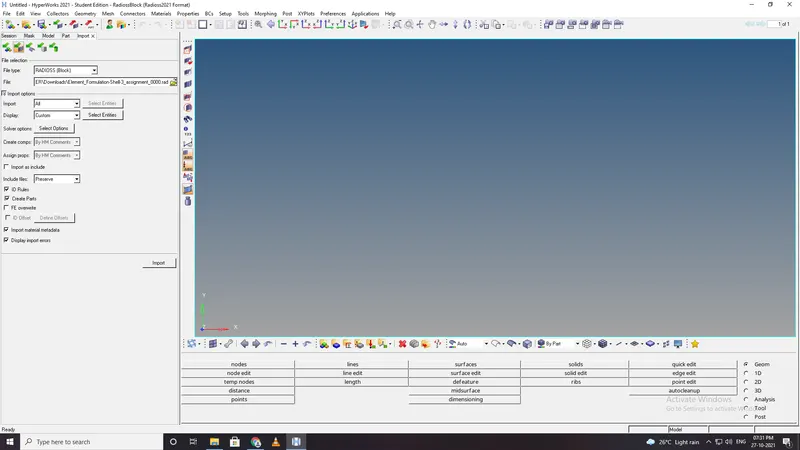
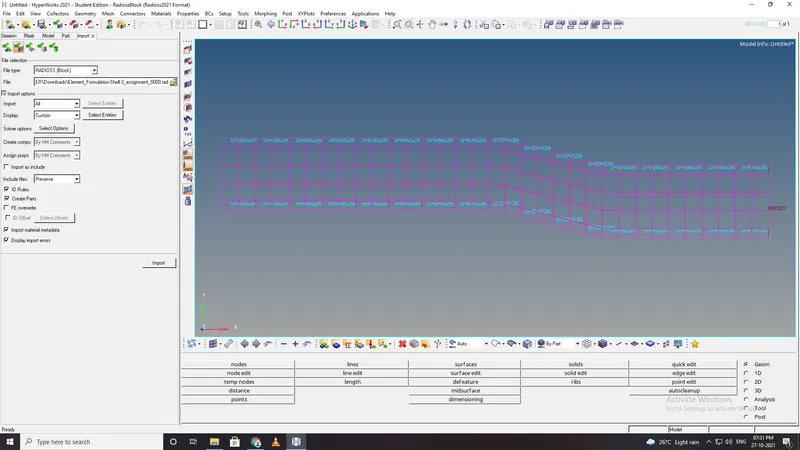
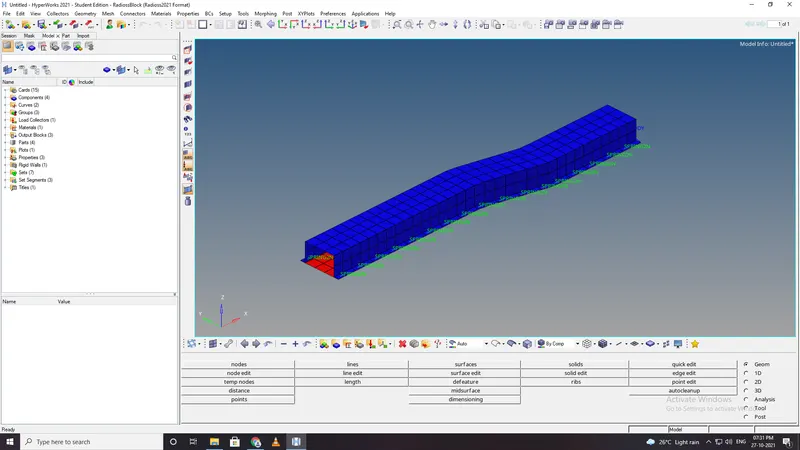
1.Using the crash beam file from the previous assignment, change the run time to 55 ms.
After importing the (-0000.rad) file
change the run time to 55 sec.
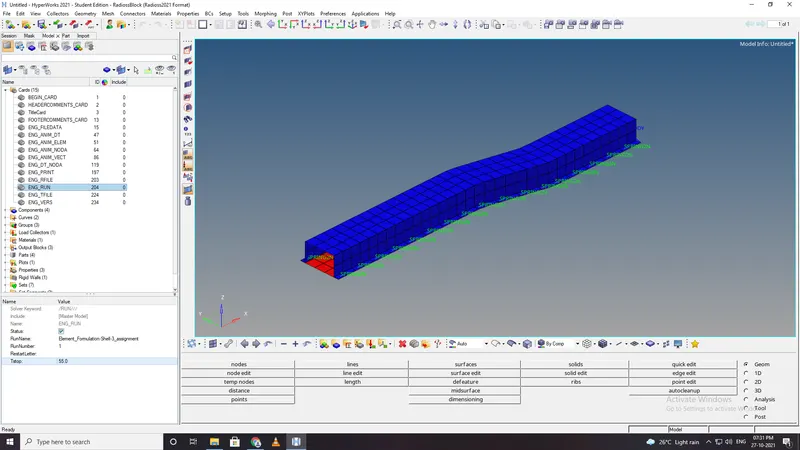
2. Change the number of animation steps during simulation to a minimum of 25 and maximum of 60.
To change the no. of animation . have to change value of Tfreq
Tfreq = Total Run time/ no.of animation steps required.
Tfreq = 55/30
Tfreq = 1.833
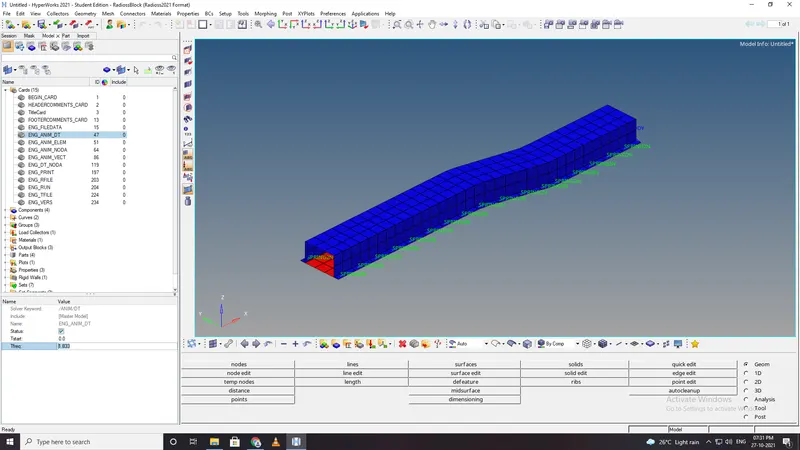
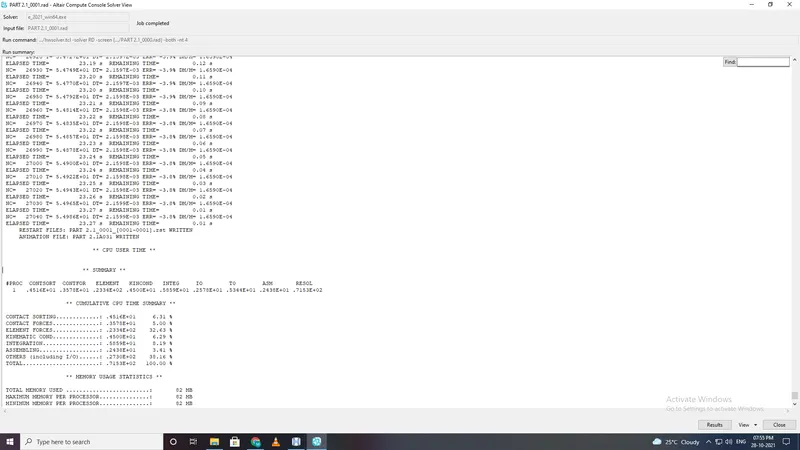
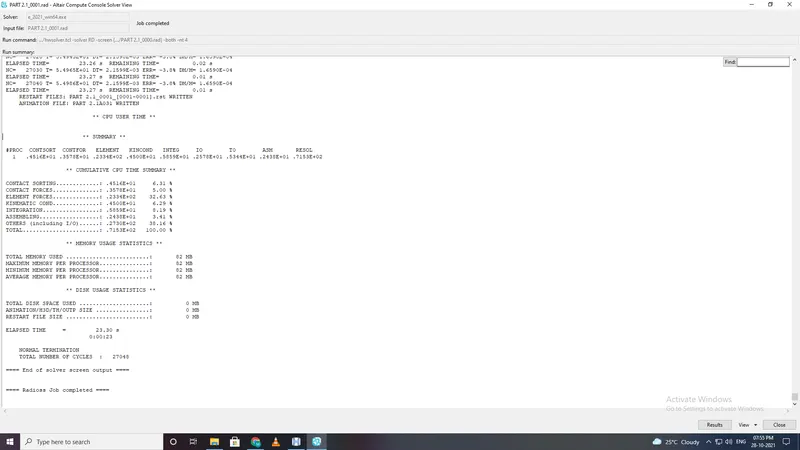
3. Run the base simulation without any modification to element properties.
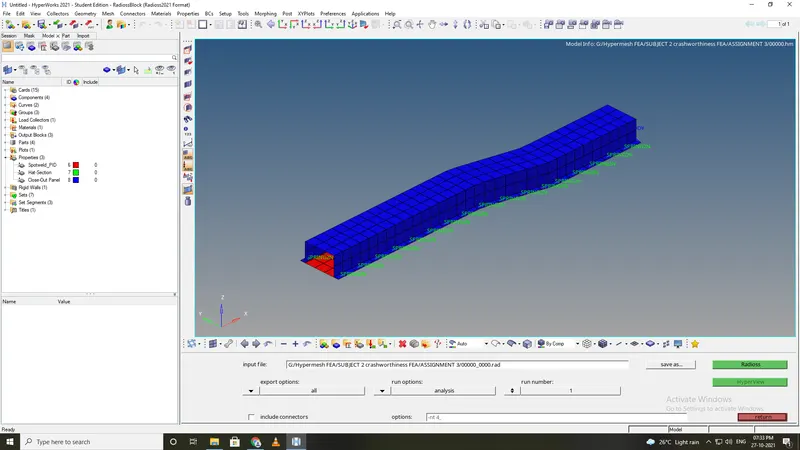
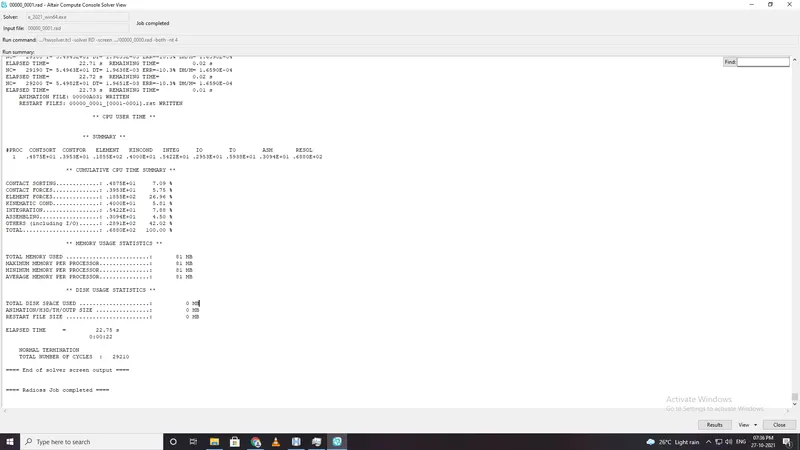
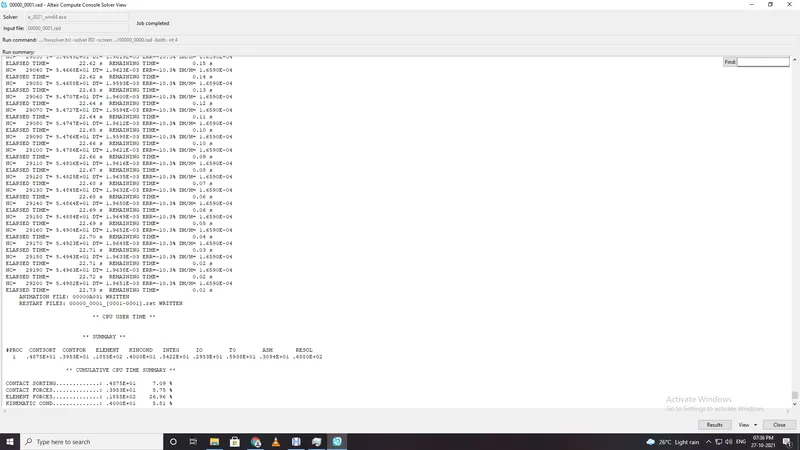
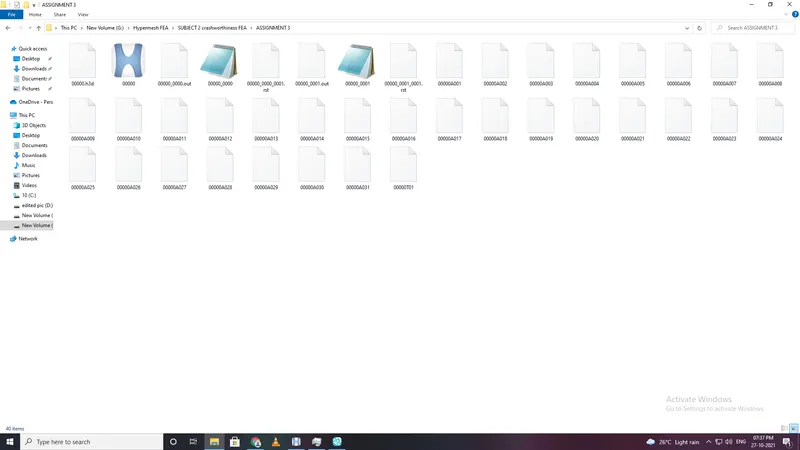
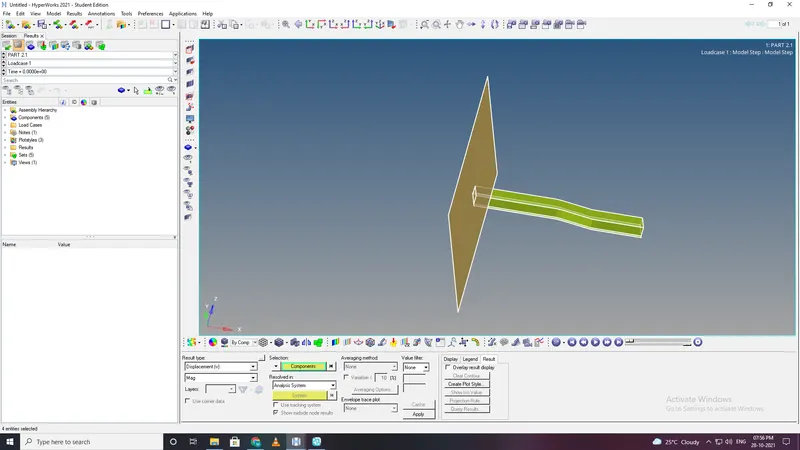
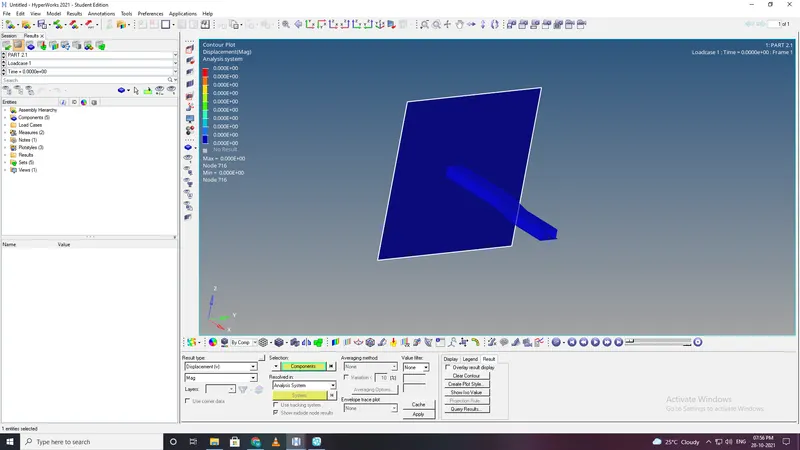
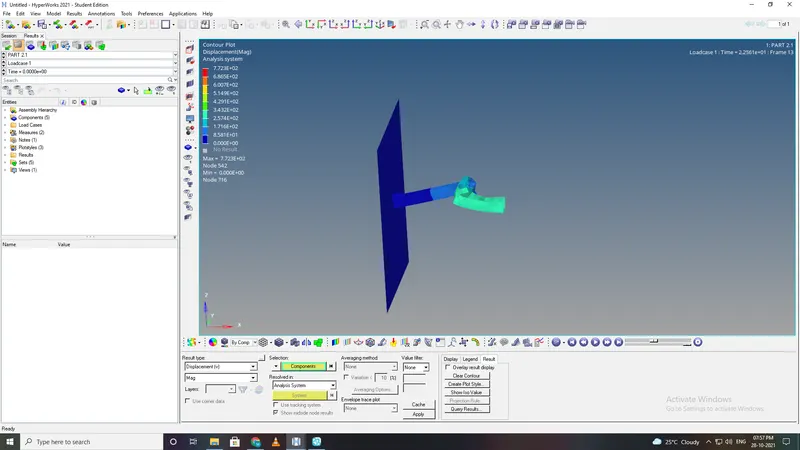
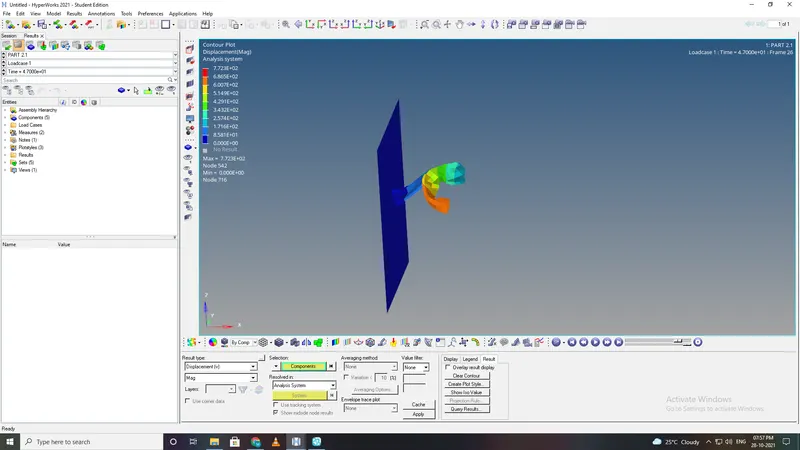
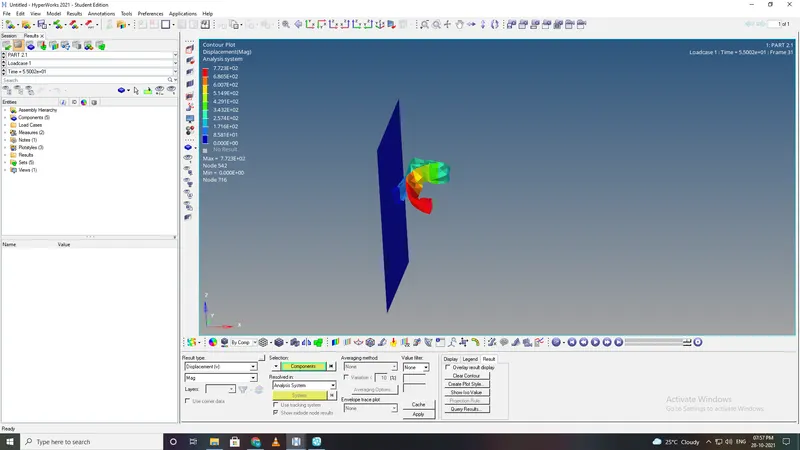
switch to hyper view select .h3d file and hit apply. we can see the animation in which elements are deform via 3D animation.
Use contour option we get animation showing displacement contour during simulation.
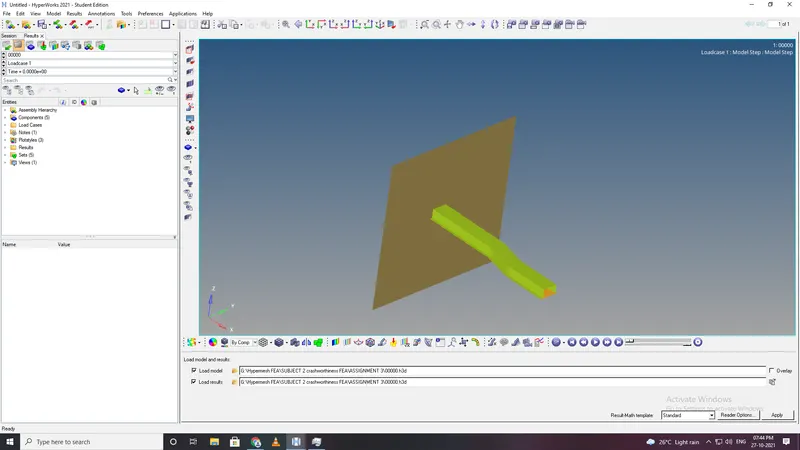
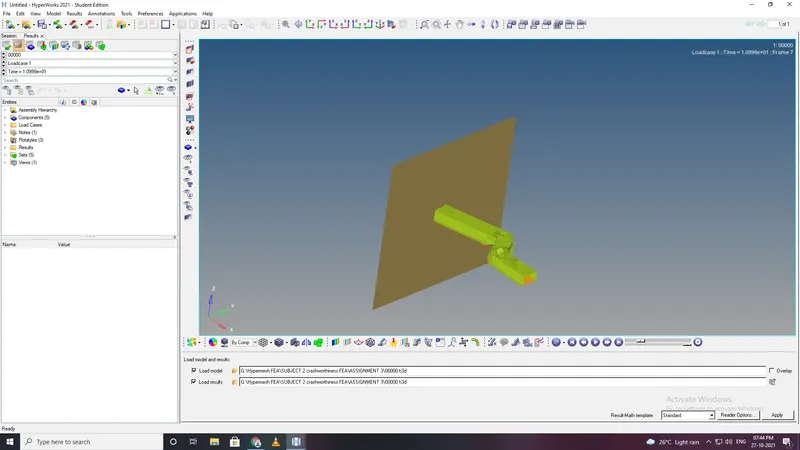
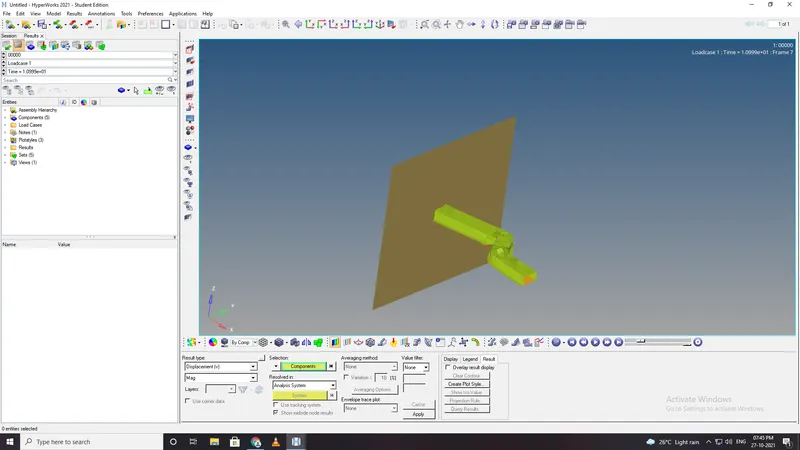
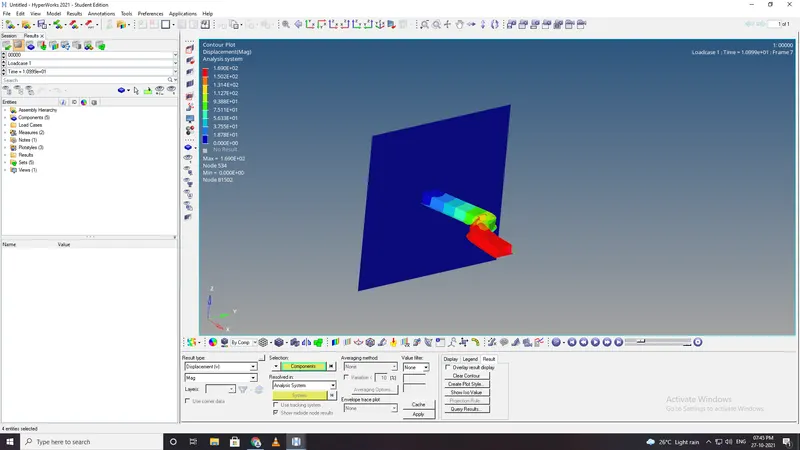
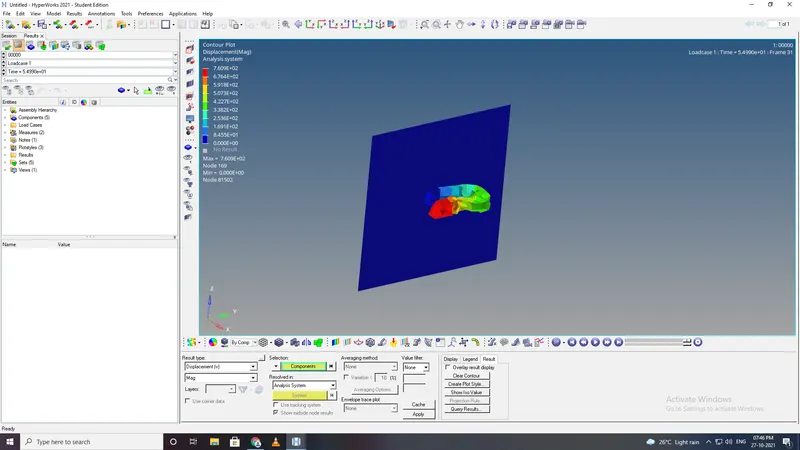
4. At the end of the simulation, do the energy error and mass error checks and determine whether results would be acceptable.
To check the energy error and mass error open engine output file(0001.out) 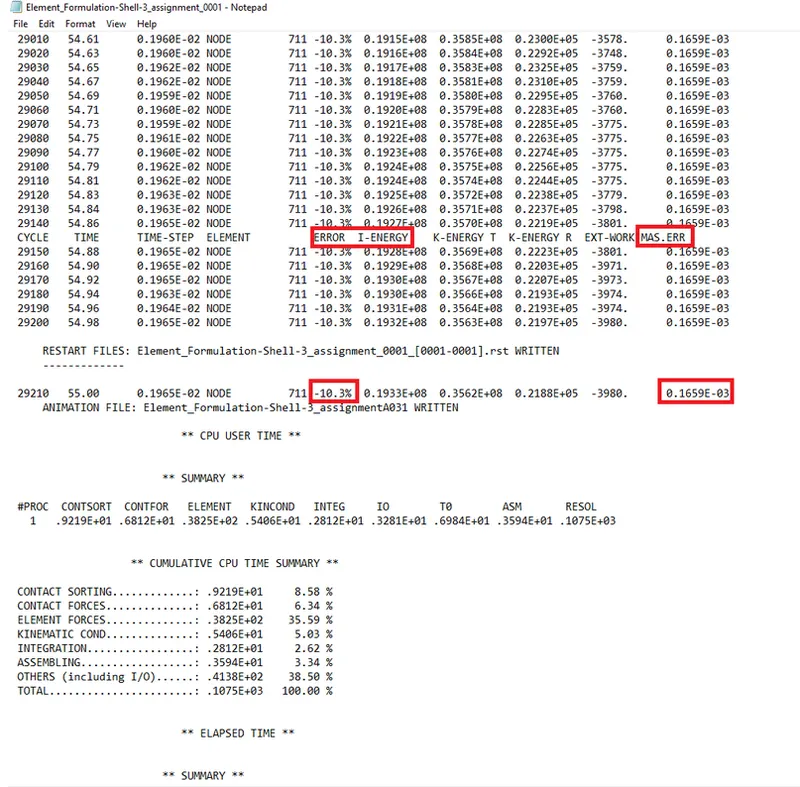
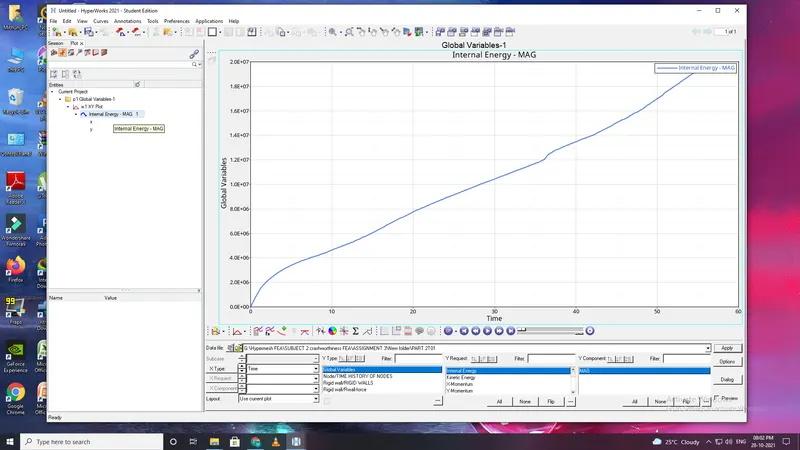
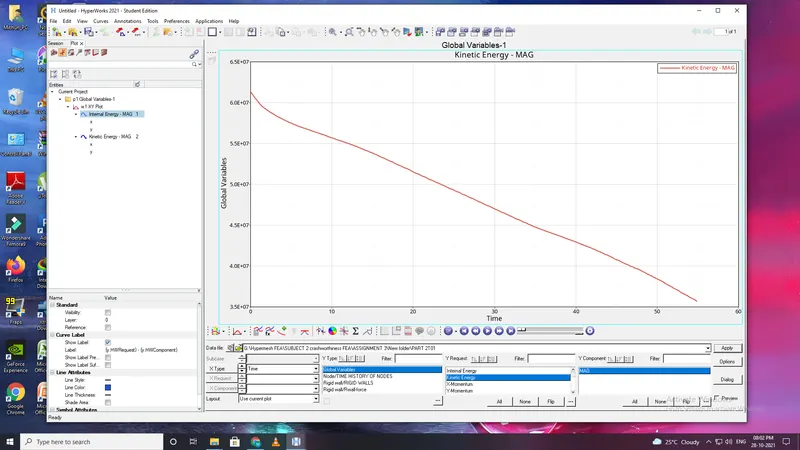
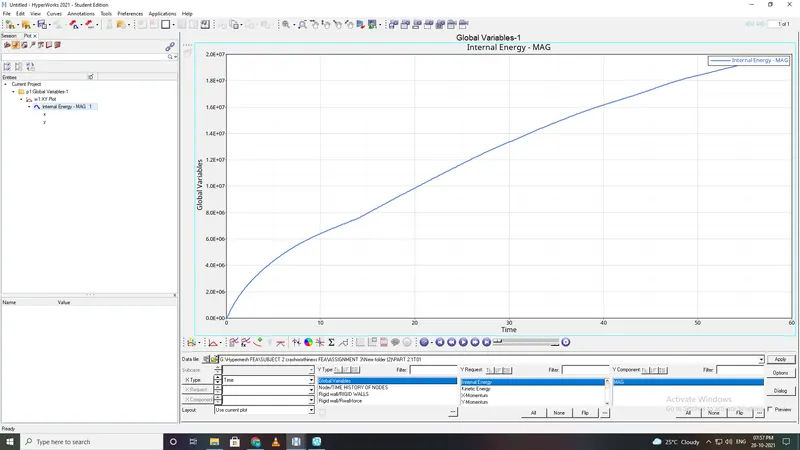
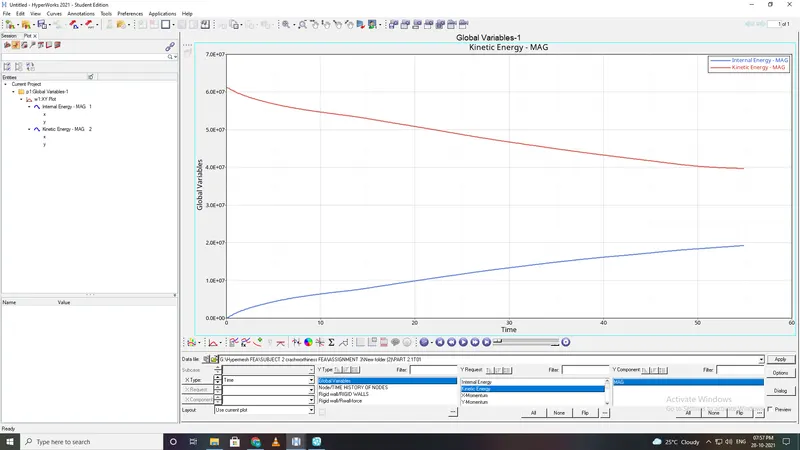
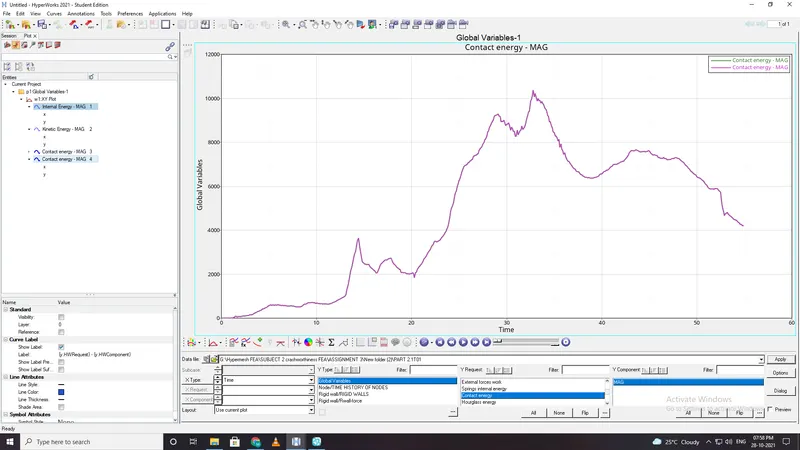
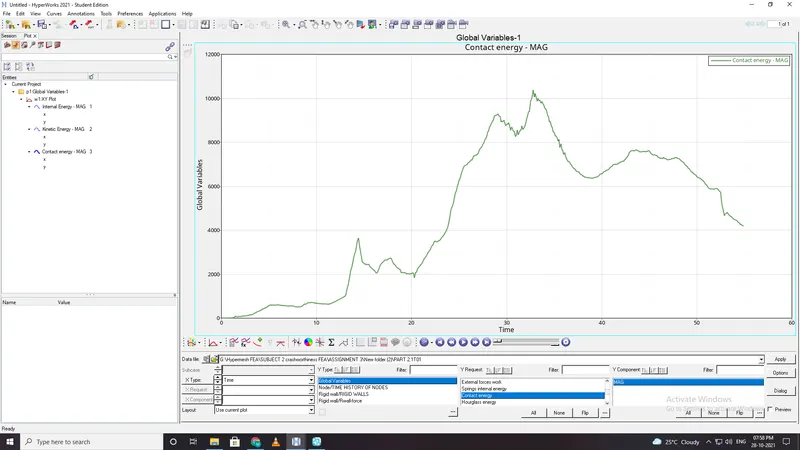
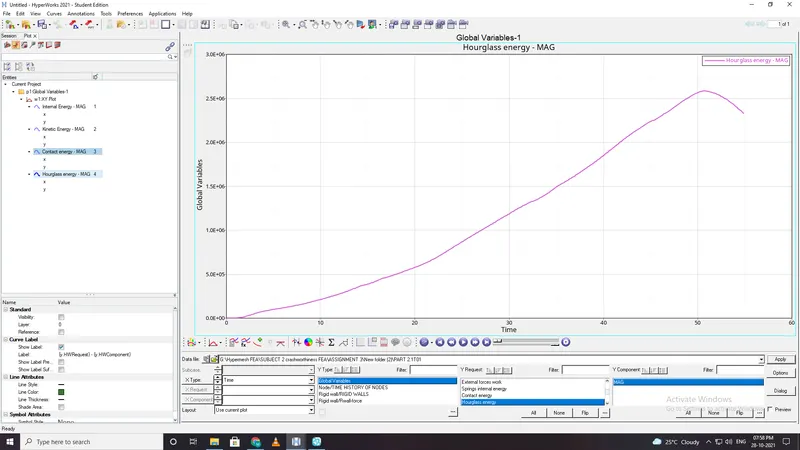
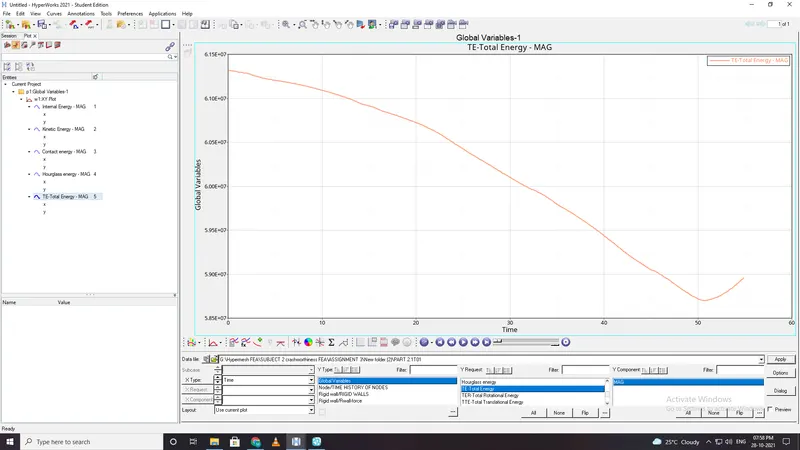
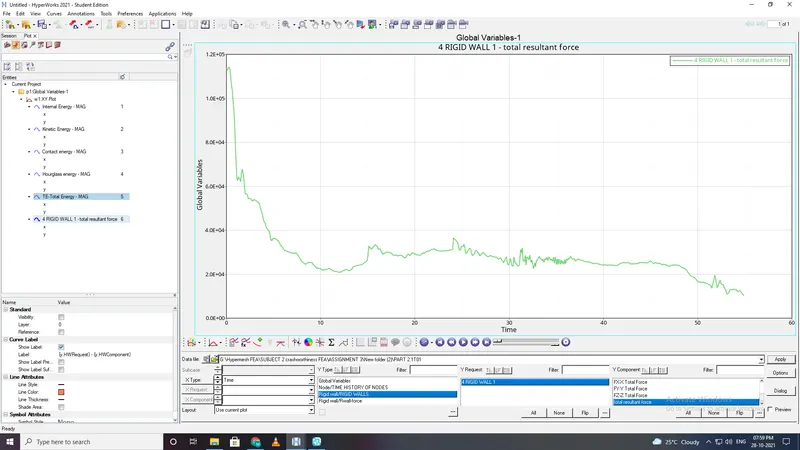
5. If acceptable, Plot rigid wall forces, internal energy, hourglass energy, contact energy, total energy of the simulations.
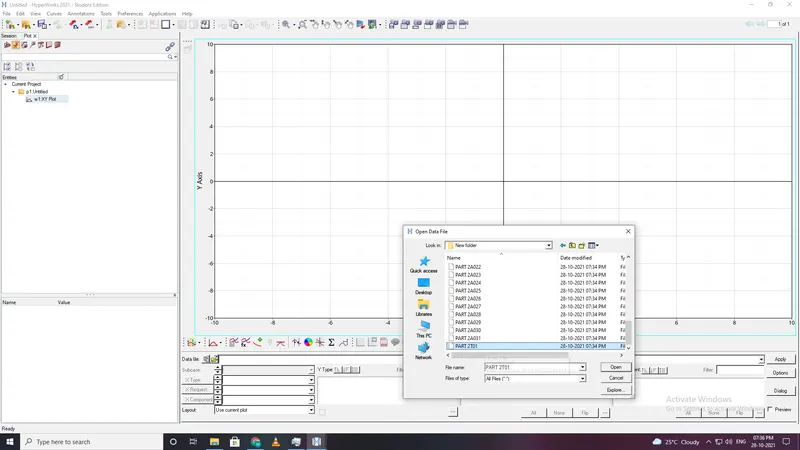
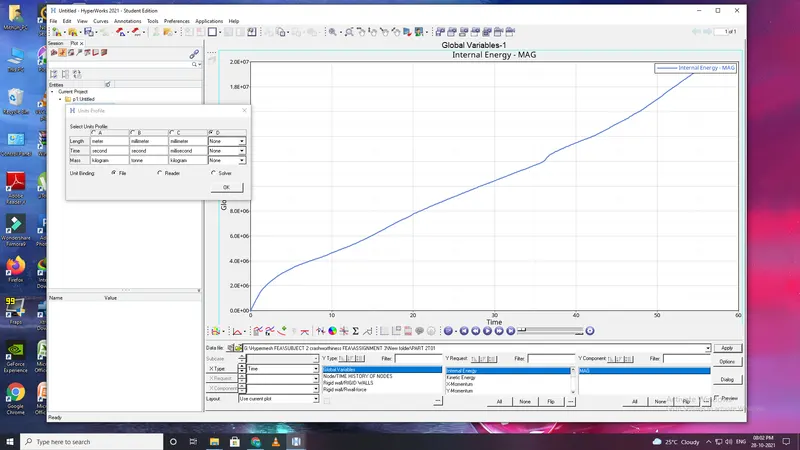
To plot the rigid wall forces , internal energy etc.. switch to hypergraph 2d.
In hypergraphs need to input file TO1,
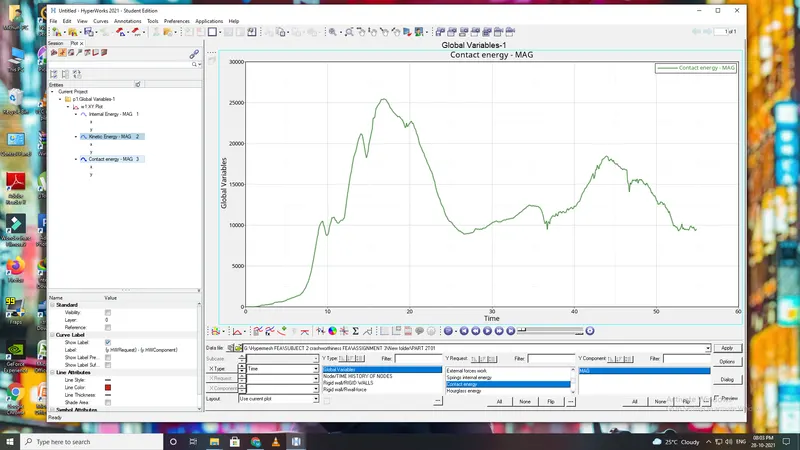
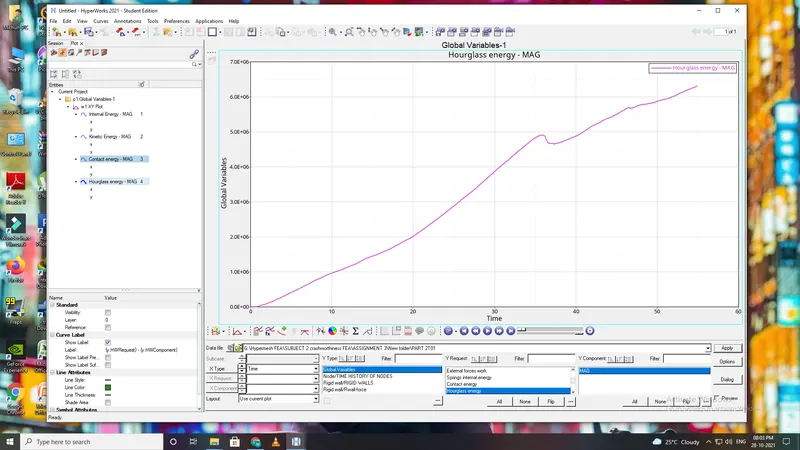
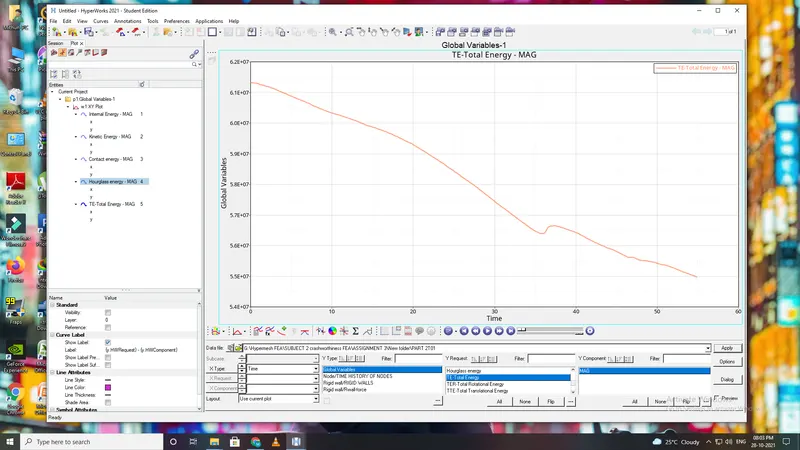
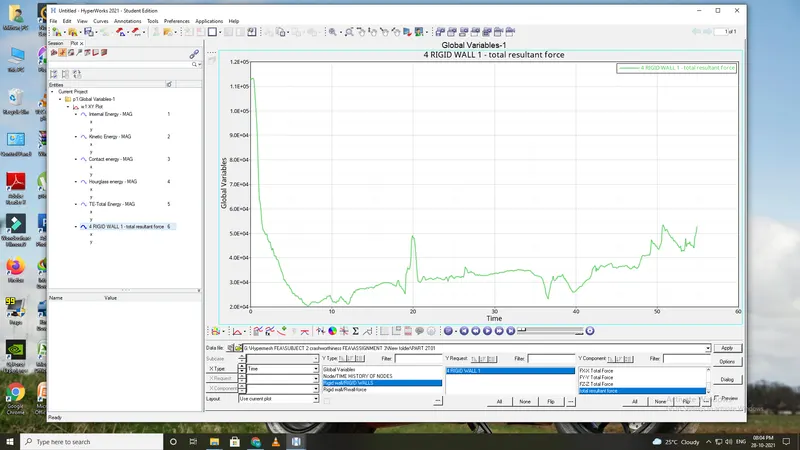
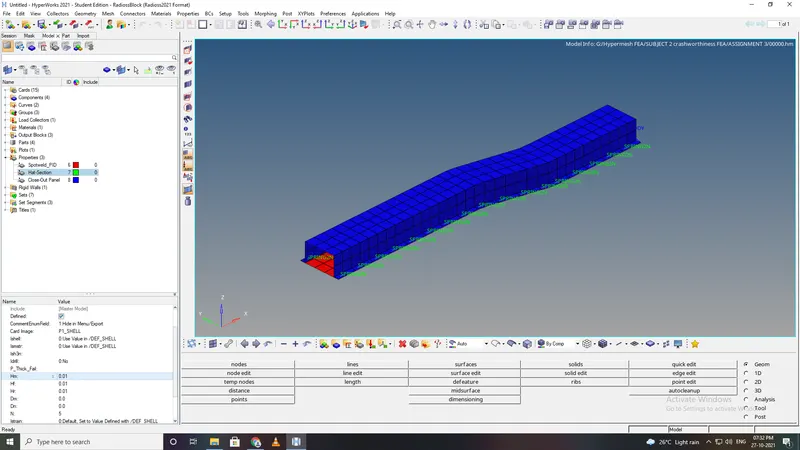
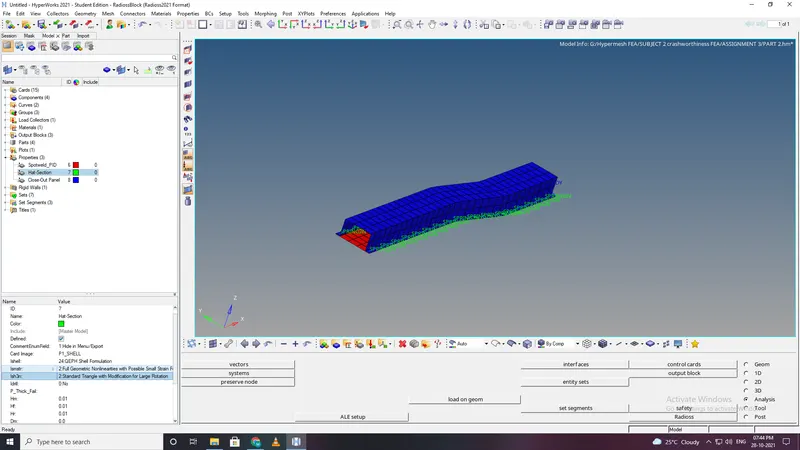
6. Change all the shell elements properties to recommended properties, save this as separate, rad files and run the simulation.
Ishell =24 QEPH 4 nodes shells are best combination of cost and accuracy.
Ismstr =2 Full geometric nonlinearities with possible small strain
Ish3n =2 Standard 3 noded shell (co)
N =5 no. of integration points set to 5 for accuracy.
Ithick =1 thickness change is taken into account for accuracy.
Iplas =1 Iterative plasticity for good accuracy
7. Follow steps 5 and 6.
To plot the rigid wall forces , internal energy etc.. switch to hypergraph 2d.
In hypergraphs need to input file TO1,
8. Create a brief report comparing all the results from steps 5 and 6 for both simulations.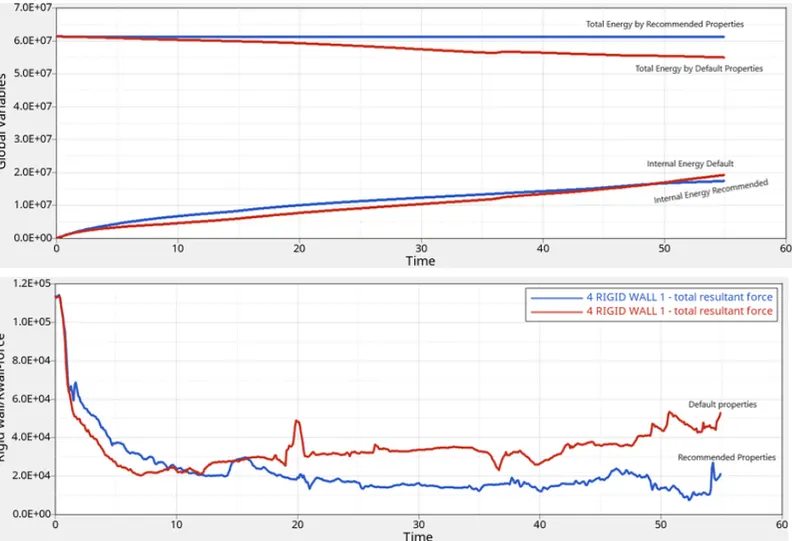
- The difference in both simulation is the decreases in hourglass energy. The introduction of OEPH shell formulation.(Ishell 24) in the second case , provides an artifical stiffness to the shell elements and helps counter hourglass formation .
- The more realistic simulation also resulted in the different resultant force graph that represents the collision events more realistic.