Assignment 2
1.Calculating the speed of sound in steel rail.
Given material properties
E = 210000 N/mm2
Density = 0.0078 g/mm3
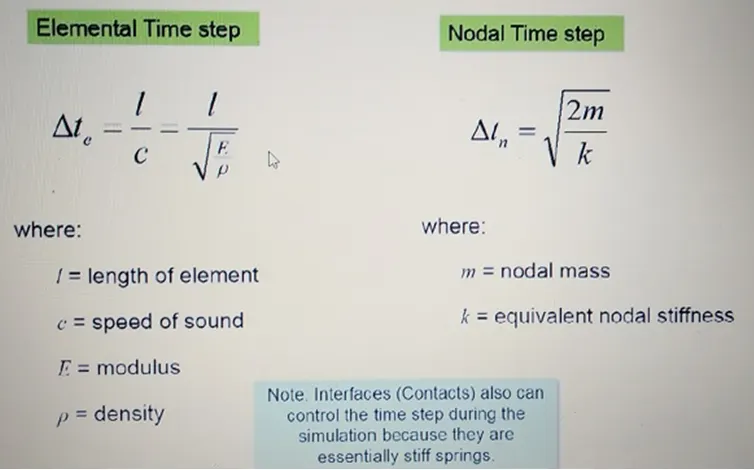
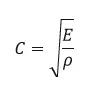
c = speed of sound (mm/sec)
E = Youngs modulus (N/mm2)
Rho = Density (g/mm3)
1N=101.97g
c = sqrt[(210e3 *101.97) / 7.8e-3]
c= 52396.05mm/s
2.Calculating time step:
Δte = l/c
l = length of the rail in mm
c = speed of sound in mm/sec
Δte = 1000/52396.05
Δte = 0.019s
3.Time for sound to travel the length of rail= 0.019s
4.
Δte = 0.019s = 19ms
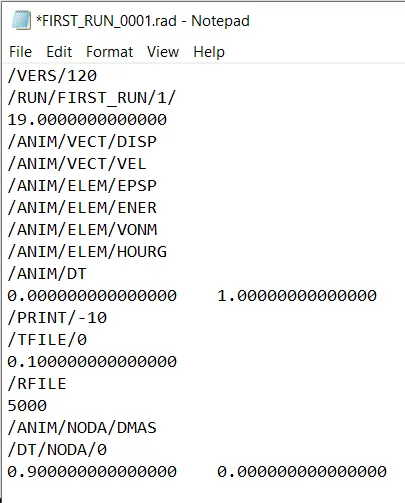
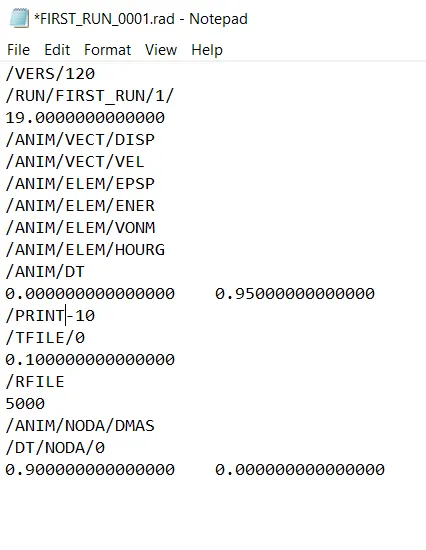
5.Time Step frequency for 20 animation Steps
19/20 = 0.95
TFREQ = 0.95
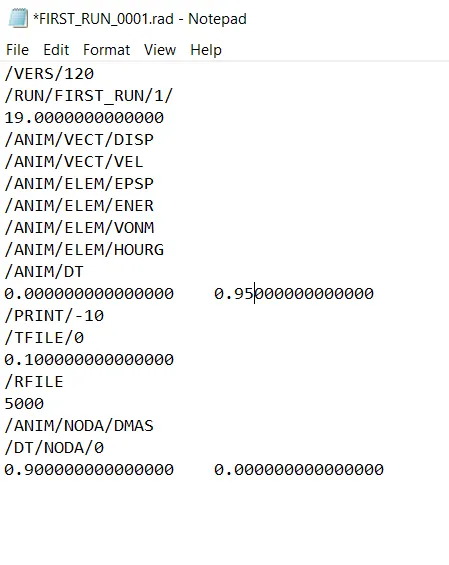
6.Change /print -10.
7. .3d meshing tetra mesh and hex mesh
1.Housing
After going through the model both hub and housing are in the same collector. Created a new collector and moved the hub into that collector.
There are some edges that are closer to each other which results in very small elements. Toggled those edges.
Then performed topology clean up.
Meshing -
2D Meshed the whole surface together with tria element size 5.
Then used these 2D elements to make 3D elements.
Checked for tet collapse rectified some failing elements.
ARM BRACKET
Selected the base part, hide the remaining parts.
The upper face is selected and meshed with quad elements.
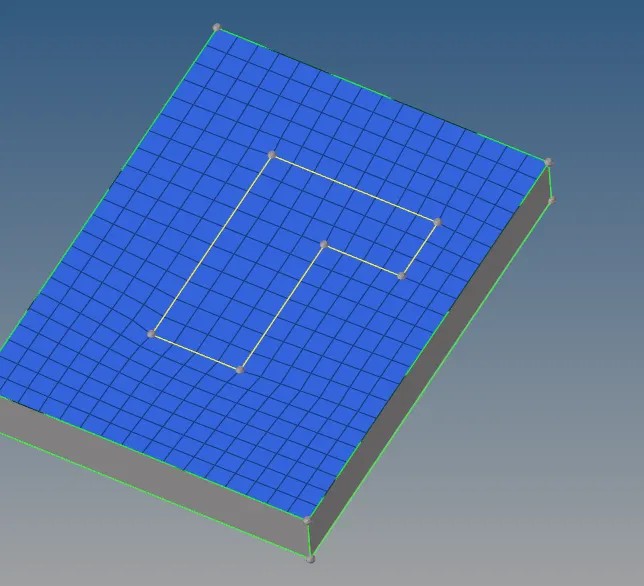
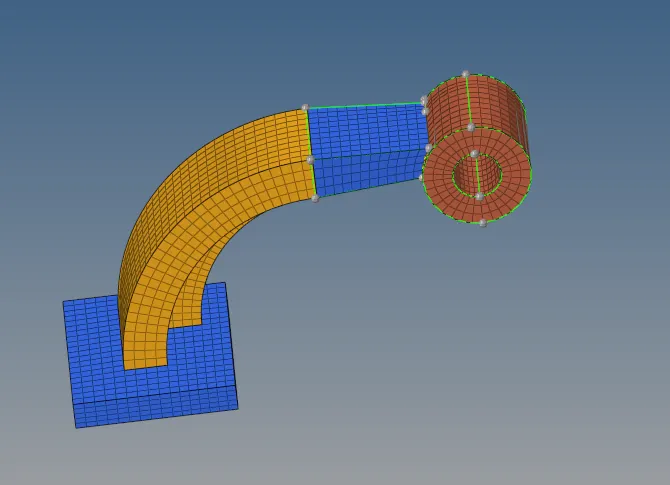
Then 3d elements are created by the Elem Offset Method.
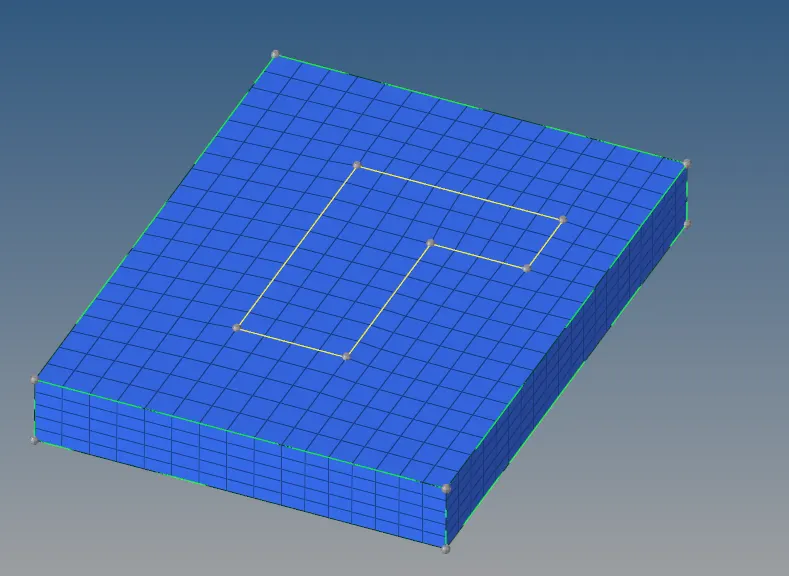
BY using base part 2d elements created the arm_curve elements by spin option.
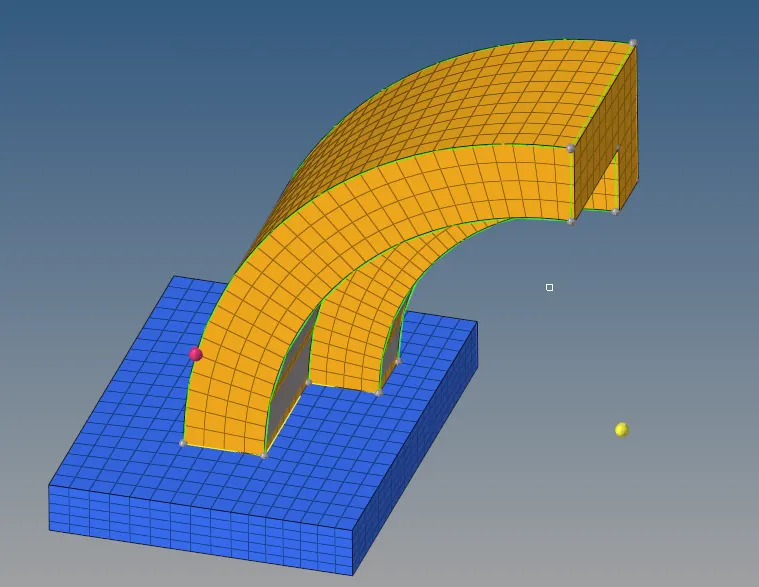
By using liner solid tool face mesh from the arm_curve are projected to arm_straight part with the element density of 12
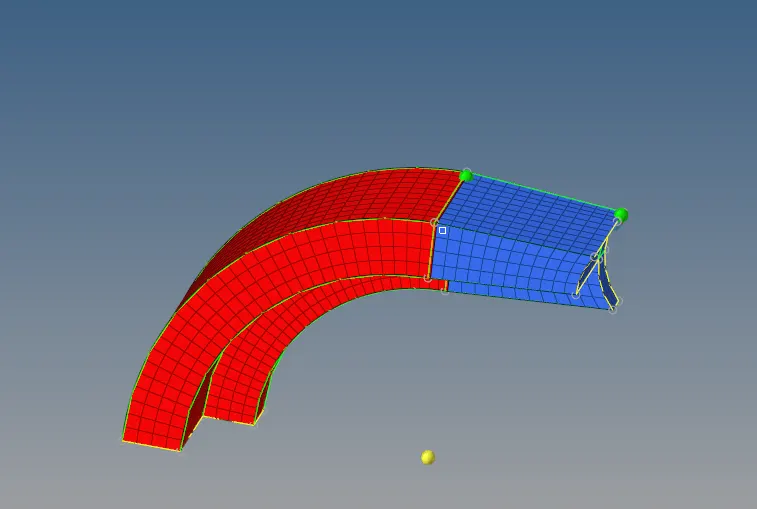
Boss elements are created by using a solid map tool by taking nodes line and surface as the reference.
For the given component 1D element, Spring, Rigid (RBE2), RBE3, welds (Spot & Seam) is performed.
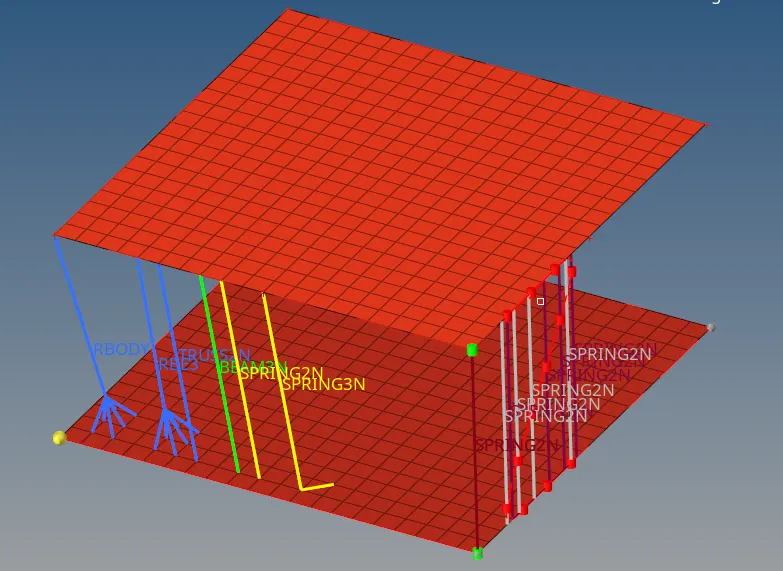
The following 1D element types,
- CRod
- CBar
- CBeam
In brief, CROD elements support (allow) tension and compression only, whereas CBARS and CBEAMS allow bending as well.
A CBAR element is a kind of simplified CBEAM element and should be used whenever the cross-section of the structure and its properties is constant and symmetrical. The CBAR element requires that its shear centre and the neutral axis coincide. Due to this requirement, CBAR elements are not useful for modelling structures that may warp, such as open channel-sections. This limitation is not present in CBEAM elements. Thus, CBEAM elements are used to model more complicated geometries with varying cross-sections. Important to note, in CBEAM elements the neutral axis and shear centre are noncoincident.
Overall, this type of element demands a deeper understanding of beam theory.
CONCLUSION:
1. Calculated speed of sound and an elemental time step of the steel rail.
2. Performed 3D meshing tetra and hexa for Housing and Arm_bracket respectively.
3. Performed 1D element, Rigids, Welds for the given component.