Assignment 1
1. Explore the GUI of GT SUITE and list down modules available with a brief description.
GT suite is a multi-physics system simulation tool that consists of over ~15 modules in V2019, and GT power is used mainly for engine performance and after treatment studies. Few other common ones are listed as below:
- Valvetrain (kinematics, & multi-body dynamics of valevtrain)
- Lubrication Circuits, Hydraulics & pneumatics (flow of liquid, gas, or mixture, lubrication system performance analysis of engines)
- Cooling system and thermal management (cooling system performance analysis of engines & battery thermal analysis etc.)
- Air conditioning/ Wate Heat Recovery (HVAC (heat exchanger performance) studies)
- Vehicle driveline & HEV (conventional & hybrid models)
2. Locate following settings:
- Time control flag -> Run Setup -> Time control -> Time control flag

- Time step and solution control -> Run Setup -> Flow control -> Time step and solution control
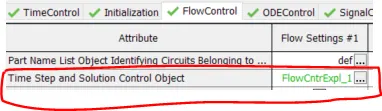
- Integrator/Solver type -> Run Setup -> ODE control -> Integrator/Solver type
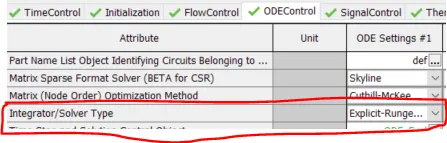
3. Explore intercooler tutorial and note down all settings of:
- Run setup -> Time Control
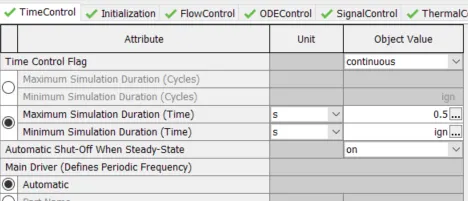
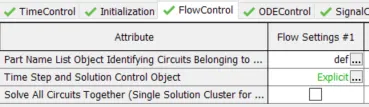
-> Initialization -> Flow Control
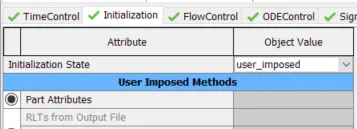
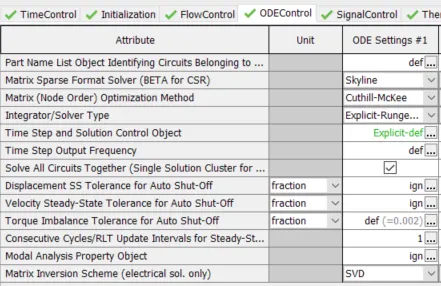
-> ODE Control
- Advanced setup
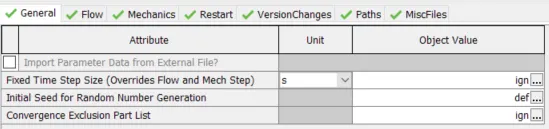
-> General
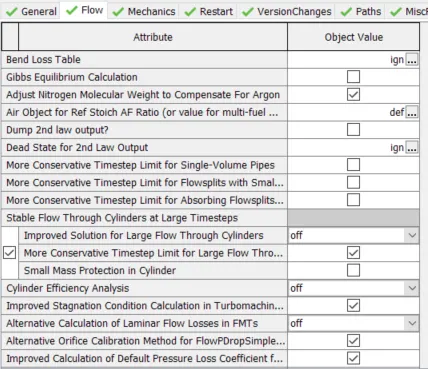
-> Flow
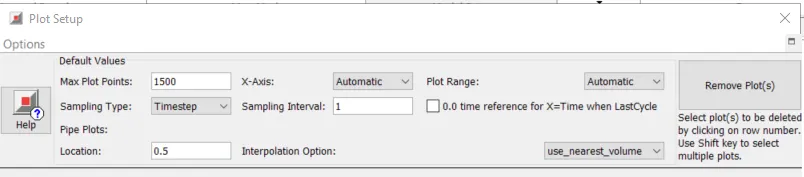
- Plot setup
- Output setup
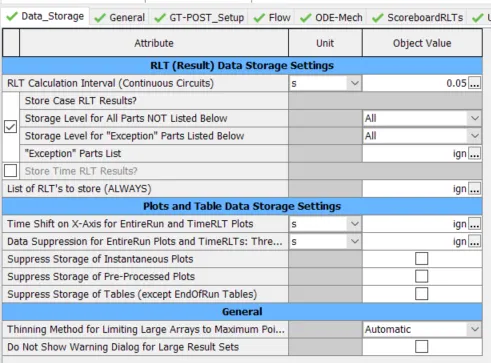
-> Data Storage
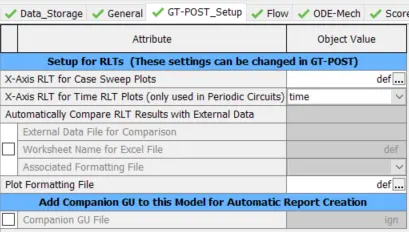
-> GT Post_Setup
4. Problem:
Given
- The diameter of cooler inlet and outlet pipe= 50 mm
- Length of the CAC= 1000 mm
- Inlet mass flow rate = 1200 kg/ h at 100 degC
- Outlet pressure 2 bar at 30 deg C
- Calculate the total heat transfer at Charge air cooler (CAC):
Total heat transfer (kW) = Average heat flux (kW/m^2) * Total heat transfer area (m^2)
= 3.970552 * 2.199115
Total heat transfer (kW) = 8.7317 kW

- Calculate pressure drop across CAC:
pressure drop across CAC (bar) = Pressure_inlet - Pressure_outlet
= 2.17344 - 2.09318
= 0.08035 bar
Pressure drop across CAC from GT post (Case RLT): 0.083685 bar
