DussehraFestive scholarship on Skill-Lync courses, this week onlyFestive scholarship is openOffer ends Wed, 21 Oct, 11:59 pm IST.

Dussehra 2026

Start your next chapter this Dussehra

Tell us where you want to work. A counsellor will match you to the right course and confirm the festive scholarship you qualify for.

  • Festive scholarship on course fees, confirmed on your call
  • Free 20-minute call to map the right course to your goal
  • Real industry projects and placement support with every course

Offer ends Wed, 21 Oct, 11:59 pm IST

3,905 engineers placed since 2019 · 1,277 hiring companies

By submitting you agree to our Terms and Privacy Policy.

You're on the list

Browse courses
Mechanical · PG program

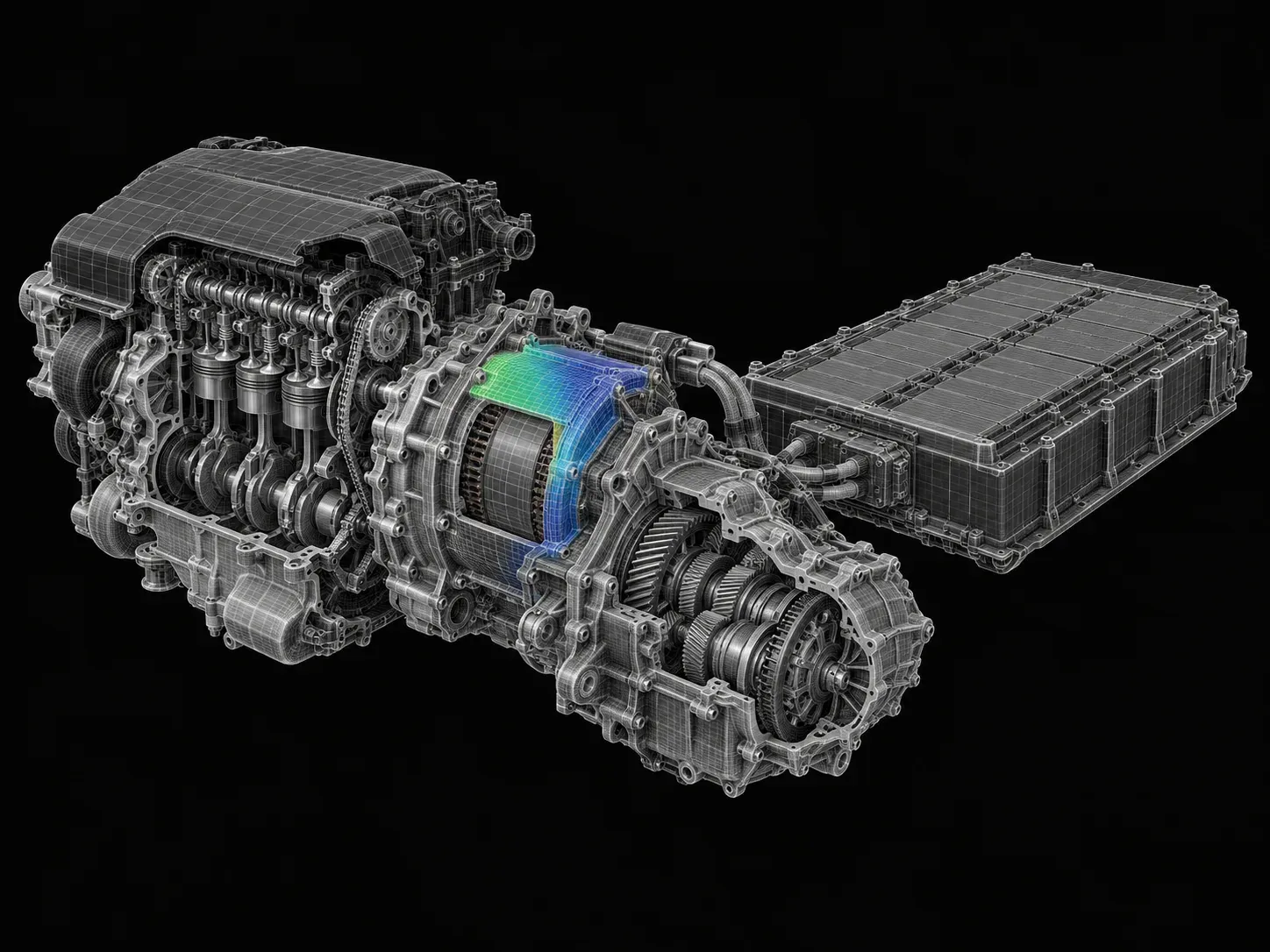
Post Graduate Program inHybrid Electric Vehicle Design and Analysis

A comprehensive EV course on Hybrid Electric Vehicle Design, Analysis, and Simulation that gives you exposure to various computational tools for HEV Applications. This EV technology course is highly recommended for beginners.

★ 4.8· 29 reviews

Duration
48 weeks
Content
343 hours
Courses
7
Projects
48
Mode
Online
Overview

What you'll
be able to do.

  • Students will gain a thorough understanding of all the essential engineering concepts and tools used by top OEMs to design future Electric & ICE Vehicles.
  • They will understand the methodologies in developing a model and acquire knowledge of incorporating the manufacturing aspects while designing a vehicle.
  • They will gain hands-on experience in using various software used by top OEMs which aid in the designing and development of a vehicle.
  • Learners can choose to specialize in one of the following four tracks:
    • Track 1 - Computational Fluid Dynamics
    • Track 2 - Finite Element Analysis
    • Track 3 - Design
    • Track 4 - EV/HEV Design
  • Each track is carefully designed with a curated set of courses developed and compiled by leading experts in the industry.

Why this program

  • The students will have a thorough knowledge of Hybrid electric vehicles.
  • They can specialize in any one domain and gain complete in-depth knowledge of it.
  • They are exposed to the modern trends and standard practices followed in the industry right now.
  • After this course, the students will better understand electric vehicles, the aerodynamics of a vehicle, and the strength analysis of materials.
  • The software used in this course MATLAB, CATIA, ANSA, Hypermesh, and Solidworks will help gain the students a better understanding of what is being taught to them and make them industry-ready.
  • Job opportunities:
    • Overall Vehicle Development Engineer
    • Hybrid Powertrain Engineer
    • Design Manager
    • Mobile Hybrid PSV Engineer
    • BMS Frontline Engineer
    • Motor Design Engineer
  • Higher Education can be pursued in the following domains:
    • Power Electronics and Drives
    • Electromechanical Engineering
    • Mobility Engineering
    • Automotive Engineering
    • Automobile Engineering
  • The student will gain a thorough knowledge of Hybrid electric vehicles. They can specialize in any one domain(from CFD, CAE, Design and MBD) and gain complete in-depth knowledge on it.
Tools you'll use
MATLABLS-DYNALS-PREPOSTANSYS FluentSpaceClaimCFD PostHyperMeshRadiossANSASimulinkCONVERGEParaviewOpenFOAMOctaveCATIA V5PythonSiemens NX CADNASimscapeANSYS Workbench
Curriculum

4 tracks to choose from,
7–8 courses each.

Get the full syllabus ↓
  1. 01Advanced CFD Meshing using ANSA5 modules
    1. Introduction to ANSA GUI and ToolsW01
      • In this module, you will be introduced to the ANSA Software. You will learn the Graphical User Interface(GUI) of the ANSA tool.
      • You will get to know about different solvers and the types of analysis carried out using them.
      • You will be introduced to the basic tools that will help you with geometric cleanups and other deck setups in ANSA.
      • The topics covered in this module are,
        • Introduction to ANSA
        • ANSA GUI
        • Geometric tools and topology cleanup
        • Different tools used in the TOPO deck
    2. 2D (Surface) Meshing to Pressure valveW02
      • In this module, you will be introduced to the pressure valve model. You will learn to perform surface meshing on a pressure valve model.
      • The topics covered in this module are,
        • PID creation and PID assignment
        • Different selection techniques and visibility tools
        • Basic Topology cleanup
        • Basic tools used in surface meshing
    3. 3D (Volume) Meshing to TurbochargerW03
      • In this module, you will be introduced to the turbocharger model.
      • You will get to know, how to perform volumetric meshing to a turbocharger model.
      • The topics covered in this module are,
        • Geometry cleanup to define volumes
        • Various geometry checks
        • Surface meshing as per quality criteria
        • Volumetric meshing as per requirements
    4. CFD meshing to BMW M6 Model inside Wind tunnelW04
      • In this module, you will be introduced to the BMW M6 model.
      • You will learn how to perform CFD meshing on a BMW M6 model.
      • The topics covered in this module are,
        • Advanced topology cleanup to define volumes
        • Variable surface meshing part by part
        • Solving quality failed elements as per quality criteria
        • Symmetry operation for surface and mesh elements
        • Wind tunnel creation
        • CFD meshing for wind tunnel
    5. Surface Wrap to an Automotive AssemblyW05
      • In this module, you will be introduced to three different automotive models: engine, transmission, and gearbox.
      • You will learn how to perform surface wrap on an automotive assembly for CFD analysis of the outer flow.
      • The topics covered in this module are,
        • Geometry cleanups for the surface wrap.
        • Merging of different models into one GUI.
        • Surface wrapping for an assembly.
  2. 02Introduction to GUI based CFD using ANSYS Fluent9 modules
    1. Introduction to CFDW01
      • In this module, you will understand what CFD is and its uses. You will also be introduced to the basic governing equations solved and many schemes and algorithms used to stabilize and improve the accuracy of the solution.
        • Governing Equations of Fluid Motion
        • Numerical Discretization
        • Fluid Solver
        • Boundary Conditions
        • Post-Processing
    2. Simulating Laminar and Turbulent Flows in ANSYS FluentW02
      • In this module, the focus is to simulate basic compressible and incompressible flows using ANSYS Fluent. You will be introduced to the streamlined workflow on the Workbench tool, from geometry creation to the solution post-processing procedure. You will get hands-on experience in
        • Geometry Creation
        • Meshing
        • Boundary and Initial Condition Calculation
        • Setting up solution algorithms
        • Solving and post-processing
    3. Performing Steady State SimulationsW03
      • In this module, the focus is to simulate basic compressible and incompressible steady-state simulations. This provides you with an introduction to the solution setup procedure for a steady-state simulation. You will get hands-on experience in
        • Geometry created using SpaceClaim
        • How to set up Steady-State Simulations?
        • Checking for Convergence and understanding when the simulation converges for different boundary conditions
        • How to create Runtime Animation of Engineering Parameters?
        • Project 1: HVAC Simulation Inside a Mixing TEE
        • Project 2: Performing Parametric Study on Flow Inside a Gate Valve
        • Project 3: Performance Characterization of a Cyclone Separator
    4. Exploring Meshing strategiesW04
      • Meshing is an important component in CFD analysis. Improper meshing can lead to bad results. In this module, you will learn the different meshing techniques that can improve the solution accuracy with a balanced computational cost. More hands-on experience in
        • Methods of providing local refinement like Sphere of Influence, Body Sizing, etc.
        • Concept of Y plus and its importance
        • Inflation Layers and Controls
        • Mesh Dependence Test
    5. External AerodynamicsW05
      • You will learn the fundamentals of performing external flow analysis using ANSYS Fluent. It provides you with knowledge on boundary layer concepts, needs of Y plus, and wall functions. Here, we will focus on the following topics.
        • Setting up Virtual Wind Tunnels using the Enclosure Utility
        • Understand Vortices, calculating Downforce & the drag on a Vehicle
        • Y+ Estimation & Grid Refinement
    6. Conjugate Heat TransferW06
      • In this module, you will learn how to simulate solid-side heat transfer along with the fluid flow. Conjugate Heat Transfer (CHT) refers to simulating multiple modes of heat transfer. For example, in one of the projects, you will simulate the heat transfer in an exhaust manifold when hot exhaust products are flowing through it. When you complete this module, you will be able to do the following:
        • Extracting solid and fluid volumes
        • Creating Shared Topologies for Creating Conformal Meshes
        • Setting up Volumetric Heat Sources
        • Visualizing Heat Transfer Coefficient Distribution
    7. Discrete Phase ModellingW07
      • Discrete Phase Modelling (DPM) is used to model particles, fuel drops, coal, and any other type of suspended phase. You will work on problems like the Cyclone Separator, where you will incorporate the DPM approach to simulate how suspended impurities travel through a Cyclone Separator. You will get hands-on experience in
        • Different types of discrete phase boundary conditions and their effects
        • Methods of tracking the Discrete Phase Particles
        • Turbulence Intensity and Vortex Core Visualisation
    8. Introduction to User Defined FunctionsW08

      You will learn how to write a customized program, create different monitor points, and extract the relevant information you need to form a simulation.

    9. Basic Reacting Flows W09

      In this module, you will learn how to simulate reacting flows using ANSYS Fluent. This includes combustion applications.

  3. 03Fundamentals of Electrical Systems and Electrical Architecture4 modules
    1. Basic Electrical Concepts and TerminologiesW01

      At the core of electrical circuits are voltage and current that relate to the flow of electricity through them. When combined, current and voltage provide power that energizes the circuit. It is important to understand these terminologies and associated concepts to fully understand electrical circuits and advanced systems.

      In this week, you will learn about

      • Terminologies: Circuit, Open Circuit, Closed Circuit, Conductor, Insulator, Voltage, Current, Power, Energy
      • War of the Currents: AC vs DC
      • Power Factor, Load (Resistor, Inductor, Capacitor), Phase, Neutral, and Earth
      • Series and Parallel Connections
    2. Electrical Systems and Power ElectronicsW02

      Electric power grids provide the power needed to charge the battery pack in electric vehicles. Power electronics are needed to control and convert electrical energy from the source to meet the specifications of the power grid that powers electrical systems such as the electric vehicle. It is therefore important to understand how this energy is generated, transferred, distributed, and stored.

      In this week, you will learn about

      • Power Grids: Generation, Transmission, and Distribution
      • Safety Equipment: CBs, Fuses, Relays
      • Role of Power Electronics
      • Vehicle: Storage, Loads, Battery Charging, Power Train
    3. Electrical Power TrainW03

      Electrical power trains are a combination of components such as the battery pack, electric motor, and inverter. These parts work together to develop power required for propulsion of the EV. It is important to understand the components in the powertrain and their associated concepts.

      In this week, you will learn about

      • Motors and their Types: DC Motor, Brushless DC Motor, Permanent Magnet Synchronous Motor, Induction Motor
      • Losses and Efficiency at Different Load Conditions
      • Power Electronics based Control: Key Ideas
    4. Battery SystemW04

      Rechargeable batteries are used to power electric vehicles. As the battery systems have high voltage requirements and operate safely under specific conditions, a battery management system is in place to oversee and regulate its functions.

      In this week, you will learn about

      • Basics of Batteries and the Types of Batteries used in Electric Vehicles
      • Battery-Related Terminologies: Level, Anode, and Cathode
      • Fundamentals of Fast Charging Techniques
      • Battery Management Systems and their Components: Cell, Pack, Fuse, Contactor, Microcontroller, and Sensor
  4. 04Introduction to CFD using MATLAB and OpenFOAM6 modules
    1. What is Computational Fluid Dynamics?W01
      • In this module, you will understand the basics and significance of CFD.
      • You will also learn what the Navier-Stokes equations are and how they are derived.
      • The following topics are covered this week.
        • CFD - An Introduction, Necessity, Advantages, and CFD Modeling Process
        • Deriving and understanding the Navier Stokes equations
          • Substantial Derivative
          • Continuity Equation
          • Momentum Equation
          • Energy Equation
          • Significance of the Reynolds number in the NS equations
    2. Mathemathics and Fluid Dynamics EssentialsW02
      • In this module, you will be writing solvers and introduced to different numerical methods.
      • The following topics are covered this week.
        • Basic Vector Calculus - Divergence, Gradient, and Curl
        • Taylor’s Series
        • Initial and Boundary Conditions
        • Classification of PDEs and their characteristics
        • Learning essential fluid dynamics quantities and their dimensional analysis
    3. Introduction to MATLAB and Basic CFD ConceptsW03
      • It is essential to establish a rigid foundation before plunging into the farther depths of CFD.
      • This is where you get introduced to MATLAB and learn the basic concepts of CFD by writing MATLAB scripts.
      • Here are some topics that we would cover:
        • Getting acclimated to the MATLAB interface
        • Numerical discretization and its types
        • FDM - Understanding different schemes with worked examples in MATLAB
        • Deriving own FD schemes using Taylor’s table
        • Solving ODEs in MATLAB using the ‘ode45’ solver
    4. Exploring CFD by Solving Standard CFD Problems using FDMW04
      • In this module, you will venture into the Finite Difference Approach to discretization and solve various benchmark CFD problems in MATLAB.
        • Solving coupled linear systems using iterative solvers
          • Jacobi
          • Gauss-Seidel
          • SOR
    5. Introduction to FVM and OpenFOAMW05
      • In this module, you will learn how to run a simulation on OpenFOAM and the significance of using an FVM approach.
      • These are the topics you would learn:
        • Finite Volume Method and Gauss Divergence Theorem
        • Understanding the Linux environment
        • OpenFOAM code organisation and case setup
        • Detailed blockMeshDict tutorial
    6. Solving Standard CFD Problems in OpenFOAMW06
      • In this module, you will be using OpenFOAM for exploring and simulating a wide variety of problems.
      • You will also create a platform that will enable you to start any simulation from scratch and establish confidence in your result.
  5. 05Advanced CFD for IC Engine Applications using CONVERGE6 modules
    1. CONVERGE Studio ModuleW01
      • In this module, you will learn how to set up a CFD simulation using CONVERGE CFD. You will be provided with step-by-step instructions on how to do the following:
        • CAD import and cleanup
        • Decomposing the model into boundaries and volumetric regions
        • Inputting valve timing
        • Choosing turbulence and combustion models
        • Running the case in a parallel environment
        • Post-processing
    2. Surface PreparationW02
      • In this module, you will learn surface preparation in complete detail. Specifically,
        • Setting up the piston motion profile
        • Boundary flagging
        • Setting up the intake and exhaust valves
    3. Region Initialization and Valve Motion SetupW03
      • In this module, you will learn the following concepts:
        • Initializing pressure, temperature, and species concentration in the intake, exhaust, and fire deck regions.
        • Disconnect triangles
        • Valve timing and the concept of minimum lift
        • Valve profile input
    4. Turbulence ModellingW04
      • In this module, you will learn how turbulence is modelled and simulated in a state-of-the-art CFD solver. You will learn about the different classes of turbulence models and understand their merits and demerits. In this module, you will also learn about,
        • RANS approach to model turbulence
        • The math involved behind RANS and its derivations
      • Learn the theory behind the various types of turbulence models available (RNG k-, k- SST, and so on) and recognise which model is appropriate for which type of application.
    5. Combustion ModellingW05
      • In this module, you will learn how the SAGE detailed chemical kinetics solver works.
      • In addition to this, you will also learn how to use the Shell CTC combustion model.
    6. Emissions ModellingW06
      • To design efficient engines, one needs to have a firm grasp of emissions modelling.
      • You will learn about the Hiroyasu soot model and the Zeldovich nox model and apply them in engine simulations.
  6. 06Battery Thermal Management using Ansys Fluent and MATLAB6 modules
    1. Concept of Heat Transfer and Fluid FlowW01

      In this week, you will learn about

      • Engineering Heat Transfer
      • Heat and Other Forms of Energy
      • The First Law of Thermodynamics
      • Heat Transfer Mechanisms
      • Conduction
      • Convection
      • Radiation
      • Simultaneous Heat Transfer Mechanism
    2. Introduction to Battery Technology and Electrochemical ModellingW02

      In this week, you will learn about

      • How electrochemical cells work
      • Choosing active materials
      • Lithium-ion cell make-up
      • Availability of Lithium
      • Manufacturing: Making the Electrodes
      • Manufacturing: Assembling the Cell
      • Failure Modes
    3. Equivalent Circuit Modelling of Cell and Thermodynamic of CellW03

      In this week, you will learn about

      • Open Circuit Voltage (OCV)
      • State of Charge
      • Linear Polarization
      • OCV Testing
      • Coulombic Efficiency
      • Thermal Logic and Algorithms
      • Li-ion Aging
      • Butler Volmer Model
    4. Battery Thermal ManagementW04

      In this week, you will learn about

      • Air Cooling and Heating
      • Liquid Cooling and Heating
      • Direct Refrigerant Cooling and Heating
      • PCM
      • Thermoelectric Module
      • Heat Pipe
      • PTC Heater
      • Forced Air System
      • Liquid System
      • PCM System
      • Thermoelectrics
      • Combined Liquid System (CLS)
      • PCM Model (CLS+PCM)
    5. Concepts of CFDW05

      In this week, you will learn about

      • Computational Fluid Dynamics: Why?
      • Computational Fluid Dynamics as a Research Tool
      • Computational Fluid Dynamics as a Design Tool
      • Governing Equations of CFD
      • Type of Boundary Conditions
      • Finite Difference Method
      • Finite Volume Method
      • Introduction to Commercial Software (Fluent/StarCCM+)
    6. Thermal and Flow Modelling of Battery PackW06

      In this week, you will learn about

      • Geometry Cleanup
      • Preprocessing (Meshing strategies)
      • Solution Setup
      • Post-processing
      • Pressure Drop Study
      • Selection of Fan/Pump for Cooling System
      • 3D Modelling of Liquid-cooled Thermal Systems using Fluent
      • 3D Thermal Modelling of an Air-cooled Battery Pack
  7. 07Python for Mechanical Engineers6 modules
    1. Introduction to PythonW01
      • This module provides an introduction to Python using different mathematical operations and performing operations such as,
        • Array manipulations
        • Plotting and understanding the relationship between 2 variables
        • Looping using one or more looping conditions
    2. Plotting and VisualizationW02
      • In this module, you will write programs that plot the p-v line of an air standard cycle and also create animations for a robotic arm with 2 degrees of freedom and simulate the motion of a pendulum.
        • In this module, you will learn the following,
          • Understanding the relationship between 2 variables using plots
          • Saving plots and creating animations using ImageMagick
          • Using tables
    3. Solving Dynamic EquationsW03
      • In this module, you will learn to solve ordinary differential equations using the SciPy module. This is of particular interest since differential equations govern the equations of motion for various mechanical systems and this method can be used to numerically solve initial value problems.
        • Using odeint to solve initial value differential equations
        • Create a pendulum using the available coordinates
        • Plotting and saving images
        • Creating an animation using ImageMagick
    4. Curve Fitting and RegressionW04
      • In this module, you will learn how to perform curve fitting using Python.
      • Curve fitting finds widespread use in predicting the relationship between different variables for which an existing relationship doesn’t exist.
      • Furthermore, curve fitting can also be used as a predictive tool in machine learning and AI to predict what will happen in the future using the trend of the plot.
      • Students will learn about,
        • Curve fitting using the SciPy module
        • Learning how to check how well the data has been fitted
    5. Understanding Iterative SolversW05
      • This module covers iterative solvers, which find widespread use in the solution of polynomial equations, and other aspects like understanding how to obtain the solution in the most optimised manner possible.
      • This module also explains,
        • How to use an iterative solver
        • How to use while loops?
    6. Data AnalysisW06
      • The final module of the coursework deals with data manipulation, which is used in many industries like CAE and CFD to post-process the results from the simulation.
      • This is particularly useful if the same simulation is run multiple times for different configurations, and this code can be used to obtain the data automatically.
      • At the end of this module, you will be able to,
        • Take data from a file and manipulate the data to create meaningful plots.
        • Make the necessary calculations.
        • Automate the post-processing procedure.
Industry projects

48 projects
you'll ship.

Our projects are designed by experts in the industry to reflect industry standards. By working through our projects, Learners will gain a practical understanding of what they will take on at a larger-scale in the industry. In total, there are 48 Projects that are available in this program.

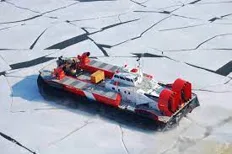
Breaking Ice with Air-Cushion Vehicle
Python for Mechanical Engineers

Breaking Ice with Air-Cushion Vehicle

In this project, you will learn to use the Newton-Raphson method. Here, you'll understand the effects of using a relaxation factor and learn how to use plots and tables to visualiz…

Data Analysis
Python for Mechanical Engineers

Data Analysis

In this project, you will learn how to manipulate the data from a given text file and create plots for different variables based on user input.

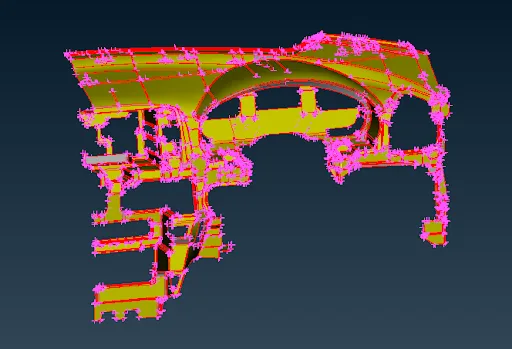
Modeling of an Automotive IP Trim Component
Preprocessor for Structural Analysis using ANSA

Modeling of an Automotive IP Trim Component

In this project, students will be provided with an IP substrate component and asked to model the same.

Modeling of an Automotive Suspension Assembly
Preprocessor for Structural Analysis using ANSA

Modeling of an Automotive Suspension Assembly

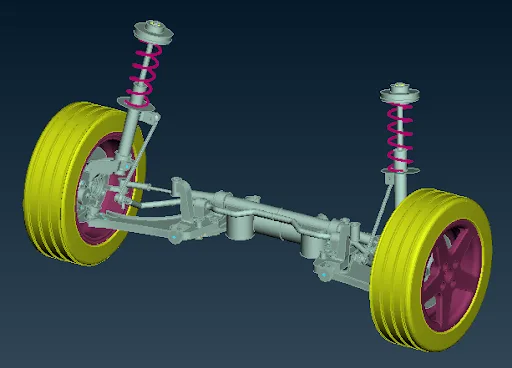
In this project, the students will model the entire automotive suspension assembly and check for connections.

Steady and Transient Flow over a Throttle Body
Advanced CFD for IC Engine Applications using CONVERGE

Steady and Transient Flow over a Throttle Body

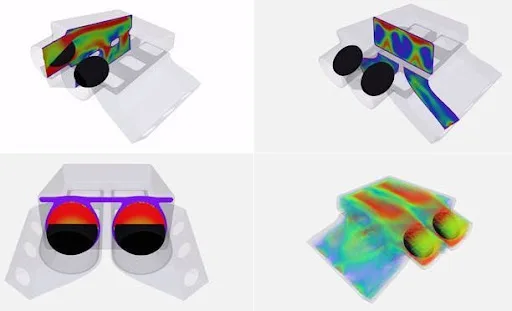
In this project, the students will simulate airflow through a throttle body under different conditions. They will also study the effect of valve dynamics.

Diesel Engine Characterization
Advanced CFD for IC Engine Applications using CONVERGE

Diesel Engine Characterization

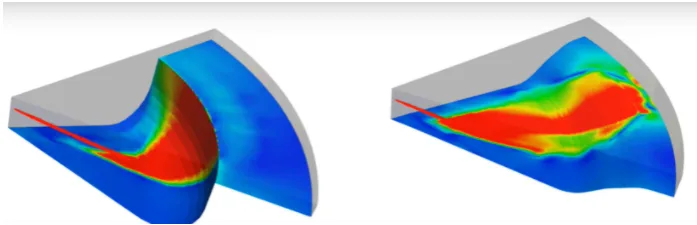
In this project, the students will run simulations of the CAT3410 engine using different piston bowls. They will also understand the effects due to changes in piston bowl shapes.

Port Fuel Injection Simulation
Advanced CFD for IC Engine Applications using CONVERGE

Port Fuel Injection Simulation

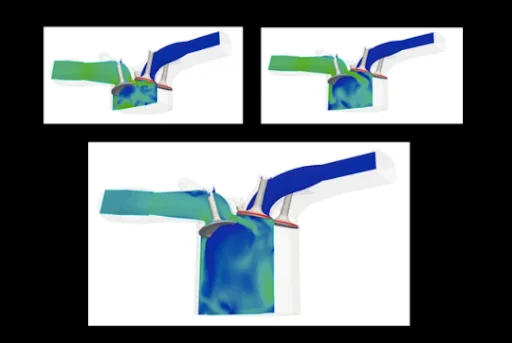
In this project, the students will perform the simulations of port fuel injection. They will analyse the data from the plots obtained.

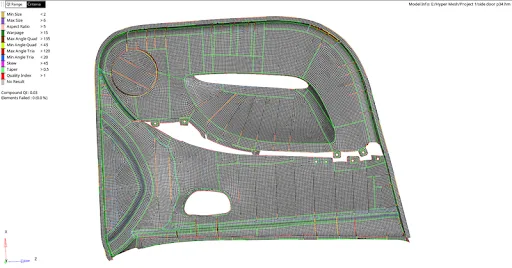
Meshing of Door Panel
HyperMesh for FEA Plastic and Sheet Metal Applications

Meshing of Door Panel

In this project, the student will mesh the door panel under the given quality criteria. They should capture all the features perfectly.

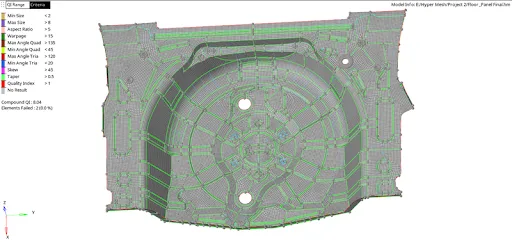
Meshing of Car Spare Tyre Floor Panel
HyperMesh for FEA Plastic and Sheet Metal Applications

Meshing of Car Spare Tyre Floor Panel

In this project, the student will mesh the floor panel under the given quality criteria. They should mesh the whole component and capture all the features perfectly.

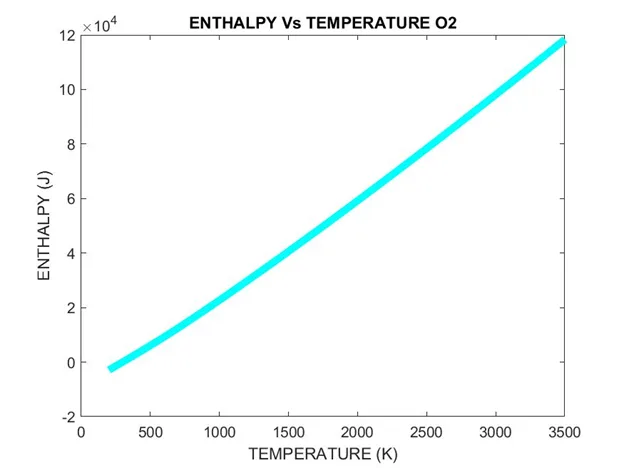
Extracting Data from NASA Thermo.dat File
MATLAB for Mechanical Engineers

Extracting Data from NASA Thermo.dat File

Learners are required to write a code that can read the NASA-II polynomial file and calculate thermodynamic parameters. They will have to extract the data from the NASA Thermo.dat …

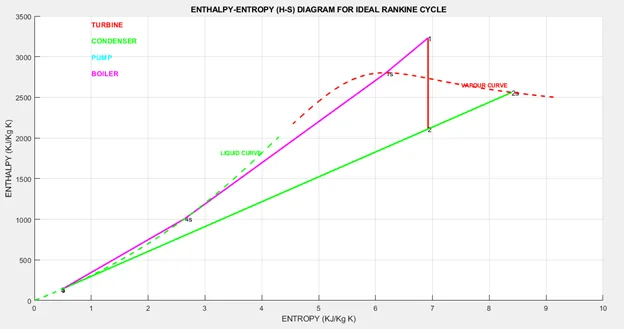
Extracting Steam Properties using Rankine Cycle Simulator
MATLAB for Mechanical Engineers

Extracting Steam Properties using Rankine Cycle Simulator

Learners are required to use the XSteam library file to determine the properties of steam under various conditions. They will have to find the Enthalpy and Entropy at various state…

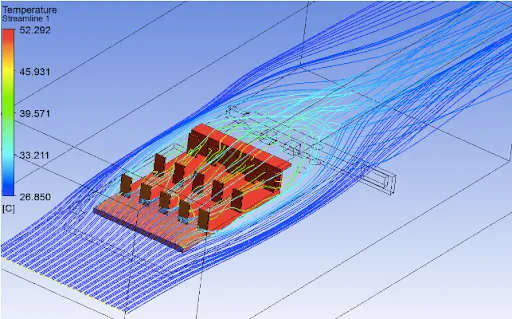
Conjugate Heat Transfer Analysis on a Graphics Card
Introduction to GUI based CFD using ANSYS Fluent

Conjugate Heat Transfer Analysis on a Graphics Card

In order to achieve effective cooling of the GPU, you will analyze the heat transfer coefficient and high-temperature concentration zones of the system.

+ 36 more projects in the full syllabus

Placements

746 learners placed
from this program.

Companies
294
Median CTC
3.43 LPA
20264.5 LPA
Expleo
Associate Mechanical

Naresh K.
20265.5 LPA
Capgemini
Design Engineer

Dev S.
20264 LPA
Hyundai Motor India
Design Engineer

Summanth P.
20264.5 LPA
Nexteer
Design Engineer

Amuthan
20266 LPA
Capgemini
Design Engineer

Chakkaravarthy M.
20266 LPA
Capgemini
Design Engineer

Amal R.
Fee

One fee.
Everything included.

Become job ready with our comprehensive industry focused curriculum for freshers & early career professionals

Premium
₹2,75,000
Inclusive of all chargesEMI from ₹14,375/month
  • Career Service Assurance
  • Personalized Career Services Mentorship
  • 1 Year Access
  • Personalized Page
  • Live Individual & Group Sessions
  • Personalized & Hands-On
  • Job-Oriented Industry Relevant Curriculum
Check eligibility →
FAQ

Questions,
answered.

Why should I enroll in this Post Graduate Program in Hybrid Electric Vehicle Design and Analysis?

Hybrid Electric Vehicles are the future of the automotive industry. This hybrid electric vehicle course will equip you with the necessary skill set required for the industry and give you a competitive advantage over other candidates.

What is the scope of the online electric vehicle course?

The online electric vehicle course can help you to become a Hybrid electric vehicle engineer, hybrid and electric vehicle design engineer, CAE engineer, CFD engineer, FEA design engineer, etc.

What software will be used during training in the course?

The course will give you hands-on experience with industry tools and software like MATLAB, ANSA, Simulink, ANSYS, LS DYNA, Hyperworks, Star CCM+, etc.

What is the average salary of a hybrid electronic vehicle design engineer?

The hybrid electronic vehicle design engineer can earn anywhere between INR 8 lakhs to INR 12 lakhs per annum.

What is the eligibility criterion for enrolling in the hybrid electric vehicle course?

Mechanical and automotive engineers are eligible to apply for the course.

What will be the primary mode of study in the course?

This hybrid vehicle training course is 100% online.

What is the duration of the hybrid electric vehicle course?

The Post Graduate Program in Hybrid Electric Vehicle Design and Analysis is eight months long.

What is a Hybrid Electric Vehicle?

Hybrid cars use both a conventional IC Engine and an electric propulsion system. The driver has the option to switch between these two modes whenever necessary.

What are the advantages of Hybrid Electric Vehicles?

Hybrid electric cars are eco-friendly and employ a regenerative braking system. This braking system would charge the batteries when the brake is applied.

Next step

Not sure it's
the right fit?

A counsellor will walk you through the syllabus, projects and fee options — and tell you honestly if another course suits you better.

Get the syllabus + a call back

We'll email the full syllabus and call within one working day.

By submitting you agree to our Terms and Privacy Policy.

Call usEnquire

Talk to a career counsellor

Free 20-minute call. We'll map the right course to where you want to work.

By submitting you agree to our Terms and Privacy Policy.