 Free · 3 lessons · no payment
Electronics System Design: 3 free lessons
Three free lessons from Skill-Lync's Electronics System Design course. They define a system by purpose and scope, with subsystems and the V-diagram, then an electronic system with analog and digital circuitry, active and passive parts and the schematic to netlist to PCB flow, and finally how user, business and regulatory inputs become requirements.
Last updated 16 Nov 2026 · 3 free lessons (57 min) · full course: 34 lessons (10 h 43 min), paid · ₹40,000
 Free lesson 1 · 17 minWhat Is a System: Purpose, Scope and the V-Diagram
What will you learn in the free Electronics System Design lessons?
- System purpose, scope, subsystems and the V-diagram
- Analog versus digital and active versus passive parts
- Schematic entry, netlist and PCB layout flow
- Turning user needs into requirements such as IP67
Free lessons you can watch now
- Lesson 1 · 17 minWhat Is a System: Purpose, Scope and the V-DiagramExplains that every system is designed to achieve a purpose, using water supply, irrigation and solar system examples and a definition of a system as interconnected elements. Introduces subsystems, integration and the V-diagram of requirements, design, verification and release, with medical device applications as context.
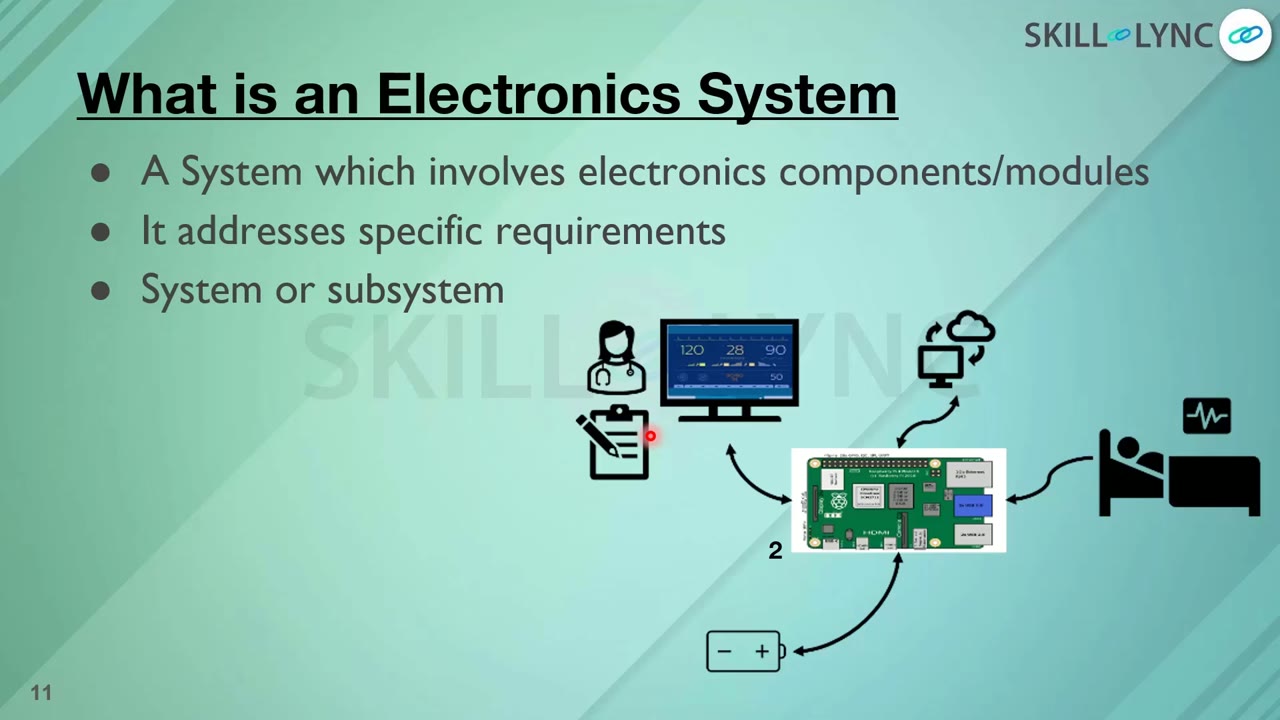 Lesson 2 · 19 minElectronic System Definition: Types, Components and PCB Design FlowDefines an electronic system using the transistor radio and a patient monitoring system as examples. Covers analog and digital circuitry, active and passive components, mechanical parts within a system, and the path from schematic entry through netlist to PCB layout and release.
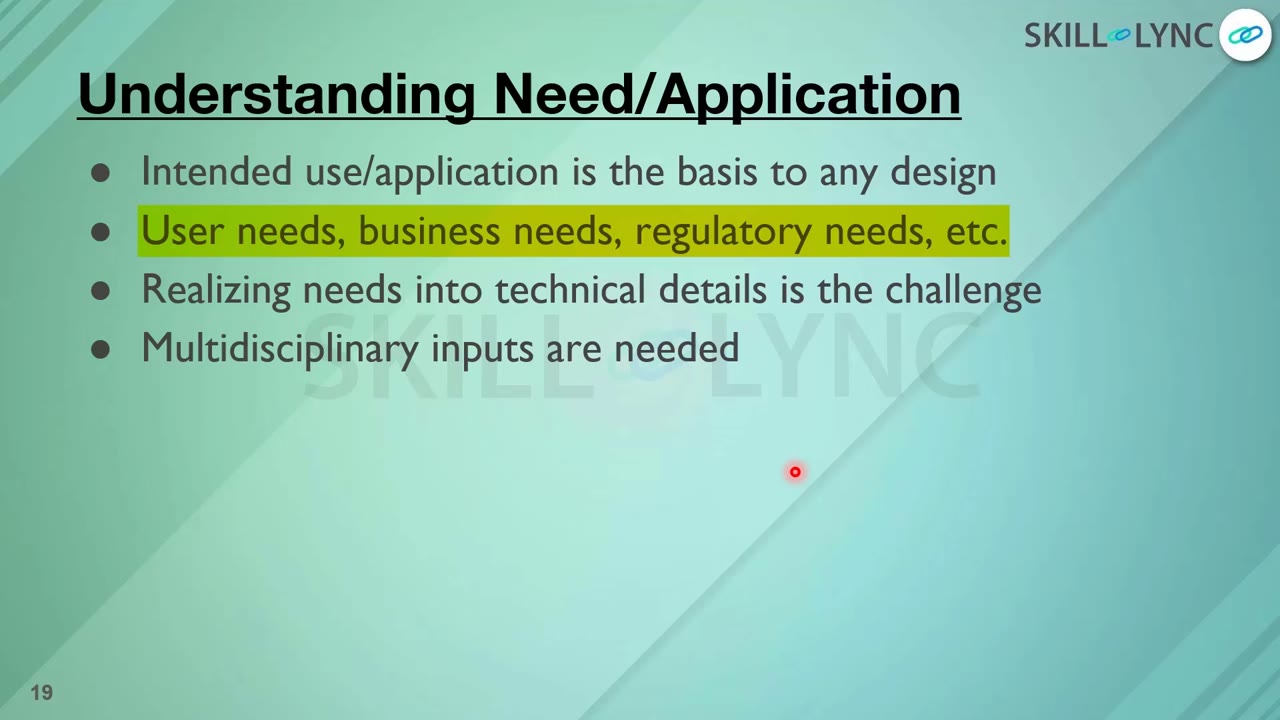 Lesson 3 · 20 minSystem Design Inputs and Electronics Applications Across IndustriesCovers the inputs to system design, including user, business and regulatory needs, and translating them into technical details using a smartwatch example. Explains why medical devices face extra regulation, then surveys electronics fields such as system on chip, instrumentation and optoelectronics, and applications in cars, IoT and consumer devices.
Which lessons of Electronics System Design are free?
The first 3 lessons are free on Grow by Skill-Lync: 57 min of video from Skill-Lync's Electronics System Design course that you can watch here at no cost: leave your name and phone number once and they play (as of 16 Nov 2026). The full course is paid (₹40,000); its other 31 lessons are listed in the outline below so you can see what each one covers.
How long is the Electronics System Design course?
The full course has 34 lessons and 10 h 43 min of recorded video, plus the projects and assignments that come with enrolment. The free lessons alone take about 57 min, so you can finish them in an evening and decide whether to continue.
What comes after the free lessons?
Lesson 4 onwards is in the paid Electronics System Design course on Skill-Lync, with mentor support and a certificate. For a career in Embedded & electronics, the PG Program in Embedded Systems for EV Applications goes further with industry projects and placement support.