Electrical · PG program

Post Graduate Program inPre-Graduate Program in Electric Mobility

A comprehensive program covering various aspects of electric mobility designed exclusively for pre-graduate electrical and electronics engineers

Duration
16 weeks
Content
72 hours
Courses
4
Projects
9
Mode
Online
Overview

What you'll
be able to do.

  • This program includes four different courses covering various aspects of electric mobility.
  • The learners will have an understanding of the basic concepts employed while designing the electrical components of an EV.
  • They will learn about the standards and trends followed in the industry for developing electric vehicles.
  • They will also be exposed to standard practices used in various electric vehicle systems.
  • This program also allows them to gain practical experience with tools such as Simulink, MATLAB, and Simscape.

Why this program

  • After the completion of the program, the learners will be able to
    • Develop models of complex physical systems using Simulink and Simscape.
    • Perform analysis and simulation of the Motor Drive and Power Systems for Electric Vehicles.
    • Perform simulation and analysis of DC/DC Converters, DC/AC Inverters, and AC/DC Rectifiers.
    • Develop simulation models for non-isolated and isolated DC/DC converter circuits and their control.
  • Students can pursue higher education in the following domains
    • Electromechanical Engineering
    • Hybrid Powertrains
    • Electric Vehicles
    • Automobile Engineering
  • Students can apply for job roles like
    • Modelling and Simulation Engineer
    • Hybrid Powertrain Engineer
    • EV System Engineer
    • Hybrid Powertrain Engineer
    • Battery Modeling Engineer
    • BMS Hardware Engineer
    • Battery Pack Engineer
Tools you'll use
SimulinkMATLAB
Curriculum

4 courses,
30 modules.

  1. 01Introduction to Physical Modeling using Simscape4 modules
    1. Introduction to the Modeling of Complex SystemsW01

      As complex systems have numerous parts interacting with each other, they are difficult to model. Mathematical models can be used to model these complex systems, and provide an understanding of how they function. By using Simscape, engineers can develop physical models, model control systems, and test performance at the system level. It is important for learners to understand complex system modeling using Simulink, and physical system modeling using Simscape.

      This week will cover

      • Importance of mathematical modeling
      • Block diagram approach & model-based design for engineering systems
      • Basics of the Simulink environment
      • Creating a simple model
      • Obtaining results
      • Basics of various Simulink toolboxes
    2. Simulation Configuration and SimscapeW02

      Simscape is used to develop models that represent physical systems in the Simulink environment. It also lets users assess system-level performance. When setting up a model for simulation on Simulink, there are specific configurations to be followed. It is important for learners to understand how to model and configure simulations using Simscape.

      This week will cover

      • How models run in Simulink
      • Types of solvers
      • Model configuration
      • Continuous & discrete-time systems
      • Timestep
      • Solving ordinary differential equations (ODEs)
      • Physical modeling using Simscape
    3. Simulink with Script and WorkspaceW03

      Simulink and MATLAB are closely integrated as Simulink models can be developed, solved, and interacted with by using MATLAB scripts. These script files have a series of statements with commands and functions that can be carried out at runtime. Simulink models can also access the MATLAB Base Workspace and Model Workspace to identify required parameters. It is important for learners to understand how MATLAB and Simulink are interfaced.

      This week will cover

      • Using a script file with Simulink models
      • Creating a subsystem
      • Variant subsystem
      • Projects
      • Template
      • Lookup tables
      • Running simulation in steps
    4. Stateflow for Control LogicW04

      Stateflow is used to elaborate on how MATLAB and Simulink respond to events, time-based variables, and input signals. It is a graphical programming platform based on finite state machines that can be used by engineers to design control logic. It is important for learners to understand the use of Stateflow in engineering applications.

      This week will cover

      • Control logic for engineering applications
      • Using a finite state machine
      • Making logic diagrams
  2. 02Introduction to Hybrid Electric Vehicle using MATLAB and Simulink4 modules
    1. Traction Power Equations, Driving Cycle & Importance of ModellingW01
      • The following topics are discussed this week.
        • Vehicle Response for Different Drive Cycle Patterns
        • Wide-open Throttle Calculations
        • Vehicle Power Requirement Calculations
          • Rolling Resistance
          • Air Drag
          • Hill Climbing
          • Acceleration Forces
        • Driving Patterns
        • Vehicle Testing Standards
        • Important Terms and Definitions Related to Driving Cycle
        • Energy Expenditure Calculation
    2. Hybrid Electric Vehicle ArchitectureW02
      • The advanced simulator tool (ADVISOR tool) is discussed this week, which gives an idea of a detailed profile for vehicle modeling and reasoning.
      • Also, the following topics are covered:
        • Different Configurations of Power Train Components
          • Battery Electric Vehicle
          • Hybrid Electric Vehicle: Series, Parallel, and Series-Parallel
        • MATLAB Simulation
          • ADVISOR and Powertrain Block Set
        • Various Modeling Options and Control Strategies
    3. Electric Motors and Power Converters For PropulsionW03
      • In this week, the following topics are covered:
        • Electrical Engineering Terminologies
        • Fundamentals of DC and AC Motors
          • Working Principle, Characteristics, and Control
        • Understanding Power Electronics
        • Basic DC Converter Circuit Operation
        • Power Devices and Switching Losses
        • Power Electronic Control of PMDC, PMBLDC, and Induction Motor
        • Inverter Operation, Sine PWM, Variable Frequency Control
        • Review of Induction Motor Controller
          • Connections and Features
          • Limitations of Variable Frequency Control
          • Introduction to Vector Control
    4. Braking of Electrical Motors & Motor Efficiency PlotsW04
      • The following topics are covered this week:
        • Braking Requirements of the Vehicle
        • Methods of Braking of DC and Induction Motors
          • Regenerative Braking and Dynamic Braking
        • Electrical and Mechanical Brakes Coordination
        • Braking Control Strategies
  3. 03Introduction to Battery Technology for Electric Vehicle10 modules
    1. Energy and electrochemistryW01
      • Sources of energy for propulsion & their comparison: Net Calorific Value & Conversion efficiency
      • History and background of battery technology
      • Electrochemistry fundamentals & terminologies
      • Lithium-ion battery and different chemistries
    2. Important terms and characteristicsW02
      • Portable power applications and electrical load requirements
      • Factors affecting the choice of EV battery systems
      • Commercially available lithium-ion cells
      • Electrical characteristics of battery: Capacity, C-rate, impedance, DOD, SOC, SOH, Life cycles, Mechanical characteristics, Form factor, Safety
    3. Mathematical ModellingW03

      In this week, the following topics are covered:

      • Reading cell manufacturer’s specifications
      • Cell characterization
      • Tools and standard testing
      • Battery capacity estimation algorithms
      • Electrical equivalent circuit & mathematical model in MATLAB
    4. Battery Pack ConstructionW04

      In this week, the following topics are covered:

      • Battery modules and complete battery pack system
      • Assembly methods
      • Electrical connections
      • Cell level protection system
      • Battery pack level protection system
      • Understanding laptop battery pack system
    5. New Energy Storage Technologies W05

      In this week, the following topics are covered:

      • Other energy sources: New battery technologies, Ultracapacitor, Fuel cell, Flywheel
      • Hybridization of energy storage systems
    6. Battery Management System: IntroductionW06

      In this week, the following topics are covereed:

      • Battery pack requirements: Measurement
      • Protection and management
      • Cell balancing
      • Battery pack electronics
      • Battery Management System (BMS): Functionality, technology and topology (centralized, modular, master-slave, distributed)
    7. Battery Management System: DesignW07

      In this week, the following topics are covered:

      • BMS Application Specific Integrated Circuit (ASIC) selection
      • Analog BMS design
      • Digital BMS design
      • BMS deploying: Installing, testing and troubleshooting
    8. Battery ChargingW08

      In this week, the following topics are covered:

      • Battery charge management
      • MATLAB simulation of battery charging circuit
      • Charger circuit overview
      • EV charging technology review
      • Charging behavior: life cycle & safety
    9. Thermal ManagementW09

      In this week, the following topics are covered:

      • Types of temperature sensors
      • Thermal management system
      • Thermal model of battery pack
      • Drive cycle simulation and vehicle range estimation
      • Cooling materials and methods
    10. Recent Trends and EconomyW10

      In this week, the following topics are covered:

      • Communication systems for battery pack
      • Review of electric car battery pack
      • Important considerations
      • Recent trends: Grid level energy storage
      • Solar & wind integration
      • Recycling and pricing
  4. 04Simulation and Design of Power Converters for EV using MATLAB and Simulink12 modules
    1. Introduction to Switched Mode Power Converters, Performance and Analysis of Buck DC/DC ConverterW01

      The following concepts are discussed in this week:

      • A brief introduction on the need of switch mode power converters and their everyday applications.
      • The performance and analysis of buck DC-DC converters.
    2. Simulation of Boost DC/DC ConverterW02

      The following concepts are discussed in this week:

      • Simulation tools from different software packages are covered
      • The studied tools are used to simulate and perform high-level design of a boost DC-DC converter
    3. Boost DC/DC Converter, Gate Driver DesignW03

      The following concepts are discussed in this week:

      • The performance and analysis of boost DC-DC converters.
      • Using simulation tools from different software packages to simulate and perform high-level and gate driver design of a boost converter.
    4. UP/Down DC/DC ConvertersW04

      The following concepts are discussed in this week:

      • The performance and analysis of various UP/Down DC-DC converters.
      • Implement design techniques using simulation tools on the studied Up/Down converters.
    5. Discontinuous Conduction ModeW05

      In this week, the following operations are done for DC-DC converters operating in discontinuous conduction mode (DCM).

      • Performance
      • Analysis
      • Simulation
    6. Modeling of DC-DC ConvertersW06

      The following concepts are discussed in this week:

      • The development of small signal models for various DC-DC converters.
      • Build simulation blocks to validate the modeled systems.
    7. Feedback Control of DC-DC ConvertersW07

      The following concepts are discussed in this week:

      • The design of feedback control system using analog circuits for DC-DC converters.
      • Simulate a fully designed closed loop DC-DC converter.
    8. Isolated DC-DC convertersW08

      The following concepts are discussed in this week:

      • The performance, analysis, and simulation of various isolated DC-DC converters.
      • AC-DC rectifiers performance and simulations
    9. AC-DC rectifiers performance and simulationsW09

      In this week, the following topics related to AC-DC rectifiers are discussed:

      • Performance
      • Analysis
      • Simulation
    10. DC-AC Inverters Performance and simulationsW10

      In this week the following topcis related to DC-AC inverters are discussed:

      • Performance
      • Analysis
      • Simulation
    11. AC-DC Rectifiers Design, DC-AC Inverters Design W11

      In this week, the following about inverters and rectifiers are discussed:

      • Design
      • Analysis
      • Applications
    12. Modern Applications of Power Electronic ConvertersW12

      The following concepts are discussed in this week:

      • Modern applications of power electronic converters in electric vehicles
      • Renewable energy systems
      • Data centers
Industry projects

9 projects
you'll ship.

Our projects are designed by experts in the industry to reflect industry standards. By working through our projects, Learners will gain a practical understanding of what they will take on at a larger-scale in the industry. In total, there are 9 Projects that are available in this program.

Simulation of All-Terrain Vehicle
Introduction to Physical Modeling using Simscape

Simulation of All-Terrain Vehicle

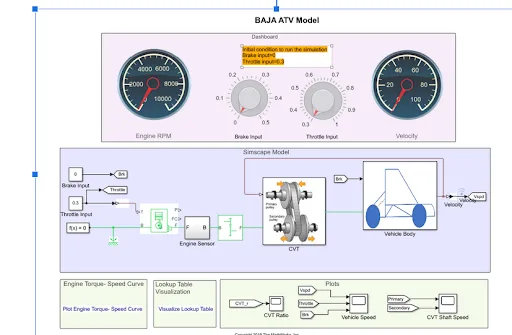
Learners are required to carry out a system-level simulation of an all-terrain vehicle using Simulink, Simscape, and Simscape Driveline. At the end of the project, learners should …

Modelling of Electric Vehicle Using DC Motor Drive
Introduction to Hybrid Electric Vehicle using MATLAB and Simulink

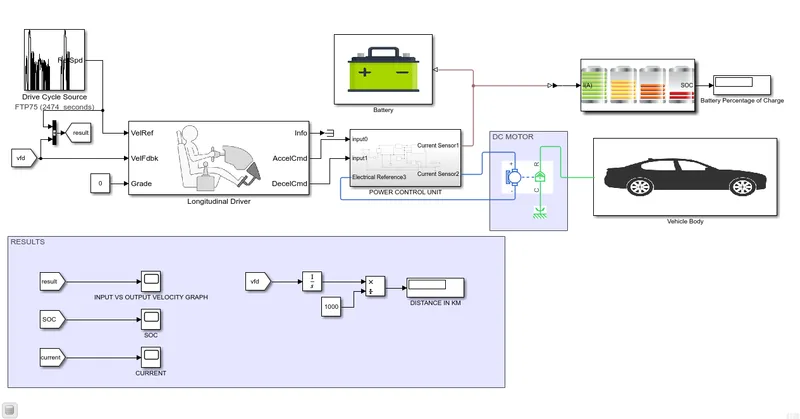
Modelling of Electric Vehicle Using DC Motor Drive

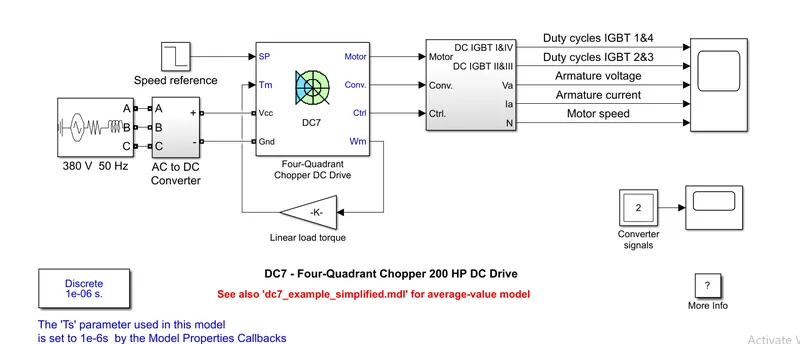
In this project, the students will model an electric car using MATLAB. The MATLAB model of the car uses a lithium-ion battery and a DC motor. Students will use suitable blocks from…

Design of Electric Powertrain
Introduction to Hybrid Electric Vehicle using MATLAB and Simulink

Design of Electric Powertrain

The project objective is to design an electric powertrain that is capable of towing an aircraft. Here, the students will design an Electric Powertrain with a type of motor, its pow…

Mechanical Design of Battery Pack
Introduction to Battery Technology for Electric Vehicle

Mechanical Design of Battery Pack

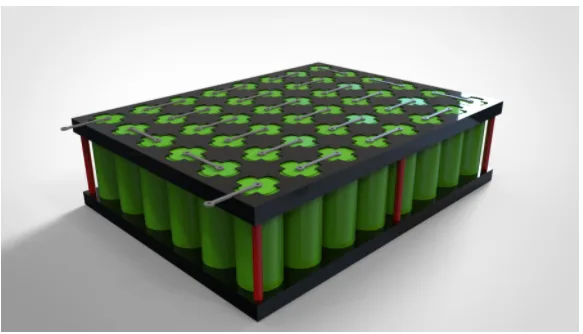
This project requires the student to design a CAD model of a lithium-ion battery pack by choosing series and parallel cells, with electrical connections, and mechanical holders.

Thermal Modelling of Battery Pack
Introduction to Battery Technology for Electric Vehicle

Thermal Modelling of Battery Pack

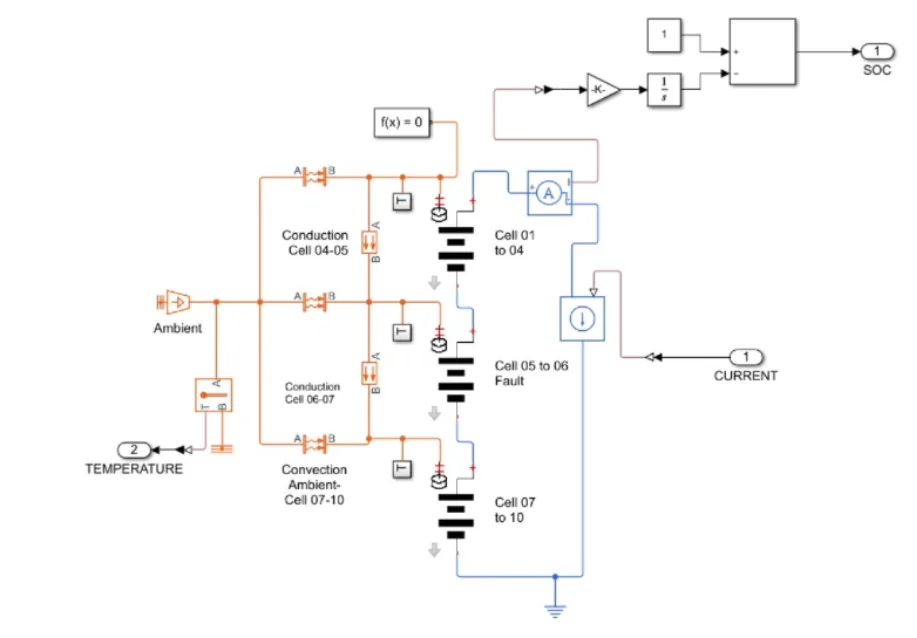
The model consists of a battery pack that includes 10 lithium-ion batteries connected in series. The battery pack is simulated with different temperature conditions and the perform…

Modeling & testing of battery management system with Simulink
Introduction to Battery Technology for Electric Vehicle

Modeling & testing of battery management system with Simulink

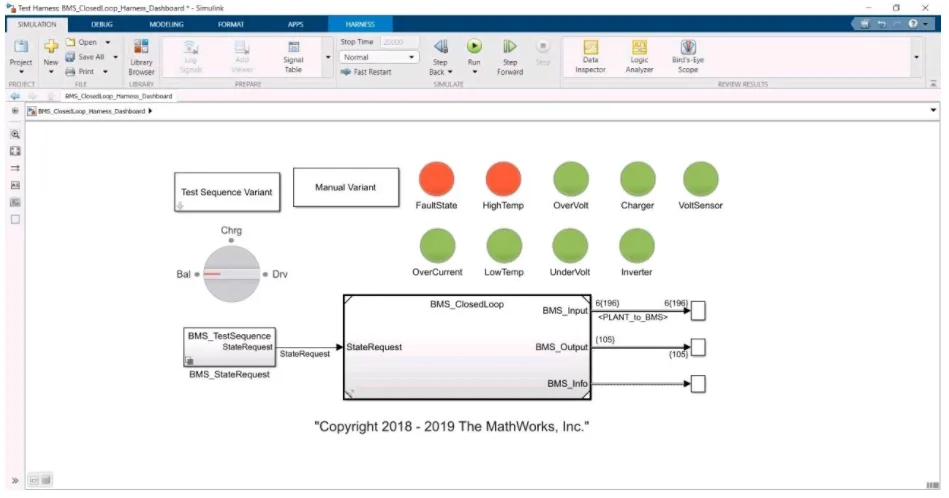
In this project, the students will test the BMS model for various types of faults during charge and discharge conditions.

Preparation of Converter Design report
Simulation and Design of Power Converters for EV using MATLAB and Simulink

Preparation of Converter Design report

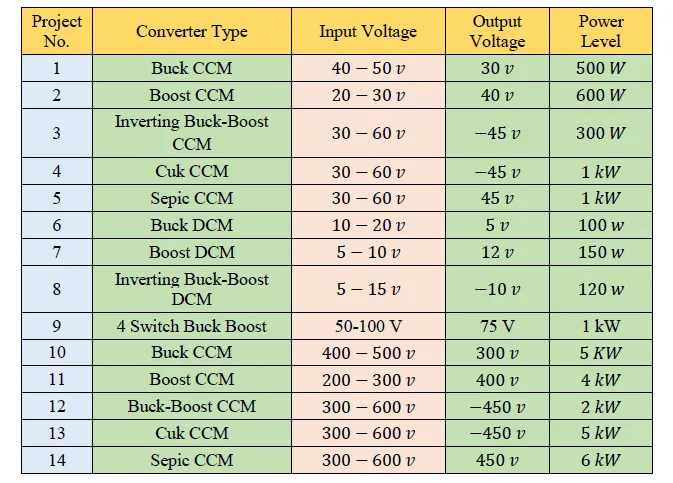
In this project, a design report is prepared. The design report contains the details indicating the choices of inductance and capacitance levels in the design.

Design an interleaving DC/DC converter system for a data center application
Simulation and Design of Power Converters for EV using MATLAB and Simulink

Design an interleaving DC/DC converter system for a data center application

In this project, an interleaving DC/DC converter system is designed for a data center application. Its specifications are provided and the DC/DC converter system should have 85% ef…

Design and development of DC/AC H-bridge inverters  for microgrid applications
Simulation and Design of Power Converters for EV using MATLAB and Simulink

Design and development of DC/AC H-bridge inverters for microgrid applications

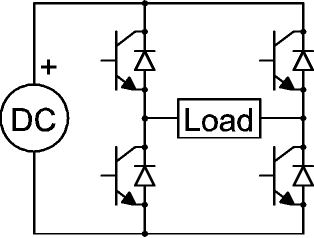
A DC/AC H-bridge inverter switches polarity of voltage, like any other inverters, but has a different circuit. In this project, the DC/AC H-bridge inverter is designed and develope…

Fee

One fee.
Everything included.

Become job ready with our comprehensive industry focused curriculum for freshers & early career professionals

Premium
₹1,50,000
Inclusive of all chargesEMI from ₹7,841/month
  • Career Service Assurance
  • Personalized Career Services Mentorship
  • 1 Year Access
  • Personalized Page
  • Live Individual & Group Sessions
  • Personalized & Hands-On
  • Job-Oriented Industry Relevant Curriculum
Check eligibility →
Next step

Not sure it's
the right fit?

A counsellor will walk you through the syllabus, projects and fee options — and tell you honestly if another course suits you better.

Get the syllabus + a call back

We'll email the full syllabus and call within one working day.

By submitting you agree to our Terms and Privacy Policy.

₹1,50,000PG program
Enquire

Talk to a career counsellor

Free 20-minute call. We'll map the right course to where you want to work.

By submitting you agree to our Terms and Privacy Policy.