DussehraFestive scholarship on Skill-Lync courses, this week onlyFestive scholarship is openOffer ends Wed, 21 Oct, 11:59 pm IST.
Dussehra 2026

Start your next chapter this Dussehra

Tell us where you want to work. A counsellor will match you to the right course and confirm the festive scholarship you qualify for.

  • Festive scholarship on course fees, confirmed on your call
  • Free 20-minute call to map the right course to your goal
  • Real industry projects and placement support with every course

Offer ends Wed, 21 Oct, 11:59 pm IST

3,905 engineers placed since 2019 · 1,277 hiring companies

By submitting you agree to our Terms and Privacy Policy.

You're on the list

Browse courses
Electrical · Course

Fundamentals of DC-DC Converters

Learn the functionalities of different DC convertors and how to develop them using the MATLAB Simulink course. Our industry experts in power electronics will teach you how to design DC convertors using software tools (MATLAB and Simulink) and deploy them in automobile applications.

Duration
12 weeks
Content
7 hours
Projects
2
Mode
Online
Overview

What you'll
be able to do.

  • The students will gain a thorough knowledge of the concepts of DC-DC converters.
  • During the coursework, the students will learn the analysis and design of the following converters:
    • Buck
    • Boost
    • Buck-boost
    • Cuk
    • SEPIC
    • ZETA
    • Interleaved
    • Luo
  • As a part of the coursework, the students will learn about Bode Plots and how to draw them for any converter.
  • The course will also give an overview of the software tools such as MATLAB and Simulink, which are widely used in the industry.
  • The students are exposed to the modern trends and standard practices being followed in the industry right now.
  • This course forms the foundation for anyone wanting to pursue a career in the domain of EV, Smart Grid, and Power Grid.
Tools you'll use
MATLABSimulink
Curriculum

12 modules,
built with industry.

  1. 01Fundamentals of DC-DC Converters12 modules
    1. DC-DC Buck ConverterW01
      • Introduction, Modes, Equations
      • Average Output Voltage, Ripple Current, and Voltage
      • Modelling and Design
      • Condition for Continuous Conduction and their Applications
      • Simulation
    2. DC-DC Boost ConverterW02
      • Introduction, Modes, Equations
      • Average Output Voltage, Ripple Current, and Voltage
      • Modelling and Design
      • Condition for Continuous Conduction and their Applications
      • Simulation
    3. DC-DC Buck-Boost ConverterW03
      • Introduction, Modes, Equations
      • Average Output Voltage, Ripple Current, and Voltage
      • Modelling and Design
      • Condition for Continuous Conduction and their Applications
      • Simulation
    4. DC-DC Cuk ConverterW04
      • Introduction, Modes, Equations
      • Average Output Voltage, Ripple Current, and Voltage
      • Modelling and Design
      • Condition for Continuous Conduction and their Applications
      • Simulation
    5. Interleaved operation and other non-isolated converterW05
      • Interleaved DC-DC Converter
      • SEPIC Converter
      • ZETA Converter
      • Luo Converter
      • Applications
    6. Bode Plot FundamentalsW06
      • Transfer Function of Electrical Circuit
      • Introduction to Bode plot
      • Procedure to Draw Bode Plot
      • Simple Example
      • MATLAB Demonstration
    7. Buck Converter Design and ModelingW07
      • Designing a Buck Converter
      • Specifying the Inductor Value
    8. Boost Converter Design and ModelingW08
      • Designing a Boost Converter for DC Drive
      • Calculating the Ripple Voltage and Ripple Current
      • Obtaining the Average State-space Model of the Designed Converter
      • Checking for Controllability and Observability
    9. Buck-Boost Converter Design and ModelingW09
      • Designing a Buck-boost Converter for a PV System
      • Calculating the Ripple Voltage and Ripple Current
      • Obtaining the Average State-space Model of the Designed Converter
      • Checking for Controllability and Observability
    10. Cuk Converter Design and ModelingW10
      • Designing a Cuk Converter
      • Selection of Duty Ratio, Switching Frequency, and Inductor Sizes
    11. Interleaved operation and other non isolated converterW11
      • Designing a Luo Converter for Fuel Cell
      • Calculate the Ripple Voltage and Ripple Current
      • Obtain the Average State-space Model of the Designed Converter
      • Checking for Controllability and Observability
    12. Bode Plot FundamentalsW12
      • Obtaining the transfer function of Buck converter using the state-space model and Bode plot specific values
      • Obtaining the gain margin and phase margin, and hence finding its stability
Industry projects

2 projects
you'll ship.

Our projects are designed by experts in the industry to reflect industry standards. By working through our projects, Learners will gain a practical understanding of what they will take on at a larger-scale in the industry. In total, there are 2 Projects that are available in this program.

Design of DC-DC SEPIC Converter

Design of DC-DC SEPIC Converter

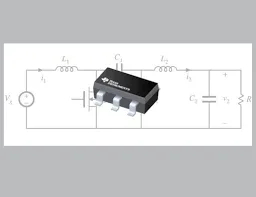
A SEPIC Converter is a DC-DC converter having a unique circuit. In this project, the students will design a SEPIC Converter based on the given specifications. SEPIC converters are …
Design of MPPT Controller

Design of MPPT Controller

MPPT is used to send the maximum current required by the load. In this project, the students will design an MPPT controller based on the given specifications.

Fee

One fee.
Everything included.

Become job ready with our comprehensive industry focused curriculum for freshers & early career professionals

Premium
₹40,000
Inclusive of all charges
  • 1 Year Access
  • Personalized Page
  • Live Individual & Group Sessions
  • Personalized & Hands-On
  • Job-Oriented Industry Relevant Curriculum
Check eligibility →
FAQ

Questions,
answered.

Why should I opt-in for the DC-DC converters course by Skill-Lync?

This course will give you hands-on experience working with DC-DC converters, and you can easily find a job in the domain.

How will people get to know that I have completed the online DC-DC converter course?

After completing the course, you will receive a certificate of completion, which you can produce in front of any recruiter.

What will I learn in the DC-DC certification course?

You will get a holistic understanding of the working and designing of DC-DC converters and other electronic parts associated with them.

Who is eligible to take up this course?

You must have a technical background or a background in electrical engineering to take up this course.

Can I work in an automobile company after completing this course?

This course is ideal for people who want to get into an automobile company.

What is the duration of this course?

The duration of this course is about three months. You might require some extra time to complete the project work.

Next step

Not sure it's
the right fit?

A counsellor will walk you through the syllabus, projects and fee options — and tell you honestly if another course suits you better.

Get the syllabus + a call back

We'll email the full syllabus and call within one working day.

By submitting you agree to our Terms and Privacy Policy.

Call usEnquire

Talk to a career counsellor

Free 20-minute call. We'll map the right course to where you want to work.

By submitting you agree to our Terms and Privacy Policy.