DussehraFestive scholarship on Skill-Lync courses, this week onlyFestive scholarship is openOffer ends Wed, 21 Oct, 11:59 pm IST.

Dussehra 2026

Start your next chapter this Dussehra

Tell us where you want to work. A counsellor will match you to the right course and confirm the festive scholarship you qualify for.

  • Festive scholarship on course fees, confirmed on your call
  • Free 20-minute call to map the right course to your goal
  • Real industry projects and placement support with every course

Offer ends Wed, 21 Oct, 11:59 pm IST

3,905 engineers placed since 2019 · 1,277 hiring companies

By submitting you agree to our Terms and Privacy Policy.

You're on the list

Browse courses
Computer Science · PG program

Post Graduate Program inFull Stack Web Development

Enroll in our full stack web development course without coding experience and build an eCommerce platform from scratch at the end of our full stack course. One of the salient features of Skill-Lync's full stack web developer course is the on-demand technical assistance from industry experts.

Duration
24 weeks
Content
204 hours
Courses
6
Projects
15
Mode
Online
Overview

What you'll
be able to do.

  • The course provides a complete understanding of how a website is built from scratch.
  • This course also focuses on building a strong foundation in Java programming along with data structures and algorithm.
  • Introduction to software tools such as HTML5, CSS, Bootstrap 4 and Spring MVC will be covered with examples to have hands-on experience.
  • The course comes with projects that involve developing an e-commerce website to make the students industry-ready.

Why this program

  • Complete understanding of frontend and backend development and the process of linking them
  • Hands-on experience on software and technologies involved in full stack development

The student can get employed as:

  • Full-Stack Developer
  • Back-End Developer
  • Front-End Developer
  • Web Developer
  • Web Designer
Tools you'll use
JavaWireSharkOracle VirtualBox (for Windows)Kali Linux OS (.ova file)Parrot OS (.ova file)ZAP Proxy toolHttrack ToolHashCalc ToolQuickStegoKFsensorHTML5CSSBootstrapJavaScriptjQueryAJAXJSONEclipse IDESpring Tools 4DockerMySQLMongoDBAngularVisual Studio CodeNode.jsCSS3
Curriculum

2 tracks to choose from,
6 courses each.

Get the full syllabus ↓
  1. 01The Complete Front-End Development - 2.06 modules
    1. Module 01 - HTML5W01
      • The topics covered in this module are:
        • Valid document structure, anatomy of HTML syntax
        • HTML5 semantic tags - Elements and attributes, Block and inline elements
        • Essential HTML5 tags - headings, paragraph, styles, comments, colours
        • HTML lists - unordered and ordered lists
        • Inserting images using HTML
        • How to create hyperlinks using anchor tags
        • HTML tables
        • HTML forms
        • HTML Div - Layout and separate content for CSS styling
        • Classes and ID
        • HTML iFrames
        • HTML Graphics
        • HTML Media
        • HTML APIs- Geolocation, Web Storage, Web Workers, Drag and Drop, SS Event
        • HTML best practices- HTML vs XHTML"
    2. Module 02 - CSSW02
      • In this module, you will learn:
        • Basics of CSS3, CSS rules
        • Comments, Colors, background, border, margin, padding, height, and width
        • CSS selectors and properties
        • Inline, internal, and external CSS
        • Font styling, web safe fonts - Texts, icons, links
        • The 'Box model'
        • CSS sizing methods
        • CSS static, relative, and absolute positioning systems
        • CSS float and clear
        • Pseudo classes and pseudo elements
        • Class vs. ID
        • Opacity, Navigation bars, Dropdowns
        • CSS rule conflict resolution. specificity, and implementing style hierarchy
        • Images and forms styling
        • Transitions, animations, pagination, 2D and 3D transforms
        • Responsive web design
        • The grid system
        • Flexbox, media queries
        • CSS coding best practices
    3. Module 03 - BootstrapW03
      • In this module you will learn:
        • The mobile-first paradigm
        • Wireframes in the design phase
        • Twitter Bootstrap - Grid System
        • How to install the Bootstrap framework
        • Bootstrap containers to layout website easily
        • Other Bootstrap components
        • Bootstrap carousels
        • Bootstrap cards
        • Bootstrap navigation bars
        • Bootstrap themes
        • Font-awesome
    4. Module 04 - Page EventsW04
      • The topics covered in this module are:
        • ECMAScript
        • JavaScript vs Java
        • Popularity and Importance
        • Basics of JavaScript
        • JS Statements
        • JS functions
        • Adding JS to your website
        • Document Object Model
        • Manipulating DOM
        • Events
        • Exception Handling
        • Forms and JS
    5. Module 05 - JavaScriptW05
      • The topics covered in this module are:
        • Variables, data types, and operators in JavaScript
        • Statements, syntax, comments, and events
        • Loops, control, and conditionals
        • JS forms
        • Document Object Model (DOM)
        • Browser Object Model (BOM)
        • JS functions
        • Scope and closures
        • Object-Oriented Programming (OOP)
        • JS objects and prototypes - keyword
        • Cookies
        • Exception handling
        • Arrow functions
        • Promises
        • Template string, default parameters, spread and rest operator, destructuring, generators, Set, Map, WeakSet, WeakMap
        • HTML APIs
        • Separation of concerns, refactoring, debugging, and coding best practices
    6. Module 06 - AJAX, JSON and XMLW06
      • We will be covering
        • Serving and retrieving data to a website
        • Asynchronous loading - Set up and handle AJAX requests and responses
        • JSON
        • XML
        • Processing JSON data
        • JSON vs. XML
  2. 02Angular Web Development for the Real World13 modules
    1. Course Overview, Prerequisites, and Introduction to Frontend Web DevelopmentW01
      • Introduction to the course
      • Course prerequisites and how to learn them better
      • Types of application and developers
      • Difference between frameworks and libraries
      • What is in Angular?
      • Introduction to TypeScript
    2. Introduction to Angular Framework and ArchitectureW02
      • Why Angular?
      • Features in Angular
      • History of Angular (AngularJS vs Angular)
      • Angular Architecture
      • Building blocks of Angular
      • How to think in Angular
      • Getting started with a basic Angular app
      • Project structure best practices
      • Overview of our course project
    3. Understanding Modules and ComponentsW03
      • Understanding modules vs components vs directives
      • Lazy loaded modules
      • Data Binding with components
      • Property/Event Binding
      • Component Lifecycle
    4. Understanding Templates and Advanced Components ConceptsW04
      • Templates and View Encapsulation
      • Accessing DOM element programmatically
      • Dynamic components
      • Content projection
    5. Introduction to Services/Dependency Injection Concepts along with RXJS (Reactive Programming)W05
      • Services and dependency injection
      • Single vs multiple instances of service
      • Reactive programming concept
      • Observable vs promise
      • RxJS library introduction
      • Use cases for Angular services
    6. Intercomponent Communication and External HTTP API Communication using AngularW06
      • Parent-child component communication
      • Component communication using services
      • Connecting to REST APIs through HTTP/HTTPS
      • Handling API response and manipulating it
      • Handling errors
      • HTTP Interceptors
    7. Understanding Directives and Styling Angular Application with Angular MaterialW07
      • Structural vs attribute directives
      • Built-in directives examples like “ngIf”,”ngFor”,”ngSwitch”, etc.
      • Custom directives
      • Angular Material introduction
      • Features of Angular Material
      • Styling Angular app using Angular Material
    8. Understanding Pipes and Introduction to FormsW08
      • Pipes
      • Pure vs Impure pipes
      • Basic built-in Pipes
      • Custom Pipes
      • Introduction to forms
      • Template-driven and Reactive forms
      • When to use which form?
    9. Template FormsW09
      • Creating a basic form
      • Accessing form state
      • Form validation
      • Error handling
      • Set values programmatically
      • Grouping controls in a form
      • Submit/Reset Forms
    10. Reactive FormsW10
      • Creating a basic form
      • Accessing form state
      • Form validation
      • Error handling
      • Set values programmatically
      • Grouping controls in a form
      • Submit/Reset Forms
    11. Introduction to Angular RoutingW11
      • Routers - Why and How?
      • Navigating with Routers
      • Pass and fetch query parameters in routes
      • Nested Routes
      • Securing routes (Route Guards)
      • Use cases for Route Guards
      • Routing Strategies
    12. Unit Testing Angular Application and Debugging CodeW12
      • How do we test code in Angular?
      • How to write unit test cases in Jasmine?
      • Writing unit test cases for a few common scenarios in Angular
      • How to debug Angular code?
      • Tools/utilities to speed up debugging Angular code
    13. Useful Tips and Tricks for Building Real-World Angular ApplicationW13
      • Designing scalable and secure Angular app
      • Deployment
      • Web Accessibility
      • Internationalization
      • Angular Universal
      • Angular Elements
      • Service workers or progressive web app
      • Angular Schematics
  3. 03Data Structures and Algorithms using JAVA12 modules
    1. Week - 01 IntroductionW01

      A data structure is a named location that can be used to store and organise data. An algorithm is a collection of steps to solve a particular problem. Data structures provide a means to manage large amounts of data efficiently.

      • In the first week of this course, you will learn:
        • Stack memory vs heap memory in Java
        • Physical vs logical data structure
        • Abstract data types and data structures
        • Complexity analysis
        • Asymptotic analysis, comparison of functions, recurrence relations
          • Time complexity
          • Space complexity
          • Master theorem
          • Amortized analysis
          • Iteration Vs recursion
        • Recursion - Factorial, Fibonacci, finding nCr, tower of Hanoi problem.
    2. Week - 02 Arrays, Strings, and ListsW02

      Arrays are used to store multiple values in a single variable, instead of declaring separate variables for each value. A string is a sequence of characters like - "hello".

      • In this session, we will learn about:
        • Arrays
          • Static arrays
          • Dynamic arrays
          • 2D arrays, row-major and column-major mapping, matrices
          • Strings
        • LinkedList
          • Singly LinkedList and its operations
          • Doubly LinkedList and its operations
          • Circular LinkedList and its operation
    3. Week - 03 Stacks and QueuesW03

      The stack is a linear data structure that is used to store a collection of objects. It is based on Last-In-First-Out (LIFO).

      • In this session, we will be discussing about:
        • Stacks
          • Implementations- using arrays, using linked lists
          • Operation
          • Applications
        • Queues
          • Implementations- using arrays, using a LinkedList, using two stack
          • Circular queues
          • Priority queues
    4. Week - 04 TreesW04

      A tree is a non-linear data structure where data objects are organised in terms of hierarchical relationships. In this week's session, we’ll be discussing them one by one.

      • In this week, we will discuss about
        • Trees.
          • Binary trees, their representations
          • Pre-order, In-order, post-order traversal
          • Binary search trees
          • AVL trees
    5. Week - 05 Heaps and TriesW05

      Heap and Trie are special cases of trees. A heap is a special tree-based data structure in which the tree is a complete binary trees.

      • In the session, we will discuss about
        • How to solve the longest word in the dictionary problem using tries.
        • Heaps
          • Min Heap
          • Max Heap
          • Find K largest (or smallest) elements in the array
        • Tries
          • Longest Word in Dictionary Problem
    6. Week - 06 Graphs & AlgorithmsW06

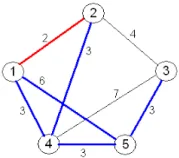
      A graph is a data structure that consists of a finite set of vertices, also called nodes and a finite set of ordered pairs of the form (u, v) called edges.

      • In this week's session, We will be discussing different types of algorithms, like:
      • Graphs
        • Types of graphs
        • Breadth-first search, depth-first search
        • Topological sort
        • Shortest path problem
      • Algorithms
        • Dijkstra's algorithm
        • Bellman–Ford algorithm
          • Minimum spanning tree problem
          • Prim's algorithm
        • Kruskal's algorithm
    7. Week - 07 SortingW07
      • In this week, we will discuss about
        • Sorting-
          • Types of sorting techniques
            • Bubble sort
            • Insertion sort
            • Selection sort
            • Quick sort
            • Merge sort
            • Heap sort
            • Count sort
            • Bucket sort
            • Radix sort
            • Shell sort
    8. Week - 08 Searching and HashingW08

      Searching is probably one of the most common actions performed in a regular business application. This involves fetching data stored in data structures like arrays, lists, and maps. Hashing is the process of converting a given key into another value. A hash function is used to generate the new value according to a mathematical algorithm.

      • During this week we will be discussing the following:
        • Searching
          • Linear search
          • Binary search
        • Hashing
          • Hash function
          • Collision handling
        • Chaining
        • Open addressing
          • Linear probing, primary clustering
          • Quadratic probing, secondary clustering
        • Double hashing
    9. Week - 09 Greedy AlgorithmsW09

      A greedy algorithm is a simple, intuitive algorithm that is used in optimization problems.

      • The topics discussed in this session will be-
        • The strategy of greedy algorithms
        • Elements of greedy algorithms
        • Advantages of greedy algorithms
        • Disadvantages of greedy algorithms
        • Applications of greedy algorithms
        • Knapsack problem
        • Job sequencing with deadlines
        • Huffman coding
    10. Week - 10 Divide and ConquerW10

      The divide and conquer approach is pretty straightforward, the problem at hand is divided into smaller subproblems and then each problem is solved independently. As we keep dividing the subproblems into even smaller problems, we eventually reach a stage where no more division is possible.

      • In the session this week, we will discuss:
        • The strategy of divide and conquer techniques
        • Advantages of divide and conquer techniques
        • Disadvantages of divide and conquer techniques
        • The master theorem of divide and conquer techniques
        • Applications of divide and conquer techniques
        • Find the median of two sorted arrays
    11. Week - 11 BacktrackingW11

      Backtracking is an algorithmic-technique for solving problems recursively by trying to build a solution incrementally.

      • We’ll discuss two methods used to backtrack.
        Backtracking-
        • Brute force approach
        • N queens problem
      • After backtracking, we will be studying how Java 8 collections framework is implemented. We will be covering the following,
        • Set
        • List
        • Queue
        • PriorityQueue
        • Map
        • HashSet
        • TreeSet
        • ArrayList
        • LinkedList
        • Vector
        • Dictionary
        • Stack
    12. Week - 12 Dynamic ProgrammingW12

      Dynamic Programming is also an algorithmic technique for solving optimization of problems. It is done by breaking the problem down into simpler subproblems, and utilizing the fact that the optimal solution to the overall problem depends upon the optimal solution to its subproblems.

      • During this session, we will be covering the following:
        • Dynamic programming-
          • The strategy of dynamic programming
          • Properties of dynamic programming
          • Approaches of dynamic programming
          • 0/1 knapsack
          • Travelling salesman problem
          • Floyd Warshall
        • In the end, we will conclude and summarize the course by having a brief discussion on
          • Greedy vs Divide & Conquer vs Dynamic
          • Programming examples
  4. 04Introduction to Java Programming 2.06 modules
    1. Basic Constructs of Java Programming Language (Part 1)W01
      • Setting up the environment for Java
      • Understanding the Java Ecosystem
      • Understanding the Eclipse IDE
      • Running your first Java program
      • Running and debugging Java Application
    2. Basic Constructs of Java Programming Language (Part 2)W02
      • Data types and operators
      • Conditional statements
      • Iterative statements
      • Other control statements
      • Functions and methods
      • Working with Arrays in Java
      • Working with Strings in Java
    3. Object Oriented Programming (Part 1 )W03
      • Classes and objects
      • Constructors
      • The ‘this’ pointer
      • The static and final keyword
      • Access modifiers
    4. Object Oriented Programming (Part 2 )W04
      • Inheritance (is-a relationship)
      • Composition (has-a relationship)
      • Abstract classes and interfaces
      • Method overloading and overriding
      • Polymorphism
      • Encapsulation and abstraction
    5. Advanced Topics in Java (Part 1)W05
      • Packages
      • Exception Handling
      • File handling
      • I/O
    6. Advanced Topics in Java (Part 2)W06
      • Optionals
      • Memory Management
      • Multithreading
  5. 05Everything about Database 2.011 modules
    1. Introduction to DatabasesW01
      • Introduction to databases
      • Downloading XAMPP and creating the first table
      • Components of DBMS
      • Characteristics of DBMS, ACID properties
      • Databases vs File system
      • Types of DB
      • SQL vs NoSQL
      • CRUD operations example in MySQL, OLTP, and OLAP
    2. Creating Database TablesW02
      • Database design
      • ER model
      • Entity and attributes
      • Entity relationships
      • Cardinality ratio
      • Generalization, specialization, and aggregation
      • Case study of Ecommerce website
    3. Introduction to RDBMSW03
      • RDBMS
      • Converting ER diagram to table
      • Properties of relational model
      • Primary key and foreign key
      • Relational model
      • E-commerce use case
      • Codd's rules
      • Data integrity in RDBMS
    4. Database DesignW04
      • Database design
      • Redundancy
      • Insertion anomaly
      • Functional dependencies
      • Closure set of attributes
      • Lossy decomposition
      • Dependency preserving
      • Normalization
      • Transitive dependency
      • 3NF
      • BCNF
      • Multivalued dependency
      • 5NF
      • Comparison between Normal forms, OLTP, and OLAP
    5. SQL (Part 1)W05
      • Discrete maths
      • Relational Algebra and null values
      • Relational calculus
      • Characteristics of SQL
      • Create a DB (example)
      • SQL Constraints
      • Foreign key
      • SQL SELECT statement
      • INSERT, DELETE statements
      • Scalar and Aggregate functions
      • HAVING clause
      • SQL Aliases
      • IN, BETWEEN operators
      • EXISTS, ANY, ALL operator
      • Auto increment
      • MySQL best practices
    6. SQL (Part 2)W06
      • JOIN-types
      • JOIN examples
      • String operators
      • Compound queries
      • SQL index
      • SQL views
      • Query optimization
      • Security Risks
    7. NoSQLW07
      • Introduction to NoSQL
      • ACID
      • Key value pair-based databases
      • Search DB and Graph DB
      • Advantages of NoSQL
      • Introduction to MongoDB
    8. MongoBD BasicsW08
      • Working with MongoDB
      • CRUD Operations with examples
      • Data Modelling in NoSQL
      • One to One and One to Many relationships
      • Advanced MongoDB queries
        • Join, sort, group, and index
    9. RedisW09
      • In memory DB
      • Redis
      • Key value store
      • Cashing layer
      • Datatypes
      • Transaction
      • Backup of data from Redis
    10. PL/SQLW10
      • PL/SQL Basics
      • Operators
      • Record
      • Recursive Functions
      • Exception Handling
      • Triggers
    11. More about DatabasesW11
      • Transactions
      • Concurrency control
      • Isolation
      • Consistency
      • ACID
      • Database lock
      • Database lock types
      • Lock Contention
      • Deadlock
      • Scaling the database
      • Storage systems
      • Database indexing
      • Index types
      • Distributed DB
      • DB Replication
      • Database sharding
      • DB on Cloud
  6. 06Microservices using Java, Spring & Docker12 modules
    1. Introduction to Microservices ArchitectureW01
      • Types of application architectures
      • Comparisons between various architectures
      • Introduction to Microservices
      • Java Ecosystem for Microservices
      • Create a simple microservices
    2. Microservices and CloudW02
      • Understanding cloud-native app
      • Traditional vs cloud-native app
      • Understand 12 Factors for cloud-native app
      • Sizing and boundary identification for microservices
    3. Creating a Bank Application using MicroservicesW03
      • Overview of the app we are creating
      • Create accounts microservices
      • Create cards microservices
      • Create loans microservices
    4. Using Docker for MicroservicesW04
      • Introduction to containerization
      • Overview of docker
      • Docker image
      • Deploy using images/containers
      • Build packs
      • Docker-compose
    5. Managing Configurations using Spring CloudW05
      • Configuration management basics
      • Sprint cloud configuration
      • RefreshScope
      • Securing config with encryption
    6. Discovering and Registering to a ServiceW06
      • Service discovery and registration basics
      • Spring cloud config
      • Eureka server
    7. Building Resiliency in MicroservicesW07
      • What is resiliency?
      • Bulkhead pattern
      • Circuit breaker patterns
      • Retry pattern
      • Rate Limiter
    8. Cross-Cutting Concerns and Routing in MicroservicesW08
      • Overview of routing and cross-cutting concerns
      • Spring cloud gateway
      • Implementing routing
      • Implementing cross-cutting concerns - Logging
    9. Challenges with Distributed Logging Aggregation with Monitoring the HealthW09
      • Distributed logging/tracing aggregation overview
      • Spring cloud sleuth for tracing
      • Zipkin overview for logging
      • Challenges with monitoring microservices
      • Approaches to monitoring microservices
      • Using Prometheus and Grafana to monitor
    10. Using Kubernetes for Scaling, Deployment and Self-RecoveryW10
      • Kubernetes overview
      • K8s cluster
      • Deployment
      • Self-healing
      • Logging/Monitoring of Kubernetes cluster
      • Auto-scaling with HPA
      • Validating deployed clusters
      • Challenges with manually created Kubernetes manifest
    11. Using Helm for Easier Installation and Packaging of YAML FilesW11
      • Understand Helm
      • Using Helm with Kubernetes cluster
      • Creating Helm charts for our microservices
      • Some common Helm commands
    12. Spring MVC using Spring BootW12
      • Overview of Spring MVC
      • Spring MVC Architecture
      • Using Spring Boot for Spring MVC Configuration
      • Performing CRUD operation through a Spring Boot MVC application
Industry projects

15 projects
you'll ship.

Our projects are designed by experts in the industry to reflect industry standards. By working through our projects, Learners will gain a practical understanding of what they will take on at a larger-scale in the industry. In total, there are 15 Projects that are available in this program.

Optimize and Solve problems with given restrictions
Data Structures and Algorithms using JAVA

Optimize and Solve problems with given restrictions

As a part of this coursework, the students will be solving a set of 20 problems in an optimized way with the given restrictions of time and space complexity.

Designing a professional-quality web portfolio
The Complete Front-End Development - 2.0

Designing a professional-quality web portfolio

In this project, a complete website is developed using different languages and frameworks. This will set up a foundation for all further projects which includes scalability, adding…

Designing static pages of an e-commerce website
The Complete Front-End Development - 2.0

Designing static pages of an e-commerce website

Static sites are the future of e-commerce because they bring speed, scalability, and security to the website. This project will help you understand how to create a webpage for a we…

Design and Implement Software
Introduction to Java Programming 2.0

Design and Implement Software

Software design and implementation is a stage in the software engineering process in which an executable software system is developed. Software design is a creative activity in whi…

Using Microservice to get Insurance Policy from the Banking App
Microservices using Java, Spring & Docker

Using Microservice to get Insurance Policy from the Banking App

In this project, learners are required to create a new microservice for allowing customers to get insurance policies from your banking app. The microservice created should have the…

Migrating the Created Microservice to the K8s Cluster.
Microservices using Java, Spring & Docker

Migrating the Created Microservice to the K8s Cluster.

For the Insurance service created in Project 1, learners are required to migrate the microservice to the K8s cluster and implement tracing and logging capabilities for these micros…

 Enhancing an Ecommerce App using Angular
Angular Web Development for the Real World

Enhancing an Ecommerce App using Angular

In this project, learners will be creating an Ecommerce shopping application. This project requires use of Angular material and other concepts learned.

Enhancing an Ecommerce Blog using Angular
Angular Web Development for the Real World

Enhancing an Ecommerce Blog using Angular

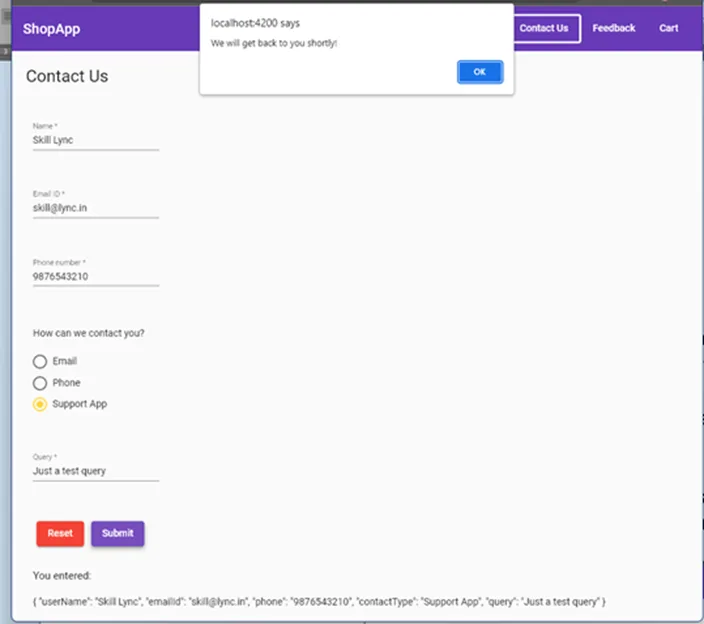
Based on the previous project, learners will extend this application and include a "contact us" page using the concepts learned in the second half of the course.

Designing an E-commerce Database
Everything about Database 2.0

Designing an E-commerce Database

Databases are vital tools for storing, managing and retrieving information. They are also critical for building an e-commerce system. A well-structured database powers e-commerce a…

Scaling and Designing E-commerce Database
Everything about Database 2.0

Scaling and Designing E-commerce Database

Scalability is key when deciding on your eCommerce platform. Your e-commerce website needs to be able to change and grow in order to meet demand. One of the critical components tha…

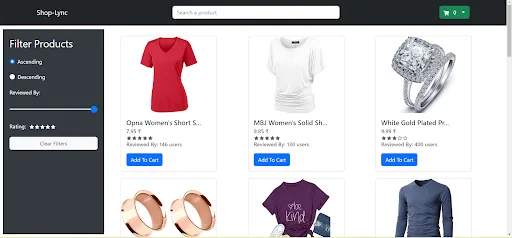
Shopping Cart Application
React.js

Shopping Cart Application

In this project, learners have to create a basic shopping cart application with core functionality where users should list and filter products on the webpage. The app should also h…

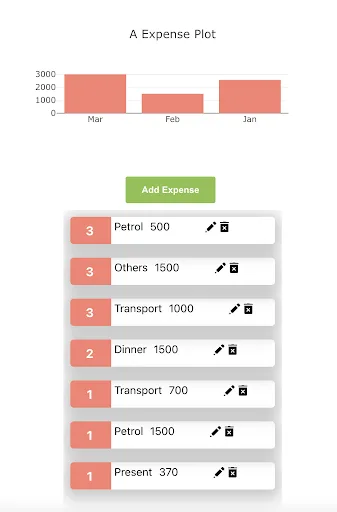
Expense Tracking Application
React.js

Expense Tracking Application

In this project, learners have to create a single-page app to track users' daily expenses using React.js basics. The tracker should have three dimensions. The first step is Receivi…

+ 3 more projects in the full syllabus

Placements

39 learners placed
from this program.

Companies
36
Median CTC
4 LPA
20245 LPA
Hummingbird Web Solutions Private Limited
Software Developer

Shubham B.
20248 LPA
Accenture
Software Configuration Engineer

Vignesh G.
20243.5 LPA
Creative Thoughts
Nodejs Developer

Yashraj
20244.6 LPA
Octoze technologies
Lead Implementation

Mohamed A.
20246 LPA
ALTEN
Senior Engineer

Ganesh K.
20243 LPA
Softility
Software Engineer

Varanasi S.
Fee

One fee.
Everything included.

Become job ready with our comprehensive industry focused curriculum for freshers & early career professionals

Premium
₹2,75,000
Inclusive of all chargesEMI from ₹14,375/month
  • Career Service Assurance
  • Personalized Career Services Mentorship
  • 1 Year Access
  • Personalized Page
  • Live Individual & Group Sessions
  • Personalized & Hands-On
  • Job-Oriented Industry Relevant Curriculum
Check eligibility →
FAQ

Questions,
answered.

Is there a placement for learners at the end of the course?

There are abundant opportunities offered after completing the course, but there is no guarantee of placement. Services and several chances are made available to you looking for a way to get into tech biggies.

While completing the Post Graduate Program in Full Stack Web Development by Skill-Lync , what are the different career support services that the learners will get?

You will get several career support services like:

  • Enhancement of technical skills
  • Mock interviews
  • Resume building
  • LinkedIn support
How many modules are there in the Post Graduate Program in Full Stack Web Development?

There are six modules to complete in the full-stack web development course.

What is the approximate salary range that can be expected after completing the Post Graduate Program in Full Stack Web Development?

After completing the Java full stack developer course, you can expect a salary ranging from Rs. 2.5 - 6 LPA.

What kind of companies can the learners get a job in?

You can get a job in various services ranging from consultancy to Y-Combinator start-ups.

Is there placement support for this full-stack developer course?

Yes, as one of the best full-stack developer courses it offers career guidance and placement support.

Next step

Not sure it's
the right fit?

A counsellor will walk you through the syllabus, projects and fee options — and tell you honestly if another course suits you better.

Get the syllabus + a call back

We'll email the full syllabus and call within one working day.

By submitting you agree to our Terms and Privacy Policy.

Call usEnquire

Talk to a career counsellor

Free 20-minute call. We'll map the right course to where you want to work.

By submitting you agree to our Terms and Privacy Policy.