Computer Science · PG program

Post Graduate Program inPre-Graduate Program in Full Stack Web Development

A comprehensive program on Full-Stack Web Development using a variety of web technologies

Duration
16 weeks
Content
75 hours
Courses
4
Projects
6
Mode
Online
Fee
₹1,50,000
Overview

What you'll
be able to do.

  • During the coursework, the learners will understand the essential concepts of full-stack web development.
  • They are exposed to the following concepts:
    • Data Types
    • Object-Oriented Programming
    • Web Application Development
    • Webpage Styling
    • UI Development Principles
    • Behavior Addition to Website
  • This course will help in developing the necessary problem-solving skills for cracking coding interviews at all software companies.
  • As a part of the coursework, the learners will develop multiple projects on real-world problems, which will strengthen their base.
  • Also, the learners will gain exposure to what top tech companies expect from programmers.

Why this program

  • By taking up this course, the student will gain
    • A thorough understanding of frontend and backend web development and the process of linking them
    • Hands-on experience on software and technologies involved in full-stack web development
    • Exposure to OOPS and advanced Java concepts
  • The student can get employed as:
    • Java Developer
    • Frontend Developer
    • Web Developer
    • Full Stack Developer
Tools you'll use
JavaEclipse IDESpring Tools 4DockerMySQLMongoDB
Curriculum

4 courses,
41 modules.

  1. 01Introduction to Java Programming 2.06 modules
    1. Basic Constructs of Java Programming Language (Part 1)W01
      • Setting up the environment for Java
      • Understanding the Java Ecosystem
      • Understanding the Eclipse IDE
      • Running your first Java program
      • Running and debugging Java Application
    2. Basic Constructs of Java Programming Language (Part 2)W02
      • Data types and operators
      • Conditional statements
      • Iterative statements
      • Other control statements
      • Functions and methods
      • Working with Arrays in Java
      • Working with Strings in Java
    3. Object Oriented Programming (Part 1 )W03
      • Classes and objects
      • Constructors
      • The ‘this’ pointer
      • The static and final keyword
      • Access modifiers
    4. Object Oriented Programming (Part 2 )W04
      • Inheritance (is-a relationship)
      • Composition (has-a relationship)
      • Abstract classes and interfaces
      • Method overloading and overriding
      • Polymorphism
      • Encapsulation and abstraction
    5. Advanced Topics in Java (Part 1)W05
      • Packages
      • Exception Handling
      • File handling
      • I/O
    6. Advanced Topics in Java (Part 2)W06
      • Optionals
      • Memory Management
      • Multithreading
  2. 02Data Structures and Algorithms using JAVA12 modules
    1. Week - 01 IntroductionW01

      A data structure is a named location that can be used to store and organise data. An algorithm is a collection of steps to solve a particular problem. Data structures provide a means to manage large amounts of data efficiently.

      • In the first week of this course, you will learn:
        • Stack memory vs heap memory in Java
        • Physical vs logical data structure
        • Abstract data types and data structures
        • Complexity analysis
        • Asymptotic analysis, comparison of functions, recurrence relations
          • Time complexity
          • Space complexity
          • Master theorem
          • Amortized analysis
          • Iteration Vs recursion
        • Recursion - Factorial, Fibonacci, finding nCr, tower of Hanoi problem.
    2. Week - 02 Arrays, Strings, and ListsW02

      Arrays are used to store multiple values in a single variable, instead of declaring separate variables for each value. A string is a sequence of characters like - "hello".

      • In this session, we will learn about:
        • Arrays
          • Static arrays
          • Dynamic arrays
          • 2D arrays, row-major and column-major mapping, matrices
          • Strings
        • LinkedList
          • Singly LinkedList and its operations
          • Doubly LinkedList and its operations
          • Circular LinkedList and its operation
    3. Week - 03 Stacks and QueuesW03

      The stack is a linear data structure that is used to store a collection of objects. It is based on Last-In-First-Out (LIFO).

      • In this session, we will be discussing about:
        • Stacks
          • Implementations- using arrays, using linked lists
          • Operation
          • Applications
        • Queues
          • Implementations- using arrays, using a LinkedList, using two stack
          • Circular queues
          • Priority queues
    4. Week - 04 TreesW04

      A tree is a non-linear data structure where data objects are organised in terms of hierarchical relationships. In this week's session, we’ll be discussing them one by one.

      • In this week, we will discuss about
        • Trees.
          • Binary trees, their representations
          • Pre-order, In-order, post-order traversal
          • Binary search trees
          • AVL trees
    5. Week - 05 Heaps and TriesW05

      Heap and Trie are special cases of trees. A heap is a special tree-based data structure in which the tree is a complete binary trees.

      • In the session, we will discuss about
        • How to solve the longest word in the dictionary problem using tries.
        • Heaps
          • Min Heap
          • Max Heap
          • Find K largest (or smallest) elements in the array
        • Tries
          • Longest Word in Dictionary Problem
    6. Week - 06 Graphs & AlgorithmsW06

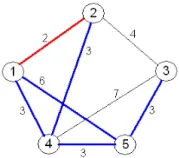
      A graph is a data structure that consists of a finite set of vertices, also called nodes and a finite set of ordered pairs of the form (u, v) called edges.

      • In this week's session, We will be discussing different types of algorithms, like:
      • Graphs
        • Types of graphs
        • Breadth-first search, depth-first search
        • Topological sort
        • Shortest path problem
      • Algorithms
        • Dijkstra's algorithm
        • Bellman–Ford algorithm
          • Minimum spanning tree problem
          • Prim's algorithm
        • Kruskal's algorithm
    7. Week - 07 SortingW07
      • In this week, we will discuss about
        • Sorting-
          • Types of sorting techniques
            • Bubble sort
            • Insertion sort
            • Selection sort
            • Quick sort
            • Merge sort
            • Heap sort
            • Count sort
            • Bucket sort
            • Radix sort
            • Shell sort
    8. Week - 08 Searching and HashingW08

      Searching is probably one of the most common actions performed in a regular business application. This involves fetching data stored in data structures like arrays, lists, and maps. Hashing is the process of converting a given key into another value. A hash function is used to generate the new value according to a mathematical algorithm.

      • During this week we will be discussing the following:
        • Searching
          • Linear search
          • Binary search
        • Hashing
          • Hash function
          • Collision handling
        • Chaining
        • Open addressing
          • Linear probing, primary clustering
          • Quadratic probing, secondary clustering
        • Double hashing
    9. Week - 09 Greedy AlgorithmsW09

      A greedy algorithm is a simple, intuitive algorithm that is used in optimization problems.

      • The topics discussed in this session will be-
        • The strategy of greedy algorithms
        • Elements of greedy algorithms
        • Advantages of greedy algorithms
        • Disadvantages of greedy algorithms
        • Applications of greedy algorithms
        • Knapsack problem
        • Job sequencing with deadlines
        • Huffman coding
    10. Week - 10 Divide and ConquerW10

      The divide and conquer approach is pretty straightforward, the problem at hand is divided into smaller subproblems and then each problem is solved independently. As we keep dividing the subproblems into even smaller problems, we eventually reach a stage where no more division is possible.

      • In the session this week, we will discuss:
        • The strategy of divide and conquer techniques
        • Advantages of divide and conquer techniques
        • Disadvantages of divide and conquer techniques
        • The master theorem of divide and conquer techniques
        • Applications of divide and conquer techniques
        • Find the median of two sorted arrays
    11. Week - 11 BacktrackingW11

      Backtracking is an algorithmic-technique for solving problems recursively by trying to build a solution incrementally.

      • We’ll discuss two methods used to backtrack.
        Backtracking-
        • Brute force approach
        • N queens problem
      • After backtracking, we will be studying how Java 8 collections framework is implemented. We will be covering the following,
        • Set
        • List
        • Queue
        • PriorityQueue
        • Map
        • HashSet
        • TreeSet
        • ArrayList
        • LinkedList
        • Vector
        • Dictionary
        • Stack
    12. Week - 12 Dynamic ProgrammingW12

      Dynamic Programming is also an algorithmic technique for solving optimization of problems. It is done by breaking the problem down into simpler subproblems, and utilizing the fact that the optimal solution to the overall problem depends upon the optimal solution to its subproblems.

      • During this session, we will be covering the following:
        • Dynamic programming-
          • The strategy of dynamic programming
          • Properties of dynamic programming
          • Approaches of dynamic programming
          • 0/1 knapsack
          • Travelling salesman problem
          • Floyd Warshall
        • In the end, we will conclude and summarize the course by having a brief discussion on
          • Greedy vs Divide & Conquer vs Dynamic
          • Programming examples
  3. 03Microservices using Java, Spring & Docker12 modules
    1. Introduction to Microservices ArchitectureW01
      • Types of application architectures
      • Comparisons between various architectures
      • Introduction to Microservices
      • Java Ecosystem for Microservices
      • Create a simple microservices
    2. Microservices and CloudW02
      • Understanding cloud-native app
      • Traditional vs cloud-native app
      • Understand 12 Factors for cloud-native app
      • Sizing and boundary identification for microservices
    3. Creating a Bank Application using MicroservicesW03
      • Overview of the app we are creating
      • Create accounts microservices
      • Create cards microservices
      • Create loans microservices
    4. Using Docker for MicroservicesW04
      • Introduction to containerization
      • Overview of docker
      • Docker image
      • Deploy using images/containers
      • Build packs
      • Docker-compose
    5. Managing Configurations using Spring CloudW05
      • Configuration management basics
      • Sprint cloud configuration
      • RefreshScope
      • Securing config with encryption
    6. Discovering and Registering to a ServiceW06
      • Service discovery and registration basics
      • Spring cloud config
      • Eureka server
    7. Building Resiliency in MicroservicesW07
      • What is resiliency?
      • Bulkhead pattern
      • Circuit breaker patterns
      • Retry pattern
      • Rate Limiter
    8. Cross-Cutting Concerns and Routing in MicroservicesW08
      • Overview of routing and cross-cutting concerns
      • Spring cloud gateway
      • Implementing routing
      • Implementing cross-cutting concerns - Logging
    9. Challenges with Distributed Logging Aggregation with Monitoring the HealthW09
      • Distributed logging/tracing aggregation overview
      • Spring cloud sleuth for tracing
      • Zipkin overview for logging
      • Challenges with monitoring microservices
      • Approaches to monitoring microservices
      • Using Prometheus and Grafana to monitor
    10. Using Kubernetes for Scaling, Deployment and Self-RecoveryW10
      • Kubernetes overview
      • K8s cluster
      • Deployment
      • Self-healing
      • Logging/Monitoring of Kubernetes cluster
      • Auto-scaling with HPA
      • Validating deployed clusters
      • Challenges with manually created Kubernetes manifest
    11. Using Helm for Easier Installation and Packaging of YAML FilesW11
      • Understand Helm
      • Using Helm with Kubernetes cluster
      • Creating Helm charts for our microservices
      • Some common Helm commands
    12. Spring MVC using Spring BootW12
      • Overview of Spring MVC
      • Spring MVC Architecture
      • Using Spring Boot for Spring MVC Configuration
      • Performing CRUD operation through a Spring Boot MVC application
  4. 04Everything about Database 2.011 modules
    1. Introduction to DatabasesW01
      • Introduction to databases
      • Downloading XAMPP and creating the first table
      • Components of DBMS
      • Characteristics of DBMS, ACID properties
      • Databases vs File system
      • Types of DB
      • SQL vs NoSQL
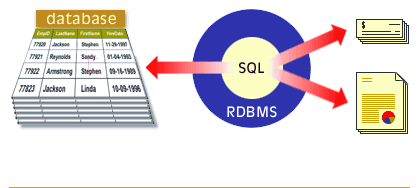
      • CRUD operations example in MySQL, OLTP, and OLAP
    2. Creating Database TablesW02
      • Database design
      • ER model
      • Entity and attributes
      • Entity relationships
      • Cardinality ratio
      • Generalization, specialization, and aggregation
      • Case study of Ecommerce website
    3. Introduction to RDBMSW03
      • RDBMS
      • Converting ER diagram to table
      • Properties of relational model
      • Primary key and foreign key
      • Relational model
      • E-commerce use case
      • Codd's rules
      • Data integrity in RDBMS
    4. Database DesignW04
      • Database design
      • Redundancy
      • Insertion anomaly
      • Functional dependencies
      • Closure set of attributes
      • Lossy decomposition
      • Dependency preserving
      • Normalization
      • Transitive dependency
      • 3NF
      • BCNF
      • Multivalued dependency
      • 5NF
      • Comparison between Normal forms, OLTP, and OLAP
    5. SQL (Part 1)W05
      • Discrete maths
      • Relational Algebra and null values
      • Relational calculus
      • Characteristics of SQL
      • Create a DB (example)
      • SQL Constraints
      • Foreign key
      • SQL SELECT statement
      • INSERT, DELETE statements
      • Scalar and Aggregate functions
      • HAVING clause
      • SQL Aliases
      • IN, BETWEEN operators
      • EXISTS, ANY, ALL operator
      • Auto increment
      • MySQL best practices
    6. SQL (Part 2)W06
      • JOIN-types
      • JOIN examples
      • String operators
      • Compound queries
      • SQL index
      • SQL views
      • Query optimization
      • Security Risks
    7. NoSQLW07
      • Introduction to NoSQL
      • ACID
      • Key value pair-based databases
      • Search DB and Graph DB
      • Advantages of NoSQL
      • Introduction to MongoDB
    8. MongoBD BasicsW08
      • Working with MongoDB
      • CRUD Operations with examples
      • Data Modelling in NoSQL
      • One to One and One to Many relationships
      • Advanced MongoDB queries
        • Join, sort, group, and index
    9. RedisW09
      • In memory DB
      • Redis
      • Key value store
      • Cashing layer
      • Datatypes
      • Transaction
      • Backup of data from Redis
    10. PL/SQLW10
      • PL/SQL Basics
      • Operators
      • Record
      • Recursive Functions
      • Exception Handling
      • Triggers
    11. More about DatabasesW11
      • Transactions
      • Concurrency control
      • Isolation
      • Consistency
      • ACID
      • Database lock
      • Database lock types
      • Lock Contention
      • Deadlock
      • Scaling the database
      • Storage systems
      • Database indexing
      • Index types
      • Distributed DB
      • DB Replication
      • Database sharding
      • DB on Cloud
Industry projects

6 projects
you'll ship.

Our projects are designed by experts in the industry to reflect industry standards. By working through our projects, Learners will gain a practical understanding of what they will take on at a larger-scale in the industry. In total, there are 6 Projects that are available in this program.

Optimize and Solve problems with given restrictions
Data Structures and Algorithms using JAVA

Optimize and Solve problems with given restrictions

As a part of this coursework, the students will be solving a set of 20 problems in an optimized way with the given restrictions of time and space complexity.

Designing an E-commerce Database
Everything about Database 2.0

Designing an E-commerce Database

Databases are vital tools for storing, managing and retrieving information. They are also critical for building an e-commerce system. A well-structured database powers e-commerce a…

Scaling and Designing E-commerce Database
Everything about Database 2.0

Scaling and Designing E-commerce Database

Scalability is key when deciding on your eCommerce platform. Your e-commerce website needs to be able to change and grow in order to meet demand. One of the critical components tha…

Design and Implement Software
Introduction to Java Programming 2.0

Design and Implement Software

Software design and implementation is a stage in the software engineering process in which an executable software system is developed. Software design is a creative activity in whi…

Using Microservice to get Insurance Policy from the Banking App
Microservices using Java, Spring & Docker

Using Microservice to get Insurance Policy from the Banking App

In this project, learners are required to create a new microservice for allowing customers to get insurance policies from your banking app. The microservice created should have the…

Migrating the Created Microservice to the K8s Cluster.
Microservices using Java, Spring & Docker

Migrating the Created Microservice to the K8s Cluster.

For the Insurance service created in Project 1, learners are required to migrate the microservice to the K8s cluster and implement tracing and logging capabilities for these micros…

Fee

One fee.
Everything included.

Become job ready with our comprehensive industry focused curriculum for freshers & early career professionals

Premium
₹1,50,000
Inclusive of all chargesEMI from ₹7,841/month
  • Career Service Assurance
  • Personalized Career Services Mentorship
  • 1 Year Access
  • Personalized Page
  • Live Individual & Group Sessions
  • Personalized & Hands-On
  • Job-Oriented Industry Relevant Curriculum
Check eligibility →
Next step

Not sure it's
the right fit?

A counsellor will walk you through the syllabus, projects and fee options — and tell you honestly if another course suits you better.

Get the syllabus + a call back

We'll email the full syllabus and call within one working day.

By submitting you agree to our Terms and Privacy Policy.

₹1,50,000PG program
Enquire

Talk to a career counsellor

Free 20-minute call. We'll map the right course to where you want to work.

By submitting you agree to our Terms and Privacy Policy.