01
Computer Science · Course
Introduction to Automotive Cybersecurity and Vehicle Networks
The current advances in vehicle technology require engineers with expertise in Automotive cybersecurity. Enrol in automotive cybersecurity courses that help students develop essential skills to enhance their engineering careers through industry-relevant projects
- Duration
- 12 weeks
- Content
- 19 hours
- Projects
- 3
- Mode
- Online
OverviewWhat you'll
What you'll
be able to do.
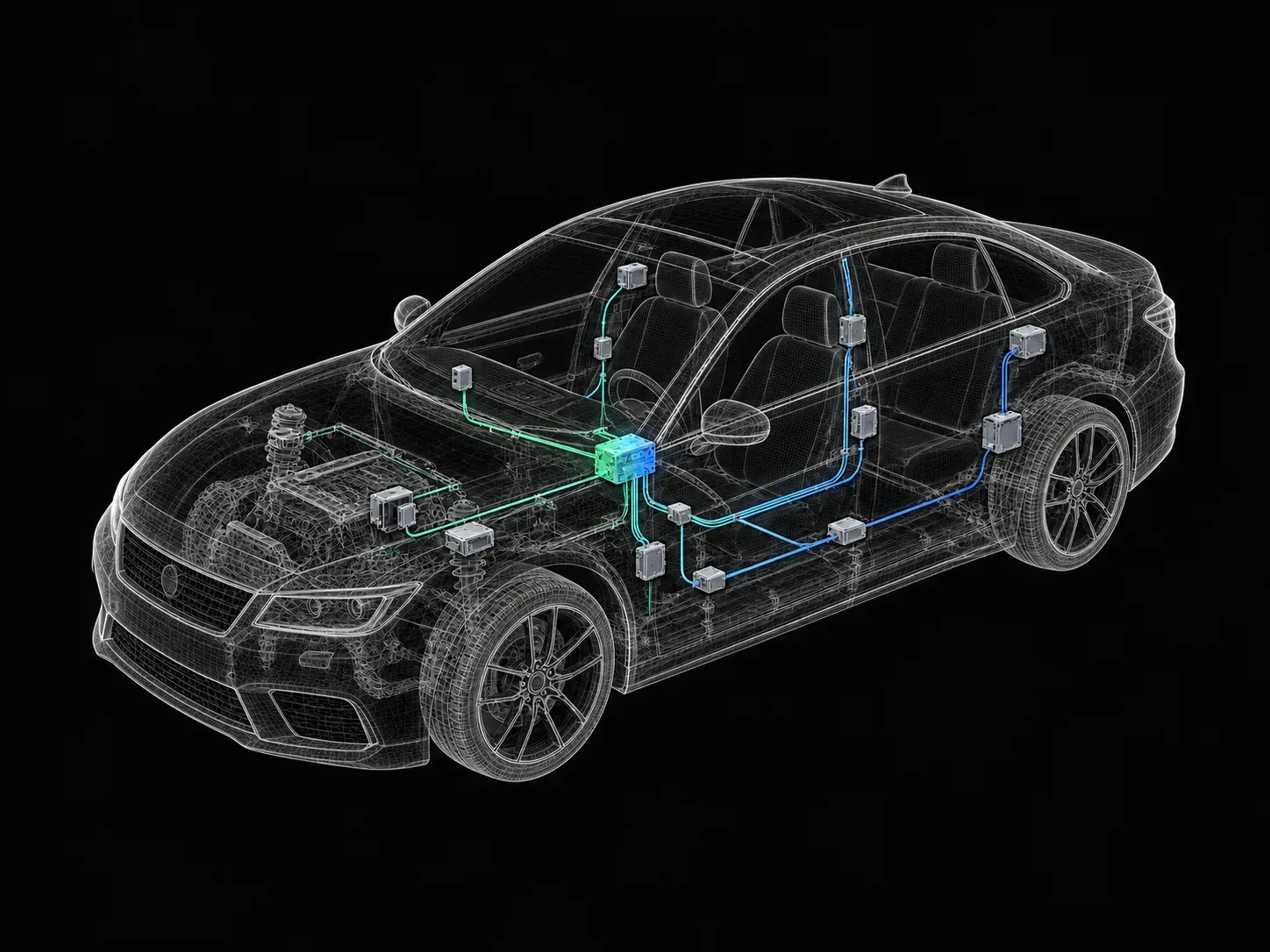
- This course will explain different in-vehicle network technologies, advanced CAN bus concepts, CAN bus hardware, cyber attacks on CAN bus, and vehicle networking architecture.
- Learners will understand the International Automotive Cybersecurity Legislation, and get exposed to modern trends in the industry.
- Learners will also complete hands-on projects about the Proper Logging of CAN Data, Binary Search for a Given Signal, and Programming and Attack Terminal that require extensive use of relevant software.
Tools you'll use
SocketCANLINUXC++
Curriculum12 modules,
12 modules,
built with industry.
01Introduction to Automotive Cybersecurity and Vehicle Networks
- Week - 01 Introduction to Automotive CybersecurityW01
- In this session, we will:
- Introduce students to automotive cybersecurity as a concept and teach them about its rise to prominence in the automotive industry.
- A technical review of relevant case studies will give students an idea of what the process of hacking a car is like.
- In this session, we will:
- Week - 02 Introduction to Different In-Vehicle Network Technologies, OBDII and EOBDW02
- This lecture will cover the technical features of CAN, LIN, FlexRay, K-Line, Automotive Ethernet, and CAN FD.
- Students will learn about different IVN types and where each is used, with emphasis on what applications each is suited for based on price, bandwidth, and other factors.
- The different ports mandated to be on vehicles which grant access to some of these networks.
- Week - 03 Advanced CAN Bus Concepts, Physical Attributes of CAN BusW03
- Since the CAN bus will be the main area of focus for the hands-on portions of this course, a deeper look will be taken at the CAN protocol.
- Students will learn about the different parts of a CAN frame, how they are relevant from a security perspective, and more. They will learn about CAN arbitration and about error states in CAN.
- Physical attributes of CAN buses such as wiring patterns, termination, and what they will look like on wiring diagrams/technical documents will also be covered.
- Week - 04 Building Your Digital WorkstationW04
- This week’s content will assist the student in setting up their virtualization environment for the remainder of the course’s hands-on work.
- We will walk the students through setting up a Linux Virtual Machine, installing the necessary programmes for the CAN bus content later on, and an introduction to some of the software that will be used in this course
- Week - 05 Building Your Virtual CAN BusW05
- This course will take students through the process of setting up their own virtual CAN bus using the open source tools they set up the previous week
- Students will learn how to use the tools at their disposal to read data from a CAN bus
- Set up a CAN controller
- Troubleshooting, and more
- Parts of this week’s content will feature hardware that the students may not have access to, but it should still serve as useful knowledge
- Week - 06 Advanced applications for open source CAN toolsW06
- This week, students will learn about the more advanced applications of CAN bus
- This includes:
- Filtering data from a network
- Logging data
- Replaying data
- Writing basic programs to achieve certain functionality with their devices.
- Week - 07 Setting up Virtual Infotainment System SimulationW07
- This week, students will be walked through the setting up of the Infotainment Cluster Simulator and shown some of its features
- Students will be taught the importance of being able to reverse-engineer CAN bus messages in the absence of a DBC file
- The format of a DBC file will be explored as well, showing students how CAN buses are structured in the industry
- This will lay the foundation for CAN bus message reverse-engineering
- Week - 08 CAN Bus Hardware, CAN Bus SoftwareW08
- This course will introduce students to some of the CAN bus products available on the market
- We will look at some of the most commonly used hardware tools for interfacing with a CAN bus and some of the most common software tools that go with them
- Expensive, industry-grade hardware and software will be reviewed, but cheaper hardware and open-source software will also be included
- Differing strengths and weaknesses of each product will be discussed, and a few live demonstrations will be given for some of the programs
- Week - 09 Cyber Attacks on a CAN Bus, Security Measures for CAN BusW09
- This week, some of the possible attacks against a vehicle’s CAN network will be explored
- We will go over the details of the attacks, what makes them effective, and possible countermeasures to them
- In tandem with this topic, we will discuss some possible security measures that can be applied to CAN bus including encryption, authentication, and transport-layer protocols
- Week - 10 Vehicle Networking Architecture, Where to Find in-Vehicle NetworksW10
- This lecture will contextualise how different subsystems can be connected to one another throughout a vehicle
- Students will learn how modern vehicle networks are organized and connected to one another and how information is shared
- Part of this lecture will also discuss how to find different vehicle networks in vehicles, as not all networks are available from the easily accessible diagnostic ports
- Week - 11 Planning a Vehicular Penetration TestW11
- This week, students will learn the process of carrying out a vehicle penetration test
- This process includes:
- The discussion phase with the customer
- Identifying targets of engagement
- Planning an attack on the target
- The technical aspects of a penetration test including
- Scanning
- Enumeration
- Exploitation
- Post-exploitation
- Week - 12 International Automotive Cybersecurity Legislation, Advanced Applications for Logged CAN Bus DataW12
- To conclude the course, a look will be taken at some of the international legislation surrounding automotive cybersecurity. Multinational standards such as the UN WP29 will be examined, but also country-specific legislation will be looked at.
- The final session will show how more expensive, industry-grade hardware and software can be used to recreate a vehicle’s driving session, allowing for advanced incident reconstruction and digital forensics.
- Week - 01 Introduction to Automotive CybersecurityW01
Industry projects3 projects
3 projects
you'll ship.
Our projects are designed by experts in the industry to reflect industry standards. By working through our projects, Learners will gain a practical understanding of what they will take on at a larger-scale in the industry. In total, there are 3 Projects that are available in this program.
02
Binary search for a given signal
03
Programming an attack terminal
In this project, the task is to program an attack terminal
Go further
Part of a PG program.
FeeOne fee.
One fee.
Everything included.
Become job ready with our comprehensive industry focused curriculum for freshers & early career professionals
Premium
₹40,000
Inclusive of all charges- 1 Year Access
- Personalized Page
- Live Individual & Group Sessions
- Personalized & Hands-On
- Job-Oriented Industry Relevant Curriculum
FAQQuestions,
Questions,
answered.
What is the complete duration of this Automotive Cybersecurity and Vehicle Networks course?
You can readily complete this online certification course within three months or 12 weeks.
Does Skill-Lync provide a certification for the Automotive Cybersecurity and Vehicle Networks course?
Yes, all students who finish the course will get a valid certification.
Is there any option to take a demo for this automotive cybersecurity course?
Yes, at Skill-Lync, you get an option to take a demo of this course.
Can working professionals learn cybersecurity in automotive industry courses?
Yes, working professionals can readily register for this certification course.
Does this course provide placement support?
No, there is no placement assistance to learners.
Who can pursue this online course?
Students and graduates of computer science, information technology and related streams of engineering can pursue this course.
Will this certification course help me in the future?
Yes, this cyber security course online certificate will help you get better job prospects.
Related
You might also like.
Course · 12 weeksDesign Patterns for Building Scalable Applications→Course · 12 weeksProgramming the Internet of Things (IOT)→Course · 12 weeksRobust Controls→Course · 12 weeksIntroduction to C++ Programming→Course · 5 weeksFundamentals of Cloud Computing→Course · 8 weeksFoundations of Cybersecurity→
Next stepNot sure it's
Not sure it's
the right fit?
A counsellor will walk you through the syllabus, projects and fee options — and tell you honestly if another course suits you better.