Everything You Need to Know About Brain-Computer Interface (BCI)
Imagine flying a drone. Only instead of using a joystick or a remote controller, you use your mind. Or instead of physically turning the switch, you just use your mind like a Jedi. You think “It” and “It” happens.
 Navin Baskar·26 Mar 2023·4 min read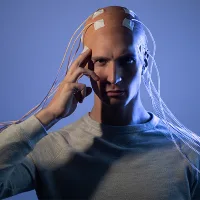
Everything You Need to Know About Brain-Computer Interface (BCI)
Imagine flying a drone. Instead of using a joystick or a remote controller, you use your mind. Or instead of physically turning the switch, you use your mind like a Jedi. You think “It” and “It” happens. This is the promise that brain-computer interfaces bring, So wake the inner Jedi in you and come along as we explore how BCIs work, their application, and their ethical implications.
What are Brain-Computer Interfaces?
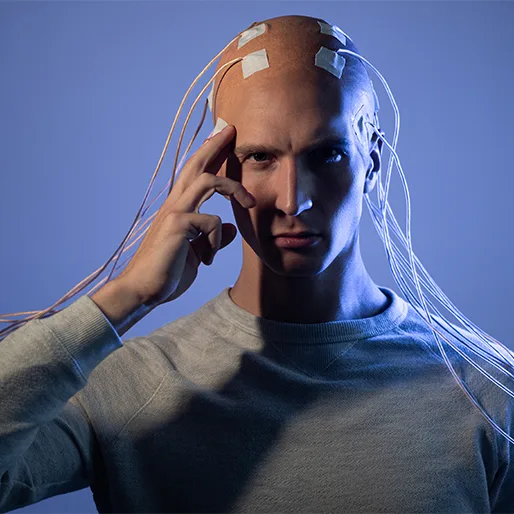
Brain-Computer Interfaces, or BCIs for short, allow users to control computers or other devices using nothing but their thoughts. This technology can restore movement to the paralysed or create new forms of communication between humans and machines. BCIs use sensors to detect electrical signals in the brain and translate these signals into commands that can be used to control a device.
BCIs have a wide range of applications in a number of fields, including,
- Rehabilitation
- Affective computing
- Robotics
- Gaming
- Neuroscience
They offer greater freedom by improving and substituting human peripheral working capacity.
How do BCIs Work?
Our brain works by forming various connections through brain cells called neurons, and electrical impulses are then sent through these connections. Different part of the brain is responsible for different actions like memory, thoughts, speech, vision etc. when you try to recollect a memory, a part of the brain called the hippocampus fires, and when you get an idea, the Frontal cortex fires.
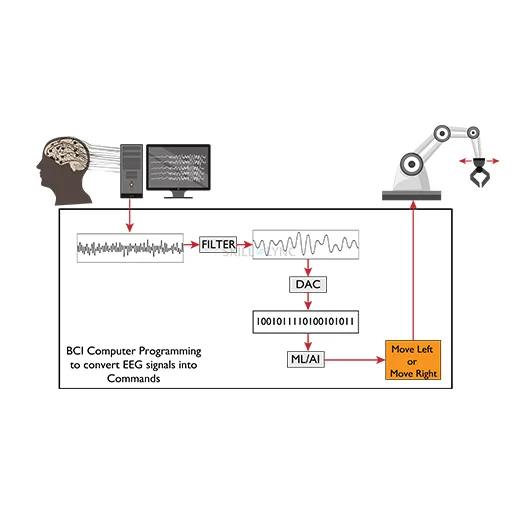
BCI systems monitor human brain waves and control the robots by the user's thoughts. These systems use electroencephalography sensors placed on the scalp of the head or implanted directly into the brain to detect and record the firing of these electrical impulses called EEG signals.
These signals are then sent to a computer. The computer first converts analog signals into digital signals. It passes them through various noise filters to eliminate any excess or unwanted signals that may have been captured.
The filtered signals are then sent through ML algorithms for signal characteristics extraction. The extracted signal can now control the computer or device.
Types of BCIs
There are three types of Brain-Computer Interfaces.
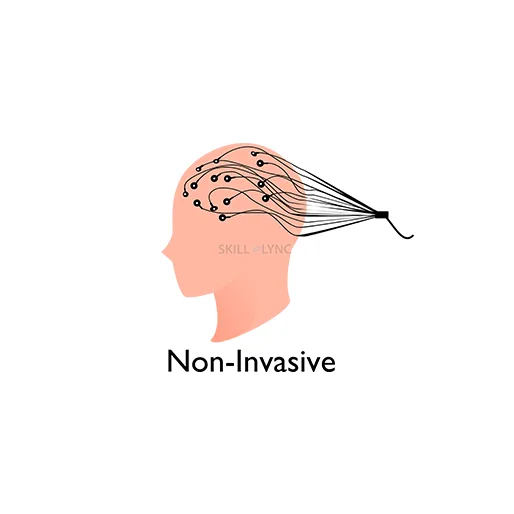
- Non-invasive
The sensors are placed on the scalp to measure the magnetic field (MEG) or the electrical potentials (EEG) that the brain generates.
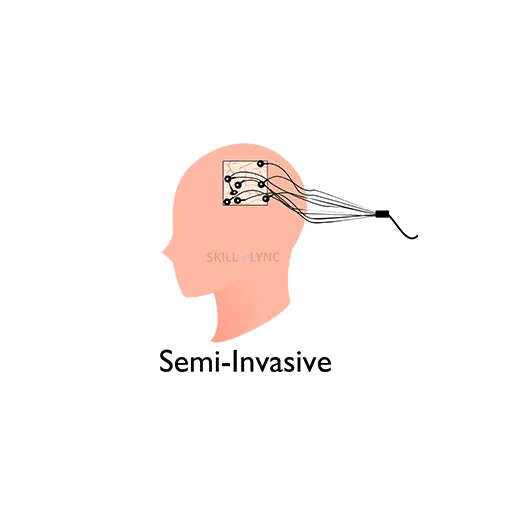
- Semi-invasive
The electrodes are placed on the exposed surface of the brain (ECoG).
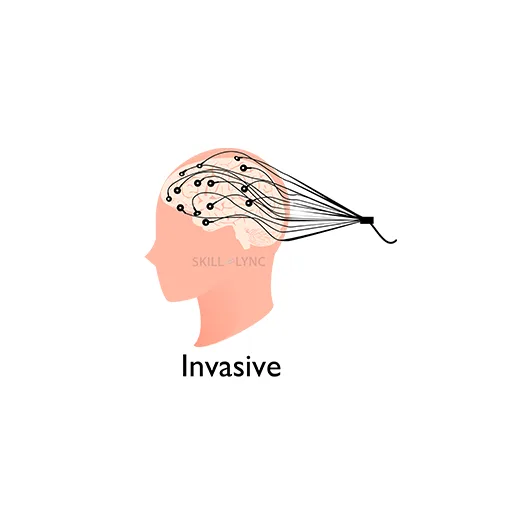
- Invasive
Micro-electrodes are inserted into the brain to track the neurons’ activity.
Applications of BCIs
Controlling Robotic Arms
Robotic arms can be controlled using the EEG signal from the user's brain. The signal is recorded and computed in real-time using the EEG sensors placed on the user’s head. The outputs from this computation are then sent as commands to the robotic arm.
Environmental Control
Homebound individuals frequently have significant motor impairments. Their sense of freedom and well-being would increase if they had access to efficient environmental control tools, such as switching on and off the light, TV, power beds, and regulating room temperature. EEG-based BCI technology can help by allowing them to take these actions independently without assistance.
Effective Education
Education is among the most challenging industries, as everyone learns and recollects information differently. However, there are a few parameters that are found to be universal. These factors include attentiveness, enthusiasm, engagement, fatigue, and motivation. These factors are hard to read; using BCIs, educators, and teachers can formulate alternative methods personalized to what works best for that user. This is enabled by stimulating the user then the BCI senses that the user is fatigued or losing attention.
Ethical Considerations
The ethical considerations of emerging medical technologies are complex and far-reaching. Healthcare professionals must consider the ethical implications of how these technologies are used.
- Brain-computer interfaces raise questions about the implications of allowing machines to interact with the human brain.
- Consider the potential for unequal access to technology and the potential for privacy and data security breaches.
- BCIs could be used to access people’s personal information or to monitor their activities without their knowledge.
- There can be a bias in decision-making, and there are chances of using technology to exploit vulnerable populations.
- There may be a potential misuse, such as neuro-hacking hacking into a person’s thoughts and memories, using the technology for surveillance.
- Controlling robotics could have serious implications for personal autonomy, which give the user an unfair advantage, such as
- Enhanced memory
- Enhanced physical abilities
- The potential for BCIs to exploit vulnerable populations, such as people with disabilities or the elderly, had to be considered.
- BCIs could create artificial intelligence (AI) systems indistinguishable from humans.
- This could lead to AI systems being treated as humans and given rights and protections not afforded to other machines.
Conclusion
BCIs hold tremendous potential. This is an exponential technology that can fundamentally change the way we use technology. Though out history, we have interacted with technology, and BCIs allow us to communicate directly with technology. This opens the doors to nearly limitless possibilities for its use and range of applications.
To learn more about similar topics, check out the blogs on our website. Skill-Lync provides various courses, internships, and PG programs, such as Post Graduate Programs in Bioengineering & Medical Device Technology and Math behind Machine Learning & Artificial Intelligence using Python in all the major domains exclusively for engineering graduates. Talk with our experts to book a free demo session.